


If you have been sitting with anxious thoughts or a low mood for weeks, wondering whether you need to track down a psychiatrist before anyone will help you, the answer is no. A primary care doctor (PCP) is not just a reasonable first stop for anxiety and depression. For most people dealing with mild to moderate symptoms, a PCP is the right first stop.
Primary care physicians handle the majority of mental health care in the United States. Research published in Health Affairs found that general practitioners provide a significant share of outpatient mental health treatment, including prescribing, monitoring, and coordinating care. So if you have been putting off getting help because you assumed you needed a specialist first, this guide will walk you through exactly what happens at that appointment, what a PCP can and cannot do, and how to know when a referral makes sense.
At a Glance
| Topic | Key Facts |
|---|---|
| Can a PCP diagnose anxiety and depression? | Yes, using validated tools like the PHQ-9 and GAD-7 |
| Can a PCP prescribe anxiety or depression medication? | Yes, including SSRIs, SNRIs, buspirone, and beta-blockers |
| Does a PCP provide therapy (CBT, talk therapy)? | No, but they can refer you to a therapist or psychologist |
| When is a psychiatrist needed? | Treatment-resistant cases, complex comorbidities, suspected bipolar disorder |
| Is a PCP referral required to see a therapist? | Most insurance plans do not require one |
| Average psychiatrist wait time | 67 days (median in the US) |
The Front Line of Mental Health Care
Yes, a primary care doctor can treat anxiety and depression, and most of the time, that is exactly where treatment begins in the United States.
According to research from the National Institutes of Health, primary care settings are the most common point of contact for patients experiencing mental health concerns. PCPs are trained to recognize, diagnose, and manage mild to moderate anxiety and depression, and they are fully authorized to prescribe the same first-line medications that a psychiatrist would typically start with.
This matters because the median wait time to see a psychiatrist in the US is approximately 67 days, and in some regions it stretches far longer. Waiting that long when you are not functioning well is not always necessary. A primary care appointment can get you evaluated and into a treatment plan within days.
So the better question is not "can my PCP help?" but "what exactly will they do, and is it enough for my situation?"
Why a PCP Is Often the Best Place to Start
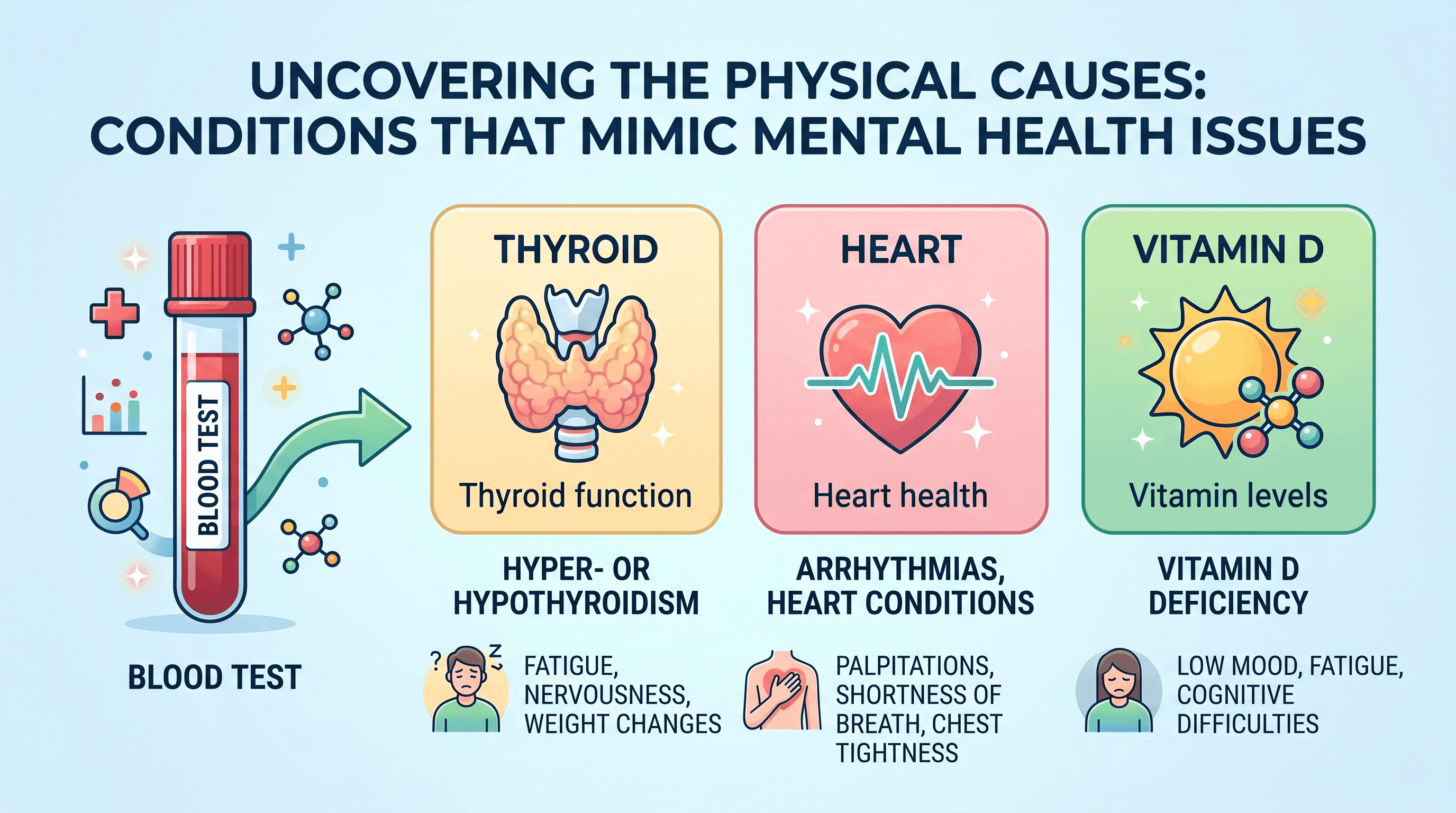
Before any mental health treatment begins, a thoughtful clinician will want to rule out a physical cause, and that is something a primary care doctor is uniquely positioned to do.
Several common medical conditions produce symptoms that look nearly identical to anxiety or depression. Hypothyroidism, for instance, can cause fatigue, low mood, weight changes, and cognitive fog. Hyperthyroidism can drive racing thoughts, heart palpitations, and persistent nervousness. Iron-deficiency anemia and vitamin D deficiency are both associated with fatigue and depressed mood. Cardiac arrhythmias can produce chest tightness and sudden surges of fear that mimic a panic attack.
A PCP can order a standard blood panel that checks thyroid function (TSH, T3, T4), a complete blood count, vitamin D levels, and metabolic markers. If something physical is driving the symptoms, treating that condition may resolve the mood or anxiety issues entirely, without any psychiatric medication needed.
Atrium Health's clinical guidance recommends starting with a primary care visit for exactly this reason: the ability to do a thorough physical workup that a mental health specialist alone typically would not perform.
How Your PCP Will Diagnose Anxiety and Depression
A PCP will not ask you to lie on a couch and free-associate. The assessment is structured, relatively brief, and grounded in validated clinical tools.
Standardized Screening Questionnaires
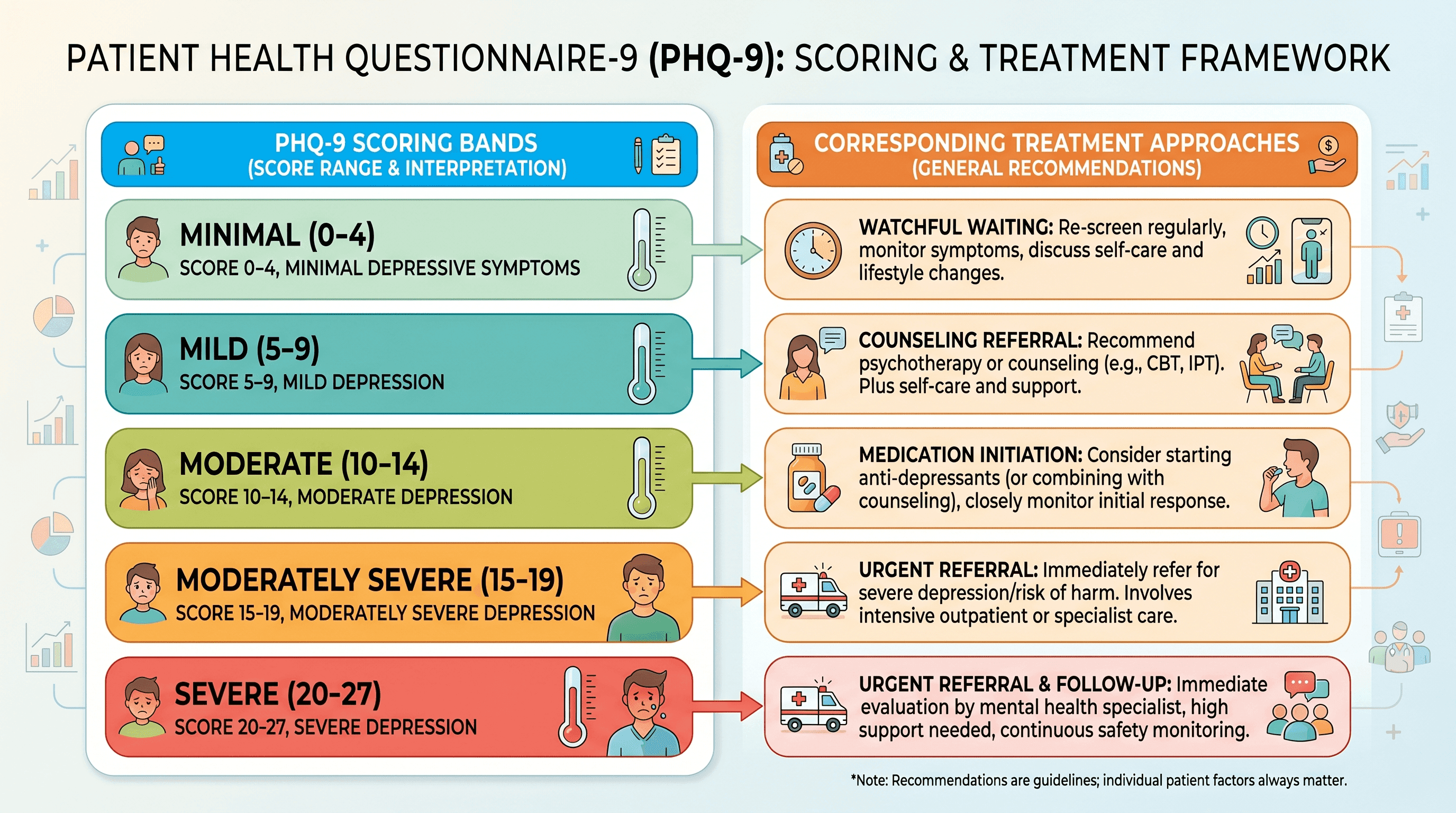
The two most commonly used tools in primary care are the PHQ-9 (Patient Health Questionnaire-9) for depression and the GAD-7 (Generalized Anxiety Disorder-7) for anxiety. Both are short, evidence-based questionnaires that take under five minutes to complete.
The PHQ-9 asks nine questions about how often over the past two weeks you have experienced symptoms like low mood, lack of interest, sleep changes, fatigue, concentration difficulty, or thoughts of self-harm. Each response is scored zero to three, and the total score places the result in a severity category: minimal (0-4), mild (5-9), moderate (10-14), moderately severe (15-19), or severe (20-27).
The GAD-7 follows the same format for anxiety, asking about nervousness, worry, difficulty relaxing, restlessness, irritability, and fear that something bad might happen.
These scores give the PCP an objective starting point, and a basis for tracking improvement over time.
The Clinical Interview
Alongside the questionnaires, the doctor will ask open-ended questions about when symptoms started, whether anything triggered them, how they are affecting sleep, work, relationships, and daily functioning, and whether there is any personal or family history of mental health conditions. They will also screen for warning signs that would prompt an immediate escalation, including suicidal ideation or thoughts of self-harm.
Based on the screening scores, the clinical interview, the physical exam findings, and bloodwork results, the PCP will arrive at a clinical impression using criteria from the Diagnostic and Statistical Manual of Mental Disorders (DSM-5). They can formally diagnose generalized anxiety disorder (GAD), major depressive disorder (MDD), panic disorder, social anxiety disorder, and a range of related conditions.
Medications a Primary Care Doctor Can Prescribe for Anxiety and Depression
A PCP is fully authorized to prescribe the same first-line medications a psychiatrist would typically start with.
SSRIs (Selective Serotonin Reuptake Inhibitors)
SSRIs are the first-line pharmacological treatment for both anxiety disorders and major depression, recommended in clinical guidelines from the Mayo Clinic and broadly endorsed across professional bodies.
Commonly prescribed SSRIs in primary care include sertraline (Zoloft), escitalopram (Lexapro), fluoxetine (Prozac), and citalopram (Celexa). These medications work by increasing the availability of serotonin in the brain, and the Mayo Clinic notes that they are generally well tolerated, with side effects that often improve after the first few weeks.
One thing to set expectations around: SSRIs do not work overnight. Full therapeutic effects typically take four to eight weeks to develop. Some patients notice early improvements in sleep and energy before mood fully lifts.
SNRIs (Serotonin-Norepinephrine Reuptake Inhibitors)
SNRIs such as venlafaxine (Effexor XR) and duloxetine (Cymbalta) are also commonly prescribed in primary care. They target both serotonin and norepinephrine pathways and are approved for several anxiety disorders in addition to depression. Duloxetine is also sometimes used when there are coexisting physical symptoms like chronic pain.
Buspirone
Buspirone is a non-habit-forming option prescribed specifically for generalized anxiety disorder. It works differently from SSRIs, acting on serotonin and dopamine receptors, and does not carry the sedation or dependency risk associated with older anti-anxiety medications. It typically takes two to four weeks to take effect.
Beta-Blockers for Situational Anxiety
For situational or performance-related anxiety (such as public speaking, presentations, or medical procedures), a PCP may prescribe a low-dose beta-blocker like propranolol. Beta-blockers do not treat the underlying anxiety disorder, but they can reduce the physical symptoms, such as a racing heart, trembling, or flushing, in a specific high-stress situation.
Benzodiazepines: A Note on Short-Term Use
Benzodiazepines such as lorazepam or clonazepam are sometimes prescribed for acute anxiety, but primary care guidelines generally reserve these for short-term use only. The National Institutes of Health notes that benzodiazepines carry a genuine risk of physical dependence and cognitive side effects, particularly in older adults. A responsible PCP will not use these as a long-term management strategy and will typically taper and discontinue them as an SSRI takes effect.
What Happens If the First Medication Does Not Work?
Not every first prescription is the right fit. If you do not experience meaningful improvement after an adequate trial (typically six to eight weeks at a therapeutic dose), a primary care doctor has several options: adjusting the dose, switching to a different SSRI or SNRI, or augmenting with a second agent. If two or more medication trials fail without adequate response, this is typically the point at which a PCP will initiate a psychiatry referral. Treatment-resistant depression or anxiety is a clinical threshold where specialist expertise becomes genuinely necessary, not a sign that your situation is hopeless.
Non-Medication Treatment Your PCP Can Initiate
Not everyone wants to start with medication, and many people do not need to.
For mild anxiety or depression, lifestyle-based interventions have meaningful clinical support behind them. Research from NIH confirms that regular aerobic exercise, consistent sleep hygiene, reduced alcohol intake, and structured stress-reduction practices like mindfulness or diaphragmatic breathing can produce measurable reductions in anxiety and depressive symptoms.
A PCP can also initiate a referral for cognitive behavioral therapy (CBT) without a psychiatrist being involved. CBT is the most evidence-backed psychological treatment for both anxiety and depression, and it works by helping patients identify and restructure unhelpful thought patterns and behaviors. While a PCP does not deliver CBT directly, they can refer you to a licensed therapist, psychologist, or licensed clinical social worker who does.
University Hospitals notes that primary care providers increasingly offer integrated care models where behavioral health coaches or counselors are embedded directly into the practice, allowing same-day access to non-medication support.
So the answer to "can a PCP treat anxiety without medication?" is yes, particularly for mild presentations, and particularly when therapy and lifestyle work are incorporated early.
Meds vs. Therapy: Where the PCP's Role Begins and Ends
This is worth making explicit. A primary care doctor manages the biological side of anxiety and depression. That means prescribing, monitoring medications, adjusting doses, running follow-up labs when needed, and checking for physical contributors.
A primary care doctor does not deliver talk therapy or CBT. That is the domain of licensed therapists, psychologists, and psychiatrists who have specialized training in psychotherapy techniques.
The PCP's role in the therapy side is as a connector: they can identify that therapy is appropriate, provide referrals to vetted local therapists, and coordinate care between the prescribing and therapy side. In a well-coordinated care model, your PCP and your therapist are aware of each other and can share relevant clinical information (with your consent).
If you are already working with a therapist and want to add medication, a PCP is a reasonable and efficient way to do that without scheduling a full psychiatric evaluation.
PCP vs. Psychiatrist vs. Therapist: How to Choose
This is the decision most people are trying to make when they search this topic, and it gets less straightforward guidance than it should.
| Provider | Best For | Limitations |
|---|---|---|
| Primary Care Doctor | Mild to moderate anxiety/depression, first episode, standard medications, physical rule-out | Does not perform therapy; may refer complex cases |
| Psychiatrist | Treatment-resistant cases, complex comorbidities (bipolar, PTSD, substance use), medication management for difficult presentations | 67-day median wait time; higher cost |
| Therapist/Psychologist | All severity levels, non-medication path, processing trauma or life stressors | Cannot prescribe; insurance coverage varies |
| Telepsychiatrist | Bridge option while waiting for in-person psychiatry, follow-up for established diagnoses | Some controlled substances cannot be prescribed via telehealth |
The practical framework: start with your PCP if this is your first time seeking help, if symptoms are affecting daily life but not causing a crisis, or if you want medication and therapy options explained before committing to either. Move directly to a psychiatrist if symptoms are severe, if you have had a previous psychiatric hospitalization, if you have a suspected or confirmed diagnosis of bipolar disorder, or if you have already tried multiple medications without improvement.
Can You See a Therapist Without a PCP Referral?
Yes, in most cases. Unlike specialist physicians, therapists and psychologists generally do not require a physician referral for insurance coverage. Most major insurance plans cover outpatient mental health services under the same terms as medical services, following the requirements of the Mental Health Parity and Addiction Equity Act. You can typically find in-network therapists through your insurer's online directory or through platforms like Psychology Today's therapist finder.
Telepsychiatry as a Bridge While You Wait
If you need psychiatric-level medication management but face a 67-day wait for an in-person appointment, telepsychiatry is a practical middle option. Most states now require insurance plans to cover telehealth mental health visits at the same rate as in-person visits. Telepsychiatrists can evaluate, diagnose, and prescribe most medications used for anxiety and depression, including SSRIs, SNRIs, and buspirone. Note that some controlled substances (particularly benzodiazepines and stimulants) are subject to additional telehealth prescribing restrictions depending on the state.
If you want to connect with a primary care provider quickly to get the evaluation and treatment process started, you can see a doctor online through Momentary, which offers virtual primary care visits without the long wait times associated with in-person psychiatry.
When Does a Primary Care Doctor Refer You to a Psychiatrist?
A referral to psychiatry is not a signal that your case is too much to handle or that something is seriously wrong. It is a sign of good clinical judgment.
A primary care doctor will typically initiate a psychiatry referral under these conditions:
Treatment-resistant anxiety or depression is the most common trigger. If two adequate trials of different first-line medications have not produced meaningful improvement, the clinical complexity warrants specialist evaluation.
Diagnostic ambiguity is another driver. If a patient presents with significant mood swings alongside anxiety or depression, a PCP may suspect bipolar disorder, which requires specialist assessment before any medication changes are made. Starting an antidepressant alone in undiagnosed bipolar disorder can trigger a manic episode, so this is a case where caution is clinically appropriate.
Complex comorbidities such as co-occurring PTSD, substance use disorder, or significant personality disorders exceed what most primary care settings are equipped to manage well.
Suicidality or acute safety concerns always prompt an immediate escalation, either to a psychiatrist, an emergency setting, or a crisis service.
Significant medication complexity, such as needing medications with narrow therapeutic windows or unusual drug interactions, may also prompt a specialist referral.
In all of these cases, a referral reflects that your PCP is doing their job correctly, not that they are giving up on you.
Does Insurance Cover Anxiety Treatment Through a Primary Care Doctor?
Yes, in most cases, and often at a lower cost than you might expect.
Under the Mental Health Parity and Addiction Equity Act (MHPAEA), most health insurance plans in the US are required to cover mental health services (including anxiety and depression treatment) at the same level as physical health services. This means your standard PCP copay or coinsurance applies to a mental health visit with your primary care doctor, the same as it would for a physical exam or a follow-up for a chronic condition.
Getting anxiety or depression care through your PCP is almost always less expensive than routing through a psychiatrist, because psychiatry often carries a specialist copay that can run significantly higher. Before your appointment, a useful step is to call the member services number on your insurance card and ask specifically about coverage for "outpatient mental health services" and "mental health screening" with your primary care provider. You can also ask your PCP's billing department which CPT codes they use for mental health visits so you can verify coverage in advance.
If you are uninsured or underinsured, community mental health centers and federally qualified health centers (FQHCs) offer sliding-scale fees for primary care and mental health services.
How to Bring It Up at Your Appointment
For many people, the hardest part is starting the conversation. The clinical part of the appointment is straightforward. Getting the words out in the first place is not always.
A few things worth knowing before you go:
Your doctor has heard this before. Mental health concerns are among the most common reasons adults seek primary care. There is no version of what you say that will surprise or burden them.
You do not need to arrive with a polished explanation. Simple, direct language works well. Phrases that open the conversation without requiring you to have all the answers include:
"I haven't been feeling like myself lately, and I think I'd like to talk about it."
"I've been dealing with a lot of anxiety and I'm wondering if there's something we can do about it."
"I think I might be depressed. I'd like to be screened."
If you are worried about minimizing your symptoms in the moment (something many people do when they finally get a doctor's attention), write them down beforehand. A short list of what you have been experiencing, when it started, and how it is affecting your daily life gives the doctor useful information and helps you make sure nothing important goes unsaid.
At a first mental health visit, expect the appointment to run longer than a standard checkup, typically 30 to 45 minutes for a new mental health concern. Come prepared to answer questions about sleep, appetite, work, relationships, and family history.
Leave with a clear next step. Whether that is bloodwork, a follow-up appointment, a prescription, or a therapy referral, you should not leave without a plan.
What to Expect at Follow-Up Visits
Getting started with anxiety or depression treatment is not a one-appointment process. The follow-up structure matters, and knowing what to expect makes it less frustrating.
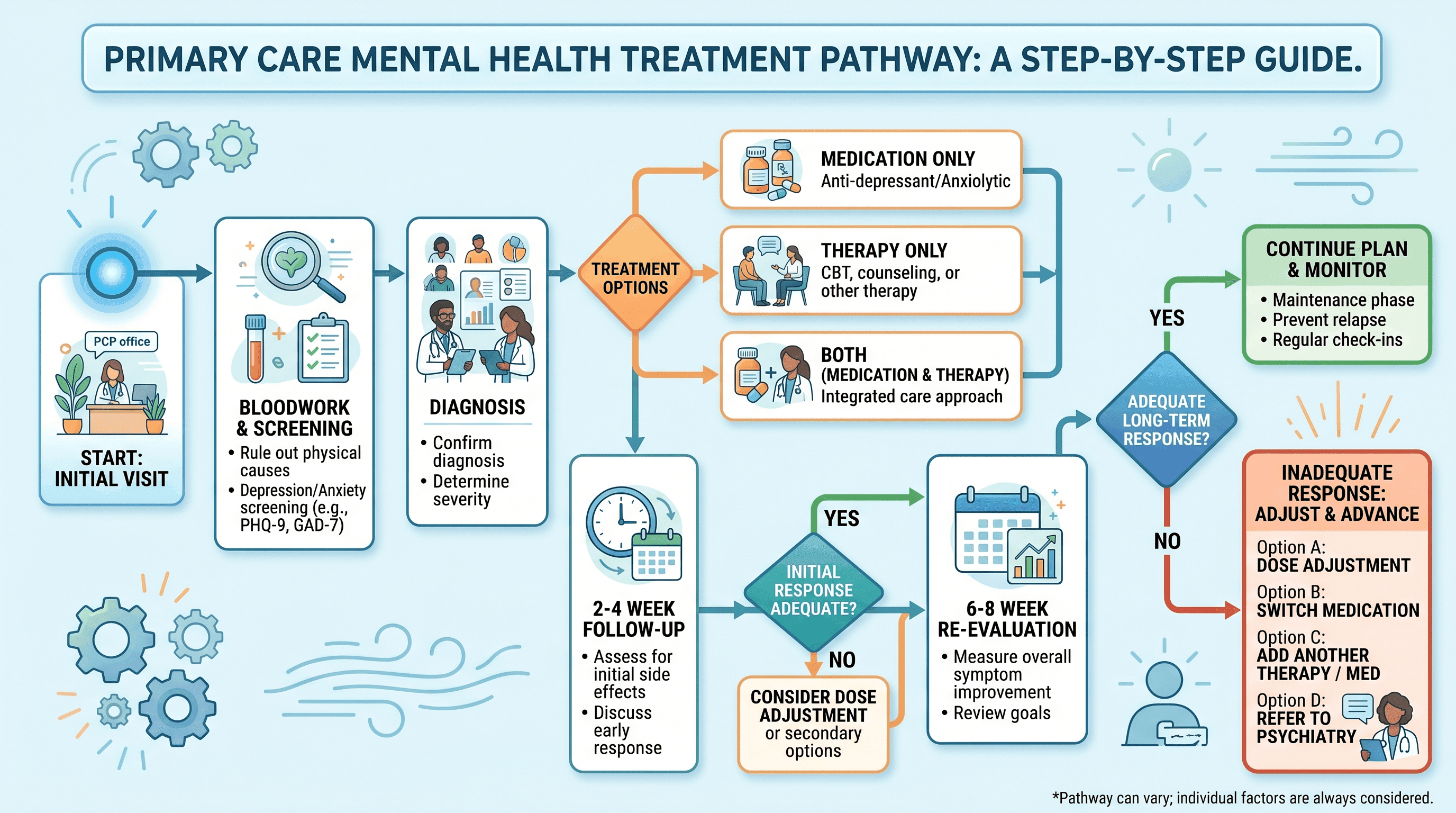
If a medication is started, the first follow-up is typically scheduled at two to four weeks, not because results are expected that quickly, but to check for early side effects (nausea, sleep disruption, initial increase in anxiety that sometimes occurs in the first week or two), to confirm tolerability, and to troubleshoot if needed.
Full therapeutic effect from an SSRI or SNRI generally develops over four to eight weeks. At the four-to-six-week mark, the PCP will evaluate whether the dose needs to be increased or whether the medication is producing an adequate response.
Once a stable, effective regimen is established, follow-up visits typically move to every three months. At each visit, the doctor may re-administer the PHQ-9 or GAD-7 to track progress quantitatively. This is not just a formality. A measurable change in the score is clinical evidence that the treatment is working, and it helps inform decisions about whether to continue, adjust, or taper the medication down the road.
What If Your Doctor Dismisses Your Concerns?
It happens, and it is worth having a plan for it before you walk in.
If you feel that your symptoms are being minimized or that the conversation is being redirected too quickly toward a non-mental-health explanation, you have options.
Ask directly: "I'd like to be screened using the PHQ-9 or GAD-7. Can we do that today?" Using the names of specific validated tools makes it harder for the visit to end without a structured assessment.
Name the impact: Rather than describing symptoms in abstract terms, describe how they are affecting your functioning. "I haven't been able to concentrate at work for three months" or "I've stopped going out with friends because the anxiety is so intense" carries more clinical weight than "I've been stressed."
Request a referral explicitly: "Even if you think my symptoms are mild, I'd like a referral to a therapist." You do not need to justify this.
Seek a second opinion: If a first visit leaves you feeling dismissed and your symptoms are significantly affecting your quality of life, another primary care provider or an urgent care setting with behavioral health services is a reasonable next step. You are not obligated to accept a dismissive response as the final word.
If you want to explore your symptoms with support before or between appointments, Momentary's AI health navigator can help you understand what you are experiencing, organize your symptoms, and think through next steps before talking to a provider.
FAQ
What are the treatments for anxiety disorders?
Anxiety disorders are treated using a combination of approaches depending on severity and type. Psychotherapy, particularly cognitive behavioral therapy, is one of the most effective non-medication treatments. First-line medications include SSRIs and SNRIs, which are prescribed by both primary care doctors and psychiatrists. For situational anxiety, beta-blockers may be used. Lifestyle strategies including regular aerobic exercise, sleep hygiene, and reduced caffeine and alcohol intake are recommended as adjuncts at all severity levels. The Mayo Clinic outlines these approaches in clinical detail.
What are the long-term side effects of anxiety medication?
Long-term side effects vary by medication class. SSRIs and SNRIs are generally well tolerated over time, though some people report sexual side effects, weight changes, or emotional blunting at higher doses. Benzodiazepines, when used long-term, carry a risk of physical dependence, cognitive effects, and withdrawal symptoms on discontinuation. A doctor can advise on individual cases and help weigh the benefit-to-risk profile of any long-term regimen.
Can a primary care doctor prescribe anxiety and depression medication?
Yes. Primary care doctors are fully authorized to prescribe SSRIs, SNRIs, buspirone, beta-blockers, and, with appropriate caution, short-term benzodiazepines. They prescribe the same first-line medications a psychiatrist would start with for mild to moderate anxiety and depression.
How can I control my anxiety without medication?
Cognitive behavioral therapy has strong clinical evidence for reducing anxiety without medication, and a PCP can provide a referral. Regular aerobic exercise, consistent sleep schedules, limiting caffeine and alcohol, diaphragmatic breathing, and mindfulness-based practices are all supported by research as effective anxiety-management strategies. For mild anxiety, these approaches can produce meaningful improvement on their own. A doctor can help assess whether a medication-free approach is appropriate based on symptom severity.
Can a PCP diagnose anxiety without a referral to a specialist?
Yes. Primary care doctors are trained to diagnose generalized anxiety disorder, panic disorder, social anxiety disorder, and other anxiety conditions using validated screening tools and DSM-5 criteria. A referral to a psychiatrist is only needed when the presentation is complex, when initial treatments fail, or when there is diagnostic uncertainty.
Do I need a PCP referral to see a therapist?
In most cases, no. Most insurance plans do not require a physician referral for outpatient therapy visits. You can typically self-refer to an in-network therapist using your insurer's provider directory. Calling member services to confirm your specific plan's requirements before booking is a straightforward way to avoid surprises.
References
- Health Affairs — Research on primary care's role in providing outpatient mental health treatment in the US.
- National Institutes of Health / PubMed Central — Research on primary care as the most common point of contact for mental health concerns, including treatment and referral patterns.
- Atrium Health — Clinical guidance on using primary care as the first step for mental health, including physical rule-out and integrated care.
- Mayo Clinic: Anxiety Diagnosis and Treatment — Clinical overview of anxiety treatment options including medications and psychotherapy.
- Mayo Clinic: Depression Diagnosis and Treatment — Clinical overview of depression treatment including antidepressant medications and psychotherapy.
- University Hospitals — Information on integrated behavioral health in primary care settings.
- National Institutes of Health / PubMed Central — Research on benzodiazepine use, dependency risk, and appropriate prescribing guidelines.