


At a Glance
| Topic | Key Facts |
|---|---|
| Primary care | A level of healthcare delivery, not a single specialty |
| Family medicine | A board-certified specialty within primary care |
| Who qualifies as a PCP | Family medicine MDs, internists, pediatricians, geriatricians, NPs, PAs |
| Family medicine age range | Birth through end of life |
| Internal medicine age range | Adults only (18+) |
| Pediatrics age range | Birth through young adulthood |
| Residency length (family medicine) | 3 years, covering nearly every clinical discipline |
| Insurance treatment | Most insurers do not distinguish between FM and IM for copay purposes |
| Telehealth access | Available across all primary care specialties |
The Short Answer: The Job vs. The Training
Primary care physician is a job description. Family medicine is the training credential behind one of the people who can fill that job.
Think of it this way. A hospital needs someone to serve as a patient's quarterback, the provider who handles routine checkups, manages chronic conditions, orders screenings, and decides when a specialist is needed. That role is "primary care provider." A family medicine physician is one type of clinician trained specifically to fill that role. So are internists, pediatricians, and several others.
The confusion is understandable because in everyday conversation, "my primary care doctor" and "my family doctor" often refer to the exact same person. But the terms are not identical, and understanding the difference helps patients make better decisions about who to see.
What Is Primary Care, Exactly?
Primary care is best understood as a level of care delivery rather than a specialty. It describes the first point of contact a patient has with the healthcare system for most health concerns: preventive visits, chronic disease management, acute illness, and coordination with specialists when needed.
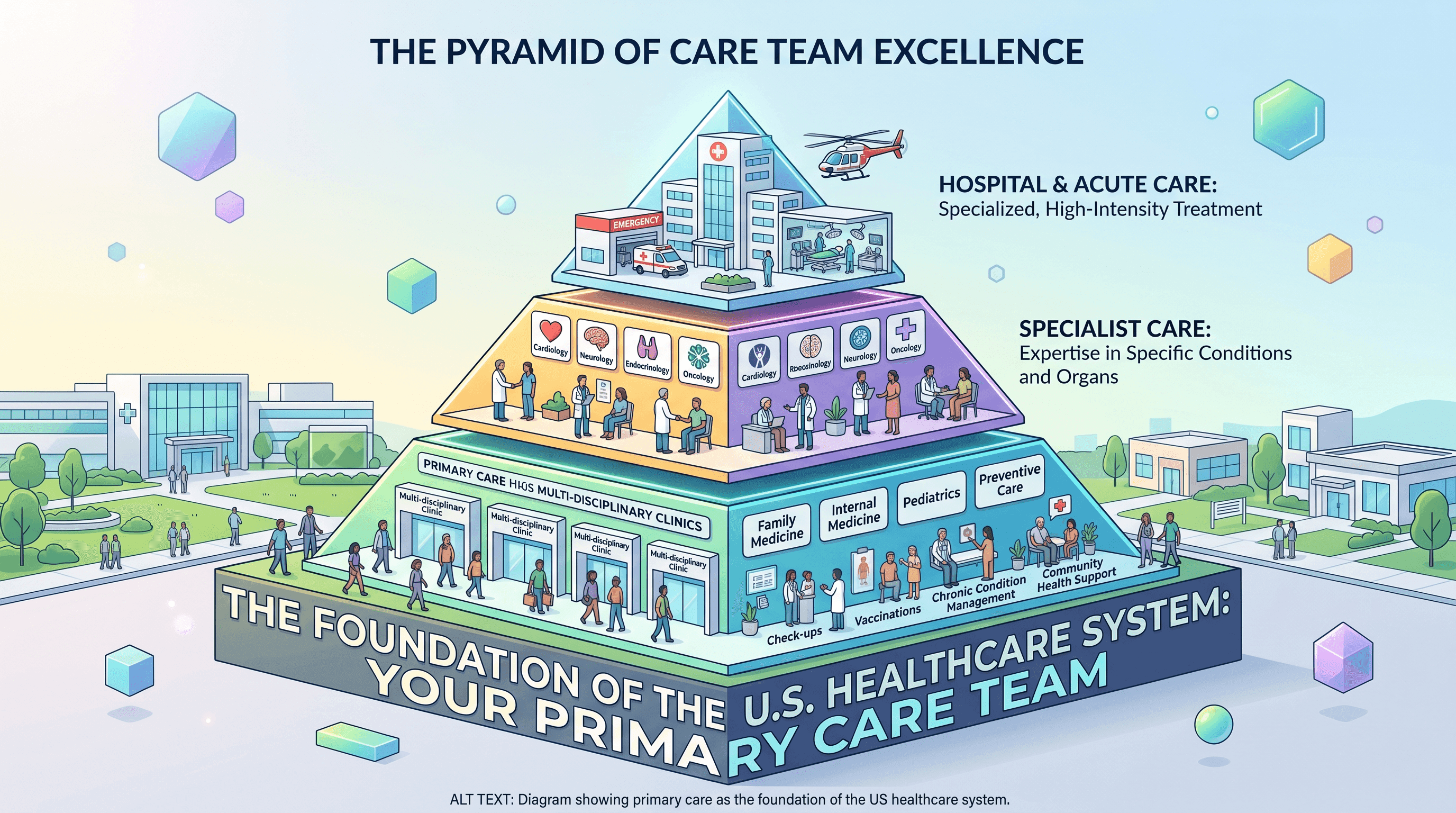
The Centers for Disease Control and Prevention describes primary care as the entry point into the healthcare system, and research consistently shows that patients with strong primary care relationships have better health outcomes and lower overall costs.
"Primary care is the provision of integrated, accessible health care services by clinicians who are accountable for addressing a large majority of personal health care needs." — Starfield B, Shi L, Macinko J, Milbank Quarterly, 2005
Who Counts as a Primary Care Provider?
The primary care roster is broader than most patients realize. Family medicine physicians are the most commonly associated type, but the category also includes internal medicine physicians (who treat adults), pediatricians (who treat children and adolescents), geriatricians (who specialize in older adults), and OB-GYNs who serve as primary care providers for many women. Nurse practitioners (NPs) and physician assistants (PAs) who practice in primary care settings also function as PCPs and, in most states, can diagnose conditions, prescribe medications, and manage ongoing care independently or with physician oversight.
What Is Family Medicine?
Family medicine is a board-certified medical specialty with its own residency training, board examinations, and certifying body: the American Board of Family Medicine. What distinguishes it from other primary care specialties is its scope. A family medicine physician is trained to care for patients of any age, any gender, and with a wide range of conditions, from pediatric ear infections to geriatric fall prevention.
The American Academy of Family Physicians (AAFP) describes family medicine as rooted in the philosophy of treating the whole patient within the context of their family and community, rather than focusing on a specific organ system or disease category. That philosophy drives both the training model and the way family physicians practice.
What Does a Family Medicine Residency Actually Cover?
After four years of medical school, family medicine physicians complete a three-year residency that rotates through an unusually wide range of clinical settings. Residents train in internal medicine, pediatrics, obstetrics and gynecology, psychiatry, emergency medicine, surgery, and outpatient family practice. That cross-discipline exposure is intentional. It produces physicians who can handle a wide spectrum of clinical situations without defaulting to a specialist referral for every question outside a narrow lane.
Research published in the Journal of Family Medicine and Primary Care has documented how this generalist training model correlates with improved care continuity and reduced fragmentation for patients managing multiple conditions.
Family Medicine vs. Internal Medicine vs. Pediatrics: How They Compare
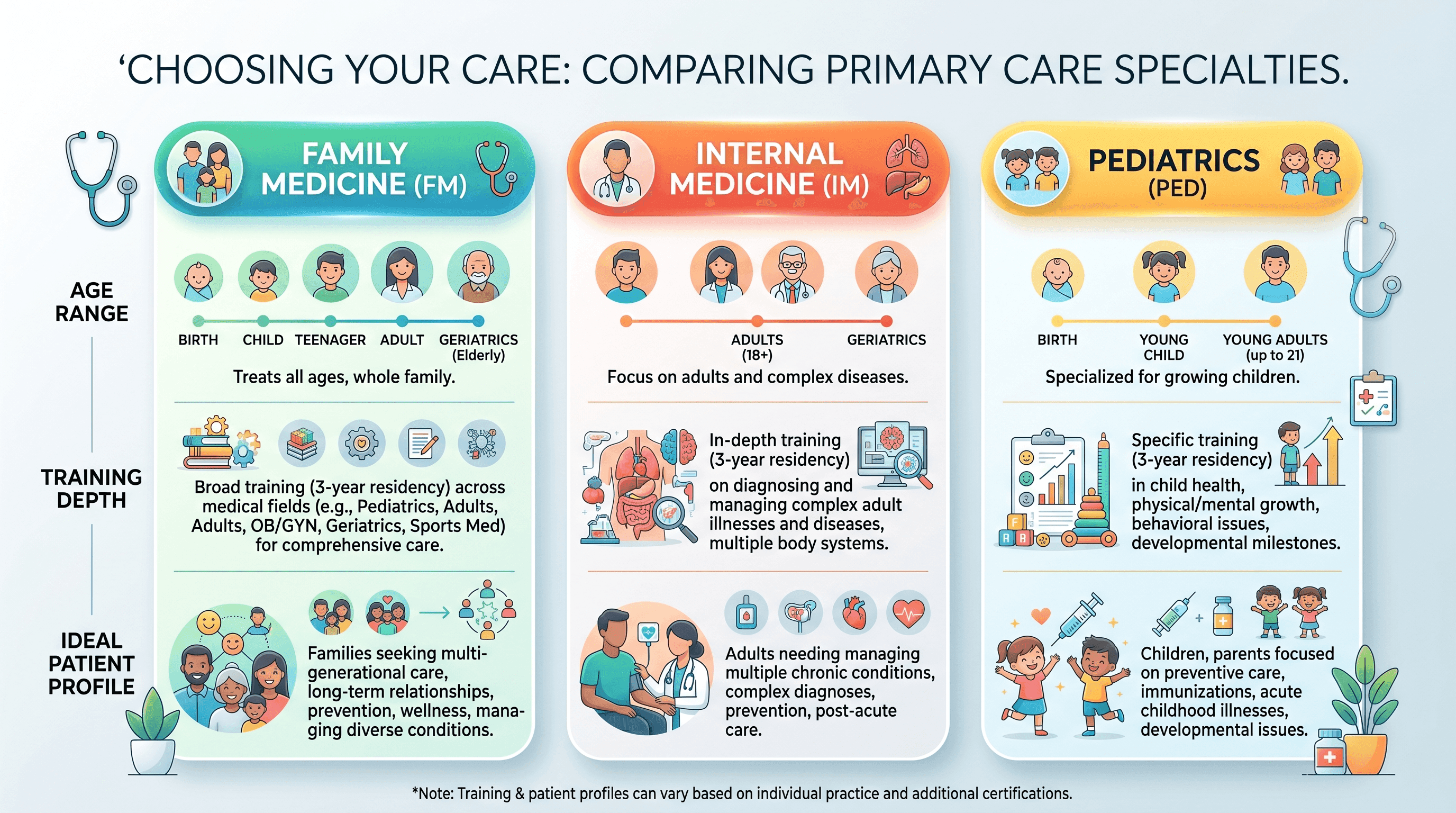
All three are primary care specialties. Choosing among them mostly depends on the patient's age and the complexity of their health needs. The table below captures the key differences.
| Feature | Family Medicine | Internal Medicine | Pediatrics |
|---|---|---|---|
| Patient age range | All ages (birth to end of life) | Adults (18+) | Birth to young adulthood |
| Training focus | Breadth across all ages and systems | Depth in adult medicine and complex disease | Child development, growth, pediatric conditions |
| Chronic disease expertise | Strong across common conditions | Deep expertise in complex adult multimorbidity | Pediatric-specific chronic conditions |
| Women's health | Routine gynecology, contraception, Pap smears | Limited | Limited |
| Best fit | Families, individuals who want one lifelong doctor | Adults with complex or multiple chronic conditions | Children and adolescents |
A study published in the Milbank Quarterly found that access to primary care, regardless of specialty type, is associated with lower all-cause mortality, improved chronic disease outcomes, and reduced health disparities across income levels.
What About General Practitioners (GPs)?
General practitioner is an older and largely informal term that refers to the same type of physician most Americans now call a family doctor or family medicine physician. In the United States, the GP designation has been largely replaced in modern usage by "family medicine physician," reflecting the formal board certification and structured residency that now define the specialty. If someone refers to their doctor as their GP, they almost certainly mean their family medicine physician.
Does Your Insurance Treat Family Medicine and Primary Care Differently?
For most patients with employer-sponsored or marketplace insurance plans, the answer is no. Most insurers apply the same copay structure to all primary care visits regardless of whether the provider is a family medicine physician, an internist, or a nurse practitioner. What determines your out-of-pocket cost is network status, not specialty type.
Where the distinction does matter is in HMO plans. Health Maintenance Organization plans require patients to designate a primary care physician as a "gatekeeper" who must provide referrals before the plan covers specialist visits. Any licensed primary care provider type typically qualifies for this role, so a family medicine physician and an internist are treated identically for this purpose.
The designation on an insurance card often reads "PCP" rather than naming a specific specialty. When selecting a PCP through an insurer's directory, the relevant filter is network status and availability, not whether the provider trained in family medicine versus internal medicine. Patients navigating plan selection can confirm PCP designation requirements directly with their insurer or by reviewing the plan's Summary of Benefits and Coverage document, which is required under the Affordable Care Act to be available to all enrollees.
Which Type of Primary Care Doctor Is Right for You?
The right choice depends less on the specialty name and more on the patient's specific situation. Here is a practical breakdown.
You Want One Doctor for Your Whole Household
Family medicine is the clear answer here. Because family medicine physicians train to care for patients of all ages, they can see a parent and a toddler in back-to-back appointments, maintain records for the whole family, and spot patterns across generations that a specialist might miss. A study in the Annals of Family Medicine found that longitudinal relationships with a single primary care provider are associated with better preventive care adherence and reduced emergency department use.
You Are a Single Adult with No Kids
Family medicine is not just for families. Any adult, single or partnered, with or without children, can and should consider a family medicine physician for primary care. The name reflects training breadth, not a patient prerequisite. That said, internal medicine is equally appropriate for adults, particularly those managing complex or multiple chronic conditions who may benefit from a physician whose training skewed more heavily toward adult medicine.
You Are Managing Multiple Chronic Conditions
Internal medicine physicians complete residencies focused exclusively on adult medicine and often develop deeper expertise in managing complex multi-system disease. For adults juggling conditions like chronic kidney disease, heart failure, and type 2 diabetes simultaneously, an internist may offer a level of clinical depth that is well matched to that complexity. Family medicine physicians are well-equipped for the majority of chronic disease management, but patients with highly complex cases may benefit from discussing their options with both types of providers.
You Need Care for Children Only
A pediatrician is the specialist-trained choice for children's care. Pediatricians complete residencies focused entirely on child development, pediatric illness, growth milestones, and age-specific preventive care. For families that prefer having one physician who knows the whole household, a family medicine physician is also appropriate for pediatric patients and can provide continuous care as children grow into adulthood without requiring a transition to a new provider.
Women's Health and Minor Procedures
One underappreciated aspect of family medicine training is its breadth of procedural capability. Family medicine physicians routinely perform Pap smears, manage contraception, insert intrauterine devices (IUDs), and screen for sexually transmitted infections. In many primary care settings, they also perform minor dermatological procedures including mole removals, skin biopsies, and joint injections. This range of in-office capability means patients can often address concerns during a primary care visit that might otherwise require a separate referral.
Research on family medicine scope of practice has consistently documented this procedural breadth as a defining feature of the specialty, particularly in rural and underserved settings where specialist access is limited.
Telehealth and Access: A Practical Consideration
Both family medicine and internal medicine providers have expanded significantly into telehealth over the past several years. Telehealth visits for primary care now cover a wide range of needs including prescription management, chronic disease monitoring, mental health coordination, and acute care triage. Medicare extended telehealth coverage through December 2027, making virtual primary care visits accessible for Medicare beneficiaries regardless of geographic location.
The practical reality for many patients is that the more pressing issue is not which specialty to choose, but how to get an appointment at all. Physician shortages are widening across primary care, and wait times have increased in many markets. Several alternatives are worth knowing. Nurse practitioners and physician assistants embedded in family medicine practices can provide the full scope of primary care services and often have shorter wait times. Direct primary care (DPC) models charge a monthly membership fee in exchange for same-day or next-day access and extended appointment times. Concierge medicine practices operate similarly with a higher price point and more comprehensive access.
For ongoing or non-urgent primary care needs, connecting with a primary care provider through a virtual visit can reduce wait times significantly and cover a broad range of conditions without requiring an in-person appointment.
Frequently Asked Questions
Can a family medicine doctor be my primary care doctor?
Yes. Family medicine physicians are primary care providers by definition. They are trained to serve as a patient's first point of contact for most health concerns, manage preventive care, treat acute illness, handle chronic conditions, and coordinate specialist referrals when needed. Choosing a family medicine physician as a PCP is appropriate for patients of any age.
Is family practice the same as family medicine?
The terms are used interchangeably. "Family practice" is an older label for the specialty now formally called family medicine. The underlying training, board certification process, and scope of care are the same. If a provider lists "family practice" or "family medicine" as their specialty, they have completed the same type of residency and board examination.
When should I switch from a family medicine doctor to an internist?
Most adults never need to make that switch. A family medicine physician is qualified to manage the full range of adult health concerns throughout a patient's life. A switch to an internist might make sense if a patient develops a highly complex multi-system condition where an internist's more concentrated adult-medicine training offers a meaningful clinical advantage, or simply if an internist is more accessible in a given area. A doctor can advise on individual cases based on specific health history.
Can I see a family medicine doctor if I am single with no kids?
Absolutely. The name "family medicine" refers to the scope of training, not the composition of the patient's household. Single adults, couples without children, and individuals at any life stage can and do establish care with family medicine physicians. The specialty's breadth makes it well-suited to any adult who wants a single provider familiar with their full health history over time.
Do NPs and PAs provide the same care as physicians in primary care?
In most primary care settings, nurse practitioners and physician assistants provide high-quality care across a wide range of conditions and are qualified to diagnose, treat, and prescribe. The scope of independent practice varies by state. In full-practice-authority states, NPs practice without physician oversight. In other states, collaborative agreements are required. Research has consistently shown comparable patient outcomes between NP-led and physician-led primary care for most routine conditions, though patients with highly complex needs may benefit from physician oversight.
If you are unsure which type of provider best fits your health situation, using Momentary's AI health navigator can help you explore your symptoms, understand your options, and figure out your next step before booking an appointment.
References
- Starfield B, Shi L, Macinko J. Contribution of Primary Care to Health Systems and Health. Milbank Quarterly. 2005. — Cited for evidence linking primary care access to lower mortality and improved chronic disease outcomes.
- American Academy of Family Physicians (AAFP). National Research Network. — Cited for the AAFP's definition of family medicine philosophy and scope.
- Katerndahl DA, Parchman M, Wood R. Confidence in primary care for managing mental health problems. Journal of Family Medicine and Primary Care. 2005. — Cited for evidence on family medicine training and generalist care continuity.
- Bindman AB, et al. Primary Care and Receipt of Preventive Services. Journal of General Internal Medicine. 2015. — Cited for evidence linking longitudinal primary care relationships to preventive care adherence.
- Bazemore A, et al. Scope of Primary Care. Annals of Family Medicine. 2023. — Cited for data on family medicine procedural scope of practice.
- Laurant M, et al. Nurses as substitutes for doctors in primary care. Cochrane Database of Systematic Reviews. — Cited for evidence on NP and PA care quality in primary care settings.
- Centers for Disease Control and Prevention. Primary Care. — Cited for the CDC's description of primary care as the entry point into the healthcare system.

