


Booking a primary care appointment should be straightforward. In 2025, it rarely is. The average wait time for a new primary care visit is now 31 days, up 19% since 2022, according to AMN Healthcare's 2025 Physician Survey. Add the reality that 76 million Americans live in areas with too few primary care providers, and it becomes clear why so many people give up before they ever get on the schedule.
This guide is for first-timers who have never booked primary care before, for people switching providers after a move or an insurance change, and for anyone who has already tried and hit a wall. What follows is a practical playbook: how to prepare, what to say, how to book online, and how to get in faster when the standard routes are not working.
At a Glance
| Topic | Key Facts |
|---|---|
| Average new patient wait time | 31 days (AMN Healthcare, 2025) |
| Americans in primary care deserts | 76 million (HRSA) |
| Projected physician shortage by 2036 | ~86,000 physicians (AAMC) |
| Main booking channels | Phone, patient portal, third-party apps |
| Fastest route for non-urgent needs | Telehealth or NP/PA appointment |
| No-show fee (typical) | $50 to $100 out of pocket |
Why Booking Primary Care Is Harder Than It Used to Be
Getting a primary care appointment today takes longer than it did five years ago, and the data explains why.
The Association of American Medical Colleges projects a shortage of up to 86,000 physicians by 2036. At the same time, the U.S. population is aging, which means more people need more frequent care. The result is a booking environment where practices are stretched thin, new patient slots are genuinely scarce, and the average person waits nearly five weeks just to establish care.
For the 76 million Americans living in primary care Health Professional Shortage Areas designated by HRSA, the wait is even longer, and in some rural counties, there may be no accepting physicians at all within a reasonable distance.
None of this means getting an appointment is impossible. It means you need a strategy, not just a phone number.
Before You Book: Three Things to Check First
Confirming these three things before you pick up the phone will save you significant time and prevent the most common booking dead ends.
Check Your Insurance and What "In-Network" Actually Means
Whether a doctor is "in-network" determines how much you pay, sometimes dramatically. If you have an HMO plan, you may also need a referral from a primary care provider before seeing a specialist, which makes choosing the right PCP even more consequential.
To verify coverage, log into your insurer's member portal and use the "Find a Provider" tool. Filter by your plan type, specialty (Family Medicine or Internal Medicine for primary care), and zip code. When you call the practice to confirm availability, ask specifically: "Is Dr. [Name] in-network for [Plan Name]?" Do not rely solely on the insurer's online directory, as provider listings can be several months out of date.
Find a Doctor Who Is Actually Accepting New Patients
The biggest frustration most people hit is calling a practice only to learn the doctor is not taking new patients. A few strategies move you past this wall faster.
Your insurer's portal is a starting point, but third-party platforms such as Zocdoc and Solv show real-time availability and let you filter by insurance directly. For uninsured readers, or anyone struggling to find an accepting provider, HRSA's Find a Health Center tool locates Federally Qualified Health Centers (FQHCs) that accept patients regardless of insurance status or ability to pay.
Know What Type of Appointment You Need to Book
Booking the wrong appointment type is one of the most common reasons people get rescheduled or rejected at the front desk. The three types you are most likely to encounter are:
A new patient visit is an introductory appointment to establish care with a provider you have never seen before. These slots are booked weeks in advance and typically run longer than standard visits.
A preventive annual physical (also called a wellness exam) is a scheduled, comprehensive check-up not prompted by any specific symptom. These are often booked months out.
A same-day or acute sick visit is for an active symptom or illness that needs prompt attention. Most practices hold these slots and release them in the morning, often by 8:30 AM.
When you call or book online, be explicit about which type you need. The front desk routes your appointment very differently depending on your answer.
How to Book: Three Ways to Schedule Your Appointment
Each booking channel works differently, and the right one depends on whether you are a new or established patient and how quickly you need to be seen.
Booking by Phone: A Word-for-Word Script
Phone booking remains the fastest way to speak directly with someone who can check real availability and make exceptions. Many people feel anxious calling a doctor's office for the first time, so having a ready script removes the hesitation.
New patient script: "Hi, I am looking to establish care as a new patient with Dr. [Name], or with any provider in your practice who is accepting new patients. I have [Insurance Name]. Could you tell me the earliest available new patient appointment?"
Established patient with an urgent issue: "Hi, this is [Your Name], a patient of Dr. [Name]. I am having [brief symptom description] and need to be seen soon. Do you have any availability today or tomorrow, or is there a telehealth option?"
The receptionist will typically ask for your date of birth, insurance information, and the reason for the visit. Have your insurance card in hand before you call. If the next available slot is weeks away, ask explicitly to be added to the cancellation list, covered in the next section.
Booking Online Through a Patient Portal
Most large health systems use platforms like MyChart for online scheduling. If you are a new patient, the login screen can feel like a dead end since you do not yet have an account.
The workaround: look for a "New Patient Registration" or "Sign Up" link, which is typically below the main login fields. You will be asked to enter basic identifying information, after which the system may either grant you immediate access or send a verification link. Once logged in, select "Schedule an Appointment," choose Primary Care, and filter for new patient slots. If no slots appear, the portal may be limiting online booking for new patients, in which case a phone call is the faster route.
Booking Through a Third-Party Platform
Platforms like Zocdoc and Solv aggregate real-time availability across participating practices, let you filter by insurance, and allow direct booking without a phone call. For new patients especially, these platforms are faster than cold-calling a list of practices.
The limitation worth knowing: not all practices participate, and some that do list limited slot types. Always confirm your insurance coverage independently after booking through a third-party platform, since the platform's insurance filter reflects what the practice has reported, not live insurer data.
How to Get an Appointment Faster
When the standard routes return wait times measured in weeks, these options can get you in significantly sooner.
Ask to Be Placed on the Cancellation List
Every busy practice has a cancellation list. Ask to be added when you book, and follow up every few days. Cancellations cluster on Mondays and Tuesdays, and same-day openings are most often released before 2 PM. When you call to check in, say: "I am on the cancellation list for Dr. [Name]. I am flexible and can come in on short notice. Is anything available this week?"
Consider Seeing a Nurse Practitioner or Physician Assistant
Nurse practitioners (NPs) and physician assistants (PAs) practice primary care with a high degree of autonomy. In most states, NPs can independently order labs, prescribe medications, make referrals, and manage chronic conditions. Their schedules often have shorter wait times than those of physicians, and a visit with an NP or PA formally establishes your care relationship with the practice, which is exactly what a new patient visit is meant to accomplish.
Use Telehealth to Establish Care Faster
A telehealth first visit can start the patient-provider relationship, generate a care record, and trigger a referral or in-person follow-up, all without the wait associated with a standard in-office new patient slot. For non-urgent needs such as medication refills, minor infections, or initial consultations, a telehealth appointment is a legitimate and often faster path into primary care.
If your current practice does not offer telehealth, you can see a doctor online through Momentary's virtual primary care service, where board-certified providers can address many of the same concerns handled in an in-person visit.
What to Do If You Still Cannot Get an Appointment
When every other option has been exhausted, two resources provide care outside the standard practice model.
Urgent Care and Walk-In Clinics as a Bridge
Urgent care centers can handle minor illnesses, infections, basic lab work, and prescription refills. They are appropriate when you have an active, time-sensitive issue and no primary care availability. What urgent care cannot replace: chronic disease management, preventive screenings, specialist referrals, and the longitudinal care relationship that a primary care provider offers over time. Use urgent care as a bridge, not a substitute.
Federally Qualified Health Centers for Uninsured Patients
FQHCs are federally funded community health centers that operate on a sliding-scale fee structure based on income. They accept Medicare, Medicaid, and uninsured patients, and they are located in underserved areas specifically to address the access gap. Use HRSA's Find a Health Center tool to locate the nearest FQHC. This option is entirely absent from most booking guides, but for uninsured or underinsured patients, it is often the most accessible route into consistent primary care.
How to Prepare Once Your Appointment Is Confirmed
There are two distinct phases here. The steps above covered pre-booking research. This section covers what to do after the slot is secured, because arriving unprepared can delay care or result in a follow-up visit for something that could have been handled in one appointment.
Documents and Information to Have Ready
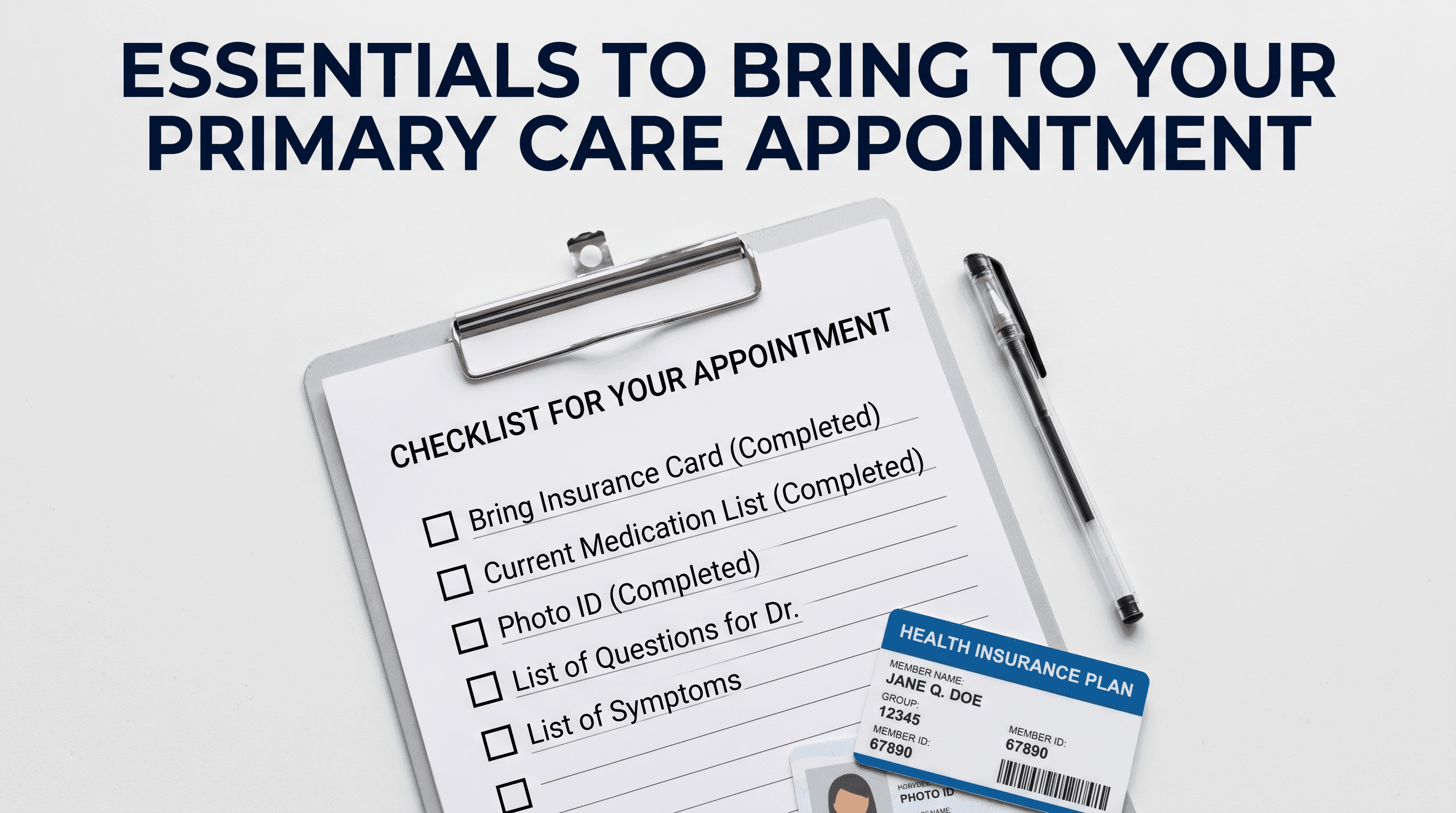
Bring your physical insurance card, a government-issued photo ID, and a written list of all current medications including over-the-counter drugs and supplements with dosages. If you have a family history of any significant health conditions, note those down as well. If you received a referral, bring the paperwork. Practices often need these documents before the provider enters the room, so arriving with them organized saves time.
How to Transfer Your Medical Records When Switching Providers
If you are moving your care from a previous provider, request your records before the new appointment. Contact your former practice directly and ask for a medical records release form, which is a HIPAA-compliant document authorizing the transfer. Typical processing time is 3 to 30 days, so request as early as possible. Many new practices will also have a records request form available through their patient portal or front desk. Arriving with your records, or having them sent in advance, allows the new provider to review your history and make the most of the first visit.
FAQ
What do you say when booking a doctor's appointment for the first time?
Keep it direct and specific. State whether you are a new or established patient, what the visit is for (a routine physical, a new symptom, or medication management), and your insurance plan. A simple version: "Hi, I am a new patient looking to establish care. I have [Insurance]. What is the earliest available new patient appointment?" Having your insurance card in front of you before you call means you can answer any follow-up questions immediately.
How do I prepare for a primary care visit?
Bring your insurance card, photo ID, a complete medication list with dosages, and a brief note on your family health history. If there is a specific reason you are being seen, write down when symptoms started, how often they occur, and anything that makes them better or worse. Organized information gives the provider more to work with in a limited appointment window.
What are the steps to make an appointment?
Confirm your insurance is active and check that the provider is in-network. Decide what type of appointment you need: new patient visit, annual physical, or same-day sick visit. Choose your booking channel: phone, patient portal, or a third-party platform like Zocdoc. When you call or book online, state your appointment type, insurance, and preferred timing. Then note any cancellation policy the practice mentions, because most require 24 to 48 hours' notice to avoid a no-show fee.
How long will I wait for a new primary care appointment?
The national average is approximately 31 days for a new patient visit, though this varies significantly by location, specialty, and whether you are willing to see an NP or PA. In primary care shortage areas, waits can extend further. Asking to be placed on a cancellation list, using telehealth for an initial visit, or seeing a nurse practitioner are the most reliable ways to reduce that timeline.
What is a cancellation fee and how do I avoid it?
Most practices charge between $50 and $100 if a patient misses an appointment without sufficient notice. The cancellation window is typically 24 to 48 hours before the scheduled time. If your plans change, call the practice as soon as you know. Cancelling through a patient portal is also accepted by most practices and creates a timestamp confirming you gave notice within the required window.
Can I use telehealth to establish primary care?
Yes. A telehealth visit with a licensed primary care provider creates a formal care record, allows a provider to order labs and prescribe medications in most states, and counts as an initial visit for purposes of establishing a patient-provider relationship. For non-urgent concerns, telehealth is often faster than waiting for an in-person new patient slot. If you want to explore your symptoms or understand your options before booking any visit, you can use Momentary's AI health navigator to get personalized guidance on next steps.
References
- AMN Healthcare 2025 Physician Survey — Source for the 31-day average new patient wait time statistic.
- HRSA Health Workforce Data — Source for the 76 million Americans living in primary care Health Professional Shortage Areas.
- Association of American Medical Colleges (AAMC) — Source for the projected physician shortage of up to 86,000 by 2036.
- Mayo Clinic: Scheduling an Appointment Online — Guidance on using patient portals to schedule appointments.
- HRSA Find a Health Center — Tool for locating Federally Qualified Health Centers by location.
- PMC: Digital Platforms and Primary Care Access — Research on how digital booking platforms affect appointment access and care-seeking behavior.