


Finding a primary care physician (PCP) used to feel simple. You picked someone close to home, called the office, and showed up. But in 2025, that process has quietly become one of the more frustrating things a person can do in the healthcare system. Average new patient wait times have climbed to 31 days, according to AMN Healthcare's 2025 Physician Wait Time Survey — a 19% jump since 2022 and nearly double what patients experienced in 2004. Family medicine appointment waits rose 30% in just the past year alone.
Meanwhile, the Association of American Medical Colleges projects a shortage of up to 86,000 physicians by 2036. So the playing field has shifted. Knowing how to choose a primary care physician — and what your options actually are — matters more now than it ever has.
The good news is that readers who understand this process have more paths available to them than they realize.
At a Glance
| Topic | Key Facts |
|---|---|
| Average new PCP wait time | 31 days (AMN Healthcare, 2025) |
| Projected physician shortage by 2036 | Up to 86,000 (AAMC, 2024) |
| PCP types | Family Medicine, Internal Medicine, NPs, PAs, Geriatricians, Pediatricians |
| First filter | Always check insurance network before anything else |
| HMO plans | Require selecting a PCP; referrals needed for specialists |
| PPO plans | More flexibility; still cheaper with in-network doctors |
| Alternative options | Telehealth-first practices, Direct Primary Care (DPC), concierge medicine |
| Board certification check | ABMS Certification Matters (certificationmatters.org) |
| Medical records transfer | HIPAA guarantees your right; providers have 30 days to comply |
The Short Answer: Interviewing for a Medical Partner
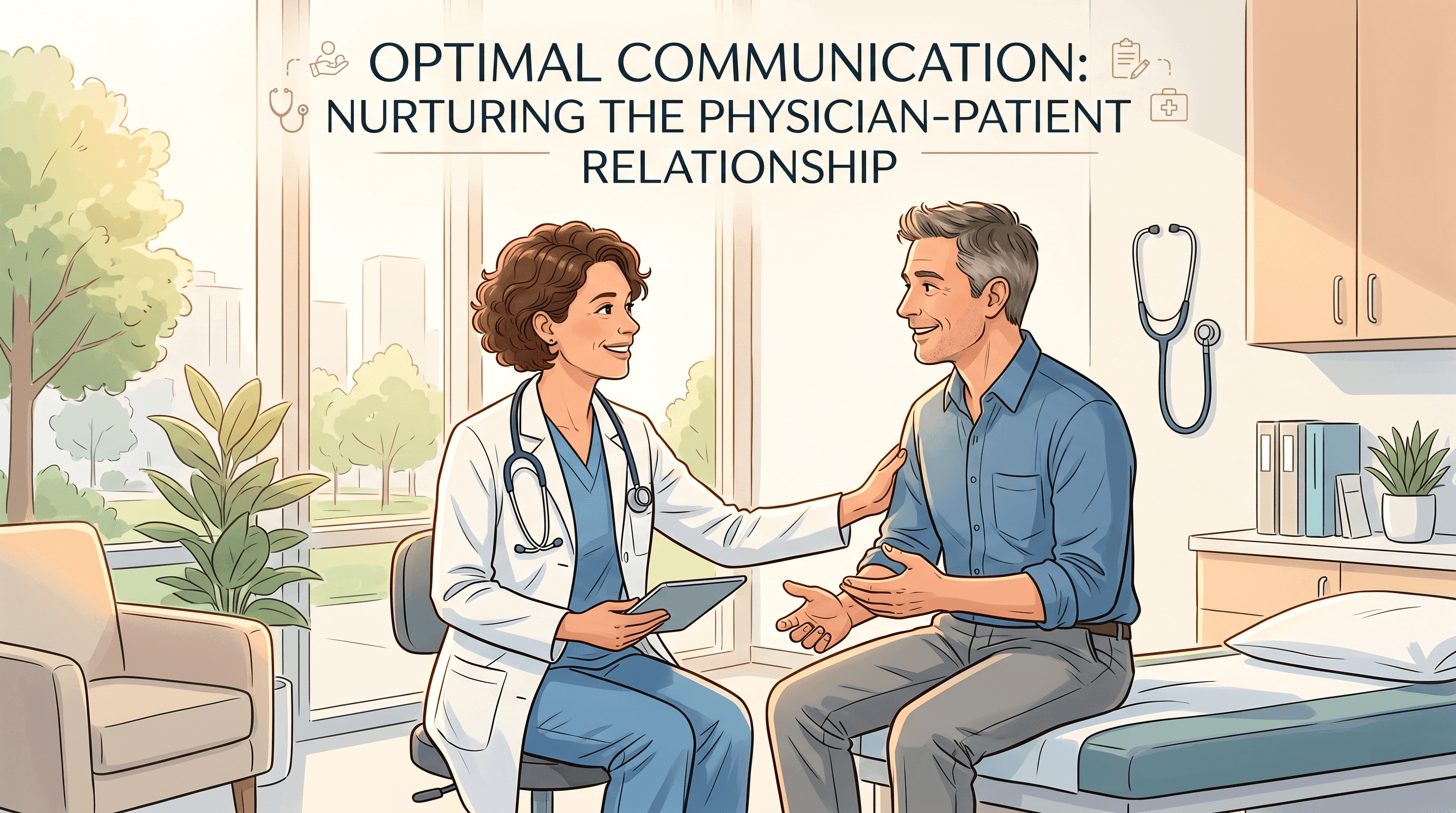
Choosing a primary care physician is not the same as picking a pharmacy or scheduling a one-off appointment. A PCP is the person who tracks your health over years and decades, catches patterns that specialists miss, coordinates your care across the medical system, and advocates for you when things get complicated. Research published in BMJ Family Practice found that continuity of care with a single primary care provider is associated with better preventive care, fewer hospitalizations, and lower overall healthcare costs.
That relationship only works if the fit is right. So treat this process less like filling out a form and more like hiring for a long-term role. Know what to look for, know what to filter out, and know when to walk away.
The Non-Negotiable Filter: Insurance and Network
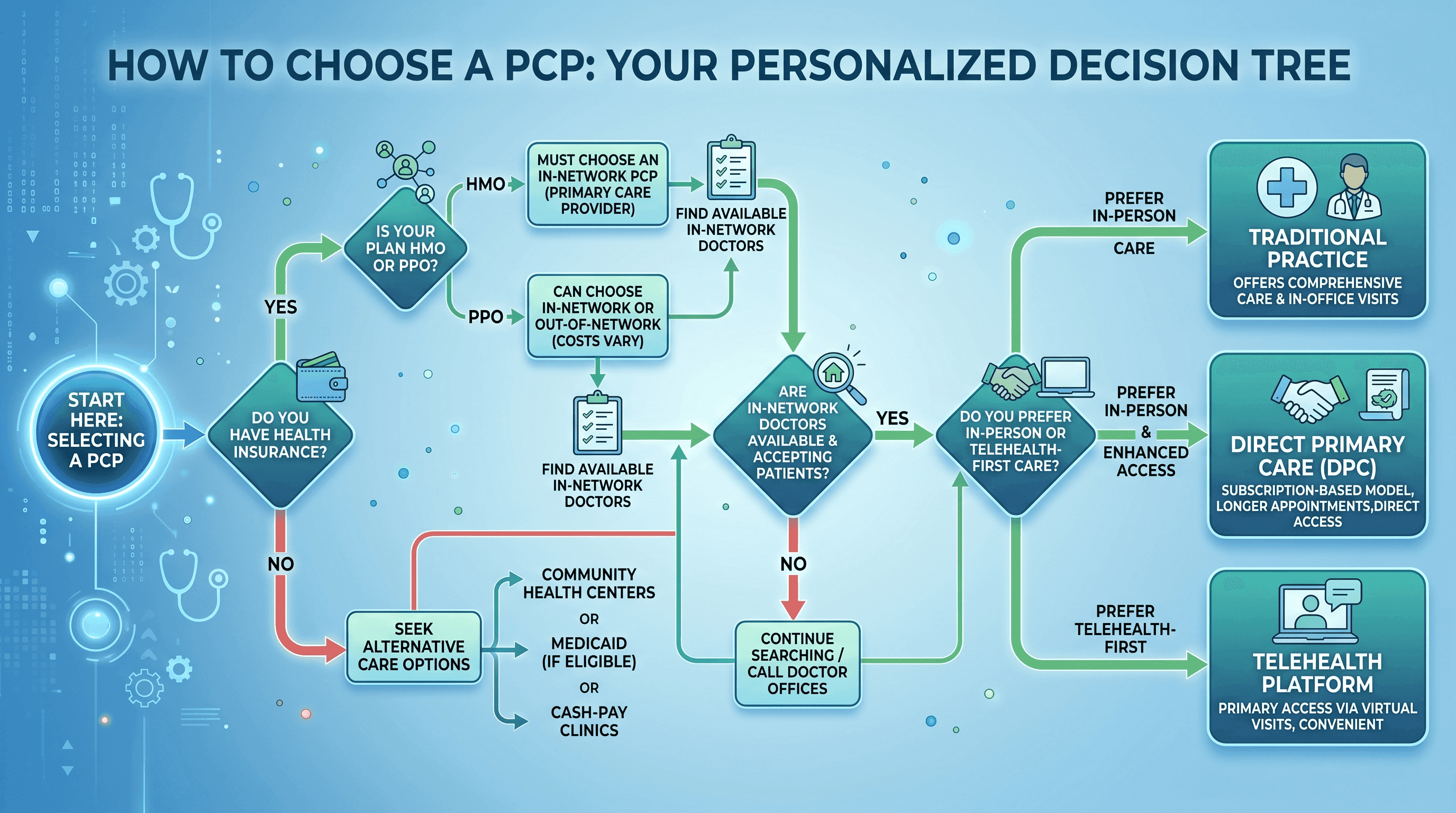
Before looking at credentials, location, or reviews, check insurance first. This is not a bureaucratic formality; it is the difference between a $40 copay and a $400 surprise bill. An in-network PCP has a contract with your insurer, meaning the insurer covers a negotiated portion of the cost. An out-of-network doctor does not, and patients absorb far more of that cost personally.
Start with your insurer's online directory. Search for primary care doctors in your zip code, filter by "accepting new patients," and note which hospitals they are affiliated with. Call any promising offices directly and confirm that the doctor is still in-network and still accepting new patients, because directories can be months out of date.
HMO vs. PPO: Why the Plan Type Changes Everything
If you have an HMO (Health Maintenance Organization) plan, choosing a PCP is not optional. HMO plans require you to designate a PCP who becomes your entry point into the healthcare system. That PCP must issue referrals for you to see specialists, and without a referral, the insurer typically will not cover specialist visits. This makes the PCP selection especially consequential under an HMO.
PPO (Preferred Provider Organization) plans are more flexible. You can generally see any doctor you want, and specialist visits do not require a referral. But in-network doctors still cost significantly less, so the network filter still applies.
What to Do When No In-Network Doctors Are Accepting New Patients
This happens more often than it should, and most guides skip it entirely. If you search your insurer's directory and every in-network PCP near you has a "not accepting new patients" notice, you have real options worth knowing about.
Federally Qualified Health Centers (FQHCs), also called community health centers, provide primary care on a sliding-fee scale and are required to serve patients regardless of insurance status or ability to pay. Locate one through the HRSA Health Center Finder.
Telehealth-first primary care practices operate entirely or primarily online and often have shorter wait times than traditional in-person offices. Direct Primary Care (DPC) practices charge a monthly membership fee, typically between $50 and $150, and provide unlimited or near-unlimited visits outside the insurance billing system entirely.
Understanding the Types of Primary Care Providers
Not everyone who can serve as your PCP holds an M.D. in family medicine. Understanding the different provider types helps narrow the search before it starts.
Family Medicine vs. Internal Medicine: What Is the Difference?
Family medicine physicians are trained to treat patients of all ages, from newborns to elderly adults. They are built for preventive care, routine checkups, and managing the full range of conditions a household might face over time. If you want one doctor who can serve as a PCP for multiple family members, a family medicine physician is the natural fit.
Internal medicine physicians (also called internists) specialize exclusively in adult care. Their training focuses more heavily on complex, chronic conditions and overlapping disease processes. Adults managing multiple ongoing conditions, such as type 2 diabetes alongside heart disease or autoimmune conditions, may benefit from an internist's deeper focus on adult systems.
| Feature | Family Medicine | Internal Medicine |
|---|---|---|
| Age range | All ages | Adults only |
| Best for | Prevention, family-wide care | Complex chronic conditions |
| Pediatric care | Yes | No |
| Training focus | Broad generalist | Adult organ systems |
Can a Nurse Practitioner or Physician Assistant Be Your PCP?
Yes, and for many patients this is an excellent option. Nurse Practitioners (NPs) complete a master's or doctoral degree in nursing (typically two to four years post-undergraduate study) with clinical training focused on patient assessment, diagnosis, and prescribing. Physician Assistants (PAs) complete a graduate-level program of similar length with a strong clinical rotation component.
Research published in BMC Health Services Research found that NP-delivered primary care produces patient outcomes comparable to physician-delivered care for a wide range of common conditions. NPs and PAs often offer shorter wait times and may spend more time per visit on average. State laws governing how independently NPs and PAs can practice vary, so it is worth confirming what oversight requirements apply in your state.
Pediatricians, OB-GYNs, and Geriatricians: Who Needs Which?
Children under 18 are generally best served by a pediatrician, a physician trained specifically in childhood development, vaccination schedules, and conditions that present differently in young patients than in adults. Many people use an OB-GYN as a de facto primary care doctor, but OB-GYNs are specialists trained in reproductive health, not broad-based primary care. A separate PCP is almost always worth having in addition to an OB-GYN. Geriatricians specialize in the care of adults typically over 65, with training focused on the particular physiology, medication sensitivities, and complex social needs of older patients.
Logistics, Location, and Telehealth
The best clinical match in the world will not help if the office is 90 minutes away or closes at 4 p.m. Practical logistics shape how often patients actually use their PCP, which shapes outcomes directly.
Checking Office Proximity, Hours, and Same-Day Access
Consider how you typically get sick. Respiratory infections, urinary tract infections, and minor injuries tend to arrive without much notice. A PCP who offers same-day sick visits or extended evening hours serves those moments far better than a practice with a three-week lead time for all appointments. Ask the office staff directly: what is the typical wait for a sick visit for an established patient? If the answer is more than two or three days, factor that in.
Proximity matters not just for sick days but for the friction of routine visits. Preventive care appointments are the easiest to skip when they require significant planning.
Telehealth as a Genuine Logistics Factor
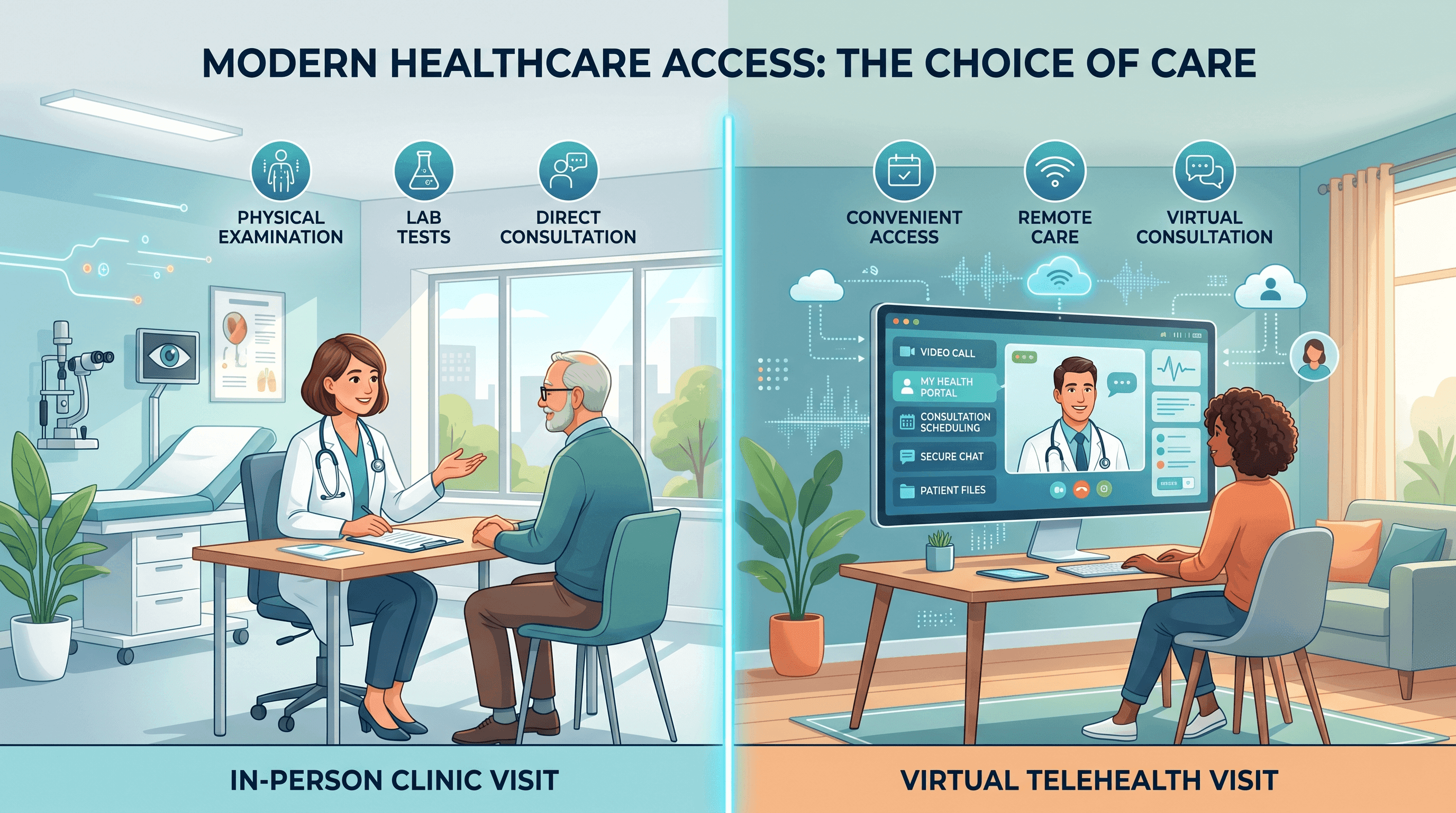
In 2025, telehealth availability is not a bonus feature. For many conditions, such as medication reviews, follow-up appointments, mental health check-ins, and early assessment of minor symptoms, a virtual visit is as clinically appropriate as an in-person one. A practice that offers robust telehealth expands access in a meaningful way, especially for patients with demanding schedules, mobility challenges, or long commutes. Ask any prospective PCP office whether telehealth is available and what conditions can be addressed virtually versus in person.
Hospital Affiliation and Referral Networks
When patients need a specialist or end up in the hospital, their PCP plays a coordinating role. And that coordination happens largely within a network. Most PCPs refer primarily to specialists who are affiliated with the same hospital system, meaning the choice of PCP is effectively a choice of hospital system as well.
Check which hospital a prospective PCP is affiliated with. Then ask yourself whether that hospital is in your insurance network and whether it has a strong reputation for the conditions most relevant to your health history. For patients who already see specialists, confirm whether those specialists are within the PCP's referral network. Fragmented care across multiple systems creates gaps, delays, and duplicate testing.
Checking Credentials and Reading Reviews
What Board Certification Really Means and How to Verify It
Board certification means a physician has completed their residency training and passed a rigorous specialty-specific examination administered by a recognized certifying board. It is a voluntary credential, not a legal requirement to practice, but it is a meaningful quality signal. You can verify whether any physician is board certified at ABMS Certification Matters, the official public lookup tool from the American Board of Medical Specialties.
How to Read Online Reviews Without Being Misled
Online reviews for physicians are useful, but they require some interpretation. A high volume of consistent, specific praise (comments about how a doctor listened carefully, explained a complex diagnosis clearly, or followed up after a procedure) is more meaningful than a handful of enthusiastic five-star reviews. Single negative outliers rarely tell you much, especially if the complaint centers on billing or parking. What does carry weight: patterns. Multiple reviews mentioning rushed appointments, dismissive responses to symptoms, or difficulty reaching staff all point to something systemic. Healthgrades and Zocdoc are generally more curated than general review platforms and more likely to reflect actual patient experiences.
Evaluating a Doctor Before You Commit
The First Visit as a Two-Way Assessment
The first appointment with a new PCP is the clearest opportunity to evaluate fit. Bring a list of current medications, any relevant medical history, and questions prepared in advance. Watch how the doctor listens. Do they make eye contact? Do they let you finish a sentence before redirecting? Do they use plain language to explain what they observe, or do they assume clinical vocabulary you may not share?
Ten Questions Worth Asking a New Primary Care Doctor
When building a relationship with a new PCP, the right questions save a lot of guesswork later. Consider asking:
- What is the typical wait time for a sick visit as an established patient?
- What are your after-hours and on-call coverage options?
- How do you handle referrals to specialists, and which hospital system do you primarily work within?
- Do you offer telehealth appointments, and for what types of visits?
- What is your approach to preventive screenings and when do you recommend them?
- How do you manage patients with chronic conditions between annual visits?
- What is the best way to reach you or your team with questions between appointments?
- Do you have a patient portal for test results and messaging?
- How do you typically approach shared decision-making when there are multiple treatment options?
- Do you speak any languages other than English, or is interpretation available at this practice?
The NIH's National Institute on Aging recommends paying close attention to whether a doctor communicates in a way that feels accessible and respectful, particularly for older adults managing multiple conditions.
Red Flags: Signs This Might Not Be the Right Doctor for You
Trust your instincts, but also watch for specific, concrete signals that the practice may not serve you well.
A red flag worth taking seriously: the doctor dismisses symptoms without a clear explanation for why further investigation is not needed. Another: they cannot describe their referral process when asked directly. If established patients routinely wait as long as new patients for sick visits, that points to a capacity problem. Appointments that feel consistently rushed, with the provider glancing at a screen rather than engaging with you, signal a dynamic that makes ongoing care difficult. Unresponsive front office staff is not a minor inconvenience; the staff is your primary contact point for everything from prescription refills to test results. A practice with poor communication infrastructure will compound over time.
Communication Style and Cultural Fit
Research published in the Journal of General Internal Medicine found that race-concordant and language-concordant patient-physician relationships are associated with higher patient satisfaction, better adherence to treatment, and improved health outcomes. If language access or cultural familiarity matters to you, searching specifically for a provider who shares your background or speaks your language is a clinically relevant consideration, not a superficial one. Many insurance directories allow filtering by language spoken.
Considering Alternatives: Telehealth and Concierge Medicine
Given the 31-day average wait for new patient appointments, it is worth knowing what modern alternatives look like before assuming the only path is a traditional in-person practice.
Telehealth-first primary care platforms provide virtual visits for a wide range of primary care needs, including chronic condition management, prescription renewals, mental health support, and preventive care consultations. What they typically cannot replace: physical examinations, imaging, blood draws, and procedures that require hands-on care. For patients who are generally healthy and primarily need a PCP for preventive management and sick-day triage, a telehealth-first practice is a legitimate option.
Direct Primary Care (DPC) is a membership model where patients pay a flat monthly fee, typically $50 to $150, directly to a physician practice. In exchange, they receive unlimited or near-unlimited visits, same-day and next-day access, and direct physician communication via phone or text. DPC practices deliberately keep patient panels small, which is what makes the access possible. DPC does not replace health insurance for hospital care, specialist visits, or major medical events, but it does make routine primary care dramatically more accessible for many patients.
Concierge medicine functions similarly to DPC but at a higher price point, often $200 or more monthly, with a more comprehensive service offering and a smaller patient panel. It tends to appeal to patients who want an especially high level of personalization and direct physician access.
If you are navigating which path fits your situation, connecting with a primary care provider through Momentary's virtual primary care platform is one option worth exploring, particularly if your current wait time for an in-person appointment is weeks away and your need is more immediate.
How to Switch Primary Care Doctors Without Disrupting Your Care
Changing PCPs is more common than patients often assume, and it is completely within your rights. The process is straightforward when handled in order.
Start by finding and confirming your new PCP before formally leaving the current one. You are not required to notify your current doctor that you are leaving, but it is courteous, and it tends to smooth the records transfer process.
Request your medical records from your current provider. Under HIPAA, you have the right to your records, and providers have 30 days to comply with a records request. Ask specifically for your full medical history, lab results, immunization records, and any active care plans or referrals. Most practices have a records release form, and many now handle transfers electronically.
Update your insurance records with the new PCP's name and practice, particularly if you are on an HMO plan where the PCP designation is tied to network access. Time the switch thoughtfully if you are mid-course on a chronic condition treatment or awaiting specialist follow-up, so continuity is not interrupted.
Frequently Asked Questions
What type of doctor is best for primary care?
For most adults, a family medicine physician or internist is the strongest choice. Family medicine is ideal for patients who want one doctor for all ages in a household or prefer a broad generalist approach. Internal medicine is better suited for adults with multiple complex or chronic conditions. Nurse practitioners and physician assistants can also serve effectively as PCPs, with outcomes research supporting their role in primary care settings.
What are the four primary care services?
Primary care broadly covers preventive care (screenings, vaccinations, wellness exams), acute care (illness and injury management), chronic disease management (diabetes, hypertension, asthma), and care coordination (referrals, specialist communication, medication oversight). According to MedlinePlus, primary care serves as the first point of contact for most health concerns and is distinct from emergency or specialist care.
What are red flags for doctors?
Concrete red flags include dismissing reported symptoms without explanation, being unable to describe referral workflows, consistently rushed appointments, poor communication from office staff, and long waits even for established patients with urgent needs. A doctor who does not listen actively during the first visit is unlikely to listen better over time.
What qualities should you look for in a primary care physician?
Active listening, plain-language communication, transparency about clinical reasoning, availability for follow-up questions, and a clear referral process are the qualities most consistently linked to good primary care outcomes. Cultural and language concordance, when relevant, also improves patient satisfaction and adherence. Research from the NIH emphasizes the importance of a provider who makes patients feel comfortable asking questions.
How long does it typically take to get an appointment with a new PCP?
In 2025, the average wait for a new patient appointment is 31 days, according to AMN Healthcare's Physician Wait Time Survey. Family medicine waits have risen 30% in the past year. Telehealth-first practices and Direct Primary Care membership practices often offer faster access.
Can I have both an OB-GYN and a separate primary care doctor?
Yes, and for most patients this is the recommended approach. OB-GYNs are specialists trained in reproductive health, not broad-based primary care. They are not equipped to manage conditions like hypertension, diabetes, thyroid disease, or the full spectrum of preventive care. A PCP handles general medicine; an OB-GYN handles reproductive and gynecologic care. Both relationships are valuable and independent of each other.
If you want help thinking through your symptoms before booking an appointment or figuring out what kind of care you actually need, Momentary's AI health navigator can help you explore your health questions and identify your next steps with more clarity.
References
- AMN Healthcare 2025 Physician Wait Time Survey — Cited for new patient wait time data (31-day average, 19% rise since 2022).
- Association of American Medical Colleges (AAMC) — Cited for projected physician shortage of up to 86,000 by 2036.
- BMJ Family Practice — Pereira Gray et al., 2018 — Cited for research on continuity of care outcomes (preventive care, hospitalizations, cost).
- HRSA Health Center Finder — Cited as a resource for locating Federally Qualified Health Centers.
- BMC Health Services Research — Stanik-Hutt et al., 2013 — Cited for NP outcome equivalence research in primary care settings.
- ABMS Certification Matters — Cited as the official verification tool for physician board certification.
- NIH National Institute on Aging — Cited for guidance on choosing a communicative physician, particularly for older adults.
- Journal of General Internal Medicine — Shen et al., 2018 — Cited for research on concordant care outcomes (patient satisfaction, adherence).
- MedlinePlus — Choosing a Primary Care Provider — Cited for definition of the four primary care service categories.

