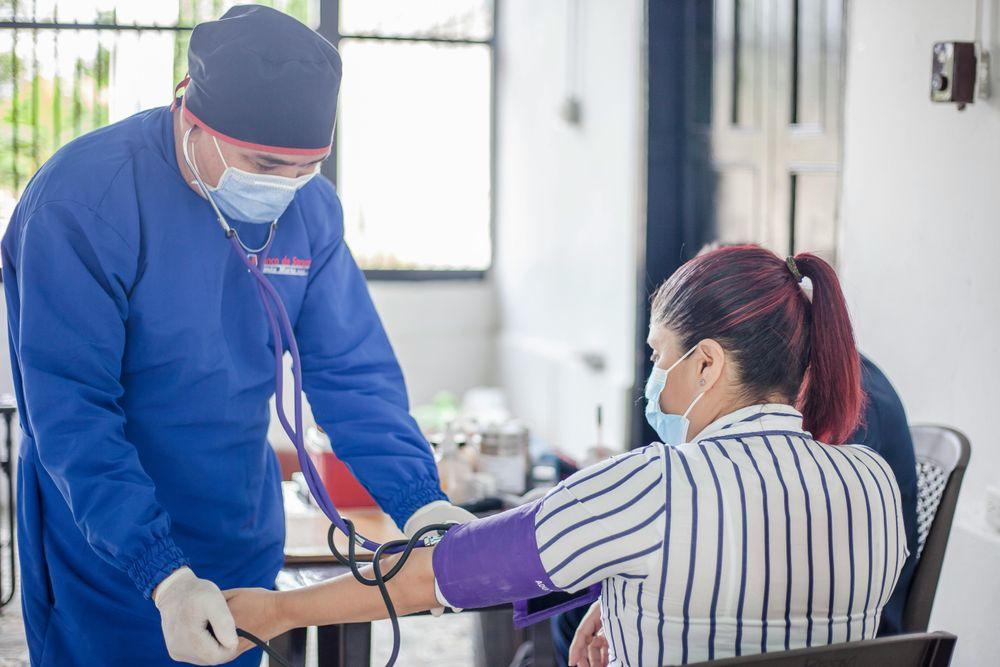


Most people think they have two options when something feels off: wait days for a doctor's appointment or drive to the nearest urgent care. But that framing is wrong, and it costs people time, money, and sometimes continuity in their own health. The real picture is a four-way decision: primary care, urgent care, telehealth, and the emergency room. Each serves a distinct purpose, operates on a different timeline, and carries a different price tag. Knowing which lane belongs to which situation is one of the most practical health skills a person can have.
This guide is built for the person who is trying to make that call right now.
At a Glance
| Topic | Key Facts |
|---|---|
| Primary care | Long-term health management, chronic conditions, preventive screenings, referrals |
| Urgent care | Walk-in, same-day, non-life-threatening issues; extended hours; on-site labs and X-rays |
| Telehealth | Remote visits for common conditions; typically $40 to $75 per visit; available 24/7 |
| Emergency room | Reserved for life-threatening or severe emergencies only |
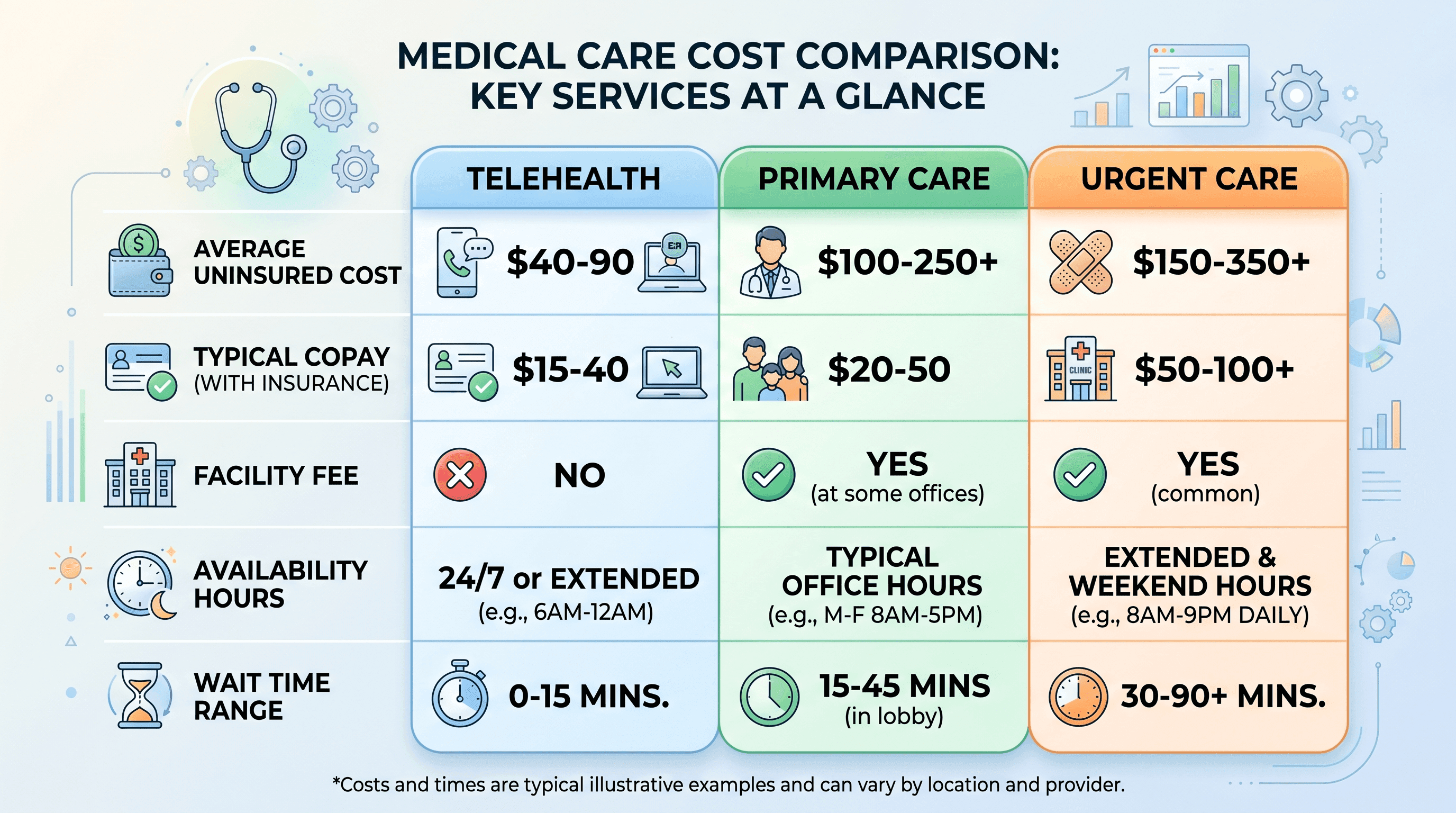
| Average urgent care cost (uninsured) | Approximately $180 out-of-pocket, plus potential facility fees |
| Average primary care visit cost (uninsured) | Approximately $171 out-of-pocket |
| Telehealth cost range | $40 to $75 per visit depending on platform and insurance |
The Marathon vs. The Sprint: The Core Difference
Primary care and urgent care are built for fundamentally different timelines.
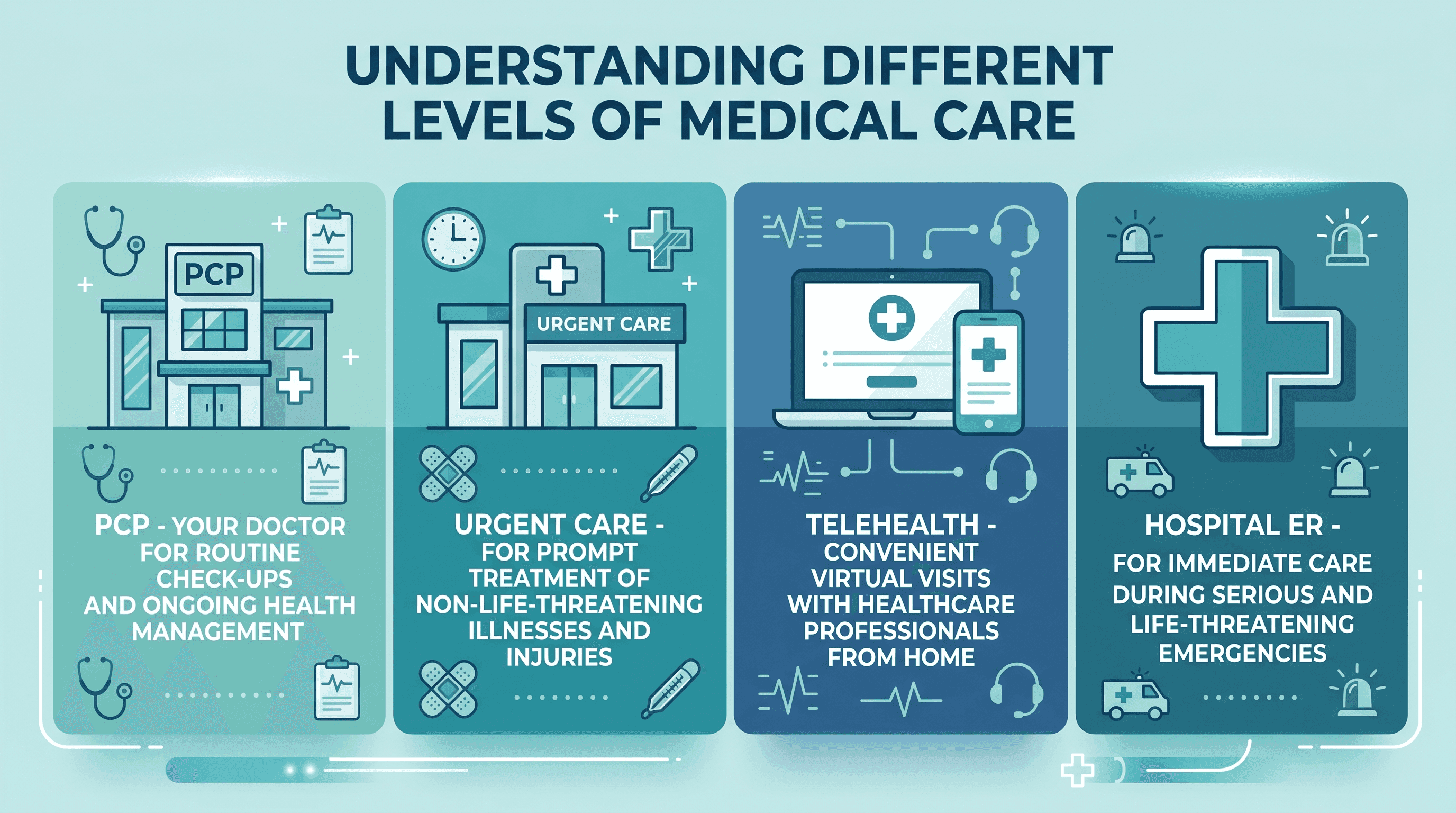
Primary care is the marathon. A primary care provider (PCP) is a physician, nurse practitioner, or physician assistant who manages health over years, not hours. They know a patient's full medical history, track lab trends across visits, coordinate specialist referrals, and serve as the central hub for long-term health decisions. A PCP handles chronic condition management, preventive screenings like colonoscopies and mammograms, annual physical exams, ongoing medication management, and mental health coordination.
Urgent care is the sprint. It exists to handle medical problems that need attention today but are not severe enough for the emergency room. Urgent care clinics are walk-in by design, with extended evening and weekend hours, on-site labs, and X-ray equipment. They can treat a sprained ankle, prescribe antibiotics for a UTI, or assess a cut that might need stitches. What they cannot do is track health trends over time, manage complex chronic diseases, or provide continuity of care.
Telehealth is the shortcut. It sits between a phone call and an in-person visit, covering a wide range of common conditions from a screen. And the emergency room is the boundary line for life-threatening situations, which is discussed below.
What Primary Care Actually Covers (and Why It's Underused)
Primary care is not just "your regular doctor." It is a coordinated system for managing health across time.
A PCP can handle annual wellness visits, Pap smears, blood pressure management, cholesterol monitoring, diabetes care, asthma management, depression and anxiety treatment, weight management, and the referrals that connect patients to specialists like cardiologists or endocrinologists. According to the Agency for Healthcare Research and Quality, patients with an established primary care relationship have better long-term health outcomes and lower total healthcare costs compared to those without one.
One access barrier worth naming: many people assume their PCP books weeks out and cannot help with urgent concerns. That is increasingly inaccurate. Many primary care practices now offer same-day or next-day sick appointments, telehealth slots, and nurse triage lines precisely for this situation. If a patient does not have a PCP yet, federally qualified health centers (FQHCs) provide care on a sliding-scale fee, regardless of insurance status.
Family Medicine vs. Internal Medicine: Which PCP Type Is Right?
The distinction matters most when a person is actively choosing a primary care provider.
Family medicine physicians are trained to treat patients of all ages, from newborns to older adults. They handle a wide range of conditions across the full lifespan, making them the natural choice for families or individuals who want one provider for general health. Internal medicine physicians, sometimes called internists, focus exclusively on adults and are trained for greater depth in complex, chronic, or multi-system conditions. An internist is well-suited for adults managing several overlapping conditions, such as heart disease combined with kidney disease and type 2 diabetes. Both are excellent primary care options; the choice largely depends on age and health complexity.
What Urgent Care Is (and What It's Not Designed to Handle)
Urgent care clinics fill the gap between a PCP's office and the emergency room.
They are built for same-day, walk-in access. Most are open evenings, weekends, and some holidays. On-site labs allow rapid strep tests, urinalysis, and basic blood work. On-site X-rays handle fractures, sprains, and minor injuries. For conditions that developed suddenly and need attention before a PCP appointment is available, urgent care is the appropriate option.
But urgent care has structural limits that are worth understanding before relying on it regularly. Urgent care providers do not have access to a patient's medical history unless records are transferred ahead of time. They are not set up to manage chronic conditions like hypertension, diabetes, or COPD over time. They will not refill long-term controlled medications such as ADHD stimulants or opioid pain medications. And follow-up care is generally outside their scope.
A common patient mistake is using urgent care as a substitute for a primary care relationship. A study published in the Journal of the American Board of Family Medicine found that urgent care use has grown substantially over the past decade, with many patients substituting it for primary care, particularly for conditions that benefit from continuity. That substitution creates a fragmented health record and can delay the diagnosis of evolving conditions.
Telehealth: The Option Nobody Mentions (and When It Wins)
Telehealth is the fourth lane, and it is consistently underrepresented in healthcare decision-making.
A telehealth visit connects a patient with a licensed provider via video or phone, typically within minutes to an hour. Coverage has expanded significantly since 2020. According to the Centers for Disease Control and Prevention (CDC), telehealth use increased dramatically during the pandemic and has remained elevated as patients recognize its convenience for appropriate conditions.
Telehealth handles a wider range of conditions than most people expect. Providers can diagnose and treat urinary tract infections, sinus infections, cold and flu symptoms, minor skin rashes, pink eye, mild allergic reactions, anxiety, depression, insomnia, prescription refills for non-controlled medications, and post-visit follow-ups. For patients with established chronic conditions, telehealth check-ins can also substitute for routine PCP office visits in many cases.
The cost comparison is a legitimate reason to consider it. A typical telehealth visit costs between $40 and $75 out-of-pocket on direct-pay platforms, or is covered at a standard copay under most insurance plans. That compares favorably to the $180 average out-of-pocket cost for an urgent care visit, which often includes a facility fee layered on top of the provider charge.
Availability is the other advantage. Many telehealth services operate 24 hours a day, seven days a week, meaning a patient with a UTI at 10pm on a Sunday has access to treatment without leaving home or sitting in a waiting room.
If telehealth feels like the right fit, booking a virtual visit through Momentary connects patients with primary care providers who can diagnose common conditions, prescribe medications where appropriate, and provide the kind of care that does not require an in-person setting.
The Real Cost Difference: With and Without Insurance
The cost math between urgent care and primary care is closer than most people assume, and the difference is often driven by how bills are structured.
A 2026 analysis using Zocdoc data found that the average out-of-pocket cost for an urgent care visit is approximately $180, while the average for a primary care visit is approximately $171. Those numbers are nearly identical, but urgent care visits often carry an additional facility fee, a separate charge that functions like a hospital facility fee and is billed on top of the provider's professional charge. Patients are frequently surprised by this when the explanation of benefits arrives weeks later.
For patients with insurance, the copay structure matters. Most plans assign a slightly higher copay to urgent care than to primary care, reflecting the tiered access model. For patients without insurance, the cost gap widens. An urgent care visit for a sinus infection that costs $180 out-of-pocket could be handled via telehealth for $40 to $60, or through an FQHC on a sliding-scale basis that could bring the cost below $30 depending on income.
For uninsured patients, FQHCs operated under the Health Resources and Services Administration (HRSA) are a critical access point. These federally funded clinics provide primary care services regardless of a patient's ability to pay, and they operate in every state.
Symptom-by-Symptom Guide: Exactly Where to Go
The right destination depends on what is happening and how quickly it needs to be addressed.
| Symptom or Situation | Best Option | Notes |
|---|---|---|
| Adult fever below 103°F, no other red flags | Telehealth or Urgent Care | Rule out infection remotely first |
| Child fever above 104°F, under 3 months any fever | Urgent Care or ER | Low-grade fevers in older children: telehealth first |
| UTI symptoms (burning, frequency, no fever) | Telehealth | Fastest and most affordable path to antibiotics |
| Sprained ankle, minor fracture concern | Urgent Care | On-site X-ray needed |
| Sore throat, possible strep | Telehealth or Urgent Care | Rapid strep test available at urgent care |
| Skin rash, no breathing difficulty | Telehealth | Photo-based diagnosis often sufficient |
| Chronic condition flare (diabetes, hypertension, asthma) | Primary Care | Requires access to full history; call PCP first |
| Annual physical / preventive screening | Primary Care | Urgent care typically does not perform physicals |
| Prescription refill (non-controlled) | Telehealth or Primary Care | Urgent care can refill short-term meds, not ongoing ones |
| Anxiety or depression concerns | Telehealth or Primary Care | Urgent care cannot provide psychiatric prescriptions or therapy |
| COVID symptoms, mild | Telehealth | Testing guidance and antiviral prescriptions available remotely |
| Minor laceration, possible need for stitches | Urgent Care | On-site wound closure |
| Ear pain | Telehealth or Urgent Care | Otoscopic exam needed for diagnosis; urgent care preferred |
| Back pain, chronic or recurring | Primary Care | Requires history and long-term management |
| Head injury with confusion or vomiting | Emergency Room | Do not wait; seek immediate care |
When to Go to the ER Instead
The emergency room is for conditions that are immediately life-threatening or require capabilities that only a hospital can provide.
Go to the ER or call 911 for chest pain or pressure, stroke symptoms (sudden facial drooping, arm weakness, or slurred speech), severe difficulty breathing, uncontrolled major bleeding, loss of consciousness, severe allergic reaction with throat swelling, high fever in an infant under three months, or a head injury with altered consciousness. These situations are outside the scope of both urgent care and telehealth, and delayed care in these cases can have serious consequences.
Special Cases: Kids, Mental Health, and Prescription Refills
Three situations consistently generate confusion across all three care settings.
For children, fever thresholds matter. Any fever in an infant under three months warrants immediate care. A fever above 104°F in older children, or any fever accompanied by a stiff neck, rash, or difficulty breathing, requires urgent evaluation. For mild fevers in older children, a telehealth visit can assess the situation quickly and advise on next steps without an unnecessary trip out.
For mental health, urgent care is generally not the right setting. Most urgent care clinics are not equipped to prescribe psychiatric medications like antidepressants, mood stabilizers, or anxiolytics for new patients, and they do not provide therapy. Primary care is the appropriate starting point for anxiety, depression, or sleep disorders. Telehealth mental health platforms are also widely available and can connect patients with therapists and prescribers.
For prescription refills, the answer depends on the medication type. Urgent care can refill short-term antibiotics or medications that were recently prescribed for an acute condition. They generally will not refill controlled substances (scheduled medications like stimulants, benzodiazepines, or opioids), nor will they continue long-term chronic disease medications without a documented treatment relationship. For those medications, the PCP is the appropriate contact.
After an Urgent Care Visit: What to Do Next
An urgent care visit should rarely be the end of the care story.
Urgent care providers document the visit, but that information does not automatically reach a patient's PCP. Patients who visited urgent care for something beyond a one-time issue, such as a blood pressure concern, a respiratory illness that lingered, or a lab result that showed an abnormality, should request a copy of the visit summary and share it with their primary care provider.
According to research published in JAMA, fragmented care, defined as receiving care from providers who do not share records or communicate, is associated with higher rates of duplicated testing, medication errors, and missed diagnoses. A follow-up PCP visit after an urgent care encounter closes that loop.
Practically speaking, patients should ask the urgent care clinic whether they transmit notes electronically to outside providers, request the visit documentation in writing or through a patient portal, and schedule a follow-up with their PCP within a week or two if the concern is ongoing or if any new information emerged during the urgent care visit.
Building a Healthcare Toolkit: Using All Four Options Strategically
The goal is not to pick one care setting and rely on it for everything. The goal is to know when each one is the right tool.
A practical framework: primary care is the home base for anything that requires history, continuity, or ongoing management. Urgent care is the walk-in option for acute, time-sensitive problems that cannot wait and do not require emergency care. Telehealth is the first stop for common conditions that can be assessed remotely, especially outside business hours. The emergency room is reserved strictly for emergencies.
If a person does not yet have an established PCP, that is the most impactful gap to close. Having a primary care relationship in place before a health issue arises means better access, faster triage, and a provider who already knows the medical history when something goes wrong.
For symptoms that are unclear, or for anyone trying to understand what their situation might mean before deciding where to go, Momentary's AI health navigator can help explore symptoms, identify relevant information, and point toward the right next step.
Frequently Asked Questions
What is the difference between primary care and emergency care?
Primary care is for managing long-term health, preventive screenings, and non-urgent conditions with a provider who knows the patient over time. Emergency care is for immediately life-threatening situations that require hospital-level resources, such as chest pain, stroke, major trauma, or severe breathing difficulty. The two settings are not interchangeable, and using the emergency room for non-emergency conditions is both costlier and less effective for managing ongoing health.
Can urgent care prescribe beta blockers?
Urgent care providers can prescribe some medications, including beta blockers in specific situations, such as for acute blood pressure management during a single visit. However, they are generally not equipped to initiate or manage long-term beta blocker therapy for conditions like chronic hypertension or heart failure. Ongoing prescriptions for those conditions require a primary care provider or cardiologist who can monitor the patient over time.
Can urgent care treat shortness of breath?
Mild shortness of breath, such as that associated with a respiratory infection or mild asthma flare, can be assessed at urgent care. On-site pulse oximetry and breathing treatments are available at many urgent care clinics. Severe or sudden shortness of breath, particularly when accompanied by chest pain, bluish lips, or confusion, is an emergency that requires immediate ER care or a 911 call.
Which is more expensive: urgent care or primary care?
The out-of-pocket costs are comparable on average, roughly $171 for primary care and $180 for urgent care. But urgent care bills often include a separate facility fee that does not appear in the upfront estimate. With insurance, most plans apply a higher copay to urgent care visits. For uninsured patients, telehealth is significantly less expensive, typically $40 to $75 per visit, compared to either in-person option.
Can urgent care serve as a substitute for a primary care doctor?
Urgent care is not designed as a primary care substitute. It cannot track health trends, manage chronic conditions, provide specialist referrals, or maintain a longitudinal health record. Patients who rely exclusively on urgent care for their healthcare needs are more likely to experience fragmented care and delayed diagnoses of evolving conditions. An established primary care relationship is the foundation of long-term health management.
Does telehealth work for serious conditions?
Telehealth is appropriate for a wide range of common and ongoing conditions, but it has limits. Providers cannot perform physical examinations, draw blood, take X-rays, or administer in-person treatments through a screen. For conditions that require hands-on assessment or testing, in-person care is necessary. Telehealth works best for common infections, prescription management, mental health, follow-up care, and preliminary symptom evaluation.
References
- PMC, JAMA Research — Cited for fragmented care outcomes and urgent care utilization patterns.
- PMC, Urgent Care Utilization Study — Cited for findings on urgent care substitution for primary care.
- PMC, Primary Care Access Research — Supporting research on primary care access and patient outcomes.
- PMC, Healthcare Delivery Research — Supporting research on care coordination and delivery models.
- Centers for Disease Control and Prevention (CDC) — Cited for telehealth utilization data and trend reporting.
- Agency for Healthcare Research and Quality (AHRQ) — Cited for data on primary care outcomes and long-term health cost benefits.
- Health Resources and Services Administration (HRSA) — Cited for federally qualified health center access and sliding-scale cost information.

