


Most adults see a healthcare provider far less often than they should. According to the CDC, roughly 85% of U.S. adults see a healthcare provider annually, compared to over 95% of children. The drop-off happens precisely during the decades when preventable chronic disease quietly takes root: the 30s, 40s, and 50s. And the most common reason people give for skipping? "I feel fine."
This guide makes the case that a primary care physician (PCP) is not just a place to go when something goes wrong. It is the single healthcare relationship that compounds in value over time, catching problems before they surface, keeping your whole health picture in one place, and saving real money in the long run. Below, we cover the eight most important reasons to visit a primary care physician, plus a practical decision guide, life-stage breakdown, and FAQ.
At a Glance
| Topic | Key Facts |
|---|---|
| Who is a PCP? | MD, DO, NP, or PA practicing family medicine, internal medicine, or general practice |
| How often to visit | At least once a year, more often with chronic conditions |
| Adults who see a PCP annually | ~85% (vs. 95%+ for children) |
| Long-term cost savings | Patients with a PCP spend roughly 33% less on healthcare over time |
| What PCPs screen for | Hypertension, diabetes, high cholesterol, cancer, mental health conditions |
| Telehealth availability | 71.4% of physicians used telehealth weekly in 2024 (AMA) |
Your Health Needs a CEO
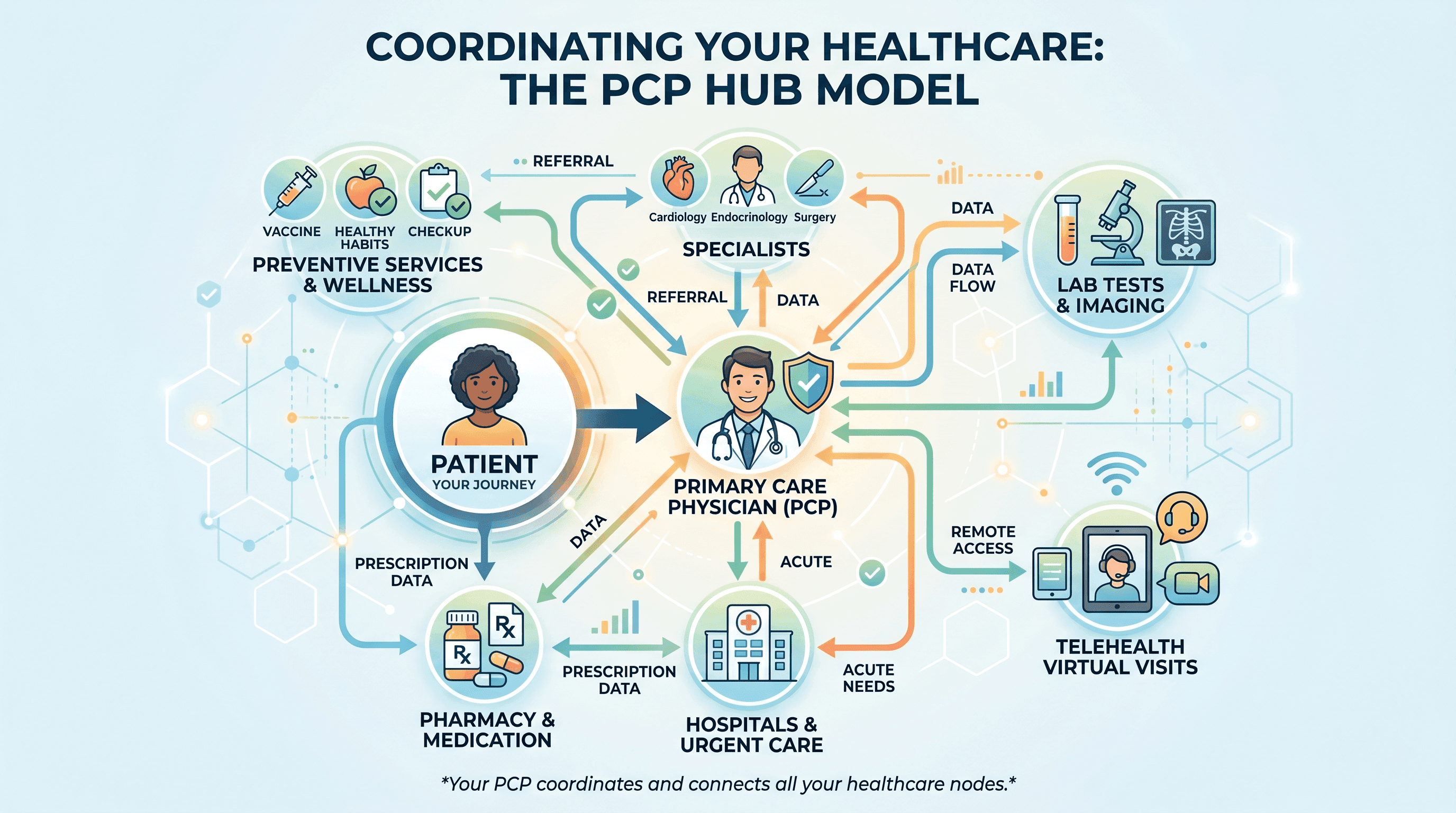
The American healthcare system is complex by any measure. Specialists focus on specific organs or conditions. Urgent care handles acute, time-limited problems. The emergency room is built for crises. None of these, on their own, manages the full picture of a person's health across time.
A primary care physician fills that gap. Per the Cleveland Clinic, a PCP serves as the central coordinator of your care, meaning that person knows your medical history, current medications, family risk factors, and how your health has changed from year to year. That longitudinal view is something no urgent care visit or specialist appointment can replicate.
Think of the PCP as the CEO of your body's health strategy: not doing every task themselves, but overseeing the whole operation and flagging when something needs attention.
Catching the "Silent Killers" Before They Surface
Preventive care is the most evidence-backed reason to see a primary care doctor, even when you feel completely healthy.
Three of the most common causes of serious illness in the U.S. share the same early signature: no symptoms at all. High blood pressure affects nearly half of American adults, according to the CDC, yet most people have no idea their readings are elevated until a clinician measures them. The same is true for prediabetes and elevated LDL cholesterol. By the time these conditions produce noticeable symptoms, meaningful damage may already be underway.
A study published in JAMA found that patients with an established primary care physician spend roughly 33% less on healthcare over their lifetimes, largely because preventive detection is significantly cheaper than late-stage treatment.
"Primary care is where we catch conditions at the point where we can actually change the trajectory." — Cleveland Clinic
The Screenings Most Adults Skip
Knowing which screenings to get, and when, is half the battle. Here is a brief reference by age group based on current U.S. Preventive Services Task Force guidelines:
Age 20 and up: Blood pressure at every visit; cholesterol baseline labs; STI screening based on risk profile; mental health screening.
Age 35 and up: Diabetes screening, especially with a BMI over 25 or family history of Type 2 diabetes.
Age 45 and up: Colorectal cancer screening begins (colonoscopy or stool-based tests); more frequent lipid panels; blood glucose monitoring.
Age 50 and up: Bone density screening for women; lung cancer screening for long-term smokers; abdominal aortic aneurysm screening for men who have smoked.
If a primary care visit does nothing other than catch a silent condition at the right stage, that single appointment may be the most valuable one a patient ever books.
Decoding the Vague Symptoms You Keep Dismissing
Chronic fatigue that does not improve with rest. Unexplained weight changes over several months. Persistent brain fog. Recurring digestive discomfort that never quite gets bad enough to feel like an emergency.
These are the symptoms most people shrug off as stress, aging, or "just how I am now." But these are also the symptoms that a primary care physician is specifically trained to investigate, because they often point to underlying conditions that are entirely treatable when caught early. Thyroid disorders, anemia, sleep apnea, early autoimmune conditions, and mood disorders can all present in exactly this way.
A paper in the Annals of Family Medicine via PMC found that unexplained physical symptoms account for a significant portion of primary care visits, and that structured evaluation by a PCP consistently leads to better patient outcomes than watchful waiting or self-management.
The rule of thumb: if a symptom has lasted more than two weeks and is affecting daily life, it is worth a conversation with a primary care doctor. A doctor can advise on individual cases and determine whether further testing is warranted.
The Quarterback of Specialist Referrals
When a complex health issue arises, most people do not know which type of specialist to see, how long the wait will be, or whether their insurance covers the visit without a referral. A primary care physician removes all of that friction.
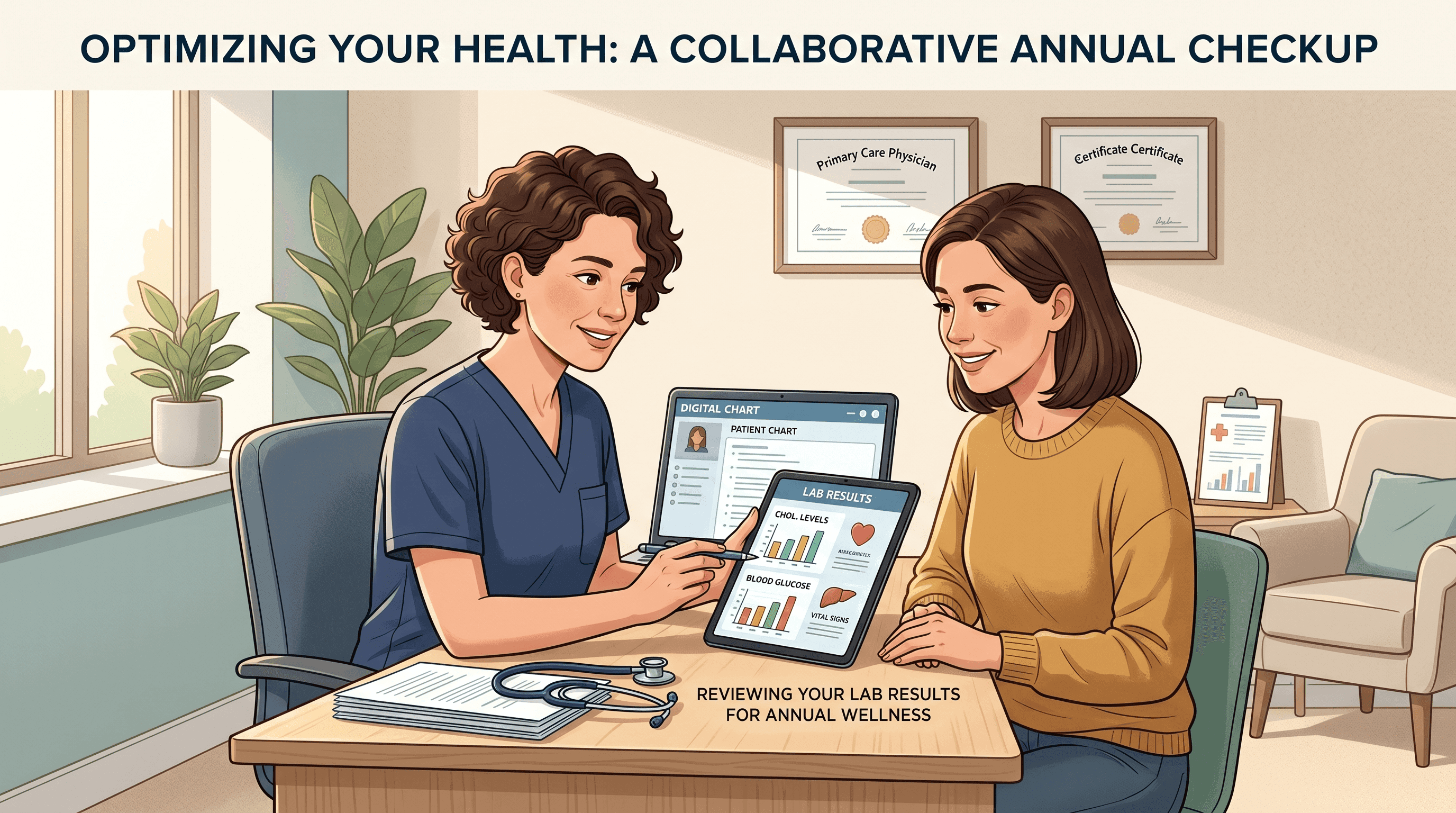
The PCP evaluates the problem first, determines the right specialist, sends a referral with relevant records, and then receives the specialist's findings to integrate them back into the patient's overall care. Without that coordination, patients often end up in a fragmented loop: a cardiologist managing heart rhythm, a nephrologist managing kidney function, and no single clinician looking at both together.
There is a practical insight buried here: a cardiologist will not screen for colorectal cancer. A dermatologist will not review blood glucose trends. Specialists are trained to look deeply at one domain. The PCP looks across all of them. Per research published via PMC, better primary care access is consistently associated with fewer unnecessary specialist visits, lower hospitalization rates, and improved care continuity.
The Front Line of Mental Health
This is one of the most underserved aspects of primary care, and one of the most important. For a large portion of U.S. patients, the primary care physician is the most accessible entry point into mental healthcare.
PCPs are trained to administer validated screening tools such as the PHQ-9 for depression and the GAD-7 for generalized anxiety disorder. They can rule out biological causes of mood symptoms, such as thyroid dysfunction or vitamin deficiencies, before attributing everything to a psychiatric condition. And for mild-to-moderate anxiety and depression, PCPs can prescribe first-line medications, including SSRIs and SNRIs, without requiring a psychiatrist referral.
This matters because access to mental health specialists remains a significant barrier for many Americans. The average wait time to see a psychiatrist can stretch to weeks or months. A PCP can begin appropriate treatment while that referral is in progress.
If symptoms are recurring or getting harder to manage, connecting with a primary care provider online through a service like Momentary Virtual Care can be a low-barrier first step toward getting a proper mental health screening and, if appropriate, a care plan.
Keeping Chronic Conditions From Quietly Escalating
Managing a chronic condition is not a one-time task. It requires ongoing calibration.
For a patient with Type 2 diabetes, regular PCP visits track A1C trends, review medication effectiveness, screen for early kidney and eye complications, and adjust lifestyle recommendations as the disease picture changes. For someone with hypertension, those visits mean regular blood pressure readings, medication titration, and monitoring for cardiovascular risk factors. For a patient with asthma, a PCP review can flag worsening lung function before it requires an ER visit.
The NIH has noted that patients with an established primary care relationship for chronic disease management have measurably fewer emergency hospitalizations and better long-term outcomes than those who rely on specialty or urgent care alone.
The key mechanism is continuity. A PCP who has followed a patient's A1C for three years notices when it ticks from 6.8 to 7.2. That small shift, invisible in isolation, tells a story across time. And catching that drift early, before it reaches 8 or 9, is the difference between a medication adjustment and a complication.
Medication Safety: Seeing the Full Picture
Polypharmacy, defined as taking multiple medications simultaneously, is increasingly common, and its risks are frequently underestimated. A patient might be prescribed a blood thinner by a cardiologist, a pain reliever by an orthopedist, a sleep aid from an urgent care visit, and a handful of over-the-counter supplements purchased on their own. No single prescriber has reviewed all of these together.
A primary care physician is uniquely positioned to hold that complete view. As part of a comprehensive annual visit, a PCP reviews every medication a patient takes, including vitamins, herbal supplements, and OTC drugs, and screens for interactions, redundancies, and doses that need adjustment based on kidney or liver function.
Research in the Journals of Gerontology found that only about 20% of older adults taking two or more medications received a comprehensive medication review. That gap represents a significant, largely preventable source of adverse drug events.
A practical step: bring a complete, updated medication list to every primary care appointment, including supplements and anything purchased without a prescription.
The Financial ROI of Preventive Primary Care
The economics of primary care are straightforward, even if they are rarely discussed in those terms.
A routine annual physical, often covered at $0 copay under the Affordable Care Act for in-network preventive visits, can detect hypertension, prediabetes, or a cholesterol abnormality years before those conditions progress. The cost of managing hypertension with a generic medication and regular monitoring is a fraction of the cost of a stroke, which averages over $100,000 in acute care costs according to the AHA.
There is also the preventive visit versus problem visit distinction that catches patients off-guard. Under the ACA, most preventive services, including annual wellness exams, blood pressure screening, diabetes screening, recommended vaccinations, and cancer screenings, are covered at no cost with an in-network PCP. If the same visit shifts into discussing a new symptom or condition, it may trigger a standard copay. Understanding this distinction upfront helps patients plan visits to maximize what their insurance covers.
The 33% long-term healthcare cost savings associated with having a primary care physician, documented in JAMA, compounds precisely because preventive detection is far cheaper than acute treatment across every condition category.
How to Choose and Get the Most From a PCP
Finding the right primary care physician starts with a few practical steps.
First, confirm the physician is in-network with your insurance plan. Out-of-network PCP visits can be significantly more expensive and may not count toward your deductible. Most insurance websites include a provider search tool, and it is worth calling the office to confirm they are accepting new patients before booking.
Second, consider scheduling a brief "meet and greet" appointment with a new PCP before committing. This gives both the patient and physician a chance to assess communication style and fit. A good primary care relationship requires trust, and trust takes a first conversation.
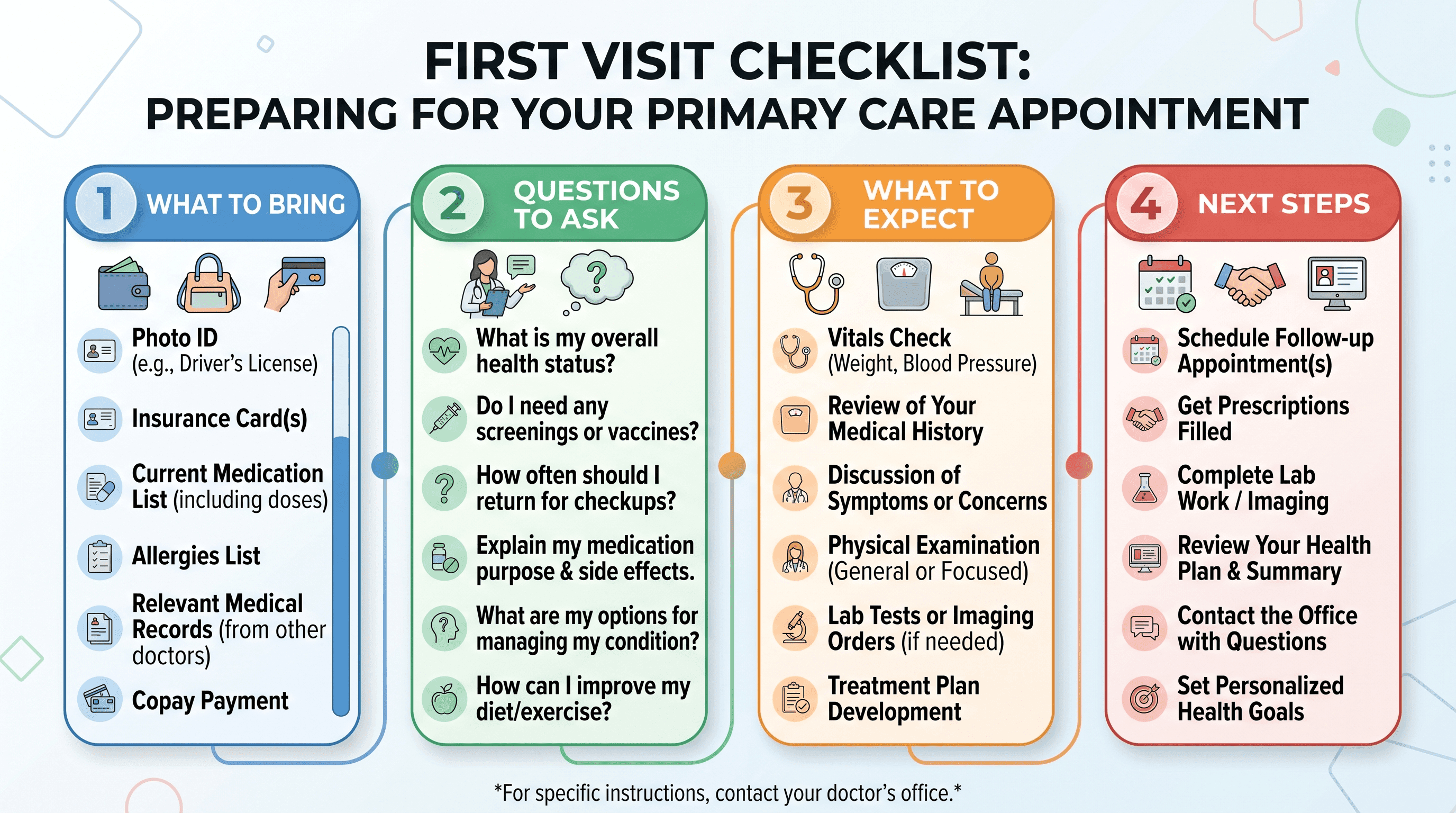
When preparing for a first visit, bring the following: a complete medication list (including supplements), any prior lab results or imaging reports, a summary of family health history (especially heart disease, diabetes, and cancer), and a short list of current symptoms or health concerns.
Five questions worth asking a new PCP include: How do you prefer to communicate between visits? What is your approach to preventive screening for my age group? How do you handle specialist referrals? What chronic conditions do you see most frequently? And: What would you want me to track between now and my next visit?
For those who have not yet established care or who need flexible appointment options, platforms that offer virtual primary care visits make it easier to connect with a provider without the barrier of scheduling weeks in advance.
FAQ
What is a common reason a patient might see a primary care physician?
The most common reasons include annual wellness exams, management of chronic conditions like hypertension or diabetes, evaluation of new or persistent symptoms, prescription refills, and preventive screenings such as cholesterol checks or cancer screenings. Many patients also visit their PCP for mental health concerns including anxiety and depression.
What are the ten most common diagnoses made in primary care?
Based on national primary care visit data, the most frequent diagnoses include hypertension, Type 2 diabetes, hyperlipidemia (high cholesterol), depression and anxiety disorders, upper respiratory infections, back pain, osteoarthritis, hypothyroidism, asthma, and obesity-related conditions. Many of these are chronic and benefit directly from ongoing PCP management.
Why should you have a primary care physician even if you are healthy?
Having a PCP when you are healthy is precisely when the relationship pays the highest return. Establishing a baseline of your normal lab values, blood pressure, and weight allows a physician to identify meaningful changes years before symptoms appear. The 33% long-term healthcare cost savings associated with primary care access, cited in JAMA, reflects the value of that early detection investment.
Can a primary care physician treat hypertension?
Yes. Treating hypertension is one of the most common things a PCP does. Primary care physicians can diagnose high blood pressure, prescribe and adjust antihypertensive medications, provide lifestyle counseling, and monitor for complications. Referral to a cardiologist or nephrologist is typically reserved for cases that are resistant to standard treatment or involve organ damage. For a broader look at how hypertension connects to heart disease and stroke risk, this overview of the hypertension-heart disease-stroke connection covers the relationship in depth.
How often should you see a primary care doctor if you are healthy?
Most clinical guidelines recommend at least one visit per year for adults, even without known health conditions. This supports preventive screening, medication review if applicable, and the continuity of care that makes early detection possible. A doctor can advise on visit frequency based on individual age, family history, and risk factors.
What is the difference between a PCP, a general practitioner, and an internal medicine doctor?
The terms overlap but have distinctions. A general practitioner (GP) provides broad, undifferentiated primary care and is the most common PCP designation internationally. In the U.S., most PCPs are trained in either family medicine (treating all age groups) or internal medicine (focused on adults). Both function as primary care physicians in practice. Nurse practitioners (NPs) and physician assistants (PAs) also practice as PCPs in many states. If you want to explore your current symptoms or understand which type of provider might be the right starting point, you can use Momentary's AI health navigator to get personalized guidance based on your situation.
References
- CDC — Physician Office Visits — Cited for U.S. adult healthcare visit frequency statistics.
- Cleveland Clinic — Primary Care Physician — Cited for PCP definition and care coordination role.
- Cleveland Clinic — Primary Care Team — Source of pull quote on preventive care trajectory.
- JAMA — Primary Care and Cost Savings — Cited for 33% long-term healthcare cost savings statistic.
- CDC — Blood Pressure Facts — Cited for hypertension prevalence among U.S. adults.
- PMC — Unexplained Physical Symptoms and Primary Care — Cited for data on vague symptom evaluation in primary care settings.
- PMC — Primary Care Access and Specialist Use — Cited for findings on primary care coordination reducing unnecessary specialist visits.
- NIH — Primary Care and Chronic Disease Management — Cited for evidence on PCP-managed chronic conditions and reduced hospitalizations.
- PMC — Medication Review in Older Adults — Cited for the 20% medication review statistic among older adults on multiple medications.
- AHA — Cost of Heart Disease — Cited for acute stroke cost data.