


A primary care physician (PCP) is a licensed medical doctor who serves as your first and most consistent point of contact with the healthcare system, handling everything from annual physicals and vaccine schedules to chronic condition management and specialist referrals. Think of your PCP less as "a doctor you see when something goes wrong" and more as the central hub of your long-term health — the one clinician who knows your full picture.
This guide covers what a primary care physician actually does, how the different types compare, how insurance fits in, and how to find the right one for where you are in life.
At a Glance
| Topic | Key Facts |
|---|---|
| What a PCP is | A licensed MD or DO who coordinates your overall, ongoing healthcare |
| Core duties | Preventive care, chronic disease management, acute illness treatment, specialist referrals |
| Main types | Family medicine, internal medicine, pediatrics, geriatrics, OB-GYN |
| Insurance role | HMO plans require a designated PCP; PPO plans generally do not |
| When to see one | Annual wellness visits, new symptoms, medication management, chronic condition follow-ups |
| Telehealth option | Virtual primary care is now widely available and covered by most major insurers |
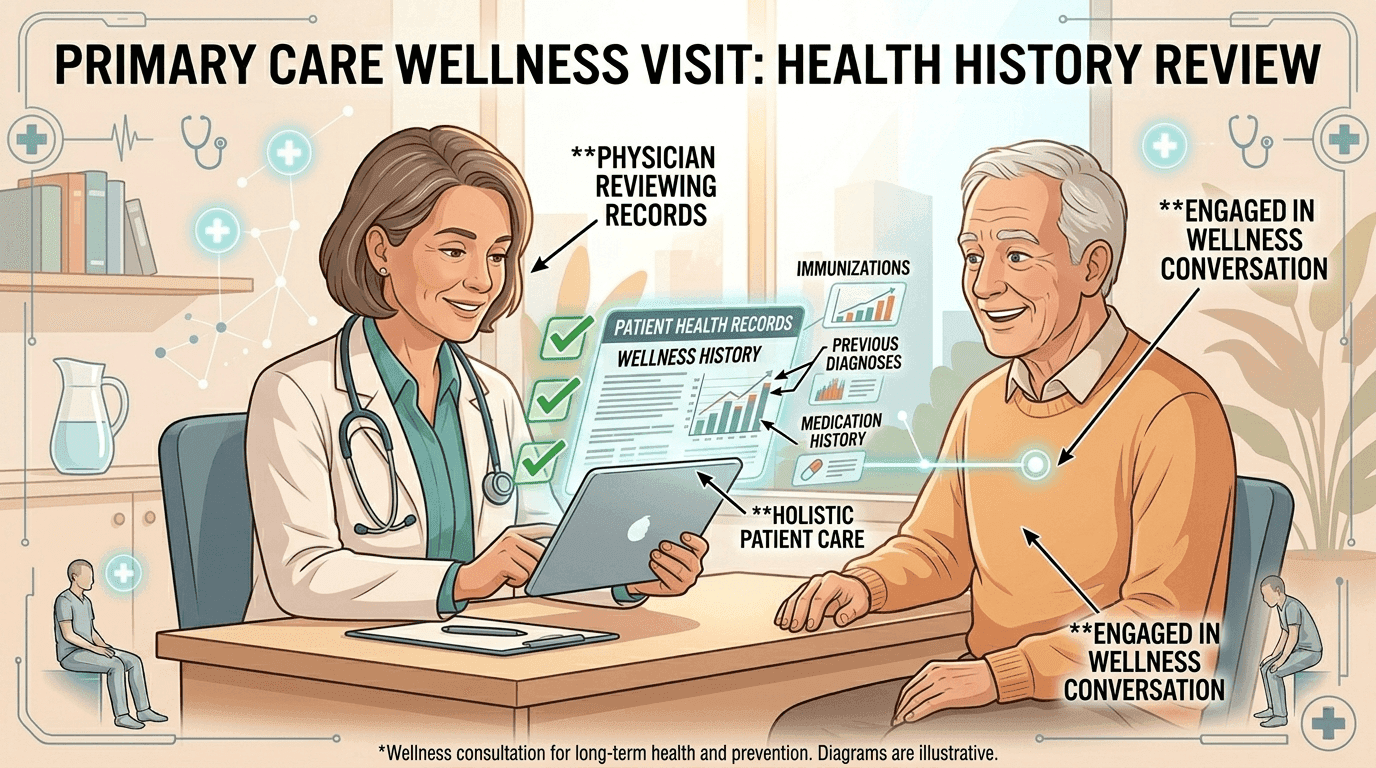
The Short Answer: The Quarterback of Your Healthcare
A primary care physician is not just a "regular doctor." They are a specialist in generalist medicine, trained to diagnose and manage a wide spectrum of conditions across body systems rather than focusing on one organ or disease category.
Where a cardiologist focuses only on the heart or an orthopedic surgeon focuses on bones and joints, a PCP is designed to see the whole patient. That breadth is what makes the role so foundational. According to the American Academy of Family Physicians (AAFP), primary care is the provision of integrated, accessible health care services by clinicians who are accountable for addressing a large majority of personal health needs, developing a sustained partnership with patients, and practicing in the context of family and community.
PCP vs. Primary Care Provider: Why the Distinction Matters
These two terms get used interchangeably, but they are not identical. A primary care physician is specifically a medical doctor (MD) or doctor of osteopathic medicine (DO) who completed medical school and a residency in a primary care specialty. A "primary care provider," by contrast, is a broader category that also includes nurse practitioners (NPs) and physician assistants (PAs), who practice under varying levels of physician oversight depending on state law.
So to answer the common question directly: yes, an NP or PA can serve as your primary care provider in many states, but they are not physicians by training. Whether that distinction matters for your care depends on the complexity of your health needs and your state's scope-of-practice laws.
Is a PCP the Same as a GP or a Family Doctor?
In the United States, the term "general practitioner" (GP) is largely outdated. It historically referred to physicians who practiced without completing a specialty residency. Today, virtually all practicing physicians have completed residency training, so GP has been replaced by more specific designations.
"Family doctor" and "family medicine physician" are often used interchangeably with PCP, but they technically refer to one specific type of primary care specialty (family medicine) rather than the category as a whole. A useful shorthand: all family doctors are PCPs, but not all PCPs are family doctors.
The Core Duties: What a Primary Care Physician Actually Does Beyond Annual Checkups
A PCP's role extends well beyond the once-a-year physical. The three main pillars of primary care are preventive medicine, chronic disease management, and acute illness care, and they often overlap in a single visit.
Preventive care includes annual wellness exams, age-appropriate health screenings (such as blood pressure monitoring, cholesterol panels, and colorectal cancer screening), immunizations, and counseling on diet, exercise, and mental health. The CDC consistently links regular preventive care with earlier disease detection and better long-term health outcomes.
Chronic disease management is where a PCP's longitudinal relationship with a patient becomes especially valuable. Conditions like hypertension, type 2 diabetes, high cholesterol, asthma, and thyroid disorders require ongoing monitoring, medication adjustments, and lifestyle guidance that a specialist or urgent care provider is not positioned to deliver over time. Research published in the Annals of Internal Medicine via PubMed found that patients with a regular primary care provider had better management of chronic conditions and lower overall healthcare costs.
Acute care covers the non-emergency illnesses that come up throughout a year: sinus infections, urinary tract infections, skin rashes, minor injuries, and similar conditions that do not warrant an ER visit but need prompt evaluation.
Beyond those three pillars, a PCP also coordinates referrals to specialists, reviews test results across providers, manages medication lists, and in many practices now incorporates mental health screening. According to data from the NIH's National Institute of Mental Health, a significant proportion of mental health conditions are first identified and initially managed in primary care settings.
The Five Types of Primary Care Physicians: And Which One Fits Your Life Stage
Not all PCPs are the same specialty. The right type for you depends largely on your age, health history, and specific needs.
| PCP Type | Trained to Treat | Best For |
|---|---|---|
| Family Medicine | All ages, from newborns to elderly | Individuals and families who want one physician across generations |
| Internal Medicine | Adults only | Adults with complex or overlapping medical conditions |
| Pediatrics | Infants through late adolescence | Children and teens up to age 18 (or 21 in some practices) |
| Geriatrics | Older adults, typically 65+ | Elderly patients managing multiple conditions or medications |
| OB-GYN | Women's reproductive and general health | Women who use their OB-GYN as their primary care contact |
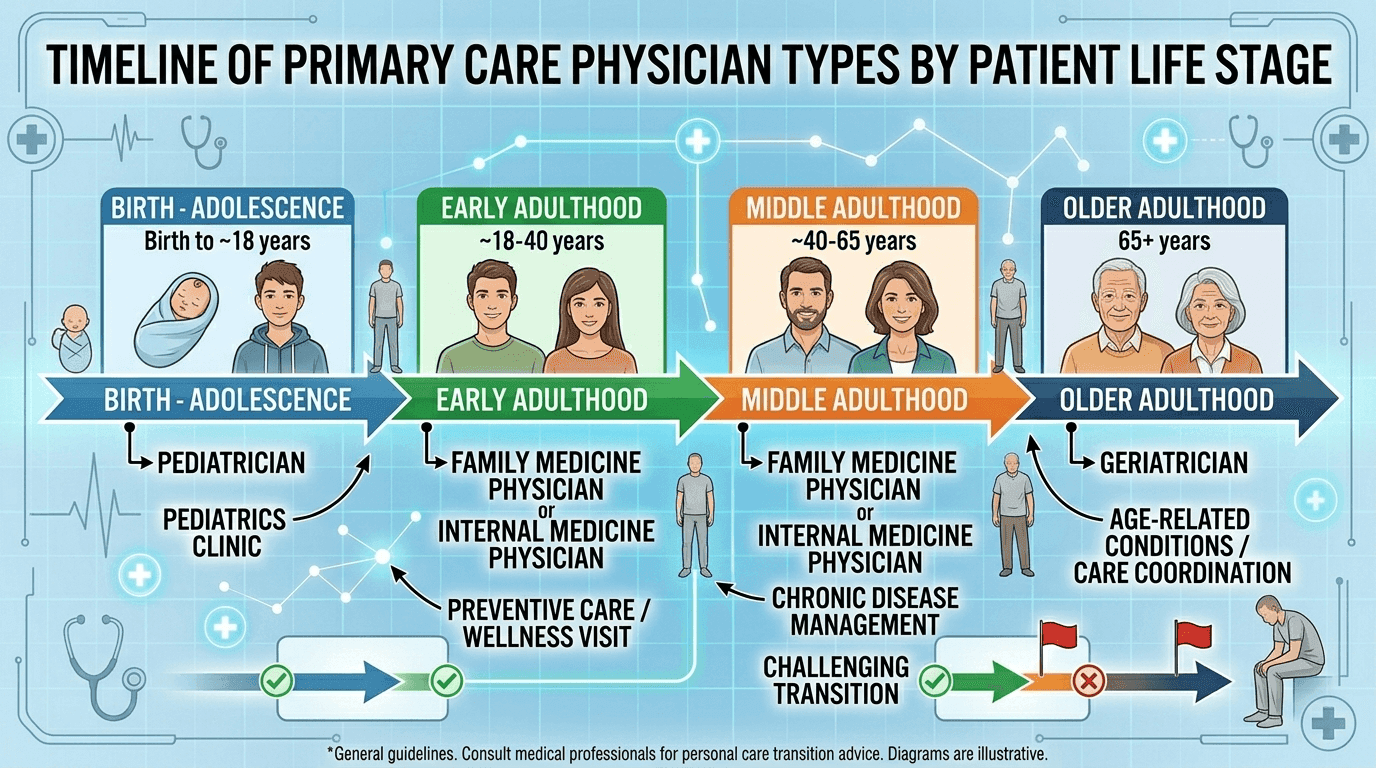
Family Medicine vs. Internal Medicine
Family medicine and internal medicine are the two most common types of adult PCP, and patients frequently confuse them. A family medicine physician completed a three-year residency in family medicine and is trained to treat patients of all ages, making them well suited for households where a parent wants to see the same doctor as their kids or for adults who want a provider comfortable managing both adult and childhood-onset conditions.
An internist (internal medicine physician) completed a three-year residency focused exclusively on adult medicine. Internists often have deeper training in complex adult diseases, particularly those involving multiple organ systems, and they frequently practice in hospital or academic settings in addition to outpatient clinics. If you are a healthy adult in your 30s, either type works well. If you are managing several overlapping chronic conditions, an internist may bring additional depth.
Pediatricians and Geriatricians
Pediatricians serve as the dedicated primary care physician from birth through late adolescence, providing well-child visits, developmental screenings, vaccine schedules, and treatment for childhood illness. The American Academy of Pediatrics (AAP) recommends scheduled well-child visits at defined intervals from birth through age 21.
Geriatricians specialize in the complex, multi-system care of older adults. They are particularly skilled at managing polypharmacy (the risks that arise when a patient takes five or more medications), cognitive decline, fall prevention, and end-of-life planning. Geriatric specialists are in shorter supply than other PCP types, but for older adults with significant medical complexity, they provide a level of coordinated care that is difficult to replicate elsewhere.
Why Having a PCP Makes a Measurable Difference to Your Health
The case for having a primary care physician is backed by outcome data, not just convenience.
A foundational analysis available through PubMed found that regions with higher ratios of primary care physicians to population had lower overall mortality rates, lower rates of death from heart disease, cancer, and stroke, and lower premature death rates. These associations held even after controlling for socioeconomic factors.
Continuity of care, meaning seeing the same provider consistently over time, is particularly associated with better outcomes for chronic conditions. When a physician knows your baseline, your medication history, and your health trajectory, they are better positioned to catch subtle changes early. An ER physician seeing you for the first time has none of that context.
A sustained PCP relationship is also associated with reduced emergency department use. Patients without a regular PCP are significantly more likely to seek care in emergency settings for conditions that could have been managed earlier in a primary care visit, which is both more expensive and typically less effective for long-term management.
The Gatekeeper Role: How Referrals and Specialists Actually Work
When you need to see a cardiologist, dermatologist, or orthopedic surgeon, your PCP is usually the starting point. This "gatekeeper" framing can feel frustrating, but it exists for a clinical reason, not just an administrative one.
Before referring to a specialist, a PCP typically orders preliminary diagnostics, reviews your full medication and allergy list, and summarizes your health context in a referral letter that helps the specialist understand why you are being referred and what has already been ruled out. That coordination reduces duplicate testing and ensures the specialist has the information they need from the first appointment.
Whether a formal referral is required depends on your insurance plan. HMO (Health Maintenance Organization) plans legally require a PCP referral before a specialist visit is covered. PPO (Preferred Provider Organization) plans generally allow patients to see specialists directly without a referral, though staying in-network still requires attention.
A strong, established relationship with your PCP also means you have an advocate in the referral process. When you are dealing with a new or complex diagnosis, your PCP can help you navigate which specialist type is most appropriate, what to expect, and how to coordinate follow-up care across providers.
Insurance Mechanics: Why Your Plan Might Require a PCP
Health insurance and primary care are linked in ways that are not always obvious when you are choosing a plan.
In an HMO structure, you are required to select a designated primary care physician when you enroll. That physician becomes your care coordinator. Specialist visits and most non-emergency services require a referral from your PCP to be covered. Without that referral, you may be responsible for the full cost of the specialist visit out-of-pocket.
In a PPO structure, you have more flexibility to see any in-network provider without a referral, but you still benefit from having a PCP for ongoing care management. EPO (Exclusive Provider Organization) plans vary but often behave similarly to HMOs without an out-of-network option.
Beyond the referral mechanics, your PCP is also the physician responsible for annual wellness visits, which are typically covered at no cost under most ACA-compliant plans. Understanding your plan's requirements around PCP designation is one of the more practical reasons to choose your primary care physician intentionally during open enrollment rather than defaulting to whoever happens to be available.
The Primary Care Physician Shortage: And What It Means for Finding Yours
Here is the reality most health content glosses over: finding a PCP who is accepting new patients in a reasonable timeframe is harder than it used to be, and the gap is projected to grow.
The Health Resources and Services Administration (HRSA) projects a shortage of more than 70,000 full-time-equivalent primary care physicians by 2038. The AAMC has similarly documented that rural and lower-income communities face disproportionate shortfalls, with tens of millions of Americans living in areas designated as primary care Health Professional Shortage Areas. Average wait times for a new patient appointment with a PCP now exceed 20 to 30 days in many metropolitan areas, according to physician workforce surveys.
This shortage is not a reason to give up on finding a PCP. But it is a reason to approach the search proactively rather than waiting until you have an urgent health need.
What to Do If You Cannot Get a PCP Appointment
If local PCPs are not accepting new patients or the wait is prohibitive, there are legitimate options:
Federally Qualified Health Centers (FQHCs) are community-based clinics that serve patients regardless of insurance status and operate on a sliding-fee scale. The HRSA health center finder can locate the nearest option. Telehealth primary care has expanded dramatically since 2020, with CMS data documenting millions of telehealth encounters annually under Medicare alone. Many telehealth platforms now offer ongoing primary care relationships, not just one-off urgent care visits, meaning you can build continuity of care virtually while you wait for an in-person practice to open up.
If you are navigating ongoing or unexplained symptoms and need access to care now, you can connect with a primary care provider through Momentary for a virtual visit, which can help bridge the gap while you establish in-person care.
Telehealth and Your Primary Care Physician: What Has Changed
Telehealth is no longer just for prescription refills and minor illness triage. For many patients, it now functions as a complete primary care relationship.
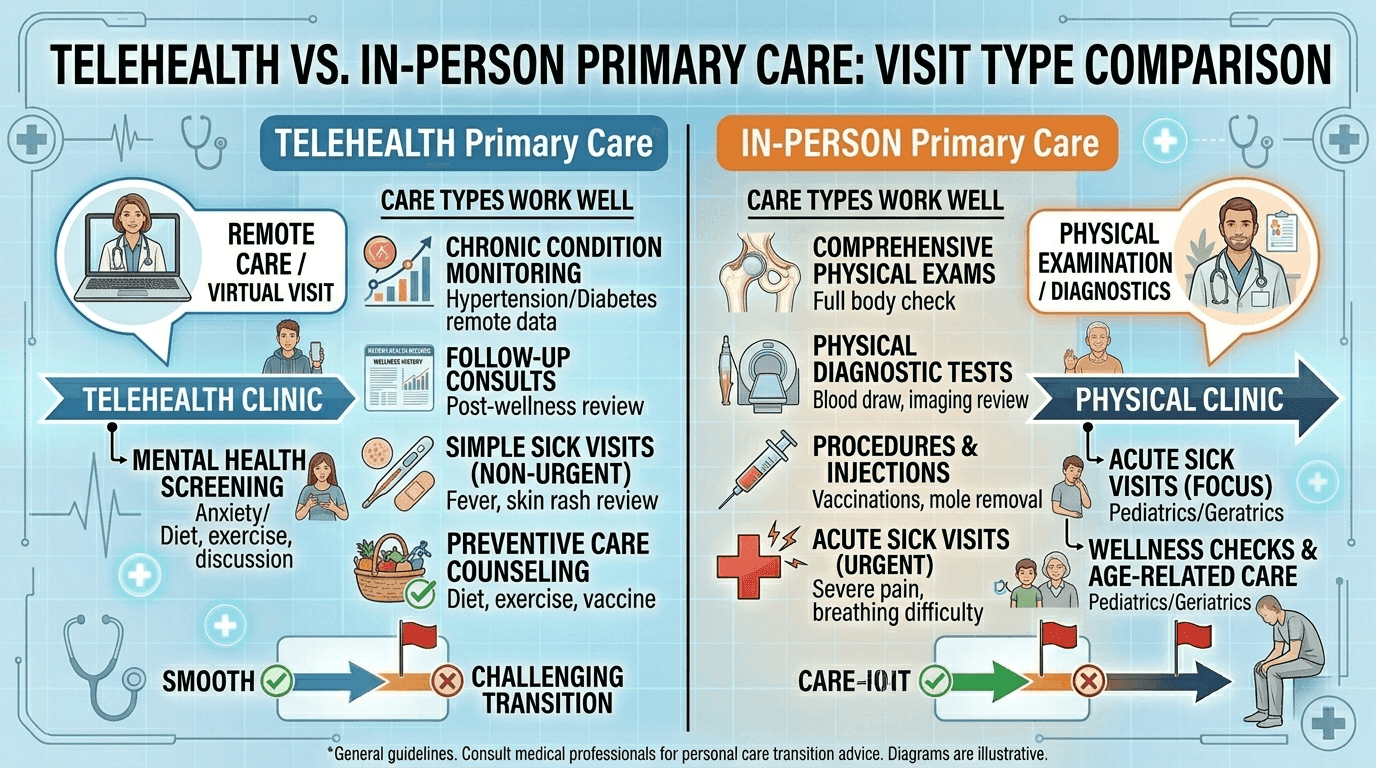
What works well virtually includes medication management and refills, mental health check-ins, chronic condition monitoring when paired with at-home devices (such as blood pressure cuffs or glucometers), post-procedure follow-ups, and preventive counseling. What still requires in-person visits includes physical examinations, diagnostic imaging, in-office lab draws, and procedures.
For patients in rural areas, those with transportation limitations, or those on waitlists for in-person practices, a telehealth PCP can provide meaningful continuity of care. Most major insurers now cover telehealth visits at parity with in-person visits, and Medicare telehealth coverage has been extended significantly for 2025 and beyond.
The Triage Guide: ER vs. Urgent Care vs. Your PCP
Knowing which setting matches your situation saves time, money, and unnecessary stress.
See your PCP for annual wellness visits, new non-emergency symptoms that have lasted more than a few days, chronic condition follow-ups, prescription management, routine lab work, referral requests, and mental health concerns.
Go to urgent care for illnesses that need same-day attention but are not life-threatening: ear infections, urinary tract infections, minor cuts requiring stitches, sprains, and flu-like symptoms when your PCP does not have same-day availability.
Go to the ER for chest pain or pressure, signs of stroke (sudden facial drooping, arm weakness, or slurred speech), difficulty breathing, severe abdominal pain, high fever with stiff neck, major trauma, or any situation where you believe your life or someone else's may be at immediate risk.
Your PCP's office may also offer a nurse line or patient portal messaging system for guidance on borderline situations, which is often the fastest way to get triage advice during business hours without needing to leave your home.
How to Find and Choose the Right Primary Care Physician
Start with your insurance. Use your insurer's provider directory to identify in-network physicians accepting new patients. Confirm this directly with the practice when you call, as directories are not always current.
Check board certification through the American Board of Medical Specialties certificationmatters.org tool. Board-certified physicians have passed rigorous specialty exams and commit to ongoing education requirements.
Consider location and clinic hours relative to your schedule. A well-qualified physician you cannot realistically reach is not a practical primary care option.
Communication style matters more than most people expect. The NIH's National Library of Medicine has documented that patient-provider communication quality is directly associated with adherence to treatment, patient satisfaction, and health outcomes. If your physician does not make you feel heard, that is clinically relevant, not just a personality preference.
What to Bring to Your First PCP Appointment
Come prepared with a complete list of all current medications including supplements and over-the-counter drugs, dosages included. Bring your insurance card and a photo ID. If you have records from previous providers, labs, or specialist visits, bring those or request that they be sent ahead. A brief written log of any current symptoms, including when they started and what makes them better or worse, will help make the appointment more efficient. If you have a relevant family health history (a parent with early heart disease, for example), note it down.
How Often Should You See Your Primary Care Physician?
For generally healthy adults between 18 and 64 with no significant chronic conditions, most guidelines recommend an annual wellness visit. The visit establishes a baseline and keeps preventive screenings current.
For adults managing chronic conditions such as hypertension, type 2 diabetes, or thyroid disease, quarterly or biannual visits are common, depending on how well the condition is controlled and whether medication adjustments are needed.
For children and adolescents, the AAP recommends a structured well-child visit schedule: multiple visits in the first year of life, annually from ages 1 through 21, with additional sick visits as needed.
For adults over 65 with multiple conditions or complex medication regimens, visit frequency is typically determined in partnership with the physician based on individual health status.
FAQ
What is another name for a primary care physician? A PCP may also be called a primary care doctor, primary care provider, family doctor, family physician, internist (if their specialty is internal medicine), or general practitioner (though that term is largely outdated in the US). The specific title depends on their specialty training, but all refer to the clinician responsible for your comprehensive, ongoing care.
What type of doctor is best for primary care? The best type depends on your life stage and health needs. Family medicine physicians work well for adults of any age and for families who prefer one provider across generations. Internists are a strong choice for adults with complex or multiple overlapping chronic conditions. Pediatricians are the standard for children and teens. There is no single "best" type — the right fit is the physician whose training aligns with your needs and who you can access consistently.
What is an example of a primary care provider? A family medicine physician who sees your entire household, an internist who manages your blood pressure and diabetes alongside your annual exams, a nurse practitioner who serves as your primary point of contact for preventive and acute care, or a telehealth physician you see virtually for ongoing medication management are all examples of primary care providers.
What doctor is a primary care physician? A primary care physician is a medical doctor (MD) or doctor of osteopathic medicine (DO) who has completed a residency in a primary care specialty such as family medicine, internal medicine, pediatrics, or geriatrics. They are distinct from specialists (like cardiologists or dermatologists) in that their training covers a broad range of conditions across body systems rather than focusing on one.
Do I need a referral from my PCP to see a specialist? It depends on your health insurance plan. HMO plans require a PCP referral before specialist visits are covered. PPO plans generally allow you to see specialists directly without a referral, though staying in-network affects your out-of-pocket costs. If you are unsure, check your insurance plan documents or call your insurer's member services line.
Can I use telehealth for primary care, not just urgent issues? Yes. Telehealth primary care has expanded significantly and now covers a wide range of ongoing care needs, including chronic disease management, mental health check-ins, medication management, and preventive counseling. What it cannot replace is the in-person physical exam or diagnostic procedures. If you have not yet established care with a physician, you can use Momentary's AI health navigator to better understand your symptoms and identify what type of care makes sense for your situation before booking an appointment.
References
- American Academy of Family Physicians (AAFP) — Definition and policy framework for primary care medicine in the United States.
- PubMed: Starfield B et al. (2005) — Research linking primary care continuity to better chronic disease outcomes and lower healthcare costs.
- PubMed: Shi L (1994) — Analysis of primary care physician supply and mortality rates across US states.
- NIH National Library of Medicine: Primary Care Overview — Clinical framework for primary care and patient-provider communication.
- American Academy of Pediatrics (AAP) — Well-child visit schedule and pediatric primary care recommendations.
- CDC: Prevention and Chronic Disease — Data on preventive care effectiveness and health outcomes.
- Health Resources and Services Administration (HRSA) — Projected primary care physician workforce shortage through 2038.
- Centers for Medicare and Medicaid Services (CMS) — Telehealth utilization data and Medicare coverage statistics.
- American Board of Medical Specialties — Board certification verification for physicians.

