


Most people wait until something is obviously wrong before calling their doctor. That instinct is understandable, but it skips over a big part of what primary care is actually for. Knowing when to see a primary care doctor, and when you genuinely can wait, is one of the more useful things you can learn about managing your own health.
This guide walks through the real situations that warrant a visit: routine prevention, nagging symptoms, mental health concerns, chronic disease management, and the moments when the PCP's office is not the right call at all.
At a Glance
| Topic | Key Facts |
|---|---|
| Healthy adults (18-39) | Visit every 1-3 years, more often with risk factors |
| Adults 40-64 | Annual visit; mammogram from 40, colonoscopy from 45 |
| Adults 65+ | At least twice yearly; Medicare Annual Wellness Visit available |
| Chronic conditions | Every 3-6 months depending on condition |
| Mental health | PCPs can diagnose and treat or refer for depression, anxiety, and sleep issues |
| Non-emergency but don't-wait symptoms | Cough over 3 weeks, unexplained weight change, fatigue over 2 weeks |
| True emergencies | Go to the ER, not the PCP, for chest pain, stroke signs, severe bleeding |
The Short Answer: Baselines and Deviations
The simplest framework for knowing when to see a primary care doctor has two parts. First, go when you feel perfectly fine to establish a healthy baseline. Second, go any time your body deviates from that baseline in a way that lasts more than a few days.
A primary care physician (PCP), as Cleveland Clinic defines it, is a doctor who serves as a patient's main point of contact with the healthcare system. PCPs handle preventive care, manage common illnesses, monitor chronic conditions, and coordinate referrals to specialists when needed. Think of them as the home base for your health, the person who knows your full picture and can catch things that a specialist or urgent care visit would miss.
Without a baseline, there is nothing to compare against. Blood pressure, cholesterol, blood sugar, thyroid function, and kidney markers can all drift quietly in the wrong direction for years before producing any symptoms. A baseline visit catches those drifts early, when they are far easier to address.
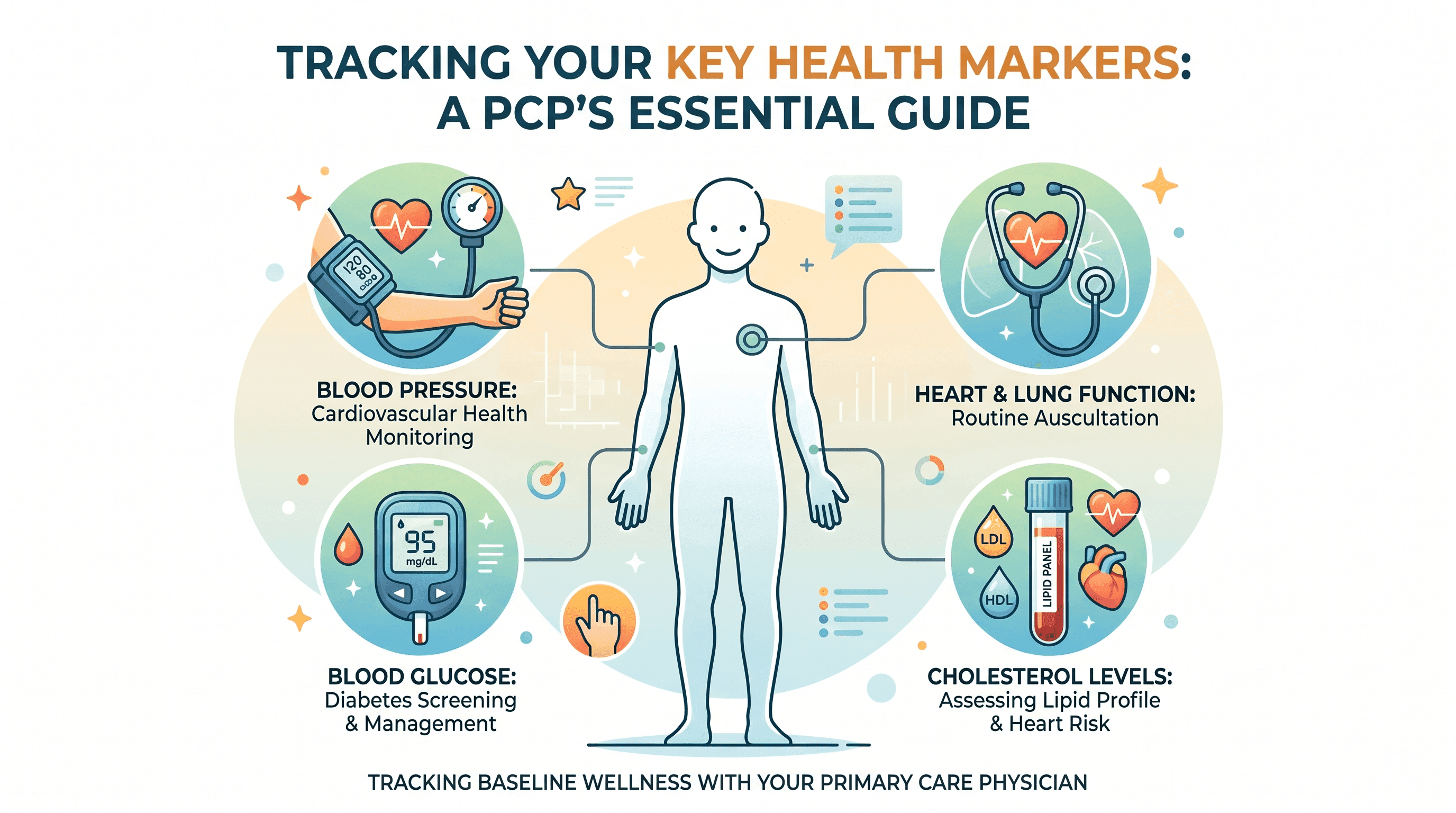
The Annual Well Visit: Preventive Care, Not Just a Formality
Even healthy adults need to see their primary care doctor regularly because prevention is not passive. The annual wellness visit is when a doctor runs screenings that identify silent conditions before symptoms appear.
According to the U.S. Preventive Services Task Force (USPSTF), adults should be screened for hypertension, type 2 diabetes, high cholesterol, depression, and several cancers at intervals that vary by age, sex, and risk factors. These are not things you would notice on your own, which is exactly why the visit matters.
Ages 18-39
Healthy adults in this age group are generally seen every one to three years. That frequency increases with risk factors like a family history of heart disease, obesity, high blood pressure, or tobacco use. Sexually active adults may also need annual STI screening depending on their situation. Do not let the low frequency create a false sense that nothing is happening, because prediabetes and hypertension both show up regularly in this group.
Ages 40-64
Annual visits become the standard in this decade. Mammograms are now recommended starting at age 40 by the USPSTF. Colorectal cancer screening begins at 45 for average-risk adults. Cholesterol monitoring and blood glucose checks become routine. If you are in this age range and have not had a lipid panel or fasting glucose test in the past year, that is a reason to book an appointment.
Ages 65 and older
Adults 65 and up benefit from at least two visits per year. Medicare covers an Annual Wellness Visit (AWV) at no cost, which is separate from a standard physical and focuses on health risk assessment, medication review, cognitive evaluation, and prevention planning. If you or a parent are on Medicare and have not used this benefit, it is worth scheduling.
When to See Your PCP Even If You Feel Fine
The most common reason people skip their PCP is that they feel fine and cannot justify the appointment. That reasoning makes sense on the surface, but it misunderstands what primary care is designed to catch.
Hypertension is called "the silent killer" for a reason. The CDC reports that nearly half of adults in the United States have high blood pressure, and many of them do not know it. The condition produces no pain, no obvious symptoms, and no warning in most people until a heart attack or stroke occurs.
The same is true for prediabetes and elevated LDL cholesterol. Both conditions can be present for years before any outward sign appears, yet both respond well to early lifestyle changes and, when needed, medication. Catching them at the preventive visit rather than after a cardiovascular event changes the trajectory entirely.
The annual visit is also when a PCP updates immunizations. Adults frequently fall behind on flu shots, Tdap boosters, shingles vaccines (recommended from age 50), and pneumococcal vaccines for older adults.
Reframe the well visit as health insurance in the most literal sense: a small, routine investment that reduces the probability of a far larger problem later.
Signs and Symptoms That Mean: Call Your PCP This Week
Some symptoms are not emergencies but still should not be ignored for more than a few days. These are the situations where waiting for the next convenient opening three weeks from now is the wrong call.
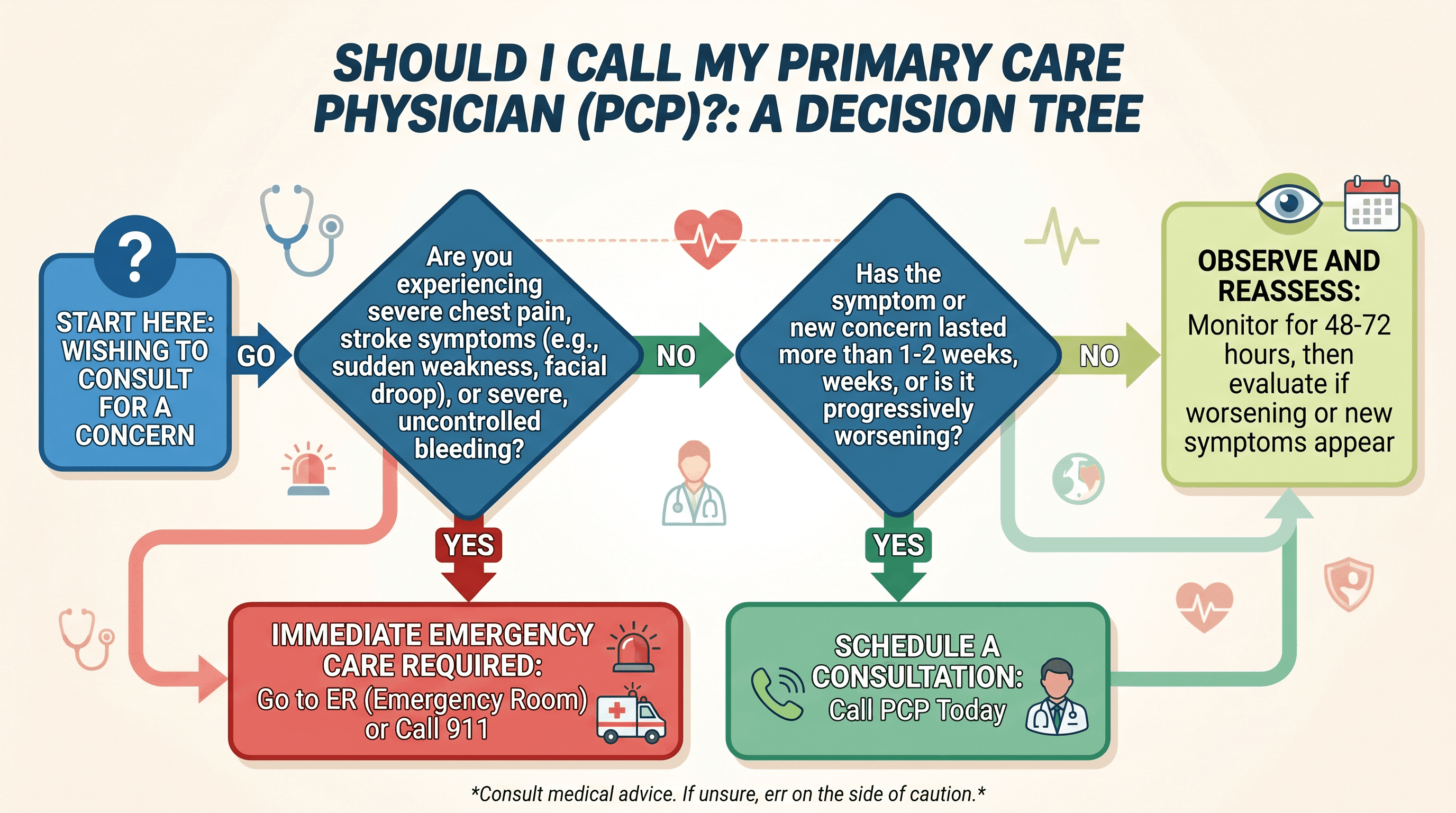
Physical Symptoms That Warrant a Call This Week
A cough lasting more than three weeks is worth reporting. According to the Mayo Clinic, most colds resolve within 10 days. A cough that lingers beyond three weeks can indicate postnasal drip, asthma, acid reflux, or in rare cases something that needs further workup.
Unexplained weight loss or gain of 10 or more pounds over a few months without a deliberate change in diet or activity is a signal that warrants evaluation. Unintentional weight changes can reflect thyroid dysfunction, blood sugar dysregulation, or other underlying issues.
Fatigue lasting more than two weeks that does not improve with rest is worth discussing with a provider. Persistent fatigue can stem from anemia, thyroid issues, depression, sleep disorders, or other conditions that are straightforward to evaluate with basic bloodwork.
Recurring headaches that have changed in frequency, intensity, or character compared to previous patterns should be reported. New onset headaches in adults over 50 also warrant attention.
Digestive changes, including new constipation, diarrhea, or blood in the stool lasting more than a week or two, should be evaluated. These are not symptoms to write off as stress without at least a phone call.
Mental Health Concerns Your PCP Can Help With
Primary care doctors are often the first and most accessible point of contact for mental health concerns, and that is intentional. PCPs routinely screen for depression, anxiety, and sleep disorders during regular visits, and they can prescribe frontline medications or make referrals to therapists and psychiatrists.
If you have noticed persistent low mood for more than two weeks, a significant spike in anxiety that is affecting your daily functioning, or chronic insomnia that is not responding to basic sleep hygiene, do not wait for those symptoms to compound. Research published in the Annals of Family Medicine has documented that integrated mental health care in the primary care setting significantly improves patient outcomes.
The brain is part of the body. A mental health concern is as legitimate a reason for a PCP visit as a respiratory infection.
Managing the Long Haul: Chronic Conditions
If you are living with a diagnosed chronic condition, the question is not whether to see your PCP, but how often.
| Condition | Recommended Visit Frequency |
|---|---|
| Type 2 Diabetes (controlled) | Every 3-6 months |
| Type 2 Diabetes (uncontrolled) | Every 1-3 months |
| Hypertension (stable) | Every 3-6 months |
| Hypertension (adjusting medication) | Monthly until stable |
| High Cholesterol (on statin) | Every 6-12 months |
| Asthma (well-controlled) | Every 6-12 months |
| Heart Disease | Every 3-4 months |
These are general guidelines and individual cadence should always be guided by a doctor based on current control, recent labs, and medication changes.
Between scheduled visits, certain triggers should prompt an unscheduled call or appointment regardless of when the next one is booked. Worsening symptoms, unexpected side effects from a medication change, new symptoms that feel out of pattern, or readings outside the target range (blood pressure, blood glucose, peak flow for asthma) are all reasons to reach out rather than wait. If you are managing a chronic condition and experience any of these, connecting with a primary care provider through a telehealth visit is often a faster way to get guidance without waiting for an in-person appointment slot.
Medication Refills and Side Effects
Two logistical situations prompt a PCP visit that patients sometimes overlook. The first is a prescription that is running low. Many chronic condition medications require a follow-up visit before refills are authorized, both for safety monitoring and to ensure the medication is still appropriate. Waiting until the last pill to call is one of the more common self-inflicted scheduling problems in primary care.
The second is a side effect from a newly prescribed medication. If a drug was started in the past two to eight weeks and something feels off, such as nausea, dizziness, skin changes, mood shifts, or anything that began after the prescription was filled, that should be reported. Adjusting the dose or switching to a different medication in the same class is often simple, but only if the provider knows there is a problem.
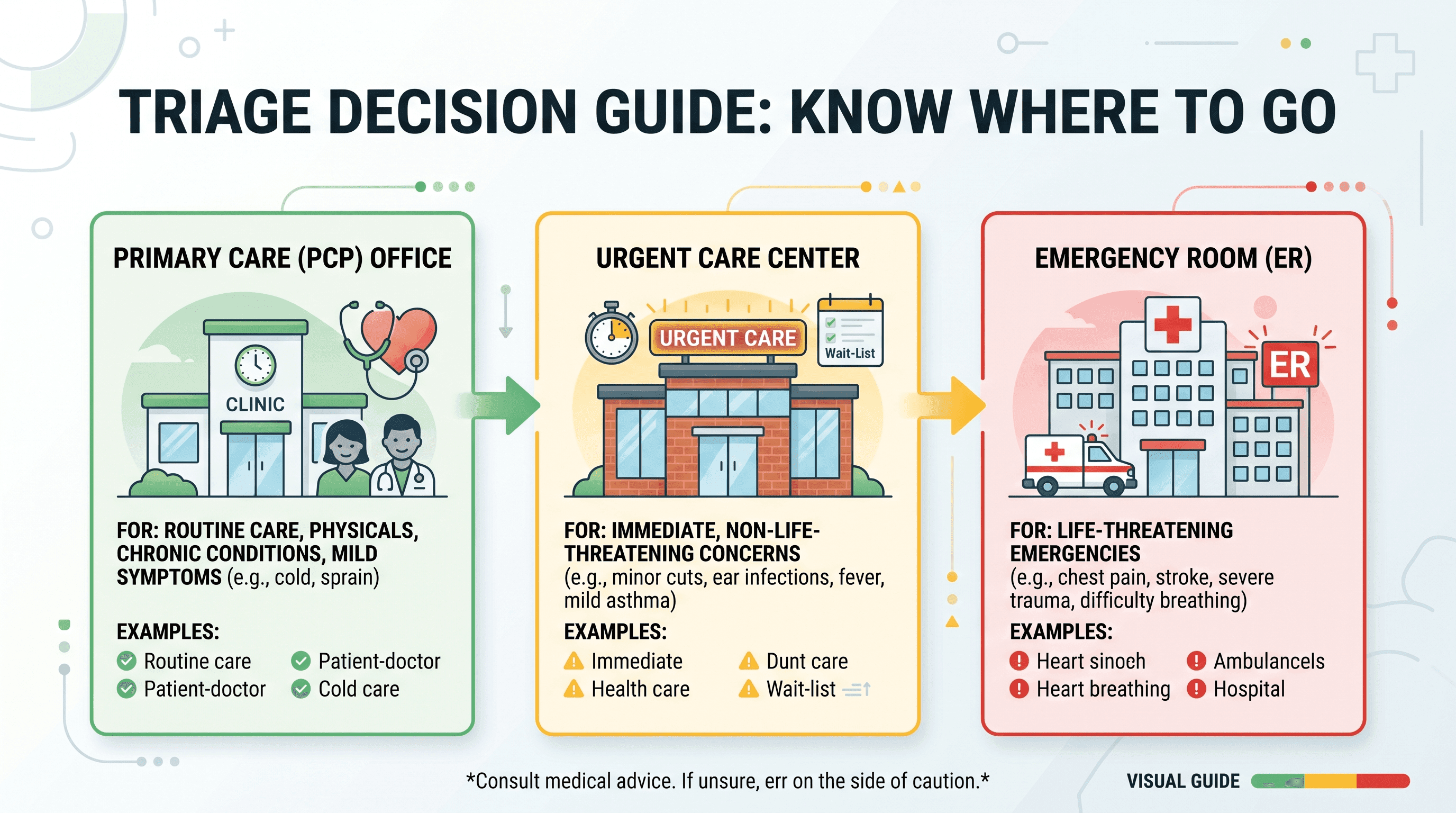
PCP, Urgent Care, or ER: How to Decide
Choosing where to go is one of the most practical decisions in healthcare, and the wrong choice wastes time, money, and in emergencies, can cost lives.
Go to Your PCP for:
Routine sick visits that are not urgent, such as a sore throat, ear pain, suspected urinary tract infection, or a mild rash, are appropriate for a PCP appointment. Follow-up care after an ER or urgent care visit, medication management, chronic condition check-ins, and annual physicals also belong here.
Go to Urgent Care for:
Urgent care is the right call when symptoms are beyond what can wait for a PCP appointment but do not rise to the level of an emergency. Sprains, minor cuts that may need stitches, suspected fractures without deformity, high fever in adults, moderate respiratory symptoms, or a UTI when a PCP cannot see you that day all fit this category.
Go to the ER for:
True emergencies require the ER. These include chest pain or pressure, signs of stroke (sudden facial drooping, arm weakness, speech difficulty), difficulty breathing, severe allergic reactions, loss of consciousness, major injuries, seizures, sudden severe headache unlike any previous headache, and uncontrolled bleeding. Do not drive yourself if any of these apply.
Telehealth: When It Is a Good First Call
Telehealth has expanded significantly in recent years and covers a wider range of situations than most people realize. Minor infections, medication questions, rash evaluation (with photos), mental health concerns, and chronic condition follow-ups can often be handled through a virtual visit. It is particularly useful for people who cannot get an in-person appointment quickly, who are too unwell to travel, or who live far from their provider.
Life Events That Should Prompt a PCP Visit
Beyond symptoms and routines, certain life events are underappreciated triggers for scheduling an appointment.
Starting a new job with new health insurance is a practical reason to establish care with an in-network PCP before any health issue arises. Relocating to a new city means finding a new primary care doctor while you are healthy, so you are not scrambling when you need one.
Planning a pregnancy is a reason to see a PCP or OB-GYN before conceiving. A preconception visit reviews medications, identifies any conditions that may affect pregnancy, ensures vaccinations are current, and discusses folic acid supplementation.
A parent or sibling receiving a new diagnosis of heart disease, diabetes, or cancer changes your own risk profile and may warrant earlier or more frequent screenings. Major stress events, whether job loss, bereavement, or a significant life transition, are appropriate to raise at a PCP visit because chronic stress has measurable physiological effects on blood pressure, immune function, and metabolic markers.
If you have been prescribed a new medication, whether by a specialist or an urgent care visit, a follow-up with your PCP is appropriate to integrate that into your overall care picture.
What to Do If You Do Not Have a Primary Care Doctor
If you do not currently have a PCP, the process for finding one starts with your insurance carrier's provider directory, available on the insurer's website. Search for in-network primary care physicians, family medicine physicians, or internists near your location. Community health centers, which are federally qualified and operate on sliding-scale fees, are another option for those without insurance or with limited coverage. When transferring from another provider, request that records be sent before the first appointment so the new PCP has your history from the start.
Frequently Asked Questions
Can a doctor on demand diagnose bronchitis?
Yes. A primary care doctor, whether seen in-person or via telehealth, can evaluate and diagnose bronchitis based on symptoms, duration, and a physical or virtual assessment. Most acute bronchitis is viral and does not require antibiotics, but a provider can confirm that and rule out pneumonia if symptoms are severe.
What are the most common diagnoses in primary care?
According to research published in PMC, the most frequent diagnoses seen in primary care include hypertension, hyperlipidemia, type 2 diabetes, depression, anxiety disorders, back pain, hypothyroidism, chronic obstructive pulmonary disease, asthma, and urinary tract infections. These conditions are precisely why a consistent PCP relationship matters, because they require ongoing monitoring rather than one-off treatment.
What are red flag symptoms I should not ignore?
Red flag symptoms that warrant urgent evaluation include unexplained weight loss, blood in stool or urine, a new lump or mass anywhere on the body, persistent difficulty swallowing, a cough that produces blood, sudden vision changes, weakness or numbness on one side of the body, and a headache described as "the worst of my life." Any of these should prompt a same-day call to a provider at minimum, and some warrant going directly to the ER.
How often should I see my doctor for hypertension?
Once blood pressure is stable on medication, most guidelines support visits every three to six months. During initial diagnosis or medication adjustment, monthly visits are common until readings stabilize. A doctor can advise on the right cadence for individual cases.
What are silent symptoms of hypertension?
This is one of the more important questions in preventive care: hypertension typically produces no symptoms at all. Occasionally, people report headaches, dizziness, or nosebleeds, but these are not reliable indicators. Most people with high blood pressure feel completely normal until a cardiovascular event occurs, which is why routine screening is the only reliable detection method. You can use Momentary's AI health navigator to explore your symptoms, understand your risk factors, and get guidance on what questions to bring to your provider.
What is the difference between a wellness visit and a physical?
A wellness visit, particularly the Medicare Annual Wellness Visit, is focused on health risk assessment, cognitive screening, preventive care planning, and medication review. It does not typically include a full physical examination of organ systems. An annual physical includes hands-on examination and may involve more comprehensive lab work. Both are valuable, and they serve slightly different purposes.
References
- Cleveland Clinic: Primary Care Physician — Definition and role of a primary care physician in the healthcare system.
- CDC: About High Blood Pressure — Prevalence and silent nature of hypertension in US adults.
- Mayo Clinic: Common Cold Symptoms and Causes — Duration benchmarks for upper respiratory illness.
- PMC: Integrated Mental Health in Primary Care — Research on outcomes of mental health care delivered in primary care settings.
- PMC: Common Diagnoses in Primary Care — Study on the most frequent conditions managed in primary care.