


If you are reading this at 3 a.m. because your shoulder still aches and you are wondering whether something went wrong, here is the short answer: probably not. Three months after rotator cuff repair is one of the most confusing stretches of recovery, because the surgery is technically behind you but your shoulder still does not feel like yours. That gap between "healed on the calendar" and "healed in the body" is real, and it is completely normal.
This guide is written for the person who is already at week 12, not the person preparing for surgery. The focus is on what is actually happening inside the shoulder right now, what is safe to do, what is not yet safe, and what the next several months will bring.
At a Glance
| Topic | Key Facts |
|---|---|
| Healing stage at week 12 | Tendon anchored; tissue still maturing |
| Pain status | Dull ache after activity is normal; sharp new pain is not |
| PT phase | Transitioning from passive range-of-motion to active strengthening |
| Weight limit | Typically 5 to 10 lbs; surgeon-specific |
| Driving | Usually cleared by week 12 for most patients |
| Return to desk work | Generally cleared by 8 to 12 weeks |
| Return to manual labor | 4 to 6 months minimum, depending on tear size |
| Sleep | Many patients still struggle; positioning continues to matter |
The 12-Week Milestone: A Turning Point, Not a Finish Line
Three months post-op marks the moment recovery shifts gears. For the first eight weeks, the entire goal was protecting the repair: keeping the arm in a sling, avoiding active shoulder use, and letting the tendon re-attach to the bone without disruption. Now the focus moves to rebuilding what surgery and immobilization took away, specifically the muscle strength, neuromuscular control, and functional range of motion that have been dormant.
This shift matters because it changes how physical therapy feels. Sessions will start to feel harder, not easier. That is by design. The shoulder that was being babied is now being asked to work, and that process takes time, consistency, and patience.
What Is Happening Biologically at 3 Months
Understanding the biology makes it easier to be patient with the pace of recovery.
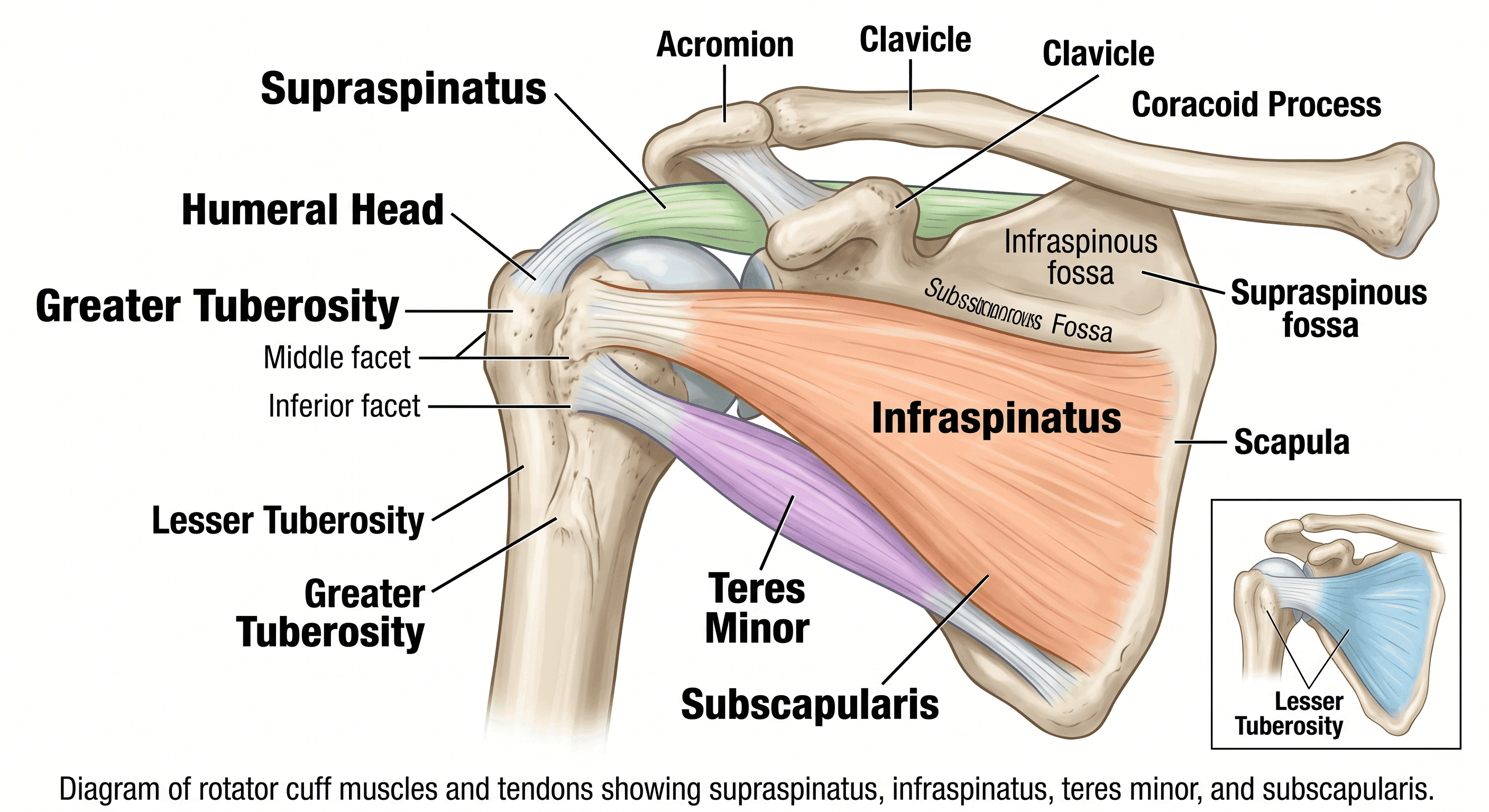
When a rotator cuff is surgically repaired, the tendon is re-anchored to the bone using sutures and anchors. The attachment itself becomes mechanically stable within about six to eight weeks, but that is not the same as the tendon being biologically integrated. According to research published in the Journal of Orthopaedic Surgery and Research, the tendon-to-bone healing process follows a specific biological sequence: an initial inflammatory phase gives way to a proliferative phase where new tissue forms, followed by a remodeling phase that can continue for six to twelve months.
At week 12, the repair site is in the middle of that remodeling phase. Collagen fibers are still organizing and maturing. The tendon is no longer fragile in the way it was at week four, but it is not yet as strong as a healthy, uninjured tendon. This is why physical therapists introduce resistance gradually rather than all at once, and why exceeding prescribed limits carries a real risk of re-tear.
One additional factor at this stage is scar tissue. The shoulder capsule naturally tightens after surgery, and scar tissue forms around the repair site as part of healing. That scar tissue contributes to the stiffness most patients feel at three months. It is not a complication; it is biology. Consistent physical therapy is the primary tool for managing it.
The Pain Profile: Why Does It Still Ache
Pain at week 12 is one of the most common patient concerns, and it makes sense. After three months, most people expect to feel substantially better. Some do. Many do not.
The distinction that matters is the character of the pain. A deep, dull ache in the shoulder, particularly after physical therapy, a long day of light activity, or sleeping in a suboptimal position, is consistent with normal healing inflammation. The tissues are being loaded progressively for the first time in months, and they respond the way any healing tissue does: with soreness.
What is not normal is a new, sharp, sudden increase in pain, especially if it occurs during a specific movement in PT or after an incident like a fall or a reaching mishap. That pattern warrants a call to the surgical team, not a wait-and-see approach.
Pain vs. Warning Signs: When to Call Your Surgeon
The following are red flags that should prompt a call to the surgeon's office rather than self-management at home.
A sudden sharp increase in pain, particularly during a movement that was previously comfortable, can suggest a structural problem. Redness, warmth, or discharge at the incision site, combined with fever above 101 degrees Fahrenheit, may indicate infection. Calf swelling, redness, or pain in the leg, which can be a sign of deep vein thrombosis, should prompt an immediate call or an emergency visit. A "pop" or sudden loss of shoulder function that occurs during activity should also be evaluated promptly.
If there is any doubt, calling the surgeon is always the right move. A brief phone check-in is far preferable to waiting on a problem that needs attention.
Range of Motion Goals for Week 12
Range of motion at the three-month mark depends heavily on the size of the original tear and the repair technique used. That said, most standard recovery protocols target specific functional benchmarks by week 12.
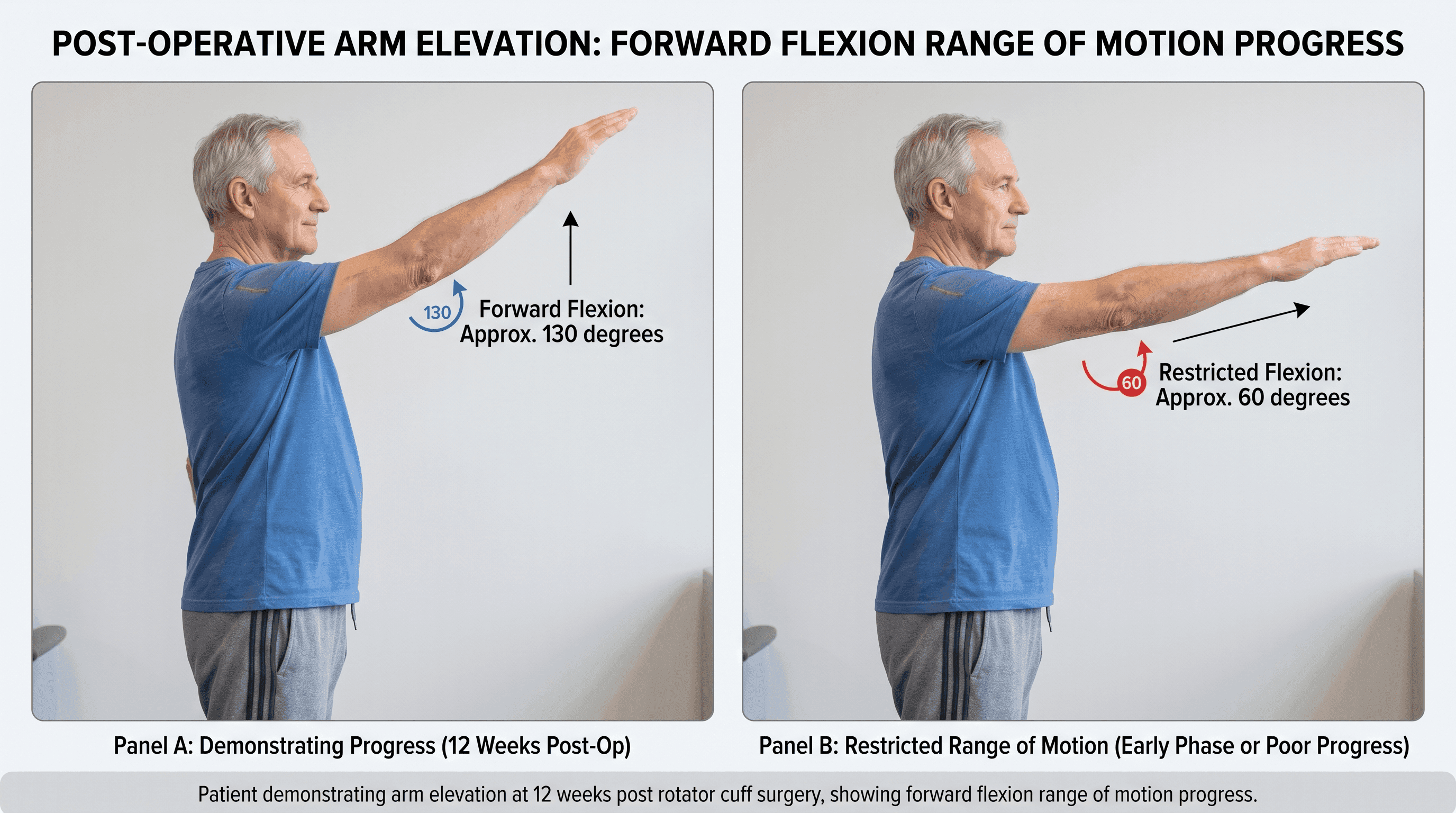
For patients recovering from small to medium tears, the shoulder should typically be able to reach at least 120 to 140 degrees of forward flexion, allowing the arm to be comfortably raised above the shoulder. Washing the hair, reaching items on a mid-height shelf, and bringing the hand to the mouth are usually achievable. External rotation, the motion used to throw a ball or reach out to the side, often lags behind and may still feel restricted.
Reaching behind the back, which requires internal rotation combined with extension, tends to be the last range-of-motion milestone to return. Limited progress in this motion at week 12 is not cause for concern in most cases.
For patients with large or massive tears, these milestones may arrive later. A large-tear repair can involve a longer protective phase and a more conservative PT progression, and some patients with massive tears are still working through passive range-of-motion work at the three-month mark.
The Physical Therapy Shift: Bringing on the Resistance Bands
The defining change in physical therapy at week 12 is the introduction of resistance. For the first eight to ten weeks, most PT programs focus on passive and active-assisted range-of-motion work: pulley systems, table slides, and therapist-guided motion that moves the joint without asking the muscles to contract against load.
At week 12, therapists begin introducing isometric exercises, in which the muscle contracts without the joint moving, followed by isotonic exercises, in which the muscle contracts through a range of motion against light resistance. Elastic bands, also called therabands or resistance bands, are the primary tool at this stage because they allow progressive loading at low resistance.
This transition is grounded in the biology described earlier. The repair is stable enough to tolerate controlled muscle activation, but not ready for high-load or ballistic movements. The goal is to wake up the rotator cuff muscles and the scapular stabilizers, rebuild neuromuscular coordination, and gradually increase the shoulder's capacity to handle load.
Exercises Typically Introduced at Week 12
The specific exercises introduced at week 12 vary by surgeon protocol and tear size, but several categories are common across most programs.
External rotation with a light resistance band, performed with the elbow at the side and the forearm moving away from the body, is one of the earliest strengthening exercises introduced. Scapular retraction and depression exercises, which train the muscles that stabilize the shoulder blade, are also standard at this stage. Light forward flexion in the scapular plane, reaching forward and slightly outward rather than straight in front, is often included. Isometric holds at various positions may be used to build initial strength before progressing to full-range movements.
Exercises that are typically off-limits at week 12 include any overhead pressing movement, push-ups or any exercise that loads the shoulder in the fully extended position, any motion that places the arm behind the body in combined extension and rotation, and any weighted exercise exceeding the surgeon's specific load limit.
Why Pushing Through Pain in PT Is Still a Mistake
The phrase "no pain, no gain" does not apply to rotator cuff recovery at week 12. The difference between productive discomfort, which is a mild, diffuse muscle fatigue that resolves within 24 hours, and counterproductive pain, which is sharp, localized, or persistent beyond the next day, is one that every patient should learn to recognize.
The tendon-to-bone interface is still remodeling and does not respond well to overload. Pushing through significant pain during PT can disrupt that process and, in the worst case, contribute to a re-tear. If a specific exercise consistently reproduces sharp pain, the appropriate response is to tell the physical therapist, not to push through it.
Daily Life at 12 Weeks: Sleeping, Driving, and Working
Sleep
Sleep disruption after rotator cuff surgery is remarkably common and often underreported. A 2021 study published in PubMed documented significant sleep disturbance in a large proportion of patients following shoulder surgery, with disruption most pronounced in the first several weeks but persisting well beyond the three-month mark for many patients.
At week 12, most patients have moved out of the sling and out of the recliner, but sleeping flat on the back or on the operated side may still be uncomfortable. A wedge pillow that elevates the upper body at a 30 to 45 degree angle continues to reduce shoulder joint pressure and can meaningfully improve sleep quality. Sleeping on the non-operated side with the arm supported on a pillow in front of the body is also comfortable for many patients at this stage. Sleeping directly on the operated shoulder is generally not recommended until at least months four to six, depending on surgical findings.
Driving
Driving clearance at week 12 is standard for most patients recovering from rotator cuff repair on the non-dominant arm or from smaller tears on the dominant arm. The limiting factors are reaction time, the ability to grip the wheel and control steering with both arms, and freedom from sedating pain medication. By week 12, most patients meet all three criteria and have already been cleared to drive. If the dominant arm is involved and the tear was large, the surgeon may extend this restriction.
Returning to Work
Desk work and sedentary jobs are typically cleared between weeks eight and twelve for most patients. At week 12, a return to office work, remote work, or light-duty roles is standard.
Manual labor, construction, overhead work, or any role requiring repetitive shoulder use above chest height falls into a different category. Most surgeons conservatively estimate a return to those roles at four to six months post-operatively for small to medium tears, and six to twelve months for large or massive tears. Returning earlier than cleared carries a meaningful re-tear risk that outweighs the short-term convenience.
The "Danger Zone": What You Still Cannot Do at Week 12
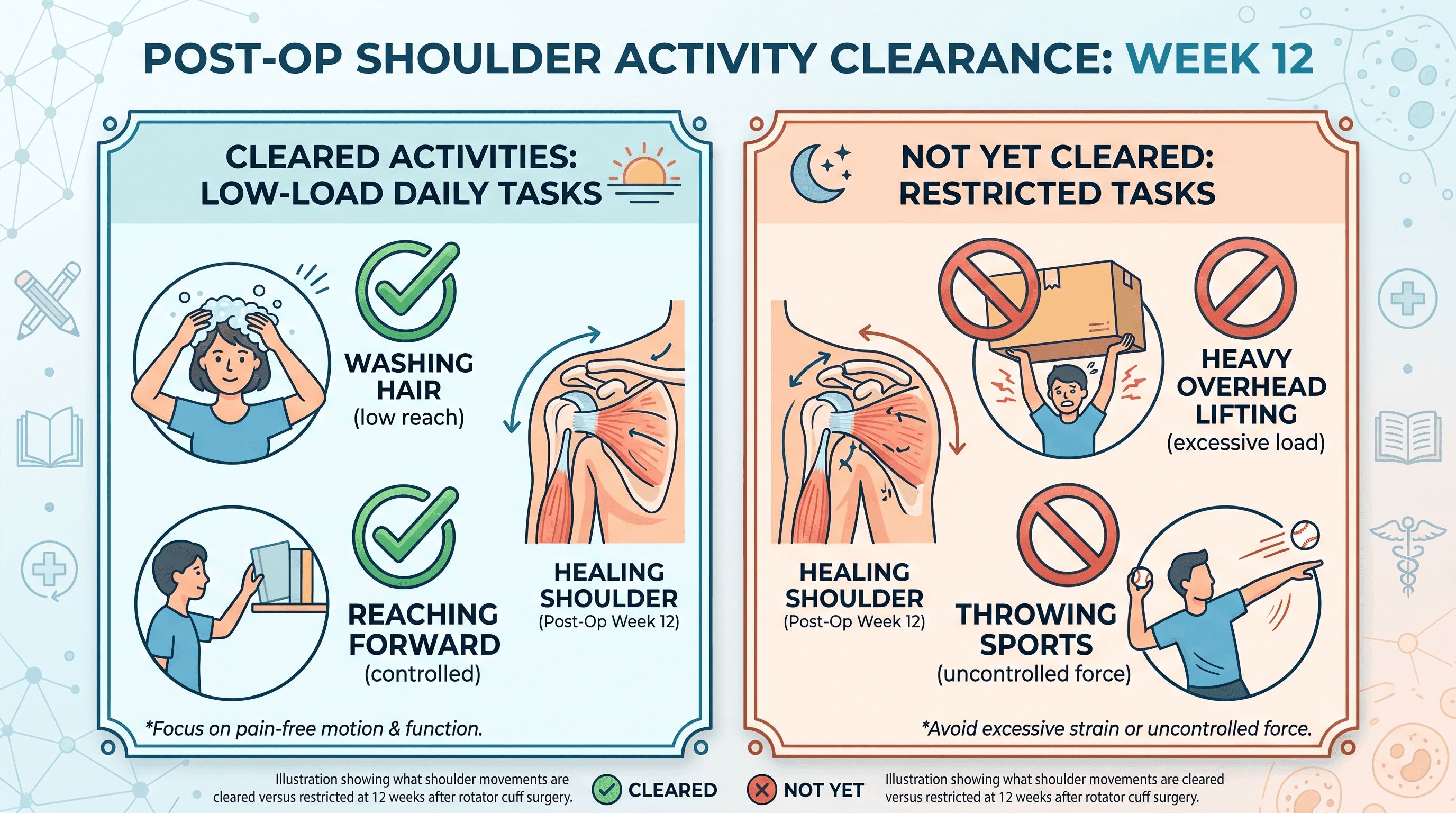
Understanding the limits at three months is just as important as knowing what progress has been made. The following activities remain off-limits for most patients at the 12-week mark unless a surgeon has given explicit clearance.
Overhead pressing of any kind, including reaching high shelves with the operated arm while under load, placing objects on high shelves that require bearing weight, or any pressing motion against resistance, should be avoided. Push-ups, which load the shoulder in full extension and require significant rotator cuff activation, are not appropriate at week 12 for most repair protocols. Throwing motions, whether a baseball, football, or frisbee, involve extreme rotational forces on the healing tendon and are contraindicated. Lifting objects heavier than 10 to 15 pounds with the operated arm exceeds what most protocols permit at this stage.
Troubleshooting Setbacks and Frozen Shoulder
Not every recovery moves in a straight line. At the three-month mark, some patients hit a plateau in range of motion, a period where gains slow or seem to stop entirely. That plateau can be normal, or it can be an early sign of adhesive capsulitis, commonly called frozen shoulder.
Adhesive capsulitis after rotator cuff repair occurs when the shoulder capsule develops excessive scar tissue and becomes abnormally tight. Symptoms include stiffness that is significantly worse in the morning, pain at the end range of any motion in any direction, and a plateau or regression in range-of-motion progress despite consistent physical therapy. According to the Mayo Clinic, adhesive capsulitis typically progresses through three stages: a freezing phase where motion becomes increasingly restricted, a frozen phase where motion is severely limited, and a thawing phase where range gradually returns.
If stiffness seems disproportionate to where recovery should be, or if motion is actually regressing rather than plateauing, that pattern warrants a conversation with the surgeon. Treatment options for post-surgical adhesive capsulitis include more aggressive PT techniques, corticosteroid injections into the joint to reduce inflammation, or in some cases a manipulation under anesthesia to break up scar tissue adhesions.
Most stiffness at week 12 is not adhesive capsulitis. But recognizing the difference early allows for earlier intervention if it is.
Sport-Specific Return Timelines
Athletes and active adults recovering from rotator cuff repair frequently want to know when they can return to specific activities. The honest answer varies by sport, tear size, surgical findings, and how the individual PT progression has gone.
For swimmers, a return to freestyle (crawl) stroke typically occurs around three to four months, provided the surgeon clears overhead activity. Butterfly and backstroke demand significantly more rotational load and are typically cleared later. Golfers generally return to the course around four to six months, with the swing mechanics and core rotation making it lower-risk than direct overhead sports. Tennis and other racquet sports typically have a return target of six to nine months given the overhead and eccentric demands on the cuff. Overhead sports like baseball, volleyball, and softball require the longest timelines, generally nine to twelve months, because the throwing or spiking motion generates extreme rotational forces at very high speeds. Contact sports follow similar or longer timelines depending on collision risk.
These timelines assume a steady PT progression and no complications. A physical therapist can provide a sport-specific assessment and help gauge readiness based on functional testing.
Nutrition and Lifestyle Factors That Support Tendon Healing
Recovery does not happen exclusively in the physical therapy room. Several nutrition and lifestyle factors influence how effectively the tendon continues to remodel and strengthen over the coming months.
Protein intake directly supports collagen synthesis, the process by which new tendon tissue is built and organized. The NIH recommends adequate dietary protein for tissue repair, and most adults recovering from surgery benefit from ensuring protein is present at every meal rather than concentrated at one time of day. Vitamin C is a cofactor in collagen production and is found in citrus fruit, bell peppers, strawberries, and broccoli. An anti-inflammatory dietary pattern that emphasizes vegetables, legumes, whole grains, fatty fish, and olive oil while limiting processed foods and refined sugars supports the overall healing environment.
Smoking is a particularly significant factor in tendon healing. Research has consistently shown that smoking impairs blood supply to tendons and slows the collagen maturation process. Patients who smoke have meaningfully higher rates of poor healing and re-tear compared to non-smokers.
Sleep, beyond its impact on pain, is when the majority of tissue repair occurs. Prioritizing sleep quality through positioning and consistent sleep schedules is a meaningful contributor to recovery.
The Mental and Emotional Side of the 12-Week Plateau
Three months into a recovery that many patients expected to be largely complete by now, frustration is common. So is anxiety: fear of re-tear, worry about whether the repair is progressing normally, and a creeping uncertainty about whether the shoulder will ever feel right again.
These feelings are a normal response to a long, demanding process. Rotator cuff recovery requires a level of patience that is difficult to sustain, particularly when progress slows after the initial post-surgical improvement. Many patients at the three-month mark describe a plateau phase that feels discouraging, even though the underlying biology is continuing to progress.
Discussing these concerns with the physical therapist or surgical team is worthwhile. Not because the feelings signal a problem, but because the care team can provide context, adjust the program if needed, and offer reassurance grounded in clinical observation of the actual shoulder. Fear of movement, sometimes called kinesiophobia, can also develop after shoulder surgery, and a good PT will address it as part of the program.
If anxiety about recovery feels persistent or is affecting daily functioning, mentioning it to the primary care provider is reasonable. There is no version of rotator cuff recovery that should be navigated entirely alone.
If looking for a specialist or need a second opinion at this stage, finding a board-certified orthopedic surgeon through a verified physician directory can help confirm whether recovery is progressing appropriately.
What to Expect from Week 12 to 6 Months
The period from week 12 to the six-month mark is when meaningful strength gains typically occur, provided PT is consistent and the repair has healed without complication.
Weeks 12 to 16 generally focus on consolidating range of motion and building baseline rotator cuff strength through low-load, high-repetition exercises. The elastic bands give way to light dumbbells, and the exercises become more functional: movements that resemble how the shoulder is actually used in daily life.
Weeks 16 to 24 introduce more challenging loads, greater ranges of motion, and sport-specific or activity-specific training for patients who are preparing to return to particular activities. Proprioceptive training, which trains the shoulder's awareness of its own position in space, becomes a larger component at this stage.
By six months, most patients with small to medium tears should have meaningful functional use of the shoulder and be close to full strength for activities of daily living. A six-month follow-up appointment is standard and often includes a clinical assessment of strength, range of motion, and overall recovery trajectory. Some patients require imaging at this visit; others do not.
When Recovery Is Not Going as Expected: Signs of a Failed Repair
Failed rotator cuff repairs are less common than patients fear, but they do occur. Recognizing the signs early is important because a re-tear that is caught and addressed promptly has better outcomes than one that goes unmanaged for months.
The most common symptom of a failed repair is a return of significant weakness after an initial period of apparent recovery, particularly weakness in specific movements like external rotation or forward elevation. Pain that was improving and then substantially worsened, especially following a specific incident or after a period of over-activity, can also be a signal. Some patients describe a distinct sensation at the time of the re-tear.
Diagnosing a failed repair requires imaging. A standard MRI can be difficult to interpret in the presence of post-surgical artifact; an MRI arthrogram, in which contrast dye is injected into the joint before imaging, provides a clearer picture of repair integrity. If there is concern about a failed repair, raising it with the surgeon and requesting appropriate imaging is the right path. Seeking a second opinion from another orthopedic specialist is reasonable and appropriate if there is uncertainty about the findings.
Research published in PMC has examined outcomes following arthroscopic repair and identified factors that influence healing rates, including tear size, patient age, and tissue quality at the time of repair. These factors help contextualize individual recovery and can inform expectations for the months ahead.
For additional guidance on navigating your care options and understanding what questions to ask at the next appointment, Momentary Lab's AI Healthcare Navigator can help orient the conversation.
FAQ
How much weight can I lift 12 weeks after rotator cuff surgery?
Most surgeons and physical therapy protocols set a limit of five to ten pounds for the operated arm at the 12-week mark. This is not arbitrary; it reflects the load capacity of a tendon that is still in the remodeling phase of healing. Some patients with smaller tears and good early healing may be cleared for slightly more by their individual surgeon, and some with larger tears may still be limited to less. The specific limit should come from the surgical team, not a general guideline.
Will the shoulder still have pain 3 months after rotator cuff surgery?
Yes, for many patients it will. A dull, diffuse ache after physical therapy or prolonged activity is consistent with normal healing at this stage. What matters is the character of the pain: persistent low-grade soreness that improves with rest is typical, while new sharp pain, especially tied to a specific movement or incident, warrants a call to the surgeon.
Why am I so tired 6 weeks after rotator cuff surgery?
Fatigue after major orthopedic surgery is a recognized and normal response. The body is directing significant metabolic resources toward tissue healing, and the combination of disrupted sleep, pain management, reduced activity, and the physiological demands of repair creates a fatigue burden that can persist for weeks. By week 12, most patients feel meaningfully less fatigued than they did at six weeks, but some ongoing tiredness is still common.
What to expect 13 weeks after rotator cuff surgery?
Week 13 is a continuation of the week 12 trajectory rather than a new milestone. Physical therapy will continue with progressive resistance work, and range-of-motion gains will continue, though often more slowly than in the earlier weeks. The major expected changes from week 12 to week 16 are incremental increases in strength, better tolerance for daily activity, and improvements in sleep quality for most patients.
Can I sleep on my operated shoulder at 12 weeks?
For the majority of patients, sleeping directly on the operated shoulder at week 12 is still premature. The healing tendon remains under stress in this position. Most physical therapists recommend continuing to use a wedge pillow for back sleeping or a support pillow for non-operated side sleeping until at least months four to six, depending on the specific repair.
How long until the shoulder feels completely normal?
Full recovery from rotator cuff repair, defined as return to prior activity levels with minimal residual symptoms, takes anywhere from six months to over a year depending on tear size, surgical complexity, individual healing, and adherence to rehabilitation. Many patients with small tears achieve close-to-normal function by six to nine months. Patients with large or massive tears may be at twelve months or beyond before the shoulder feels functionally reliable for demanding activities.
References
- PMC: Journal of Orthopaedic Surgery and Research — Tendon-to-bone healing biology and phase sequence after rotator cuff repair.
- PubMed — Study documenting sleep disturbance prevalence and duration following shoulder surgery.
- Mayo Clinic — Adhesive capsulitis (frozen shoulder) stages, symptoms, and treatment options.
- NIH National Institutes of Health — Protein and micronutrient role in tissue repair and collagen synthesis.
- PMC: Arthroscopic Repair Outcomes — Outcomes following arthroscopic rotator cuff repair, including factors influencing healing rates.