


Hip pain that has progressed to the point of limiting daily life is genuinely hard to live with. But a surgeon's recommendation for total hip replacement is not always the final word, and for many patients, it does not have to be the next step. There is a broad and evidence-based spectrum of alternatives to hip replacement surgery, ranging from targeted physical therapy and injectable treatments to lesser-known surgical options that preserve your natural joint. The right option depends almost entirely on who you are as a patient: your age, how far your arthritis has progressed, your activity goals, and how much pain you are currently managing.
This guide walks through every meaningful option, organized around the question that actually matters: which alternative fits your situation?
At a Glance
| Topic | Key Facts |
|---|---|
| Primary condition addressed | Hip osteoarthritis (OA), avascular necrosis, labral tears |
| Who benefits most from alternatives | Patients with Grade 1–3 OA, younger patients, those unfit for surgery |
| First-line non-surgical options | Physical therapy, weight management, NSAIDs, walking aids |
| Injection options | Corticosteroids, hyaluronic acid, PRP, stem cell/orthobiologics, prolotherapy |
| Surgical alternatives | Hip arthroscopy, hip resurfacing, osteotomy, OATS procedure |
| When total replacement is genuinely the right call | Grade 4 OA, failed conservative treatment, severely diminished quality of life |
The Honest Truth About Managing Hip Arthritis Without Surgery
The first thing worth saying plainly: alternatives to hip replacement surgery cannot reverse cartilage loss or regrow a joint. Osteoarthritis (the wearing down of protective cartilage inside the hip socket) is a structural change, and no injection, exercise plan, or supplement reverses it on an X-ray. What these treatments can do, and often do remarkably well, is reduce pain, slow progression, restore function, and delay the need for surgery by months or even years.
That distinction matters because it sets realistic expectations. Patients who understand they are managing a condition rather than curing it tend to engage more consistently with treatment, and consistent treatment is where results actually happen.
The scale of hip replacement surgery in the United States puts this conversation in context. According to the American Academy of Orthopaedic Surgeons, roughly 450,000 to 500,000 total hip replacements are performed annually, with projections estimating demand will exceed 1.4 million procedures per year by 2040. A significant portion of those surgeries occur in patients who still had meaningful conservative treatment options left unexplored.
Understanding where you sit on the spectrum of hip degeneration is the starting point for any honest conversation about alternatives.
What "Bone on Bone" Actually Means for Your Options
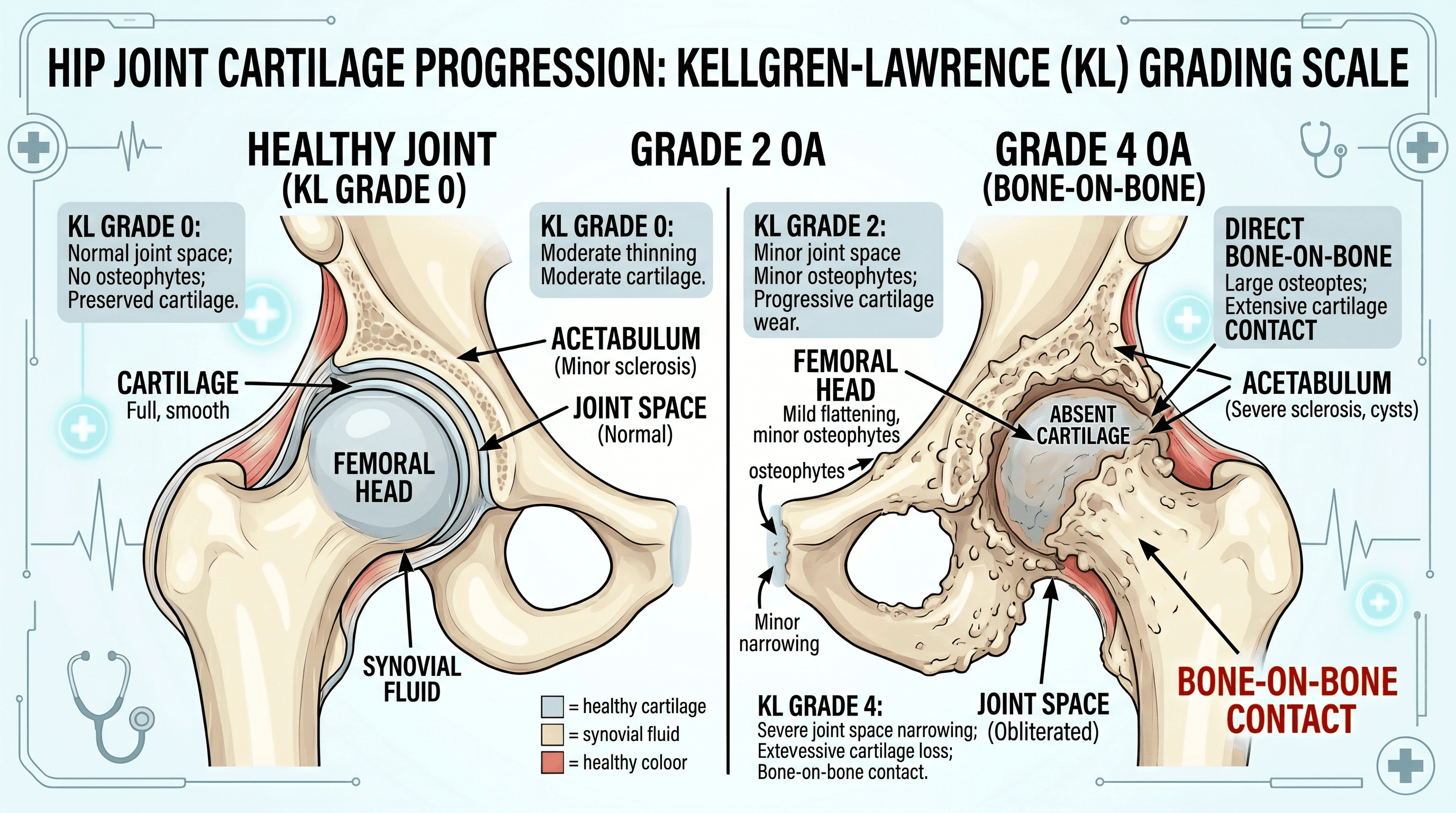
Orthopedic surgeons use the Kellgren-Lawrence (KL) grading scale, a 0-to-4 system based on X-ray findings, to classify the severity of hip osteoarthritis. Grade 0 means no signs of OA. Grade 4 means severe joint space narrowing and marked bone changes consistent with end-stage arthritis.
Many patients who are told they are "bone on bone" after a quick appointment are actually at Grade 2 or Grade 3, where significant cartilage remains and non-surgical pathways are not only appropriate but often highly effective. Grade 4 with a truly obliterated joint space is a different situation, and that is addressed honestly later in this guide.
Asking your orthopedist for your specific KL grade is one of the most useful questions a patient can ask before agreeing to surgery.
The First Line of Defense: Physical Therapy and Activity Modification
Physical therapy is the most evidence-supported non-surgical intervention for hip osteoarthritis, and it is consistently underutilized because patients are often referred directly to orthopedic surgeons rather than to rehabilitation specialists first.
The mechanism is straightforward: the hip joint is surrounded by muscles (primarily the glutes, hip flexors, core stabilizers, and quadriceps) that, when strengthened, absorb mechanical load that would otherwise press directly onto the joint surface. A well-designed PT program does not just reduce pain temporarily. It changes the biomechanics of how you move, which can meaningfully slow the progression of cartilage wear over time.
Physical Therapy and Hip-Strengthening Exercises
A structured hip OA program typically targets gluteal strengthening (bridges, clamshells, side-lying abductions), core stability, and range-of-motion work. Aquatic therapy is particularly effective for patients in significant pain because the buoyancy of water reduces joint loading during exercise, allowing meaningful muscle activation without the impact that aggravates symptoms on land.
According to the Mayo Clinic, physical therapy aimed at strengthening the muscles around the hip can delay or even eliminate the need for surgery in patients with mild to moderate OA. A referral can come through a primary care physician, or in many US states, patients can self-refer directly to a licensed physical therapist.
The frequency and duration that produces results is typically two to three sessions per week for six to twelve weeks, followed by an independent home program. Patients who are told PT "didn't work" after four sessions rarely gave the intervention a fair trial.
Lifestyle Changes That Reduce Hip Joint Load
Body weight has a direct and measurable effect on hip joint loading. Research from the NIH has established that each pound of body weight translates to roughly three to four pounds of force across the hip joint during walking. That ratio means a ten-pound reduction in body weight removes thirty to forty pounds of pressure per step, which compounds over thousands of steps per day.
An anti-inflammatory diet pattern (emphasizing omega-3 fatty acids, leafy vegetables, and reducing ultra-processed foods) can also reduce systemic inflammation that exacerbates joint pain, though it does not treat the structural joint damage directly.
Activity modification is not about giving up an active lifestyle. It is about redirecting impact. Swapping high-impact running for cycling, swimming, or an elliptical trainer preserves cardiovascular fitness and joint-friendly muscle tone without the ground reaction forces that accelerate cartilage wear.
Offloading the Joint: Walking Aids
A cane, used correctly, is a legitimate medical intervention, not a sign of giving up. The key is technique: a cane held in the hand opposite the affected hip offloads approximately 15 to 20 percent of the body weight that would otherwise pass through the damaged joint. This is enough to reduce pain during walking significantly for many patients and can be used alongside other treatments without any interaction concerns.
Walking aids are particularly relevant for patients managing severe flares, for those awaiting a treatment response from injections, and for patients who are not surgical candidates for other medical reasons.
The Cortisone Option: Corticosteroid Injections
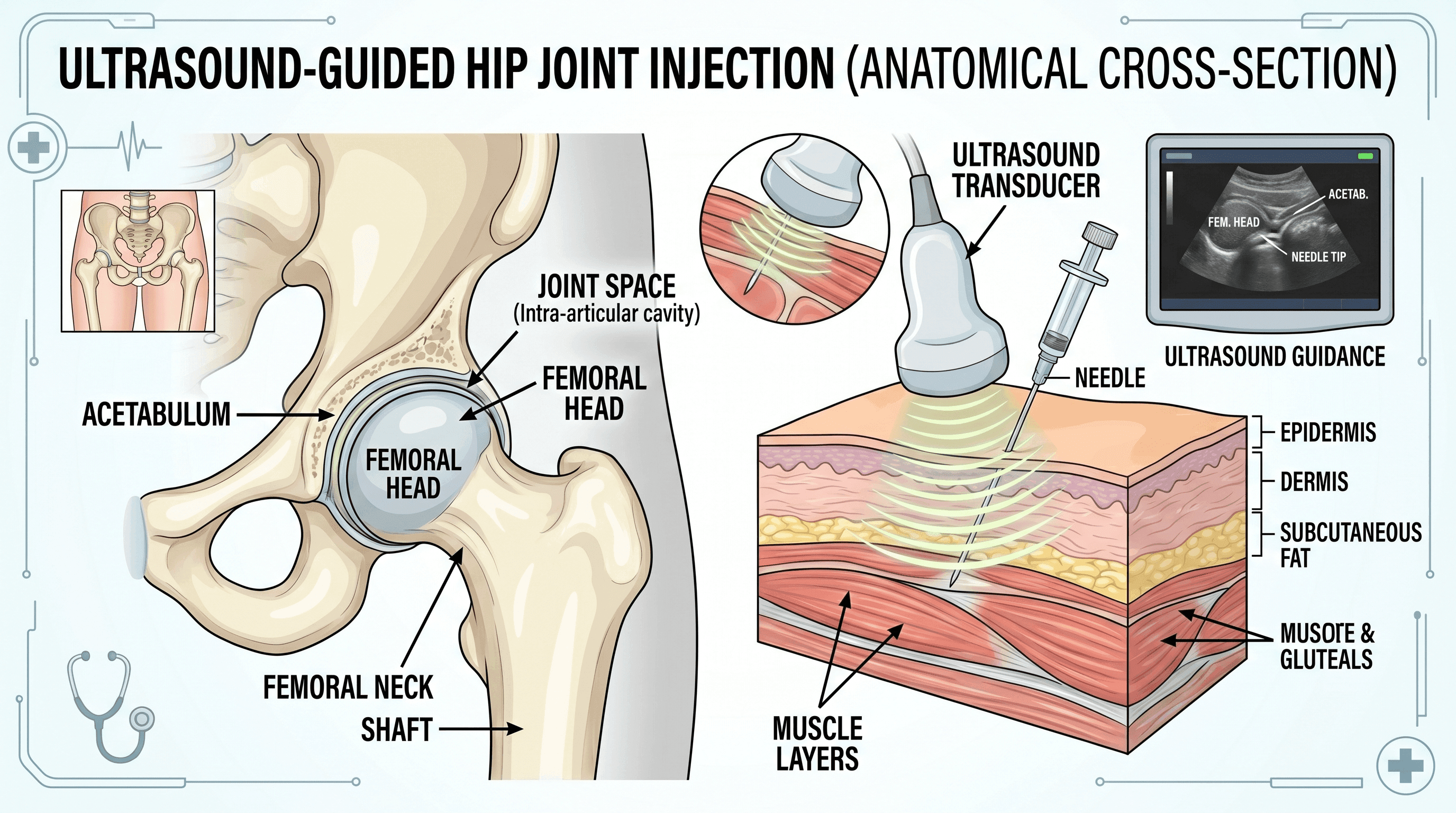
Corticosteroid injections (commonly called cortisone shots) are typically the first injectable treatment offered for hip OA, and for good reason. An ultrasound-guided injection of corticosteroid directly into the hip joint can reduce inflammation substantially, often within days, and provide meaningful pain relief for three to six months according to Cleveland Clinic guidelines.
The mechanism is anti-inflammatory rather than regenerative. Cortisone does not repair cartilage or rebuild joint space. What it does is suppress the inflammatory cascade that drives much of the pain in arthritic joints, creating a window during which patients can engage more productively with physical therapy.
The important caveat: repeated corticosteroid injections over time may contribute to cartilage degradation and weaken surrounding tendons if used excessively. Most orthopedic guidelines recommend no more than three to four injections per year in a given joint, and clinical judgment should govern frequency based on individual patient response.
Corticosteroid injections are best used as a short-term bridge, not a long-term strategy in isolation.
Lubricating the Joint: Hyaluronic Acid (Gel) Injections
Hyaluronic acid (HA) injections, sometimes called viscosupplementation or gel injections, work on a different principle than cortisone. Hyaluronic acid is a naturally occurring substance in joint fluid that provides lubrication and cushioning. In osteoarthritic joints, HA concentration and quality degrades. Injectable HA aims to restore some of that cushioning effect.
For knee OA, HA injections are FDA-approved and covered by Medicare and most insurance plans. For hip OA, they are currently considered off-label use in the United States, though they are widely used clinically and many patients report meaningful symptom relief.
A 2021 review published in PMC found that HA injections for hip OA produced statistically significant reductions in pain and functional improvement compared to baseline, particularly in patients with mild to moderate joint space narrowing. Newer single-injection formulations (rather than the older multi-injection protocols) have made the treatment more practical for patients.
HA injections are most likely to benefit patients at KL Grade 1 to 3 with preserved joint space. At Grade 4 with severe narrowing, there is limited physical space for the injected material to provide cushioning benefit.
The Biologics Frontier: PRP and Stem Cell Therapy
Regenerative medicine has moved from experimental fringe to mainstream orthopedic practice over the past decade. Two treatments in particular have accumulated meaningful clinical evidence for hip OA: platelet-rich plasma (PRP) therapy and stem cell (orthobiologic) injections.
PRP Therapy: What the Evidence Actually Shows
Platelet-rich plasma is derived from a patient's own blood. A blood draw is processed by centrifuge to concentrate the platelets, which are then injected into the affected joint. Platelets release growth factors that promote tissue healing, reduce inflammation, and may modulate the joint environment in ways that slow cartilage degradation.
A 2024 pooled analysis published in PMC found that PRP therapy produced significant clinical improvement in hip OA patients across multiple outcome measures, including pain scores and functional assessments, with effects lasting beyond six months in several studies. PRP does not regrow destroyed cartilage on imaging, but the functional gains documented in peer-reviewed research are clinically meaningful.
PRP is generally not covered by insurance in the US. Out-of-pocket costs typically range from $500 to $2,000 per injection depending on the provider and protocol. It is most appropriate for patients at KL Grade 2 to 3 who have not responded adequately to cortisone or HA injections.
Stem Cell and Orthobiologic Therapy
The term "stem cell therapy" covers a range of procedures. The most studied for hip OA involves bone marrow aspirate concentrate (BMAC), in which stem cells and growth factors are extracted from the patient's own bone marrow (typically from the iliac crest) and injected into the hip joint.
A 2024 pooled analysis of 13 studies involving 742 patients, published in PubMed, found that orthobiologic therapies including BMAC produced significant improvements in pain and function scores for hip OA, with a favorable safety profile. Notably, the results were more pronounced in younger patients and those with less advanced degeneration.
This category of treatment warrants clear-eyed consumer caution. Legitimate orthobiologic procedures performed by trained orthopedic specialists differ substantially from the unregulated "stem cell clinics" that charge large sums for unproven therapies. Patients should seek treatment through academic medical centers or board-certified orthopedic specialists who can explain the exact biological preparation being used and cite peer-reviewed evidence for the protocol.
Stem cell therapy is best suited for younger patients (under 55), those with Grade 2 to 3 OA, and patients with avascular necrosis (AVN) of the femoral head who are not yet candidates for total joint replacement.
Surgical Alternatives to Total Hip Replacement
There is an entire tier of procedures between conservative non-surgical management and total hip arthroplasty. These surgical alternatives are appropriate for patients who need intervention beyond injections but want to preserve their natural joint anatomy and potentially avoid or delay total replacement.
Hip Arthroscopy
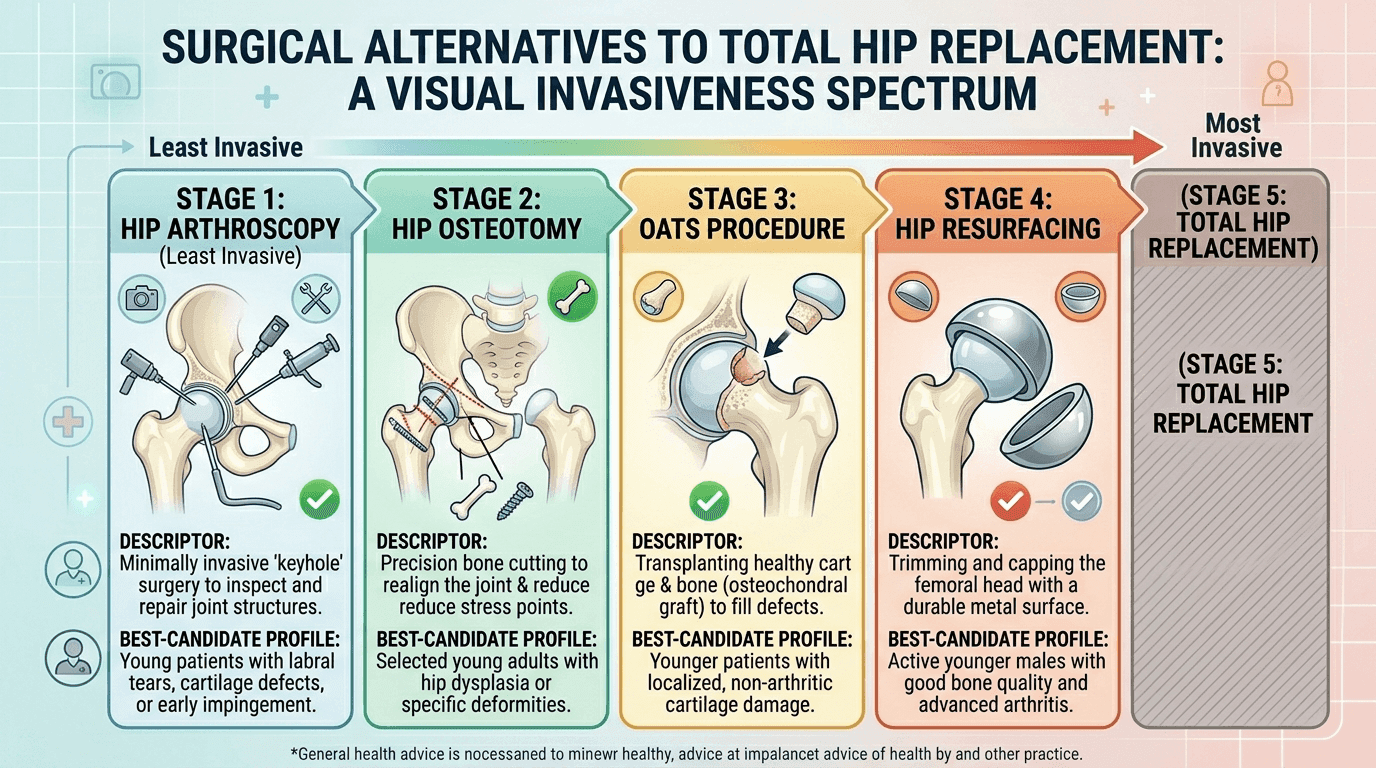
Hip arthroscopy is a keyhole surgical technique in which a camera and instruments are inserted through small incisions to address specific structural problems inside the hip joint. It is appropriate for labral tears, femoroacetabular impingement (FAI, a structural mismatch between the ball and socket), cartilage damage in isolated areas, and loose bodies within the joint.
According to the Mayo Clinic, hip arthroscopy typically involves a shorter recovery than open procedures and can significantly reduce pain and improve function in appropriately selected patients. The critical qualifier: it is not appropriate for bone-on-bone arthritis. Patients with Grade 4 OA who undergo hip arthroscopy rarely achieve meaningful improvement and may accelerate their timeline to total replacement. Patient selection is everything with this procedure.
Hip Resurfacing
Hip resurfacing is a bone-preserving surgical alternative in which the damaged surface of the femoral head (the ball) is capped with a metal component, and the acetabular socket receives a metal liner, rather than removing the top of the femur entirely as in a standard total hip replacement.
Because the femoral neck and much of the femoral head are preserved, revision surgery (if ever needed) is substantially easier than revising a failed total hip replacement. This makes resurfacing particularly valuable for younger, active patients who are statistically likely to outlive a total hip implant's lifespan of 15 to 25 years.
Hip resurfacing is most commonly performed in younger men (under 60) with good bone quality and larger femoral head sizes. A 2023 review in PubMed confirmed that modern metal-on-metal hip resurfacing implants, using improved designs and surgical techniques, have substantially improved safety profiles compared to earlier-generation devices. Resurfacing is performed at significantly lower rates in the US than in the UK, where it remains a common choice for active younger patients.
Hip Osteotomy
A hip osteotomy is a procedure that realigns the hip joint by cutting and repositioning bone to shift weight-bearing forces away from the damaged portion of cartilage and onto healthier tissue. It is most appropriate for hip dysplasia (a structural abnormality where the socket does not adequately cover the femoral head) and for younger patients with focal cartilage damage rather than diffuse joint degeneration.
When successful, a hip osteotomy can preserve the natural hip joint for ten or more years before any additional intervention becomes necessary. It is rarely discussed in general orthopedic offices because it requires specialist surgical expertise, but at academic medical centers and hip preservation clinics, it is a well-established option for the right patient profile.
OATS Procedure: A Regenerative Surgical Option
Osteochondral Allograft Transplantation Surgery (OATS) is a procedure, detailed by the Mayo Clinic's sports medicine program, in which plugs of healthy cartilage and bone from a donor source are transplanted into the damaged area of the hip. It is particularly relevant for patients with avascular necrosis of the femoral head, a condition where blood supply disruption causes bone death, which can progress to joint collapse if untreated.
The Mayo Clinic reports approximately 80 percent patient satisfaction and preserved joint function at ten-year follow-up in appropriately selected OATS patients. This procedure is not widely available and should be sought through orthopedic centers with specific hip preservation expertise.
Matching the Right Alternative to Your Patient Profile
Every treatment discussed in this guide works better for some patients than others. This section consolidates those options into practical decision paths based on patient profile.
Young, Active Patients (Under 55)
Younger patients face a specific problem with total hip replacement: implants have a finite lifespan, typically 15 to 25 years, and revision surgery (replacing a worn-out replacement) carries higher complication rates and worse outcomes than a primary replacement. A 45-year-old who has hip replacement today is statistically likely to need at least one revision during their lifetime.
For this group, the priority is preserving natural anatomy as long as reasonably possible. A logical treatment progression often looks like this: physical therapy plus orthobiologic injections as a first phase, followed by hip arthroscopy or osteotomy if structural problems are contributing, then hip resurfacing as a bone-preserving surgical option, with total replacement reserved as a genuine last resort.
Older Patients Who Want to Delay Surgery
For patients in their 60s and 70s who have moderate OA but are not ready or willing to undergo major surgery, a structured delay strategy is reasonable and achievable. Hyaluronic acid injections combined with a consistent PT program and weight management can often delay total replacement by one to two years, depending on the degree of degeneration. Honest expectation-setting matters here: the goal is quality of life and function during the delay period, not permanent avoidance.
Patients Who Cannot Have Surgery
Some patients are not surgical candidates due to serious health conditions: advanced Parkinson's disease, severe muscle weakness that would compromise rehabilitation, active infection, serious clotting disorders, or systemic illness that makes anesthesia high-risk. For these patients, non-surgical alternatives are not a preference but a medical necessity.
Cooled radiofrequency ablation (CRFA) is a minimally invasive procedure in which nerve signals carrying pain from the hip joint are interrupted using radiofrequency energy. It does not treat the underlying arthritis but can provide substantial pain relief for six months to two years, with research showing significant improvement in both pain and functional scores in patients who cannot pursue surgical options. This procedure is performed under image guidance and is generally safe for patients who are not candidates for general anesthesia.
If you are in this situation, connecting with a pain management specialist in addition to your orthopedist can open treatment pathways that a surgical-focused practice may not routinely offer. You can see a doctor online through Momentary's virtual primary care service to get a referral to the right specialist, discuss your current treatment plan, or ask a provider to review whether your options have been fully explored.
When Surgery Is Genuinely the Best Option
Intellectual honesty requires saying this clearly: total hip replacement is a highly successful procedure with decades of outcome data, and for the right patient, it is the most effective path to restored quality of life. That patient typically has Grade 4 OA with a truly obliterated joint space, has undergone a genuine trial of conservative treatment (at least six months of PT, injections, and activity modification) without adequate relief, experiences pain that prevents sleep or requires daily opioid use to manage, and whose hip motion has become so restricted it affects basic activities like dressing and bathing.
Surgery is not a failure of alternatives. For patients who have reached this threshold, it is the most rational next step.
Questions to Ask Your Orthopedist Before Agreeing to Surgery
Patients who feel pressured to schedule surgery immediately after a consultation deserve more time and more information. These are not adversarial questions; they are the questions any well-informed patient has the right to ask.
What is my Kellgren-Lawrence grade, and what does that mean for non-surgical options? Have we discussed orthobiologic treatments like PRP or bone marrow concentrate, and am I a candidate? Am I a candidate for hip resurfacing rather than total replacement, given my age and activity level? What would a structured six-month conservative treatment trial look like, and what outcomes would tell us it has succeeded or failed? If I pursue physical therapy and injections now, how does that affect my surgical options later?
A surgeon who takes time to answer these questions thoroughly is one worth trusting. A surgeon who cannot or will not engage with them may not be the right fit for a patient who is not yet ready to commit to major surgery.
FAQ
What can I do instead of having a hip replacement?
The most evidence-supported non-surgical options include a structured physical therapy program targeting hip and gluteal strength, weight loss to reduce joint loading, anti-inflammatory pain management with NSAIDs or acetaminophen, and injectable treatments including corticosteroids, hyaluronic acid, and orthobiologics like PRP. The best starting point depends on the severity of joint degeneration and the patient's overall health.
Can a hip be repaired without surgery?
For some underlying causes of hip pain, yes. Labral tears, femoroacetabular impingement, and focal cartilage defects can be addressed with minimally invasive hip arthroscopy. For advanced osteoarthritis, the joint cannot be structurally repaired without surgery, but pain and function can be managed substantially with the non-surgical approaches described above.
Can you avoid surgery with a bone-on-bone hip?
It depends on what "bone on bone" means for your specific case. Many patients given this description are at KL Grade 2 to 3, where meaningful cartilage remains and non-surgical treatment is appropriate. True Grade 4 disease with complete joint space obliteration is harder to manage without surgery, though conservative measures can still improve quality of life, particularly in patients who are not surgical candidates.
Can I live without having a hip replacement?
Many people with hip OA, including moderate to severe cases, live full and functional lives without total hip replacement, through a combination of physical therapy, weight management, pain management, and injections. The question worth asking is not whether replacement is avoidable in the abstract, but whether your current quality of life is acceptable and sustainable with the available non-surgical options.
How long can you delay hip replacement?
There is no universal answer, as delay depends on the degree of degeneration, response to treatment, and individual pain tolerance and activity goals. Patients with Grade 2 to 3 OA who engage consistently with PT, injections, and lifestyle modification can often delay surgery by one to several years. Grade 4 disease with severe functional limitation is harder to manage conservatively for extended periods.
What is the newest alternative to hip replacement?
Cooled radiofrequency ablation (CRFA) and advanced orthobiologic protocols (including BMAC and next-generation PRP preparations) represent some of the more recent additions to the non-surgical toolkit. The OATS procedure for avascular necrosis, while not new, remains underutilized and represents a meaningful surgical alternative for younger patients with AVN.
If you want help making sense of your symptoms, understanding your treatment options, or knowing which questions to bring to your next appointment, you can explore your situation with Momentary's AI health navigator for personalized, evidence-based guidance on next steps.
References
- NIH / PubMed Central: Orthobiologic therapies for hip OA, pooled analysis — Cited for PRP and orthobiologic clinical evidence in hip osteoarthritis.
- NIH / PubMed Central: HA injections for hip OA outcomes — Cited for hyaluronic acid viscosupplementation evidence in hip OA.
- PubMed: Hip resurfacing safety and outcomes review — Cited for modern hip resurfacing implant safety profile and patient selection.
- PubMed: Stem cell / BMAC pooled analysis, 742 patients — Cited for stem cell therapy outcomes in hip OA.
- NIH / PubMed Central: Joint loading and body weight in OA — Cited for the three-to-four pounds of force per pound of body weight statistic.
- Mayo Clinic Sports Medicine: OATS procedure as hip replacement alternative — Cited for OATS procedure description and ten-year outcome data.
- Mayo Clinic: Physical therapy and hip OA management — Cited for PT evidence and self-referral guidance.
- Mayo Clinic: Hip arthroscopy overview — Cited for hip arthroscopy indications and recovery context.
- Cleveland Clinic: Cortisone injections — Cited for corticosteroid injection mechanism, duration, and frequency guidelines.