

If your orthopedic surgeon has mentioned shoulder replacement and your first instinct was to ask "but is there another way?" — that instinct is worth following. The honest answer is: yes, for many people, there are meaningful alternatives. But the right one depends almost entirely on your specific diagnosis, how far the damage has progressed, and how much it is already affecting your daily life.
This guide maps every major non-surgical and minimally surgical option to the condition it best addresses. It also covers the surgical middle ground most patients never hear about, and gives you honest timelines for how long these alternatives can realistically hold surgery off.
At a Glance
| Topic | Key Facts |
|---|---|
| Primary condition covered | Shoulder osteoarthritis, rotator cuff tears, inflammatory arthritis |
| First-line treatment | Structured physical therapy (6 to 12 weeks minimum) |
| Injection options | Corticosteroids, hyaluronic acid, PRP |
| Surgical middle ground | Arthroscopic debridement, shoulder resurfacing, SCR |
| When surgery becomes necessary | Bone-on-bone confirmed, 6+ months conservative care failed, night pain unmanageable |
| TSR patient satisfaction | Above 90% pain relief in published outcome data |
The Honest Truth About Managing Shoulder Arthritis Without Surgery
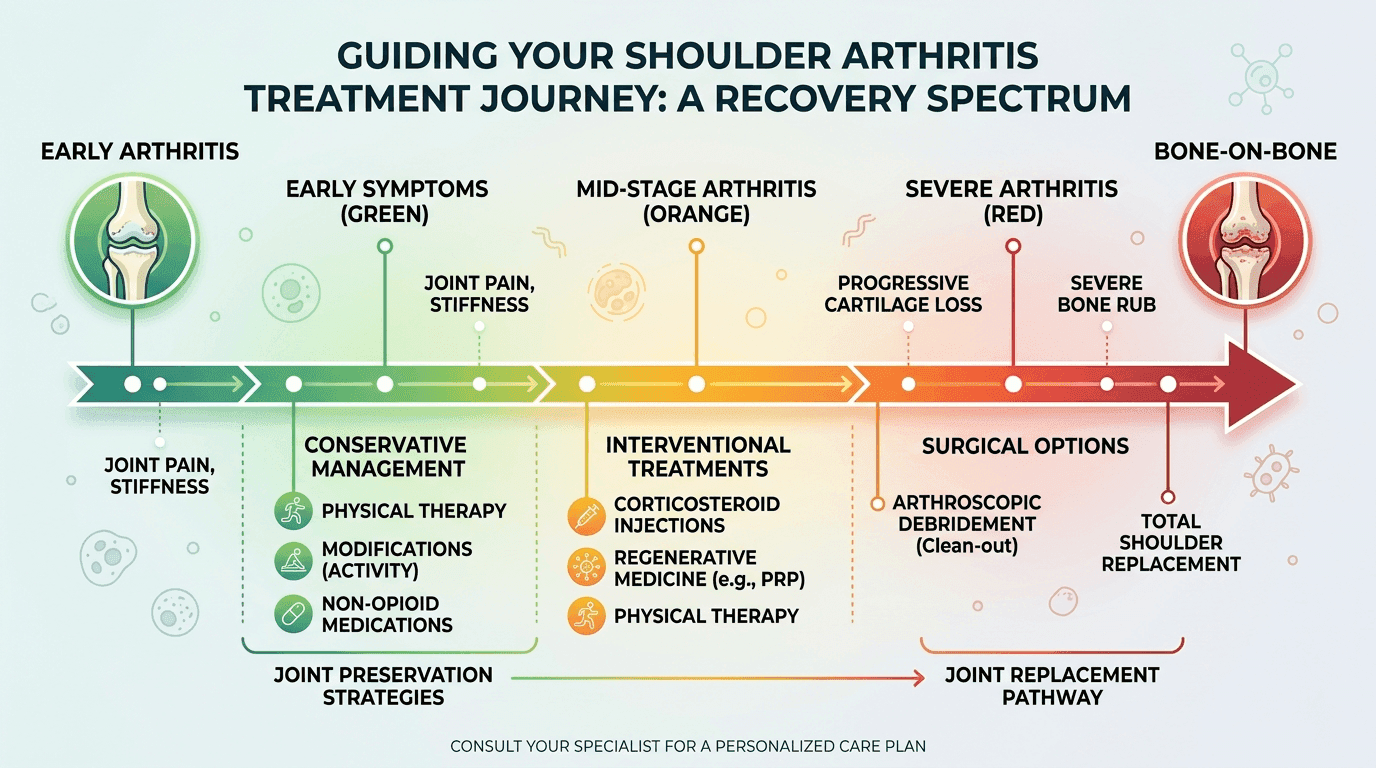
The most important thing to understand before exploring alternatives is this: no conservative treatment reverses cartilage loss. Once cartilage is gone, it does not regenerate on its own. What alternatives can do is slow the progression of damage, reduce inflammation, strengthen the structures that compensate for the lost cartilage, and keep pain at a manageable level, sometimes for years or even decades.
That distinction matters because it sets realistic expectations. The goal of non-surgical shoulder arthritis treatment is not to cure the joint. It is to delay the point at which the joint's condition outpaces what conservative care can manage. For patients with early or moderate osteoarthritis (the gradual wearing away of the smooth cartilage that lines the shoulder's ball-and-socket joint), that window can be very long. For patients with advanced bone-on-bone degeneration, alternatives buy time, not a cure.
The good news is that the toolkit is larger and better-evidenced than most patients realize.
Why Shoulder Replacement Is a Last Resort
Most orthopedic surgeons follow a conservative-first protocol before recommending total shoulder replacement (TSR). The shoulder sees roughly 4.5 million physician visits annually in the United States, and the overwhelming majority of those visits are managed without surgery.
The reasons for this are practical. Shoulder replacement implants have a lifespan, typically estimated between 15 and 20 years before potential revision is needed. For a 45-year-old patient, agreeing to TSR today may mean agreeing to a second, more complex revision surgery in their 60s. Surgeons delay replacement not to avoid helping patients, but because the longer a patient can manage conservatively, the better the long-term arithmetic on implant longevity works out.
That said, delaying surgery too long carries its own risks. Severe, unmanaged arthritis can cause bone loss in the glenoid (the socket side of the joint), which complicates reconstruction later. So the goal is not maximum delay at any cost, but informed, strategic delay with a clear plan.
Non-Surgical Alternatives Ranked by Evidence
Physical Therapy: The Strongest Evidence
Structured physical therapy remains the most evidence-supported conservative option for shoulder joint disease, and it is the appropriate first step for nearly every diagnosis short of a massive irreparable tear.
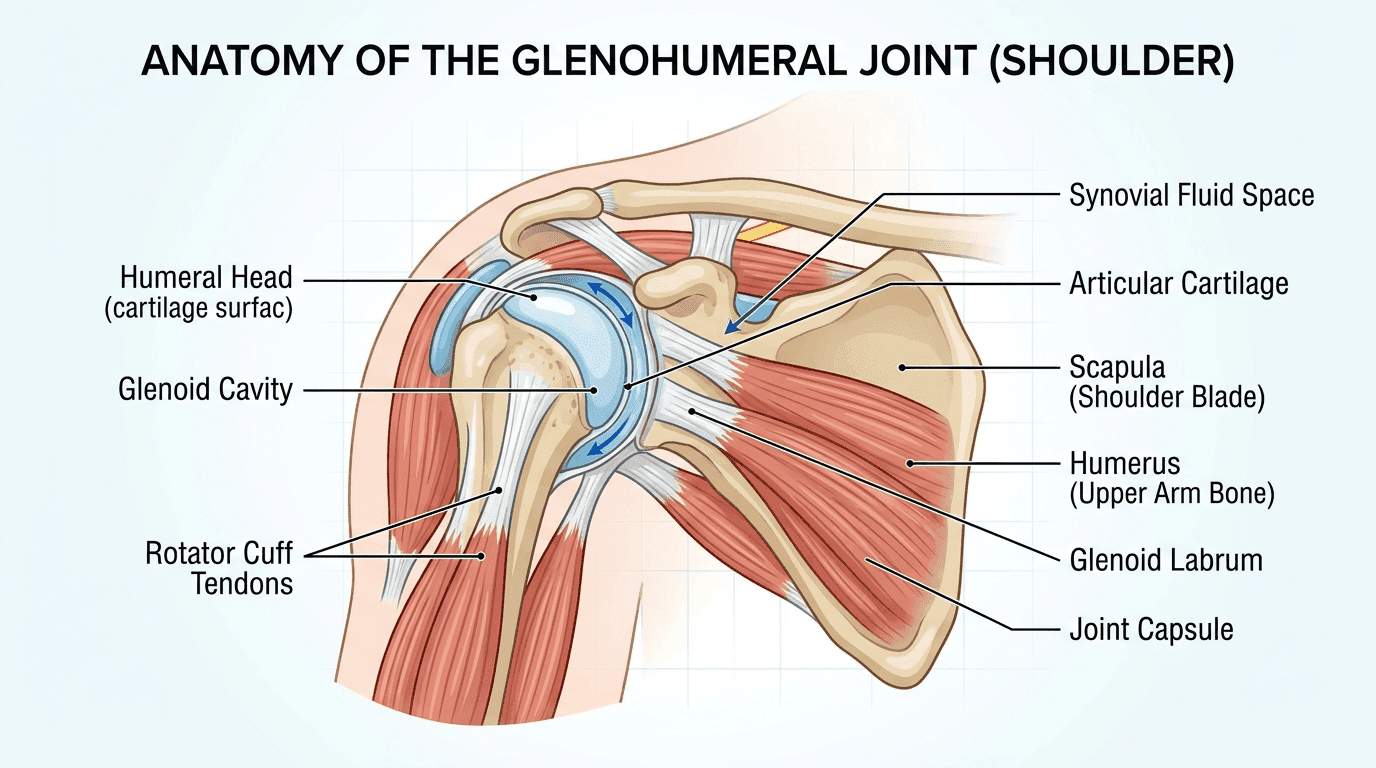
The mechanism is straightforward. The rotator cuff, a group of four muscles and their tendons surrounding the shoulder joint, functions as a dynamic stabilizer. When those muscles are strong, they actively hold the humeral head (the ball) centered in the glenoid (the socket), reducing the mechanical grinding that accelerates cartilage loss. A well-designed PT program targeting rotator cuff strengthening and scapular stabilization can meaningfully offload stress from an arthritic joint.
A standard course of structured PT runs six to twelve weeks, with two to three supervised sessions per week supplemented by a home exercise program. Manual therapy techniques, including joint mobilization and soft tissue work, are frequently incorporated alongside strengthening work. For patients with mild to moderate damage, research supports PT as a primary management strategy with outcomes comparable to surgery in select populations.
The key qualifier is "structured." A generic set of shoulder exercises printed from a website is not the same as a program designed around your imaging, your strength deficits, and your functional goals. If previous PT "didn't work," it is worth asking whether the program was genuinely tailored to your condition.
Injection Therapy: The Stepwise Approach
Injections are not a single treatment; they are a progression of options, each with different mechanisms, evidence bases, and appropriate timing.
Corticosteroid injections are typically the first injection option offered. A corticosteroid (commonly triamcinolone or methylprednisolone) is injected directly into the glenohumeral joint space, where it suppresses local inflammation and can provide several weeks to several months of pain relief. The relief is real and often significant, but it does not address underlying structural damage. A 2024 study published in the Journal of Shoulder and Elbow Surgery raised important safety considerations around repeated corticosteroid use, including potential acceleration of cartilage degradation with frequent injections. Most guidelines recommend limiting injections to three or four per year in the same joint.
Hyaluronic acid injections (also called viscosupplementation or gel injections for shoulder arthritis) work differently. Hyaluronic acid is a naturally occurring component of healthy synovial fluid, the lubricating fluid inside the joint. In an arthritic joint, synovial fluid becomes thinner and less effective. Injecting a concentrated hyaluronic acid product attempts to restore some of that cushioning and lubrication. The evidence for hyaluronic acid in the shoulder is more mixed than in the knee, but a meaningful subset of patients report sustained relief lasting six months or longer. It carries none of the tissue-degradation concerns associated with steroids, making it an appropriate option for patients who need repeated injections over time.
Platelet-Rich Plasma (PRP) represents the next step. PRP is derived from the patient's own blood: a sample is drawn, spun in a centrifuge to concentrate the platelets, and injected back into the joint. Platelets contain growth factors that may support tissue repair and modulate inflammation. Published data on PRP for shoulder osteoarthritis shows promising results for pain reduction, though evidence for structural cartilage regeneration remains limited. PRP injections typically cost $500 to $2,000 out of pocket, as most insurance plans do not cover them. They are best considered for patients who have had adequate but not complete relief from corticosteroids, or for whom repeated steroid injections are no longer advisable.
Medications and Topical Treatments
Oral nonsteroidal anti-inflammatory drugs (NSAIDs) such as ibuprofen and naproxen reduce prostaglandin-mediated inflammation and are a standard part of shoulder arthritis management. Acetaminophen is appropriate for patients who cannot tolerate NSAIDs. Both classes address pain and inflammation but do not modify the underlying disease process. Long-term NSAID use carries well-documented risks including gastrointestinal irritation, cardiovascular effects, and renal strain, so they are best used at the lowest effective dose for the shortest necessary duration, in consultation with a physician.
Topical diclofenac gel (available by prescription as Voltaren) delivers an NSAID directly to the joint with substantially lower systemic absorption than oral versions. For patients with localized shoulder pain, topical diclofenac offers meaningful anti-inflammatory benefit with a more favorable side-effect profile than oral NSAIDs.
Lifestyle and Ergonomic Modifications
Modifications to daily activity are consistently underestimated as a management strategy, and they are often more actionable than patients expect.
Sleep position is one of the most impactful adjustments. Sleeping on the affected shoulder compresses the joint and can intensify night pain significantly. Switching to the opposite side or sleeping semi-reclined with a wedge pillow under the affected arm frequently produces an immediate improvement in sleep quality. Overhead reaching places the shoulder in its most mechanically disadvantaged position, maximizing joint compression in an already damaged space. Reorganizing kitchen storage, lowering shelving, and using grabber tools for high items reduces cumulative daily stress on the joint. For patients whose work involves repetitive overhead or heavy lifting tasks, an ergonomic assessment and workstation modification can be the difference between managing well and accelerating toward surgery.
Weight management, while not specific to the shoulder, reduces total systemic inflammatory burden, which matters in inflammatory arthritis conditions. It also reduces the mechanical load on the joint in loaded activities.
Emerging Modalities: Shockwave, Dry Needling, and Prolotherapy
These treatments are worth understanding, with honest caveats about the evidence.
Extracorporeal shockwave therapy (ESWT) uses acoustic pulses delivered to the tissue around the joint to stimulate cellular repair responses. It has reasonably good evidence for calcific tendinitis of the shoulder, a related but distinct condition involving calcium deposits in the rotator cuff tendons. Evidence for its benefit in glenohumeral osteoarthritis specifically is less established.
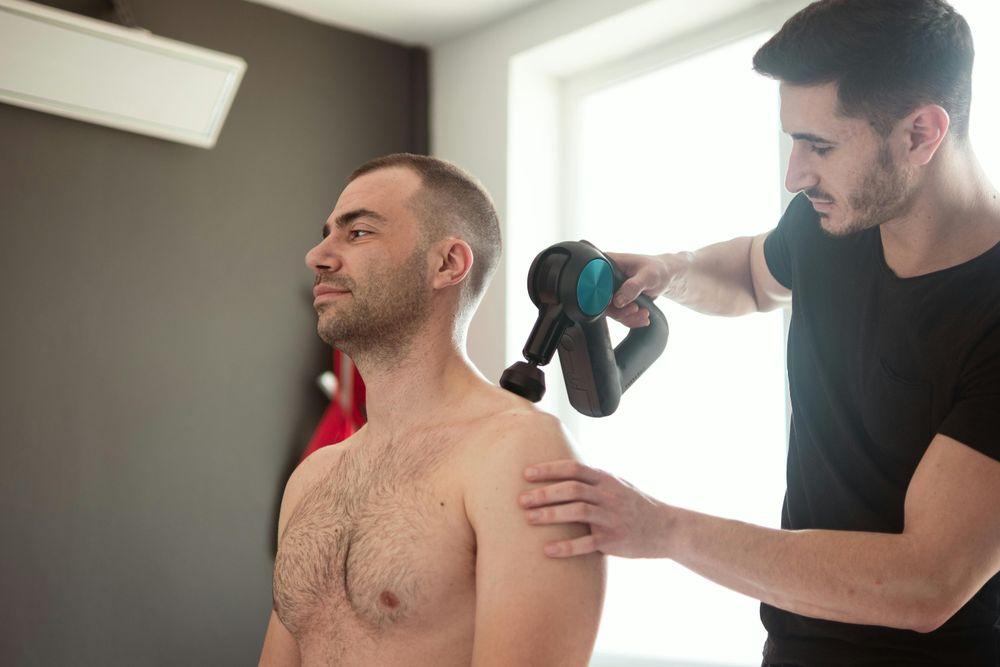
Dry needling involves inserting thin needles into muscular trigger points to release tension and improve mobility. It is frequently used as an adjunct to PT for shoulder pain, and many patients report short-term improvement in range of motion and pain levels. It is not a structural treatment, but as a complement to a rehabilitation program, it can be a useful tool.
Prolotherapy involves injecting an irritant solution (usually a dextrose-based mixture) into the joint or surrounding structures to stimulate a localized healing response. Evidence for prolotherapy in shoulder arthritis remains preliminary. It may be worth discussing with a sports medicine physician in cases where other conservative options have been insufficient, but it should not be considered a first or second-line option.
Which Alternative Is Right for Your Specific Condition?
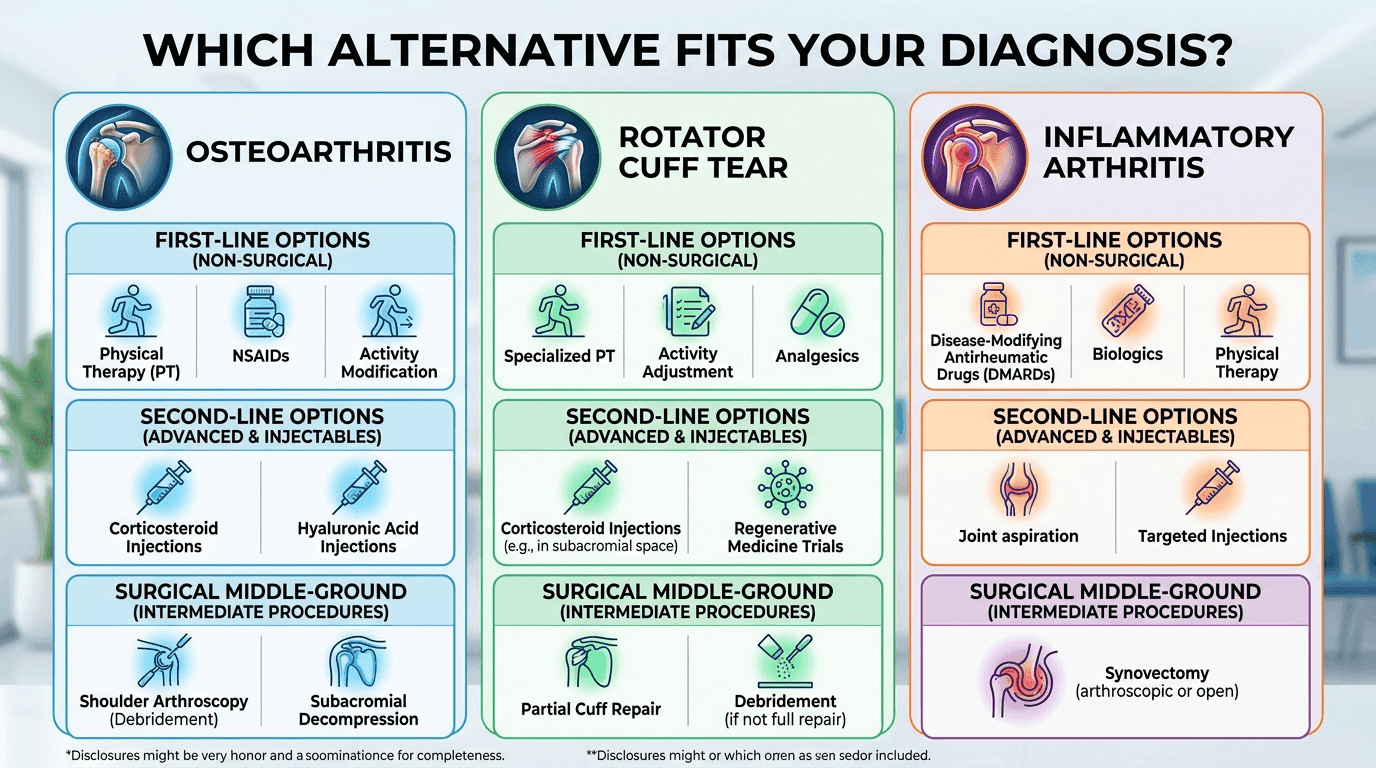
The right alternative depends heavily on the diagnosis driving your shoulder pain. The treatments above are not interchangeable across conditions.
Shoulder Osteoarthritis (Glenohumeral)
Glenohumeral osteoarthritis is the gradual loss of cartilage in the main ball-and-socket joint of the shoulder. Management should be staged based on severity.
In early-stage osteoarthritis, cartilage is thinned but intact, and joint space is reduced but not eliminated. At this stage, a structured PT program combined with anti-inflammatory medication is the appropriate primary approach. Activity modification to reduce high-impact overhead loading is also introduced at this stage.
In moderate-stage disease, cartilage loss is more significant, and patients typically experience pain with activities of daily living. Injection therapy (corticosteroid or hyaluronic acid) becomes a primary tool alongside continued PT. PRP injections may be introduced at this stage, particularly for patients under 60 who are poor candidates for repeated steroids.
In advanced-stage disease, with confirmed bone-on-bone contact visible on imaging, conservative options shift from management to symptom control while the patient and surgeon determine surgical timing. Injections may still provide episodic relief, but the trajectory toward surgical intervention is typically established at this point.
Rotator Cuff Tears: Partial vs. Massive Irreparable
Rotator cuff tears require a completely different framework from osteoarthritis.
A partial-thickness tear, or a small to medium full-thickness tear with intact tendon tissue, is a strong candidate for non-surgical management. Published evidence supports PT-based rehabilitation for these tears, with a significant proportion of patients achieving full functional recovery without surgery. The program focuses on strengthening the intact portions of the rotator cuff and the periscapular muscles to compensate for the torn tissue.
A massive or irreparable tear, meaning a tear too large or too retracted for surgical repair, changes the calculus. PT can still improve function and reduce pain to some extent, but the structural deficit is not addressable through rehabilitation alone. These patients are candidates for the surgical middle-ground options described below, or, depending on age and activity level, for reverse total shoulder replacement.
Rheumatoid Arthritis and Inflammatory Shoulder Disease
Inflammatory arthritis conditions, including rheumatoid arthritis (RA), psoriatic arthritis, and ankylosing spondylitis affecting the shoulder, are fundamentally different from osteoarthritis. The damage is driven by an overactive immune system attacking the joint lining, not simply by mechanical wear.
For these patients, the most powerful non-surgical interventions are disease-modifying antirheumatic drugs (DMARDs) and biologic therapies, prescribed and managed by a rheumatologist. Biologics such as TNF inhibitors (e.g., etanercept, adalimumab) target specific inflammatory pathways and can dramatically slow joint destruction when started early in the disease course. A patient who achieves good systemic disease control through biologics may avoid or substantially delay shoulder replacement entirely. This is a gap in most patient-facing content on this topic: the single most effective non-surgical intervention for inflammatory shoulder disease is not a shoulder treatment at all. It is systemic disease management.
The Surgical Middle Ground: Options Between PT and Full Replacement
Between physical therapy and total shoulder replacement lies a set of procedures most patients never hear about. These are not full replacements, but they do involve surgery. For the right candidates, they can extend the window before a full replacement is needed by several years.
Arthroscopic debridement (sometimes called a comprehensive arthroscopic management, or CAM, procedure) uses a small camera and instruments inserted through tiny incisions to remove bone spurs, loose cartilage fragments, and inflamed tissue from the joint. It does not restore cartilage, but by cleaning out the mechanical irritants in the joint, it can reduce pain and improve mobility. The procedure is typically reserved for patients with moderate arthritis who have had inadequate relief from conservative care but are not yet at the bone-on-bone stage. Recovery is measured in weeks, not months, and it preserves all options for future surgery.
Superior capsular reconstruction (SCR) is specifically designed for massive irreparable rotator cuff tears. In this procedure, a graft (either from the patient or a donor) is used to reconstruct the superior capsule of the shoulder, effectively replacing the stabilizing function of the torn tendon. SCR is not appropriate for osteoarthritis; it addresses the specific problem of superior migration of the humeral head that occurs when the superior rotator cuff is absent. Candidacy typically requires a relatively intact glenohumeral joint surface.
Biologic resurfacing and anatomic biologic total shoulder resurfacing (ABTSR) is an option for younger, highly active patients, often under 55, who have significant cartilage loss but want to avoid a prosthetic implant. The procedure involves resurfacing the damaged joint with a biological graft rather than metal or polyethylene components. It preserves more native bone than standard replacement, which matters when considering what a future revision surgery would involve.
Pyrocarbon partial shoulder replacement involves replacing only the humeral head (the ball) with a pyrocarbon component, leaving the native glenoid socket intact. Because pyrocarbon has a modulus of elasticity close to cortical bone, it produces less wear on the opposing cartilage than metal, making it an option for active patients who want partial intervention without committing to a full prosthesis.
If any of these middle-ground procedures is on your radar, connecting with a specialist to discuss candidacy is the right next step. A virtual primary care provider through Momentary can help coordinate a referral to an orthopedic specialist and ensure the clinical picture is complete before any surgical consultation.
How Long Can Alternatives Realistically Delay Shoulder Replacement?
The answer depends almost entirely on how much cartilage is left.
For patients with mild to moderate osteoarthritis, a well-executed combination approach, including structured PT, targeted injections, activity modification, and appropriate medications, can delay replacement for years or in some cases decades. The timeline is not guaranteed, but the data on non-operative management for early-stage glenohumeral arthritis supports meaningful long-term symptom control in a substantial proportion of patients.
For patients with advanced disease, meaning confirmed bone-on-bone contact, alternatives typically extend the window by months rather than years. At this stage, the more useful question is not "how long can I delay?" but "am I ready, and what type of replacement is right for me?" A March 2025 study in the Journal of Shoulder and Elbow Surgery examining outcomes for anatomic versus reverse total shoulder replacement reinforces that surgical timing and implant selection both significantly affect long-term functional results, which is why patients should approach this decision with as much information as possible.
One risk worth naming directly: waiting too long can compromise future surgery. Severe, prolonged arthritis can cause glenoid bone loss that makes reconstruction more complex and outcomes less predictable. The goal of conservative care is informed, strategic delay, not avoidance of surgery at any cost.
Signs It Is Time to Move Forward With Surgery
At some point, the balance shifts. These are the clinical signals that suggest conservative care has reached its limit.
Confirmed bone-on-bone contact on imaging, combined with pain that is no longer adequately controlled by injections or medications, is the clearest indicator. Night pain that consistently disrupts sleep, meaning pain that wakes a patient repeatedly regardless of position or pain management strategy, is a significant functional threshold. Loss of the ability to perform essential daily tasks, such as lifting the arm to wash hair, reaching a seatbelt, or dressing independently, represents a quality-of-life floor that most clinicians use as a surgical indicator.
Failing three or more months of genuinely structured, supervised physical therapy with no meaningful improvement is also a recognized threshold. The qualifier "genuinely structured" matters here: patients whose prior PT was inconsistent, poorly matched to their diagnosis, or too brief should consider a second, more targeted course before concluding that PT has failed.
When surgery does become the appropriate path, outcomes are strong. Published data shows above 90% satisfaction rates for pain relief following total shoulder replacement, with significant improvements in range of motion and daily function for most patients.
Questions to Ask Your Surgeon Before Agreeing to Shoulder Replacement
Walking into a surgical consultation better prepared changes the conversation. These questions help ensure the decision is fully informed.
Have I genuinely exhausted the conservative alternatives appropriate to my diagnosis, or did I exit conservative care too early? This is particularly worth asking if PT was shorter than six weeks or if injection therapy was not offered.
Am I a candidate for a partial replacement or a surgical middle-ground procedure, and if not, why? Not every patient is appropriate for these options, but every patient deserves to know whether they were considered.
What is the risk of waiting six more months? This question opens the conversation about bone loss risk, symptom trajectory, and the surgeon's own assessment of urgency.
What type of replacement are you recommending, anatomic or reverse, and what is the reasoning? The two types have different candidacies, recovery profiles, and long-term trajectories. A Cleveland Clinic overview of reverse shoulder replacement outlines the key differences in plain language and is worth reviewing before a consultation.
What does recovery involve, and when would I realistically return to the activities I care about most? Timelines vary by procedure type, patient age, and pre-operative function, and the answer should be specific, not generic.
What happens if I choose not to have surgery and continue managing conservatively? A surgeon who cannot answer this question clearly, or who dismisses it, is a surgeon worth getting a second opinion from.
If you are still working through whether surgery is the right call, using Momentary's AI health navigator can help you organize your symptoms, review your options, and prepare a more focused set of questions for your orthopedic consultation.
Frequently Asked Questions
What happens if you do not have shoulder replacement surgery?
For many patients, especially those with early or moderate arthritis, not having shoulder replacement surgery means continuing to manage the condition conservatively for an extended period. With the right combination of physical therapy, injections, and lifestyle modification, quality of life can remain high for years. For patients with advanced bone-on-bone disease, avoiding surgery typically means living with progressively worsening pain and reduced function, with the additional risk that prolonged delay may cause bone loss that complicates surgery if it becomes necessary later.
How can I treat my shoulder without surgery?
The most evidence-supported non-surgical approach combines structured physical therapy targeting rotator cuff and scapular muscle strength, appropriate injection therapy (corticosteroid, hyaluronic acid, or PRP depending on the stage and diagnosis), anti-inflammatory medications, and activity modifications that reduce joint stress. The right combination depends on the specific diagnosis and disease stage. A sports medicine physician or orthopedic specialist can map a personalized protocol.
What do patients wish they knew before shoulder surgery?
Common reflections from patients who have undergone shoulder replacement include wishing they had started a more aggressive PT program earlier, wishing they had asked about partial or middle-ground procedures before committing to full replacement, and underestimating the length and demands of the post-surgical rehabilitation period. Recovery from TSR typically spans three to six months before patients regain meaningful functional use of the arm, and full recovery can extend beyond a year. Knowing this in advance helps patients prepare logistically and psychologically.
What is the regret rate for shoulder replacement surgery?
Published outcome data shows that the large majority of patients who undergo total shoulder replacement report satisfaction with the decision, with pain relief rates consistently above 90% in well-selected candidates. Regret is most commonly reported in patients who felt the decision was rushed, who had unrealistic expectations about restoration of pre-injury function, or who experienced complications. Regret rates are lower when patients have fully exhausted conservative options first, received clear pre-surgical counseling, and had a realistic understanding of the recovery process.
Are gel injections effective for shoulder arthritis?
Hyaluronic acid (gel) injections have demonstrated benefit for a meaningful subset of shoulder arthritis patients, particularly those in the moderate stage of disease. Evidence in the shoulder is less robust than in the knee, but the treatment has a favorable side-effect profile and can provide several months of relief. It is an appropriate option for patients who want to avoid repeated steroid injections or who are building toward PRP therapy.
Is stem cell therapy a viable alternative to shoulder replacement?
Stem cell therapies for shoulder arthritis are under active investigation, but they remain largely experimental at this stage. Most available products involve mesenchymal stem cell injections derived from the patient's own bone marrow or adipose tissue. Early data shows potential for pain reduction and anti-inflammatory effects, but evidence for cartilage regeneration is not yet established in peer-reviewed literature. Stem cell therapies are typically not covered by insurance and can cost several thousand dollars. They may be worth discussing with a sports medicine specialist as part of a broader regenerative medicine approach, but should be evaluated with appropriate skepticism about current evidence levels.
References
- Warrender WJ et al., J Shoulder Elbow Surg, 2019 — Cited for annual shoulder physician visit volume in the United States.
- Kluczynski MA et al., J Shoulder Elbow Surg, 2021 — Cited for evidence supporting PT as a primary management strategy for shoulder conditions.
- NBK574545, StatPearls, NIH/NCBI — Cited for definition and pathophysiology of glenohumeral osteoarthritis.
- Familiari F et al., JSES, 2024 — Cited for 2024 safety data on repeated corticosteroid injections in the shoulder.
- Shams R et al., J Shoulder Elbow Surg, 2021 — Cited for PRP data in shoulder osteoarthritis.
- PMC11849629, J Shoulder Elbow Surg, 2025 — Cited for March 2025 study on anatomic vs. reverse TSR outcomes and surgical timing.
- Haskel JD et al., J Shoulder Elbow Surg, 2022 — Cited for evidence on non-operative management of rotator cuff tears.
- Cleveland Clinic: Reverse Shoulder Replacement — Cited for patient-facing explanation of anatomic vs. reverse shoulder replacement differences.