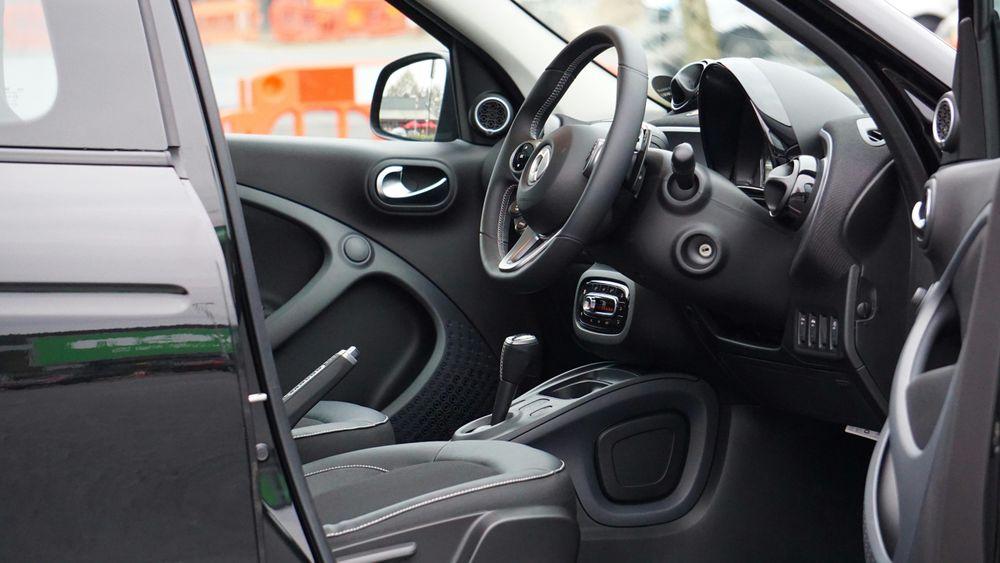


Hip replacement surgery gives people their lives back, and one of the first things most patients want to know is when they can get back behind the wheel. The short answer: somewhere between 2 and 6 weeks, depending on which leg was operated on and when prescription pain medication is fully out of the picture. But that range is deceptively wide, and the factors that determine where you land in it are specific and worth understanding.
This article walks through the real clinical variables that determine when driving after hip replacement surgery is safe, including which hip was replaced, what pain medications you are on, and how your brain and body will signal readiness before any calendar date does.
At a Glance
| Topic | Key Facts |
|---|---|
| Overall timeline | 2 to 6 weeks post-surgery for most patients |
| Biggest barrier | Active use of narcotic pain medication |
| Right hip | 4 to 6 weeks minimum (controls gas and brake) |
| Left hip (automatic car) | 2 to 3 weeks possible in some patients |
| Surgical approach | Anterior approach may allow earlier return than posterior |
| Formal clearance | Surgeon sign-off is required before resuming driving |
| Passenger phase | Sit in the front seat, pushed back, with stops every 45 minutes |
The Absolute Barrier: Narcotic Pain Medication
Before any discussion of timelines, weeks, or surgical approaches, one rule stands completely on its own: you cannot drive while taking prescription opioid pain medication.
This is not a gray area. Drugs like oxycodone (OxyContin, Percocet) and hydrocodone (Vicodin) impair reaction time, judgment, and motor coordination in ways that are functionally equivalent to driving under the influence of alcohol. Getting behind the wheel while taking these medications carries the same legal and physical consequences as a DUI, regardless of how alert or capable you feel at the time. Patients frequently underestimate how long they remain on narcotics after surgery; some are still taking them well into the fourth week without realizing the implications for driving readiness.
Beyond opioids, some over-the-counter antihistamines and muscle relaxants also impair driving ability. If you are unsure whether a specific medication affects your fitness to drive, ask your surgeon or pharmacist directly before making any assumptions.
The timeline clock does not really start until the last dose of prescription pain medication is at least 24 hours in the past and you feel completely clear-headed without it.
Right Hip vs. Left Hip: Why the Timeline Splits
Which side was operated on matters more than almost any other variable, and the reason is mechanical.
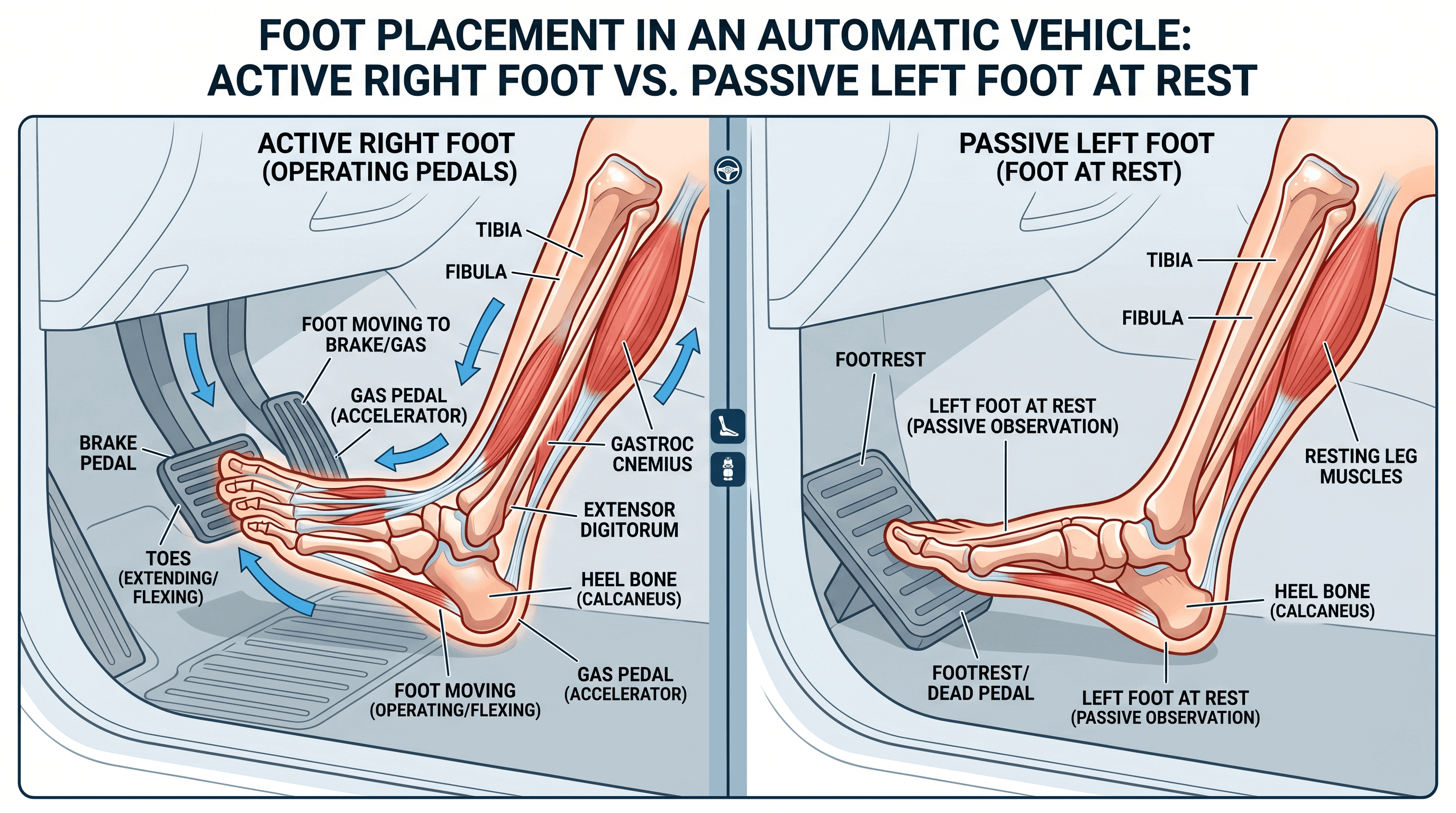
In an automatic transmission vehicle, the right foot handles both the gas pedal and the brake. When you need to stop in an emergency, your right hip flexor and quadriceps must fire quickly and with enough force to press the brake pedal firmly. That is a direct demand on the replaced hip joint. If the muscles around it are still healing or if movement causes pain, your braking ability is genuinely compromised.
The left hip is a different story for automatic car drivers. The left foot is largely resting while driving an automatic. Patients with a left hip replacement can often return to driving in 2 to 3 weeks, assuming they are fully off narcotic medication and their surgeon has cleared them. The left side still contributes to weight shifting during hard braking, as research has noted, so it is not completely irrelevant, but it presents a meaningfully lower barrier.
For manual (stick-shift) transmission drivers, both hips are actively involved at all times because the left foot operates the clutch. This places the two-to-three-week estimate out of reach for left hip patients driving a manual vehicle, and makes the timeline for right hip patients driving a manual even more conservative.
The Physical Requirement: Emergency Brake Reaction Time
The true measure of driving readiness after hip replacement is not how well you can cruise down the highway. It is whether you can slam on the brakes in an emergency without pain, hesitation, or loss of control.
Researchers call this total brake reaction time (BRT), defined as the time between recognizing a hazard and achieving full braking force on the pedal. A meta-analysis published in the Bone & Joint Journal found that total brake reaction time returned to pre-surgery baseline approximately two weeks after a right-sided total hip arthroplasty (THA). A separate systematic review published in Hip International (PMC9827492) confirmed that BRT can recover as early as one week post-surgery for some patients, though individual variation is considerable and this represents an early-end outlier, not a typical outcome.
What this means practically: a 6-week rule is not a physiological law. It originated largely from conservative guidelines built around the posterior surgical approach, which involves cutting through significant muscle tissue. For many patients, especially those with an anterior approach, BRT may recover substantially sooner. The problem is that no patient can reliably self-assess their own brake reaction time without objective testing. A parking lot test drive (covered in a later section) helps bridge that gap.
"The advice should be individualised." — van der Velden et al., Bone & Joint Journal, 2017 (source)
How Your Surgical Approach Changes the Timeline
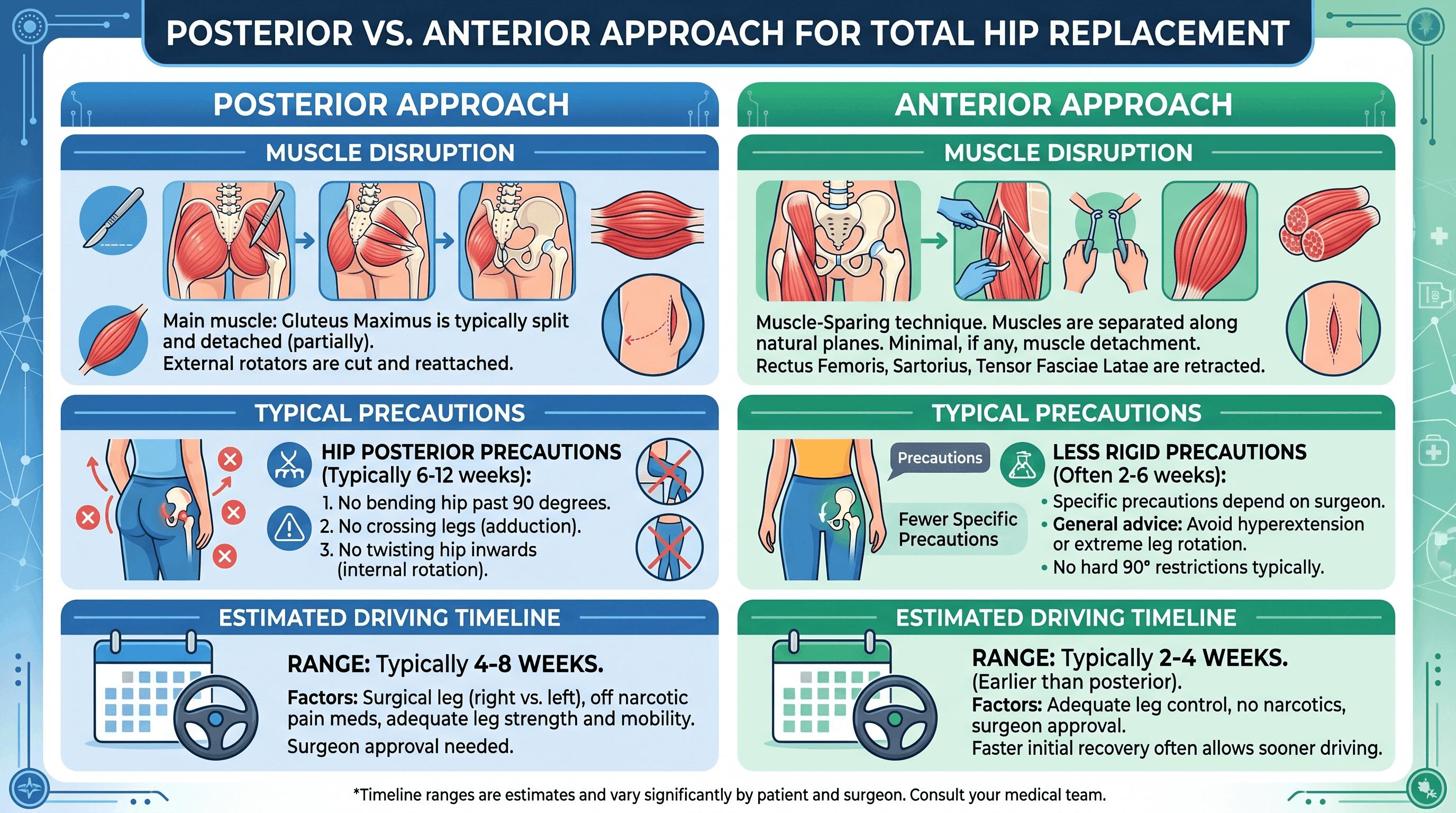
The standard "wait 6 to 8 weeks" recommendation for driving after hip replacement was built primarily on data from the posterior approach, which has historically been the most common surgical method. Understanding the difference helps you apply the right expectations to your own recovery.
Posterior Approach
In a posterior hip replacement, the surgeon accesses the joint from the back of the hip, which requires cutting through the piriformis and short external rotator muscles. These muscles need time to heal, and patients are placed on hip precautions, meaning they must avoid certain positions (typically bending the hip more than 90 degrees, crossing the legs, or rotating the foot inward) for several weeks after surgery. These precautions affect how you sit, pivot, and shift your weight in a driver's seat. The conservative 6-to-8-week driving recommendation applies most directly to this group.
Anterior Approach
The anterior approach accesses the hip joint from the front, between muscle groups rather than through them. Because major muscles are moved aside rather than cut, this approach is often called "muscle-sparing." Recovery from soft tissue injury is faster, and many anterior approach patients have no formal hip precautions at discharge.
Research supports earlier return to driving for this group. A prospective study published in Orthopedics examining anterior total hip arthroplasty (A-THA) concluded that objective data supports consideration of earlier return to driving after A-THA when patients are off narcotics and meet local and insurer requirements. This does not mean you can assume clearance; it means the conversation with your surgeon is worth having sooner.
The Driving Timeline: A Week-by-Week Guide
This table consolidates the clinical picture into a practical reference. These are general ranges based on available research, not guarantees. Your surgeon's explicit clearance overrides any timeline here.
| Time After Surgery | Situation | Driving Status |
|---|---|---|
| Days 1 to 7 | All patients, all approaches | Passenger only. No exceptions. |
| Weeks 1 to 3 | Anterior approach, left hip, automatic car, off narcotics | Possible with surgeon clearance |
| Weeks 2 to 4 | Anterior approach, right hip, automatic car, off narcotics | Early window; depends on BRT recovery |
| Weeks 4 to 6 | Posterior approach, left hip, automatic car, off narcotics | Typical clearance zone |
| Weeks 6 to 8 | Posterior approach, right hip, any transmission | Conservative end of the range |
| Beyond 8 weeks | Complications, persistent pain, continued narcotic use | Delay until resolved, consult surgeon |
Days 1 to 7: Passenger Only
The first week is not a time for negotiation. Even if pain is minimal and the surgical approach was anterior, the body is managing acute healing processes, anesthesia effects are still clearing, and many patients are still adjusting medication doses. Sit in the passenger seat, positioned as far back as possible to maximize hip extension, and do not drive.
Weeks 1 to 3: Early Return Window (Anterior, Left Hip, Automatic)
This window applies to a specific subset of patients: anterior approach surgery on the left hip, driving an automatic vehicle, and fully off narcotic medication. These patients have the lowest mechanical demand on the operated hip while driving and the shortest soft tissue recovery curve. Surgeon clearance at an early follow-up appointment is still required.
Weeks 4 to 6: Typical Clearance Zone (Right Hip)
Right hip patients across both approaches typically land in this range. The right side is the braking side, so both the physical strength to brake forcefully and the absence of pain during that motion need to be confirmed. This is also when most standard follow-up appointments occur, making it a natural time to request formal clearance.
6 to 8 Weeks: Conservative End (Posterior, Right Hip, Manual)
Patients who had a posterior approach on the right hip, particularly those driving a manual transmission, should expect this end of the range. Soft tissue healing from the posterior approach is more extensive, and manual transmission requires both hips to be active throughout the drive.
Getting In and Out: Managing Hip Precautions
How you enter and exit the vehicle is just as important as whether you should be driving at all. Doing it wrong can put the new joint in a position that risks dislocation, particularly if you had a posterior approach.
Entering the Car Safely
Pull the passenger seat as far back as it will go before you begin. Back up to the seat and lower yourself slowly, keeping the operated hip extended and the knee lower than the hip throughout the descent. Do not pivot or twist once seated. The "plastic bag trick" is genuinely useful here: sitting on a smooth plastic bag allows you to swivel both legs into the car in one controlled movement without twisting at the hip. For taller vehicles like trucks or SUVs, a step stool placed outside the door helps reduce the drop distance.
Adjusting the Driver's Seat
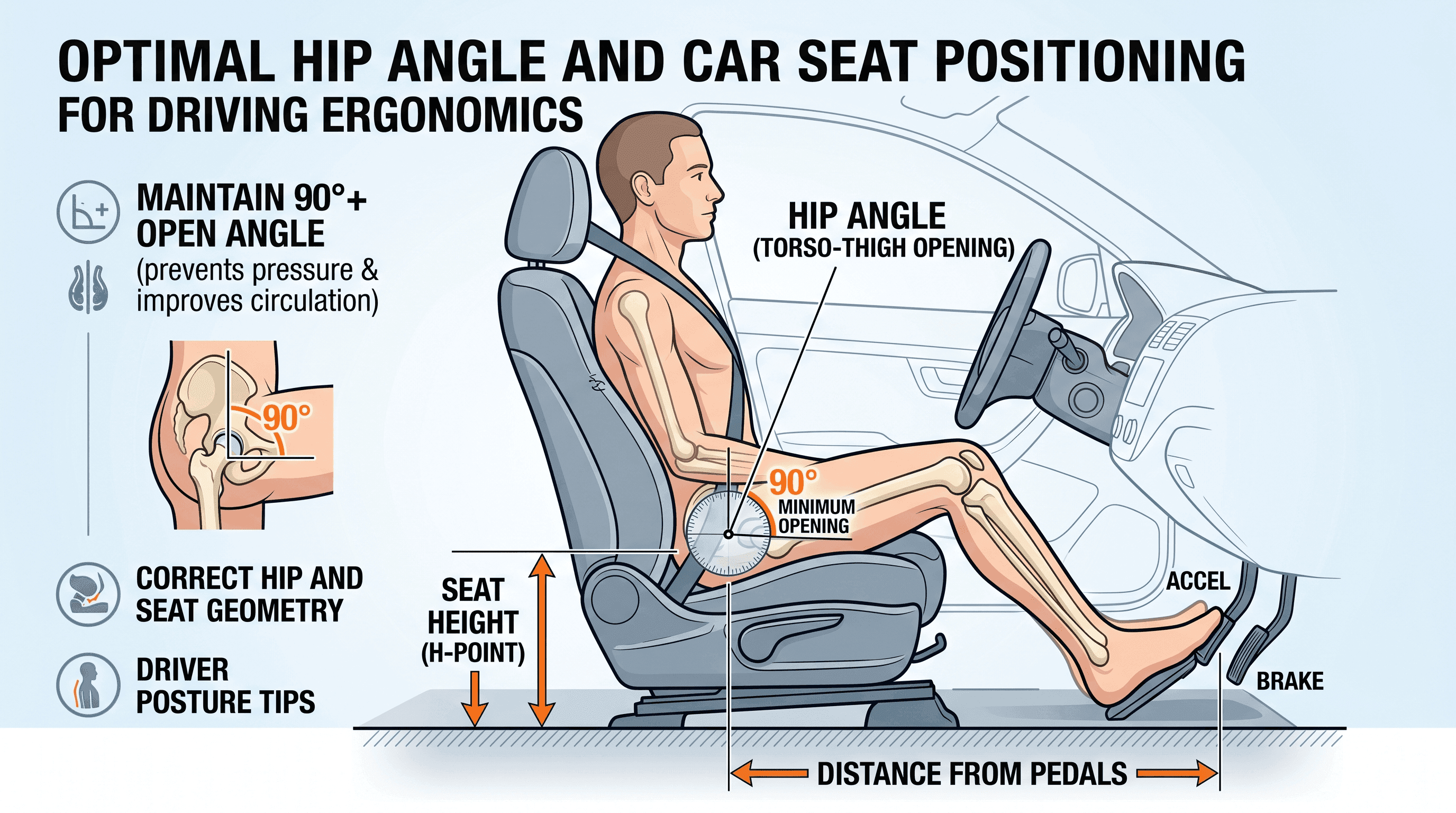
When you do return to driving, the seat position matters. Push the seat back far enough that the hip is never bent beyond 90 degrees during the drive. Many patients find that raising the seat slightly, or adding a firm cushion, helps keep the hip at a comfortable, open angle. Lumbar support can also reduce the temptation to slouch forward, which closes the hip angle.
Getting Out of the Car
Leading with the operated leg makes exiting safer. Push the seat back first, then slide the operated leg out toward the door opening, keeping it extended. Use the door frame or a grab handle for support as you stand. Do not rush.
The Passenger Phase: How to Ride Safely in the Meantime
If you cannot yet drive, you still need to travel, and how you ride as a passenger affects your recovery.
The front passenger seat is almost always the better option than the back seat, because it offers more legroom and a more natural hip angle. Reclining the seat slightly can help keep the hip extended and comfortable. In the rear seat, knees tend to rise toward hip level in a way that creates unwanted pressure on the joint and increases the risk of awkward positioning.
On any trip lasting more than 30 to 45 minutes, plan a stop to get out, stand, and walk for a few minutes. Sitting still for extended periods increases the risk of deep vein thrombosis (DVT), a blood clot in the leg veins that is a known complication after hip replacement surgery. Movement helps maintain circulation and keeps the joint from stiffening.
If you need to travel long distances during the first four weeks, talk to your surgeon about DVT prophylaxis, which may include compression stockings or medication, depending on your individual risk profile.
If you are managing symptoms or want to connect with a clinician during your recovery without leaving home, you can see a doctor online through Momentary's virtual primary care service, which is available without an in-person appointment.
The "Test Drive" Protocol
Once your surgeon has cleared you to drive, do not go straight to a highway. Use a structured parking lot approach to confirm your readiness before returning to real traffic.
Find an empty or nearly empty parking lot, ideally in the morning when you are at your most alert. Bring a fully licensed adult with you in the passenger seat. Start with slow-speed navigation, turning, and gentle braking, then progress to a hard stop from about 15 to 20 mph to test your braking force and reaction time under controlled conditions. Check your blind spots by turning your upper body to confirm you can rotate comfortably without hip pain.
If hard braking produces significant pain or hesitation, or if twisting to check blind spots is restricted, stop the test drive and contact your surgeon before attempting to drive in traffic. A few extra days of patience is a far better outcome than a preventable accident.
Surgeon Clearance and the Liability Question
Returning to driving is not purely a personal decision. It carries legal and financial weight that most patients are not fully aware of.
No major US insurer maintains an explicit post-arthroplasty driving exclusion in standard policies. Research published in the Journal of Arthroplasty found no language in major insurer policies that would automatically void coverage after hip replacement surgery. However, that does not mean you are off the hook. If you are involved in an accident while driving without your surgeon's formal clearance, liability may shift toward you and your treating physician. A plaintiff's attorney will ask when you were cleared to drive. "I thought I was ready" is not the same as "my surgeon confirmed I was cleared at my follow-up appointment on this date."
Get that clearance in writing, or at minimum make sure it is documented in your patient record. Ask for it explicitly at your follow-up appointment. This protects you legally and gives your insurer no reasonable grounds to dispute a claim.
Questions to Ask Your Surgeon Before Getting Behind the Wheel
Most surgeons will raise driving readiness at the standard follow-up appointment, but they may not cover all the angles you need unless you ask. Bring these questions:
"Based on my surgical approach and which hip we replaced, when do you recommend I resume driving?" This frames the question around your specific case, not a generic answer.
"What specific physical milestones should I hit before I consider myself ready, beyond being off narcotics?"
"Is there any objective braking test or physical therapy assessment you recommend before I return to driving?"
"I drive a manual transmission. Does that change your recommendation?"
"What documentation do I need to protect myself from an insurance or liability standpoint if I am involved in an accident after I return to driving?"
FAQ
How soon can I start driving after hip replacement surgery?
The realistic range is 2 to 6 weeks post-surgery. Left hip patients driving an automatic transmission vehicle and fully off narcotic medication may be cleared as early as 2 to 3 weeks. Right hip patients, who use the operated side for both gas and brake, typically need 4 to 6 weeks. The anterior surgical approach may support earlier clearance than the posterior approach. A surgeon's explicit sign-off is required in all cases.
What are the three big restrictions for a hip replacement patient?
The three most common restrictions after hip replacement surgery, particularly with a posterior approach, are: avoiding bending the hip past 90 degrees, avoiding crossing the legs, and avoiding rotating the foot inward on the operated side. These hip precautions protect the new joint while the surrounding soft tissue heals and are typically in place for the first 6 to 12 weeks. Patients who had an anterior approach may have fewer or no formal precautions, but this varies by surgeon.
What is the hardest day after hip replacement?
Most patients report the second and third days post-surgery as the most physically challenging, as the initial anesthesia and nerve block have worn off and the full extent of surgical pain becomes apparent. The second week is often described as emotionally difficult, when the novelty of the procedure has faded but full mobility and independence have not yet returned. Physical therapy typically begins within 24 hours of surgery to minimize this difficult period.
Why do you have to wait 6 weeks after surgery to drive?
The 6-week recommendation was established largely around the posterior surgical approach, which involves cutting through muscle tissue that requires significant healing time. It also reflects the time typically needed for brake reaction time to return to pre-surgery levels in right hip patients. For left hip patients or those who had an anterior approach, the clinical evidence supports the possibility of earlier return to driving, though formal clearance from a surgeon is still required.
Can I ride as a passenger right after hip replacement?
Yes, but positioning matters. Sit in the front passenger seat with the seat pushed back as far as possible to keep the hip at an open angle. Avoid the rear seat, where legroom is typically more limited and the hip tends to flex past 90 degrees. On trips longer than 30 to 45 minutes, stop to walk briefly and reduce the risk of blood clots. Bring a wedge cushion or folded blanket if the seat height causes the knee to rise above the hip.
Do I need special adaptive equipment to drive after hip replacement?
Most patients do not require permanent adaptive driving equipment. Short-term aids like a firm seat cushion to raise hip height, a lumbar support pillow, or a wider mirror to reduce the need for torso rotation can make the return to driving more comfortable. Patients with significant restricted range of motion or those driving modified vehicles should ask their physical therapist or an occupational therapist for a formal adaptive driving evaluation.
Not sure whether your symptoms or recovery timeline are on track? Use Momentary's AI health navigator to explore your symptoms, understand what to expect, and get guidance on next steps before your next appointment.
References
- van der Velden CA, Tolk JJ, Janssen RPA, Reijman M. Bone Joint J. 2017 May. — Meta-analysis on brake reaction time recovery after total hip and total knee arthroplasty; finding that BRT returned to baseline approximately two weeks after right-sided THA.
- Patel PV et al. Hip Int. 2021 Mar (PMC9827492). — Systematic review and meta-analysis on return to driving after total hip arthroplasty; found BRT can recover as early as one week in some patients.
- Masturov YA, Hogan WB, Regal S, Sybert M, Hammarstedt JE. Orthopedics. 2026 Jan-Feb. — Prospective study on return to driving after anterior total hip arthroplasty; objective data supported consideration of earlier return when patients were off narcotics.
- Johns Hopkins Medicine. Hip Replacement Recovery. — General recovery guidance following total hip arthroplasty including activity milestones