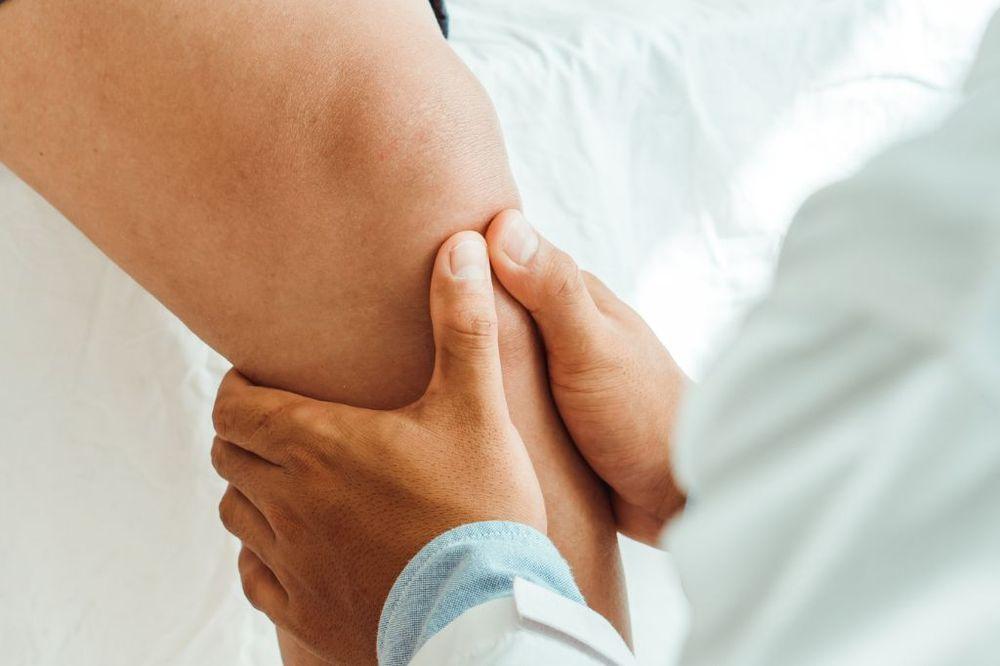


Here is something worth knowing before you start reading: a landmark study published in the New England Journal of Medicine found that for patients with a degenerative medial meniscus tear, arthroscopic surgery produced outcomes no better than a sham procedure at 12 months. That is not a fringe finding. It has been replicated, followed up over five years, and folded into mainstream orthopedic guidance. So if you just got diagnosed and your first instinct was to ask how to heal a torn meniscus without surgery, you are asking the right question and the research is largely on your side.
This guide walks through the full non-surgical toolkit, from what you should do in the first 48 hours to what a return-to-sport timeline realistically looks like. The goal is specificity: named exercises, grade-based timelines, and measurable milestones so you know whether you are progressing or stalling.
At a Glance
| Topic | Key Facts |
|---|---|
| Condition | Torn meniscus (medial or lateral) |
| US incidence | Approximately 61 per 100,000 people |
| First-line treatment | Physical therapy and conservative care |
| Typical non-surgical timeline | 6 to 12 weeks for most partial tears |
| Surgery rate after PT program | Around 30% of patients in PT trials eventually cross over |
| When surgery is needed | Locked knee, bucket-handle tear, symptoms unresolved after 6 to 8 weeks of structured PT |
| Best candidates for non-surgical recovery | Degenerative tears, red-zone tears, Grade 1 and 2 tears |
The Biological Reality: Can a Torn Meniscus Actually Heal Itself?
Whether a torn meniscus can heal without surgery depends almost entirely on where inside the cartilage the tear sits. This is not a vague answer. It is a structural fact rooted in how your knee is built.
The meniscus is a C-shaped wedge of fibrocartilage sitting between your thighbone (femur) and shinbone (tibia). According to the Cleveland Clinic, these rubbery wedges act as shock absorbers, providing cushioning for your bones and knee joint. Without them, bone grinds against bone. There are two in each knee: the medial meniscus (inner side) and the lateral meniscus (outer side).
The Red Zone vs. White Zone: Why Blood Supply Is the Deciding Factor
Think of the meniscus as a bullseye. The outer third is called the red zone because it has a blood supply. Tissue with blood supply can receive oxygen and nutrients, which means it can mount an actual healing response when torn. The inner two-thirds, called the white zone, has no meaningful vascular supply by adulthood. Less than 20% of the meniscus is vascularized in most adults over 40, meaning the majority of the structure cannot repair itself in the traditional biological sense.
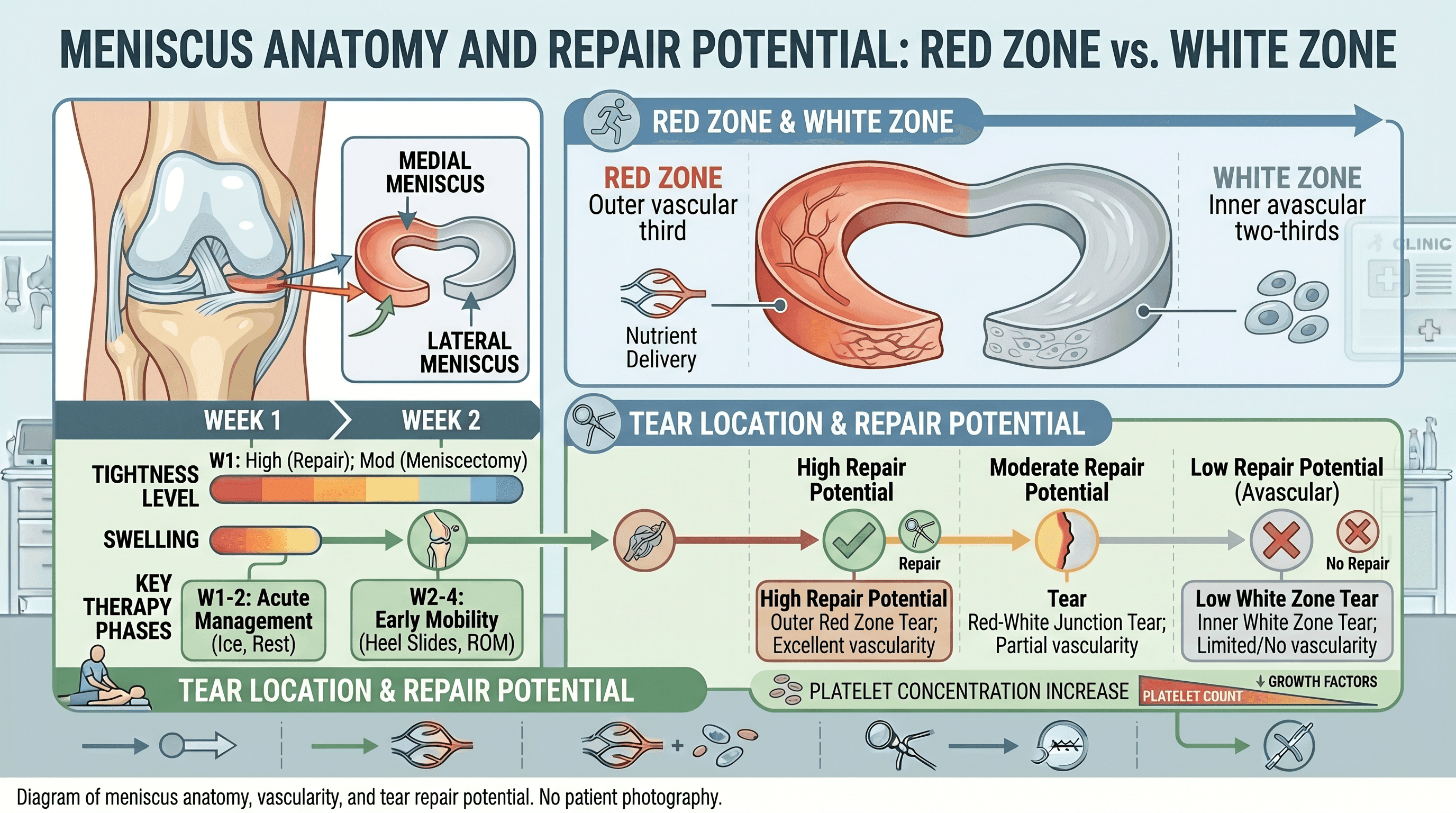
This single concept explains why "it depends" is the medically accurate answer to "will my meniscus heal on its own?" If the tear is in the red zone, conservative treatment has a genuine shot at facilitating healing. If it sits in the white zone, the goal of non-surgical management shifts: rather than promoting tissue regrowth, the aim becomes reducing pain, restoring strength, and loading the knee in a way that prevents the tear from worsening.
Which Types of Tears Can Heal on Their Own?
Tear type and location together determine healing potential. Here is how the main categories break down:
Vertical and longitudinal tears that sit in the red zone are the most favorable for natural healing. These are often seen in younger athletes after a traumatic injury, and when they occur in the outer third of the meniscus, conservative care followed by careful rehabilitation gives the tissue the best environment to repair.
Horizontal tears sit in the plane of the meniscus and their healing potential depends on where they land. A horizontal tear at the red-white junction may respond to conservative care; one deep in the white zone typically will not.
Radial tears cut across the width of the meniscus and, because they usually occur in the avascular zone, rarely heal without surgical intervention. Conservative management can still reduce pain and improve function, but tissue closure is not expected.
Flap, bucket-handle, and complex tears almost always require surgical evaluation. Bucket-handle tears in particular can cause the knee to lock, which is a mechanical problem that physical therapy cannot resolve.
Traumatic Tears vs. Degenerative Tears: Does Cause and Age Matter?
Yes, and in an important way. A younger athlete who twists a knee and tears the outer portion of the meniscus in a clean, acute event has a different prognosis than a 55-year-old who tears fraying cartilage stepping off a curb. Degenerative tears, common in people over 40 and often associated with early osteoarthritis, are the category where the evidence for non-surgical management is strongest and most consistent. The research is not subtle here. Multiple randomized controlled trials have found that structured physical therapy produces outcomes equivalent to surgery for degenerative tears over 6 to 12 months.
Traumatic tears in younger patients require more individualized assessment. Tear type, location, and the patient's activity demands all factor into whether surgery provides a meaningful advantage.
Managing Acute Inflammation: The First Line of Defense
The first two weeks after a meniscus tear are about controlling the inflammatory response, protecting the joint, and setting conditions for recovery, not about rushing back to activity.
Phase 1 (Week 1 to 2): The RICE Protocol Done Right
The RICE method (rest, ice, compression, elevation) remains the standard starting point for acute knee injury management.
Rest means relative rest, not complete immobility. Walking on a torn meniscus is generally possible in mild to moderate tears, though pain and swelling will increase over the first few days as the Cleveland Clinic notes. Using crutches for the first few days is reasonable if weight-bearing causes significant pain. Complete off-loading is rarely beneficial and can lead to rapid quad muscle loss.
Ice should be applied for 15 to 20 minutes every four to six hours during the first 48 to 72 hours. Always keep a thin cloth between the ice pack and skin to avoid frostbite.
Compression using a knee sleeve or elastic bandage helps limit swelling by providing gentle pressure around the joint. It should feel snug but should not cut off circulation.
Elevation means keeping the leg raised above heart level when resting, which helps reduce fluid pooling in the joint.
For pain and inflammation, non-steroidal anti-inflammatory drugs (NSAIDs) such as ibuprofen or naproxen address both. Acetaminophen manages pain but does not touch the inflammatory process, so it is a secondary option when NSAIDs are contraindicated.
What to avoid in the first two weeks is equally important. Deep squats, kneeling, pivoting, and any high-impact activity that loads or twists the knee should stop entirely until a sports medicine physician or orthopaedic specialist has assessed the tear type and severity.
Physical Therapy: The Core Non-Surgical Treatment
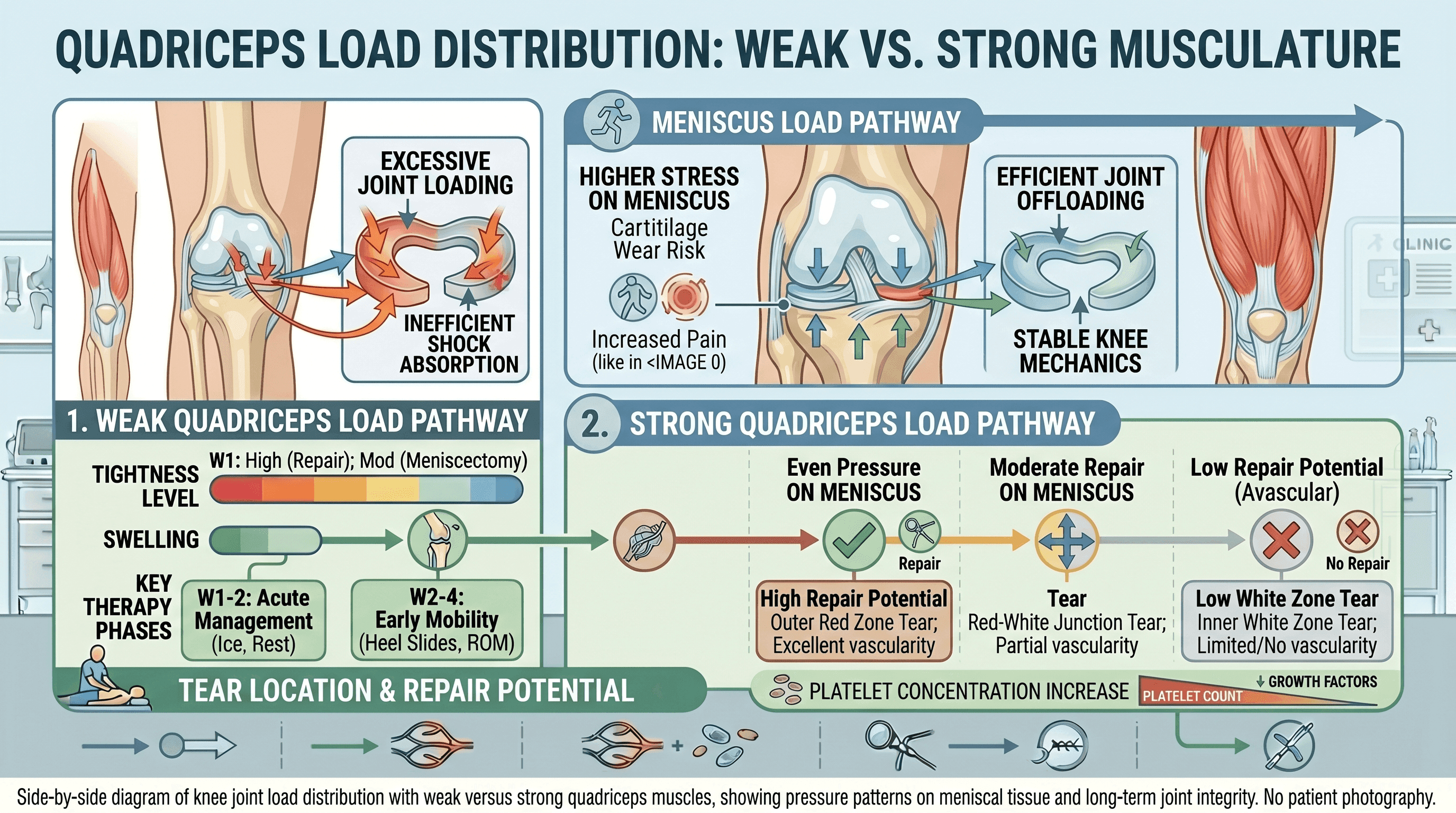
Physical therapy for a torn meniscus works by redistributing mechanical load away from the damaged cartilage and toward the surrounding musculature. When the quadriceps, hamstrings, and gluteal muscles are strong, they absorb more of the force that would otherwise travel straight through the meniscus with every step.
Phase 2 (Week 2 to 6): Exercises to Begin at Home
Before starting any exercise program at home, confirm the tear type with a sports medicine physician or orthopaedic specialist, particularly if pain is severe or the knee is swelling repeatedly. The following exercises represent a standard starting protocol for mild to moderate tears with manageable symptoms.
Quad sets are the foundation. Lying flat on your back, place a small rolled towel under your knee, then tighten your quadriceps by pressing the back of your knee toward the floor. Hold for five seconds, release, and repeat for three sets of 15. This activates the quads without loading the joint.
Straight leg raises come next once quad sets feel comfortable. Lying on your back with one knee bent and foot flat, tighten the quad of the straight leg and raise it to about 45 degrees. Hold briefly and lower slowly. Three sets of 15 builds quad strength without bending the knee under load.
Heel slides address range of motion. Lying on your back, slowly slide the heel of the affected leg toward your buttocks, bending the knee as far as pain allows. Hold at the end range for five seconds before sliding back. This maintains and gradually improves knee flexion.
Supported mini squats introduce controlled weight-bearing. Standing with hands lightly resting on a counter or chair back, bend both knees to no more than 30 degrees and straighten. The range is intentionally shallow. Three sets of 10, progressing the depth weekly as pain allows.
Calf raises support overall lower leg stability and improve circulation around the joint. Standing behind a chair with hands on the backrest, rise up onto the balls of both feet, hold for two seconds, and lower slowly. Three sets of 15.
Phase 3 (Week 6 and Beyond): Criteria-Based Return to Activity
The most common mistake in meniscus recovery is using time alone as the return-to-activity signal. A six-week calendar marker means nothing if the criteria for safe return have not been met.
The milestones that matter are: quadriceps strength at 80% or greater of the uninjured leg (typically assessed by a physical therapist using manual or dynamometer testing), full pain-free range of motion through the knee, no swelling after 20 to 30 minutes of light walking, and the ability to perform a controlled single-leg squat to 60 degrees without pain or compensatory movement.
Once those criteria are met, sport-specific movement is introduced gradually: jogging before cutting, cutting before pivoting, low-impact before high-impact. Returning to sport when pain is merely "manageable" rather than fully resolved significantly raises the risk of re-injury or progression of the underlying tear.
Activity Modification: What Movements to Avoid With a Torn Meniscus
Protecting the joint during recovery is not about doing nothing. It is about identifying the specific loading patterns that stress the damaged tissue and removing them temporarily while building the strength to tolerate them again.
Deep squats (beyond 90 degrees of knee flexion) compress the posterior meniscus hard and should be avoided until late-stage rehabilitation when range of motion and strength are both restored. Kneeling places body weight directly through a flexed knee and should be limited or avoided depending on where the tear sits. Pivoting and twisting motions are the original mechanism of many tears and carry real risk of extension until the knee is well-stabilized by the surrounding musculature. High-impact running on hard surfaces creates repetitive compression cycles that can worsen a tear that is otherwise trending toward stability.
Activities that are generally well-tolerated early in recovery include walking on flat, even surfaces, cycling (with the seat set high to minimize knee bend), swimming or pool walking, and low-resistance elliptical training without incline.
Knee Bracing and Support
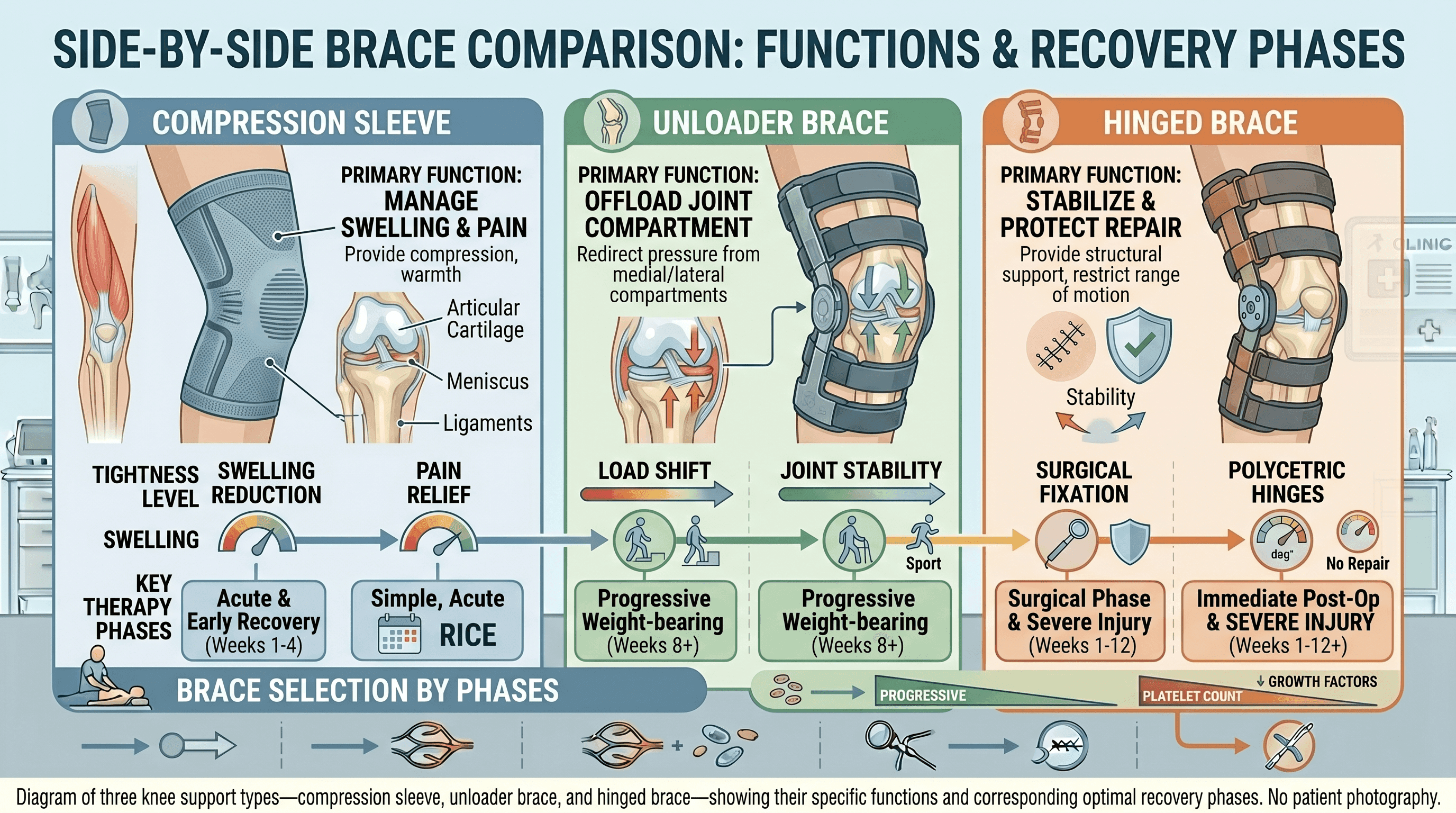
A knee brace does not repair a meniscus, but it can meaningfully support recovery by reducing pain and improving a patient's confidence during early rehabilitation.
Compression sleeves are the most accessible option. They provide circumferential pressure around the joint, which limits swelling and provides mild proprioceptive feedback (the sensation of where the knee is in space). They are appropriate for low-impact daily activities and early-phase exercise.
Unloader braces are more specialized. These are hinged devices engineered to shift compressive force away from the compartment where the tear sits, typically the medial side. They are generally prescribed for patients with combined meniscus tear and early osteoarthritis where one side of the joint is taking disproportionate load. A sports medicine physician or orthopaedic specialist can assess whether an unloader brace is appropriate for a given tear pattern and compartment.
Off-the-shelf hinged knee braces provide lateral stability and limit extreme range of motion, which can be helpful during more active phases of recovery when the knee is being asked to do more.
Beyond RICE: Advanced Non-Surgical Interventions
For patients who have moved through the basics and are looking at additional options, or for those with significant pain that is blocking engagement with physical therapy, three injection-based interventions are worth understanding.
Corticosteroid Injections: Pain Relief, Not Healing
Corticosteroid (cortisone) injections work by reducing inflammation inside the joint. They can provide meaningful pain relief within two to three days and can help a patient who is too uncomfortable to participate in physical therapy to re-engage with their rehabilitation program. What they do not do is repair meniscal tissue. Their effect is anti-inflammatory, not regenerative.
Repeated corticosteroid injections carry documented risks including accelerated cartilage breakdown with overuse. They are a tool for symptom management at a specific moment in recovery, not a long-term treatment strategy. A sports medicine physician or orthopaedic specialist should guide both the timing and frequency.
Hyaluronic Acid (Gel) Injections
Hyaluronic acid injections, sometimes called viscosupplementation or gel shots, deliver a lubricating fluid into the joint space to supplement the knee's natural synovial fluid. They are more commonly used in knee osteoarthritis than in isolated meniscus tears, but they are sometimes offered when degenerative tear and early arthritis overlap. The evidence base for hyaluronic acid in the meniscus population specifically is limited compared to the osteoarthritis literature, and a sports medicine physician or orthopaedic specialist can advise on whether this option applies to a given case.
PRP Injections: What the Evidence Actually Shows
Platelet-rich plasma (PRP) therapy involves drawing a small amount of the patient's own blood, spinning it in a centrifuge to concentrate the growth factors found in platelets, and injecting that concentrate back into the injured tissue. The rationale is that growth factors can stimulate healing in tissue that would otherwise receive poor biological signaling, including the avascular white zone of the meniscus.
A 2024 systematic review published in the journal Arthroscopy, Sports Medicine, and Rehabilitation, examining six studies and 184 patients, found that MRI revealed variable improvement in meniscus grade, with complete healing seen in 0% to 44% of patients and partial healing in 0% to 40% of patients. Four of five studies in that review reported significant improvement in pain from baseline to final follow-up.
Separately, a 2022 meta-analysis and systematic review on PRP augmentation during surgical meniscus repair found that patients undergoing repair with PRP had a re-tear rate of 18.2%, compared to 30.5% in those who had repair without PRP, a statistically significant difference. However, patient-reported functional outcome scores did not differ significantly between groups, meaning PRP reduced structural failure without clearly improving how patients felt on validated scales.
The honest summary: PRP shows promise, particularly for degenerative tears and white-zone tears with limited natural vascularity, but the evidence is not yet definitive enough to consider it a standard first-line option. Long-term data beyond 12 months is still limited. Patients interested in PRP should discuss candidacy with a sports medicine physician or orthopaedic specialist who can assess whether the tear pattern and patient profile make it a reasonable consideration.
If you are working through your options and want to explore care paths available to you, finding a qualified orthopedic or sports medicine specialist is a practical next step before committing to any injection-based intervention.
The Conservative Recovery Timeline: Grade-Specific Expectations
Managing expectations is part of good recovery. Here is how healing timelines generally break down by tear severity.
Grade 1, 2, and 3 Tear Healing Timelines
Grade 1 tears represent a minor signal change on MRI with no complete disruption of the meniscal tissue. The structure is stressed or slightly strained but not torn through. With conservative care (activity modification, RICE, and early physical therapy), most patients with Grade 1 tears become functionally pain-free within four to six weeks.
Grade 2 tears involve partial disruption of the meniscal tissue. When the tear sits in or near the red zone with adequate blood supply, recovery with physical therapy typically runs six to twelve weeks. Age, activity level, and consistency with rehabilitation all influence where a given patient lands in that range.
Grade 3 tears represent a complete tear through the meniscus. Conservative care is still the appropriate starting point for most Grade 3 degenerative tears, with a structured trial of six to eight weeks of physical therapy recommended before surgical evaluation is considered. However, Grade 3 traumatic tears, particularly bucket-handle variants, often require surgical assessment earlier given their mechanical consequences.
Factors that extend recovery timelines across all grades include older age with underlying degenerative change, low adherence to the rehabilitation program, returning to loading activities too soon, and concomitant ligamentous injury such as an ACL tear.
Signs Your Meniscus Is Healing (and Signs It Is Not)
Positive indicators of recovery include pain that decreases measurably week over week rather than staying flat or worsening, swelling that subsides within the first two weeks and does not return after light activity, range of motion that gradually improves with exercise, and the ability to bear weight with a normal gait pattern rather than a protective limp.
Red flags that suggest the knee is not responding include a catching or clicking sensation inside the joint with movement (which may indicate a displaced tear fragment), the knee buckling or giving way under body weight, pain that has not improved after eight weeks of structured physical therapy, and swelling that increases after even light activity rather than remaining stable or improving. These signs warrant prompt reassessment by a sports medicine physician or orthopaedic specialist.
Anti-Inflammatory Nutrition to Support Healing
Food does not repair a torn meniscus, but the inflammatory state of the body affects recovery pace and comfort. Dialing in nutrition during the recovery period is low-cost and low-risk.
Collagen is the primary structural protein in cartilage, and supporting collagen synthesis during recovery has a reasonable biological rationale. Vitamin C is required for collagen formation and is found in high concentrations in citrus fruits, bell peppers, and kiwi. Collagen peptide supplements and foods like bone broth and gelatin provide substrate for collagen production, though the evidence for supplements specifically is mixed and a sports medicine physician or orthopaedic specialist can advise on individual needs.
Omega-3 fatty acids, found in fatty fish like salmon and mackerel, walnuts, and flaxseed, have well-documented anti-inflammatory properties. Turmeric, specifically its active compound curcumin, has shown anti-inflammatory effects in joint tissue research when consumed with black pepper (which increases bioavailability).
Limiting ultra-processed foods, refined sugar, and excessive alcohol during the recovery period reduces the pro-inflammatory load on the body and gives the immune system cleaner conditions in which to work.
Should You Have Surgery? What the Research Actually Shows
This section is not a recommendation against surgery. It is a presentation of the data that any patient with a meniscus tear has a right to understand before making a treatment decision.
In 2013, Sihvonen and colleagues published the landmark FIDELITY (Finnish Degenerative Meniscal Lesion Study) trial in the New England Journal of Medicine. The study enrolled 146 patients aged 35 to 65 with symptoms of a degenerative medial meniscus tear and no knee osteoarthritis. Half underwent arthroscopic partial meniscectomy; half underwent a sham procedure (incisions were made, instruments were inserted, but no tissue was removed). At 12 months, there were no significant differences between groups in pain, function, or symptom scores. A five-year follow-up of the same cohort found the results held: surgery offered no measurable advantage over the sham procedure for this population.
In the same year, Katz and colleagues published the METEOR (Meniscal Tear in Osteoarthritis Research) trial, also in the NEJM, this time enrolling 351 patients aged 45 and older with a meniscal tear and imaging evidence of mild-to-moderate osteoarthritis. Patients were randomized to surgery plus physical therapy or to physical therapy alone. At both six months and twelve months, functional improvement and pain reduction were statistically equivalent between groups. Around 30% of the physical therapy group eventually crossed over to surgery, compared to 6% who went the other direction.
These findings do not mean surgery is never appropriate. They mean that for degenerative meniscus tears, surgery is not the default superior option that many patients assume it is.
When Surgery Is the Right Choice
There are clear clinical situations where surgical intervention is the appropriate path. A locked knee caused by a displaced bucket-handle tear is a mechanical problem that physical therapy cannot resolve and generally requires prompt surgical attention. Symptoms that have not meaningfully improved after six to eight weeks of a structured, supervised physical therapy program are a reasonable threshold for surgical consultation. High-level athletes with traumatic tears in repair-amenable zones and specific functional demands may benefit from surgical repair to restore meniscal tissue integrity rather than simply managing it conservatively. Younger patients with traumatic tears in the vascularized red zone are also often better served by repair than by watchful waiting.
The takeaway is not "avoid surgery." It is "earn the conversation with good data," which means completing a real course of physical therapy first, tracking measurable outcomes, and bringing that information to a shared decision-making discussion with a sports medicine physician or orthopaedic specialist.
Frequently Asked Questions
Is it OK to walk on a torn meniscus?
Walking on a torn meniscus is generally possible with mild to moderate tears, but the knee will typically become more painful and swollen over the first few days after injury. Short-distance flat walking is usually tolerable; uneven surfaces, prolonged standing, and stairs under heavy load are more problematic. If the knee buckles, locks, or produces sharp pain with each step, weight-bearing should be reduced and a sports medicine physician or orthopaedic specialist should evaluate the tear type before resuming normal walking.
Can a Grade 3 meniscus tear heal without surgery?
Some Grade 3 tears can be managed successfully without surgery, particularly degenerative tears in older patients where pain management and functional improvement are the goals rather than complete structural repair. However, traumatic Grade 3 tears, especially bucket-handle patterns that cause locking, almost always require surgical evaluation. A structured six-to-eight-week physical therapy trial is typically recommended before any decision is made, unless mechanical symptoms are present.
How do I know if my meniscus is healing?
The clearest week-to-week signals are pain trending downward, swelling that subsides after activity rather than increasing, and range of motion that gradually improves. By weeks four to six of a consistent rehabilitation program, most patients with healable tears can bear weight with a more normal gait pattern and tolerate short-duration light activity without significant flare. If pain and swelling are unchanged or worsening after four to six weeks of structured PT, that is a signal to reassess the approach with a sports medicine physician or orthopaedic specialist.
Can a meniscus tear heal in 3 days?
No. Meniscal tissue does not regenerate in days regardless of tear type. What can happen in three days is that acute inflammation subsides, pain decreases with appropriate RICE management, and weight-bearing becomes more comfortable. This improvement in symptoms is not the same as structural healing. Even the most favorable red-zone tears require weeks of biology to mount a meaningful repair response, and full rehabilitation runs six to twelve weeks or longer.
Can I live with a meniscus tear without surgery?
Many people do. The FIDELITY and METEOR trials both demonstrate that a meaningful proportion of patients with degenerative tears manage their symptoms effectively through physical therapy and activity modification without ever undergoing surgery. The key variables are tear type, location, and whether the tear is producing mechanical symptoms like locking. For degenerative tears that respond to conservative care, living well with a meniscus tear is a realistic outcome, not a compromise.
How can I rebuild my meniscus naturally?
Red-zone tears can undergo biological healing with adequate blood supply and the right mechanical environment, but "rebuilding" in the sense of regrowing white-zone tissue is not something current non-surgical options can reliably achieve. What natural recovery actually does is build the muscular support around the knee (quads, hamstrings, glutes) so that less force passes through the meniscal tissue with each step, and it reduces local inflammation so that existing tissue is not under ongoing biochemical stress. PRP and other orthobiologics aim to augment this by introducing growth factors, but the evidence is still maturing. Navigating these options is easier with a knowledgeable provider. Momentary Lab's AI Healthcare Navigator can help you find relevant information and understand your care options.
What are three signs of a meniscus tear in the knee?
The three most characteristic signs are a popping sensation at the time of injury or when moving the knee, joint-line tenderness (pain specifically at the inner or outer edge of the knee where the meniscus sits), and swelling that develops over the hours following the injury or activity. The combination of these three, particularly joint-line tenderness, is considered a reliable clinical indicator that a meniscus tear warrants MRI evaluation.
References
- Cleveland Clinic — Torn meniscus overview: anatomy, symptoms, causes, and treatment.
- Sihvonen R et al., New England Journal of Medicine, 2013 — FIDELITY trial: arthroscopic partial meniscectomy versus sham surgery for degenerative meniscal tear.
- Katz JN et al., New England Journal of Medicine, 2013 — METEOR trial: surgery versus physical therapy for a meniscal tear and osteoarthritis.
- Gopinatth V et al., Arthroscopy Sports Medicine and Rehabilitation, 2024 — Systematic review of PRP for nonoperative management of degenerative meniscal tears.
- Utility of Platelet-Rich Plasma Therapy in Meniscus Injuries, Orthopedic Reviews, 2024 — Narrative review of PRP clinical and functional outcomes for meniscal injuries.
- Platelet-Rich Plasma Augmentation for Meniscus Repair, ScienceDirect, 2024 — Meta-analysis finding 18.2% re-tear rate with PRP augmentation vs. 30.5% without.