


Hip pain has a way of quietly reshaping your life before you realize how much ground you have lost. One season you are hiking on weekends. The next, you are turning down a walk around the block because you already know what the next morning will feel like. If you have reached the point where you are seriously wondering whether hip replacement surgery is the answer, this guide is built for you.
More than 600,000 total hip replacements were performed in the United States in 2023, according to UC Davis Health. That number keeps climbing. But surgery is a significant step, and the decision to pursue it is not made by an imaging report alone. What follows is a progressive decision framework to help you evaluate where you actually stand.
At a Glance
| Topic | Key Facts |
|---|---|
| Procedure | Total hip arthroplasty (replacement of ball and socket) |
| Most common cause | Osteoarthritis (cartilage breakdown over time) |
| Annual US procedures | 600,000+ (2023 data) |
| True hip pain location | Deep groin or front of thigh, not the buttock |
| Conservative care timeline | Typically 3 to 6 months before surgery is considered |
| Implant longevity | Modern implants last 20+ years in most patients |
| Primary candidacy factor | Functional decline and quality of life impact, not X-ray findings alone |
Treat the Patient, Not the X-Ray
The single most important thing to understand before reading anything else: a striking X-ray does not automatically mean you need surgery.
Orthopedic surgeons use a guiding philosophy often described as "treating the patient, not the image." Some people walk around with X-rays showing severe joint deterioration and report manageable discomfort. Others have imaging that looks comparatively mild but are in significant daily pain. The imaging gives your surgeon a map, but the map is not the territory.
According to the American Academy of Orthopaedic Surgeons (AAOS), the decision to proceed with hip replacement is based primarily on the degree to which symptoms interfere with daily life, and whether conservative treatments have been tried and found insufficient.
So the real question is not "what does my X-ray look like?" It is "how much is this hip shrinking my life?" That framing guides everything that follows.
Location, Location, Location: Groin Pain vs. Back Pain
One of the most common reasons people delay appropriate care is misattributing their pain to the wrong source.
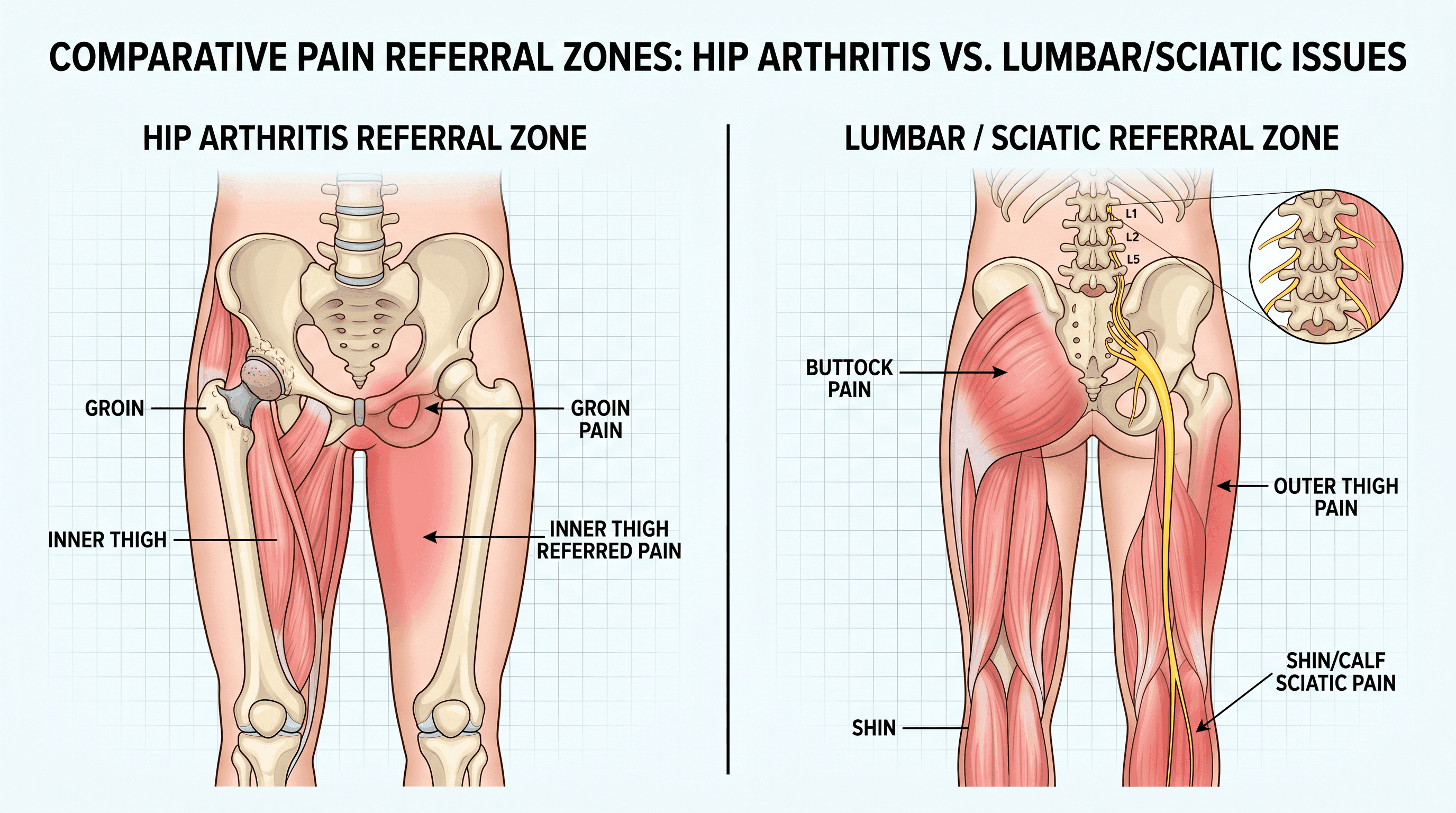
True hip joint pain, the kind that signals arthritis and potential joint failure, almost always originates deep in the groin or at the front of the thigh. Many patients are surprised to hear this, because they feel their discomfort in the buttock or outer hip. That outer and posterior pain pattern is more consistent with lumbar spine problems, sciatica, or piriformis irritation than with hip joint arthritis.
Groin Pain vs. Back Pain: What Each Location Signals
Hip osteoarthritis (OA) tends to generate referred pain into the groin, inner thigh, and sometimes the front of the knee. Patients often describe it as a deep, hard-to-locate ache rather than a surface-level soreness. It typically worsens with weight-bearing activities like walking or climbing stairs, and eases somewhat with rest in the earlier stages.
Lumbar nerve root compression and sciatica, by contrast, produce pain that radiates from the lower back down through the buttock, outer thigh, and into the shin or foot. A straight-leg raise test or lumbar MRI can help differentiate these patterns, but the location of pain at rest is usually the first useful clue.
Other Conditions That Mimic Hip Pain
Several conditions can feel like hip joint arthritis without involving the joint itself. Trochanteric bursitis produces sharp outer hip tenderness, especially when lying on the affected side. Iliotibial (IT) band syndrome causes lateral thigh and knee discomfort in active patients. Labral tears generate a catching or clicking sensation deep in the groin, often in younger, more active adults. An inguinal hernia can produce groin pain that mimics early hip arthritis, particularly in men.
This overlap is exactly why a specialist evaluation matters. Self-diagnosis has real limits when multiple structures share overlapping pain referral zones.
The Sock and Shoe Test: Reading Your Loss of Range of Motion
Range of motion loss is one of the earliest and most telling signs of hip joint deterioration.
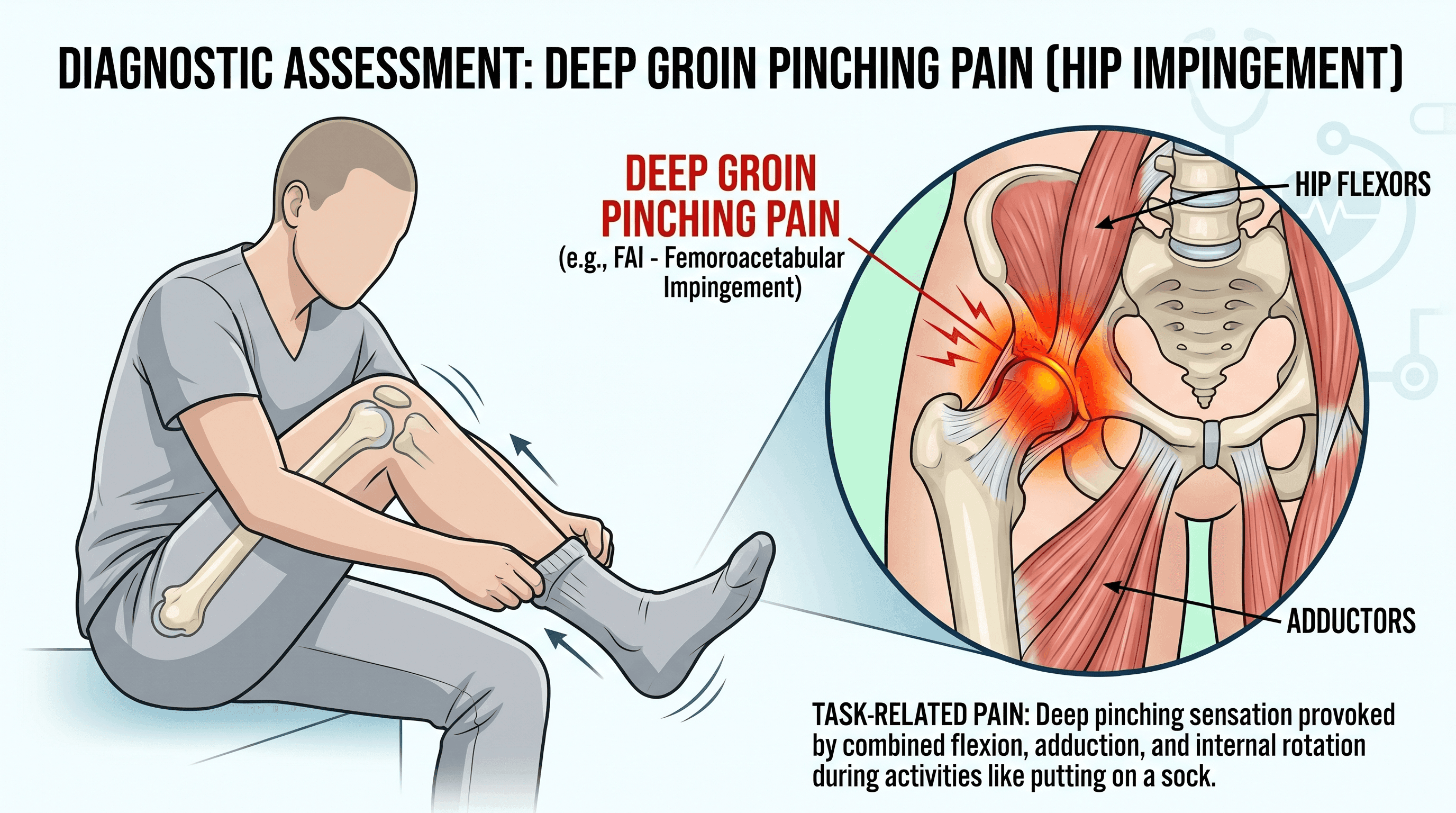
Before pain reaches its peak, the hip joint starts losing its ability to rotate and flex. The daily task that most reliably exposes this limitation is simple: putting on socks and shoes. When the hip flexes and externally rotates to bring the foot within reach, an arthritic joint produces a deep pinching sensation in the groin, sometimes severe enough to require a workaround like crossing the knee to the opposite side or recruiting help from a partner.
Other daily tasks that reveal range of motion loss include clipping toenails, getting in and out of low chairs or car seats, and swinging the leg to mount a bike. These are not minor inconveniences. They are the hip's way of communicating that the joint space is narrowing and the cartilage cushion is thinning.
According to the Cleveland Clinic, loss of range of motion and stiffness are among the most common functional indicators that lead patients and surgeons toward the decision to pursue replacement.
"Hip pain can affect your everyday activities, but how do you know if you might need a hip replacement?" — UC Davis Health, 2026
The Sleep Factor: When Rest Stops Being Restful
Night pain is one of the clearest signals that hip arthritis has progressed beyond the early stage.
In the early and middle phases of hip osteoarthritis, pain behaves predictably. It arrives with activity and retreats with rest. A long walk produces a dull ache that settles after an hour off the feet. That pattern, while frustrating, generally falls within the range of what conservative treatment can manage.
The tipping point arrives when that equation reverses. When a deep, throbbing ache begins waking patients at 2 or 3 in the morning, when rolling over in bed triggers pain, when no position provides relief, the joint is communicating something fundamentally different. End-stage osteoarthritis generates inflammatory activity even at rest, because the exposed bone surfaces and surrounding tissue remain in a chronic state of irritation regardless of whether the joint is bearing weight.
Sleep disruption from hip pain has compounding consequences. Chronic pain at night accelerates fatigue, reduces pain tolerance during the day, and contributes significantly to the mental health burden of living with severe arthritis. Patients who have normalized this pattern often do not realize how significantly it has degraded their overall quality of life until they describe it to a clinician.
Failing the Conservative Care Checklist
Surgery is the last stop on the treatment train, and most surgeons apply a 3 to 6 month documented trial of conservative care before recommending it.
The standard conservative care ladder for hip osteoarthritis moves through several stages. It begins with over-the-counter NSAIDs like ibuprofen or naproxen, used consistently and at appropriate doses under medical supervision. When that proves insufficient, supervised physical therapy is added, typically a minimum of 6 to 8 weeks of consistent, guided sessions. Patients who do not follow through with a full PT course are not yet candidates for surgery by most clinical standards.
When PT and medications provide incomplete relief, corticosteroid injections into the joint offer temporary anti-inflammatory relief. According to the AAOS, injections typically provide 2 to 4 months of meaningful relief. Some surgeons also consider viscosupplementation (hyaluronic acid injections), though the evidence base for this option is more limited in severe OA.
What Physical Therapy Can and Cannot Do for Hip Arthritis
Physical therapy can meaningfully reduce pain, improve gait mechanics, strengthen the muscles that support the hip, and delay surgical intervention, sometimes by years. What it cannot do is reverse cartilage loss. The tissue, once degraded, does not regenerate. PT is a management strategy, not a curative one. "Failed PT" has a clinical definition: 6 to 8 weeks of consistent, supervised sessions with no meaningful functional improvement.
When Steroid Injections Stop Working
The duration of relief from corticosteroid injections shortens as the joint deteriorates. Early-stage patients may get 4 to 6 months of relief from a single injection. As the joint space narrows further, that window compresses to 6 to 8 weeks, then less. When two or more injection cycles have produced progressively shorter and weaker relief, most surgeons treat this as a meaningful signal that the joint is no longer responding to non-surgical management.
The Limp and the Shrinking World
The most overlooked sign of advancing hip disease is behavioral, not biological.
Patients with significant hip arthritis develop a characteristic alteration in their gait called a Trendelenburg limp, in which the body leans toward the affected side during the stance phase of walking to offload stress from the deteriorating joint. Many patients are completely unaware they are walking this way until a family member points it out or a clinician observes it during evaluation.
Beyond the physical gait change, the more telling pattern is what patients stop doing. The mental calculus of living with hip pain involves a constant cost-benefit analysis. Is this walk worth tomorrow morning? Is this trip worth the days of recovery? Over time, patients stop accepting invitations to walk the dog, travel, visit grandchildren, or attend events that require extended standing. The world quietly contracts.
This progressive withdrawal from activities, referred to clinically as activity limitation and participation restriction, is one of the most weight-bearing factors in the surgical decision. When avoidance behavior has become the dominant coping strategy, conservative management has effectively run its course.
What "Bone-on-Bone" Actually Means
"Bone-on-bone" is one of the most commonly used terms in conversations about hip arthritis, and one of the least explained.
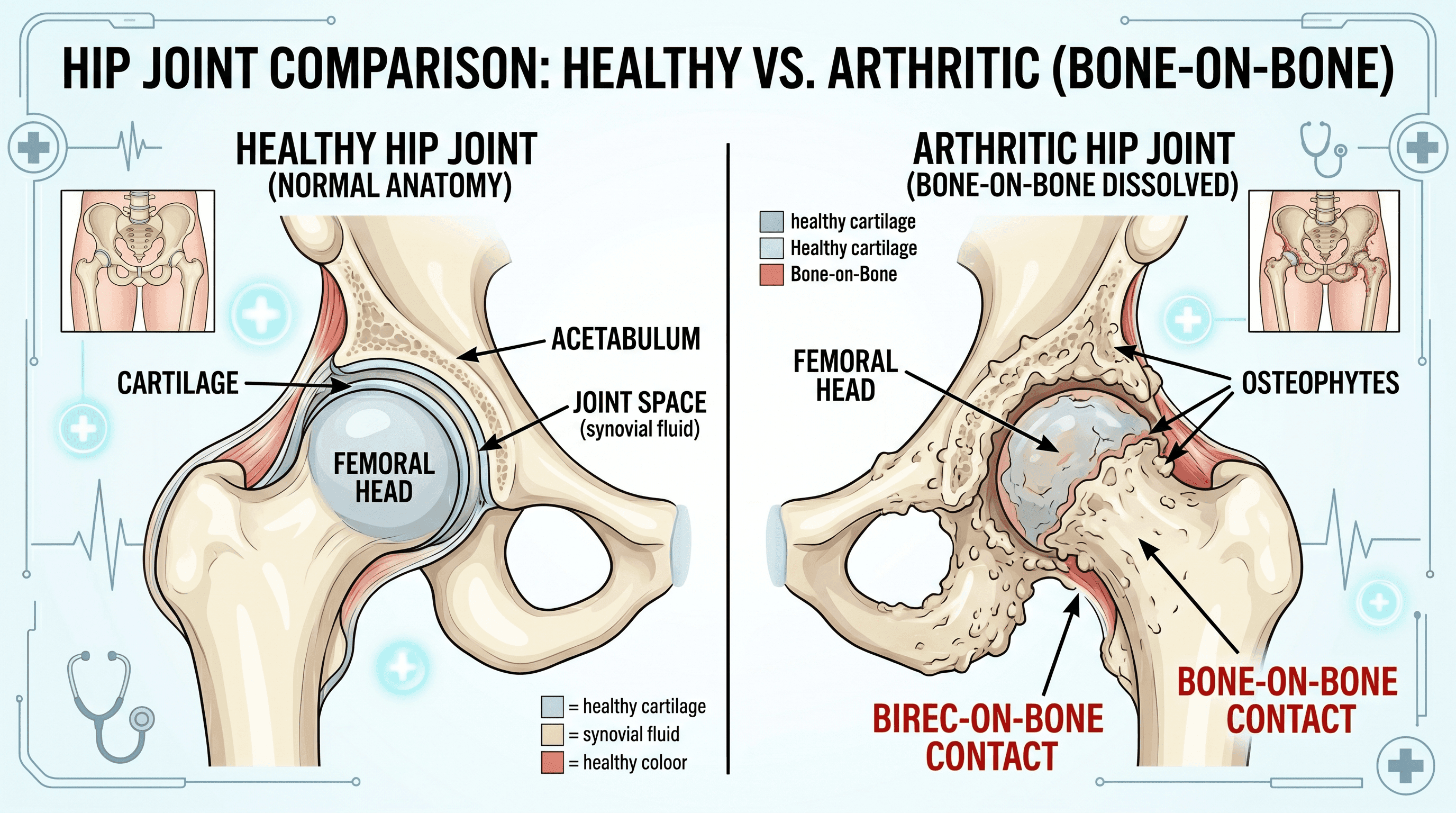
Articular cartilage is the smooth, dense connective tissue that covers the ball and socket surfaces of the hip joint. Its job is to absorb load, reduce friction, and allow the joint to move through its full range without resistance. Healthy cartilage has a compressive strength that allows it to withstand forces many times greater than body weight during activity.
Osteoarthritis is the progressive breakdown of this cartilage layer. As the tissue thins, the joint space visible on X-ray narrows. When cartilage loss is severe, the exposed bony surfaces of the femoral head and acetabulum come into direct contact. This is what "bone-on-bone" refers to: contact between raw bone surfaces without the protective cartilage buffer in between.
The consequences are several. The mechanical grinding produces the crepitus (a clicking, popping, or grinding sensation) that many patients describe. Bone spurs, called osteophytes, form along the joint margins as the body attempts to stabilize the degrading joint. These spurs further limit range of motion and can contribute to pain with specific movements.
On an X-ray report, "bone-on-bone" typically appears as "severe joint space narrowing" or a Kellgren-Lawrence grade 3 or 4 classification. When an orthopedic surgeon shows a patient their imaging and points to this finding, it represents a clinical milestone, though by itself, it is still not the only criterion for proceeding to surgery.
Causes That Lead to Hip Replacement
Osteoarthritis is the most common reason people reach the surgical threshold, but it is far from the only one.
Osteoarthritis (OA) accounts for the majority of total hip replacements performed in the United States. It is a degenerative condition in which cartilage breaks down progressively over time, accelerated by factors including age, body weight, genetics, and prior joint injury. Rheumatoid arthritis, an autoimmune condition, can attack the joint lining and cartilage at a much younger age and may lead to replacement even in patients in their 30s or 40s. Avascular necrosis (AVN) is a condition in which the blood supply to the femoral head is interrupted, causing the bone to collapse from within. Causes include long-term corticosteroid use, heavy alcohol use, and certain blood disorders. Post-traumatic arthritis develops years after a fracture or significant hip injury that disrupts the cartilage surface. Developmental dysplasia of the hip, a malformation of the socket that may be identified in infancy or missed until adulthood, leads to abnormal joint loading and accelerated cartilage breakdown. Labral tears in the hip's fibrocartilage ring, increasingly recognized in active adults aged 40 to 55, can progress to OA when unaddressed.
Age Is Not a Disqualifier
The most persistent misconception about hip replacement is that it is only for older adults. The data tells a more nuanced story.
If You Are Under 55: What Younger Patients Need to Know
The rate of hip replacement in patients under 55 has risen sharply over the past two decades, driven by earlier OA onset, improved implant technology, and broader recognition that functional decline is unacceptable at any age. Modern implants are designed with materials including highly cross-linked polyethylene, ceramic-on-ceramic, and metal-on-ceramic bearings to maximize longevity. Most contemporary implants are expected to function for 20 to 25 years or longer.
Younger patients do face a realistic possibility of needing a revision surgery at some point in their lifetime, and a good surgeon will counsel them on this honestly. Activity expectations after surgery, implant material selection, and long-term follow-up planning are all part of the surgical conversation for this population.
If You Are Over 75: Health Status, Not Age, Is the Question
Older patients often delay or decline surgical evaluation based on age-related concerns about recovery or outcomes. The clinical evidence does not support this hesitation. Research published in peer-reviewed literature consistently shows that patients in their late 70s and 80s achieve comparable pain relief and functional improvement to younger cohorts after total hip replacement. The genuine gating factors are cardiovascular health, diabetes management, bone density, and overall surgical fitness, not the number of birthdays.
A thorough preoperative evaluation will assess all of these factors. Age alone is not a reason to defer care indefinitely.
If you have been delaying getting answers because of concerns about your age or health status, connecting with a primary care provider through Momentary is a practical first step to get a medical assessment and a referral to an orthopedic specialist without an in-person wait.
What Happens at a Hip Replacement Consultation
A consultation with an orthopedic surgeon is an information-gathering session, not a binding commitment to surgery.
Many patients avoid scheduling a consultation because it feels like a point of no return. It is not. The appointment is structured around shared decision-making, and the entire goal is to give both the patient and the surgeon the information needed to make a well-grounded choice.
The visit typically begins with a thorough medical history review, including prior treatments, current medications, and the trajectory of symptoms over time. A physical examination follows, assessing gait, limb length, muscle strength, and active and passive range of motion. Imaging, usually weight-bearing X-rays of both hips, is reviewed and interpreted together with the patient. The surgeon will explain what the imaging shows in plain language and how it correlates with reported symptoms.
From there, the conversation moves to surgical approach options, implant considerations, and realistic expectations for recovery. The AAOS notes that most patients require several tests before surgery, including blood work and imaging, to ensure surgical fitness.
5 Questions to Ask Your Orthopedic Surgeon
These five questions will help make a consultation as productive as possible.
First: Am I a genuinely good candidate right now, or is there a conservative option worth trying first? Second: Which surgical approach do you recommend for my anatomy and activity level, and why? Third: What are your practice's infection and revision rates for this procedure? Fourth: What does recovery realistically look like for someone with my age, health history, and lifestyle goals? Fifth: What specifically happens to my hip if I wait another 12 months?
What Happens If You Wait Too Long?
Choosing to delay surgery is always an option, but it carries its own clinical consequences.
Progressive cartilage loss is irreversible. Once bone-on-bone contact is established, the joint continues to deteriorate with daily load-bearing, and no conservative intervention can halt that trajectory. Extended delay also allows periarticular muscle wasting to develop as patients move less to avoid pain, and weakened hip musculature increases both the complexity of the surgical procedure and the length of post-operative rehabilitation.
Compensatory loading is another concern. When a patient favors the arthritic hip, abnormal forces transfer to the knee, lumbar spine, and contralateral hip. Over time, this compensation can accelerate degeneration in joints that might otherwise have remained healthy. The psychological burden of chronic pain, including disrupted sleep, social withdrawal, and reduced mood, also compounds with each month of delay.
Most patients who have undergone hip replacement report, with consistent regularity, that they wish they had moved forward sooner.
The Bottom Line: When Is It Time?
The decision to pursue hip replacement converges on four factors, and all four generally need to point in the same direction before surgery becomes the right answer.
Functional decline means the hip is limiting activities that matter, consistently and significantly. Failed conservative treatment means a documented course of PT, medication, and injections has been completed without meaningful lasting relief. Imaging confirmation means the X-ray finding aligns with the clinical picture. Quality of life impact means the patient, not the surgeon, has concluded that the current situation is no longer acceptable.
When all four of those conditions are present, the clinical consensus, and the consistent experience of patients who have been through it, points toward surgery.
This is always a shared decision, made in conversation with a board-certified orthopedic surgeon who knows your specific history, imaging, and goals. If you have questions about your symptoms and want to understand what they might mean before a specialist visit, Momentary's AI health navigator can help you explore your symptoms and identify your most useful next steps.
Frequently Asked Questions
Where do you feel pain if your hip needs replacing?
The pain of hip joint arthritis is most commonly felt deep in the groin or at the front of the thigh. Some patients experience referred discomfort into the inner thigh or front of the knee. Pain located primarily in the buttock, outer hip, or radiating down the back of the leg is more often associated with lumbar spine or sciatic nerve involvement rather than the hip joint itself.
What are the first signs of hip problems?
Early hip joint deterioration often presents as morning stiffness that eases within 30 minutes of movement, mild groin discomfort during or after physical activity, and reduced ease of rotation when getting into or out of a car. A growing difficulty reaching the foot to put on socks or shoes is also a reliable early indicator of hip joint range of motion loss.
What is the one-leg test for hip replacement?
The one-leg stance test, also called the Trendelenburg test, assesses the strength of the hip abductor muscles on the weight-bearing side. The patient stands on the affected leg while the other leg is lifted. If the pelvis drops toward the unsupported side, or if the patient leans noticeably toward the standing leg to compensate, the test is considered positive. Surgeons use this test as part of the physical examination, though it is one piece of a broader assessment and not a standalone indicator for surgery.
What is the 90% rule for hip replacement?
The 90-degree rule is a post-operative precaution, not a candidacy criterion. In the weeks following traditional posterior-approach hip replacement, patients are typically instructed to avoid bending the hip beyond 90 degrees to reduce the risk of dislocation while the surrounding tissue heals. Whether this restriction applies, and for how long, depends on the specific surgical approach used. Anterior-approach procedures often carry fewer or no such restrictions. Your surgeon will provide individualized guidance.
Can hip replacement be avoided entirely?
For some patients, particularly those with early-stage OA, a sustained commitment to conservative care (physical therapy, weight management, activity modification, and appropriate pain management) can delay or, in some cases, indefinitely defer surgery. However, for patients with end-stage joint destruction, significant functional impairment, and failed conservative treatment, surgery remains the most reliable path to meaningful, lasting pain relief and restoration of mobility.
How long does recovery from hip replacement take?
Most patients return to light daily activities within 2 to 6 weeks. A full return to activities like longer walks, travel, and low-impact recreation typically takes 3 to 6 months. Recovery timelines vary based on age, overall health, pre-surgical muscle strength, and adherence to rehabilitation. According to the Cleveland Clinic, recovery can take up to 12 weeks, with most patients living comfortably with their implant for the rest of their lives.
References
- UC Davis Health — Statistics on annual hip replacements in the US (2023 data); overview of surgical readiness signs.
- American Academy of Orthopaedic Surgeons (AAOS) — OrthoInfo — Clinical criteria for total hip replacement candidacy; conservative care recommendations; preoperative testing requirements.
- Cleveland Clinic — Overview of hip replacement procedure, types, recovery timeline, and candidacy indicators including stiffness and range of motion loss.