

At a Glance
| Topic | Key Facts |
|---|---|
| Surgery types | Partial meniscectomy (removal) vs. meniscus repair (stitching) |
| Meniscectomy recovery | 3 to 6 weeks to daily function; 3 to 4 months to full activity |
| Repair recovery | 3 to 6 months to daily function; 6 to 12 months to sport return |
| Transplant recovery | 6 to 12 months; sport clearance up to 1 year |
| Weight-bearing | Immediate for meniscectomy; 4 to 6 weeks protected for repair |
| Driving (right knee) | 2 weeks post-meniscectomy; 2 to 3 weeks post-repair |
| Physical therapy | Begins within days; spans the full recovery arc |
| Biggest recovery variable | Physical therapy adherence |
Meniscus surgery is one of the most common orthopedic procedures in the United States, yet the recovery timeline varies so widely between patients that a single number rarely tells the full story. The short answer is that a partial meniscectomy, where a torn portion of cartilage is trimmed and removed, typically has patients back to daily life within 3 to 6 weeks. A meniscus repair, where the torn tissue is stitched back together, requires a much longer protected healing phase of 3 to 6 months. But the answer that actually helps you plan your life requires going deeper than that.
This guide breaks down the recovery week by week, covers the practical milestones patients search for most (driving, sleeping, going back to work), and explains why two people with the same diagnosis can have genuinely different timelines.
The Short Answer: Repair vs. Removal
The single most important factor in meniscus surgery recovery time is which procedure was performed. These two surgeries share the same entry point, an arthroscopic incision through the knee, but they produce fundamentally different healing demands on the body.
| Surgery Type | What Happens | Typical Recovery to Daily Function | Return to Sport |
|---|---|---|---|
| Partial meniscectomy | Damaged cartilage is trimmed away | 3 to 6 weeks | 6 to 8 weeks |
| Meniscus repair | Torn edges are stitched back together | 3 to 6 months | 6 to 9 months |
| Meniscus transplant | Donor cartilage replaces the meniscus | 6 to 9 months | Up to 12 months |
A partial meniscectomy heals quickly because the surgeon is removing tissue rather than asking the body to regenerate it. There is no fragile repair site to protect, so weight-bearing can begin almost immediately. A meniscus repair, by contrast, requires the stitched cartilage to knit back together across a cellular level, which takes months, not weeks. Breaking the weight-bearing restrictions during a repair recovery is the most common reason stitches fail.
The First 72 Hours at Home
The first three days after outpatient arthroscopic surgery set the tone for everything that follows. Managing swelling aggressively in this window makes the early PT weeks significantly more comfortable.
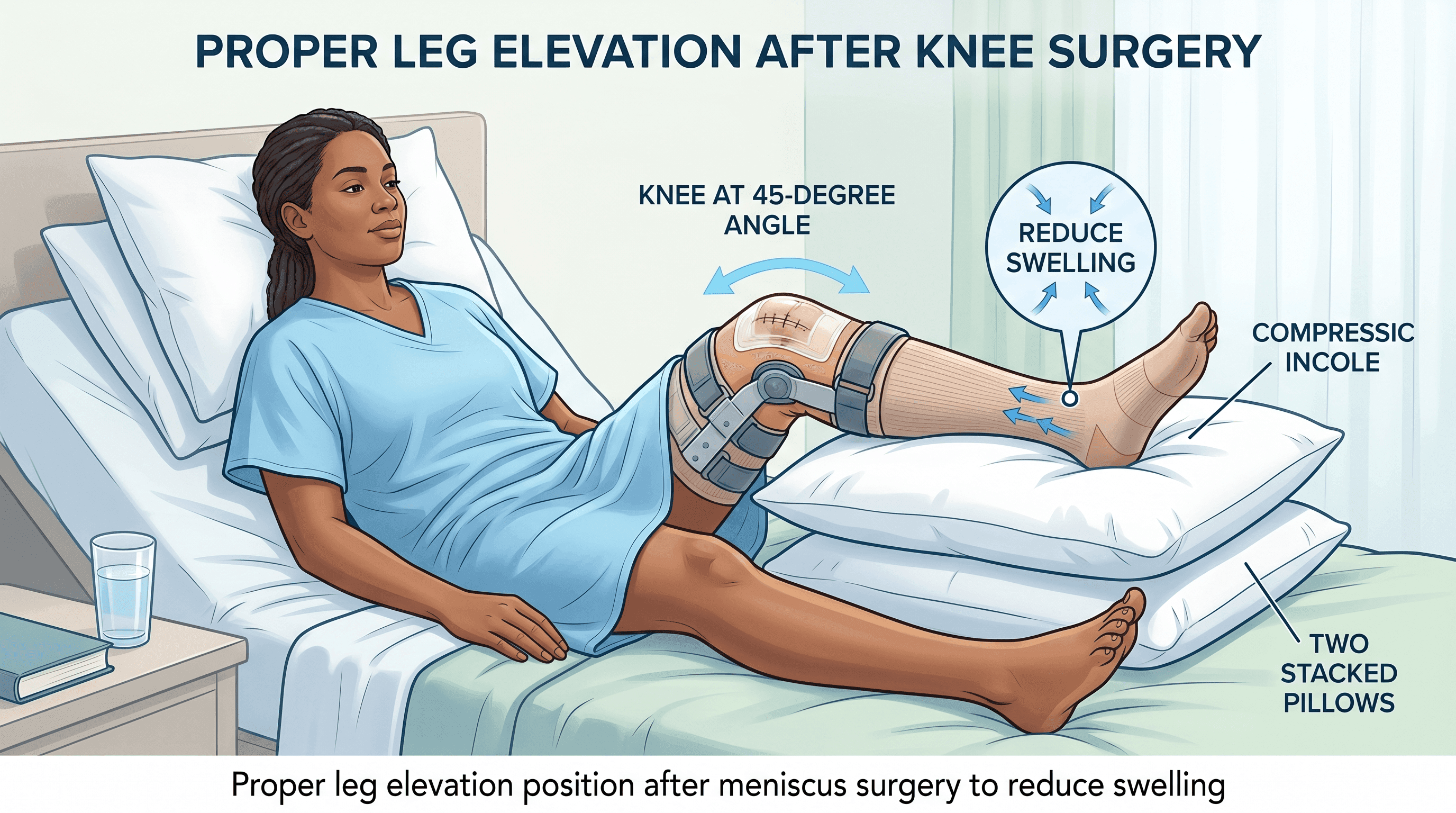
The standard protocol recommended by orthopedic surgeons is R.I.C.E.: rest, ice, compression, and elevation. Ice should be applied for 15 to 20 minutes every 2 to 3 hours during waking hours, never directly on skin. The leg should stay elevated above the level of the heart as often as possible, propped on pillows while resting or sleeping.
Pain management in the first 72 hours typically involves a combination of prescription NSAIDs or short-term opioids and over-the-counter acetaminophen, as directed by the surgical team. Most patients find pain peaks around day 2 and begins to ease by day 4. Nausea from anesthesia is common on day 1 and usually resolves by day 2.
Sleep is difficult for most patients in this phase. Lying flat on the back with the leg elevated on a pillow is the most protective position. Side sleeping on the non-operative side, with a pillow placed between the knees, becomes tolerable for most people within a few days.
Swelling after knee arthroscopy is normal and expected. According to the Cleveland Clinic, some degree of swelling can persist for 2 to 3 months even in uncomplicated recoveries, so the goal in week 1 is reduction, not elimination.
Recovery Timeline for a Partial Meniscectomy
Partial meniscectomy recovery moves faster than most patients expect. The trimmed cartilage does not need to heal back together, so the body's job is primarily managing surgical inflammation and rebuilding the muscles that atrophied during inactivity.
Days 1 to 3: Right After Surgery
Most patients go home the same day as surgery. Crutches are typically provided but are often needed for only a few days, and many surgeons allow partial weight-bearing immediately if the repair was straightforward. The incision sites are small (arthroscopic portals are typically less than a centimeter), covered with a sterile dressing, and should be kept dry for the first 24 to 48 hours. After that window, a brief shower with a waterproof dressing is generally permitted, though patients should confirm this with their surgical team.
Pain levels in these first days are moderate for most people, not severe. Staying ahead of the inflammation with consistent icing and keeping the leg raised makes the biggest practical difference.
Weeks 1 to 2: Early Movement and First PT
By the end of week 1, most partial meniscectomy patients are walking with reduced crutch support or without crutches entirely. The first physical therapy appointment typically happens 5 to 7 days post-op, focusing on restoring range of motion, reducing swelling with therapeutic exercises, and beginning gentle quadriceps activation.
Incision care during this phase means watching for normal healing: mild redness at the portal edges is expected, but spreading redness, warmth, or discharge warrants a call to the surgeon.
Driving timelines differ by side. For a right knee meniscectomy, most surgeons clear patients to drive an automatic transmission vehicle at around 2 weeks, once they can perform an emergency stop reliably and are off narcotic pain medication. For a left knee meniscectomy, patients driving an automatic can often return within a few days of stopping narcotics, since the left foot is not used for braking. Patients on opioid pain medication should never drive regardless of which knee was operated on.
Weeks 3 to 6: Strength, Range of Motion, and Return to Work
This phase is where meaningful functional recovery happens. Physical therapy shifts toward strengthening the quadriceps, hamstrings, and hip stabilizers, all of which lose conditioning rapidly after any knee surgery. Range of motion typically normalizes by week 4 to 6 for most patients.
Desk work is realistic by week 1 to 2 for most people, provided sitting for extended periods is tolerable and the commute is manageable. Jobs requiring prolonged standing take 4 to 6 weeks. Physical labor or jobs that involve squatting, kneeling, or heavy lifting typically require 3 to 4 months of clearance.
Swelling continues to resolve throughout this phase but can return after more active days. This is a normal part of cartilage healing and does not mean anything has gone wrong.
Recovery Timeline for a Meniscus Repair
Meniscus repair recovery is a different experience entirely, and understanding why makes the restrictions easier to follow.
The meniscus has two blood supply zones. The outer third (the "red zone") is well-vascularized and heals reliably when stitched. The inner two-thirds (the "white zone") has poor blood supply, which is why tears in that area are usually treated with trimming rather than repair. When a repair is performed, the stitched tissue must receive enough blood flow to knit together at a cellular level, and any stress placed on the knee before that happens can tear through the repair like wet paper.
This is why the first weeks after meniscus repair look almost nothing like meniscectomy recovery.
Weeks 1 to 4: Brace, Crutches, and Protected Healing
The first four weeks after repair are the most restrictive phase of the entire recovery. Patients typically use crutches with no or minimal weight-bearing on the operative leg, wear a locked knee brace (usually locked in full extension or near-extension), and avoid any range of motion that loads the repair site. Sleeping with the brace on is standard in this phase, uncomfortable as that is.
The rationale is not excessive caution. Research published in the Journal of Bone and Joint Surgery has found that early unprotected weight-bearing after meniscal repair significantly increases the risk of re-tear. Respecting this window protects the investment of the surgery itself.
Pain in this phase is typically manageable but sustained. Swelling is significant and should be treated with consistent icing and elevation.
Months 2 to 3: Walking Without Aids and PT Milestones
Around weeks 6 to 8, most patients transition out of the locked brace and into either a hinged brace with increasing range of motion or no brace, depending on surgeon preference. Crutches are typically discontinued between 8 and 12 weeks.
Physical therapy in this phase builds progressively, first restoring full range of motion, then introducing open-chain and closed-chain strengthening exercises. Walking without a limp by the end of month 3 is a realistic milestone for most repair patients.
Driving timelines for repair: right knee patients typically return at 2 to 3 weeks (once off narcotics and cleared by the surgeon for emergency braking), and left knee patients on automatics can often return earlier. However, these timelines are surgeon-specific and should be confirmed before getting behind the wheel.
Months 4 to 6: Return to Sport and Full Activity
According to research published in the American Journal of Sports Medicine, meniscus repair has approximately 90 percent good-to-excellent outcomes at five years in appropriately selected patients. But reaching those outcomes requires completing the full rehabilitation arc, not stopping PT when the knee "feels fine."
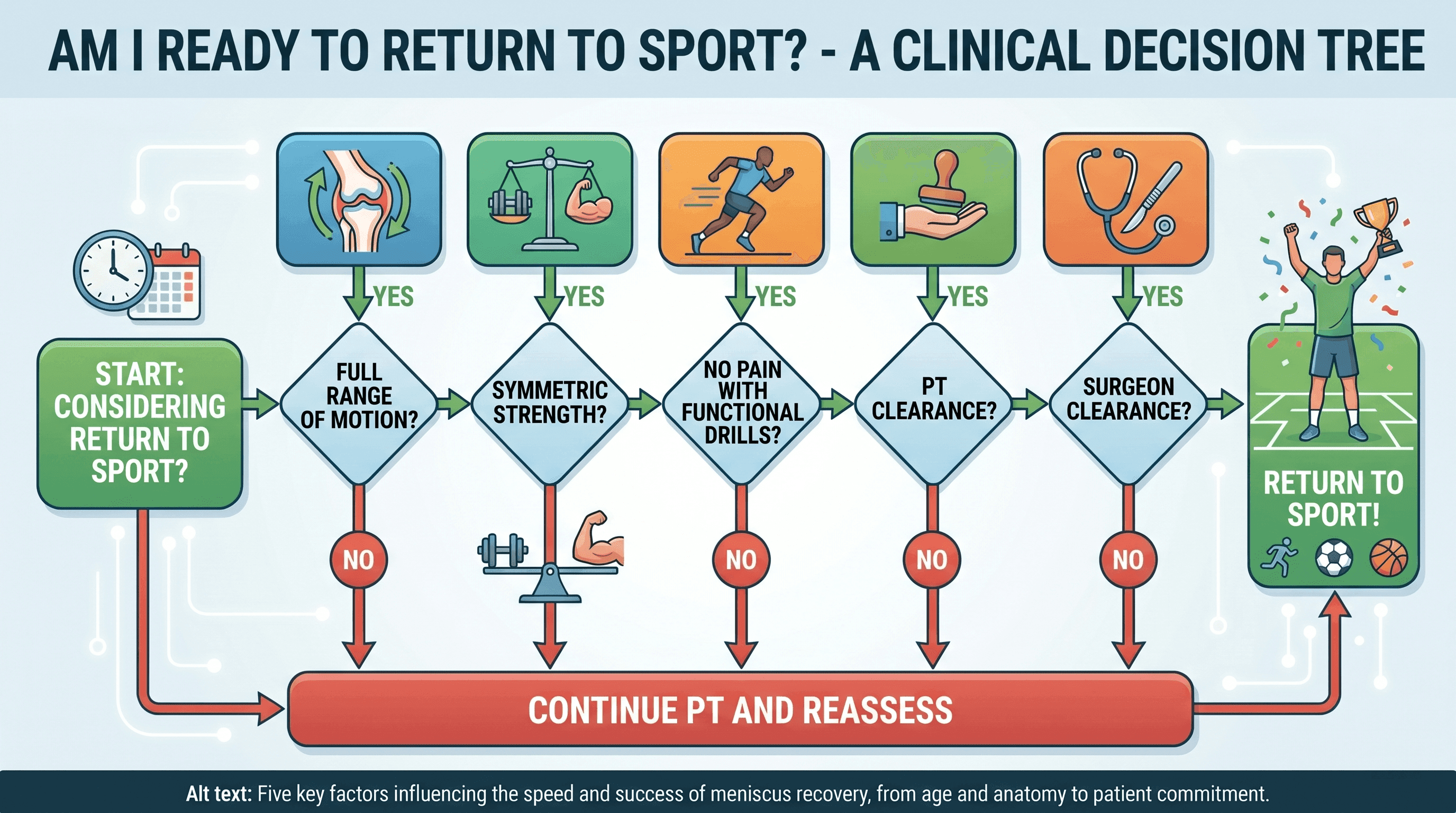
Sport-specific clearance criteria typically include full symmetrical strength between both legs (measured by isokinetic testing or functional assessments), normal single-leg squat mechanics, full pain-free range of motion, and completion of sport-specific agility drills without compensating. Feeling ready and being clinically cleared are not the same thing.
Pivoting sports (soccer, basketball, skiing) carry higher re-tear risk than linear sports (cycling, swimming), and most surgeons do not clear high-risk sport return until 6 to 9 months post-repair.
Meniscus Transplant Recovery
Meniscus allograft transplantation (MAT) is a procedure reserved for younger patients who have had all or most of their meniscus removed and are experiencing pain and dysfunction as a result. Candidates are typically under 50 years old with minimal signs of arthritis on imaging.
Recovery from transplant surgery is the longest of the three procedures: most patients reach functional daily activity by 6 to 9 months, with full sport clearance up to 12 months post-op. The extended timeline reflects the complexity of the procedure: the donor tissue must integrate with the native knee structure, which places demands similar to ligament reconstruction in terms of biological healing time.
Physical therapy for MAT follows a phased protocol similar to meniscus repair but with an even longer protected phase. Patients considering this procedure should have detailed discussions with their surgeon about realistic expectations before scheduling.
Factors That Affect How Fast You Recover
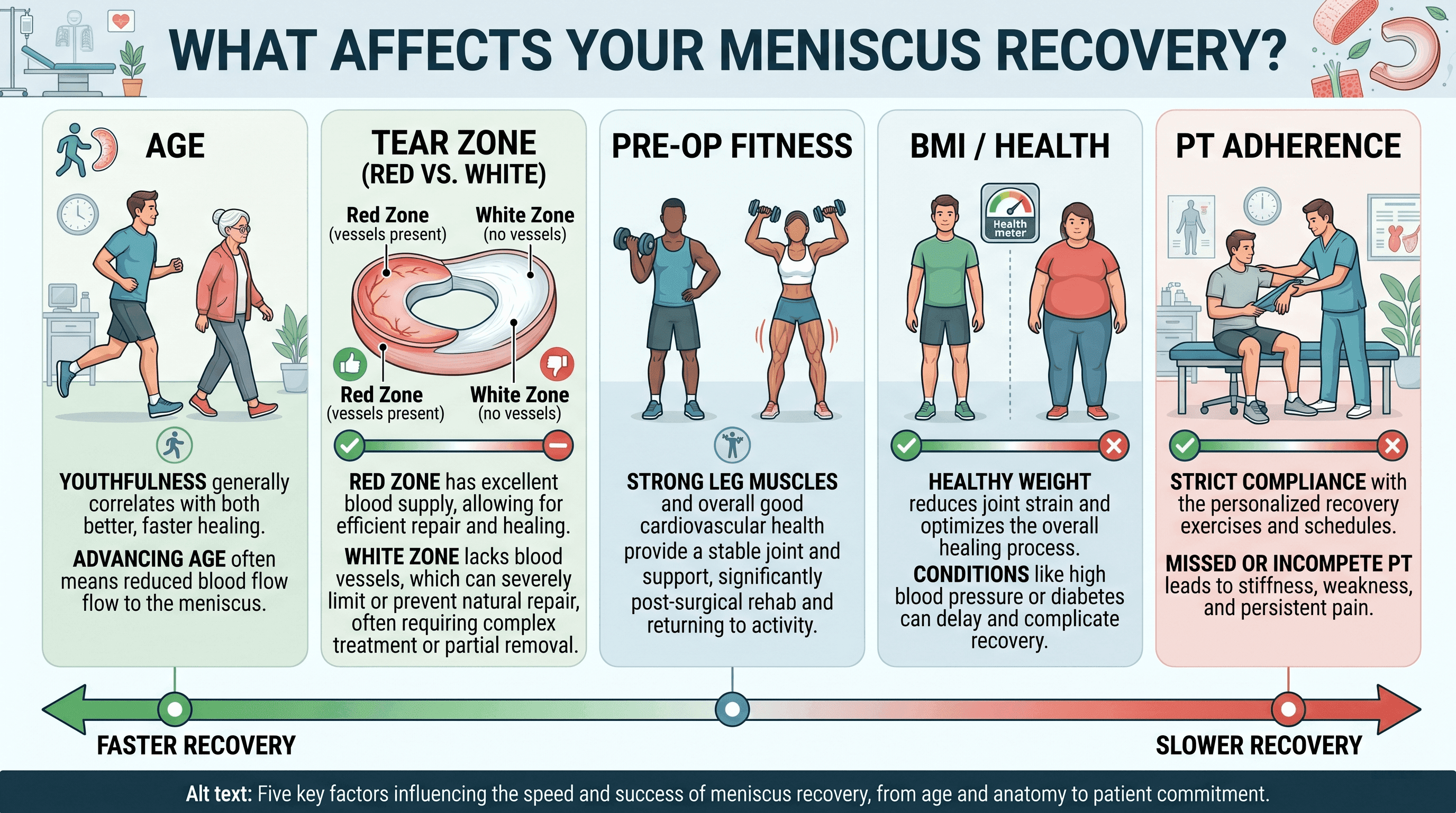
The timelines above describe average recovery arcs, and individual results vary based on several well-documented variables. Understanding these factors helps set realistic expectations rather than measuring progress against a generic timeline.
Age is among the most significant. Healing biology slows after age 40, and cartilage repair is less vascularized in older patients. Surgeons are also more likely to recommend meniscectomy over repair for older patients because the biology of their tissue makes repair less likely to succeed.
Tear zone determines surgical options from the start. A red zone tear (outer meniscus) has much stronger healing potential after repair than a white zone tear. Patients whose tears were repaired despite being in the white zone face a longer and statistically less predictable recovery.
Pre-surgery fitness level meaningfully affects recovery speed. Patients who maintain quad and hamstring strength before surgery (a process sometimes called "prehabilitation") tend to regain functional movement faster post-op. A stronger muscle baseline simply has less ground to recover.
BMI and metabolic health affect both tissue healing and the mechanical load placed on the knee during rehabilitation. Higher body weight increases joint stress at every phase of weight-bearing, which can slow progression through PT milestones.
Physical therapy adherence is the most controllable variable on this list. Research in PMC consistently shows that patients who complete their full prescribed PT program have better functional outcomes than those who stop when symptoms improve. This is especially relevant for repair patients, where stopping PT early at month 3 or 4 is a common mistake.
Getting Back to Normal: Driving, Work, and Daily Life
This is the section most patients actually need before surgery. The broad timelines matter less than the specific milestones for getting back to life.
Driving depends on both the surgery type and which knee was operated on. For a right knee meniscectomy, most surgeons clear patients around week 2, once they can perform an emergency brake simulation (rapidly pressing down from 90 degrees of knee flexion) without hesitation or pain, and once all narcotics are stopped. For a left knee meniscectomy in an automatic-transmission vehicle, return can happen within days of stopping narcotic medication, since the left foot is not involved in braking. Meniscus repair patients should plan for 2 to 3 weeks minimum on the right side and 1 to 2 weeks on the left, though surgeon clearance is required in either case.
Work return breaks into three tiers. Desk work and remote work: realistic at 1 to 2 weeks for meniscectomy and 2 to 4 weeks for repair, provided the commute and prolonged sitting are manageable. Jobs requiring standing for extended periods: 4 to 6 weeks for meniscectomy, 8 to 12 weeks for repair. Jobs involving heavy labor, squatting, kneeling, or lifting: 3 to 4 months for meniscectomy, 4 to 6 months or longer for repair.
Sleeping is a legitimate challenge in the first 2 to 3 weeks. Back sleeping with the leg elevated on a firm pillow is the most protective and most comfortable position for most patients. Side sleeping on the non-operative side becomes possible within a week for meniscectomy patients (with a pillow between the knees). Repair patients wearing a locked brace face a harder adjustment; body pillows and adjustable wedge pillows help.
Showering is permitted for most patients 24 to 48 hours post-op, with a waterproof dressing covering the incision sites. Full submersion (bath, pool, hot tub) should wait until all incisions are fully closed and the surgeon provides clearance, typically 2 to 3 weeks.
Stairs are manageable from day 1 for most meniscectomy patients with crutch support ("good leg up, bad leg down" is the rule). Repair patients should follow the specific stair protocol given by their surgical team, as range of motion restrictions affect stair mechanics.
How to Speed Up Your Meniscus Surgery Recovery
Recovery cannot be rushed, but it can be optimized. These strategies have the best evidence behind them.
Complete your physical therapy program. This is not advice for motivation's sake. PT compliance is the single most consistently documented predictor of good outcomes after meniscus surgery, according to research in PMC. Every session skipped is a compounding cost.
Prioritize protein intake. Muscle repair and cartilage healing both require adequate protein. Most adults need 1.2 to 2.0 grams of protein per kilogram of body weight during active recovery. A registered dietitian can advise on individual targets.
Optimize vitamin C and anti-inflammatory nutrition. Vitamin C supports collagen synthesis, which underpins cartilage and connective tissue healing. An anti-inflammatory dietary pattern (emphasizing vegetables, omega-3-rich fish, and whole foods while limiting processed sugars) supports the healing environment at the tissue level.
Stop smoking before and after surgery. Nicotine directly impairs cartilage healing by reducing oxygen delivery to tissue. If stopping completely is not possible before surgery, reducing as much as possible and avoiding smoking during the recovery period produces measurable benefit.
Do not return to activity early. One of the most common re-tear mechanisms is returning to sport or high-demand physical activity before the surgical site has finished healing. Feeling better and being healed are different things, particularly for repair patients.
Ask your surgeon about biologics. Platelet-rich plasma (PRP) injections are sometimes discussed in the context of musculoskeletal recovery. The evidence base for PRP specifically in meniscus surgery is still developing, and it should not be pursued as a standalone strategy. Frame any conversation about biologics as "worth discussing with your surgeon" rather than a proven protocol.
If you are still in the planning stages or trying to find the right orthopedic specialist, finding a qualified doctor through a trusted directory can help ensure you are matched with a provider who has specific experience in arthroscopic knee surgery and meniscal repair.
Return to Sports: The Final Phase
Sport return after meniscus surgery is not a date on a calendar. It is a clinical milestone determined by functional testing, not just how the knee feels during daily activity.
For meniscectomy patients, low-impact activity such as cycling and swimming can often begin at 4 to 6 weeks. Jogging on a flat surface is typically cleared at 6 to 8 weeks. Pivoting, cutting, and contact sport return depends on the specific sport and the surgeon's assessment but is often possible at 3 to 4 months.
For repair patients, the clearance process is substantially more involved. Most protocols require symmetric leg strength (typically 90 percent of the unaffected leg on isokinetic testing), successful completion of sport-specific functional drills, and a formal return-to-sport assessment by a physical therapist or sports medicine physician. These criteria are typically not met until 6 to 9 months post-repair.
One honest note for competitive athletes: the psychological challenge of sport return is real. Fear of re-injury during first contact or first pivoting movement is common and should be discussed openly with a sports psychologist or PT familiar with return-to-sport psychology.
Long-Term Outlook: Protecting Your Knee for the Future
The long-term data on meniscus surgery outcomes is nuanced and worth understanding.
For meniscus repair patients, the 5-year outcomes are generally favorable. Research in the American Journal of Sports Medicine reports approximately 90 percent good-to-excellent functional results in appropriately selected patients, meaning those with repairable tears in vascularized tissue who complete their full rehabilitation.
For partial meniscectomy patients, the picture is more complex. The meniscus serves as a load-distributing shock absorber between the femur and tibia. Removing a portion of it, even when necessary, increases the contact stress on the underlying cartilage. Research published in PubMed has found that the risk of early-onset knee osteoarthritis is elevated in patients who have had meniscal tissue removed, particularly when a significant portion is resected. This does not mean meniscectomy is the wrong choice; in many cases it is the most appropriate one. But it does mean that joint preservation strategies after surgery matter.
Maintaining a healthy body weight, building strong knee-stabilizing musculature (quadriceps, hamstrings, hip abductors), avoiding high-impact repetitive activity when possible, and attending annual check-ins with an orthopedic provider are the most consistently recommended strategies for long-term joint health after meniscus surgery.
Signs Your Recovery May Be Off Track
Most people recover from meniscus surgery without complications. But a few signals are worth knowing so that a call to the surgeon's office happens promptly when warranted.
Fever above 101°F, increasing redness, or discharge from the incision sites may indicate infection and should prompt a same-day call to the surgical team. These are not "wait and see" symptoms.
Excessive swelling that worsens after week 3, particularly if accompanied by warmth and tightness in the calf, warrants evaluation for deep vein thrombosis (DVT), a blood clot that can develop in the leg veins after knee surgery. DVT symptoms include calf pain, swelling below the knee, and skin warmth. This is a medical urgency.
Inability to bear weight at the expected milestone for a meniscectomy patient, or a sudden sharp pain in a repair patient after an ordinary movement, should be reported to the surgeon. A sudden pop or new instability may signal a re-tear.
Numbness or tingling that does not resolve after the first week may indicate nerve irritation or, rarely, nerve injury, and should be documented and reported.
None of these possibilities are listed to create anxiety. The vast majority of meniscus surgeries proceed without these complications. But knowing the thresholds for calling the surgeon keeps a solvable problem from becoming a serious one.
FAQ
How long after meniscus surgery can you walk again?
For partial meniscectomy, most patients walk without crutches within 1 to 2 weeks of surgery, and many are walking with reduced crutch support within days. For meniscus repair, full unassisted walking typically takes 8 to 12 weeks, because the repair site must be protected from load-bearing stress during the initial healing phase. The exact timeline depends on the surgeon's protocol and the patient's progress in physical therapy.
How painful is meniscus surgery recovery?
Pain after arthroscopic meniscus surgery is typically described as moderate rather than severe, and it peaks in the first 2 to 3 days before gradually improving. Most patients manage well with prescribed NSAIDs and short-term opioids in the first few days, then transition to over-the-counter pain management within the first week. Meniscus repair patients tend to have a longer period of low-level discomfort compared to meniscectomy patients, given the extended protection phase. Pain that worsens significantly after the first week or spikes unexpectedly after initial improvement should be reported to the surgical team.
What is the fastest way to recover from meniscus surgery?
The most evidence-supported route to a faster recovery is consistent physical therapy attendance, adequate protein intake, aggressive swelling management in the first week (R.I.C.E. protocol), not returning to activity before clinical clearance, and stopping smoking. Prehabilitation, meaning strengthening the knee before surgery, has also been shown to reduce recovery time for patients who have the luxury of a planned surgery date.
What do I wish I knew before meniscus surgery?
A few things surgeons do not always have time to explain: swelling persists longer than most people expect (2 to 3 months is normal), the difference between meniscectomy and repair recovery is not just a matter of weeks but of months, PT compliance is the most controllable factor in the outcome, and feeling "fine" at 6 weeks (for repair patients) does not mean the repair is healed. Also, the first night at home is the hardest, and having ice packs, a wedge pillow, and meals prepared in advance makes a real difference.
How do I know if my meniscus surgery is healing properly?
Steady, gradual improvement across the milestones described by the surgical team is the clearest positive signal. Swelling should slowly reduce over weeks, pain should trend downward, and range of motion and strength should improve with each PT session. Warning signs include fever, discharge from incisions, new or worsening swelling with calf pain, sudden sharp pain, or inability to hit the expected weight-bearing milestones. A doctor can review individual recovery progress and order imaging if something seems off. Use Momentary Lab's AI Healthcare Navigator to help understand your symptoms or find the right specialist if something feels unexpected during recovery.
References
- American Journal of Sports Medicine, PMC9107559 — Cited for meniscus repair outcomes data (approximately 90% good-to-excellent results at 5 years) and PT compliance as a predictor of outcomes.
- Columbia Doctors Health Library — Referenced for general meniscus surgery recovery framing and patient-facing milestones.
- Cleveland Clinic, Meniscal Root Tear Case Study — Cited for post-op swelling duration guidance (2 to 3 months).
- PubMed 36995377 — Cited for elevated osteoarthritis risk following partial meniscectomy.
- PubMed 10663312 — Cited for early weight-bearing risk and re-tear rates after meniscal repair.
- PMC3666493 — Cited for PT adherence and functional outcome correlation.
- PMC12185851 — Referenced for rehabilitation protocol framing after meniscal repair.