


If you are scheduled for rotator cuff surgery and wondering how long the whole ordeal is going to take, the short answer is: plan for about four to six hours at the facility, even though the actual repair only runs one to two hours. The rest is prep, anesthesia, and monitored recovery. This guide walks through each phase in order so there are no surprises on the day of surgery.
At a Glance
| Topic | Key Facts |
|---|---|
| Actual surgery duration | 1 to 2 hours for arthroscopic; up to 3+ hours for large open repairs |
| Pre-op preparation | 1 to 2 hours (check-in, IV, nerve block) |
| Recovery room (PACU) | 1 to 2 hours |
| Total facility time | Approximately 4 to 6 hours |
| Discharge | Same day in most cases |
| Nerve block duration | 12 to 24 hours post-surgery |
| Add-ons that extend OR time | Bone spur removal, bicep tenodesis, labral repair |
The Short Answer: Time in the Operating Room
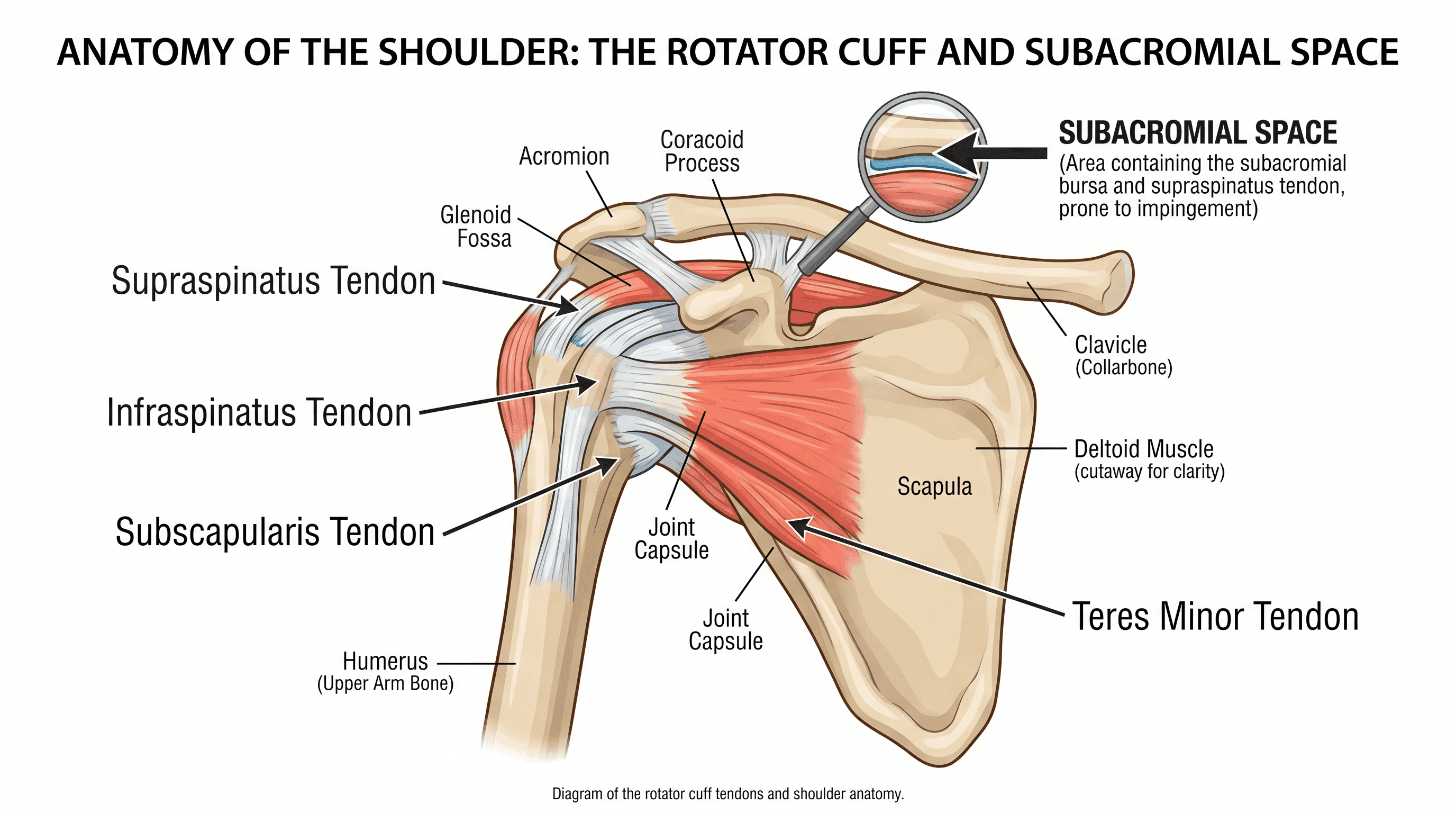
For most patients, the arthroscopic repair itself takes between one and two hours. That window covers the time from when the surgeon makes the first incision to when the last anchor is secured and the camera ports are closed. A straightforward partial-thickness tear on a single tendon sits at the lower end of that range. A full-thickness, multi-tendon tear requiring three or four suture anchors pushes closer to the two-hour mark.
The operating time feels fast to patients who spend most of it unconscious. What makes surgery day feel long is everything surrounding that window, including prep, anesthesia induction, the nerve block, and the monitored recovery that follows.
The Pre-Op Waiting Game (1 to 2 Hours)
Arriving at the surgical center does not mean going straight into the operating room. Most facilities ask patients to check in one to two hours before the scheduled surgery start time, and that buffer exists for good reason.
During this phase, a nurse will verify the surgical site with a marker on the correct shoulder, insert an intravenous line, confirm medication allergies, and review the consent paperwork. The anesthesiologist will stop by to discuss the general anesthesia plan and ask about prior reactions to anesthesia. Vitals are taken, a hospital gown replaces street clothes, and the patient is moved to a pre-op bay to wait for the operating room to be ready.
This wait varies by facility and scheduling. Delays can push it to 90 minutes or slightly longer, particularly at hospital-based surgical suites where emergencies can affect the schedule. Ambulatory surgical centers tend to run tighter timelines.
The Nerve Block Procedure
Before rolling into the operating room, most rotator cuff patients receive a regional nerve block, specifically an interscalene brachial plexus block, which numbs the shoulder and upper arm. An anesthesiologist or pain management specialist uses ultrasound guidance to place the needle near the nerve roots in the neck, and the entire process takes about 15 to 30 minutes.
The reason this step matters for patients is the aftermath. According to the Cleveland Clinic, the nerve block continues working for 12 to 24 hours after surgery, which means the shoulder typically remains numb for a significant portion of the first night at home. Many patients feel almost no pain that first evening, then wake up to discomfort as the block wears off. Knowing this in advance prevents a startling transition.
A nerve block is not mandatory for every patient. Those with certain neck conditions or bleeding disorders may receive spinal or general anesthesia modifications instead. The anesthesiologist will discuss the appropriate plan individually.
Arthroscopic vs. Open Surgery: How It Affects OR Time
The surgical approach has a direct impact on how long the patient spends in the operating room.
Arthroscopic repair is the standard for the majority of rotator cuff tears. The surgeon inserts a small camera (arthroscope) and thin instruments through two to four small portals, each roughly the size of a pencil eraser, to visualize and repair the tendon. Research published in PubMed Central confirms that arthroscopic techniques are associated with shorter operative time, less blood loss, and faster discharge compared to open approaches. Most arthroscopic cases are completed in one to two hours.
Open repair is reserved for massive, complex tears, revision surgeries, or cases where tendon grafting is required. The surgeon makes a longer incision to access the shoulder directly, which allows more working room but adds time. Open cases can run two to three hours or more depending on complexity.
Mini-open repair sits between the two. The surgeon uses arthroscopy to assess the joint, then makes a small incision to complete the tendon attachment by hand. This approach tends to add 20 to 40 minutes compared to a fully arthroscopic repair.
| Approach | Typical OR Time | Common Use Case |
|---|---|---|
| Arthroscopic | 1 to 2 hours | Partial and full-thickness tears, small to medium |
| Mini-open | 1.5 to 2.5 hours | Medium tears needing direct access |
| Open | 2 to 3+ hours | Massive tears, revision cases, tendon transfers |
Add-Ons That Can Extend the Clock
The repair itself is not always the only thing happening in the operating room. When the surgeon inserts the arthroscope, they can see the entire joint, and what they find sometimes calls for additional procedures.
Subacromial decompression is the most common add-on. If the surgeon identifies bone spurs on the underside of the acromion (the bony shelf above the rotator cuff), shaving them down prevents future impingement on the repaired tendon. This adds roughly 15 to 30 minutes to the surgical time. Patients are rarely told about this step in advance because the decision is made in the moment based on what the camera reveals.
Bicep tenodesis is another common extension. The long head of the bicep tendon attaches inside the shoulder joint and is frequently frayed or partially torn in patients who have rotator cuff damage. If the surgeon finds a compromised bicep tendon, they will often anchor it to the humerus (the upper arm bone) at the same time. This procedure adds another 20 to 45 minutes to the case.
Labral repair becomes necessary if the cartilage rim around the shoulder socket shows tearing. Overhead athletes and patients who have had shoulder dislocations are most likely to need this. A combined rotator cuff and labral repair can extend surgical time by 30 to 60 minutes.
Patients should ask their surgeon during the pre-op consultation whether any of these add-ons are anticipated. It allows for a more accurate time estimate and avoids confusion when a family member hears the surgery ran longer than expected.
Waking Up: The PACU and Recovery Room (1 to 2 Hours)
Once the surgical team closes the shoulder and applies the sling, the patient is moved to the Post-Anesthesia Care Unit, commonly called the PACU or recovery room. This phase typically lasts one to two hours, and it exists to allow the anesthesia to wear off under monitored conditions.
Nurses check blood pressure, oxygen levels, and heart rate at regular intervals. Nausea is a common side effect of general anesthesia, and the recovery nurse will administer anti-nausea medication if needed. Pain management begins here with oral medications or IV administration, though the nerve block is usually still active and doing most of the work.
Grogginess, mild confusion, and a feeling of heaviness in the body are all normal during this period. The arm will be in a sling. Some patients wake up alert and oriented; others need the full two hours to feel steady. Neither experience is a sign of a problem.
Before discharge is cleared, the patient must demonstrate stable vitals, the ability to tolerate fluids, adequate pain control on oral medication, and safe mobility with the sling in place.
Heading Home: Why It Is Usually an Outpatient Procedure
Rotator cuff repair is performed on an outpatient basis for the overwhelming majority of patients. This means no overnight hospital stay. Once the PACU team clears the patient, discharge paperwork is completed, prescriptions are provided, and the patient leaves with their designated driver.
The total time at the facility from check-in to walking out the door generally falls between four and six hours. That range accounts for standard pre-op prep, a one-to-two-hour surgery, and a one-to-two-hour recovery room stay.
Patients who require general anesthesia for longer procedures, those with significant medical comorbidities such as heart disease or poorly controlled diabetes, or those who have unanticipated complications during surgery may require an overnight observation stay. This is not common but should be discussed with the surgical team before the procedure if there are relevant health concerns.

Preparing the Ride Home
The nerve block makes the immediate post-surgery window more comfortable than most patients expect, but the logistics of getting home still require planning. A few practical points make the transition safer and smoother.
The driver matters. The patient cannot drive, and this restriction applies for the remainder of the day regardless of how alert they feel. A friend or family member must be confirmed in advance and must remain at the facility during the surgery. Ride-share services are not appropriate for immediate post-surgical discharge because there is no one to help manage the sling or assist the patient if nausea or dizziness develops.
Stop at the pharmacy first. Prescription pain medication and a stool softener (opioid-related constipation is common) should be filled before arriving home, not the next morning when the nerve block wears off. The surgeon's office should send prescriptions electronically in advance; confirming this the day before surgery avoids delays.
Getting into the vehicle. The sling can make car entry uncomfortable. A higher vehicle like an SUV or truck is easier to enter than a low sedan. The patient should ride in the front passenger seat with the seatbelt crossing the non-surgical shoulder. Placing a folded blanket or small pillow between the sling and the seatbelt reduces contact pressure on the incision sites.
The first night at home. Most patients are most comfortable sleeping in a recliner chair or propped upright with wedge pillows for the first several days. Lying flat puts pressure on the shoulder and increases discomfort once the nerve block has worn off. Setting up the sleeping area before surgery day prevents scrambling while in pain.
If concerns arise after discharge, or symptoms feel out of the ordinary, consulting with a physician early is the right call. Find a doctor through Momentary Lab to connect with a shoulder specialist who can address recovery questions and complications promptly.
Frequently Asked Questions
Is rotator cuff surgery painful?
During the actual surgery, no. The combination of general anesthesia and a regional nerve block means the patient feels nothing in the operating room. The 12 to 24 hours after surgery are often manageable because the nerve block remains active. Pain typically becomes more noticeable on the second day as the block fully wears off. Prescribed pain medication, combined with ice and proper sling positioning, controls discomfort for most patients during this transition window. A doctor can advise on individual pain management plans based on the tear size, surgical complexity, and patient history.
Is rotator cuff surgery considered a major surgery?
It depends on the definition. Arthroscopic rotator cuff repair is technically a minimally invasive procedure performed under general anesthesia with small camera portals rather than a large incision. By those criteria, it is less invasive than open surgery. However, the recovery process is lengthy and demanding, often requiring six months to a year to regain full strength. In terms of the commitment required from the patient and the impact on daily function, it is a significant undertaking. Open repair for massive tears falls more firmly into the category of major surgery given the incision size, blood loss potential, and recovery complexity.
What is the 7-minute rotator cuff solution?
The phrase circulates widely in search results and wellness marketing. It refers to exercise-based approaches promoted for rotator cuff strengthening or pain relief, but there is no peer-reviewed surgical or clinical protocol by that name supported by medical literature. Patients searching for legitimate, evidence-based rotator cuff exercises should speak with a licensed physical therapist or orthopedic specialist. Self-directed exercise programs should always be reviewed by a provider before starting, particularly in cases involving confirmed tendon tears.
What is the hardest part of rotator cuff surgery?
Most patients and physical therapists consistently identify the immobilization phase as the most difficult. The sling must be worn for four to six weeks, sometimes longer for large tears, and the arm cannot be used for most daily activities during this period. The frustration of dependency, disrupted sleep from uncomfortable positioning, and the slow pace of early physical therapy can be mentally taxing. The physical challenge shifts later in recovery, when strengthening work begins and the gap between restored range of motion and restored strength becomes apparent.
For broader health questions or help understanding what care options are available to you, Momentary Lab's AI Healthcare Navigator can point you in the right direction.
- Cleveland Clinic: Shoulder Arthroscopy — Cited for nerve block duration and general arthroscopic shoulder surgery overview.
- PubMed Central: Arthroscopic vs. Open Rotator Cuff Repair — Cited for comparative data on arthroscopic vs. open surgical approaches and outcomes.
- PubMed Central: Rotator Cuff Repair Outcomes — Supporting source for rotator cuff repair surgical considerations.
- NYU Langone Health: Surgery for Torn Rotator Cuff — Referenced for surgical approach descriptions and patient preparation.