

Most patients ice actively for 2 to 6 weeks after knee replacement surgery, with the highest frequency concentrated in the first three weeks. But the honest answer is that the right stopping point is not about the calendar at all. It is about what your knee is telling you. This guide gives you a week-by-week framework and, more importantly, a set of specific body signals that tell you when your knee is ready to transition away from routine cryotherapy after total knee arthroplasty (TKA).
At a Glance
| Topic | Key Facts |
|---|---|
| Active icing window | Weeks 1 to 6 post-surgery |
| Highest priority window | Days 1 to 3 and weeks 1 to 2 |
| Session duration | 15 to 20 minutes per session |
| Frequency at peak | Every 2 to 3 hours (days 1 to 3); 3 to 5 times daily (weeks 1 to 2) |
| Minimum gap between sessions | 30 to 60 minutes |
| When to stop routine icing | When the five body signals are met, not based on a date |
| Sleeping with ice on | Not recommended |
| Cold therapy machine vs. ice packs | Both work; cold therapy units offer more consistent temperature |
Why Icing Matters After Knee Replacement Surgery
Cold slows everything down at the surgical site, and after a total knee replacement, that is exactly what the tissue needs.
When you apply ice or a cold therapy device to the knee, the blood vessels underneath contract in a process called vasoconstriction. This reduces blood flow to the area, which limits how much inflammatory fluid accumulates in the joint. Less fluid means less pressure, and less pressure means meaningfully less pain. At the same time, cold lowers the metabolic rate of the cells near the incision, which reduces their oxygen demand and helps protect tissue in the early healing phase. Cold also numbs peripheral pain receptors, providing a non-opioid form of post-operative pain management that many patients can use alongside, and sometimes instead of, higher doses of medication.
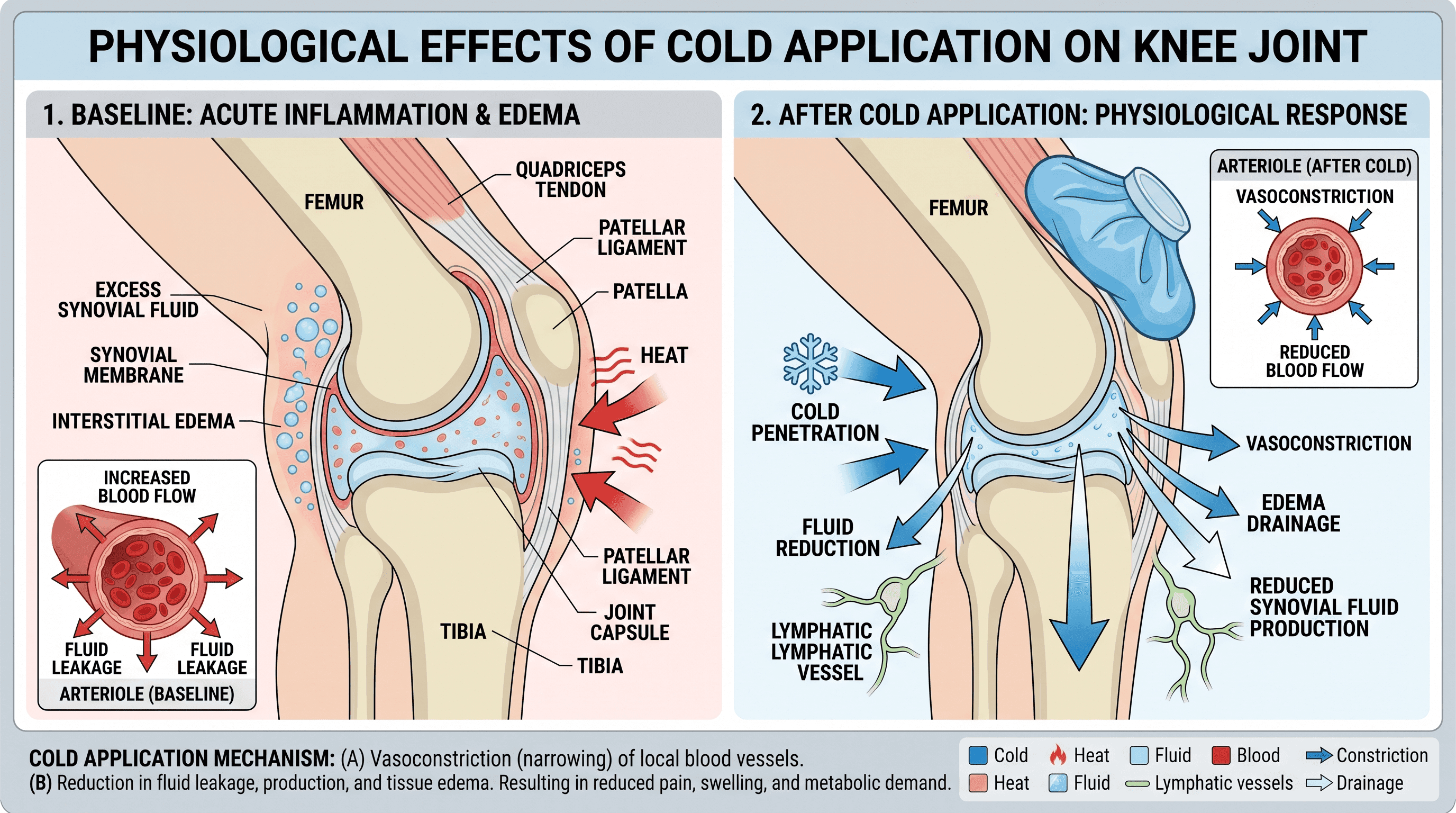
According to research published in the Journal of Bone and Joint Surgery, cryotherapy applied after TKA is associated with reduced postoperative blood loss, lower pain scores, and decreased swelling in the early recovery period. These are not marginal benefits. For patients managing an anxious first week at home, consistent icing is one of the highest-leverage tools available.
How Long and How Often to Ice: A Week-by-Week Schedule
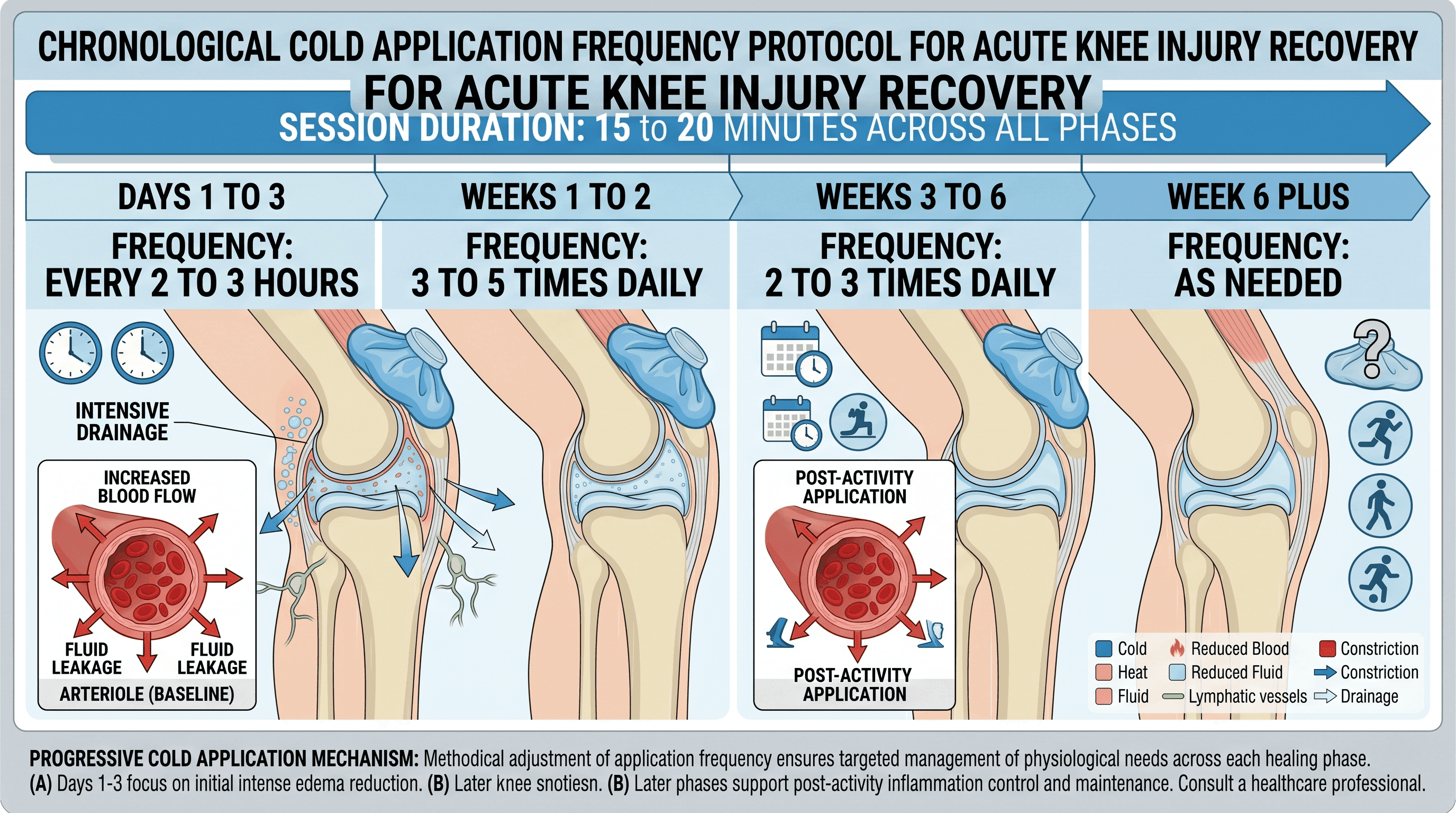
The frequency and duration of icing after knee replacement surgery follow a tapering pattern. Intensity is highest immediately after surgery and gradually decreases as swelling subsides and range of motion improves.
Days 1 to 3 (Hospital and Transition Home)
The first 48 to 72 hours represent the highest-priority icing window of the entire recovery. Inflammatory processes peak within this window, and consistent cold application has the most impact on reducing cumulative swelling.
During this phase, aim to ice every 2 to 3 hours while awake, with sessions lasting 15 to 20 minutes each. Always keep at least 30 to 60 minutes between sessions so the skin returns to normal temperature. Most hospital care teams will begin icing in the recovery room, and that protocol should continue seamlessly when you transition home. Setting a phone alarm to cue each session prevents gaps, particularly in the first day or two when fatigue can make it easy to lose track of time.
Weeks 1 to 2
Swelling typically peaks during this window, even as pain levels may start to stabilize slightly. This is the phase where consistency matters most, because the inflammatory cycle has not yet begun to recede.
Ice 3 to 5 times per day, 15 to 20 minutes per session, always with the leg elevated. Elevation and icing work together: raising the leg above the level of the heart uses gravity to assist fluid drainage, while the cold reduces the rate at which fluid accumulates. Skipping sessions during this phase tends to result in more pronounced morning stiffness and a harder physical therapy session.
Weeks 3 to 6
By week three, most patients experience a gradual but measurable reduction in resting swelling. The icing schedule tapers to 2 to 3 times daily, with sessions timed around physical therapy and periods of increased activity.
Post-PT icing becomes the most predictable anchor point during this phase. Exercise-induced inflammation from physical therapy is real, and cooling the knee within 20 to 30 minutes of a session helps manage that response. As the weeks progress, let your swelling levels guide whether you use the full 3 sessions or taper further toward 1 to 2.
Beyond Week 6
Most patients exit a routine icing schedule by week six, but that does not mean ice is off the table. Many people find occasional icing helpful for up to 12 weeks, particularly after more active days or longer walks.
After six weeks, ice on an as-needed basis rather than on a fixed schedule. A knee that swells after a busy afternoon still benefits from a 15-minute session. A knee that feels stable and warm to the touch may not need it at all.
5 Body Signals That Tell You When to Stop Icing
Most guides tell patients to stop icing after a certain number of weeks. This one tells you what to look for instead. These five observable signals, tracked together, give a much more accurate picture than a date on a calendar.
1. Resting swelling has measurably subsided. When the knee looks and feels closer to normal size after a night of sleep or several hours of rest, the acute inflammatory phase is winding down. Compare both knees side by side as a reference point.
2. Pain is manageable with over-the-counter medication at rest. When pain at rest responds adequately to acetaminophen or ibuprofen without requiring a strong prescription analgesic, that is a sign the tissue is moving out of acute post-surgical distress. Ice provides the most benefit when pharmacological pain control alone is insufficient.
3. The knee feels stiff and tight rather than hot and swollen. This is an underappreciated distinction. Stiffness is a different problem from acute inflammation. Ice is excellent for inflammation; heat and gentle movement address stiffness more effectively. Recognizing which problem you are treating changes what you reach for.
4. Skin temperature returns to normal within 30 minutes of removing ice. In the early weeks, skin near the knee may stay cool for an extended period after icing, reflecting high blood flow to the area. When skin normalizes quickly after a session, the local circulation has stabilized, which suggests the acute phase is subsiding.
5. Your physical therapist confirms range-of-motion milestones are on track. This is the clinical checkpoint. If PT progress is on schedule, the underlying tissue healing is proceeding appropriately. Your PT can advise whether continued icing is helping or whether you have moved into a phase where other modalities are more appropriate.
If swelling suddenly worsens, the knee becomes hot and red without a clear activity explanation, or pain escalates after a period of improvement, contact your surgical team rather than adjusting the icing protocol on your own.
Icing Safely: Technique, Skin Protection, and What to Avoid
Icing is low-risk when done correctly. Done incorrectly, it can cause frostbite, nerve irritation, or delayed healing.
Ice Pack vs. Cold Therapy Machine: Which Is Better?
Both approaches are effective. The practical difference comes down to consistency and convenience.
A cold therapy machine (sometimes called a motorized cold therapy unit or continuous cooling pad) circulates chilled water through a pad that wraps around the knee. These units maintain a more stable, controlled temperature than a traditional ice pack and require less hands-on management. For patients in weeks 1 to 3, when icing frequency is high and fatigue is significant, the reduced effort often translates to better protocol compliance. Cold therapy machines generally cost between $150 and $400, and some insurance plans reimburse the cost when prescribed by a surgeon. Check with your insurer before the procedure, not after.
Traditional ice packs and bags of crushed ice work reliably when used consistently. They require more active attention, including repositioning as the ice melts, but they are accessible and effective for patients who use them correctly.
Can You Ice at Night or Sleep With Ice on Your Knee?
No. Sleeping with an ice pack on the knee is not safe and should be avoided.
During sleep, the normal sensory feedback that would alert you to skin discomfort or excessive cold is suppressed. Prolonged contact without that feedback raises the risk of frostbite, nerve damage, and circulation restriction. If nighttime discomfort is a concern, a better approach is to complete a 15 to 20 minute icing session approximately one hour before bed, pair it with leg elevation, and use compression stockings if your care team has recommended them. This timing allows the analgesic benefit to carry into the early sleep period without leaving ice on unattended.
Skin Protection and Warning Signs of Over-Icing
Always place a cloth towel or thin fabric barrier between the ice or cold pack and bare skin. Direct skin contact, even with commercially prepared cold packs, can cause tissue damage within a single session.
Keep each session to a hard limit of 15 to 20 minutes. Allow at least 30 to 60 minutes between sessions so skin temperature normalizes fully. Over-icing restricts the immune cell activity needed to clear debris and begin tissue repair at the surgical site, which can slow healing rather than support it.
Stop icing and contact your care team if you notice any of the following: numbness or tingling that persists after the session ends, skin that appears pale, grey, or mottled, or pain that consistently worsens after icing rather than improving.
When to Add Heat and How to Transition From Ice
Around weeks 4 to 6, as acute swelling resolves, many patients begin to experience stiffness in the surrounding muscles, particularly the hamstrings and calves. This is where heat becomes a useful tool.
Heat relaxes muscle tissue and improves local circulation, which helps with the kind of deep, achy tightness that follows range-of-motion exercises. However, heat applied directly over the knee joint can re-trigger localized swelling, particularly if applied too early. Target heat to the muscles above and below the knee, not to the joint itself.
Contrast therapy, alternating brief heat and ice sessions, is sometimes introduced in this phase under PT guidance. It can stimulate circulation and reduce stiffness without the sustained swelling risk of heat alone. Before incorporating contrast therapy, confirm with your physical therapist that your swelling levels are stable enough to support it.
Use the five body signals from the earlier section as your guide. If the knee still registers as hot and swollen at rest, the transition to heat is premature regardless of the week on the calendar.
Special Considerations: Who May Need to Ice Differently
Standard icing protocols assume intact skin sensation and normal circulation. Certain patient populations face different risk profiles that call for modified approaches.
Patients with diabetes or peripheral neuropathy may have reduced sensation in the lower leg and foot, which means the normal discomfort signal that prevents over-icing is less reliable. For these patients, sessions should be limited to 10 to 12 minutes, and skin checks should be performed immediately before and after each session. This is an area where a doctor can advise on individual cases, since the right protocol depends heavily on the degree of neuropathy present.
Patients with circulation disorders, including peripheral artery disease, may face a situation where cold-induced vasoconstriction is contraindicated. Ice reduces blood flow to the area, which is beneficial for inflammation management in healthy tissue but potentially problematic when baseline circulation is already compromised. These patients should defer entirely to their surgeon's guidance before beginning any icing protocol.
Patients undergoing bilateral knee replacement face the logistical challenge of managing two icing sessions simultaneously. Cold therapy machines with dual-pad configurations simplify this considerably. If using traditional ice packs, stagger the sessions slightly so both knees receive consistent treatment without one being neglected.
Patients who undergo manipulation under anesthesia (MUA) after their initial replacement, a procedure sometimes used to address scar tissue limiting range of motion, will typically experience a reset in local swelling. After MUA, treat icing with the same intensity as the early post-surgical period rather than continuing a tapered schedule.
If you have any of the conditions above, work with your care team to establish a protocol that accounts for your specific situation. You can find a specialist or orthopedic surgeon through Momentary Lab's doctor directory to help coordinate your recovery plan.
Frequently Asked Questions
What happens if you don't ice after knee replacement surgery?
Skipping cryotherapy in the early recovery period is associated with greater swelling accumulation, higher pain levels, and increased reliance on opioid pain medication. Research published in PMC indicates that consistent cold therapy after TKA contributes to reduced analgesic consumption and better early range-of-motion outcomes. In practical terms, patients who skip icing tend to have harder physical therapy sessions and slower progress in the first month.
Should I ice before or after physical therapy?
The standard recommendation is to ice after physical therapy, not before. Exercise generates localized inflammation, and cooling the knee in the 20 to 30 minutes following a session helps manage that response. Icing before PT is occasionally used when stiffness is limiting range of motion at the start of a session, but this should only be done with your physical therapist's guidance and not as a routine practice.
Can you ice too much after knee replacement surgery?
Yes. Over-icing, meaning sessions longer than 20 minutes or intervals shorter than 30 minutes, restricts the immune cell activity at the surgical site and can delay healing. Prolonged skin contact without a barrier raises frostbite risk. Stick to the session limits and gaps outlined in this guide, and do not assume more icing means faster recovery.
Is a cold therapy machine worth the cost after knee replacement?
For most patients, particularly in weeks 1 to 3, a cold therapy machine is worth considering. The consistent, controlled temperature and low hands-on effort improve compliance during the period when compliance matters most. Patients who struggle with fatigue or have limited mobility that makes repositioning traditional ice packs difficult tend to benefit most. The cost ranges from $150 to $400, and some plans cover the expense with a physician's prescription.
Why is my knee still swollen 8 weeks after surgery?
Some degree of swelling at 8 weeks is common and does not automatically signal a complication. The knee joint has a large synovial lining that responds slowly to surgical trauma. Factors including activity level, patient age, and whether bilateral surgery was performed all influence how long swelling persists. Swelling that worsens suddenly, is accompanied by warmth and redness, or arrives with fever should be reported to the surgical team promptly. Persistent but stable swelling at 8 weeks is typically addressed through ongoing PT and targeted icing after activity.
How far should I be walking 4 weeks after knee replacement?
According to the American Academy of Orthopaedic Surgeons, most patients are walking with a cane or walker by 4 weeks post-surgery, with distances varying based on individual progress. Many patients can manage short community distances of a few hundred yards by this point. Walking goals should always be set in coordination with the physical therapy team, as pushing too far too soon can increase swelling and set back range-of-motion gains.
For broader questions about managing your recovery, understanding your symptoms, or identifying next steps in your care, the Momentary Lab AI healthcare navigator can help you find reliable answers and connect with the right resources.
References
- PMC / NIH — Cryotherapy after Total Knee Arthroplasty — Cited for evidence on cryotherapy reducing postoperative blood loss and pain after TKA.
- American Academy of Orthopaedic Surgeons — Activities After Total Knee Replacement — Cited for post-surgical activity expectations including walking milestones at 4 weeks.
- PMC / NIH — Cold Therapy and Analgesic Consumption After TKA — Cited for evidence on reduced opioid use and improved range-of-motion outcomes with consistent cryotherapy.
- PMC / NIH — Postoperative Swelling and Recovery After Knee Replacement — Cited for context on swelling duration and tissue healing timelines after TKA.