


Sleep is one of the hardest parts of hip replacement recovery that nobody warns you about. The pain, the restricted positions, the 3 a.m. muscle spasms — they can feel relentless. But knowing why sleep rules exist, what changes week by week, and how to set yourself up correctly makes a measurable difference. This guide covers every layer of the topic: your surgical approach, the safest positions, how to get in and out of bed, how to manage nighttime pain without just relying on medication, and when you can realistically expect to sleep normally again.
At a Glance
| Topic | Key Facts |
|---|---|
| Safest early position | Back-sleeping (supine) with legs uncrossed |
| Abduction pillow | Required for all approaches to prevent leg crossing during sleep |
| Posterior approach | Strictest restrictions; no operated-side sleeping for 6–12 weeks |
| Anterior approach | Muscle-sparing; some surgeons clear operated-side sleeping at 2–4 weeks |
| Non-operated side | Most patients cleared around weeks 4 to 6 with pillow between knees |
| Operated side / stomach | Typically restricted until months 2 to 3 |
| Week 2 to 3 | Sleep often worsens as pain medication tapers — this is normal |
| Recliner | Valid option in week 1; hip angle must stay above 90° for posterior patients |
The Honest Truth: Back-Sleeping Is Your New Reality
Back-sleeping is mandatory for the first several weeks after hip replacement surgery, and the sooner a patient accepts that, the easier recovery becomes.
For side sleepers and stomach sleepers, this is the adjustment that catches people off guard. The discharge sheet mentions it, but it rarely explains why. Here is the reason: a total hip replacement involves a metal or ceramic ball placed into a cup-shaped socket. In the early weeks, the surrounding muscles and soft tissue have not yet healed enough to hold that ball securely in place. Certain leg positions, particularly crossing the legs, rotating the hip inward, or bending it past 90 degrees, can lever the new joint out of the socket. That is a dislocation, and it is exactly what every sleep rule is designed to prevent.
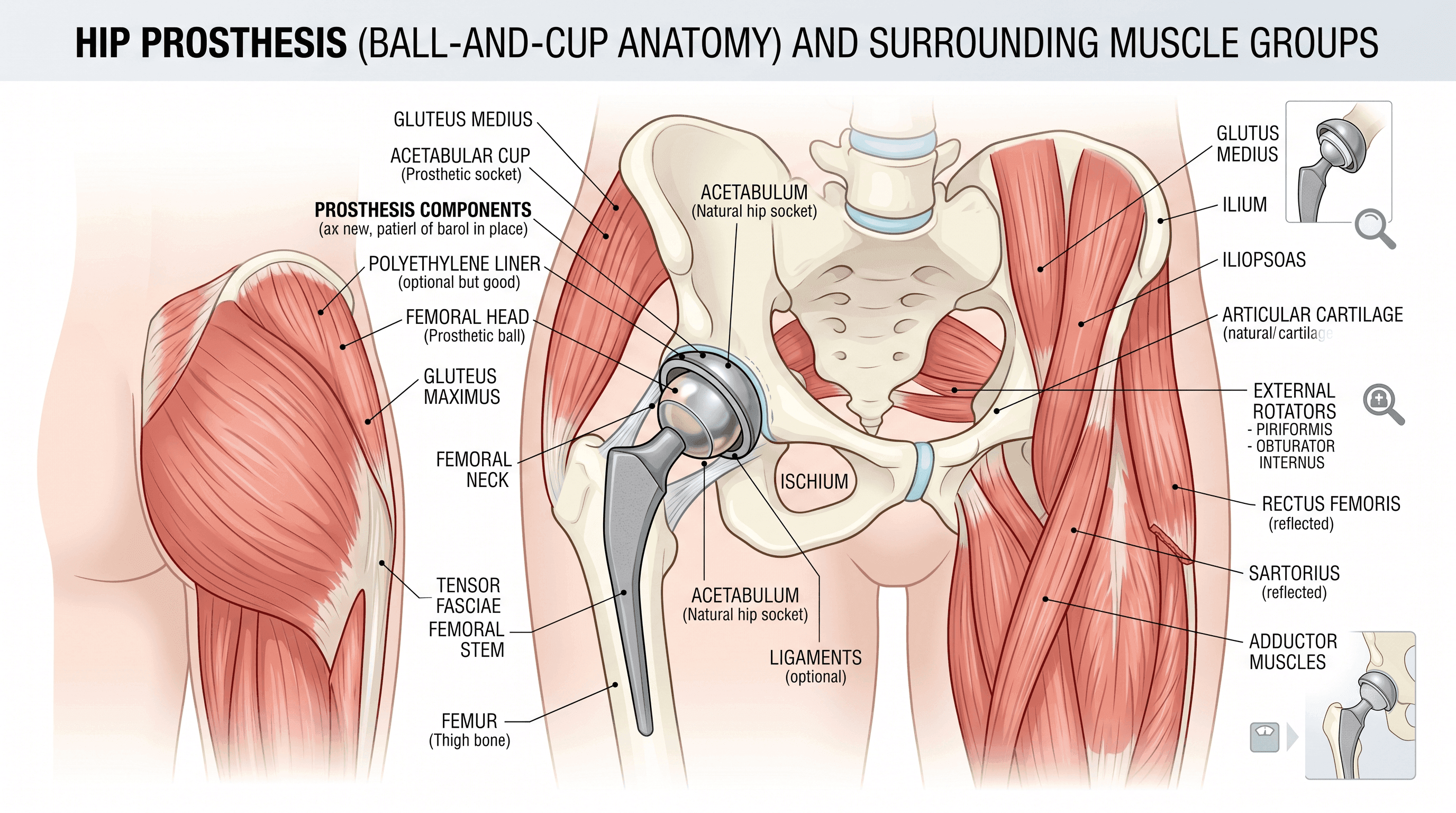
Back-sleeping keeps the hip in a neutral, stable position. Combined with an abduction pillow (covered next), it effectively removes the most common dislocation triggers while a patient sleeps. The frustration is real, but the reason is biomechanically sound.
The Abduction Pillow: Your Most Critical Sleep Tool
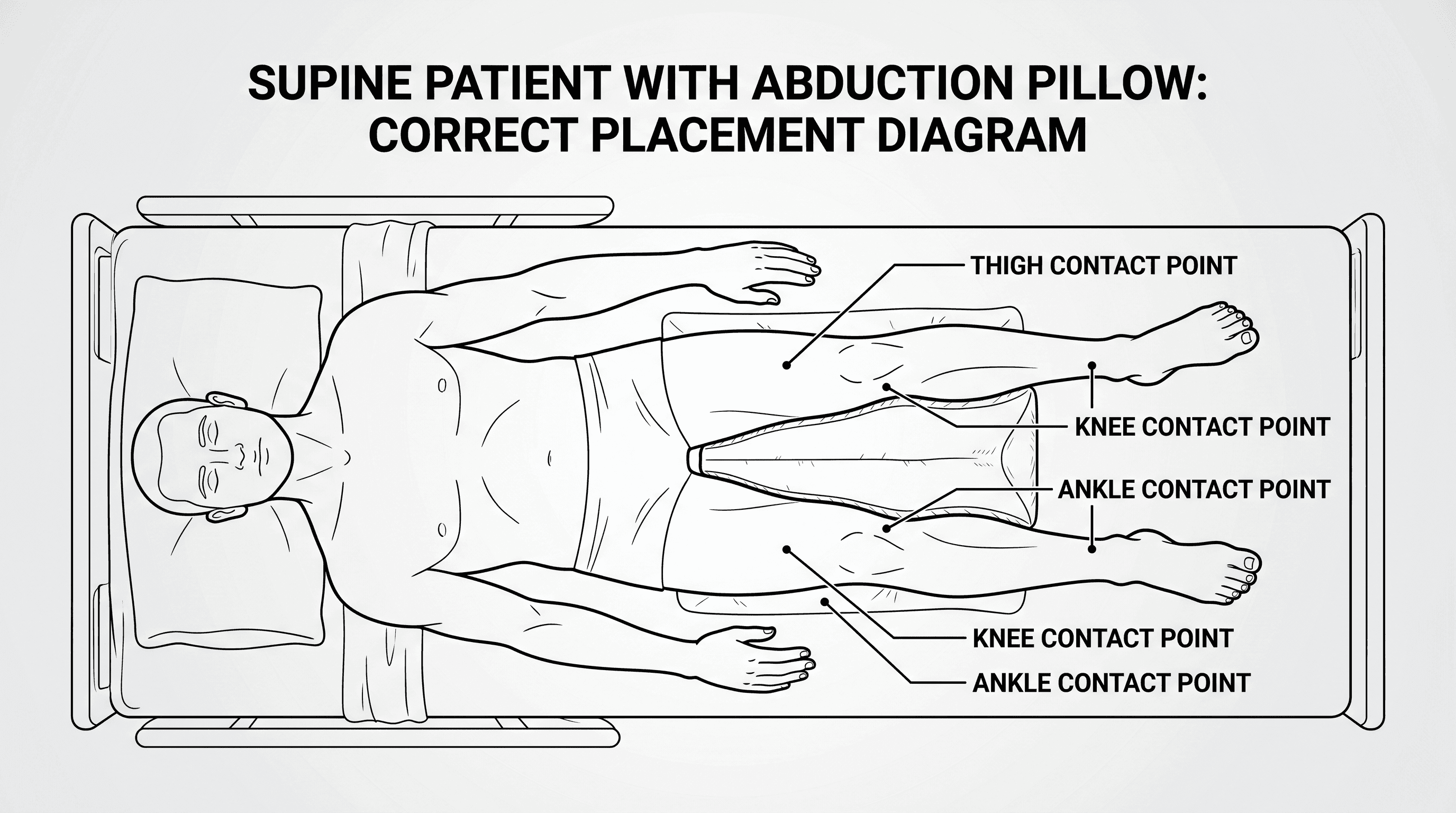
An abduction pillow — or a thick, firm pillow wedged between the thighs — is the single most important piece of sleep equipment after hip replacement surgery.
The word "abduction" means moving a limb away from the body's midline. The goal of the pillow is to keep both legs slightly apart and aligned throughout the night, preventing the thighs from dropping inward or the knees from crossing. Even during deep sleep, the body shifts. Without a physical barrier between the legs, a sleeping patient can unconsciously rotate the operated hip into a dangerous position.
What does the right pillow actually look like? Abduction pillows are triangular foam wedges available through medical supply retailers; many hospitals send patients home with one. If that is not available, a firm couch cushion or two stacked standard bed pillows can substitute, provided they are dense enough to stay in place when pressed against. Soft, compressible pillows lose their shape and allow the legs to drift together — that is not safe.
Placement matters. The pillow sits between the thighs (or knees down to the ankles depending on pillow length), not just at the knees. The goal is to keep the entire leg in alignment, not just to prop the knee.
Anterior vs. Posterior: Do the Sleep Rules Change?
The surgical approach used to place the hip implant directly determines how strict the sleep precautions are and how long they last.
Posterior Approach: The Strictest Restrictions
The posterior approach enters through the back of the hip and requires cutting through part of the posterior capsule and short external rotator muscles. Because those muscles are repaired during surgery, they are at elevated risk of failure under stress while they heal. The three movements that can cause dislocation for posterior patients are hip flexion past 90 degrees, internal rotation (turning the toes inward toward the midline), and leg crossing. All three can happen during sleep.
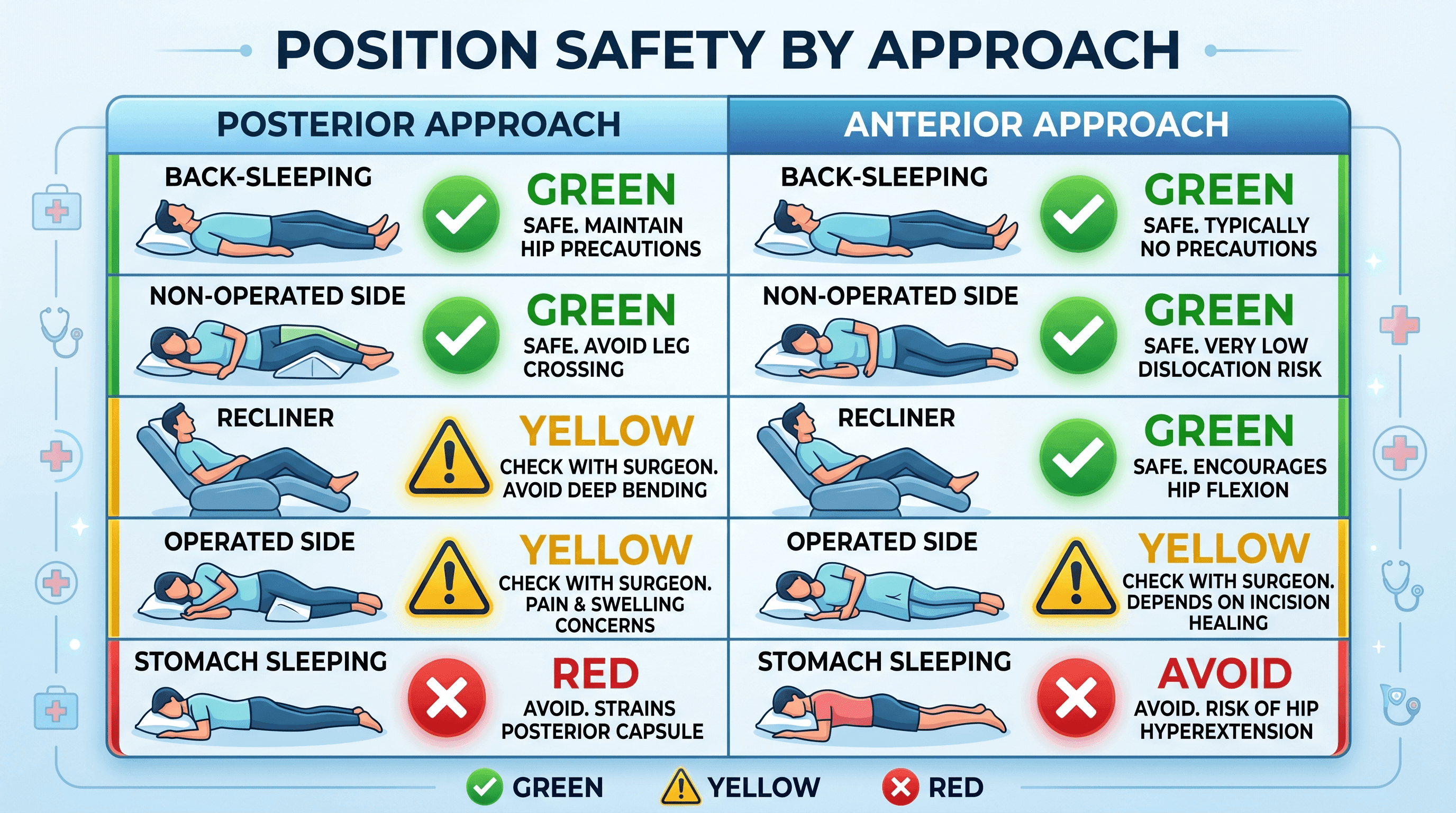
For posterior approach patients, sleeping on the operated side is typically restricted for 6 to 12 weeks. The non-operated side is usually permitted earlier, but only with a firm pillow wedged from hip to ankle to prevent the top leg from dropping inward.
A 2019 review published in the Journal of Arthroplasty found that posterior approach patients had dislocation rates that were meaningfully higher than those from anterior approaches when standard hip precautions were not followed, reinforcing why these rules exist.
Anterior (Direct Anterior) Approach: Fewer Restrictions, More Flexibility
The anterior approach reaches the hip joint from the front of the body, working between muscle planes rather than cutting through them. Because the posterior capsule and external rotators are not disrupted, patients typically face a lighter set of precautions.
Some surgeons who use the direct anterior approach (DAA) clear patients to sleep on the operated side as early as two to four weeks post-surgery, provided the pain allows it. The precautions to avoid for anterior patients are different: excessive hip extension (think stretching the leg far behind the body) combined with external rotation. Flat stomach sleeping, which combines both, is still off-limits for months.
A 2024 meta-analysis in the Journal of Orthopaedic Surgery and Research found that direct anterior approach total hip arthroplasty patients had significantly reduced early complication rates, supporting the case for earlier mobilization and less restrictive positional precautions compared to posterior approach patients.
Lateral and Anterolateral Approaches: A Middle Ground
Lateral and anterolateral approaches involve the abductor muscles on the outer hip. Because those muscles are involved in stabilizing the joint, the sleep precautions tend to resemble the posterior approach more than the anterior approach. Operated-side sleeping is usually restricted for several weeks, and a pillow between the legs is still required when sleeping on the non-operated side.
The most important rule regardless of approach: confirm the specific precautions with the surgeon before discharge. Precaution protocols vary between surgeons, institutions, and individual patient factors like bone density, implant type, and muscle condition.
The Safest Sleeping Positions After Hip Replacement
Sleeping on Your Back (Supine): Recommended for All Approaches
Back-sleeping is the universal starting position for all hip replacement patients, regardless of surgical approach.
The setup matters more than most patients realize. The legs should lie flat with the toes pointed toward the ceiling, not rotated outward or inward. A thin pillow or folded towel can support the lower back if the natural lumbar curve feels uncomfortable. One common mistake: placing a pillow directly under the knees. This forces the hip into flexion, which is one of the exact movements that posterior approach patients must avoid. The thighs rest flat on the mattress, with the abduction pillow between the legs keeping them separated.
Sleeping on the Non-Operated Side
For most patients, the non-operated side is cleared for sleeping relatively early, though "early" depends on surgical approach and individual surgeon guidance.
The setup requires a firm pillow placed between the legs from the hip all the way down to the ankle. A thin knee pillow is not enough. The top leg needs support along its full length to prevent it from dropping forward (which internally rotates the operated hip) or falling backward (which extends and externally rotates it). Either of those movements could stress the new joint before the soft tissue has healed.
The pillow should be firm enough to hold its shape under the weight of the leg. A soft, compressible pillow collapses over the course of the night and allows the leg to drop. Medium-firm foam pillows or couch-grade cushions work better than standard bed pillows for this purpose.
Sleeping in a Recliner: When It Is a Valid Option
A recliner is a genuinely useful recovery tool, particularly in the first week, and the question of whether it is safe is one that many patients bring home unanswered.
For anterior approach patients, a recliner that puts the body at roughly a 30 to 45 degree incline is comfortable and safe from day one. For posterior approach patients, a key rule applies: the hip angle must stay above 90 degrees when reclined, meaning the torso should not drop below parallel with the thighs. A fully flat recliner position (like a zero-gravity chair) can push the hip into dangerous flexion for posterior patients. A semi-reclined position (footrest slightly elevated, back partially reclined) typically keeps the hip at a safe angle.
The upside of a recliner in week one is that getting in and out is far easier than navigating a mattress. The armrests provide support for pushing to standing, and the body does not need to rotate at all during repositioning. Many patients find a recliner easier to manage than a bed until pain levels and mobility improve enough to make bed transfers comfortable.
Positions and Habits to Avoid
Each restricted position has a specific biomechanical reason behind it, and understanding that reason makes the rule stick at 3 a.m. when the temptation to just roll over is strong.
Stomach sleeping forces the hip into a combination of extension and external rotation. For posterior approach patients, external rotation is a primary dislocation risk. For anterior approach patients, forced extension combined with external rotation stresses the anterior capsule. Either way, stomach sleeping is off-limits until the surgeon explicitly clears it, typically around months 2 to 3.
A pillow placed under the knee pulls the hip into flexion past 90 degrees. This is one of the most common well-intentioned mistakes. Patients do it because it feels more comfortable, particularly when back pain flares up in a supine position. The problem is that for posterior approach patients, hip flexion past 90 degrees is the primary dislocation trigger. The pillow goes between the legs, not under the knee.
Crossing the ankles might feel like a small habit, but it internally rotates both hips simultaneously. For posterior approach patients, internal rotation is one of the three primary dislocation risks. Ankles stay uncrossed and legs stay parallel, held in position by the abduction pillow.
Rolling onto the operated side in the early weeks is the restriction that frightens patients the most, particularly when it happens accidentally during deep sleep. The operated hip does not have full muscle protection until the soft tissue heals, and sleeping directly on it compresses the joint before that healing is complete. Most posterior approach patients are restricted from operated-side sleeping for 6 to 12 weeks. Anterior approach patients may be cleared significantly earlier, but that clearance comes from the surgeon, not from a general timeline.
How to Get In and Out of Bed Safely
Getting in and out of bed is a skilled movement after hip replacement surgery, and doing it incorrectly is how dislocations happen outside of sleep. The log roll method is the standard safe technique taught by physical therapists, and it covers both repositioning during the night and full bed exits.
Getting Into Bed Safely
Back up to the bed with the walker or cane until the backs of the legs touch the mattress edge. Reach back and lower slowly onto the mattress using the arms, keeping the operated leg extended and forward throughout the descent. Once seated on the edge, extend the operated leg forward (keeping it straight) and lower the upper body back onto the mattress using the elbows and arms. Then bring both legs up onto the bed, leading with the non-operated leg and lifting the operated leg with the hands if needed to keep it controlled. The abduction pillow goes between the legs before settling into the final position.
The Log Roll Method for Turning at Night
The log roll is the only safe way to reposition during sleep for the first several weeks.
To roll from back to non-operated side: move the abduction pillow first so it is ready. Bend the non-operated knee and place that foot flat on the mattress. Clasp the hands together over the chest. In one coordinated movement, use the bent knee and the arms to roll the entire torso as one rigid unit, like a log, without twisting the hips independently of the shoulders. Keep the operated leg extended and allow it to roll with the body rather than crossing in front. Once on the side, place the abduction pillow between the legs before relaxing. For week one patients or those with limited strength, a caregiver should assist with the log roll by supporting the operated leg through the rotation to ensure it stays aligned.
Getting Out of Bed Safely
Roll to the non-operated side using the log roll method. Push up to sitting using the lower arm and upper hand on the mattress, keeping the operated leg extended forward as the torso rises. Swing both legs off the bed simultaneously, placing the non-operated foot on the floor first while keeping the operated leg extended forward. Push to standing using the walker or cane, leading with the non-operated leg when taking the first step.
The temptation to rush this process grows as recovery progresses. Slower and more deliberate is always safer than quick.
Week-by-Week Sleep Timeline: What to Expect
No competitor article includes a timeline, and it is the single most useful thing for managing expectations during recovery. Sleep does not improve linearly after hip replacement. It gets worse before it gets better, and knowing that in advance prevents panic.
| Week | What Happens | What to Do |
|---|---|---|
| Week 1 (hospital / just home) | Highest pain, peak medication, sleep is short and interrupted in 2 to 3 hour blocks. This is normal. | Use recliner if bed transfers feel unsafe. Ice the joint before lying down. Keep phone, water, and medication within arm's reach. |
| Week 2 to 3 (the hardest stretch) | Pain medication tapering, activity increasing, but sleep paradoxically worsens. Muscle spasms peak. Many patients call their surgeon in alarm. | Do not skip pain doses thinking you are managing well. This phase is physiological, not a setback. Time medication 30 to 45 minutes before bed. |
| Week 4 to 6 (stabilization) | Pain decreasing, sleep blocks lengthening, non-operated side sleeping usually cleared with pillow between knees. | Confirm non-operated side clearance with surgeon. Continue abduction pillow religiously. |
| Week 6 to 12 | Posterior patients typically cleared for operated-side sleeping. Anterior patients often cleared sooner. | Only sleep on operated side with explicit surgeon clearance. Do not self-clear based on reduced pain alone. |
| 3 months and beyond | Most patients return to their preferred sleep position. Stomach sleeping may still require clearance. | Ask the surgeon at the 3-month follow-up for final position clearance. |
The week 2 to 3 window is worth dwelling on. As narcotics are tapered, the body's natural pain suppression drops. Simultaneously, patients are more active during the day, which increases inflammation in the joint by evening. Sleep disruption during this phase is not a sign of a complication. It is a predictable physiological response to tapering pain medication while the tissue is still healing. A 2020 study in BMC Musculoskeletal Disorders found that sleep disturbance was significantly correlated with postoperative pain levels in total joint arthroplasty patients, which supports why addressing pain directly (rather than hoping sleep improves on its own) is the right strategy during this window.
Managing Nighttime Pain Beyond Just Taking Your Medication
Nighttime pain after hip replacement is not just a medication management problem. The position of the body changes fluid dynamics in the leg, and that matters.
Timing Prescription Medication Correctly
Taking pain medication 30 to 45 minutes before lying down gives the drug time to reach peak efficacy by the time the patient is horizontal and the joint begins to stiffen. Taking it at bedtime, after already lying down, means the drug peaks an hour or more into what should be sleep time.
The week 2 to 3 paradox applies here specifically. As narcotics are reduced, many patients interpret reduced pain during the day as a sign they no longer need a nighttime dose. But nighttime pain follows a different pattern than daytime pain because lying flat redistributes fluid toward the operated limb. Skipping a dose during the taper phase often results in a full wake-up from pain at 2 a.m. The better strategy is to maintain the nighttime dose until the surgeon explicitly says to reduce it.
Non-Drug Strategies That Genuinely Help
Ice applied to the hip for 15 to 20 minutes before lying down reduces joint inflammation and numbs the surrounding tissue. This is one of the most underused recovery tools because patients are often too tired to bother, but the improvement in pain at hour three of sleep is measurable for most patients who use it consistently.
Leg elevation while awake during the evening hours reduces the fluid pooling that worsens hip swelling and stiffness by morning. Lying with the leg slightly raised on a wedge pillow while watching television for 30 to 60 minutes before bed is a simple habit that carries over into better nighttime comfort.
Diaphragmatic breathing (slow belly breathing) activates the parasympathetic nervous system and reduces the pain amplification that comes from sleep anxiety. Box breathing (inhale 4 counts, hold 4, exhale 4, hold 4) takes about five minutes and measurably reduces perceived pain intensity at bedtime.
Room temperature between 65 and 68 degrees Fahrenheit has been associated with better sleep architecture. For post-surgical patients who may also experience medication-related night sweats, a cooler room helps regulate body temperature without the heat buildup that wakes patients up.
Melatonin (at doses typically between 0.5 and 3 mg) is generally considered safe for short-term use, but patients on narcotics or blood thinners should confirm with their surgeon or pharmacist before adding it. It is not a sleep drug; it is a circadian signal. It works better when taken 60 to 90 minutes before the intended sleep time rather than right at bedtime.
For patients whose insomnia persists beyond six weeks despite managing pain well, cognitive behavioral therapy for insomnia (CBT-I) is the evidence-based first-line treatment recommended by the American Academy of Sleep Medicine. It outperforms sleep medication in long-term outcomes and involves no drug interactions.
Warning Signs That Require a Call to the Surgeon
Most nighttime discomfort after hip replacement is expected. But a few specific symptoms require prompt communication with the surgical team: uncontrolled pain that does not respond to medication and ice, a sharp pop or clicking sensation accompanied by the leg rotating outward and shortened in appearance (a potential dislocation), fever above 101 degrees Fahrenheit, increased warmth or drainage from the wound, and complete sleep deprivation (fewer than two hours per night) that does not improve through week three. These are not situations to wait out until the next scheduled follow-up.
If pain or symptoms are escalating and the next appointment is far off, connecting with a primary care provider through a virtual visit can bridge the gap. A provider can review post-op notes, assess whether symptoms warrant an urgent surgical call, and help manage non-surgical components of recovery like medication timing and sleep hygiene.
Setting Up Your Bedroom Before You Come Home
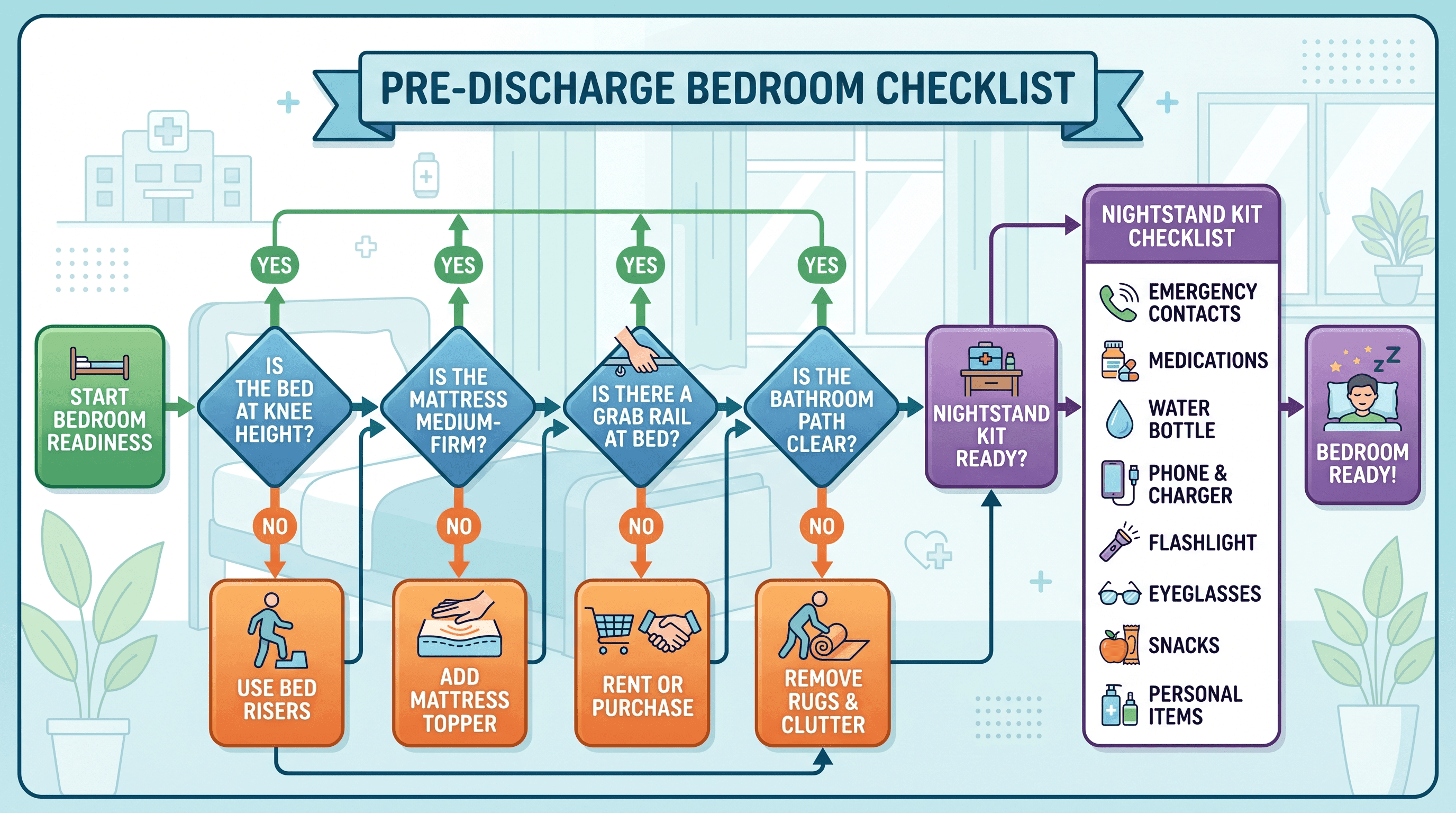
The bedroom setup done before surgery matters more than most patients realize because the ability to configure it optimally drops sharply once a person is recovering at home with limited mobility.
Mattress firmness: A medium-firm mattress provides the best balance of support and comfort. A mattress that is too soft allows the pelvis to sink, which passively puts the hip into internal rotation during the night. If the current mattress is soft, placing a plywood board under the mattress or using a firm mattress topper is a practical fix. Changing the mattress before surgery is not usually necessary, but worth considering if the mattress is more than 10 years old or noticeably soft.
Bed height: The bed should sit at approximately knee height when the patient is standing. A bed that is too low forces the patient to drop down during entry, which can push hip flexion past 90 degrees. Bed risers are an inexpensive fix and widely available. A bed that is too high creates a step-up problem for exit. Adjustable-height beds are ideal but not required.
Bed rail or grab bar: A hospital-grade bed rail that attaches under the mattress provides a secure handhold for log rolling and exit transitions without pulling on the side table or headboard. This is a strong recommendation for the first three to four weeks, particularly for patients who live alone.
Nightstand essentials: Water, nighttime medication, a charged phone, an ice pack in a small cooler (or a designated path to a freezer), and a flashlight or nightlight for bathroom trips. Do not rely on memory to gather these things at 2 a.m. after hip surgery. Set it up before discharge.
Bathroom path: Remove all throw rugs between the bedroom and bathroom. They are a fall risk with a walker. Ensure the path is wide enough for a walker to move without turns that require hip rotation.
Frequently Asked Questions
How long until I can sleep normally after hip replacement?
Most posterior approach patients return to their preferred sleep position at around 12 weeks, when operated-side sleeping is typically cleared. Anterior approach patients often reach that milestone earlier, around 6 to 8 weeks. "Normal" sleep in terms of duration and quality usually returns by 3 months for most patients, though individual variation is significant based on pain tolerance, fitness level before surgery, and how consistently precautions are followed.
What if I accidentally roll onto my operated side during sleep?
One accidental roll is unlikely to cause a dislocation, particularly in weeks three and beyond when soft tissue healing is progressing. Do not panic. Reposition calmly by log rolling back to the non-operated side. Monitor for any pain, clicking, or a leg that appears rotated outward and shortened. If any of those signs are present, contact the surgeon immediately. If none are present, note the incident, reinforce the pillow barrier, and continue recovery normally.
Can my partner sleep in the same bed?
Yes, with a few accommodations. Use a bed rail or a firm pillow barrier between yourself and the edge of the bed to prevent accidental contact during the first one to two weeks. A partner rolling into the operated leg during deep sleep is a real risk in the early weeks. A king-sized bed helps. If the mattress transfers motion significantly, a separate sleeping arrangement for the first one to two weeks is worth considering.
Can I use a weighted blanket after hip replacement?
A lightweight weighted blanket (under 10 pounds) is generally fine from week one, provided it is light enough that repositioning during the night does not require significant effort. Blankets over 10 to 12 pounds can make repositioning harder and may compress the abduction pillow enough to reduce its effectiveness. A lighter option is preferable during the first four weeks.
Can I put a pillow under my knee after hip replacement?
Not for posterior approach patients. A pillow under the knee creates hip flexion, which is one of the three primary dislocation risks for posterior approach surgery. The pillow belongs between the legs, not under the knee. Anterior approach patients should confirm with their surgeon, as some DAA protocols are more permissive about knee flexion. When in doubt, place the pillow between the thighs and leave the knee free.
How long should I elevate my leg after hip replacement?
Leg elevation during waking hours, particularly in the first two to three weeks, helps reduce swelling in the operated limb. Thirty to sixty minutes of elevation (ankle above hip level) in the afternoon and again in the evening is a reasonable target. This is done while awake and seated or reclined, not while sleeping. Prolonged leg elevation during sleep is not recommended because it requires placing a pillow under the thigh or knee in a way that may compromise hip position.
If symptoms are shifting faster than expected or new concerns are emerging between appointments, using Momentary's AI health navigator to organize questions, explore what certain symptoms may mean, and prepare for the next provider conversation can make a meaningful difference in how well the recovery process is managed.
References
-
Pelt CE, et al. BMC Musculoskeletal Disorders (2020) — Cited for data linking sleep disturbance to postoperative pain in total joint arthroplasty patients.
-
Zhao J, et al. Journal of Orthopaedic Surgery and Research (2024) — Cited for meta-analysis findings on direct anterior approach outcomes versus posterior approach, including early complication rates.
-
Migliorini F, et al. Journal of Arthroplasty (2022) — Cited for surgical approach comparisons in total hip arthroplasty outcomes.
-
Abdel MP, et al. Journal of Arthroplasty (2019) — Cited for posterior approach dislocation risk data and hip precaution outcomes research.
-
Konan S, et al. Bone and Joint Journal (2023) — Cited for total hip arthroplasty approach-related complication and recovery data.