


At a Glance
| Topic | Key Facts |
|---|---|
| Classification | Major surgery under general anesthesia |
| Typical hospital stay | 1 to 4 days inpatient |
| Procedure duration | 2 to 6 hours depending on levels fused |
| Hardware used | Titanium screws, rods, interbody cages |
| Blood loss risk | Transfusion required in some cases |
| Open vs. MIS | Both are still classified as major surgery |
| Recovery window | 6 weeks minimum; full fusion takes 3 to 12 months |
| Primary risks | DVT, infection, hardware failure, nerve injury |
The Short Answer: Yes, Spinal Fusion Is a Major Operation
Spinal fusion permanently alters the anatomy of the central skeleton. That single fact places it squarely in the category of major surgery, regardless of how small the incision looks on the outside.
Patients often hear phrases like "routine procedure" from their surgical team and assume that means uncomplicated or low-stakes. Both things can be true at once: a surgery can be something a skilled spine surgeon performs hundreds of times per year and still require general anesthesia, significant blood loss management, a multi-day hospital stay, and months of structured recovery. The word "routine" describes the surgeon's familiarity with the technique, not the magnitude of what your body goes through.
According to the Mayo Clinic, spinal fusion joins two or more vertebrae so that they heal into a single, solid unit, eliminating motion between those segments and stabilizing the spine. That goal, while sometimes medically necessary, requires the surgeon to permanently alter bone structure, place metal hardware, and manage the nerves that run through the surgical field. Those elements, taken together, define a major surgical event.
What Exactly Makes It a "Major" Surgery?
Major surgery is generally defined by four criteria: the use of general anesthesia, a significant degree of internal tissue disruption, a meaningful risk of serious complications, and a recovery period measured in weeks or months rather than days. Spinal fusion meets all four.
General anesthesia carries its own risk profile. The procedure typically runs two to six hours, and patients spend that entire window under general anesthesia, which introduces risks including cardiovascular stress, respiratory depression, and rare but serious reactions. Longer anesthesia exposure correlates with a higher chance of post-operative cognitive effects, particularly in older adults.
Muscle dissection is extensive. To reach the spine, the surgical team must cut through or retract substantial layers of paraspinal musculature. In a traditional open approach, this dissection can span several inches. Even in minimally invasive approaches, the muscle tissue undergoes significant mechanical stress from retraction instruments. That soft tissue trauma is a major source of post-operative pain and the extended fatigue patients report in the first four to six weeks.
Nerve proximity is unavoidable. The spinal cord and exiting nerve roots run directly through the operative field. Every step of the procedure, from placing retractors to drilling pilot holes for screws, happens within millimeters of neural tissue. A study published in the Journal of Bone and Joint Surgery notes that neurologic complications, while uncommon, remain one of the more consequential risks associated with spinal instrumentation.
Bone architecture is permanently changed. Fusion is not a reversible intervention. Once the bone graft integrates and the hardware is set, those vertebral segments no longer move independently. The structural consequences of that change, including altered load distribution on adjacent levels, are lifelong.
The Hardware and the Graft
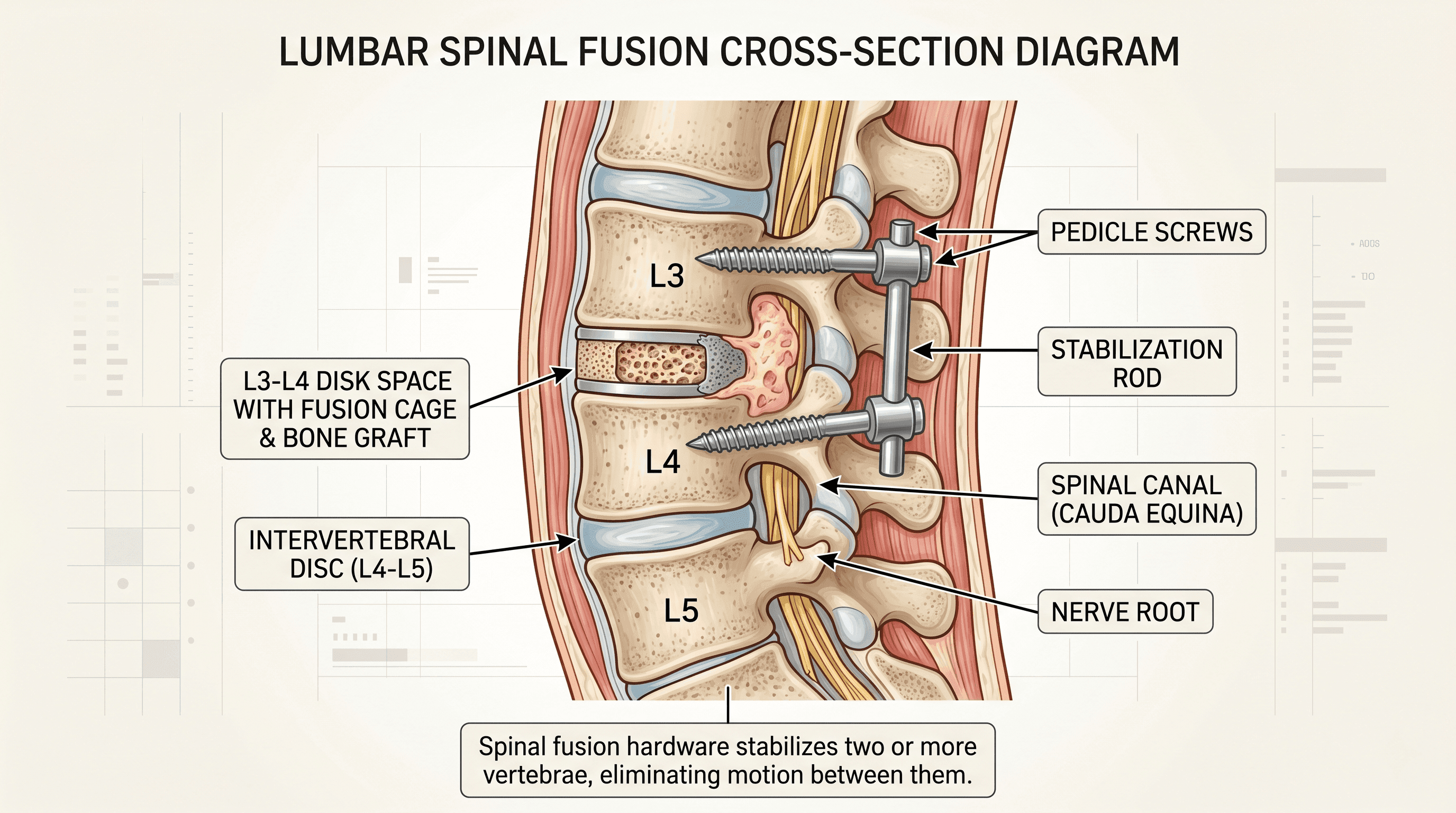
Most patients know that spinal fusion involves "screws," but the actual implant system is more extensive than that phrase suggests.
A standard instrumented fusion uses titanium pedicle screws driven through the back wall of each vertebra, connected by a rigid titanium rod running along the spine. The disc space between fused vertebrae is typically cleared and filled with an interbody cage, a small hollow device usually made of PEEK polymer or titanium mesh that holds the vertebral bodies apart at the correct height while bone grows through and around it.
The bone graft is the biological engine of the procedure. Without living bone material, the vertebrae cannot actually fuse. Surgeons choose from three main graft sources: autograft (bone harvested from the patient's own iliac crest, the bony ridge of the pelvis), allograft (donor bone from a tissue bank), or synthetic bone substitutes such as demineralized bone matrix or recombinant bone morphogenetic protein (rhBMP-2). Autograft is considered the gold standard for fusion biology, but harvesting it from the patient's pelvis creates a secondary surgical site with its own recovery demands, including pain, soreness, and occasional nerve sensitivity along the outer thigh.
Cleveland Clinic notes that the type and amount of hardware depends on how many spinal levels are being fused, the approach the surgeon uses, and the underlying diagnosis. A single-level lumbar fusion differs considerably in hardware volume from a three-level construct.
The Hospital Stay: Why You Do Not Go Home the Same Day
Most spinal fusions require a one to four-day inpatient hospital stay. While outpatient single-level fusions are performed at select centers for carefully screened patients, the large majority of people undergoing lumbar fusion spend at least one night, often two, in the hospital.
Several clinical needs drive that inpatient requirement. Blood loss during spinal fusion ranges considerably depending on the number of levels, the surgical approach, and the patient's anatomy. Some patients require intraoperative blood transfusion, and post-operative monitoring for continued blood loss is standard. Urinary catheters are placed during surgery and remain in place for the first 12 to 24 hours while patients regain mobility. Surgical drains may be placed to remove blood and fluid from the wound site, and these are managed by nursing staff before removal.
Pain management in the immediate post-operative period typically requires intravenous medications that cannot be safely self-administered at home. Physical therapists visit patients in the hospital starting on post-operative day one to begin supervised mobilization, assess gait safety, and teach patients how to perform basic movements without compromising the surgical repair.
Deep vein thrombosis (DVT) prophylaxis begins in the hospital. Patients wear compression devices on their legs throughout their stay, and pharmacologic blood thinners may be started within 12 to 24 hours depending on surgical bleeding. This reflects the genuine risk that prolonged immobility in the post-operative period presents.
Open vs. Minimally Invasive: Does a Smaller Incision Mean a Minor Surgery?
This is one of the most common misconceptions patients bring to their pre-surgical consultations. The answer is no.
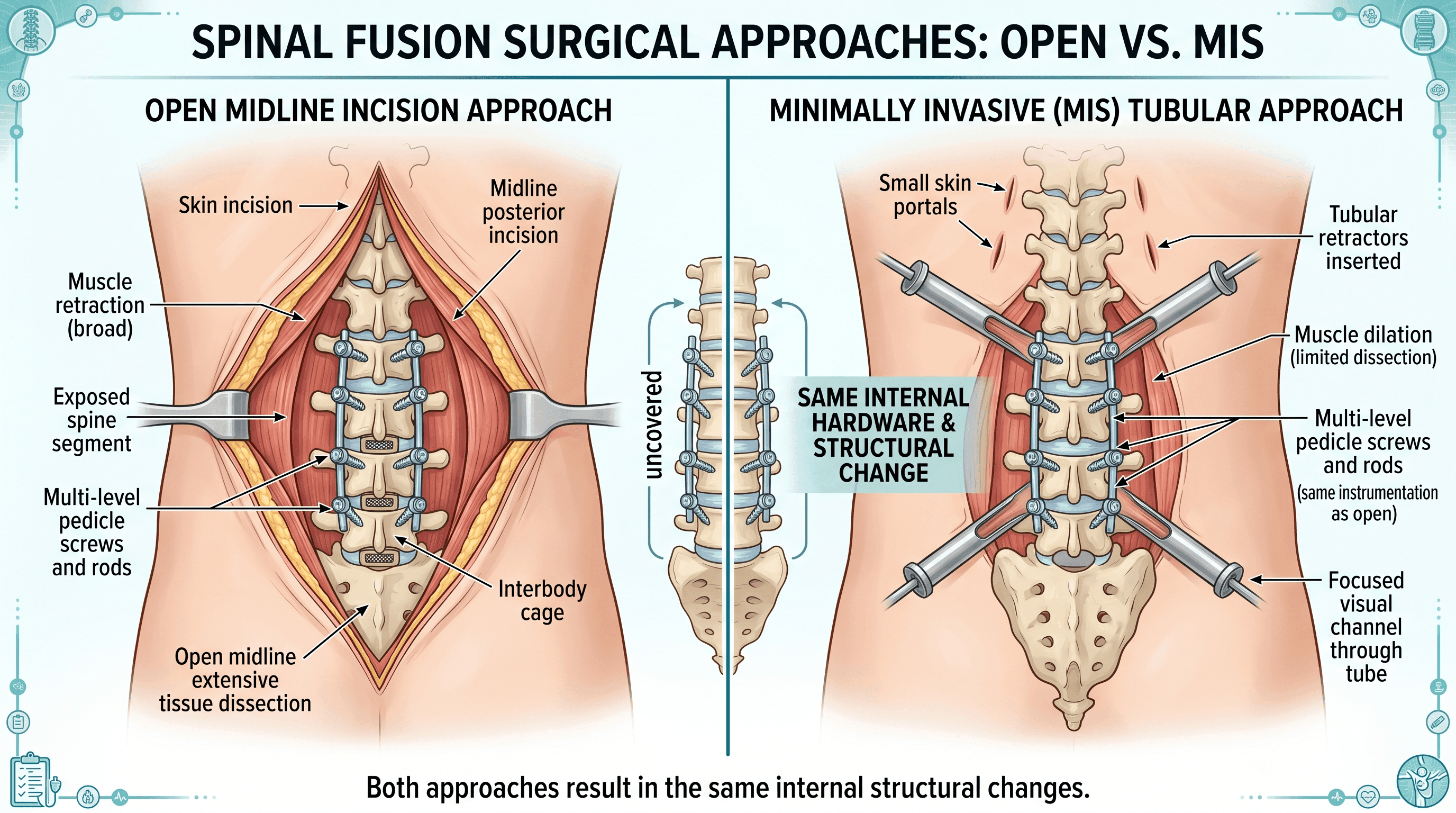
Minimally invasive spinal fusion (MIS fusion) uses tubular retractors rather than wide open exposure. The skin incision may be one inch long instead of six. Fluoroscopic and endoscopic guidance allows the surgeon to place hardware through that small opening. From the outside, a patient who has had MIS fusion looks far less operated-on than someone who had an open approach.
But the internal changes are identical. The vertebrae are still permanently joined. The disc space is still cleared and packed with graft material. The titanium hardware is still present. The nerves still need to be protected throughout. A 2017 analysis in the Spine Journal found that while MIS approaches reduce blood loss, shorten hospital stays, and lower infection rates compared to open surgery, post-operative functional outcomes and fusion rates at one and two years are similar between the two techniques. The procedure is less traumatic to the surface anatomy. The structural result is the same.
Patients who have MIS fusion still require general anesthesia, still experience post-operative nerve sensitivity, and still follow the same weight-bearing and activity restrictions. Recovery is often somewhat faster in the early weeks, but the fusion biology, the three-to-twelve-month process by which bone grows across the graft, proceeds on the same timeline regardless of approach.
The Metabolic Toll: Why Your Body Feels Completely Drained
Patients who are well-prepared for the physical recovery are often still surprised by how depleted they feel in the first three to six weeks after spinal fusion. There is a physiologic explanation for this that is worth understanding before surgery.
Fusing bone is one of the most metabolically demanding repair processes the human body undertakes. The immune system mounts a sustained inflammatory response to the surgical trauma. Bone-forming cells called osteoblasts are recruited to the graft site and must manufacture new bone matrix continuously over months. The liver synthesizes acute-phase proteins at elevated rates. Caloric and protein requirements increase substantially. Sleep is fragmented by pain and positional discomfort. All of this happens simultaneously in a patient who may already be deconditioned from chronic back pain.
A study in Global Spine Journal found that nutritional status prior to surgery, specifically adequate protein intake and vitamin D levels, significantly affects both fusion outcomes and post-operative recovery duration. Surgeons who specialize in spine care increasingly screen patients for nutritional deficiencies before booking elective fusions, precisely because the metabolic burden of the procedure is that significant.
Patients should expect to rest substantially more than they expect in the first four to six weeks. Short, frequent walks are encouraged. Long periods of sitting or standing are not. The fatigue is not a sign that something went wrong. It is the sign of a body doing exactly what it is supposed to do.
The Risks: Understanding the Stakes Clearly
Spinal fusion is performed safely thousands of times every year in the United States, and most patients do well. That statistical reality does not mean the risks are trivial. Informed consent requires understanding what the actual risk profile looks like.
Blood loss and transfusion. Surgical blood loss varies by approach and number of levels. Some patients require intraoperative or post-operative transfusion. A review published in PMC found that multilevel fusions and revision surgeries carry substantially higher transfusion rates than single-level primary procedures. Patients who donate their own blood prior to surgery (autologous donation) may reduce the need for donor blood.
Deep vein thrombosis and pulmonary embolism. Prolonged surgery, general anesthesia, and reduced mobility in the post-operative period all increase the risk of blood clots forming in the deep veins of the legs. A clot that travels to the lungs becomes a pulmonary embolism, which can be life-threatening. Prevention protocols, including compression devices, early mobilization, and blood thinners, reduce this risk substantially.
Surgical site infection. Infection rates for spinal fusion range from approximately 1 to 4 percent depending on patient factors including diabetes, obesity, and smoking history. Deep infections that reach the hardware are particularly serious and may require additional surgery to address.
Adjacent segment disease. Because fusion eliminates motion at one level, the vertebral levels above and below a fusion must absorb more mechanical stress. Over years, this accelerated wear can produce new disc degeneration or instability at those adjacent segments. This is a long-term consideration rather than an immediate complication, but it is part of the full informed-consent picture.
Hardware failure. Pedicle screws and rods can loosen, migrate, or break, particularly if the fusion does not successfully consolidate. Revision surgery to address hardware failure is a meaningful risk in a subset of patients, particularly those with multilevel constructs or significant osteoporosis.
If you are weighing surgical options or seeking a second opinion, finding a board-certified spine specialist through Momentary Lab's physician directory can help you connect with a surgeon who can evaluate your individual imaging, health history, and risk factors in detail.
Why It Is "Major" but Still "Routine"
The word "routine" is not a diminishment of what patients go through. It is a description of a surgeon's technical familiarity with a procedure that they perform hundreds of times per year.
Board-certified orthopedic spine surgeons and neurosurgeons who subspecialize in fusion surgery have performed the technique so many times that they can execute each step with precision and anticipate complications before they escalate. Surgical teams in high-volume spine centers develop protocols that reduce infection risk, minimize blood loss, and accelerate early mobilization. The cumulative experience of a well-trained spine surgical team is one of the most reliable predictors of a good outcome.
That does not make the procedure minor for the patient. What it means is that the gap between "this is a major undertaking for your body" and "this is a procedure with well-established safety protocols and a strong track record" is not a contradiction. Both things are true, and understanding both makes for a better-prepared patient.
A 2016 systematic review in PMC found that outcomes in lumbar fusion improved significantly with surgeon volume and subspecialty training. Choosing an experienced, fellowship-trained spine surgeon at a center that performs a high volume of these procedures is one of the most actionable steps patients can take to optimize their result.
If you want to understand your care options more broadly before making a surgical decision, Momentary Lab's AI healthcare navigator can help you find reliable information on conditions, treatments, and specialist referrals in one place.
Questions to Ask Your Surgeon Before Agreeing to Fusion
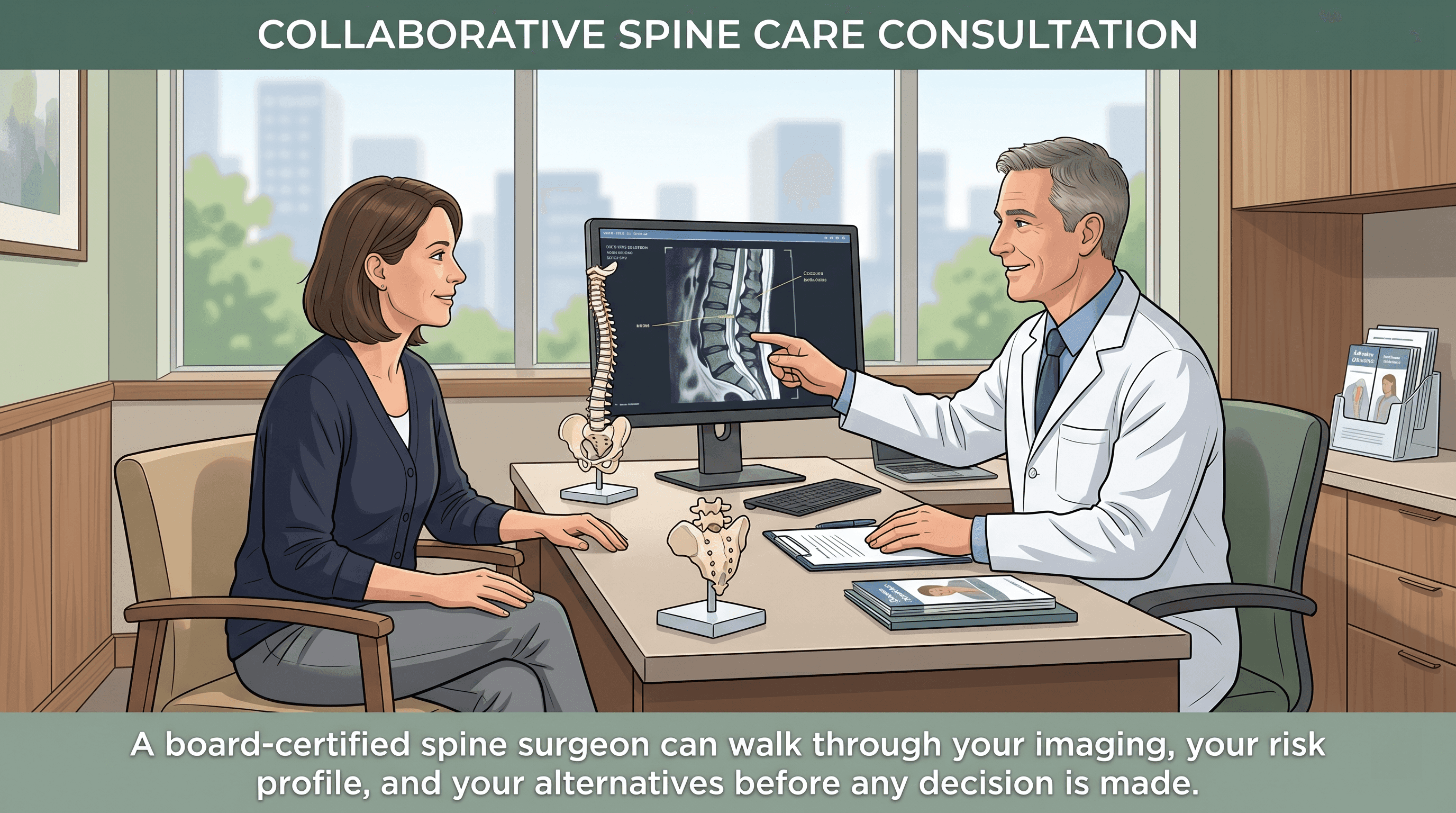
Patients who go into pre-surgical consultations with specific, direct questions get more useful answers than those who rely on the surgeon to volunteer information. These are among the most valuable questions to raise:
How many levels are being fused, and how does that affect my recovery timeline and risk profile? Single-level and multilevel fusions differ meaningfully in surgical duration, blood loss, and long-term adjacent segment risk.
What is the planned surgical approach, and why is that approach best for my anatomy? Whether the surgeon plans an open posterior approach, a lateral approach such as XLIF or LLIF, or a minimally invasive technique determines the specific recovery experience, including whether thigh pain or hip flexor weakness is likely.
What type of bone graft will be used, and will you harvest bone from my pelvis? Autograft from the iliac crest is effective but creates a second operative site. Knowing in advance allows patients to prepare for additional recovery demands.
What is your personal complication rate for this specific procedure? High-volume surgeons at experienced centers should be able to answer this question with data.
What are the non-surgical alternatives I have not yet tried, and why do you believe fusion is the right next step at this point? This question is particularly important if the patient has not yet completed a structured physical therapy course or tried targeted injection therapy.
What does my return to work and activity look like at six weeks, three months, and six months? Specific functional benchmarks help patients plan and reduce anxiety during recovery.
Frequently Asked Questions
Is spinal fusion one of the most painful surgeries?
Spinal fusion consistently ranks among the more painful orthopedic procedures in the early post-operative period, primarily because of the paraspinal muscle dissection involved. Most patients require a combination of intravenous medications in the hospital followed by oral pain management at home. Nerve-related pain, including burning or tingling in the legs, may persist for weeks to months as nerves recover. The intensity typically peaks in the first two weeks and decreases progressively. A doctor can advise on individual cases based on procedure type and patient history.
How many years does a spinal fusion last?
When a fusion successfully consolidates, the joined vertebrae are permanently bonded and the construct itself does not have an expiration date. Hardware such as titanium screws and rods is designed for lifelong implantation. The more relevant question is how long a patient remains symptom-free, which depends on factors including the underlying diagnosis, the health of adjacent spinal segments, and activity levels over time. Adjacent segment disease can produce new symptoms years after a successful fusion.
How painful is recovery from spinal fusion?
Recovery pain follows a general pattern: significant in the first two weeks, substantially improved by six weeks, and largely resolved from a surgical pain standpoint by three months. Nerve-related sensations such as tingling, burning, or hypersensitivity may take longer. Many patients describe the first two weeks as the hardest and feel meaningfully better by the end of the first month. Individual experience varies considerably based on the number of levels fused, the patient's pre-operative pain levels, and how well post-operative protocols are followed.
How long does L4 to L5 spinal fusion surgery take?
A single-level L4 to L5 fusion typically takes two to four hours, depending on the surgical approach, whether decompression is also being performed, and the patient's anatomy. Multilevel fusions or revision procedures take longer. Anesthesia induction and preparation time add to the total time in the operating room.
Can spinal fusion be done as an outpatient procedure?
In select cases, single-level minimally invasive fusions are performed on an outpatient basis at ambulatory surgery centers, with patients going home the same day. This option is generally reserved for younger, healthier patients undergoing limited fusions with no significant comorbidities. The majority of spinal fusions, particularly those involving multiple levels, open approaches, or patients with medical complexity, require inpatient hospitalization. A surgeon can determine whether outpatient fusion is appropriate for a specific patient.
References
- Mayo Clinic — Overview of spinal fusion procedure, indications, and surgical goals.
- Cleveland Clinic — Spinal fusion procedure details, hardware types, and recovery expectations.
- PMC (Global Spine Journal) — Review of surgical outcomes, transfusion rates, and surgeon volume effects in lumbar fusion.
- PubMed (Journal of Bone and Joint Surgery) — Neurologic complications associated with spinal instrumentation.
- PubMed (Spine Journal) — Comparison of open vs. minimally invasive spinal fusion: outcomes and fusion rates.
- PubMed (Global Spine Journal) — Nutritional status and its effect on spinal fusion outcomes.
- PubMed — Additional outcomes data cited in surgical risk and recovery sections.