

Most surgeons tell patients to expect pain for "three to twelve months." That range is accurate, but it is also almost useless for someone lying awake at 2 a.m. with a throbbing knee at week four, wondering whether what they are feeling is normal or a reason to call the office in the morning.
This guide is built around a different idea: specific, honest milestones. A week-by-week picture of what the pain should feel like, what it means when pain falls outside that window, and what to do about it. Recovery from knee replacement surgery, whether total knee arthroplasty (TKA) or partial knee replacement (PKR), follows a recognizable pattern. Your personal timeline will vary, but the pattern itself is reliable enough to use as a roadmap.
At a Glance
| Topic | Key Facts |
|---|---|
| Surgery type | Total knee arthroplasty (TKA) or partial knee replacement (PKR) |
| Peak pain period | Days 1 to 3 post-surgery |
| Typical pain resolution | 3 to 6 months for most daily activities |
| Full recovery window | Up to 12 months for complete bedding-in |
| Chronic pain prevalence | Approximately 10 to 34% of patients report pain beyond 3 to 6 months |
| Night pain | Common through weeks 6 to 12; caused by nerve sensitivity and inflammation |
| Warning signs | Fever, sudden swelling, leg warmth or redness, worsening pain after week 6 |
The Honest Answer: Knee Pain After Replacement Follows a Predictable Pattern, But Your Timeline Is Personal
The short answer to how long pain lasts after knee replacement is this: for most people, significant daily pain resolves somewhere between three and six months, and residual stiffness or occasional discomfort can linger through the full twelve-month mark.
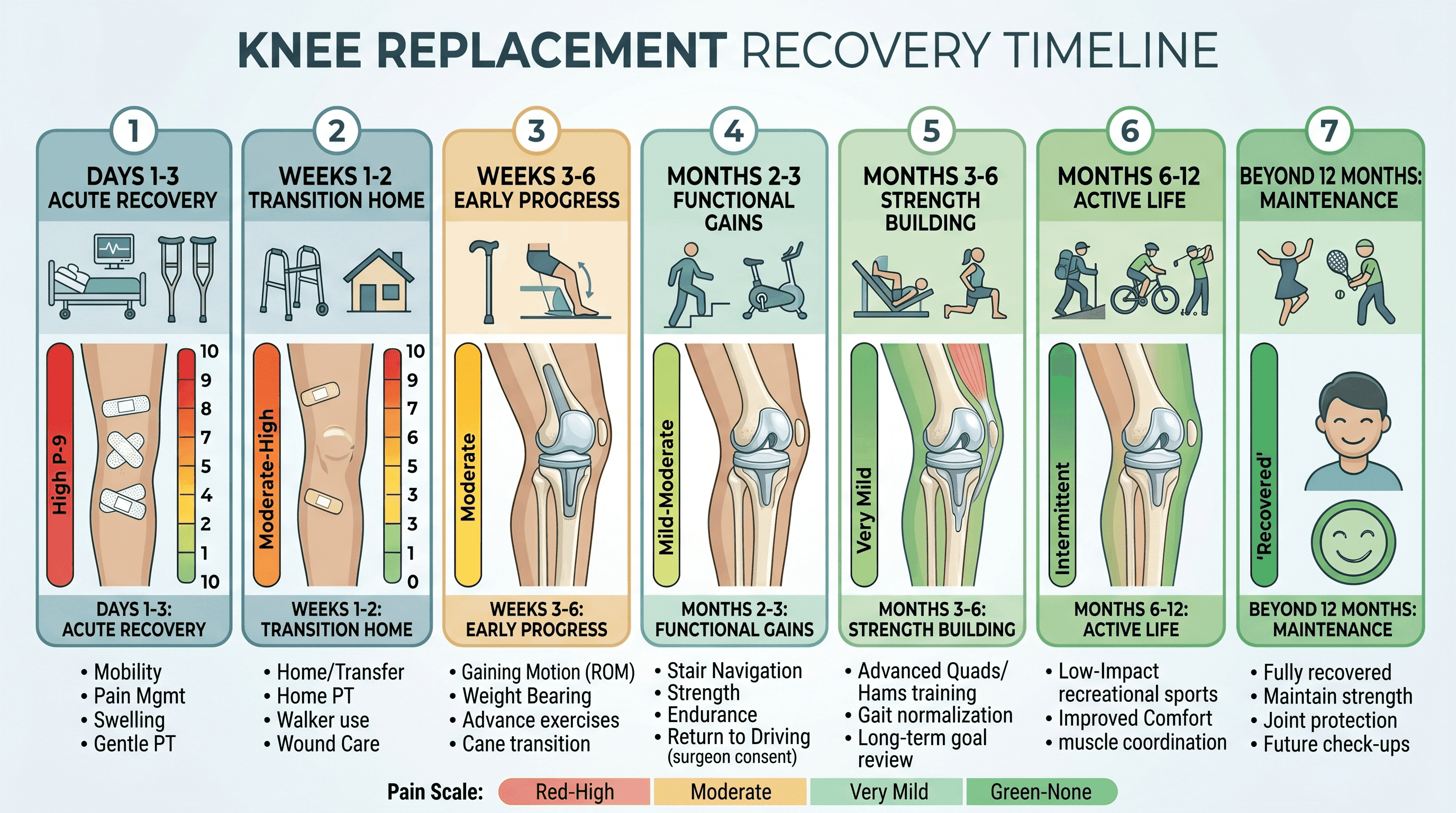
Here is a quick-reference snapshot of the major milestones:
Week 1: Severe pain managed with prescription medication; swelling at its peak; mobility is supported.
Week 6: Pain has shifted from sharp to dull and persistent; most patients are walking without assistive devices; physical therapy (PT) is active.
Month 3: A noticeable turning point for most people; activity-related flares still occur but daily baseline pain is mild.
Month 12: The "bedding-in" period closes; the implant feels integrated; most patients report outcomes that meet or exceed their pre-surgery expectations.
The frustration most patients report is that nobody gave them this map before discharge. Understanding where you are supposed to be at each stage makes the experience far less frightening.
Why Your Knee Hurts After Surgery
Pain after a knee replacement does not come from a single source. Three distinct biological processes are operating at once, and each has its own timeline.
Surgical Trauma and Bone Healing
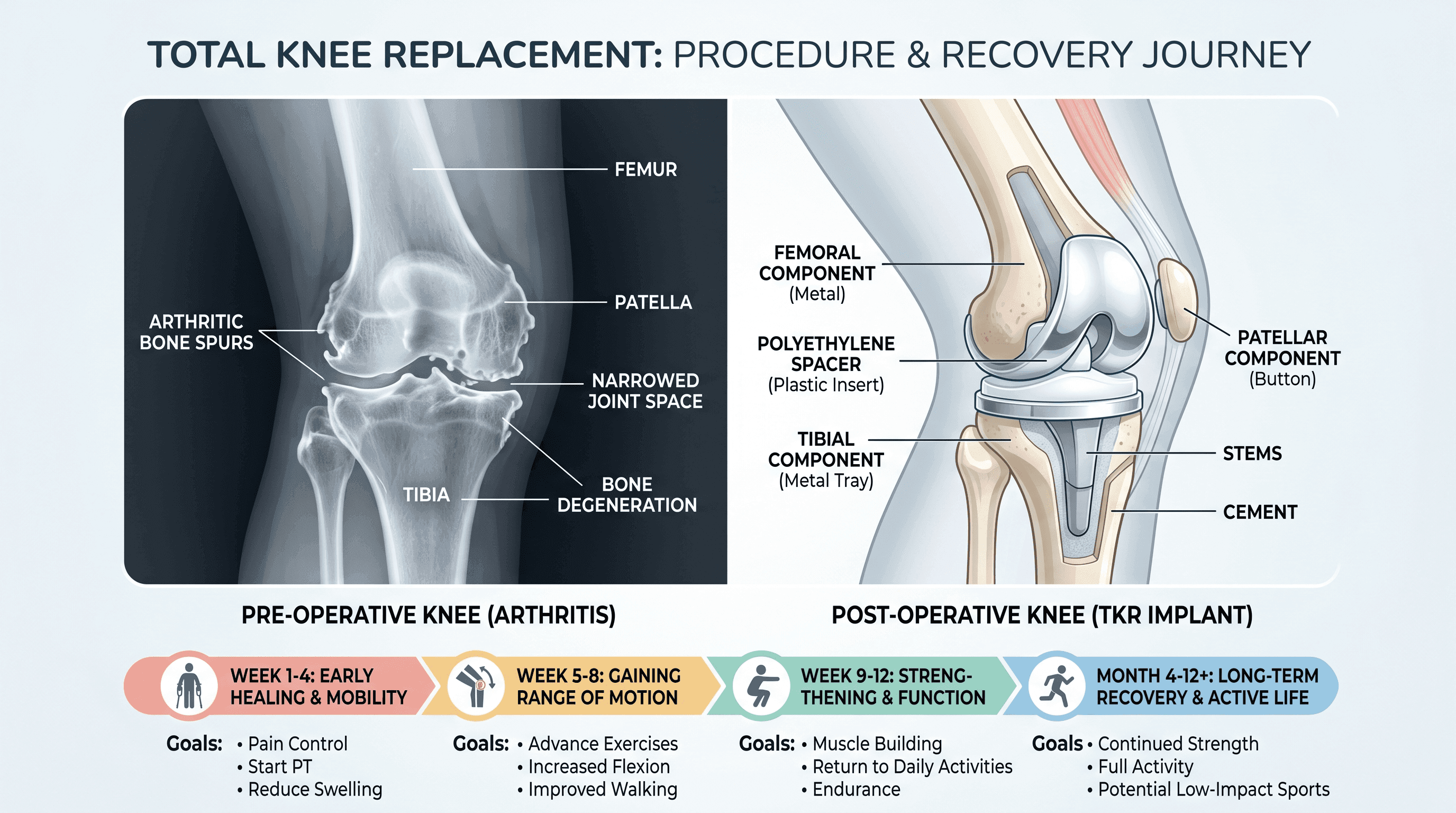
The surgery requires cutting through skin, muscle, and ligament tissue, and reshaping the ends of the femur (thighbone) and tibia (shinbone) before the metal implant components are fixed in place. According to the Cleveland Clinic, your surgeon removes damaged cartilage and bone, then seats metal and plastic prosthetic components. The body responds to this level of tissue disruption with an acute inflammatory cascade. Swelling, heat, and pain are not signs that something went wrong. They are signs the healing process is working.
This phase peaks in the first 48 to 72 hours and gradually subsides over the first two to three weeks as the initial inflammatory response winds down.
Nerve Sensitivity: The "Pins and Needles" Phase
Small skin nerves around the incision site are disrupted during surgery. This creates a phenomenon called peripheral sensitization, where the nerves in and around the knee become hypersensitive to stimulation. Patients often describe tingling, burning, or a feeling of tight pressure around the scar. This neuropathic pain pattern is expected and typically resolves within two to six months as the nerves regenerate and recalibrate.
Understanding this mechanism is important because it also explains one of the most frustrating parts of early recovery.
Why Pain Is Often Worse at Night
Night pain after knee replacement is one of the most underaddressed topics in standard patient education, and it catches a lot of people off guard. Several factors converge after dark.
During the day, mental activity and movement provide competing sensory input that effectively dampens pain perception. At rest, that competition disappears, and nerve signals from the surgical site travel with less interference. Inflammation also pools in dependent tissue when the leg is still, increasing pressure around the joint. Positional compression from lying on your side can press against hypersensitive scar tissue, and reduced circulation from inactivity can make the entire area feel stiff and aching.
The result is that many patients find their nights are genuinely harder than their days, particularly in weeks two through eight. This is not a sign of a complication. It is a predictable consequence of the nerve sensitivity described above, and it resolves as the nerves heal.
How Long Does Knee Pain Last: A Week-by-Week Timeline
Days 1 to 3: The Most Intense Pain, and Why It Peaks Here
The first 72 hours represent the highest-intensity period of the entire recovery. Anesthesia from surgery wears off within hours, and the acute surgical inflammation is at its strongest. In the hospital, pain management typically involves prescription opioids alongside regional nerve blocks, which allow the medical team to keep pain at a tolerable level. Most patients are encouraged to begin gentle movement, including standing and short walks with a walker, within the first 24 hours. Early mobilization, while uncomfortable, reduces clot risk and prevents the stiffness that comes with prolonged immobilization.
Weeks 1 to 2: Pain Is Real, But You Are Already Healing
Returning home typically happens within one to three days of surgery. This transition can feel abrupt. Prescription pain medication continues, but the doses begin to taper. Physical therapy sessions begin, and they hurt in a way that can feel counterproductive. Swelling often peaks around day five to seven. A common and confusing symptom during this phase is referred pain in the thigh or calf, which occurs because the nerves serving the knee also serve surrounding structures. This is not a DVT (deep vein thrombosis) in isolation, but calf pain accompanied by warmth, redness, or significant swelling should be reported to a surgeon promptly.
Weeks 3 to 6: The Dull, Persistent Phase
This is the phase many patients describe as the hardest to push through, precisely because it lacks the urgency of early acute pain. The sharp, stabbing quality has softened, replaced by a constant, deep ache that some clinicians compare to a severe toothache. The clinical context for this metaphor is real: the bone is undergoing active remodeling around the implant fixation surfaces, and the soft tissue repair is still well underway. Over-the-counter NSAIDs (nonsteroidal anti-inflammatory drugs) like ibuprofen or naproxen, taken as directed by a physician, are typically sufficient for pain management at this stage. Compliance with PT is especially important here. Scar tissue (adhesions) begins forming aggressively in this window, and range-of-motion work during PT is the primary tool for preventing arthrofibrosis, a condition where excessive scarring limits joint motion long-term.
Months 2 to 3: The Turning Point Most Patients Notice
Around the six-to-eight-week mark, a noticeable shift occurs for most patients. Many describe it as "hitting their stride." The baseline daily pain has dropped significantly. PT is producing visible functional gains. Most people can walk without an assistive device and handle stairs with one hand on a railing. Activity-related flares still happen during this phase, particularly after longer walks or physical therapy sessions that push range of motion. These flares are expected and should subside within 24 hours with rest, ice, and elevation.
Months 3 to 6: Mild and Intermittent; Life Normalizes
By the three-month milestone, most patients have returned to driving (provided the surgery was on the non-dominant leg, and with physician clearance), resumed light work, and re-engaged with daily activities that felt impossible in the first weeks. Pain has become intermittent rather than constant. A weather-related ache is common during this phase and can persist for years; metal implants and surrounding scar tissue respond to barometric pressure changes and temperature. This is not a sign of a problem. It is a normal feature of living with a joint implant.
Months 6 to 12: The Bedding-In Period
According to the Mayo Clinic, full recovery from knee replacement can take up to a year. During this phase, the body is completing the process of integrating the implant. Occasional twinges, clicks, and brief flares during high-demand activities are still within the normal range. The twelve-month mark is when most orthopedic surgeons consider recovery essentially complete and establish a patient's long-term functional baseline.
Partial vs. Total Knee Replacement: Does the Type Change How Long Pain Lasts?
The answer is yes, meaningfully so.
Total knee arthroplasty (TKA) replaces all three compartments of the knee joint and involves more extensive bone reshaping, soft tissue disruption, and a longer incision. The recovery arc described in the section above applies primarily to TKA.
Partial knee replacement (PKR) addresses only the damaged compartment, typically the medial (inner) side. Because less tissue is disrupted, swelling is generally reduced, hospital stays are shorter, and the acute pain phase resolves more quickly. Many patients who have a partial replacement reach the "mild and intermittent" phase at approximately six to eight weeks rather than three months.
That said, the early post-operative pain in the first 48 to 72 hours is comparable between the two procedures. The difference lies in the arc from week two onward.
| Feature | Total Knee Replacement (TKA) | Partial Knee Replacement (PKR) |
|---|---|---|
| Tissue disruption | Extensive | Limited to one compartment |
| Typical hospital stay | 1 to 3 days | Often same-day or 1 day |
| Active PT duration | 3 to 6 months | 6 to 10 weeks |
| Time to "mild and intermittent" pain | Around month 3 | Around weeks 6 to 8 |
| Full recovery window | Up to 12 months | 3 to 6 months |
| Future revision risk | Lower (single comprehensive procedure) | Slightly higher if other compartments deteriorate |
Factors That Determine How Long Your Pain Lasts
General timelines describe the average patient. Real recovery is shaped by individual biology, lifestyle, and preparation.
Age and Baseline Health
Older patients on average take longer to move through each recovery phase, but they still achieve excellent outcomes in the majority of cases. The relationship between age and recovery speed is less about age itself and more about cardiovascular fitness, muscle strength going into surgery, and the presence of comorbid conditions that slow tissue repair.
BMI and Diabetes
Elevated body weight increases mechanical load on the healing joint and is associated with slower functional recovery. Diabetes compounds this picture significantly. Research published in BMJ Open found that diabetes affecting daily activities was a predictor of slower recovery at the six-month mark, beyond what BMI alone explains. This makes pre-surgical optimization of blood sugar control a recovery factor, not just a perioperative safety measure.
Sleep Quality: The Overlooked Recovery Factor
This connection rarely makes it into standard patient materials, but the clinical evidence for it is solid. Sleep is the period during which the body releases the hormones most responsible for tissue repair and inflammation resolution. Poor sleep quality measured using validated tools has been identified as an independent predictor of worse pain outcomes after joint replacement surgery. Practically, this means treating sleep disruption during recovery as an active part of rehabilitation, not an inconvenience to push through. Elevating the leg, managing nighttime pain proactively with physician-directed medication timing, using a body pillow for positional support, and limiting stimulants after early afternoon are all approaches worth discussing with a care team.
Prehabilitation: Doing the Work Before Surgery
Prehabilitation refers to structured physical therapy and exercise completed before the surgery date. Evidence supports that patients who arrive for their procedure with stronger quadriceps and better cardiovascular fitness recover more quickly and reach functional milestones earlier than those who do not. This matters most for patients who have time between their surgical decision and their procedure date. A referral to PT before surgery is worth asking about.
Normal Pain vs. Warning Signs: How to Tell the Difference
Not all pain after knee replacement is part of expected recovery. Knowing which symptoms warrant a call to the surgeon and which are part of the normal process can prevent both unnecessary panic and delayed treatment.
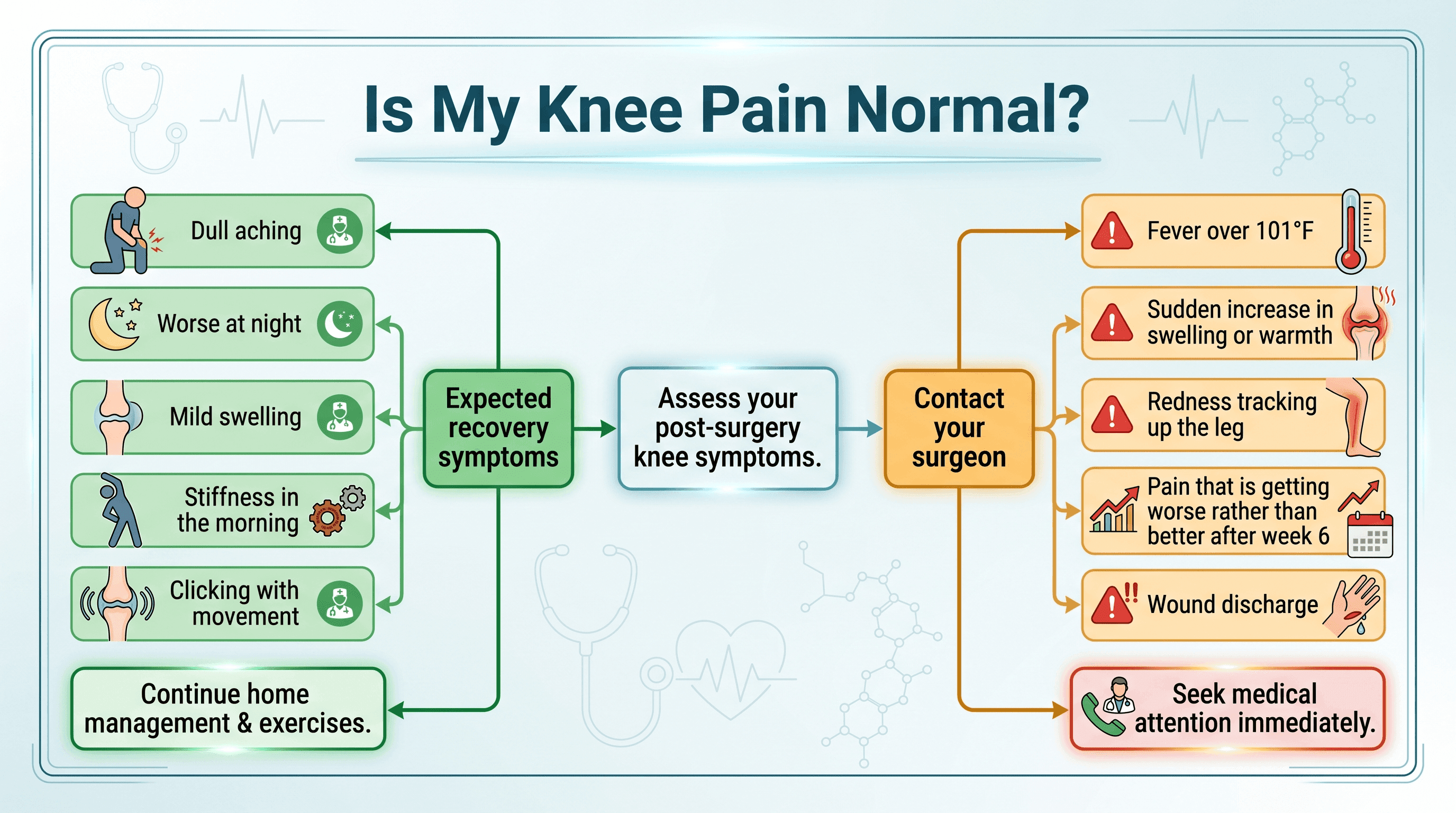
This is normal:
Dull, persistent aching that is gradually improving week over week. Morning stiffness that loosens with movement. Swelling that is worst in the evening and better in the morning. Clicking or clunking sounds with knee movement (the prosthetic components do not move exactly like natural cartilage, and some noise is expected). Occasional weather-related aches. Flares after a demanding PT session that resolve within a day.
Contact your surgeon if you experience:
Fever above 101°F, which can indicate surgical site infection. Sudden dramatic increase in swelling, warmth, or redness, particularly with calf tenderness, which may indicate deep vein thrombosis (DVT). Wound drainage that is cloudy, has an odor, or increases after initially stopping. Pain that is getting objectively worse rather than better after the six-week mark. A sensation of the knee "giving way" or feeling unstable in a new way.
These symptoms do not necessarily mean the replacement has failed, but they require professional evaluation. Finding a qualified orthopedic physician near you for an in-person assessment is the appropriate step when any of these warning signs appear.
What If Pain Lasts Longer Than a Year? Understanding Chronic Pain After Knee Replacement
Most discussions of knee replacement recovery stop at twelve months. But for a meaningful percentage of patients, the pain story does not end there, and this is the part that is least often discussed openly.
Research published in PMC found that chronic pain after total knee arthroplasty affects approximately 10 to 34% of patients, depending on how chronic pain is defined and measured. This is a well-established finding in orthopedic literature, yet it rarely features in the pre-surgical conversations patients have with their surgeons.
Chronic post-TKA pain is generally defined as pain that persists beyond three to six months after surgery. At the twelve-month mark, pain that has not meaningfully improved from its six-month level warrants a formal evaluation rather than more waiting.
Why Some Patients Have Pain Beyond 12 Months
The causes fall into two broad categories. Biological causes include residual nerve damage (neuropathic pain that did not fully resolve), arthrofibrosis (scar tissue formation that limits motion and generates pain), implant-related issues such as loosening or malalignment, and referred pain from the hip or lumbar spine that was present before surgery but goes unrecognized. Psychosocial factors, including depression, anxiety, catastrophizing pain (a cognitive pattern where pain is interpreted as maximally threatening), and limited social support, are also independent predictors of chronic pain after joint replacement. These are not "in your head" dismissals. They reflect how pain processing in the central nervous system is modulated by psychological state.
What to Do If Your Pain Is Not Improving
The research is clear that a substantial number of patients with persistent pain after knee replacement do not return to their surgeon, assuming nothing can be done. This assumption is incorrect.
Options that exist for persistent post-replacement pain include a formal reassessment of implant positioning, a referral to a pain management specialist, evaluation for neuropathic pain components (which respond to different treatments than inflammatory pain), and, in appropriate cases, newer interventional options such as genicular nerve ablation or dorsal root ganglion (DRG) stimulation. Revision knee surgery is a more significant intervention reserved for mechanical failures, but the range of options before reaching that point is broader than most patients realize.
If pain at twelve months is limiting daily function, returning to an orthopedic specialist and asking explicitly about these options is appropriate and warranted.
How to Manage Pain and Speed Up Recovery
Managing recovery well is an active process, not just a matter of waiting and hurting less.
Ice and elevation remain two of the most effective non-medication tools throughout the first three months. Ice applied for 15 to 20 minutes several times per day, combined with keeping the leg elevated above heart level, reduces inflammatory pooling and swelling. A standard protocol is: ice after PT, ice before bed, leg elevated on a pillow whenever seated.
Medication progression moves from prescription opioids in the first one to two weeks, to NSAIDs and acetaminophen for weeks two through six, to as-needed OTC analgesics beyond that point. Any medication changes should be coordinated with the care team. Opioid dependency is a real risk with prolonged use, and the goal from the first day is to reduce opioid use as quickly as pain control permits.
Physical therapy is non-negotiable. Patients who skip or minimize PT sessions consistently show worse range of motion, slower functional recovery, and higher rates of arthrofibrosis. The discomfort of PT during the early weeks is one of the best predictors of a good long-term outcome, counterintuitive as that feels in the moment.
Nutrition plays a more significant role in recovery than it is typically given credit for. Adequate protein intake supports tissue repair. Vitamin D, which is widely deficient in the US adult population, is involved in bone healing and immune function. An anti-inflammatory dietary pattern, with a higher proportion of whole grains, fatty fish, vegetables, and olive oil, may reduce the baseline inflammatory burden during recovery. A doctor can advise on individual supplementation needs.
Mental health support is appropriate when anxiety or depression is interfering with sleep, therapy compliance, or pain perception. These are not peripheral concerns. They are documented predictors of recovery outcomes.
Common Questions About Knee Replacement Pain
Why does knee replacement hurt more at night?
Night pain after knee replacement results from the convergence of several factors: reduced distraction from sensory competing input, inflammatory pooling in the joint when the leg is still, nerve hypersensitivity from incisional disruption, and positional pressure on scar tissue. It is typically at its worst in weeks two through eight and resolves progressively as nerve sensitivity decreases.
How long does it take for a knee replacement to stop hurting?
For most patients, the transition from constant daily pain to intermittent, activity-related discomfort happens around the three-month mark. Full resolution of even occasional discomfort takes most patients the complete twelve-month recovery window. A smaller percentage of patients, estimated at 10 to 34% in clinical literature, experience pain that persists beyond six months.
What are the five mistakes people make after knee replacement?
The most common errors that extend recovery or worsen outcomes are: stopping physical therapy too early, pushing through warning signs without contacting a surgeon, neglecting sleep and nutrition as recovery factors, managing pain reactively rather than proactively (waiting until pain is severe before taking medication), and resuming high-impact activity before receiving physician clearance. Pre-surgery preparation is also frequently skipped, and that matters more than most people realize.
Should my knee replacement still hurt after 6 months?
Mild, occasional discomfort at six months, particularly after demanding activity or in cold weather, remains within the range of normal recovery. Constant daily pain at six months, or pain that has not shown improvement since the three-month mark, warrants a formal conversation with an orthopedic surgeon. Research confirms this is underreported; many patients assume nothing can be done and do not seek evaluation. That assumption is worth challenging.
What percentage of knee replacements are still painful?
Research in PMC estimates that chronic post-replacement pain, meaning pain persisting beyond three to six months, affects approximately 10 to 34% of patients undergoing total knee arthroplasty. The wide range reflects differences in how pain is measured and at what follow-up time point. It is a common enough experience that patients should feel entirely comfortable raising it with their care team.
Is clicking normal after knee replacement?
Yes. The prosthetic components interact differently than natural cartilage and bone, and clicking, clunking, or low-grade mechanical sounds with knee movement are common and expected. Clicking that is accompanied by new pain, instability, swelling, or a change in the quality of the sound should be reported to a surgeon.
References
- Cleveland Clinic — Overview of knee replacement surgery, types, procedure details, and recovery timeline.
- Mayo Clinic — Patient guide to knee replacement recovery, including the 12-month full recovery window.
- Wylde V, et al. — PMC (EFORT Open Reviews) — Systematic review of chronic pain after total knee arthroplasty; prevalence estimates of 10 to 34%.
- BMJ Open — Research examining diabetes and its impact on knee replacement recovery outcomes at six months.