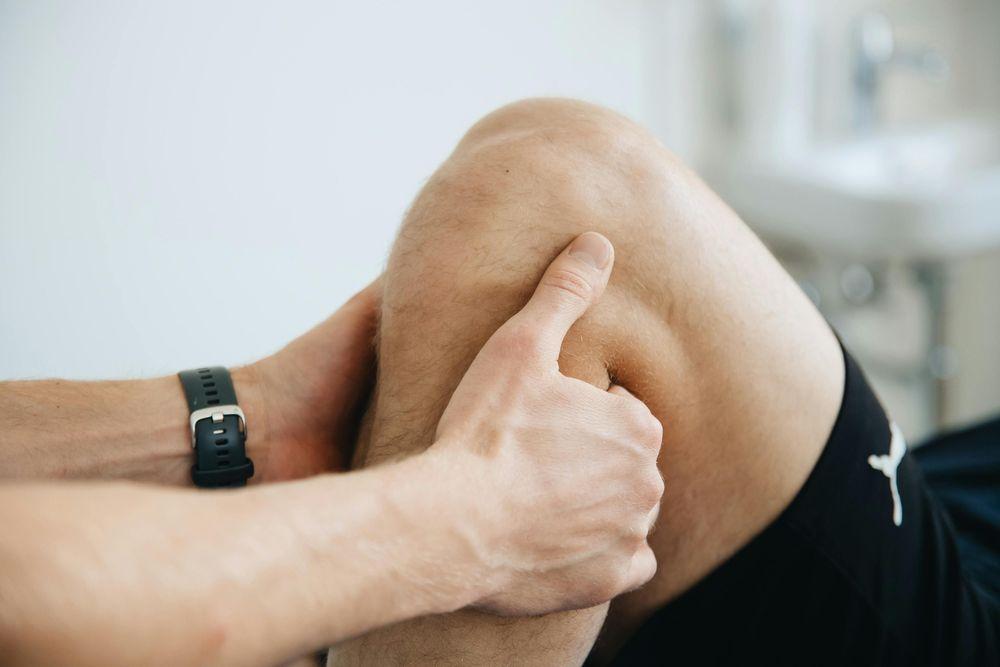


Knowing which assessment to run first is what separates a good nurse from a great one. After a total knee arthroplasty (TKA), the clinical picture shifts fast. What matters at hour one is entirely different from what matters at hour forty-eight, and a flat domain checklist does not capture that. This guide organizes the full nursing assessment for a patient who had knee replacement surgery into four clinical phases, so every shift has a clear focus, every red flag has a threshold, and every student has the exam prep they need.
At a Glance
| Topic | Key Facts |
|---|---|
| Surgery type | Total knee arthroplasty (TKA), the most common elective orthopedic procedure in the US |
| Projected volume | Over 1.2 million TKA procedures annually in the US by 2030 |
| Highest-risk window | First 24 hours post-op: DVT, neurovascular compromise, infection onset |
| DVT risk without prophylaxis | Up to 40 to 88 percent of TKA patients |
| Assessment framework | Four phases: Immediate (0 to 24 hrs), Sub-acute (24 to 72 hrs), Pre-discharge, Rehabilitation |
| Gold-standard functional test | Timed Up and Go (TUG) test |
| Key patient outcome measures | WOMAC, KOOS, Oxford Knee Score |
| Primary nursing diagnoses | Acute Pain, Impaired Physical Mobility, Risk for DVT/PE, Risk for Infection, Risk for Falls |
Why Assessment After Knee Replacement Is a Clinical Priority
The first hours after total knee arthroplasty are not a holding pattern. They are the window when the most dangerous complications announce themselves, and the nurse is the person most positioned to catch them. Deep vein thrombosis, neurovascular compromise, surgical site infection, and respiratory depression from opioid analgesia all have early signs that respond to timely detection. Missing them is not a paperwork problem. It changes outcomes.
According to the American Academy of Orthopaedic Surgeons (AAOS), total knee replacement is among the most frequently performed elective surgeries in the United States, with projections exceeding 1.2 million procedures per year by 2030. As volume grows, so does the demand for structured, phase-aware nursing assessment.
Understanding the Four Assessment Phases After TKA
Rather than treating TKA nursing assessment as a single static checklist, this guide uses a temporal framework that maps clinical priorities to where the patient actually is in recovery.
Phase 1 (Immediate, 0 to 24 hours): The PACU and first hospital night. Life-threatening complications take center stage. Neurovascular status, pain control, wound integrity, and VTE risk dominate.
Phase 2 (Sub-acute, 24 to 72 hours): The threat focus shifts from survival to function. Early ambulation, mobility tolerance, fall prevention, and psychosocial readiness enter the picture.
Phase 3 (Pre-discharge): Criteria-based discharge readiness. Can the patient manage pain on oral medications, ambulate safely, perform basic ADLs, and articulate their home care plan?
Phase 4 (Rehabilitation): Outpatient or home-based recovery. Functional performance tests and patient-reported outcome measures (PROMs) track the trajectory.
Each phase is addressed in full below.
Immediate Post-Op Assessment (0 to 24 Hours)
The immediate post-op period is the highest-acuity window in TKA recovery. Every assessment domain carries escalation potential, and the nurse's job is to distinguish expected post-surgical findings from early warning signs. For each domain, the core question is the same: is this within the range of normal recovery, or is it telling me something is wrong?
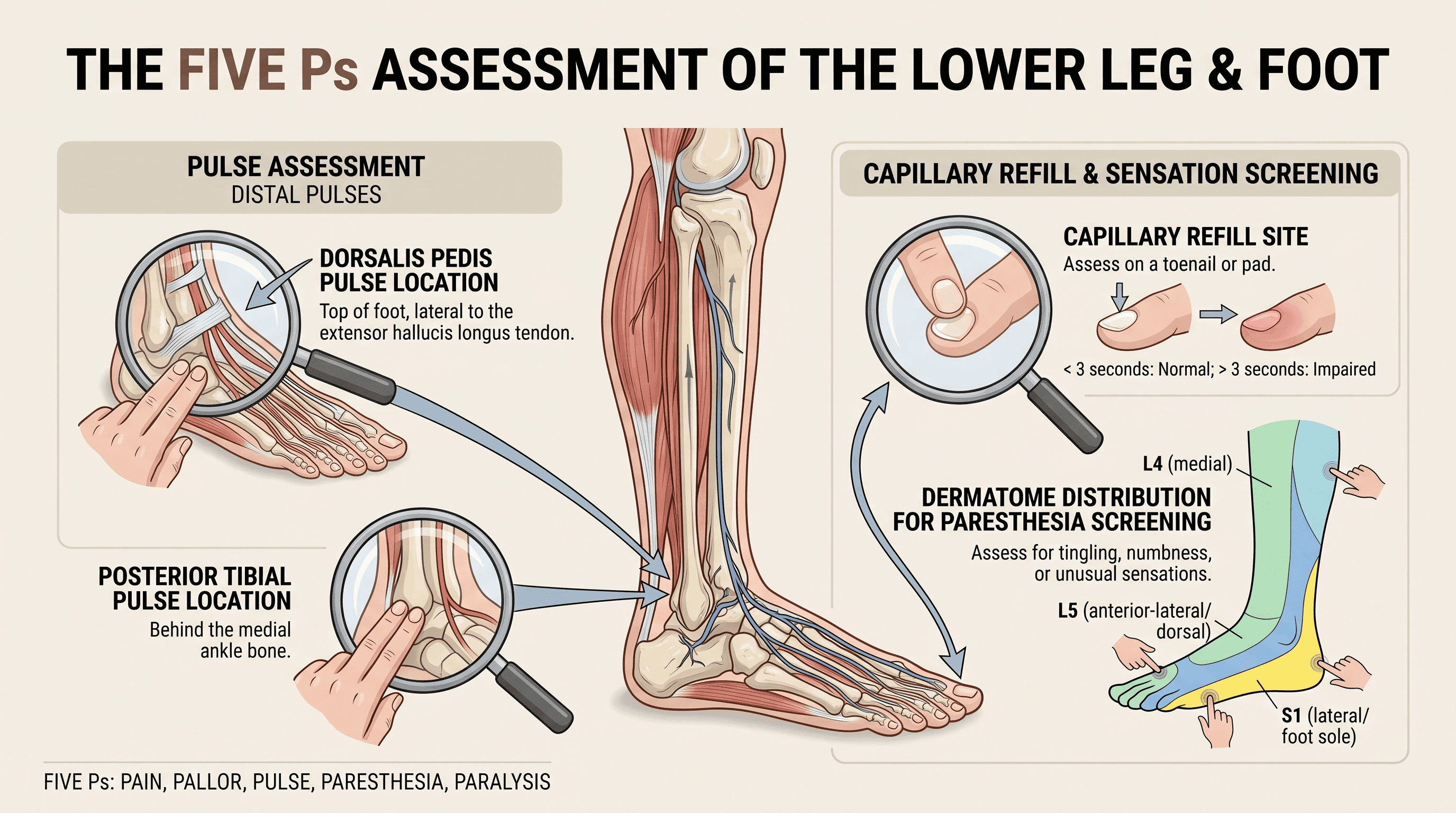
Neurovascular Assessment — The 5 Ps
The five Ps are the cornerstone of post-TKA neurovascular monitoring. They are Pain, Pallor, Pulselessness, Paresthesia, and Paralysis, and together they screen for the most dangerous early complication: acute compartment syndrome.
Pain in this context is pain that is out of proportion to the procedure or that is worsening despite adequate analgesia. This type of pain is a red flag and should trigger immediate provider notification. Pallor is assessed by comparing skin color, warmth, and capillary refill in the operative limb to the contralateral leg. Capillary refill should return within two seconds. Delays suggest compromised perfusion. Pulselessness requires palpation or Doppler assessment of pedal pulses, specifically the dorsalis pedis and posterior tibial arteries, at the start of each shift and after position changes. Paresthesia refers to abnormal sensation: tingling, numbness, or burning in the foot or lower leg, which may indicate nerve compression or ischemia. Paralysis is the inability to move the toes or foot on command. Any loss of motor function in the operative limb requires urgent escalation.
Regional and Nerve Block Sensory-Motor Monitoring
Most TKA patients today receive femoral nerve blocks or adductor canal blocks as part of multimodal anesthesia. This creates a specific assessment wrinkle that many nursing resources overlook. While a block is active, the expected absence of sensation and motor response in part of the operative limb is normal. The problem arises when a block takes longer to resolve than expected, or when sensory changes emerge in a distribution inconsistent with the block itself.
Nurses should document the expected duration and distribution of any regional block placed intraoperatively and assess the return of both sensory and motor function against that baseline. If motor function has not returned within the expected block duration, or if new paresthesia appears outside the blocked territory, notify the surgical or anesthesia team.
Pain Assessment — Subjective vs. Objective Data
For NCLEX purposes and for clinical accuracy, it matters whether pain data is subjective or objective. Subjective data comes from the patient: their self-reported pain score on a numeric rating scale (NRS), descriptions of stiffness, anxiety about moving, or fear of weight-bearing. Objective data comes from observation: guarding behavior, facial grimacing, splinting the knee in one position, elevated heart rate, or elevated blood pressure.
Both types inform the complete picture. A patient who reports a 4 out of 10 on the NRS but is visibly guarding and refusing to perform incentive spirometry may have inadequately controlled pain despite a low self-reported score. Multimodal analgesia, which combines scheduled non-opioid agents (acetaminophen, NSAIDs where appropriate), regional techniques, and opioids as needed, is now the standard of care for TKA, per Mayo Clinic guidelines. The nurse monitors for efficacy across all modalities and watches for opioid-related adverse effects: respiratory rate below 10 breaths per minute, oxygen saturation below 93 percent, and excessive sedation.
Wound and Surgical Site Assessment
Early wound assessment uses an adapted REEDA framework: Redness, Edema, Ecchymosis, Discharge, and Approximation. In the first 24 hours, some redness and edema around the incision are expected. The concern is dressing saturation that occurs faster than expected, which is typically defined as strike-through in under one hour, or discharge that is purulent rather than serous.
Drain output, if a drain is in place, should be recorded and compared to expected norms, with volumes trending downward over the first 24 hours. Rising output or a sudden spike warrants provider notification. As same-day discharge becomes more common for selected low-risk TKA patients, wound monitoring education is increasingly part of the acute phase assessment. Patients or caregivers need clear criteria for when to call the surgical team.
DVT and VTE Risk Assessment After Knee Replacement
Total knee arthroplasty carries the highest risk of venous thromboembolism (VTE) of any elective orthopedic surgery. Without prophylaxis, research published in PubMed demonstrates DVT rates ranging from 40 to 88 percent post-TKA. That figure is the starting point for every conversation about VTE prevention in this population.
Clinical signs of DVT include calf swelling, erythema, warmth, and tenderness along the course of a deep vein. Nurses should note that the classic Homans sign, pain on dorsiflexion of the foot, is neither sensitive nor specific for DVT and should not be used as a standalone screen. A negative Homans sign does not rule out thrombosis.
AAOS 2023 guidelines support the use of pharmacologic prophylaxis for TKA patients, including low-molecular-weight heparin (LMWH), direct oral anticoagulants (DOACs), or aspirin in appropriately selected patients, in combination with mechanical prophylaxis such as sequential compression devices (SCDs). The nurse's role includes confirming the prescribed prophylaxis was administered, verifying SCD use and fit, and assessing for DVT clinical signs at every shift.
"Patients undergoing total knee arthroplasty face a substantial risk of venous thromboembolism in the absence of prophylaxis, making structured pharmacological and mechanical prevention a clinical standard." NIH / National Library of Medicine
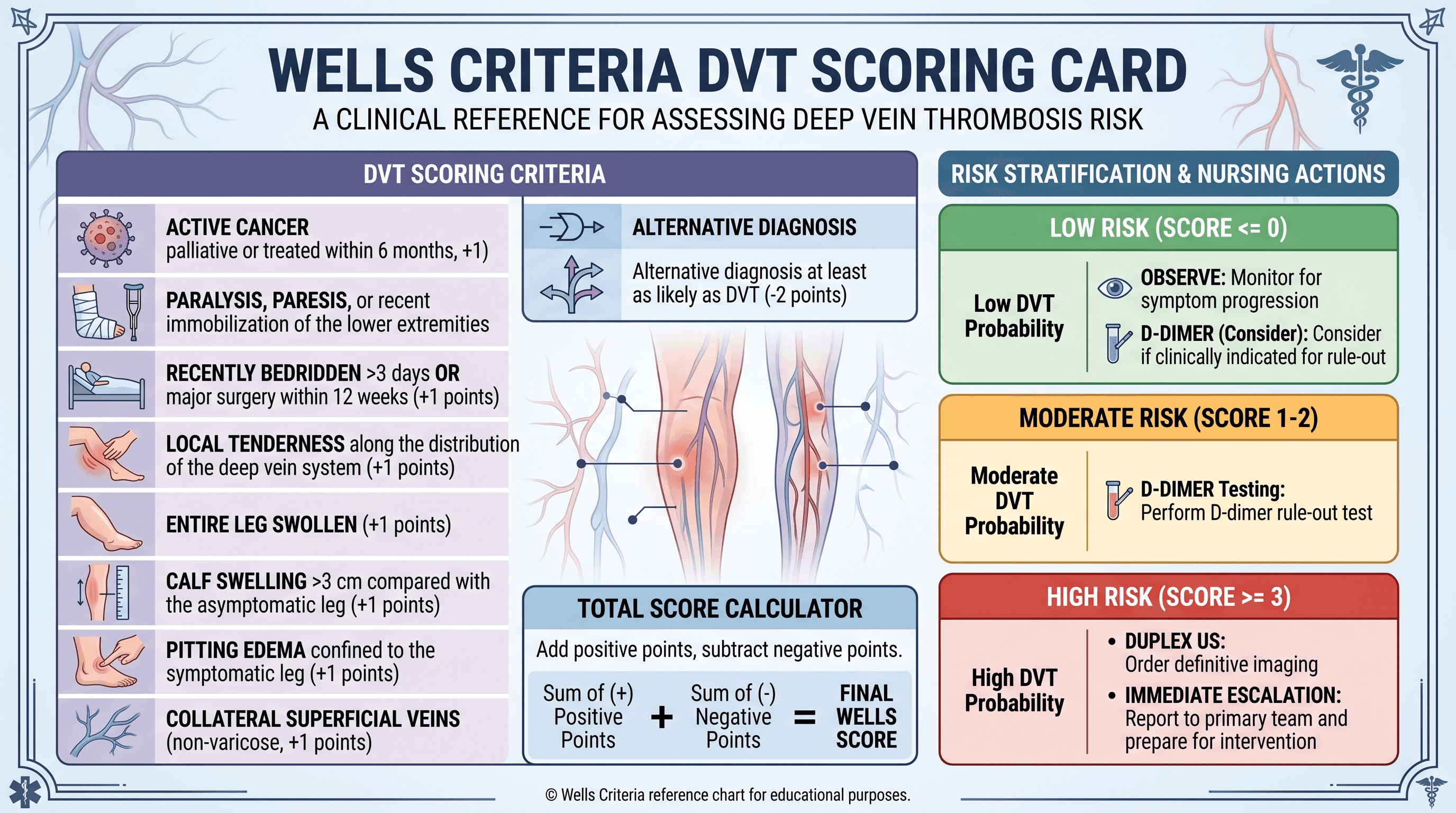
Using the Wells Criteria for DVT Risk Stratification in TKA
The Wells Criteria for DVT provides a structured scoring framework that nurses can apply when a patient shows clinical signs. Each element earns a point: active cancer, paralysis or recent plaster cast, bedridden for more than three days or major surgery within four weeks, localized tenderness along the deep vein, entire leg swelling, calf swelling more than 3 cm compared to the asymptomatic leg, pitting edema, collateral superficial veins, and a previous DVT. An alternative diagnosis at least as likely subtracts two points.
In TKA patients, the surgery itself earns a Wells point immediately. A score of two or higher indicates high probability, and the nursing action is clear: escalate to the provider, anticipate orders for d-dimer or duplex ultrasound, and reinforce limb immobility restrictions while awaiting workup. Lower scores do not eliminate the need for vigilance given baseline TKA risk.
Sub-Acute Assessment (24 to 72 Hours) — Mobility, Function, and Falls
Once the patient is past the first night and immediate life threats have been ruled out, the clinical focus shifts. Now the question is whether the patient is moving toward safe functional recovery. Early mobilization is not optional. Evidence cited in PMC / NIH consistently supports early ambulation as protective against complications including DVT, pneumonia, and deconditioning. The nurse's role in this phase is part assessment, part facilitation.
Weight-bearing status is established by the surgeon, with most patients prescribed weight-bearing as tolerated (WBAT) beginning the day of or day after surgery. Assess the patient's actual tolerance compared to the prescription. Document whether the patient is weight-bearing appropriately, whether they require cueing, and whether pain is limiting participation.
Gait pattern with an assistive device should be assessed in collaboration with physical therapy. The nurse observes for antalgic gait (shortened stance phase on the operative leg), unsafe pivot technique, and fatigue patterns that suggest the patient is not yet ready for unsupported ambulation.
Regarding continuous passive motion (CPM) machines: current evidence no longer supports routine CPM use post-TKA. Active participation in physical therapy with early ambulation has replaced CPM as the standard in most US orthopedic centers. Nurses should follow institutional protocol and not assume CPM is part of the care plan without a specific order.
Fall risk peaks in this phase. The Morse Fall Scale provides a structured nursing tool: history of falls, secondary diagnosis, ambulatory aid, IV or IV access, gait, and mental status each contribute to a total score that guides fall prevention intensity.
Functional Assessment Tools — TUG, Stair Climb, and ROM
Pain scores alone are inadequate measures of functional recovery. A patient may rate pain at 2 out of 10 but be unable to rise from a chair without pushing off with both arms. Performance-based tests close that gap.
The Timed Up and Go (TUG) test measures the time in seconds for a patient to rise from a chair, walk 3 meters, turn, return, and sit back down. Normal values for adults over 65 are generally under 12 seconds. Post-TKA patients will exceed this in early recovery, but serial TUG scores track improvement. Research published in PubMed demonstrates that quadriceps strength and performance-based tests like TUG are stronger predictors of functional outcomes than pain alone.
Knee range of motion (ROM) is assessed with a goniometer. A target of 90 degrees of flexion by discharge is a commonly cited clinical benchmark. Quadriceps lag, the inability to fully extend the operative leg when lying supine, is an important finding that reflects quadriceps strength deficits and should be documented and reported to the PT team.
Psychosocial and Mental Health Assessment
Fear of falling, anxiety about rehabilitation, and low mood are documented comorbidities in post-TKA recovery that affect rehab adherence and outcomes. Nurses are often the first to notice when a patient is withdrawing from mobilization efforts, expressing catastrophic thinking about pain, or showing signs of depressive affect.
Clinical prompts that open this conversation include asking the patient what concerns them most about going home, whether they feel confident about using their assistive device, and whether they have the support they need in their home environment. A patient who feels unsupported or frightened is at higher risk for early readmission. Noting these findings in the chart and looping in the social work or case management team is a concrete nursing action.
Pre-Discharge Assessment and Patient Readiness Criteria
Discharge readiness after TKA is not a single checklist moment. It is a judgment built from the cumulative assessment picture. General criteria include pain that is manageable on oral analgesics alone, knee flexion of at least 90 degrees, the ability to ambulate safely with an assistive device, a stable surgical wound without signs of early infection, a confirmed VTE prophylaxis plan, and documented patient or caregiver education.
Nurses should also screen for nutritional status as part of the pre-discharge assessment. Protein intake and overall nutritional adequacy are documented contributors to surgical wound healing, and patients who are nutritionally compromised may heal more slowly. A brief screen using a validated tool such as the Malnutrition Universal Screening Tool (MUST) can flag patients who need dietary support post-discharge.
For same-day or 23-hour discharge patients, the assessment timeline is compressed, which makes each interaction more focused. Nurses must prioritize patient education efficiency: wound care instructions, VTE prophylaxis schedule, activity restrictions, return-to-care criteria, and emergency contact information.
If there is any question about a patient's readiness or home situation, connecting with a qualified physician through Momentary Lab's doctor finder can help coordinate specialist follow-up before the patient leaves the facility.
Patient-Reported Outcome Measures — WOMAC, KOOS, and Oxford Knee Score
Patient-reported outcome measures (PROMs) capture the patient's own perspective on pain, stiffness, and physical function, which is distinct from what a clinical assessment can observe. Three measures are widely used in TKA:
The Western Ontario and McMaster Universities Osteoarthritis Index (WOMAC) covers pain (5 items), stiffness (2 items), and physical function (17 items). Higher scores indicate worse outcomes. It is commonly used at baseline before surgery and again at follow-up to quantify functional gain.
The Knee Injury and Osteoarthritis Outcome Score (KOOS) is broader, covering five domains: pain, symptoms, activities of daily living, sport and recreation function, and quality of life. KOOS is more sensitive to change in younger and more active post-TKA populations.
The Oxford Knee Score uses 12 questions covering pain and function, each scored 0 to 4, for a total of 0 to 48 where higher scores represent better outcomes. Its simplicity makes it practical for discharge and outpatient follow-up conversations.
Nurses are well placed to introduce PROMs at discharge, briefly explain the scoring, and confirm that the patient understands how follow-up visits will use their responses to track progress.
Priority Nursing Diagnoses Linked to Assessment Findings
Nursing diagnoses synthesize the assessment data into clinical problems that drive the care plan. For TKA, the following NANDA diagnoses connect directly to specific findings.
Acute Pain related to surgical intervention is supported by a patient's NRS score, visible guarding, elevated vital signs, and limited participation in mobility exercises. The goal is adequate pain control that allows active participation in therapy without oversedation.
Impaired Physical Mobility related to pain and surgical repair is supported by limited knee ROM, inability to weight-bear at the prescribed level, or dependence on assistive devices beyond the expected timeline. Functional performance test data including TUG results, ROM measurements, and observation of gait quality all feed this diagnosis.
Risk for Deep Vein Thrombosis/Pulmonary Embolism is supported by the surgical history itself, immobility, and any clinical signs detected during shift assessment. This diagnosis drives SCD management, prophylaxis administration, and mobility facilitation.
Risk for Infection is supported by wound assessment findings: erythema beyond the immediate incision border, warmth, purulent discharge, fever above 38.5 degrees Celsius after 48 hours, or elevated white cell count. This diagnosis drives wound care, hand hygiene reinforcement, and early reporting of abnormal findings.
Risk for Falls is supported by Morse Fall Scale scoring, early ambulation with an unfamiliar assistive device, opioid sedation, and the spatial disorientation common in the first 24 to 48 hours post-op.
Deficient Knowledge related to post-discharge care is supported by gaps identified during discharge education assessment. A patient who cannot accurately describe their VTE prophylaxis schedule, wound monitoring criteria, or weight-bearing restrictions is not ready for discharge regardless of their clinical parameters.
Red Flag Findings Requiring Immediate Surgeon Notification
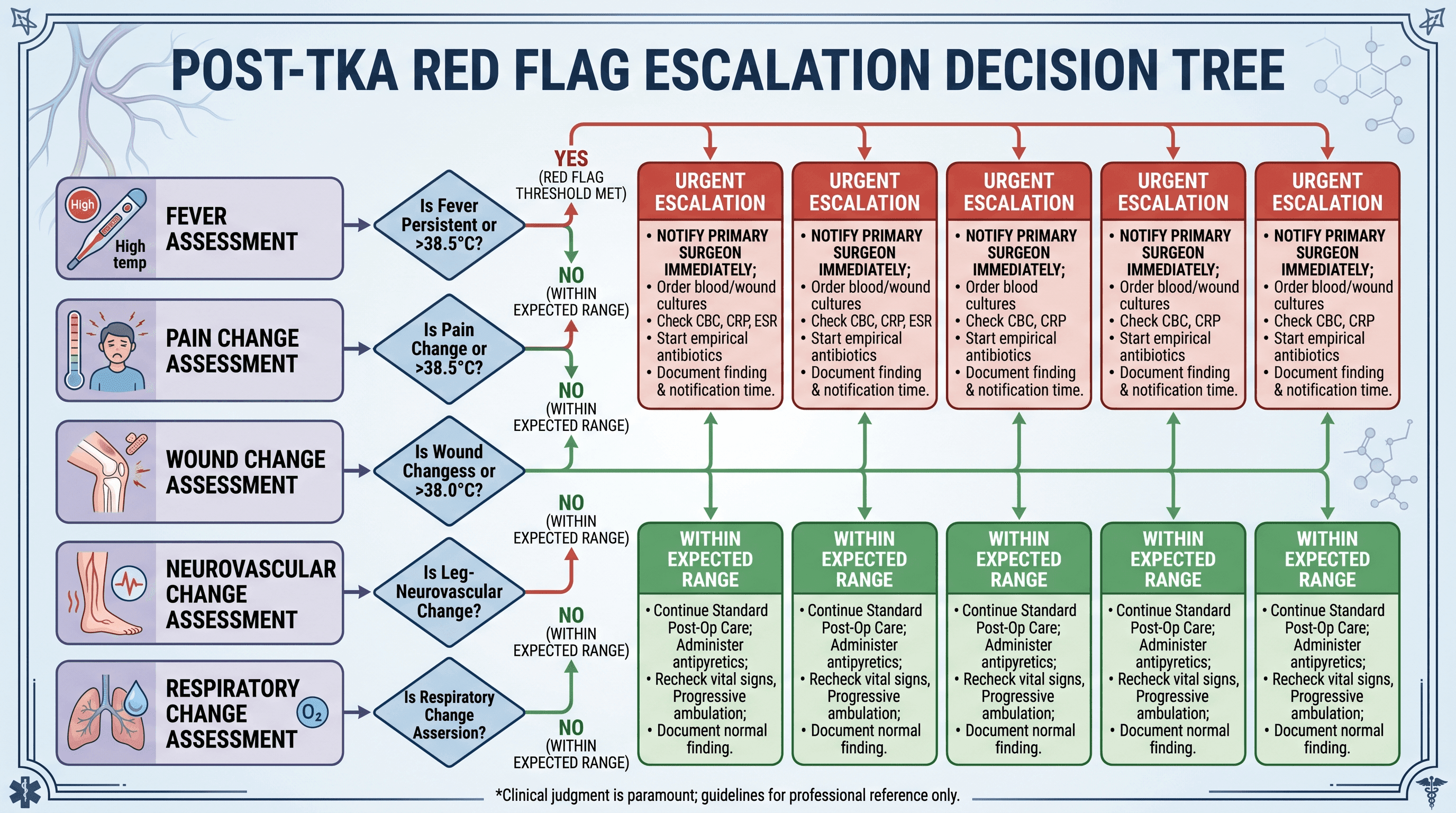
The following findings require immediate escalation to the surgical team. They are not wait-and-watch situations.
Acute compartment syndrome signs include pain that is out of proportion, worsening despite analgesia, or pain with passive stretch of the toes or foot combined with tense swelling and neurovascular changes in the operative limb. This is a surgical emergency.
Sudden hemarthrosis presents as rapid, tense swelling of the knee with severe pain and inability to flex or extend. It may indicate internal bleeding within the joint.
Fever above 38.5 degrees Celsius persisting after 48 hours moves from expected inflammatory response to potential infection signal and requires culture workup and provider notification.
Dressing saturated in under one hour suggests ongoing active bleeding that exceeds normal post-surgical ooze.
Unexplained new paresthesia or motor loss in a limb that had normal neurovascular function earlier in the shift represents a change in baseline and must be evaluated immediately.
Clinical signs of pulmonary embolism include sudden shortness of breath, chest pain, tachycardia, and oxygen desaturation. This is life-threatening and requires emergency response, not a routine page.
Signs of prosthetic joint infection in the early post-op period include persistent wound drainage beyond five days, deep wound dehiscence, or systemic signs of sepsis. Early detection changes the surgical management trajectory significantly.
FAQ
What happens at a pre-assessment for knee replacement?
A pre-assessment for knee replacement typically occurs in the weeks before surgery and includes a complete medical history review, a physical examination, baseline blood tests (complete blood count, metabolic panel, coagulation studies), an electrocardiogram for cardiac screening, imaging review of the affected knee, and a medication reconciliation with particular attention to anticoagulants, NSAIDs, and diabetes medications. Anesthesia may also conduct a pre-op evaluation during this visit. The goal is to identify and manage any comorbidities that could complicate surgery or recovery.
What assessments are the highest priorities for a patient who just had a hip or knee replacement?
In the immediate post-op window, neurovascular assessment is the top priority. Checking the five Ps, monitoring pedal pulses, and assessing for signs of compartment syndrome take precedence. Closely following are pain assessment, wound assessment, VTE risk screening, and respiratory status monitoring. For nurses using the NGN-style clinical judgment framework, the first action is always to address any finding that represents an immediate threat to limb or life.
What are nursing considerations for a patient who has total joint arthroplasty?
Total joint arthroplasty nursing care centers on four parallel priorities: preventing complications (DVT, infection, compartment syndrome), managing pain using a multimodal approach, facilitating early and safe mobility, and preparing the patient for discharge with the knowledge and support to manage recovery at home. Documentation of serial neurovascular checks, pain response to analgesia, wound status, and functional progress forms the clinical evidence base for the care plan.
What tests are done for knee replacement?
Pre-operative workup typically includes imaging (X-ray, sometimes MRI), blood panel including CBC and CMP, coagulation studies, urinalysis, and a blood type and screen. Some centers add an HbA1c for diabetic patients or an infectious disease screen. Post-operatively, lab work may include hemoglobin to monitor for surgical blood loss, and duplex ultrasound if DVT is clinically suspected. The NIH/NLM resource on TKA provides additional detail on the workup standards used in US clinical practice.
How does a nurse use WOMAC or KOOS scores after knee replacement?
The WOMAC and KOOS are patient-reported outcome measures used to quantify the patient's own experience of pain, stiffness, and function. Nurses introduce these tools at discharge as part of the transition of care conversation, explaining that follow-up providers will use these scores to track recovery progress over time. A baseline score taken before surgery allows comparison at three-month and one-year follow-up, and significant improvement in WOMAC or KOOS scores is the patient-centered benchmark for a successful TKA outcome.
Where can I find more help navigating my care after knee replacement?
If you are managing recovery questions at home or looking for resources beyond what your discharge paperwork covered, the Momentary Lab AI Healthcare Navigator can help you find relevant health information and connect with care options that match your situation.
References
- PubMed — DVT Incidence After TKA Without Prophylaxis — Source for the 40 to 88 percent DVT rate cited in the VTE risk section.
- NIH / National Library of Medicine — TKA Clinical Overview — Source for clinical standards in post-TKA assessment, cited in the DVT and FAQ sections.
- PMC / NIH — Early Mobilization After TKA — Evidence supporting early ambulation as protective against TKA complications.
- PubMed — Quadriceps Strength and Functional Outcomes After TKA — Source for the evidence that performance-based tests predict functional recovery better than pain scores alone.
- Mayo Clinic — Knee Replacement — Source for multimodal analgesia standards referenced in the pain assessment section.
- American Academy of Orthopaedic Surgeons (AAOS) — Source for TKA volume projections and VTE prophylaxis guidelines.