


At a Glance
| Topic | Key Facts |
|---|---|
| Primary condition | Leg weakness following lumbar or cervical spinal fusion |
| Most common cause | Nerve root irritation or disuse muscle atrophy |
| Most urgent red flag | Loss of bowel or bladder control (cauda equina emergency) |
| Typical recovery window | 6 weeks to 12 months depending on cause |
| Permanent weakness rate | Rare; approximately 0.74% of patients require re-surgery |
| Key diagnostic tools | MRI, CT scan, EMG/nerve conduction studies, MRC Scale |
| Primary treatment | Structured physical therapy, observation, rarely re-intervention |
The Immediate Panic: Is My Leg Supposed to Feel This Heavy?
Waking up from spinal fusion with legs that feel leaden, unresponsive, or just plain wrong is one of the most unsettling things a patient experiences in recovery. Most people expect back pain. Nobody tells them about the strange heaviness creeping down from hip to heel, or the foot that just will not cooperate when they try to walk to the bathroom.
Here is the first and most important thing to know: some degree of leg weakness after spinal fusion surgery is common, well-documented, and in most cases, temporary. The surgery involves working in close proximity to nerve roots that have often been compressed for months or years. After that kind of manipulation, those nerves can behave unpredictably in the days and weeks that follow.
That said, not all post-fusion leg weakness is the same. Some of it is expected and will resolve on its own. Some of it needs a phone call to the surgical team. And a small portion needs same-day imaging. The difference between those three categories is what this article is built to explain.
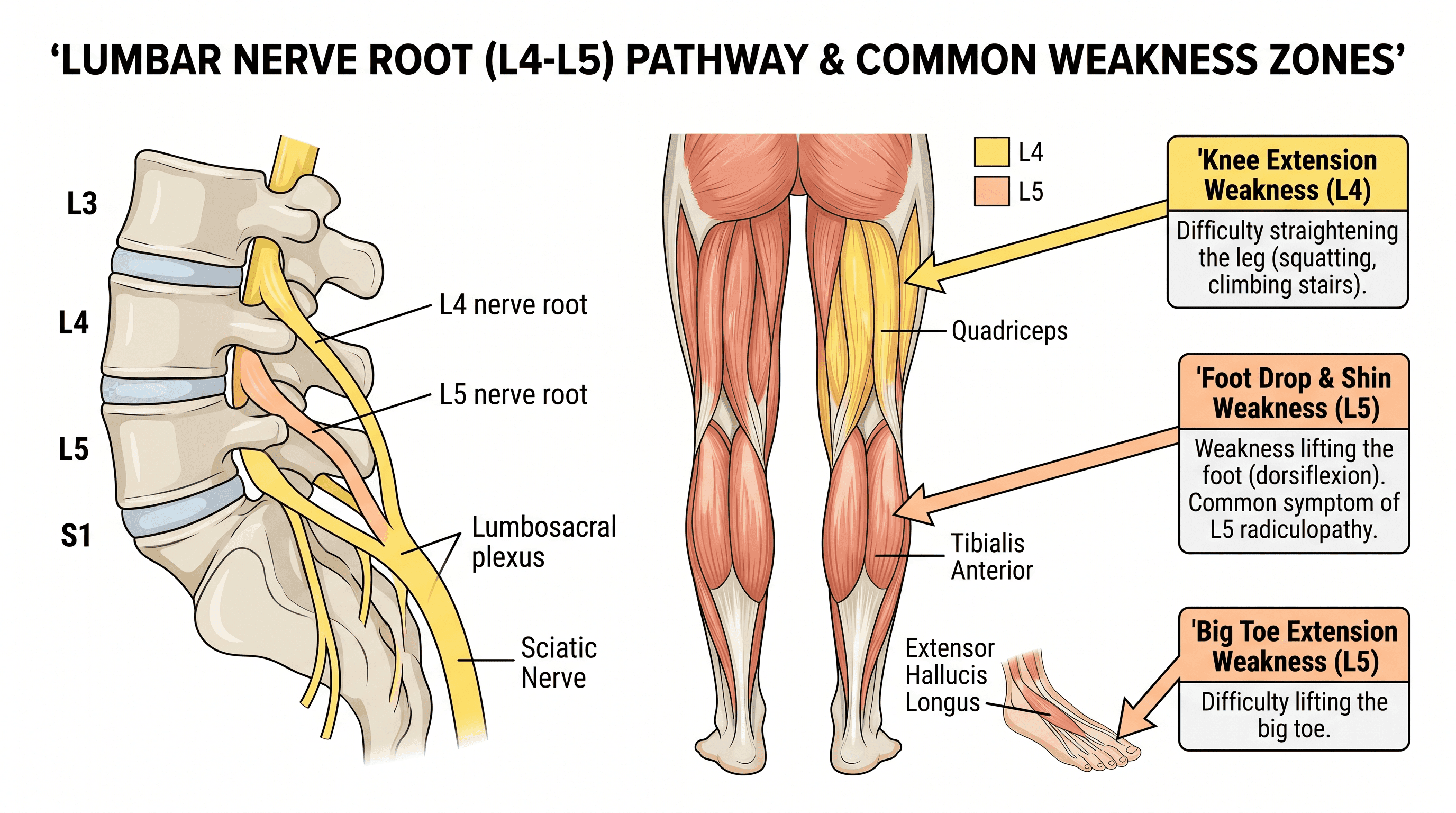
The "Stunned Nerve" (Neuropraxia): Biology of a Surgical Aftermath
The most common explanation for leg weakness right after spinal fusion is a phenomenon called neuropraxia, which is essentially a nerve that has been temporarily shut down without any structural damage to its fibers.
Think of it like a garden hose that has been kinked for a long time. The moment you release the kink, water does not immediately flow at full pressure. The hose needs a moment to recover its shape, and so does a nerve that has spent months being compressed by a herniated disc or arthritic bone spur.
During surgery, several things happen simultaneously that can stun the surrounding nerves. The surgeon retracts soft tissue and muscle to access the spine, placing mechanical pressure on structures near the nerve roots. Instruments used to decompress the spine can cause localized trauma. Post-operative swelling, which is a normal biological response to any surgical site, creates additional pressure on nerves that are already irritated. The anesthetic agents used during surgery also temporarily suppress nerve conduction, meaning some of the weakness immediately after waking up is simply the pharmacological hangover of general anesthesia and any nerve blocks administered around the surgical site.
All of these mechanisms fall under the umbrella of neuropraxia: the nerve's electrical signaling is disrupted, but the nerve fiber itself is intact. This type of weakness typically begins to lift within days to weeks as swelling subsides and the nerve's own repair machinery gets to work. According to research published in PubMed, the trajectory for neuropraxic weakness after lumbar decompression is generally favorable when the pre-operative compression was not prolonged or severe.
The Foot Drop Phenomenon
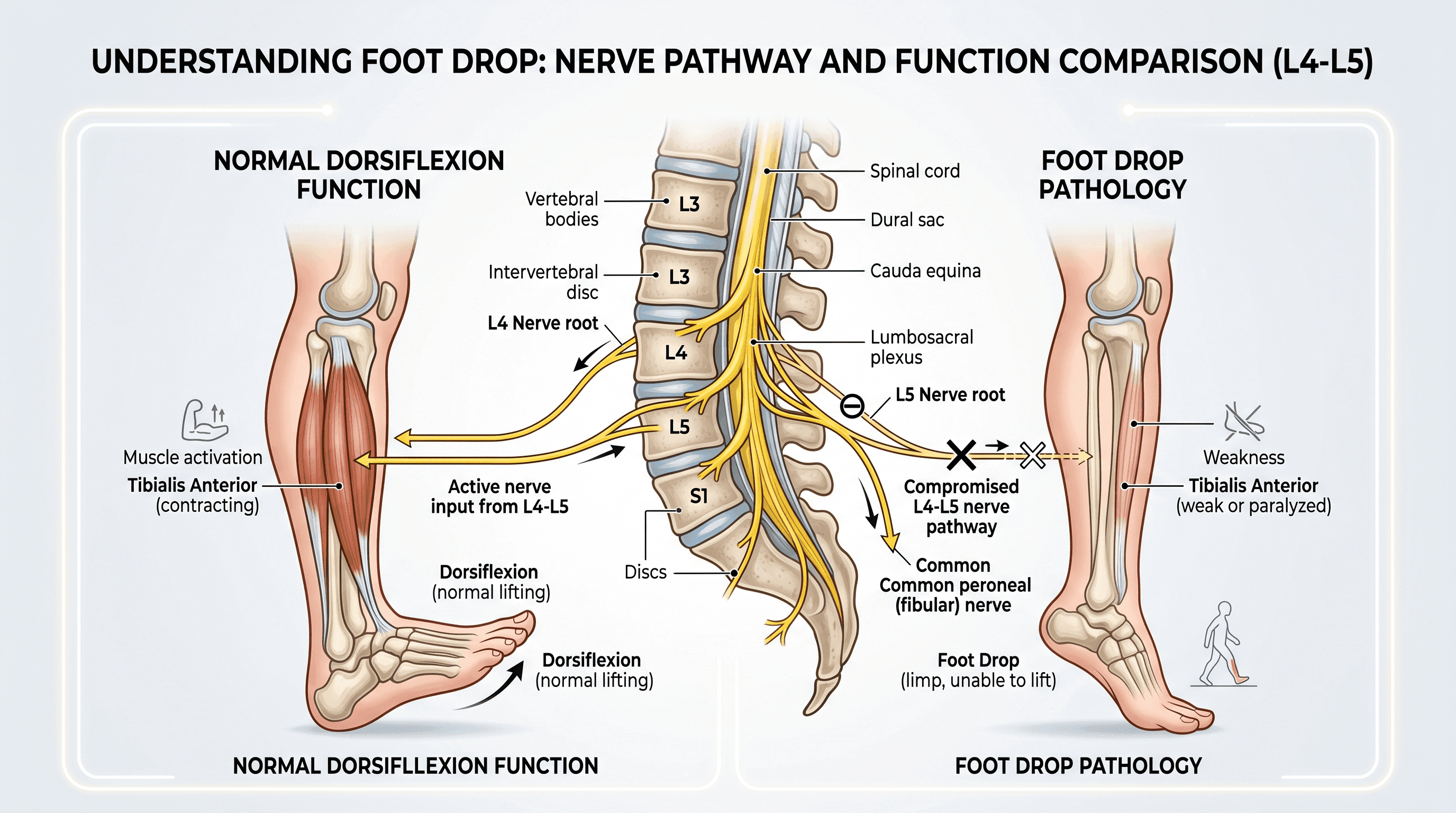
Foot drop is one of the most disorienting complications a spinal fusion patient can experience, and it deserves its own explanation because it has a specific anatomy behind it.
Foot drop refers to the inability to lift the front part of the foot and toes upward toward the shin, a movement called dorsiflexion. When this motor function is lost or impaired, the foot drags during walking, forcing patients to compensate with a distinctive high-stepping gait to clear the floor.
The nerve roots most responsible for dorsiflexion are L4 and L5, both of which exit the lumbar spine at levels that are operated on in the majority of lumbar fusions. The L4-L5 and L5-S1 levels are the most commonly fused segments in the lower back, which is precisely why foot drop after spinal fusion concentrates so heavily in the lumbar population.
According to research published in PMC, motor deficits following lumbar decompression surgery, including foot drop, can occur from nerve root injury during the procedure or as a result of residual or new compression. The L5 nerve root is particularly vulnerable because of its anatomical position and the length of time it may have already been compressed before surgery.
The good news: foot drop caused by neuropraxia or nerve root swelling often improves substantially with time. The recovery window, though, can stretch from several weeks to over a year depending on the severity of the nerve injury and how long that nerve was compressed before the operation. A patient who waited two years to have surgery may face a longer recovery than one who had the procedure within three months of symptom onset.
An ankle-foot orthosis, commonly called an AFO brace, can help manage foot drop functionally while the nerve heals. It lifts the front of the foot during walking, dramatically reducing fall risk and fatigue. A physiatrist or orthotist can fit one appropriately.
Red Flags: When Leg Weakness Is a Medical Emergency
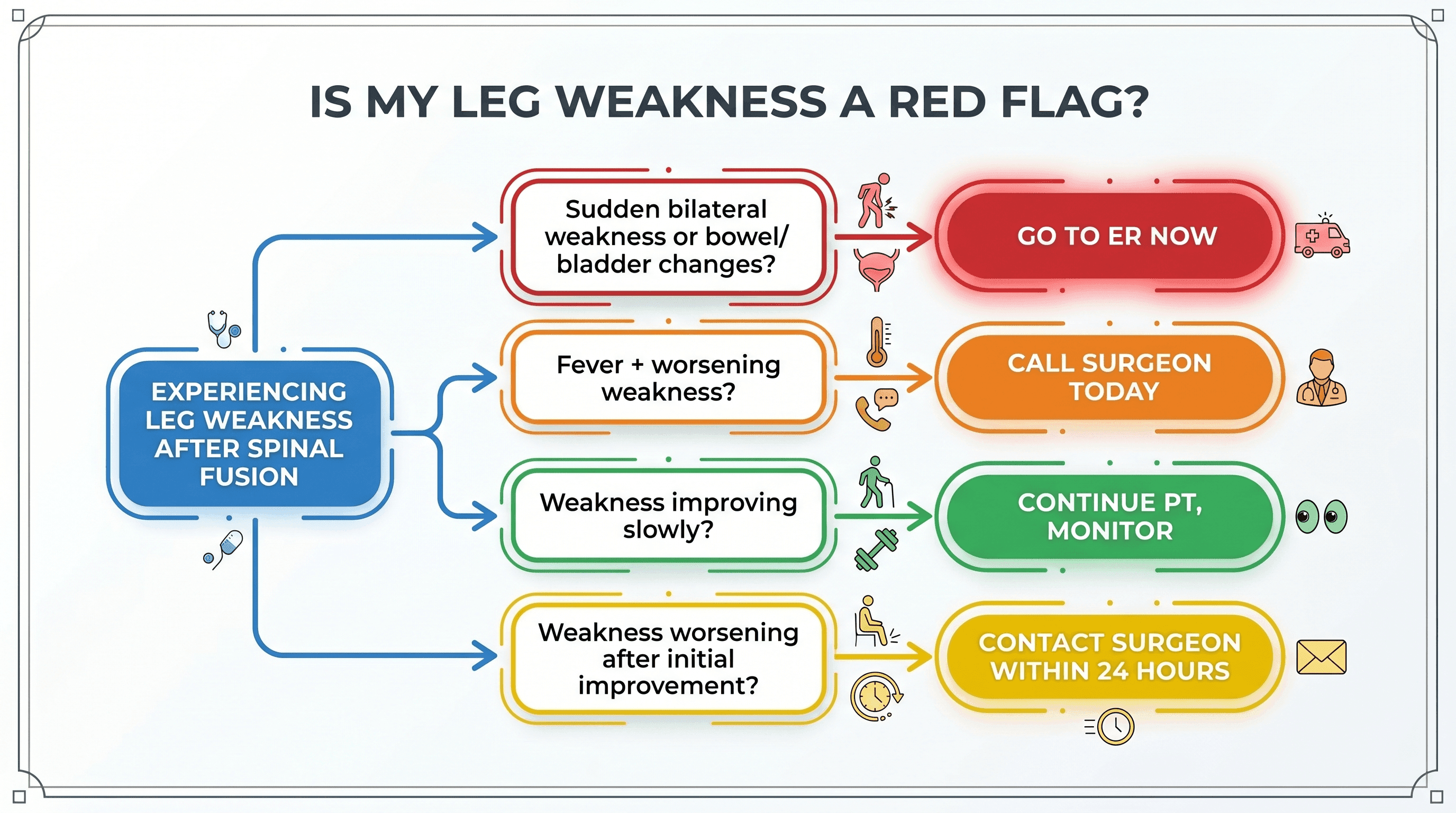
Most post-fusion leg weakness is worrying but not dangerous. The following situations are the exceptions, and they require action today, not at the next scheduled appointment.
Sudden onset of bilateral leg weakness. If both legs lose strength simultaneously, or if weakness appears abruptly and is rapidly progressing rather than slowly improving, this can indicate involvement of the spinal cord itself or a central compressive event. This is not something to monitor at home.
Any change in bowel or bladder control. Inability to urinate, inability to control urination, loss of bowel control, or new numbness in the groin or inner thighs (called saddle anesthesia) are the hallmark signs of cauda equina syndrome. The cauda equina is the bundle of nerve roots at the base of the spinal cord. When it is compressed, the result can be permanent loss of bowel, bladder, and sexual function if not surgically decompressed within hours. According to the Mayo Clinic, cauda equina syndrome is a surgical emergency with no exceptions. If these symptoms appear, go to the emergency room immediately.
Weakness that worsens rapidly after initial improvement. A nerve recovering from surgical trauma generally follows a slow, steady trajectory upward. If strength was improving and then suddenly declined, something new is happening: a hematoma, an infection, or a hardware issue.
Fever combined with worsening weakness. An infection at the surgical site or in the epidural space can cause swelling that compresses nerve roots. The combination of fever, incision changes, and increasing neurological symptoms in the legs needs same-day evaluation.
Weakness that begins within the first 48 to 72 hours and escalates quickly. Research published in PMC documents that epidural hematomas after spinal surgery have an average onset of 1.4 to 2.9 days post-operatively. A hematoma is a collection of blood that compresses neural structures. Rapid decompression is necessary, and the outcome is strongly correlated with how quickly treatment begins.
Did the Hardware Shift? Understanding Hardware Complications
Spinal fusion uses titanium pedicle screws, rods, and cages to stabilize the vertebrae while bone graft material fuses them together. In the vast majority of cases, this hardware sits exactly where it was placed and causes no problems at all. But in a small number of patients, hardware complications become the source of post-operative leg weakness.
Pedicle screw malposition is the most commonly documented hardware-related cause of neurological symptoms after fusion. A screw that migrates into or is initially placed too close to a nerve root can cause pain, weakness, or sensory changes in the leg distribution that nerve serves. According to data from PMC research, internal fixation malposition accounts for approximately 36% of cases requiring re-surgery after spinal fusion, making it the leading surgical cause of neurological complications that need intervention.
The diagnostic workup for suspected hardware complications typically begins with plain X-rays to assess screw position, followed by CT scanning if X-rays are inconclusive. MRI adds information about soft tissue and nerve root involvement. If imaging confirms a misplaced screw or other hardware problem, revision surgery may be necessary.
This is also the appropriate moment to find a specialist who can review post-operative imaging with fresh eyes. If leg weakness is worsening and the initial surgical team does not have a clear explanation, finding a spine specialist through Momentary Lab's doctor directory can help connect patients with physicians who can conduct an independent evaluation.
The Nerve Recovery Timeline: A Game of Millimeters
One of the most important pieces of information missing from most patient-facing content on this topic is a realistic, cause-specific recovery timeline. Telling a patient "nerves take time to heal" without numbers leaves them unable to evaluate whether their own progress is on track.
Nerves regenerate at approximately 1 millimeter per day, which works out to roughly 1 inch per month. This is not a metaphor. It is the biological rate at which axons regrow after injury, and it explains why nerve recovery is measured in months, not weeks.
The table below organizes expected recovery windows by cause:
| Cause of Weakness | Expected Recovery Timeline |
|---|---|
| Disuse / muscle atrophy | 4 to 8 weeks with consistent physical therapy |
| Nerve root irritation / neuropraxia | 6 weeks to 6 months |
| Significant nerve root injury (axonotmesis) | 6 to 24 months; large motor fibers take longest |
| Hardware complication | Resolves only after surgical re-intervention |
| Cauda equina syndrome | Variable; permanent deficits possible without emergency surgery |
| Insufficient decompression / new swelling | 4 to 12 weeks following additional treatment |
One finding from PubMed-indexed research on lumbar surgery outcomes supports an important distinction: small sensory nerve fibers tend to recover faster than large motor fibers. This is why a patient might notice that tingling or burning sensations improve before actual muscle strength returns. Sensory improvement is a positive signal, even when motor recovery still has a long way to go.
It is also worth understanding that the duration of pre-operative nerve compression matters significantly. A nerve that was compressed for six months before surgery has more recovery work to do than one that was compressed for six weeks. Patients with longer symptom histories before surgery should calibrate their expectations accordingly, and a physician can advise on individual cases based on intraoperative findings and imaging.
Physical Therapy and Exercises to Rebuild Leg Strength After Fusion
Physical therapy is not optional after spinal fusion. It is the mechanism through which muscle atrophy reverses, balance returns, and the body learns to move safely around a fused spinal segment. PT also protects the fusion by training the surrounding muscles to absorb load that the fused vertebrae can no longer distribute the same way.
Every exercise program after spinal fusion must be supervised by a physical therapist and approved by the operating surgeon. The following represents the general categories of exercises used across recovery phases, not a self-directed home program.
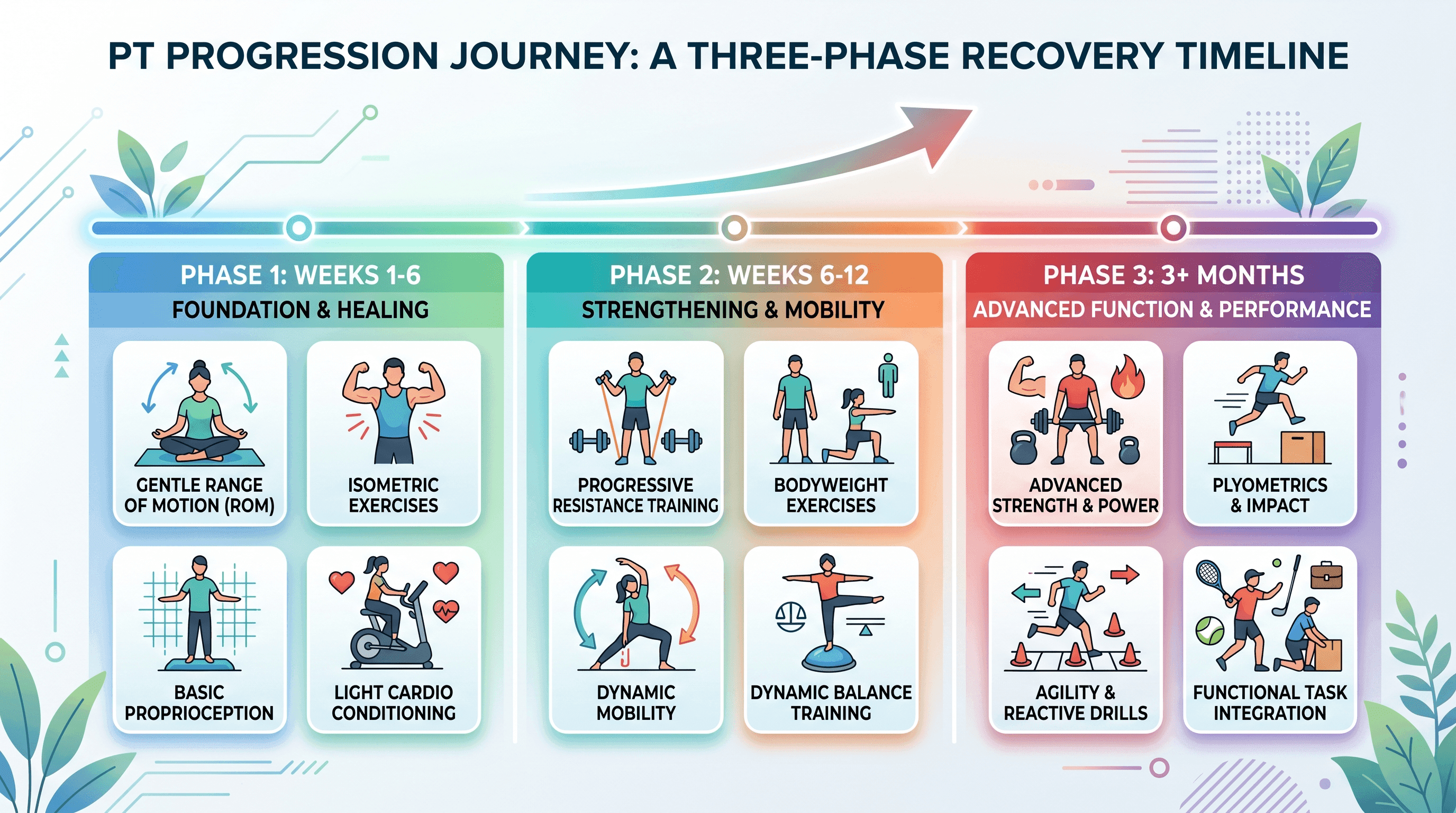
Weeks 1 to 6: Gentle Activation and Range of Motion
In the early post-operative weeks, the goal is simple: prevent further atrophy and maintain circulation without stressing the fusion site. Most patients are not cleared for formal PT until weeks 4 to 6, but gentle exercises often begin in the hospital.
Ankle pumps, which involve flexing and pointing the foot while lying down, promote circulation and gently activate the calf muscles. Quad sets involve tightening the thigh muscle while the leg is straight on the bed, maintaining muscle tone without movement. Heel slides, which are performed by slowly pulling the heel toward the body while lying flat, maintain hip and knee range of motion. Supine straight-leg raises, when cleared by the surgeon, begin to reactivate the hip flexors. All of these movements respect the "no BLT" restriction, meaning no bending, lifting, or twisting.
Weeks 6 to 12: Progressive Resistance and Core Engagement
As the fusion site consolidates and surgical clearance is obtained, the program shifts toward rebuilding functional strength. Seated leg press at light resistance targets the quadriceps without loading the spine in flexion. Standing hip abduction with support from a counter or walker activates the gluteus medius, which plays a major role in walking stability. Core stabilization exercises such as the bird-dog (opposite arm and leg extension from a hands-and-knees position) and the dead bug (lying on the back with controlled arm and leg movements) begin training the deep spinal stabilizers without creating shear force at the fusion site.
Balance training, beginning with double-leg stance on a stable surface and progressing to single-leg work as tolerated, also begins in this phase. Impaired balance is a major fall risk after spinal fusion, particularly for patients with residual foot drop or proprioceptive changes from nerve involvement.
Three Months and Beyond: Functional Mobility and Gait Retraining
Walking is the primary functional goal of long-term recovery. A structured walking progression, beginning with short, frequent sessions and building duration over weeks, forms the backbone of this phase. Stair training, which requires eccentric quad strength going down and concentric quad strength going up, becomes a priority as patients return to home environments.
For patients with persistent foot drop, specific exercises targeting dorsiflexion, such as heel walking and toe-tap exercises, supplement the AFO brace and help maintain the neuromuscular connection to the recovering nerve. Aquatic physical therapy is an excellent option for patients with significant residual weakness, as buoyancy reduces the load on the spine and legs while still providing meaningful resistance. A physiatrist or physical therapist can help determine if aquatic PT is appropriate.
The Psychological Side: How Fear of Movement Slows Recovery
There is a well-documented psychological pattern in spine surgery recovery that rarely gets the attention it deserves. It is called kinesiophobia, and it is defined as an excessive, irrational fear of movement resulting from a belief that movement will cause re-injury.
For a patient who just had major spinal surgery, a degree of movement fear makes complete sense. The surgeon warned about bending and twisting. Pain during early attempts at walking feels like confirmation that something is wrong. So the patient moves less. Less movement means more muscle atrophy. More muscle atrophy means more weakness and instability. More weakness and instability means more pain with movement. And more pain with movement reinforces the fear that movement is dangerous.
This is the kinesiophobia cycle, and research cited in PubMed has linked fear of movement directly to poorer walking recovery after lumbar fusion surgery. Patients who score high on kinesiophobia measures tend to have slower functional recovery, independent of their actual nerve or muscle status.
The treatment for kinesiophobia is not to simply tell a patient to push through the pain. It is graded exposure: carefully supervised, incremental increases in movement that allow the nervous system to recalibrate its threat response over time. Cognitive behavioral therapy (CBT) adapted for chronic pain has strong evidence behind it, and many spine rehabilitation programs now incorporate psychological support alongside traditional PT.
If a patient recognizes this pattern in themselves, bringing it up with the surgical team or requesting a referral to a pain psychologist is a legitimate and effective part of the recovery plan.
Can Leg Weakness After Spinal Fusion Be Permanent?
This is the question every patient is actually asking, even when they phrase it differently. The honest answer, backed by data, is: for the large majority of patients, no.
According to research published in PMC, only approximately 0.74% of spinal fusion patients required re-surgery specifically for post-operative weakness. Of those who did undergo a secondary surgical procedure, approximately 90% recovered meaningful strength afterward. These are reassuring numbers, even accounting for the fact that recovery sometimes requires intervention.
That said, several factors do increase the risk that weakness persists longer or does not fully resolve. Long duration of pre-operative nerve compression is the most significant: nerves that have been chronically compressed lose some of their regenerative capacity. Multi-level fusion surgeries carry higher neurological complexity than single-level procedures. Age affects nerve regeneration speed, as older peripheral nerves regenerate more slowly than younger ones. Diabetes is associated with peripheral neuropathy that can compound surgical nerve injury, and smoking impairs both vascular supply to healing nerves and the fusion process itself.
None of these factors make permanent weakness inevitable. They shift the probability and the timeline. A 65-year-old with diabetes who had a three-level fusion after years of compression has a harder road than a 45-year-old who had a single-level procedure six weeks after symptom onset. But harder is not the same as impossible, and most patients, even in the higher-risk categories, see meaningful improvement over 12 to 24 months.
Preventing Dangerous Falls While You Heal
Weak legs and an altered gait pattern are a fall risk. For a patient with a fresh spinal fusion, a fall is not a minor inconvenience; it can compromise the fusion hardware, cause new fractures, or trigger a secondary nerve injury. Fall prevention deserves serious and practical attention.
An ankle-foot orthosis is the most impactful single intervention for patients with foot drop. Fitted and worn inside the shoe, it holds the foot at a neutral angle during walking, eliminating the dragging that causes trips. Any patient experiencing foot drop should have an AFO discussed at their first post-operative appointment, if not before discharge.
A rollator walker or standard walker provides stability during the early weeks when muscle weakness and balance impairment are at their worst. Many patients transition from a walker to a cane as strength returns. A home physical therapist can assess gait and recommend the appropriate assistive device for each stage.
The home environment matters too. Throw rugs are among the most common household trip hazards and should be removed from any walking area during recovery. Bathroom grab bars near the toilet and shower, non-slip mats, and a shower chair reduce the risk of falls in the highest-risk room of the house. If stairs must be navigated, a handrail on both sides is strongly preferred over one.
Footwear with a firm, flat sole and good heel support outperforms socks, slippers, or bare feet on almost every safety metric. Shoes are not just a comfort choice during spinal recovery; they are a functional tool.
For patients and families wanting to navigate questions about recovery management, home therapy options, or follow-up care, Momentary Lab's AI healthcare navigator can help guide the search for the right resources and next steps.
FAQ
How can I strengthen my legs after spinal fusion?
Leg strengthening after spinal fusion follows a phased approach that begins with gentle activation exercises such as ankle pumps, quad sets, and heel slides in the first six weeks, progressing to seated resistance work and core stabilization between six and twelve weeks, then walking progressions and functional mobility training from three months onward. All exercises must be cleared by the operating surgeon and supervised by a licensed physical therapist, as the specific fusion level and any hardware involved affect what movements are safe at each stage.
What is the recovery time for L4-L5 surgery?
Recovery from L4-L5 fusion varies considerably depending on the extent of the procedure and the degree of pre-operative nerve compression. Most patients see significant improvement in pain and function within three to six months. Leg weakness tied to L4-L5 nerve root involvement may take six months to twelve months to resolve, with slow, progressive improvement throughout that period. Return to sedentary work is often possible within four to six weeks, while physically demanding work may require three to six months or longer.
How long does it take for leg pain to go away after back surgery?
Acute post-operative pain generally begins to decrease within the first four to six weeks as surgical swelling subsides. Nerve pain in the leg, which often has a burning, electric, or shooting character, can persist longer: three to six months is common, and up to twelve months is within the normal range for patients with significant pre-operative nerve compression. Pain that worsens after initial improvement is not part of the expected trajectory and should be reported to the surgical team promptly.
How do I help nerves heal after back surgery?
No intervention accelerates nerve regeneration beyond its biological rate of approximately 1 millimeter per day, but several strategies support the optimal healing environment. Maintaining blood sugar control is particularly relevant for diabetic patients, as elevated glucose impairs nerve repair. Avoiding smoking is equally important, since nicotine constricts blood vessels that deliver oxygen and nutrients to healing nerve tissue. Consistent physical therapy prevents the muscle atrophy that can mask improving nerve function and maintains the neuromuscular connections the nerve is rebuilding. Adequate protein intake supports tissue repair broadly, and managing pain appropriately allows patients to participate in physical therapy without excessive guarding.
What is neuropraxia after spinal fusion?
Neuropraxia is a temporary disruption of nerve conduction in which the nerve fiber itself is structurally intact but is unable to transmit signals normally. After spinal fusion, it most commonly results from surgical manipulation, retraction of tissue near nerve roots, or post-operative swelling at the operative site. Because the nerve structure is undamaged, neuropraxia has the most favorable recovery prognosis of all post-fusion nerve injuries, typically resolving over weeks to months without surgical re-intervention.
When should I go to the emergency room for leg weakness after spinal fusion?
Go to the emergency room immediately if leg weakness is accompanied by any change in bowel or bladder control, including inability to urinate, incontinence, or new numbness in the groin or inner thighs. These symptoms suggest cauda equina syndrome, which requires emergency surgical decompression. Also seek emergency care for rapidly progressive bilateral leg weakness, high fever combined with neurological deterioration, or sudden onset of weakness that develops within the first two to three days after surgery and escalates quickly, which may indicate an epidural hematoma.
References
- PMC — Postoperative Motor Deficits After Lumbar Spine Surgery — Cited for data on L4-L5 nerve root vulnerability, foot drop etiology, and the 0.74% re-surgery rate with 90% recovery outcomes.
- PMC — Epidural Hematoma and Hardware Complications After Spinal Fusion — Cited for epidural hematoma onset timing (1.4 to 2.9 days post-op) and the 36% internal fixation malposition rate among re-surgery cases.
- PubMed — Nerve Recovery Outcomes Following Lumbar Decompression — Cited for neuropraxia prognosis and the favorable outcome trajectory for non-structural nerve injuries.
- PubMed — Kinesiophobia and Walking Recovery After Lumbar Fusion — Cited for the association between fear of movement and poorer walking recovery post-fusion.
- PubMed — Pre-operative Duration of Compression and Nerve Recovery — Cited for the distinction between small-fiber and large-fiber recovery rates and the influence of compression duration on surgical outcomes.
- Mayo Clinic — Cauda Equina Syndrome — Cited for cauda equina syndrome classification as a surgical emergency.