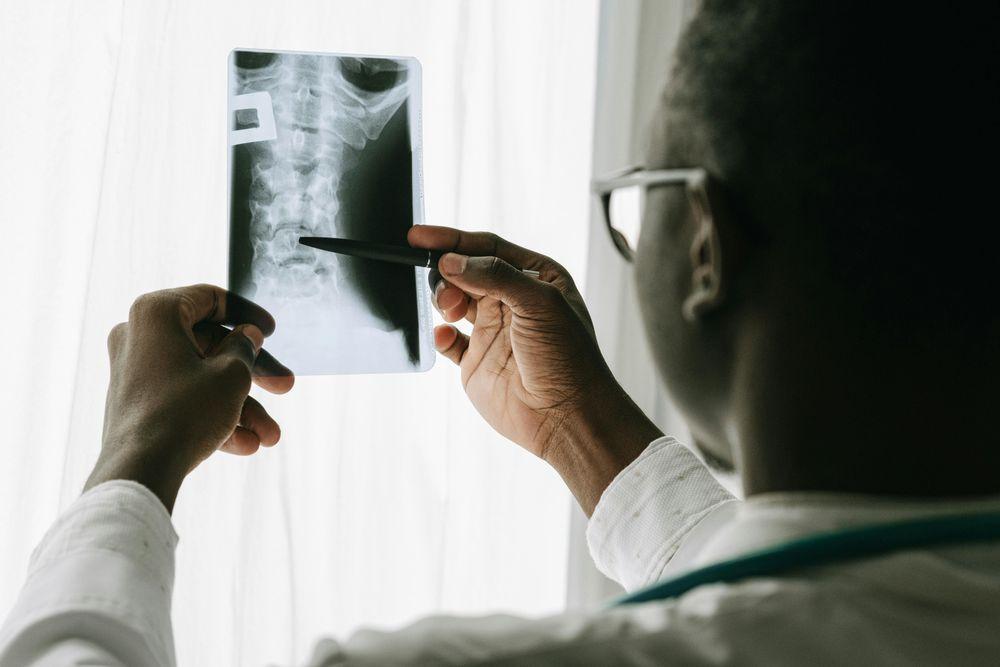


If a spine surgeon has told you that you might need a lumbar fusion, you're probably not asking "what is surgery?" You're asking something harder: Is this actually the right call for me? Who should do it? And what does my life look like for the next year? This guide is written for that conversation, not around it.
At a Glance
| Topic | Key Facts |
|---|---|
| Procedure type | Lumbar spinal fusion via minimally invasive approach |
| Incision size | Approximately 1 inch (vs. 5 to 6 inches in open surgery) |
| Hospital stay | Often same-day or 1 to 3 nights |
| Bone fusion timeline | 6 to 12 months |
| Common approaches | MIS-TLIF, XLIF/LLIF, ALIF, MIS-PLIF |
| Key technology | Robotic navigation, intraoperative CT, ERAS protocols |
| First ambulation (MIS) | Typically within 1 to 2 days post-op |
| Long-term satisfaction | 85 to 90% at one year (multicenter outcome data) |
What Exactly Is Minimally Invasive Spine Surgery?
Minimally invasive spine surgery (MIS) uses small incisions and specialized instruments to reach the spine without widely cutting or detaching the muscles that run alongside it. The goal of the surgery, fusing two adjacent vertebrae together to stop painful movement at a diseased segment, is identical to traditional open surgery. What changes is the pathway to get there.
In a conventional open procedure, a surgeon makes a single long incision and physically retracts the paraspinal muscles away from the spine so the entire operative field is visible with the naked eye. That retraction works, but it causes significant muscle trauma, increases blood loss, and extends recovery. According to Cleveland Clinic, the minimally invasive approach involves one or more small incisions through which a tube or endoscope is passed, allowing the surgeon to operate through a much smaller field with far less damage to surrounding soft tissue.
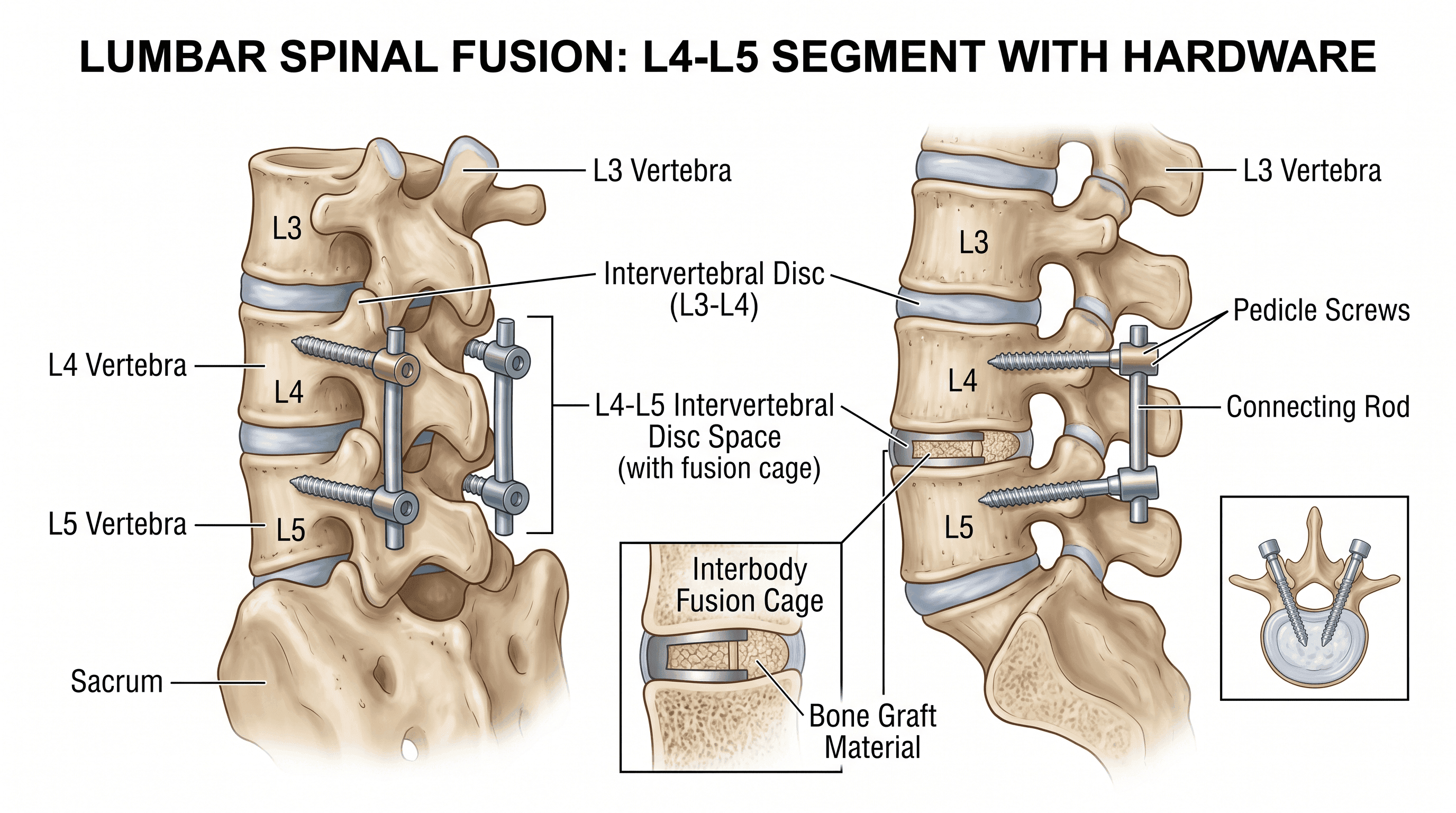
Lumbar fusion specifically joins one or more vertebrae in the lower back using a bone graft, pedicle screws, and connecting rods. Over the following months, the graft material stimulates the two vertebrae to grow into a single, stable unit. Once that union forms, the segment no longer moves, which eliminates the pain generated by instability or nerve compression at that level.
How Does It Differ from Traditional Open Back Surgery?
The mechanical difference is straightforward: open surgery requires a 5 to 6 inch incision and deliberate muscle stripping to expose the spine, while MIS fusion typically uses an incision closer to 1 inch and preserves the muscle architecture around it. But the downstream effects of that difference are significant.
| Variable | Open Fusion | MIS Fusion |
|---|---|---|
| Incision length | 5 to 6 inches | ~1 inch |
| Estimated blood loss | Higher (often 500ml+) | Substantially lower |
| Hospital stay | 3 to 5 days typical | Same-day to 2 nights |
| Infection risk | Higher (larger wound) | Lower |
| Acute muscle pain | More severe | Reduced |
| Radiation exposure (patient) | Lower | Higher (fluoroscopy-dependent) |
| Long-term fusion outcomes | Equivalent | Equivalent to slightly better |
A 2022 review published in the Asian Spine Journal (PMC9827213) confirmed that MIS techniques have achieved outcomes equivalent to open procedures for standard one- to two-level lumbar fusion, while demonstrating meaningful reductions in perioperative complications. The trade-off worth knowing: MIS surgery relies more heavily on real-time imaging, which can mean somewhat higher radiation exposure during the procedure itself, though robotic navigation is reducing that gap.
The Tubular Retractor: How the Muscle-Sparing Technique Actually Works
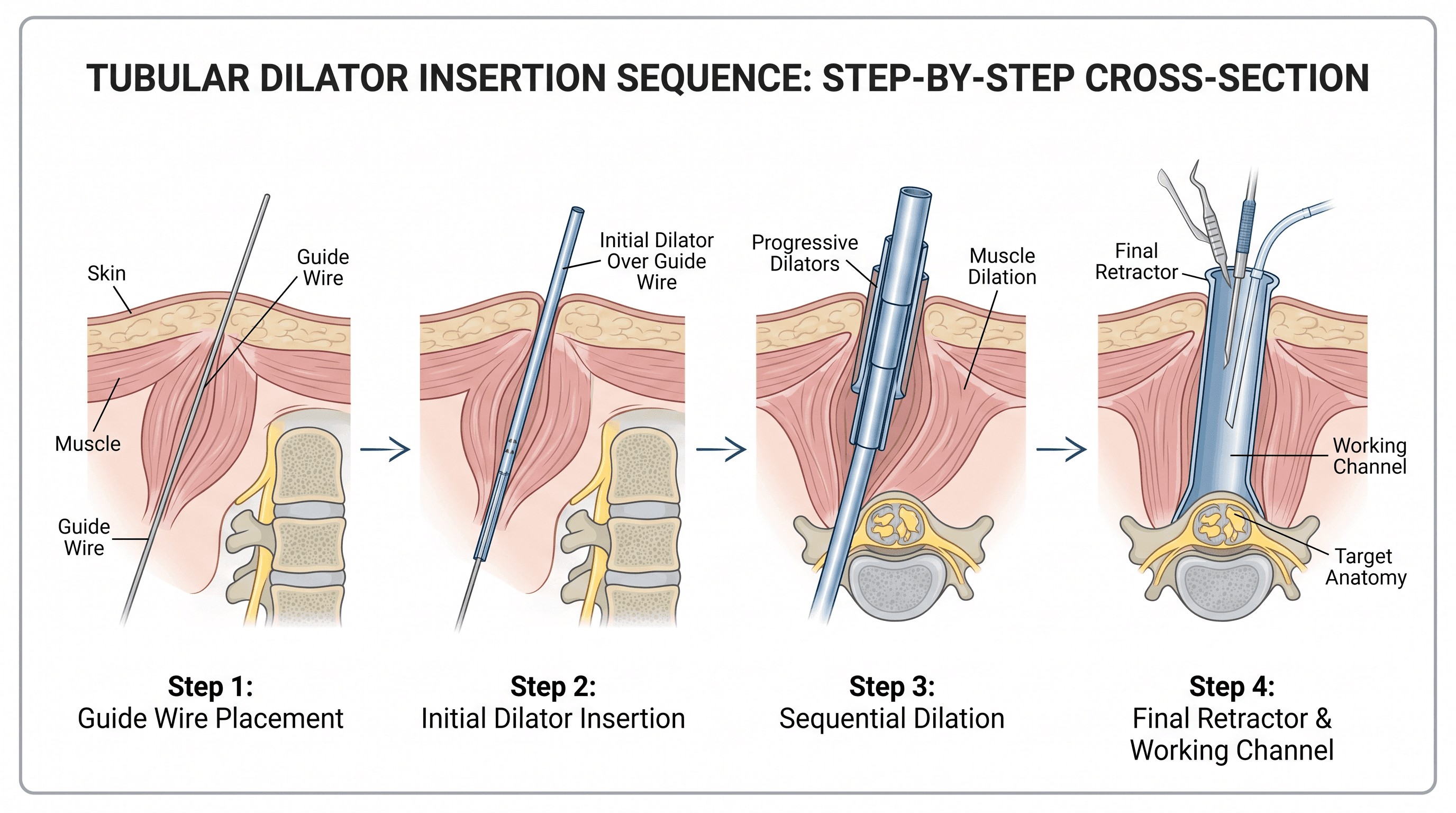
The central tool that makes minimally invasive lumbar fusion possible is the tubular retractor, and understanding how it works makes the rest of the procedure much easier to follow.
Rather than cutting through the paraspinal muscles, the surgeon inserts a thin dilating rod through the small skin incision and advances it down to the spine. Over that initial rod, a series of progressively wider hollow tubes are stacked, each one gently nudging the muscle fibers aside rather than severing them. The outermost tube, the actual retractor, sits snugly against the spine and creates a narrow working channel maybe an inch or so in diameter. All subsequent tools, the drill, the curette, the implant inserter, pass through that channel.
When the surgery ends and the tubes are removed, the muscle fibers spring back toward their original position. They were pushed, not cut. That distinction is what drives the reduced post-operative pain scores and faster early mobilization that patients in MIS fusion series consistently report compared to open cohorts. According to Cleveland Clinic, once the retractors and devices are removed, the muscles and tissue return to their original position and the incision is closed.
Open vs. Minimally Invasive: What the Real Difference Looks Like for Patients
For most patients considering lumbar fusion, the question is not academic. It is personal: will the smaller incision actually matter to my recovery? The answer, for appropriately selected patients, is yes in the short term and equivalent in the long term.
The immediate advantages of MIS fusion are most pronounced in the first six to eight weeks. Blood loss is substantially lower, which matters because higher intraoperative blood loss is associated with longer hospitalization and transfusion need. Surgical site infection rates are lower with MIS approaches because the exposed wound surface is smaller. Muscle pain in the early post-operative period is typically less severe because the muscle itself sustained less physical trauma during the procedure.
What does not change is the underlying bone biology. A fusion is a fusion. Whether the surgeon approached through a 1-inch tube or a 6-inch incision, the bone graft still requires the same 6 to 12 months to consolidate. Patients sometimes assume that a smaller scar means a faster overall recovery, and while the early weeks are genuinely different, the long-term behavioral restrictions around bending, lifting, and twisting (commonly called the "No BLT" rules) remain fully in force until the fusion is confirmed by imaging. More on that in the recovery section below.
The Technology: How Surgeons Operate Through a Keyhole
Working through a 1-inch tube in a deep anatomical corridor requires a fundamentally different visual toolkit than open surgery. Three technologies carry most of that burden.
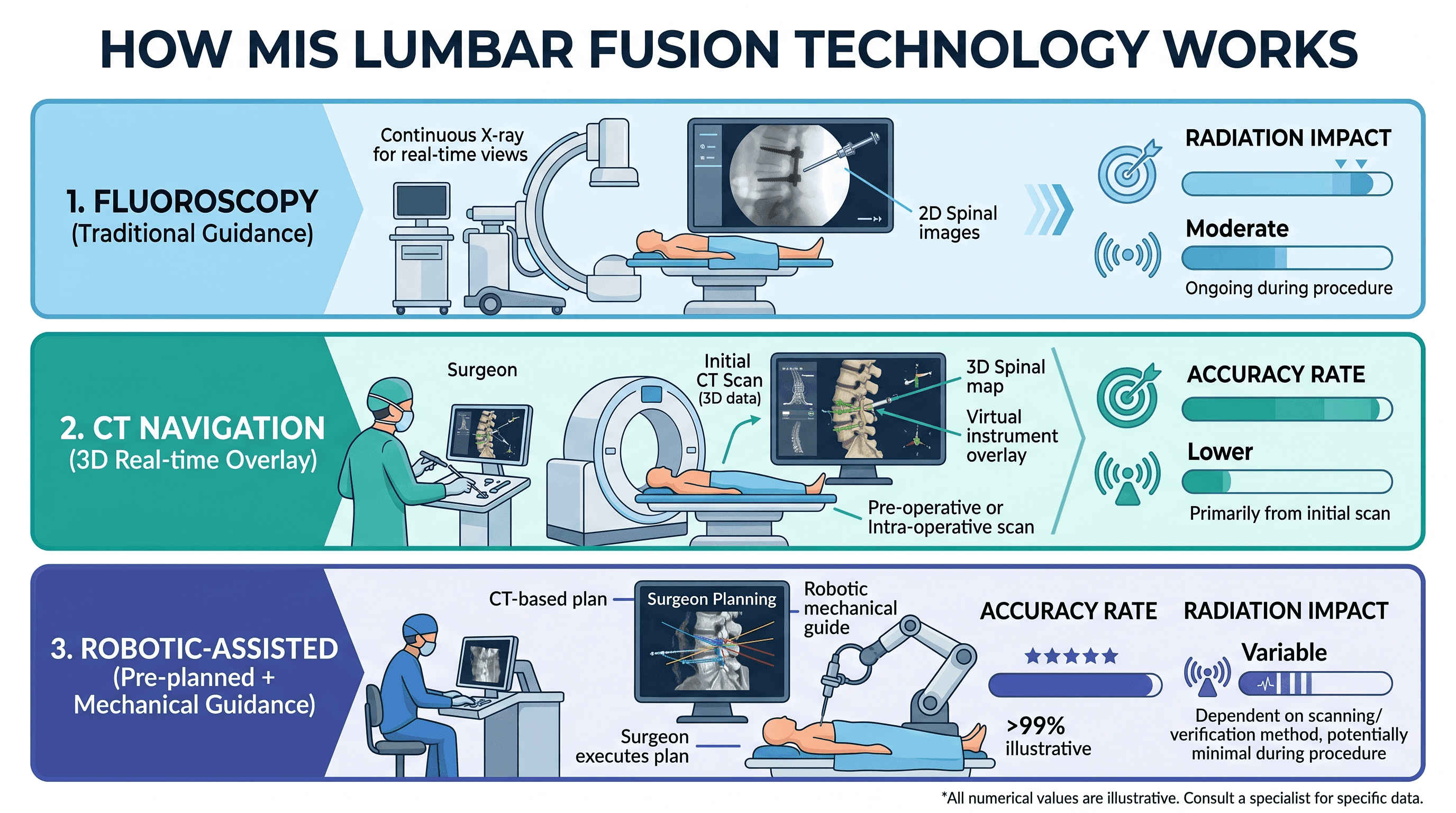
Fluoroscopy is real-time X-ray imaging. The surgeon uses it throughout the procedure to confirm instrument and implant positions relative to the bony anatomy. It is reliable, widely available, and forms the baseline for MIS work. The limitation is that it delivers continuous low-level radiation to the patient and surgical team.
Intraoperative CT with navigation (the "O-arm" system is one common platform) takes a three-dimensional scan of the spine with the patient already on the table, then overlays that image data onto the surgical instruments in real time. The surgeon sees a digital representation of where each tool is positioned relative to the patient's actual anatomy. According to research published in PMC9827213, navigation-assisted pedicle screw placement has been shown to achieve accuracy rates around 96% compared to roughly 92% with fluoroscopy guidance alone, and it significantly reduces radiation exposure to the OR team.
Robotic-assisted surgery (platforms include Mazor X and ROSA Spine) adds a layer of pre-operative planning and mechanical guidance on top of navigation. The surgeon maps the intended screw trajectories before the procedure begins, and the robotic arm holds instruments along those pre-planned paths during execution. The result is highly reproducible screw placement and reduced reliance on real-time fluoroscopy.
ERAS protocols (Enhanced Recovery After Surgery) are not a technology per se, but a structured set of pre- and post-operative care standards designed to reduce surgical stress, shorten hospital stays, and accelerate return to function. ERAS for spine surgery includes pre-operative optimization, multimodal pain management (reducing opioid dependence), early mobilization on the day of or day after surgery, and structured discharge criteria. Centers that have adopted ERAS for lumbar fusion are reporting increasing rates of outpatient or same-day discharge for appropriately selected single-level MIS cases.
Common MIS Approaches: TLIF, XLIF, ALIF, and When Each Is Used
Minimally invasive lumbar fusion is not one single operation. It is a family of procedures that approach the spine from different directions, and the choice of approach depends on the anatomy of the problem being treated, the number of levels requiring fusion, and patient-specific factors.
MIS-TLIF (Transforaminal Lumbar Interbody Fusion) is the most frequently performed MIS lumbar fusion technique. The surgeon accesses the disc space from a posterior or posterolateral angle, removes the damaged disc, inserts an interbody cage packed with bone graft, and places pedicle screws and rods to stabilize the segment. MIS-TLIF works well for one- or two-level fusion in patients with spondylolisthesis, degenerative disc disease, or recurrent disc herniation with instability.
XLIF/LLIF (Extreme or Lateral Lumbar Interbody Fusion) approaches the spine from the side of the body, threading between the abdominal organs and the spinal muscles to reach the disc from a lateral position. Because this approach avoids the posterior muscles entirely, it is particularly useful for multilevel fusions or cases involving deformity correction. It does not work for the L5-S1 level due to the position of the iliac crest.
ALIF (Anterior Lumbar Interbody Fusion) approaches the disc from the front of the body through a small abdominal incision. This approach allows placement of the largest possible interbody cage, which achieves excellent disc height restoration and fusion rates. It requires collaboration with a vascular surgeon to safely move abdominal vessels out of the way, which adds complexity but makes ALIF particularly valuable at the L5-S1 level.
MIS-PLIF (Posterior Lumbar Interbody Fusion) provides bilateral access to the disc through a posterior approach. It is less commonly chosen for MIS cases compared to TLIF because it requires more retraction on both sides, but it remains appropriate in select anatomical situations.
A spine surgeon with MIS fellowship training evaluates which approach gives the best access to the problem while minimizing tissue disruption and risk to adjacent structures. Patients should feel comfortable asking their surgeon directly which approach is planned and why.
Are You a Good Candidate for MIS Fusion? The Candidacy Checklist
Not everyone who has back pain is a candidate for spinal fusion, and not everyone who needs fusion is a candidate for the minimally invasive version. Here is a clear framework of the criteria surgeons use.
Criteria that generally support candidacy:
Symptoms have persisted for at least 3 to 6 months despite structured conservative treatment, including physical therapy, anti-inflammatory medications, activity modification, and/or injections. Imaging confirms structural instability or neural compression at a specific one- or two-level segment. The underlying diagnosis is one for which fusion is an established, evidence-supported treatment: spondylolisthesis, severe degenerative disc disease at a single level, lumbar spinal stenosis with instability, recurrent disc herniation with confirmed instability, or a pars defect causing spondylolysis. Overall health status allows tolerating general anesthesia. BMI is within a range that permits safe access through the tubular system, though thresholds vary by surgeon and center.
Criteria that may limit candidacy for MIS specifically (open surgery may be more appropriate):
Severe multilevel scoliosis or complex spinal deformity requiring extensive correction. Three or more levels requiring fusion with significant deformity. Prior surgery at the same level that has created dense scar tissue around the intended approach corridor. Active spinal infection. Severe osteoporosis (low bone density reduces implant purchase and fusion reliability).
According to Cleveland Clinic, MIS candidacy depends critically on whether the surgeon can pinpoint the exact source of symptoms and access it through a small corridor. Diffuse or multilevel disease often requires a more open approach.
What to Expect During Your Surgical Consultation
A pre-operative evaluation for MIS lumbar fusion typically includes MRI to characterize the disc pathology, nerve compression, and any instability; CT imaging to assess bone quality, anatomy, and screw trajectory planning; DEXA bone density scan if osteoporosis is a concern; and medical clearance from a primary care physician or cardiologist if cardiac or pulmonary conditions are present. The surgeon will review these studies alongside the clinical examination to confirm that the anatomical problem matches the reported symptoms. When the two align clearly, surgical intervention tends to produce better outcomes.
To find a qualified spine specialist for an evaluation, search for a board-certified spine surgeon near you.
What Happens During the Surgery: A Step-by-Step Walkthrough
Understanding the actual sequence of events on the day of surgery can reduce pre-operative anxiety considerably.
On arrival, an anesthesiologist reviews your history and medications. For most lumbar fusion procedures, general anesthesia is used so patients are fully asleep and unaware throughout. Once anesthesia takes effect, the patient is positioned face-down (prone) on a radiolucent operating table that allows X-ray imaging in any direction. The surgical site is sterilized and draped.
The surgeon confirms vertebral levels using fluoroscopy before making any incision. The 1-inch skin incision is placed precisely over the target level. The sequential tubular dilators are passed down to the spine and the retractor is locked into position. If robotic navigation is in use, the pre-planned screw trajectories are activated at this point.
The surgeon then removes a portion of the bony arch (partial laminectomy) and a portion of the joint (partial facetectomy) to access the disc and decompress the nerve. The damaged disc material is removed from the disc space. A cage, typically made of PEEK polymer or titanium, filled with bone graft material (the patient's own local bone chips, allograft, or a combination), is inserted into the empty disc space to restore height and stimulate fusion. Pedicle screws are placed into the vertebral bodies above and below, and a connecting rod links them together, providing rigid fixation while the bone heals.
The retractor is removed, the muscle returns to position, and the incision is closed. For a single-level MIS-TLIF, surgery typically takes 2 to 3 hours from incision to closure.
Many MIS fusion patients at high-volume centers are now going home the same day or after a single overnight stay. The outpatient trend has been supported by ERAS protocols that prioritize same-day ambulation and multimodal pain control.
Risks and Complications: What the Evidence Actually Shows
Every surgery carries risk, and a clear-eyed understanding of the specific rates helps patients make informed decisions without either catastrophizing or minimizing.
Surgical site infection occurs in approximately 2 to 5% of spinal fusion cases. The MIS approach reduces this risk compared to open surgery by limiting wound exposure, but it does not eliminate it. Patients with diabetes face infection rates approximately six times higher than those without the condition, making pre-operative glucose optimization a medically important preparation step.
Pseudarthrosis (non-union of the fusion) occurs when the bone graft fails to consolidate into a solid fusion. Reported rates range from approximately 5 to 10% depending on patient factors, number of levels fused, and smoking status. Smoking is the most modifiable risk factor: nicotine directly impairs bone healing by reducing osteoblast activity and impairing bone graft vascularization, approximately doubling pseudarthrosis risk compared to non-smokers.
Nerve injury is uncommon at less than 1% in experienced hands, but the risk increases with complex anatomy, revision surgery, or extensive decompression.
Adjacent segment disease is a distinct long-term risk that deserves more attention than it typically receives. When one spinal segment is fused and no longer moves, the levels immediately above and below must compensate by absorbing more motion and mechanical load. Over years, this accelerated stress can cause degeneration at those adjacent levels, sometimes requiring further treatment. Published estimates suggest adjacent segment disease develops at a rate of approximately 2 to 3% per year in adjacent levels following fusion.
Obesity, multi-level fusion, and prior spine surgery all independently increase complication risk. A thorough pre-operative conversation about individual risk should be part of every consultation.
Preparing for Surgery: The 4 to 8 Weeks Before Your Procedure
Pre-operative preparation genuinely changes surgical and recovery outcomes, and most patients are not given nearly enough guidance on this front.
Prehabilitation physical therapy strengthens the core and gluteal muscles that support the lumbar spine before surgery disrupts normal movement patterns. Patients who enter surgery with better baseline muscle conditioning typically achieve earlier ambulation and require shorter inpatient stays.
Nutrition optimization supports bone healing. Target protein intake of 1.2 to 1.6 grams per kilogram of body weight daily in the weeks before and after surgery. Calcium intake of at least 1,200 mg per day and vitamin D supplementation around 2,000 IU daily support the bone graft consolidation process. NIH guidelines on bone health are a reliable reference for pre-operative patients.
Smoking cessation is non-negotiable for patients who smoke. Nicotine impairs the bone healing required for fusion and approximately doubles the rate of non-union. Most spine surgeons require confirmed cessation for at least 4 to 6 weeks before elective fusion and throughout the post-operative fusion period.
Medication management requires a careful review with your surgeon and prescribing physicians. NSAIDs (ibuprofen, naproxen, aspirin in anti-inflammatory doses) should be stopped at least 7 to 10 days before surgery due to bleeding risk and, importantly, must also be avoided for 3 to 6 months after surgery because they impair bone healing. Blood thinners need a documented stop-and-restart protocol. Certain supplements including fish oil, vitamin E, and garlic can increase bleeding and should be discussed with the surgical team.
Home logistics are worth addressing before, not after, surgery. Set up a sleeping area that allows getting in and out of bed without bending at the waist. Install grab bars in the bathroom. Prepare meals in advance or arrange help for the first two weeks. Plan for no driving for 2 to 4 weeks minimum.
10 Questions to Ask Your Spine Surgeon Before Agreeing to Surgery
These are the questions patients often wish they had asked earlier.
- How many MIS lumbar fusions do you personally perform each year?
- Will you use robotic navigation or intraoperative CT guidance for this procedure?
- What is your personal pseudarthrosis (non-union) rate for this type of fusion?
- Is this planned as an inpatient or outpatient procedure, and what determines that?
- What specific approach will you use (TLIF, ALIF, XLIF) and why is that the right choice for my anatomy?
- What are the realistic chances that surgery does not fully resolve my symptoms?
- What happens if the fusion does not consolidate? What is the next step?
- How long do the No BLT restrictions remain in effect?
- What imaging will confirm the fusion, and when will that happen?
- What does failure look like and what are the options at that point?
A surgeon who is transparent, specific, and willing to discuss non-fusion alternatives is a surgeon worth trusting.
Week-by-Week Recovery Timeline
Recovery from minimally invasive lumbar fusion follows a fairly predictable biological arc, even if the early weeks feel unpredictable from the inside.
Weeks 1 to 2. Most single-level MIS patients are walking within 1 to 2 days of surgery. Discharge from the hospital, whether same-day or after 1 to 3 nights, includes wound care instructions, a short-term prescription for pain medication, and explicit No BLT restrictions (no bending at the waist past 30 degrees, no lifting over 5 to 10 pounds, no twisting of the spine). Wound site monitoring for signs of infection is a priority during this period.
Weeks 3 to 6. Narcotic pain medications are typically tapered and replaced with scheduled acetaminophen and non-opioid adjuncts. Physical therapy begins, initially focused on gentle walking, posture, and breathing mechanics. Driving is generally restricted until the patient can perform an emergency stop without hesitation, usually no sooner than 2 to 4 weeks, and only when not taking any opioid medication. Many desk workers begin remote work by the end of this window.
Months 2 to 3. Walking distance increases progressively. PT milestones include resuming a normal gait pattern, core activation exercises, and light functional tasks. The first post-operative imaging is often ordered in this window to assess early hardware positioning.
Months 3 to 6. Low-impact exercise, walking, stationary cycling, and light swimming are gradually introduced. Fusion is not yet confirmed, so high-impact activities, heavy lifting, and rotational sports remain off-limits.
Months 6 to 12. CT imaging is the gold standard for confirming successful fusion, showing continuous bony bridging across the interbody space. Once fusion is confirmed, activity restrictions are progressively lifted in collaboration with the surgical team and physical therapist.
Optimizing Bone Fusion After Surgery: Nutrition, Activity, and Monitoring
Successful fusion depends on maintaining the nutritional foundation established before surgery. Protein, calcium, and vitamin D targets should continue throughout the fusion period. NSAIDs must be avoided for at least 3 to 6 months post-operatively regardless of their effect on pain, as they interfere with the prostaglandin pathways that drive bone remodeling and graft incorporation.
Walking is the most universally recommended post-operative activity. Light, controlled ambulation promotes circulation, reduces the risk of deep vein thrombosis, and delivers mechanical loading to the spine that stimulates bone formation. Prolonged bed rest does the opposite.
On follow-up imaging, a "successful fusion" on CT shows solid bony continuity bridging the vertebrae at the treated level with no visible gap or lucency around the hardware. Until that image is confirmed, the fusion timeline should be treated as active and the restrictions honored.
Long-Term Outcomes and Honest Expectations
The data on MIS lumbar fusion outcomes is genuinely encouraging, but the most helpful framing accounts for what surgery actually fixes and what it does not.
Multicenter outcome studies report patient satisfaction rates of 85 to 90% at one year following MIS lumbar fusion. Pain scores in these cohorts show substantial reductions from pre-operative levels, with over 70% of patients returning to work within one year. First ambulation in MIS series occurs at an average of 1 to 2 days post-operatively.
What surgery reliably achieves: stabilization of an unstable or degenerating segment, decompression of compressed neural structures, and resolution of the specific pain generated by that segment's pathology.
What surgery does not achieve: reversal of degenerative changes throughout the rest of the spine. A fused segment stays fused and stable. But the spine above and below that segment continues to age, and adjacent segment disease remains a meaningful long-term consideration. Surgery stabilizes one segment; it does not stop the underlying degenerative process.
Patients with realistic expectations, who understand the bone fusion timeline, the behavioral restrictions, and the distinction between acute instability pain (which fusion addresses well) and chronic, diffuse back pain (which it addresses less reliably), consistently report better outcomes and higher satisfaction than those whose expectations were not well calibrated before surgery.
How to Choose the Right Spine Surgeon and Hospital
This is where most patient guides stop short, and it is one of the most consequential decisions in the entire process.
Surgical volume matters. Spine surgeons who perform 30 or more MIS lumbar fusions per year consistently demonstrate better outcomes than lower-volume providers. This threshold is not arbitrary. The technical demands of operating through a narrow tubular retractor require repetition to master, and the ability to adapt when anatomy is unexpected comes from experience. When evaluating a surgeon, it is entirely appropriate to ask directly how many of these procedures they perform annually.
Fellowship training in MIS spine surgery is a meaningful credential. Orthopedic and neurosurgical residencies provide broad spine training, but the subspecialty techniques of MIS fusion are increasingly concentrated in dedicated fellowship programs. A surgeon who completed fellowship training specifically in minimally invasive spine surgery has had supervised immersion in these techniques beyond residency.
Hospital spine program infrastructure affects outcomes independently of individual surgeon skill. Centers with dedicated spine service lines, structured ERAS protocols, and experienced nursing staff familiar with post-operative spine patients provide a consistently higher level of care.
Red flags to take seriously. A surgeon who recommends proceeding to fusion without a documented trial of conservative care (absent an emergency like cauda equina syndrome) is a meaningful warning sign. Reluctance to discuss non-surgical alternatives, unwillingness to engage transparently with the 10 questions above, inability to share personal outcome data, and pressure to decide quickly all merit a second opinion.
A second opinion before a spinal fusion is not a sign of distrust. It is standard practice among well-informed patients and well-regarded surgeons will encourage it.
Use Momentary Lab's AI Healthcare Navigator to explore your care options, understand your diagnosis, and prepare for specialist conversations with better questions.
FAQ
What is the recovery time for L4-L5 fusion surgery?
Most patients undergoing single-level MIS fusion at L4-L5 can expect to be walking within 1 to 2 days of surgery and returning to light desk work within 3 to 6 weeks. Full unrestricted activity typically requires 6 to 12 months, as this timeline is set by bone biology, specifically by how long it takes the graft to consolidate into a confirmed fusion, not by how quickly the incision heals.
How risky is spinal fusion surgery?
Serious complications from minimally invasive lumbar fusion are uncommon at high-volume centers. Surgical site infection occurs in roughly 2 to 5% of cases, pseudarthrosis (non-union) in 5 to 10%, and nerve injury in under 1% in experienced hands. Patient-specific factors including smoking, diabetes, obesity, and multi-level fusion increase individual risk. A thorough pre-operative discussion with your surgeon about your personal risk profile is the most accurate source of this information for your specific case.
How soon can you walk after spinal fusion surgery?
Most MIS lumbar fusion patients are assisted to stand and take initial steps within 24 hours of surgery, sometimes on the day of the procedure itself. Early ambulation is both safe and encouraged as part of ERAS recovery protocols. Unsupported walking with gradual distance increases is typically a goal by the end of the first post-operative week.
What can I expect 6 months after spinal fusion?
At 6 months, many patients are beginning to return to low-impact exercise including walking, cycling, and swimming. CT imaging is often ordered around this time to assess fusion status. If the bone graft is consolidating well, activity restrictions begin to lift in a structured, therapist-guided progression. Full fusion and full unrestricted activity may require the complete 12-month window.
What conditions are treated with minimally invasive lumbar fusion?
The five most common diagnoses are spondylolisthesis (a vertebra slipping forward on the one below it), severe degenerative disc disease at a specific level, lumbar spinal stenosis with associated instability, recurrent disc herniation with confirmed instability, and spondylolysis from a pars defect. Fusion is generally a second-line intervention, recommended after conservative care has not provided adequate relief.
Is robotic-assisted spine fusion better than standard MIS surgery?
Robotic navigation improves pedicle screw placement accuracy and reduces reliance on continuous fluoroscopy. Published data suggests accuracy rates with robotic guidance approach 96% compared to approximately 92% with fluoroscopy alone, which can matter in complex anatomy. However, robotic assistance does not replace surgical judgment and long-term outcome differences between robotic and non-robotic MIS fusion remain an active area of study.
References
- Cleveland Clinic — Overview of minimally invasive spine surgery, candidate criteria, procedure steps, and recovery expectations.
- Choi JY, Park SM, Kim HJ, Yeom JS. Recent Updates on Minimally Invasive Spine Surgery: Techniques, Technologies, and Indications. Asian Spine Journal. 2022. PMC9827213 — Review of MIS techniques, navigation accuracy, robotic-assisted surgery, and ERAS protocols.
- NIH National Institutes of Health — Referenced for bone health, calcium, and vitamin D guidelines.
- AAOS OrthoInfo: Minimally Invasive Spine Surgery — American Academy of Orthopaedic Surgeons patient-facing overview of MIS spine procedures.