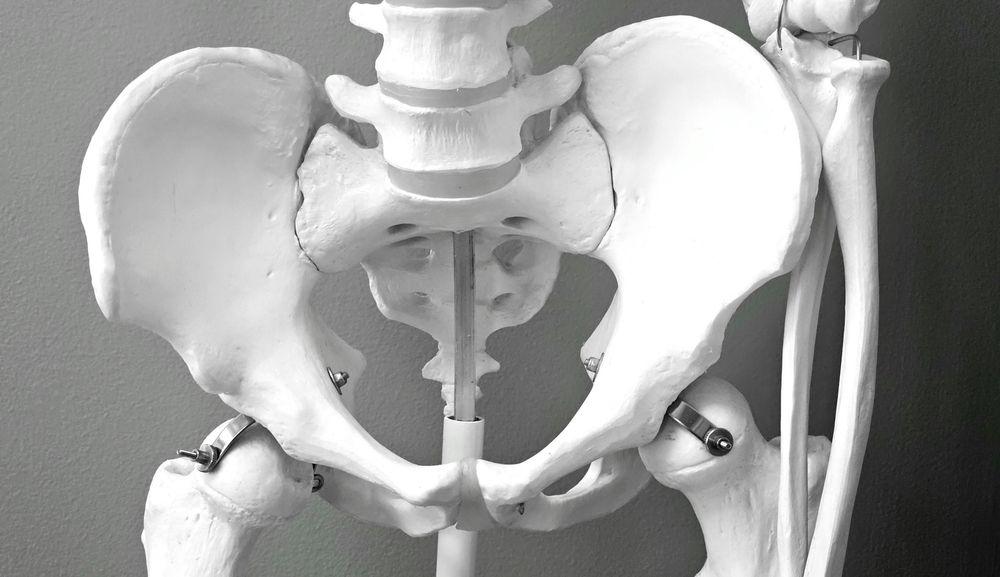


Your surgeon said it went perfectly. The X-rays look great. And yet, here you are, two weeks post-op, wondering why moving from the couch to the kitchen feels like a punishment. That disconnect — between a "successful" surgery and the very real pain you are living in — is one of the most undertreated sources of anxiety in hip replacement recovery. This guide explains what is actually happening inside your body at each stage, where the pain is coming from, and how to know when something genuinely warrants a call to your doctor.
At a Glance
| Topic | Key Facts |
|---|---|
| Peak acute pain | Days 2 to 5 post-op |
| Normal pain duration | Most patients: 3 to 6 months; mild residual up to 12 months |
| Most common pain sites | Groin, anterior thigh, glutes, knee (referred) |
| Multimodal medication approach | NSAIDs + acetaminophen together outperform either alone |
| Red flag threshold | Consistent pain of 6 or higher out of 10 warrants a call to your surgeon |
| Chronic post-surgical pain prevalence | Approximately 14% of patients at 6 to 12 months post-op |
The Honest Truth: Trading Joint Pain for Muscle Pain
The first thing to understand about pain after hip replacement surgery is that you have successfully traded one type of pain for another, and only one of them is permanent.
The bone-on-bone grinding that brought you to the operating table is gone. That deep, relentless arthritic pain is not coming back. What has replaced it, temporarily, is something different: the acute soreness of traumatized muscles, bruised tissue, a surgically remodeled bone socket, and a body that is working overtime to heal. These are two entirely separate pain experiences, and recognizing the difference is the first step toward recovering with realistic expectations.
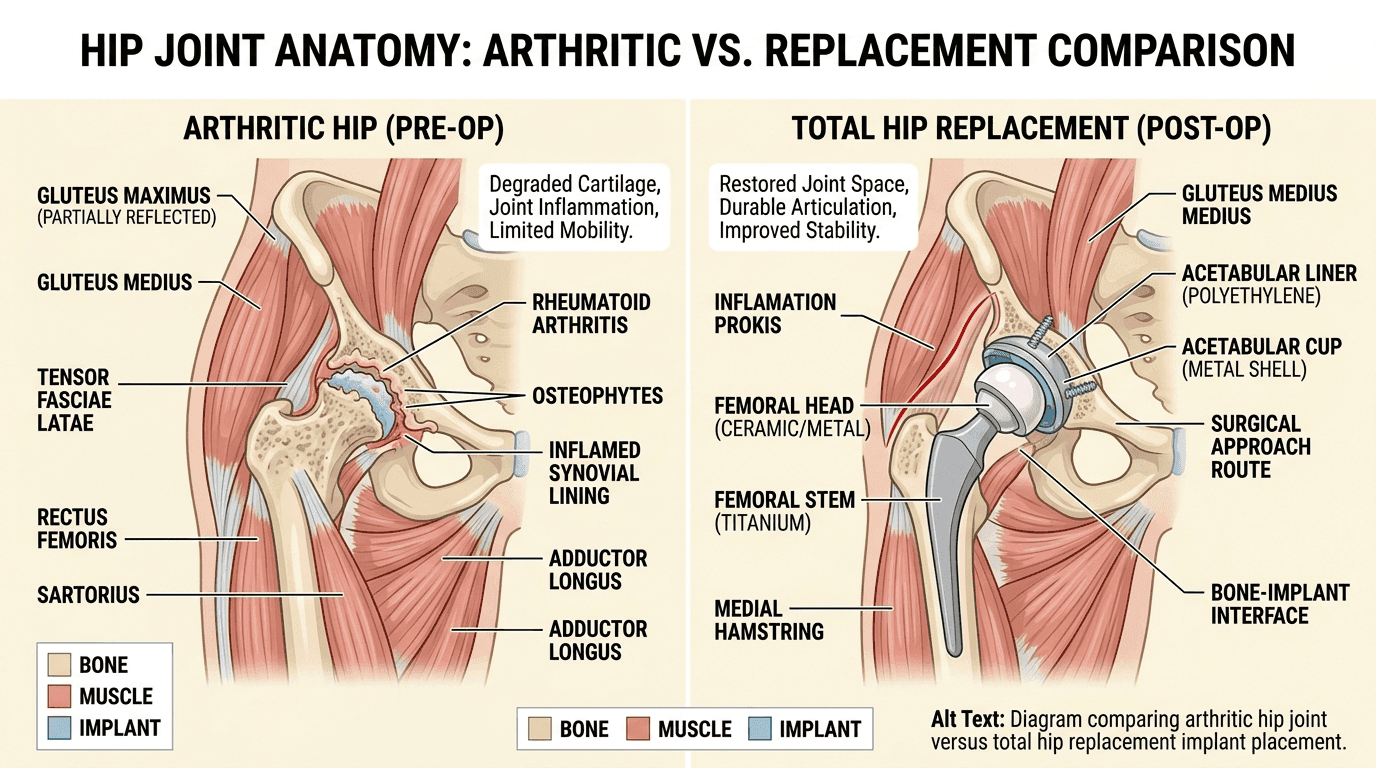
Total hip replacement (THR) involves cutting through layers of muscle and connective tissue, removing the damaged femoral head and acetabular cartilage, and securing metal and ceramic implant components into place. According to the American Academy of Orthopaedic Surgeons, this procedure resurfaces the entire hip joint, which means the surrounding soft tissue needs weeks to months to fully adapt to the new geometry of the implant. The pain you feel in early recovery is that adaptation process in real time.
Anterior vs. Posterior: Why Your Surgical Approach Dictates Your Pain Profile
Not all hip replacement pain looks the same, and one of the biggest reasons is the direction your surgeon approached the joint.
Anterior Approach: The Burning Thigh
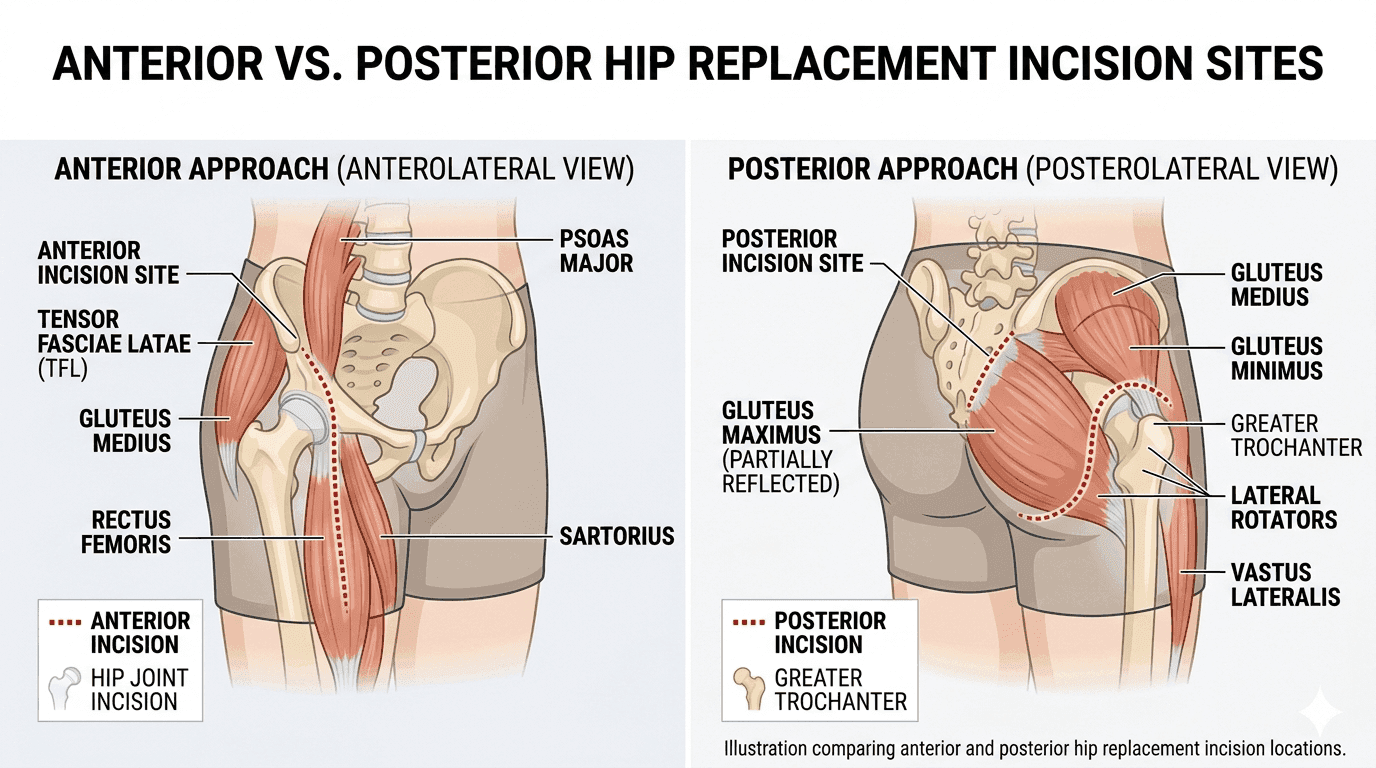
The anterior approach accesses the hip from the front of the body, threading between muscles rather than cutting through them. This tends to mean less blood loss and a faster return to walking for many patients. The trade-off is a higher risk of irritating the lateral femoral cutaneous nerve, a sensory nerve that runs along the outer thigh. When this nerve is stretched or compressed during surgery, patients often experience a burning, tingling, or numb sensation that travels from the upper thigh down toward the knee. This is called meralgia paresthetica, and while it can be startling, it typically resolves on its own within three to six months as the nerve recovers.
Posterior Approach: The Deep Glute Ache
The posterior approach enters from behind, which historically required cutting through part of the gluteal muscle group. Patients who undergo this approach frequently describe a deep, throbbing ache seated in the buttock and outer hip during the first four to six weeks. The glute muscles, having been disrupted, go into a prolonged protective spasm as they heal. This is normal, and by three months post-op, pain outcomes between anterior and posterior approaches largely converge, according to research published in PMC by the National Library of Medicine.
"By three months, functional outcomes between surgical approaches are largely equivalent — the early differences in pain and mobility tend to even out." — PMC / National Library of Medicine
The "Groin Pinch": Iliopsoas Tendinitis After Hip Replacement
One of the most common and alarming post-op pains is a sharp, pinching sensation in the groin, particularly when lifting the operated leg to get into a car, climb stairs, or rise from a low chair.
This is almost always iliopsoas tendinitis, or irritation of the hip flexor tendon (the iliopsoas) as it passes over the front of the new implant. The tendon's path through the hip does not change after surgery, but the new prosthetic cup can create a slightly different contact point. Every time the hip flexes, the tendon rubs across the edge of the implant, producing that sharp groin pinch.
Groin pain after hip replacement is one of the most frequently searched concerns among recovering patients, and for good reason: it mimics the kind of deep pain that might signal something serious. In most cases, it does not. Iliopsoas impingement resolves with physical therapy focused on stretching and strengthening the hip flexor in most patients within three to six months. A small subset requires ultrasound-guided injection or, rarely, a minor revision procedure, which a doctor can advise on based on imaging findings.
"Start-Up" Pain and Muscle Spasms: The First Three Steps Are the Hardest
If the pain is worst in the first few steps after sitting for a while, you are experiencing what physical therapists call start-up pain, and it is one of the most reliably normal features of early hip replacement recovery.
Here is the mechanism. When the body detects a recently traumatized joint, it responds by significantly increasing the activity of the surrounding muscles, which go into a near-constant state of guarded contraction. This protective spasm stabilizes the joint but also makes it stiff. After sitting for 30 to 60 minutes, fluid pools in the joint space, tissues cool slightly, and the muscles tighten further. The first few steps break through all of that, which is why they hurt.
The good news is that start-up pain typically peaks in the first two to three weeks and decreases sharply after that. The bad news is that it can fool patients into avoiding movement, which makes it worse. Gentle, consistent movement (short walks every hour or two rather than long walks twice daily) is the most effective way to reduce it.
Muscle spasms after hip arthroplasty are especially common in the gluteal and quadriceps groups. These spasms can produce sudden, sharp sensations that are genuinely alarming, particularly at night. Unless the spasm is accompanied by visible deformity, inability to bear any weight, or a preceding "pop" sensation, it is part of the normal healing process.
The "Log Leg": Understanding Swelling as a Source of Pain
From the first day post-op onward, gravity works against you in a very specific way.
Surgical trauma triggers an acute inflammatory response, which floods the joint and surrounding tissue with fluid. That fluid, following gravity, travels downward through the leg. This is why patients are often shocked to see swelling not just at the hip but all the way down through the knee and into the calf. The heaviness, pressure, and throbbing that comes with this swelling is real pain, not imagined, and it is one of the most undertreated sources of discomfort in the first four to six weeks.
Managing the "log leg" requires two things used consistently: elevation and ice. Elevating the leg above heart level for 20 to 30 minutes several times daily uses gravity to move fluid back out of the limb. When icing, place the pack over the hip joint and upper thigh for 20 minutes at a time. Do not apply ice directly to the skin, and do not place it behind the knee, where compression of the popliteal vessels carries a small risk of interfering with venous return in an already-vulnerable period.
The Medication Strategy: Staying Ahead of the Ache
Pain management after hip replacement works best when it stays ahead of the pain cycle rather than chasing it after the pain has already peaked.
The Medication Toolkit: What Works Best Together
The current evidence-based standard for hip replacement pain management is a multimodal approach: combining an NSAID (such as ibuprofen or naproxen) with acetaminophen (Tylenol) on a scheduled basis during the acute recovery period. Research consistently shows this combination is more effective than either medication taken alone, because the two drugs act through different biochemical pathways and produce an additive effect without the same risk profile as higher-dose opioids.
Opioids (such as oxycodone or hydrocodone) are typically prescribed for the first one to two weeks only and are intended to bridge the gap between the highest-intensity surgical pain and the point where the multimodal combination becomes sufficient. Transitioning off opioids after hip replacement should be gradual and guided by your prescribing physician. Do not discontinue them abruptly, and do not continue them beyond the prescribed course without a clinical conversation about ongoing necessity.
Important: All medication decisions should be made with the guidance of a prescribing physician. Individual tolerance, kidney function, and existing conditions all affect what is safe and appropriate.
Ice, Heat, and Elevation: Timing Matters
Ice therapy for hip surgery is most effective in the first 48 to 72 hours, when acute inflammatory activity is highest. After the first three days, transitioning to alternating ice and heat can help relax the surrounding muscle spasm. Heat should never be applied to a wound that has not fully closed. The 20-minute protocol (20 minutes on, 20 minutes off) prevents tissue damage from prolonged cold exposure.
Movement as Medicine: Why Staying Active Reduces Pain
Counter-intuitively, one of the most powerful pain-reduction tools after hip replacement is controlled movement. Physical therapy exercises, even when they are uncomfortable, improve circulation to the healing tissue, prevent scar tissue adhesion, and reduce joint stiffness. The evidence base for early mobilization after total hip replacement is strong: patients who begin walking within the first 24 hours post-op consistently report better outcomes at 6 and 12 weeks compared to those who delay. Your physical therapist can advise on the right balance of activity and rest for your specific recovery stage.
Taking pain medication approximately 30 to 45 minutes before a physical therapy session allows it to reach peak effectiveness during the most demanding activity of the day.
Sleep and Night Pain: Positioning Strategies That Help
Night pain after hip replacement is largely a positioning problem combined with the natural dip in anti-inflammatory medication levels during sleep. The safest and most comfortable sleep position in the first six weeks is on the back, with a pillow placed between the knees if needed. Sleeping on the non-operated side with a firm pillow between the legs (keeping the hip from adducting across the midline) is generally acceptable once the surgical team gives the go-ahead, typically around three to four weeks. Avoid sleeping on the operated side until your surgeon explicitly clears it.
The Timeline: When Does the Pain Finally Fade?
One of the most searched questions by recovering patients is simply: how long does pain last after hip replacement surgery? The honest answer is that it varies, but there is a well-documented arc.
The First 72 Hours: What Peak Pain Looks Like
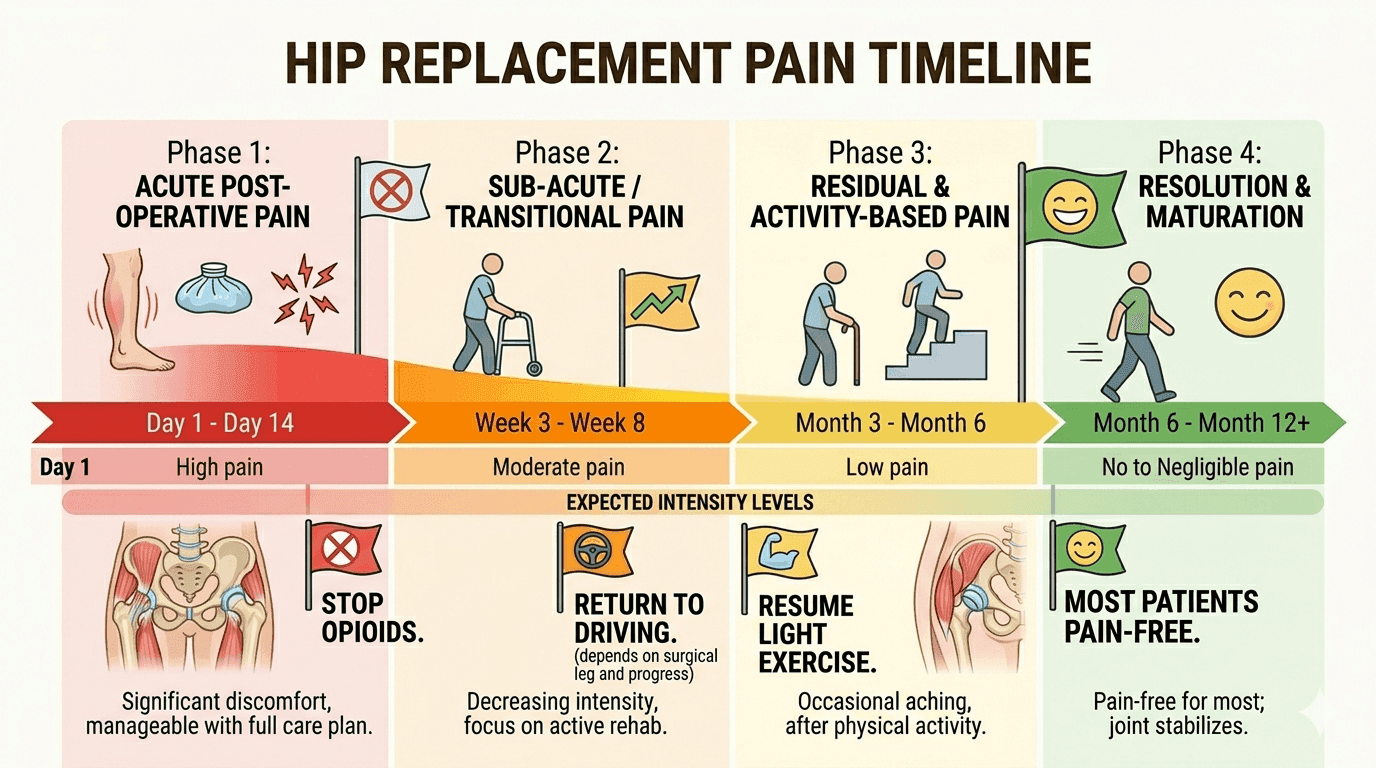
Pain after hip replacement peaks between days two and five post-op, not on day one. On day one, residual anesthesia and intraoperative pain blocks typically dampen the initial experience. As those medications wear off and the inflammatory response builds, pain intensity rises. This is the window when around-the-clock scheduled medication matters most. Physical therapists will still ask you to stand and take a few steps on day one or two, not to be punishing but because early movement genuinely reduces the overall recovery arc.
Weeks One Through Six: The Active Healing Phase
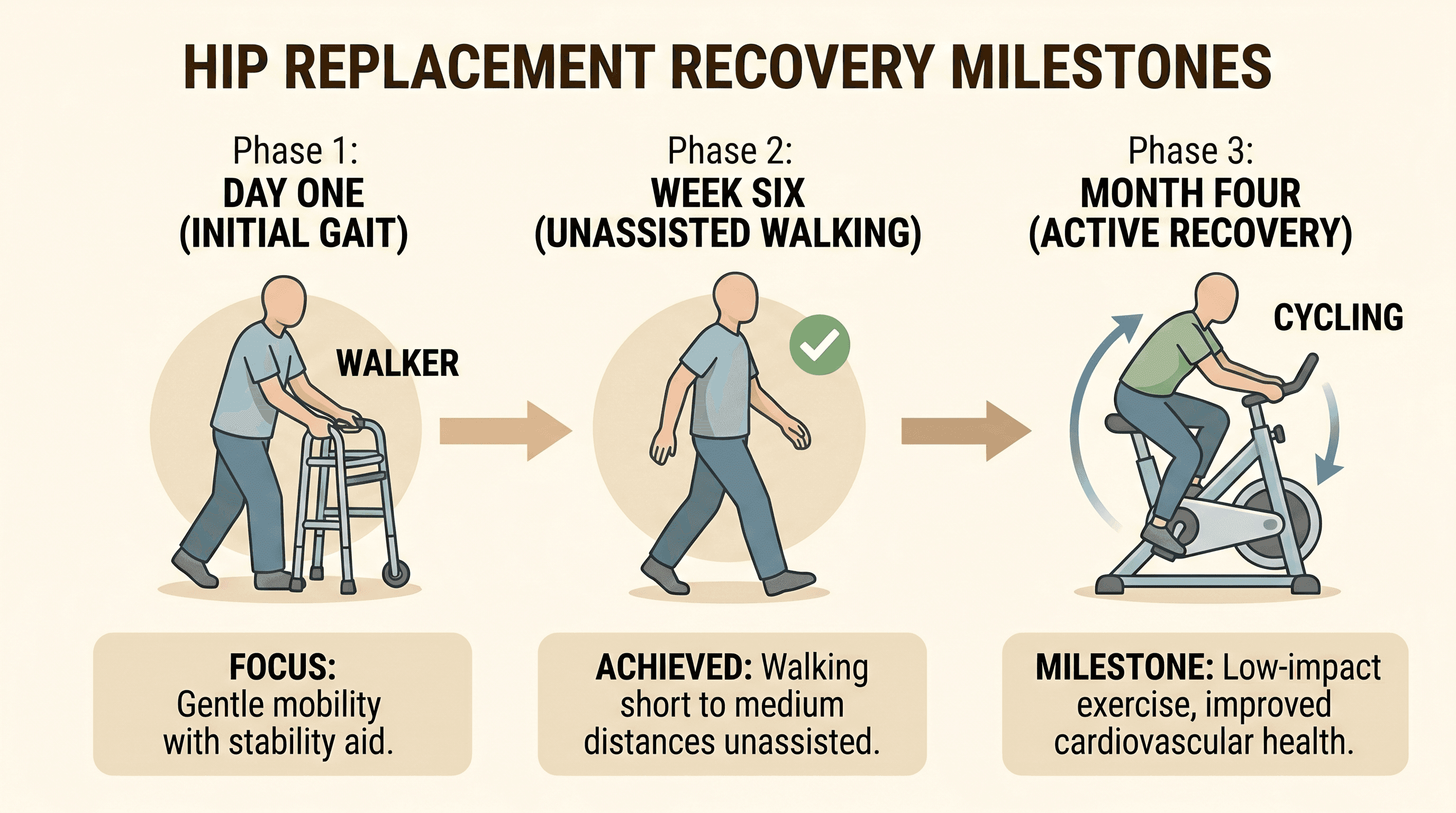
During the first six weeks, you are doing the hardest psychological work of recovery: accepting that discomfort during PT and daily activity is a sign of healing, not harm. Pain during movement is expected and generally not a reason to stop. Pain that persists at rest at 6 or more out of 10 is a reason to call your care team. Most patients find that by weeks three to four, the acute surgical pain has softened into a manageable, dull ache, and the number of daily hours spent in significant discomfort begins to drop.
Months Two Through Six: Progress That Does Not Always Feel Like Progress
This is the phase where many patients become discouraged. They have graduated from the walker, they are walking further, and then a particularly active day sends the hip into a pain flare that feels like regression. It is not regression. The healing tissues in the hip are still remodeling, and exceeding their capacity on any given day triggers a temporary inflammatory response. The solution is not rest, but pacing: maintaining consistent activity levels rather than swinging between overdoing it and recovering on the couch.
Beyond Six Months: When Residual Pain Is Still Normal
Johns Hopkins Medicine notes that pain typically falls to approximately 1 to 2 on a 10-point scale by 12 weeks for most patients. Mild, activity-related discomfort beyond that point, including a dull ache after longer walks or soreness at the end of an active day, can be normal up to 12 months post-op. The window for "normal" closes at around one year. Pain that remains moderate or interferes with daily function beyond 12 months warrants a formal evaluation.
Where Is Your Pain? A Location-by-Location Guide
Pain after hip replacement rarely stays in one place, which is part of what makes it so confusing. Here is what each location usually means.
Groin Pain After Hip Replacement
Groin pain after hip replacement is normal and typically traces to the iliopsoas tendon (as described above) or to the adaptation of the soft tissue anterior capsule around the new implant. It is one of the most common post-op complaints and usually resolves between three and six months with PT. Persistent groin pain beyond six months, especially if accompanied by a clicking or catching sensation, warrants imaging to rule out iliopsoas impingement requiring intervention.
Thigh Pain: One of the Most Common Complaints
Thigh pain after hip replacement, particularly along the outer and front thigh, is extremely common and often has multiple overlapping causes: the lateral femoral cutaneous nerve irritation described above in anterior approaches, stress shielding around the femoral stem (a normal adaptation process where the bone remodels around the implant), and referred discomfort from healing soft tissue. Most thigh pain is self-resolving within three to six months. Burning sensation down the thigh is most characteristic of nerve-related pain and should be mentioned to your surgeon even if it resolves, so it can be documented.
Knee Pain After Hip Replacement
Knee pain after hip replacement is most often caused by leg length discrepancy or gait compensation. After surgery, one leg may be slightly longer or shorter than the other while soft tissue tension equalizes, and the altered walking pattern this produces places new stress on the knee joint. This is usually temporary, resolving within two to four weeks as gait normalizes. Persistent knee pain warrants an evaluation for leg length discrepancy or referred nerve pain from the hip.
Back Pain: The Compensation Nobody Warns You About
Many patients who lived with severe hip arthritis for years developed a compensatory spinal posture to unload the painful hip. After surgery corrects the hip, those deeply ingrained movement patterns do not disappear overnight. The lumbar spine and sacroiliac joint, having adapted to an abnormal load distribution, now face the work of readapting. Back pain after hip replacement is common in the first two to three months and usually improves as gait mechanics normalize with PT. Back pain that predates the surgery or that worsens progressively post-op may need separate evaluation by a spine specialist.
Night Pain: Why You Cannot Sleep Comfortably
Night pain in the first four to six weeks is almost universally caused by a combination of inflammatory activity peaking in the absence of daytime distraction, scar tissue tension pulling at the joint at rest, and positional stress from not yet knowing how to sleep comfortably with the new joint. Beyond six weeks, persistent night pain that is disruptive or getting worse rather than better should be reported to the surgical team.
Red Flags: When Pain Signals a Complication
Most pain in the first weeks after hip replacement is exactly what it sounds like: a body healing from major surgery. But some pain patterns are different. Knowing how to recognize them is one of the most practical things a recovering patient can do.
Signs of Infection You Should Not Ignore
Infection after total hip replacement affects roughly 1% of patients, according to the CDC. The pain signature of infection is distinct from normal healing: it worsens instead of improving, and it is accompanied by at least one of the following: fever above 101 degrees Fahrenheit, increasing redness or warmth spreading from the incision, wound drainage that is cloudy, foul-smelling, or increasing in volume, or swelling that is localized and hot to the touch rather than diffusely distributed. Deep infections (periprosthetic joint infections) may present with subtler systemic symptoms such as fatigue, night sweats, or a persistent low-grade fever. Any combination of worsening pain and these systemic signs is a reason to call your surgeon the same day.
What Hip Dislocation Feels Like
Hip dislocation after replacement, in which the ball of the implant slips out of the socket, is uncommon but constitutes a surgical emergency. The pain is sudden and severe, often preceded by a distinct "pop." The leg may appear visibly shortened or rotated outward (in posterior dislocations) or inward (in anterior dislocations), and weight-bearing is impossible. Dislocation most commonly occurs in the first three months before scar tissue has fully stabilized the implant. If you experience sudden, severe pain with any of these features, go to the emergency department immediately.
Nerve Pain After Hip Replacement: When It Is Not Routine
Some degree of altered sensation around the incision and outer thigh is expected after hip replacement. The sciatic nerve (in posterior approaches) or the lateral femoral cutaneous nerve (in anterior approaches) can be stretched or irritated during surgery, and most patients experience some numbness, tingling, or burning in the first weeks. This is typically self-resolving. Nerve pain that is worsening after three months rather than improving, that is accompanied by weakness or foot drop (difficulty lifting the front of the foot), or that has an electric-shock quality warrants a referral to a neurologist or pain specialist. Nerve healing is measured in months to years rather than weeks, so patience is required, but a trajectory of worsening deserves investigation.
Implant Loosening: A Long-Term Concern
Implant loosening is not a concern in the early post-op period; it is a concern that develops gradually over years. The signature of a loose implant is activity-related pain that increases progressively over time rather than fading. It may be accompanied by a sensation of instability or grinding with weight-bearing. Diagnosis typically involves plain X-ray and sometimes bone scan. This concern is more relevant to patients with older-generation metal-on-metal implants, but any progressive increase in hip pain years after a successful surgery should prompt a clinical evaluation.
Chronic Pain After Hip Replacement: The 14% Nobody Talks About
The majority of hip replacement patients achieve excellent pain relief. But a meaningful minority do not, and the silence around this in most recovery materials does patients a disservice.
Research published in PubMed via the National Library of Medicine indicates that approximately 14% of patients report clinically significant pain at six to twelve months after total hip replacement. This is defined as chronic post-surgical pain (CPSP): persistent pain lasting three or more months after surgery that cannot be explained by the original condition or an acute complication. It is real, it is not imagined, and it has identifiable risk factors.
Risk Factors That Increase the Likelihood of Chronic Pain
The biopsychosocial model of post-surgical pain identifies three overlapping domains of risk. Physical factors include higher pre-operative pain levels, elevated BMI, smoking history, and the presence of comorbidities such as diabetes or inflammatory arthritis. Psychological factors include pre-existing anxiety or depression, pain catastrophizing (a cognitive tendency to interpret pain as worst-case), and poor pre-operative expectations about recovery. Social factors include disrupted sleep, limited support systems during recovery, and return to physically demanding work. None of these factors is a disqualifier for surgery, but patients who recognize themselves in this list may benefit from proactive support, including pre-operative pain psychology consultation, which is increasingly offered at major orthopedic centers.
When Pain Persists: What to Tell Your Doctor
If pain is not tracking in the expected direction by three to four months post-op, the conversation with the surgical team should shift from reassurance to investigation. Useful language for that appointment includes describing the pain's quality (burning, aching, sharp, or electrical), its location, what makes it better or worse, and whether it has a consistent pattern or comes and goes unpredictably. Tests worth asking about include updated plain X-rays, a complete blood count and inflammatory markers (to screen for occult infection), and, if nerve involvement is suspected, nerve conduction studies. Metal ion blood levels (cobalt and chromium) may be relevant for patients with older metal-on-metal implants.
If you are not yet connected with a specialist and want to discuss your symptoms, you can connect with a primary care provider through Momentary's virtual care platform to review your recovery trajectory and get a referral pathway without waiting for an in-person appointment.
Rare but Real: Causes Often Missed
Several causes of persistent post-replacement pain are frequently overlooked in standard follow-up. Spinal stenosis or lumbar disc disease can refer pain into the hip and groin in a pattern that closely mimics hip pathology, and patients who had pre-existing spine issues may find those issues unmasked after the hip is corrected. Scar tissue adhesions around the iliopsoas tendon or joint capsule can produce chronic catching and pain without showing on imaging. And in patients with metal-on-metal implants, elevated cobalt and chromium ion levels from implant wear can cause a local tissue reaction that is distinctly painful and requires specialist management.
Frequently Asked Questions
Is it normal to have pain 3 weeks after hip replacement surgery?
Yes, pain at three weeks post-op is entirely expected for most patients. By this point, the worst of the acute surgical pain has typically passed, but moderate discomfort with movement, physical therapy, and transitions between positions is still the norm. Pain that is improving overall, even if not gone, is generally a good sign. Pain that is worsening at three weeks rather than trending downward warrants a call to the surgical team.
What is the best pain relief for hip replacement?
The most effective approach combines a scheduled NSAID (such as ibuprofen) with acetaminophen taken together on a fixed schedule during the first two to four weeks, rather than waiting until pain peaks to take anything. This multimodal protocol addresses multiple pain pathways simultaneously and consistently outperforms single-drug approaches in the research. Opioids play a short-term bridging role in the first one to two weeks for most patients and should be tapered under physician guidance. Ice therapy, leg elevation, and pre-medicating before PT sessions are practical additions to the medication protocol.
What nerves are damaged in hip replacement?
The lateral femoral cutaneous nerve is the most commonly affected nerve in anterior hip replacement approaches, producing numbness, tingling, or burning along the outer thigh. The sciatic nerve, which passes close to the posterior surgical field, is more commonly at risk in posterior approaches and can produce symptoms ranging from mild thigh numbness to foot drop in rare cases. A study in PMC / National Library of Medicine found that nerve complications after total hip replacement are generally underreported but are most often mild and transient. True nerve damage requiring specialist intervention is uncommon but does occur, and persistent or worsening neurological symptoms should always be evaluated.
What should I be doing 3 weeks after hip replacement?
At three weeks, most patients are walking with a single cane or forearm crutch (or have progressed beyond assistive devices), performing prescribed PT exercises daily, managing stairs with a railing, and handling most basic activities of daily living independently. Driving is typically not yet cleared at this point (usually requires surgeon sign-off between four to six weeks, depending on which hip was operated on and whether it was automatic or manual transmission). Long walks, vigorous activity, and anything that puts the hip in a position that risks dislocation should be avoided until the surgical team gives explicit clearance.
Is groin pain normal after hip replacement?
Yes, groin pain is one of the most common complaints in the first three to six months after hip replacement and is usually caused by iliopsoas tendon irritation over the front of the implant. It typically presents as a sharp pinching sensation when lifting the leg, getting into a car, or climbing stairs. It is not a sign of implant failure. PT-directed hip flexor stretching and strengthening resolves most cases, though it can take several months. Groin pain accompanied by fever, increasing redness, or wound changes is a different matter and warrants immediate attention.
Is it normal to have nerve pain after hip replacement?
Some altered sensation, including numbness and tingling around the outer thigh or incision site, is expected after hip replacement and usually resolves on its own within three to six months. Burning or electrical sensations specifically along the thigh are characteristic of lateral femoral cutaneous nerve irritation in anterior-approach patients and are also typically self-resolving. Nerve pain that worsens beyond three months, involves weakness, or affects the foot should be reported to the surgical team and may warrant referral to a neurologist.
If navigating these symptoms feels overwhelming, use Momentary's AI health navigator to explore what your symptoms might mean and get clear guidance on your next steps before your follow-up appointment.
References
-
American Academy of Orthopaedic Surgeons (AAOS) — OrthoInfo: Total Hip Replacement — Cited for overview of total hip replacement procedure and implant components.
-
PMC / National Library of Medicine: Surgical Approach Comparison in THR — Cited for convergence of pain outcomes between anterior and posterior approaches at three months.
-
Johns Hopkins Medicine: Hip Replacement Recovery — Cited for benchmark pain scale expectations at 12 weeks post-op.
-
PubMed / National Library of Medicine: Chronic Post-Surgical Pain After THR — Cited for 14% chronic post-surgical pain prevalence at 6 to 12 months.
-
PMC / National Library of Medicine: Nerve Complications After Total Hip Replacement — Cited for nerve complication rates and outcomes after THR.
-
CDC: Periprosthetic Joint Infection — Cited for infection rate following total hip replacement.
-
PubMed / National Library of Medicine: Multimodal Pain Management in THR — Cited for evidence supporting combined NSAID and acetaminophen protocols.