


At a Glance
| Topic | Key Facts |
|---|---|
| Immediate post-op pain | Typically masked by nerve block for the first 12 to 24 hours |
| Rebound pain spike | Occurs when the nerve block wears off, usually Day 1 to 2 |
| Worst period | First 72 hours; acute phase generally breaks around Weeks 2 to 3 |
| Night pain | Gravity-driven; managed with recliner or 45-degree wedge for 4 to 6 weeks |
| Long-term outlook | Roughly 95% of patients report significant pain reduction at one year |
| Persistent pain risk | Around 22% of patients report daily pain at 1 to 2 years in registry data |
| Primary non-opioid tools | Scheduled acetaminophen, NSAIDs, nerve block, EXPAREL, cold therapy |
If shoulder replacement pain were easy to explain, your surgeon would have had more than three minutes to do it before your procedure. The honest answer is: the pain is real, it peaks in a predictable window, and for a few days it will probably feel worse than the arthritis you lived with for years. That part is true, and it deserves to be said plainly.
The other honest answer is that the trajectory from here is reliably downward. Studies consistently show that roughly 95% of patients report meaningful pain relief at one year after shoulder arthroplasty. Knowing what is coming, and when it will ease, is the most useful thing anyone can hand a patient before surgery.
The Honest Truth: Trading the Old Pain for a New Pain
The surgical pain you wake up to after shoulder replacement is fundamentally different from the bone-on-bone grinding that sent you to the operating room. Arthritis pain is chronic, degrading, and worsens across months and years with no ceiling. Surgical pain is acute, purposeful, and moves in one direction once the healing begins.
That distinction matters psychologically. What patients often describe in the first 48 to 72 hours is a deep aching soreness layered over the shoulder, neck, and upper arm, sometimes with a raw nerve sensitivity that feels alarming but is a normal part of tissue healing. The joint itself is no longer grinding. What hurts is everything around it: the muscles, tendons, and soft tissue that were moved, retracted, or repaired during the procedure.
According to the Mayo Clinic, shoulder replacement surgery reliably reduces or eliminates the chronic joint pain caused by arthritis, though recovery requires time and active participation in rehabilitation.
Understanding this trade-off before surgery changes how patients interpret their early pain. It is not a sign the surgery failed. It is healing doing its job.
Day 1: The Nerve Block and the Honeymoon Phase
Most patients wake up from shoulder replacement surgery feeling surprisingly comfortable. That is not a coincidence; it is the interscalene nerve block at work.
An interscalene nerve block is a regional anesthesia technique in which a local anesthetic is injected near the brachial plexus nerve bundle in the neck, completely numbing the shoulder, arm, and hand on the surgical side. The American Society of Regional Anesthesia and Pain Medicine recognizes it as a cornerstone of multimodal pain management for shoulder surgery, and for good reason: it provides dense, reliable numbness for 12 to 24 hours post-operatively without the sedation or side effects of opioids.
During this window, patients may feel a heavy, dead-arm sensation. That is expected. The arm may hang limply, feel cold, or appear swollen under the sling. None of this indicates a complication. It simply means the block is doing its job.
The mistake patients make is interpreting this comfort as their baseline recovery experience. It is not. The block will wear off, and when it does, the experience changes significantly.
The Nerve Block Wearing Off: The Rebound Pain Spike
The transition from nerve block to no nerve block does not happen gradually. Most patients describe a 1 to 2 hour window in which the arm and shoulder "wake up" with a sharp intensification of pain that can feel alarming if they were not warned about it.
The clinical recommendation from pain specialists is to begin oral pain medication at the first sign of tingling or warmth returning to the arm, not after the pain has peaked. Waiting until the pain is unbearable means chasing it rather than staying ahead of it, and catching up takes hours. The first tingle is the signal to take the scheduled dose. Patients who follow this guidance consistently report a smoother transition than those who wait.
Talk to the surgical team before the procedure about exactly when to start the oral medication schedule. The answer should come from them, based on which nerve block formulation was used and how long it is expected to last.
Why Night Pain Is Worse (and How to Fix the Sleep Position)
Pain worsens at night after shoulder replacement for a straightforward mechanical reason. When a person lies flat, gravity pulls the weight of the humerus (the upper arm bone) posteriorly, placing traction on the repaired soft tissue and the new implant. That tension translates directly to pain.
The standard recommendation from orthopedic teams is to sleep in a recliner or propped at approximately a 45-degree angle using a wedge pillow for the first four to six weeks. This position keeps the arm slightly forward and supported, reducing the gravitational pull on the repair. Cleveland Clinic notes that many patients find a recliner more comfortable than a bed for the first several weeks of recovery.
Night pain after shoulder replacement typically improves meaningfully by Weeks 3 to 4, as acute inflammation subsides. Patients who struggle most at night are often those who attempt to sleep flat too soon.
Day 2 and Beyond: The Rebound Pain Reality
Day 2 is statistically the hardest day of shoulder replacement recovery for most patients. The nerve block has worn off, the surgical inflammation is peaking, and the oral pain regimen is still being dialed in.
Pain on Day 2 is commonly described as a deep, throbbing ache radiating from the shoulder into the neck, upper arm, and sometimes the chest. Surgical soreness at the incision site adds a sharp surface layer. Movement, even passive repositioning in the sling, amplifies both.
This is the day that most patients believe something has gone wrong. In the vast majority of cases, nothing has. This is the expected peak. Knowing that it will not last longer than a few days is one of the most clinically useful pieces of information a patient can receive.
Research published in PMC found that patients who reported severe acute pain in the first week of shoulder replacement recovery were the single strongest predictor group for persistent long-term pain, which reinforces how important it is to manage this window aggressively with the tools available.
Muscle Spasms and Sling Aches: The Pain Nobody Warns You About
One of the most commonly under-described experiences after shoulder replacement is muscle spasm. The deltoid, biceps, and neck muscles are not accustomed to being immobilized in a sling for weeks at a time, and they respond by cramping, aching, and occasionally spasming involuntarily.
These spasms feel distinct from joint pain. They tend to be sharp, sudden, and brief, occurring in the upper arm, along the collarbone, or up into the neck. They are not dangerous, but they are genuinely uncomfortable and can disrupt sleep.
Several factors drive them. The muscles around the new implant are recalibrating their resting tension as they adjust to the changed joint mechanics. Immobility in the sling reduces blood flow to the surrounding tissues. Postural compensation, typically holding the neck and upper back rigidly to protect the arm, creates its own strain pattern.
Gentle pendulum exercises, when cleared by the surgical team, help reduce spasm frequency by encouraging circulation. Heat applied to the neck and upper trapezius (not the surgical site) can relax the accessory muscles. Cold therapy goes on the shoulder itself.
Week-by-Week Pain Progression: Months 1 Through 6
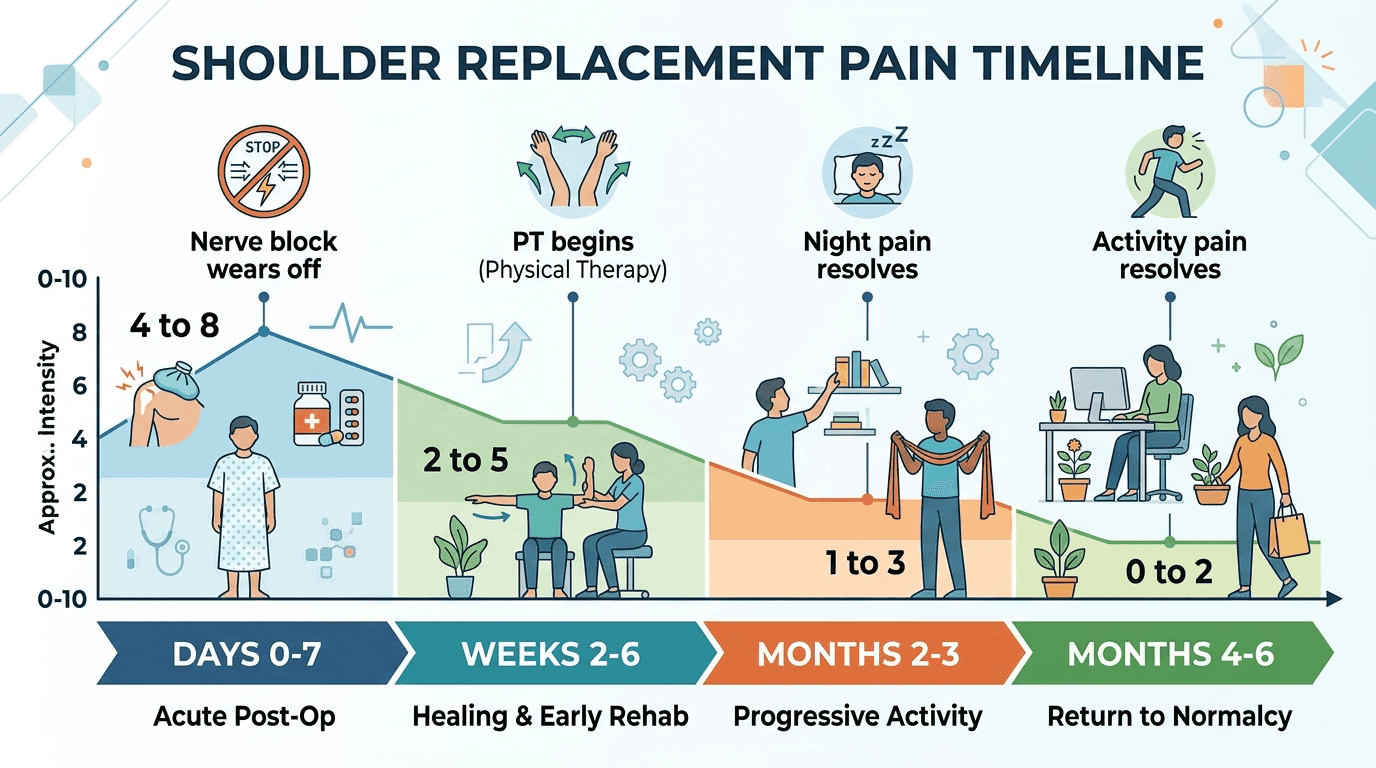
Pain after shoulder replacement follows a pattern that is consistent enough to map, even if individual variation exists. The following timeline reflects the general trajectory described across orthopedic literature and patient-reported outcomes.
Weeks 1 to 2: This is the acute phase. Pain typically runs in the 6 to 8 out of 10 range for most patients during waking hours, with night pain often rating higher. Inflammation is at its peak. Oral medications are doing significant work. Physical therapy has not yet started in most protocols. The sling is worn continuously except during prescribed exercises.
Weeks 3 to 6: The corner turns here for the majority of patients. The acute surgical pain begins to resolve, replaced by a duller, more manageable ache in the 3 to 5 out of 10 range. Physical therapy begins introducing range-of-motion work, which triggers its own soreness. That PT-induced soreness is expected and not a sign of re-injury. Night pain improves significantly during this window as inflammation drops.
Months 2 to 3: Most patients describe their pain as intermittent and activity-dependent by this point, often rating 1 to 3 out of 10 at rest. The shoulder fatigues during therapy sessions, and overexertion produces next-day soreness. Medication use drops significantly. Many patients are sleeping in bed again by Month 2.
Months 4 to 6: Pain for most patients is minimal to none at rest, with occasional soreness after demanding activity. The implant is settling, and the surrounding musculature is strengthening. Patients with uncomplicated recoveries often report feeling better than they have in years by the end of Month 6.
Does It Hurt More With Reverse vs. Total Shoulder Replacement?
This is one of the most searched questions about shoulder arthroplasty recovery, and current online resources largely fail to answer it directly.
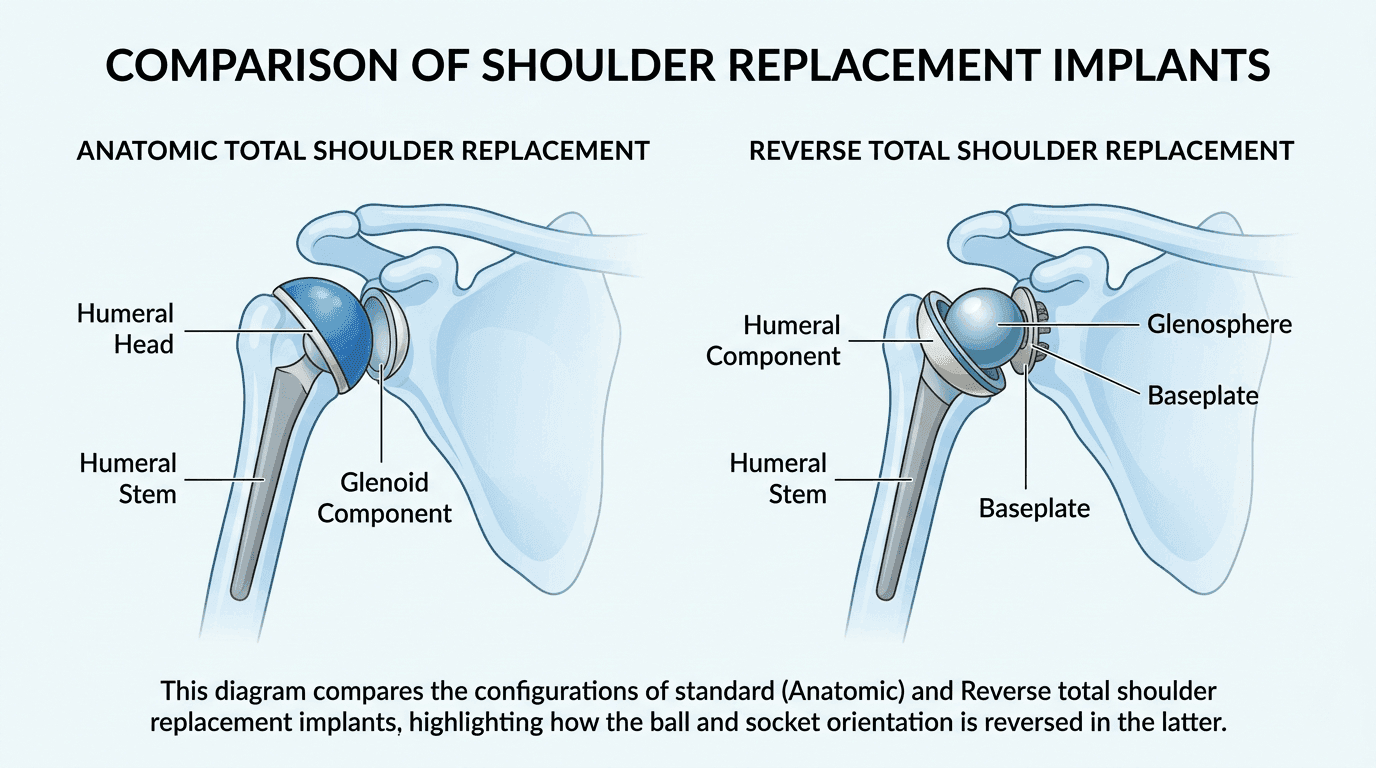
Anatomic total shoulder replacement replicates the natural shoulder joint geometry. It requires repair of the subscapularis tendon, a large muscle at the front of the shoulder, which adds a distinct pain source and enforces a longer and more restrictive sling protocol. The subscapularis repair must be protected for weeks, which limits early mobility and prolongs the period of sling-related muscle aches and spasms.
Reverse total shoulder replacement, in which the ball-and-socket positions are switched, is typically performed when the rotator cuff is severely compromised or irreparable. Because reverse shoulder replacement does not require a rotator cuff repair, it often allows a more aggressive early rehabilitation protocol. Many patients who have had reverse replacement report faster acute pain reduction in the first four weeks despite the surgery being technically more complex.
A 2024 study published in PubMed examining outcomes across shoulder arthroplasty types found that reverse shoulder replacement patients showed comparable or superior pain reduction outcomes relative to anatomic replacement in rotator cuff-deficient populations.
It is worth noting that neither procedure should be conflated with isolated rotator cuff repair, which is a different surgery with a different recovery arc entirely.
The Medication Strategy: Staying Ahead of the Pain
The phrase "staying ahead of the pain" appears in nearly every orthopedic discharge packet, but rarely gets the explanation it deserves. Here is what it actually means.
Pain medication works best when taken on a scheduled basis rather than as-needed. When pain is allowed to build to a 7 or 8 out of 10 before medication is taken, the dose has to work against a fully activated pain signal. When medication is taken on a consistent schedule before the pain climbs, it keeps the signal suppressed, requiring less medication overall and producing steadier comfort.
The modern multimodal pain management approach for shoulder replacement typically includes scheduled acetaminophen as the anchor drug, taken at regular intervals around the clock, paired with a short course of NSAIDs to address inflammation, and opioids reserved for breakthrough pain rather than as the primary tool. Research on multimodal analgesia protocols published in PMC supports this approach as effective in reducing opioid consumption after orthopedic procedures.
Opioids carry real risks, including dependence, constipation, and respiratory side effects, and most current orthopedic protocols are intentionally designed to minimize their role. The goal is to taper off them within the first one to two weeks as the acute phase resolves.
Transitioning off opioids after shoulder surgery should be gradual and guided by the surgical team, not abrupt. Patients who stop too quickly often experience rebound pain and worsened sleep, which can be confused with surgical complications. A structured weaning schedule prevents this.
Patients recovering at home and looking to manage their pain regimen more precisely may benefit from connecting with a provider who can review their medication schedule remotely. Platforms like Momentary allow patients to see a doctor online and get guidance on pain management, medication questions, or signs of concern without leaving the house, which is particularly useful when mobility is limited in the early weeks after surgery.
Non-Opioid Options Worth Asking About
Patients often do not know to ask about extended non-opioid options, so they simply do not receive them. EXPAREL (liposomal bupivacaine) is an injectable local anesthetic that provides pain relief for up to 72 hours and can be applied directly to the surgical site during the procedure. It extends the non-opioid coverage window significantly.
Cryotherapy devices such as the Game Ready or IceMan circulate cold water through a pad that conforms to the shoulder, providing consistent, regulated cold therapy that penetrates deeper than a standard ice pack. Research on cryotherapy after orthopedic surgery supports its use in reducing pain and swelling in the early post-operative period. These devices are available for home rental or purchase and are worth asking about before the procedure date.
Ice Therapy: Your Most Effective Non-Narcotic Tool
Cold therapy is consistently underutilized after shoulder replacement, often because patients rely on a standard gel ice pack, apply it for too long or too short a period, or stop using it after the first week when the benefit continues well beyond that point.
The standard protocol for ice therapy after shoulder replacement is 20 to 30 minutes of application, three to four times per day. Ice should not be applied directly to skin; a thin cloth barrier prevents frostbite. Standard gel packs work, but continuous-flow cold therapy devices maintain a consistent temperature over the full application window without the warming that occurs as a gel pack equilibrates to body temperature.
Cold therapy reduces pain by numbing superficial nerve endings, limits swelling by causing vasoconstriction, and reduces the metabolic activity of inflamed tissue. It is most effective in the first three to four weeks, though many patients continue using it through the first two to three months whenever the shoulder feels warm or overworked after therapy sessions.
Apply cold therapy after physical therapy sessions, after any activity that increases shoulder discomfort, and before sleep. Do not apply heat to the surgical site during the acute phase.
What's Normal Soreness vs. a Warning Sign?
This distinction causes more anxiety than almost anything else in the recovery process, and most discharge paperwork handles it poorly.
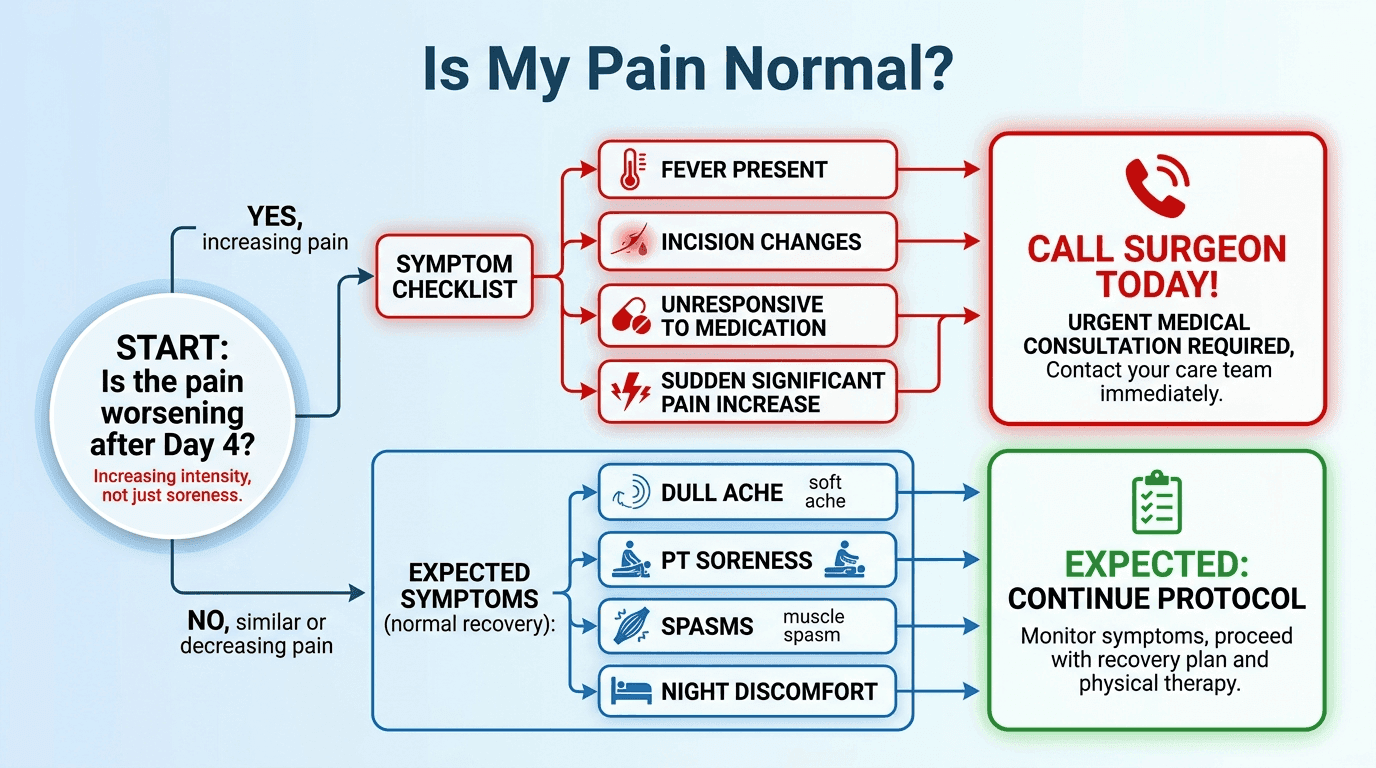
Expected post-operative pain includes a dull, aching soreness in the shoulder, arm, and neck. It includes sharp soreness during physical therapy exercises that settles within 24 hours. It includes fatigue after any active use of the arm. It includes intermittent muscle spasms in the biceps and deltoid. Mild swelling and bruising around the incision site are also normal for the first several weeks.
Red flags requiring a call to the surgeon are a different category entirely. Fever above 100.4 degrees Fahrenheit warrants immediate contact, as does increasing redness, warmth, or drainage from the incision site. Pain that is worsening rather than improving after the first week, pain that does not respond to medication at the prescribed dose, and new numbness or tingling below the elbow that was not present before surgery are all signals to call rather than wait.
Shoulder replacement infection is uncommon, occurring in roughly 0.3% to 2.9% of cases according to published data, but it is serious when it does occur. Early detection changes outcomes significantly. Do not wait for a scheduled appointment if the warning signs above appear.
Who Is at Higher Risk for Persistent Pain After Shoulder Replacement?
Most patients do very well long-term after shoulder replacement, but a meaningful minority experience ongoing pain beyond the expected recovery window.
A Danish registry study of 538 shoulder replacement patients found that approximately 22% reported daily persistent pain at one to two years post-operatively. The most powerful single predictor of that outcome was severe acute pain during the first week of recovery, present in 37% of patients who went on to have chronic pain. This finding reinforces how aggressively the early pain window should be managed.
Other risk factors identified in the study include the underlying diagnosis. Patients who underwent shoulder replacement after a fracture had a persistent pain rate of approximately 29%, compared to 16% in patients with osteoarthritis as the primary indication. Hemiprosthesis type and the presence of pain in other body regions were also associated with higher chronic pain rates.
These numbers reflect registry-era protocols. Modern multimodal pain management, improved implant design, and more aggressive early rehabilitation have since shifted these outcomes in a favorable direction. A doctor can advise on individual risk based on surgical indication and pre-operative health status.
Tips to Reduce Pain and Speed Recovery
The following strategies are backed by orthopedic and rehabilitation evidence, not generic post-surgical advice.
Taking acetaminophen on a fixed schedule rather than waiting for pain to spike is one of the most effective pain-control behaviors a patient can adopt. The consistent suppression of the pain signal requires smaller total doses and produces more stable comfort across the day.
Applying cold therapy within the first 20 minutes after physical therapy sessions reduces post-PT soreness faster than skipping it. Make cold therapy part of the PT routine, not an afterthought.
Sleeping in the correct position from night one prevents a significant source of avoidable pain. A recliner or 45-degree wedge pillow is not optional for the first four to six weeks; it is part of the recovery protocol.
Attending physical therapy even on days when the shoulder is sore is generally the right call, though patients should always communicate pain levels to their therapist. PT-induced soreness that resolves within 24 hours is expected and acceptable. Soreness that persists beyond 48 hours after a session should prompt a conversation about modifying the exercise intensity.
Quitting smoking before surgery, if applicable, significantly improves healing outcomes. Research consistently shows that smoking impairs tissue oxygenation and slows bone integration, both of which affect implant stability and recovery speed.
Protein intake supports tissue repair. Aiming for adequate dietary protein in the weeks after surgery, along with vitamin C for collagen synthesis, gives the body the raw materials it needs to heal the repaired soft tissue. A doctor or registered dietitian can advise on appropriate targets.
Prehabilitation, meaning strengthening the shoulder and surrounding muscles before the procedure, reduces post-operative pain by improving the baseline condition of the tissue being repaired. Patients who engage in a structured pre-surgical PT program consistently recover faster than those who do not.
Frequently Asked Questions
What should I expect after shoulder replacement surgery?
The first 72 hours are the most painful, beginning with the nerve block wearing off on Day 1 to 2. From there, pain gradually decreases over six to twelve weeks, with physical therapy soreness replacing surgical soreness from Week 3 onward. Most patients report minimal daily pain by Month 4 to 6, with meaningful long-term relief from the arthritis that led to surgery.
How successful are shoulder replacements?
Shoulder replacement has a strong long-term track record. According to Cleveland Clinic, the procedure reliably reduces chronic joint pain and improves function, with most implants performing well for fifteen to twenty years. Patient satisfaction rates in published literature are consistently high, particularly for osteoarthritis as the indication.
What should I wear after shoulder surgery?
Loose, button-front or zip-front tops are the standard recommendation for the first several weeks, as pullover shirts require overhead arm movement that is restricted by the sling and painful during recovery. Many patients find shirts one size larger than normal helpful during the sling period. Ask the surgical team about specific clothing guidance based on which arm was operated on.
What are the main restrictions after shoulder replacement?
Sling wear is typically required continuously for four to six weeks depending on the procedure type and surgeon protocol. Driving is prohibited until the sling is removed and the arm has regained adequate strength and response time, commonly six to eight weeks or longer. Lifting restrictions are strict and progressive; most protocols do not allow lifting beyond a pound or two for the first several weeks. A doctor will outline the specific restrictions based on the surgical approach used.
Is it normal to have pain 6 months after shoulder replacement?
Mild, activity-dependent soreness at six months is within the normal range. Constant or severe pain at six months is less expected and should be evaluated by the surgical team. Research indicates that the majority of patients achieve functional, low-pain status well before the six-month mark, but individual variation exists based on surgical indication, age, and adherence to rehabilitation.
What does shoulder replacement pain feel like?
In the first days, most patients describe a deep, throbbing ache centered in the shoulder and radiating into the neck and upper arm, with a sharp nerve sensitivity at the incision site. By Weeks 3 to 4, the character shifts to a duller, activity-triggered soreness. Muscle spasms in the biceps and deltoid are common throughout the first month. By Month 3, most patients describe only occasional tightness or fatigue with activity rather than pain in the traditional sense.
If questions about your recovery come up between appointments, or if symptoms are making it hard to gauge what warrants a call to the surgeon, use Momentary's AI health navigator to explore your symptoms, understand what you are experiencing, and get a clearer sense of what steps make sense next.
References
- PMC — Danish Registry Study, n=538 — Cited for persistent pain prevalence (22%), severe acute pain as predictor, fracture vs. OA pain outcomes, and infection rate range.
- Cleveland Clinic — Shoulder Replacement — Cited for 95% pain relief outcome at one year, sleep positioning guidance, and implant longevity data.
- Mayo Clinic — Shoulder Replacement — Cited for general pain relief outcomes and post-operative recovery expectations.
- PubMed — ASRA Nerve Block and Multimodal Analgesia — Cited for interscalene nerve block as a cornerstone of multimodal shoulder surgery pain management.
- PMC — Multimodal Analgesia in Orthopedic Surgery — Cited for scheduled acetaminophen protocol and opioid reduction outcomes.
- PMC — Cryotherapy After Orthopedic Surgery — Cited for cold therapy reducing post-operative pain and swelling.
- PubMed — Reverse vs. Anatomic Shoulder Arthroplasty Outcomes — Cited for reverse shoulder replacement pain outcomes relative to anatomic replacement in rotator cuff-deficient populations.
- PubMed — Smoking and Orthopedic Recovery — Cited for smoking impairing tissue oxygenation and bone integration in orthopedic patients.