

Most people spend weeks researching hip replacement surgery. Far fewer spend that same energy preparing for it. That gap is where outcomes are won or lost.
Research published in the Journal of Bone and Joint Surgery found that patients who completed structured prehabilitation regained functional mobility up to 25% faster in the weeks following total hip arthroplasty compared to those who did not. Separately, studies suggest roughly 1 in 5 orthopedic surgery patients experiences clinically significant preoperative anxiety, which can impair recovery independently of the surgical result itself.
This guide is not a passive hospital checklist. Think of it as a preparation playbook, the kind an athlete uses before competition, because patients who treat surgery as something they train for tend to do better on the other side of it.
At a Glance
| Topic | Key Facts |
|---|---|
| Primary keyword | Preparing for hip replacement surgery |
| Surgery type affects home prep | Yes, anterior vs. posterior determines equipment needs |
| Prehab benefit | Up to 25% faster mobility recovery |
| Medication stop window | NSAIDs and most supplements: 7 days before surgery |
| Dental work deadline | Complete at least 6 weeks before surgery |
| Home modification priority | Bathroom and fall-hazard removal |
| Caregiver need | Minimum 1 to 2 weeks of active daily support |
| Same-day discharge | Increasingly common; confirm with your surgeon |
The Big Picture: Why Preparation Dictates Your Recovery Speed
A successful hip replacement is not entirely determined in the operating room.
Surgical skill matters, but so does the body you bring to the table and the home you return to afterward. Orthopedic surgeons at the Cleveland Clinic consistently emphasize that patients who optimize their health before surgery, arrange their home thoughtfully, and understand the recovery process tend to have fewer complications and shorter hospital stays.
Preoperative preparation reduces surgical risk in measurable ways. Uncontrolled blood pressure, poorly managed blood sugar, excess weight, and active infection all increase complication rates for total hip arthroplasty. Getting ahead of each of these in the weeks before your procedure is not optional padding in your to-do list. It is clinical risk reduction.
The framing matters too. Patients who approach surgery as something they are actively preparing for, rather than something happening to them, report lower anxiety levels and higher satisfaction with outcomes. That mindset starts here.
Pre-Hab: Strengthening Your Body Before the OR
Prehabilitation, or pre-hab, refers to targeted physical conditioning performed before surgery to improve functional capacity going in.
A study published in BMC Musculoskeletal Disorders found that hip replacement patients who completed preoperative exercise programs showed measurably better early postoperative outcomes, including faster return to walking and reduced length of hospital stay. The logic is straightforward: the stronger and more mobile you are before surgery, the more resources your body has to draw on during recovery.
Upper Body and Non-Operative Leg
In the days immediately after hip replacement, a walker or crutches become your primary mode of transportation. Your arms and your non-surgical leg carry most of your weight. Strengthening both before surgery pays dividends from day one post-op.
Seated shoulder presses using light resistance bands, seated rows, and wrist curls all build the arm strength needed for walker use. For the non-operative leg, standing wall squats (going only as deep as comfortable) and leg presses using low resistance help build the compensatory strength you will rely on heavily in week one.
Prehab Exercises for the Surgical Hip
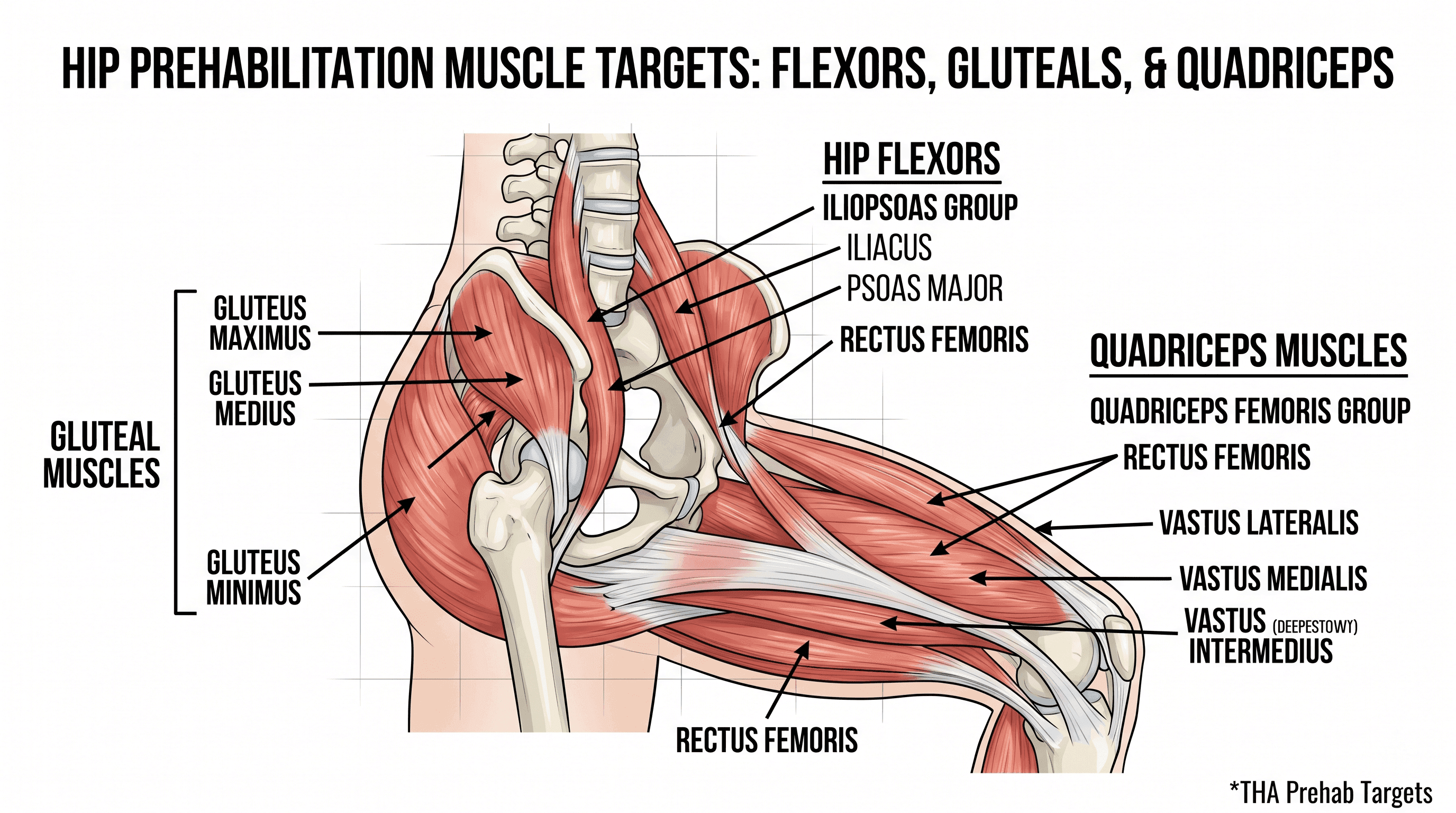
These movements are specifically designed to strengthen the muscles around the hip joint without stressing the joint itself. Work within your pain tolerance and stop any exercise that causes sharp or worsening joint pain.
Quad sets: Lie flat on your back with both legs straight. Tighten the thigh muscles of your surgical leg by pressing the back of the knee gently into the floor. Hold for 5 seconds, then release. Perform 10 repetitions, 2 to 3 sets daily.
Glute sets: In the same position, squeeze your buttock muscles firmly and hold for 5 seconds. Perform 10 repetitions, 2 to 3 sets daily.
Heel slides: Lying flat, slowly slide the heel of your surgical leg toward your buttocks, bending the knee as far as comfortable, then slide it back. Perform 10 repetitions, 2 sets daily.
Straight-leg raises: Bend your non-surgical knee for back support. Keeping the surgical leg straight, tighten the thigh and raise the leg to about 45 degrees. Lower slowly. Perform 10 repetitions, 2 sets daily.
Clamshells: Lie on your non-surgical side with both knees bent and stacked. Keeping your feet together, rotate the top knee upward like a clamshell opening, then lower. Perform 10 repetitions, 2 sets daily.
Always confirm this exercise list with your surgeon or physical therapist before starting, as individual restrictions apply.
Medical Clearance and Medication Management
Getting surgical clearance is not a formality. It is where hidden risk gets caught.
According to the American Academy of Orthopaedic Surgeons, patients scheduled for total hip arthroplasty typically need pre-operative evaluation that includes bloodwork, an electrocardiogram (EKG), chest X-ray, and urinalysis. Patients with existing heart conditions, diabetes, or pulmonary disease may need specialist sign-off from a cardiologist or pulmonologist before the surgical team will proceed.
Start this process at least 8 weeks before your surgery date. Medical appointments take time to schedule, and results sometimes prompt additional follow-up.
Dental Work: Complete It Early
Any dental procedure, including routine cleanings, carries a small risk of introducing bacteria into the bloodstream. After a hip replacement, an implanted prosthetic joint is highly vulnerable to hematogenous infection, meaning bacteria traveling through the blood can colonize the implant. Most orthopedic surgeons require all dental work to be completed at least 6 weeks before surgery. Do not schedule a cleaning for the week before your procedure.
Stopping Medications Before Surgery
Certain medications significantly increase surgical bleeding risk and must be paused on a strict timeline. The following are general clinical guidelines; your surgical team will give you individualized instructions.
Non-steroidal anti-inflammatory drugs (NSAIDs), including ibuprofen (Advil, Motrin) and naproxen (Aleve), are typically stopped 7 days before surgery. Blood thinners such as warfarin, apixaban (Eliquis), and rivaroxaban (Xarelto) require individualized cessation plans that depend on clotting risk; discuss this directly with both your surgeon and the prescribing physician. Supplements including fish oil, vitamin E, garlic, ginkgo biloba, and aspirin should also be stopped 7 days before surgery, as these can impair platelet function.
Do not stop any prescribed medication without explicit guidance from your care team.
Weight and Blood Sugar Optimization
Elevated BMI and poorly controlled blood sugar are two of the most modifiable surgical risk factors. Research cited by the NIH links both to higher rates of surgical site infection, implant failure, and prolonged recovery. If a GLP-1 medication has been prescribed for weight management, discuss the perioperative protocol with your surgeon, as some programs pause these agents before major procedures.
Fall-Proofing the Home Environment
The most dangerous thing in a recovering hip replacement patient's home is the floor.
Throw rugs are the leading household fall hazard for people recovering from joint replacement surgery. Every loose rug in the home needs to come up entirely before the patient returns from the hospital. This includes bathroom mats, kitchen runners, and any decorative rugs in the bedroom or hallway. Tape down all loose electrical cords and charging cables that cross walking paths. Install nightlights in hallways, bathrooms, and the bedroom, because nighttime bathroom trips in the dark are a common fall scenario in week one of recovery.
Walk every path you will regularly travel with fresh eyes, or ask a family member to do it for you. The goal is a clear, unobstructed walking lane at least 36 inches wide to accommodate a walker. Remove low furniture, ottomans, and any items left habitually on the floor. Arrange furniture so there is always a stable surface within reach to steady yourself while sitting down or standing up.
Consider temporarily relocating the bedroom to the ground floor if possible, or ensure stair access is planned carefully. Stair handrails on both sides, if feasible, are a meaningful safety upgrade.

Bathroom Logistics: The Mandatory Upgrades
The bathroom is the most challenging room in the house for hip replacement patients, and the one that demands the most preparation.
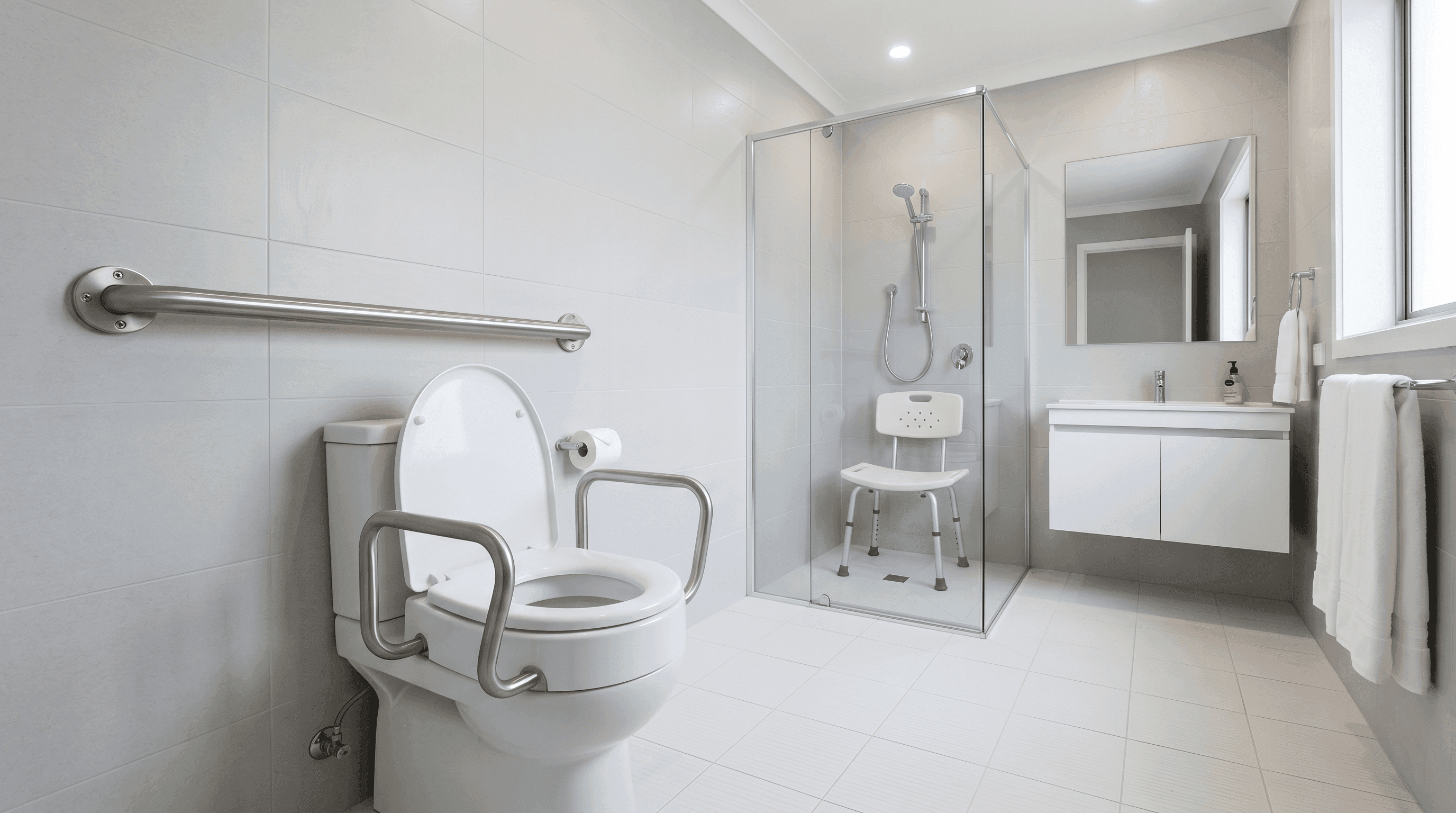
After a posterior approach hip replacement, most patients must observe hip precautions for 6 to 12 weeks. The core restriction is avoiding hip flexion past 90 degrees, meaning the hip joint cannot bend to a right angle or beyond. A standard toilet places most adults well beyond that threshold when sitting down or standing up, which is why a raised toilet seat is not optional equipment. It is a medical necessity for posterior approach patients.
A raised toilet seat elevates the sitting surface by 2 to 6 inches, keeping the hip at a safe angle. Models with armrests on both sides provide the added stability needed for lowering and rising without assistance. Install this before leaving for the hospital.
A shower chair or transfer bench allows the patient to sit while bathing, eliminating the balance demands and hip angles that standing in a shower creates. A handheld showerhead extends the reach needed to wash without bending. A long-handled sponge or bath brush covers the lower leg and foot, which cannot be reached by bending forward.
Grab bars installed at the toilet and inside the shower are worth the investment. Suction-cup grab bars are widely available without permanent installation and provide meaningful support. A non-slip bath mat inside the shower (with secure suction backing, not a loose rug) completes the bathroom setup.