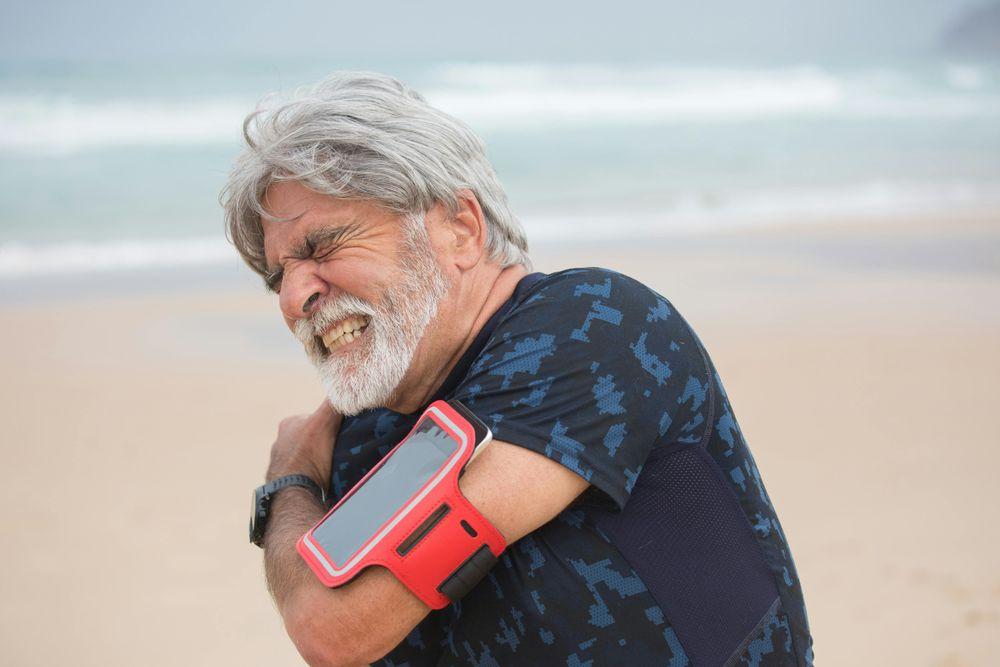


Shoulder pain that wakes you up at 3 a.m. is hard to ignore, but that does not automatically mean surgery is in your future. Most people with a rotator cuff tear never need an operating room. The decision hinges on the type of tear, how long symptoms have been present, what conservative treatments have been tried, and how the injury is affecting daily life. This guide walks through each of those factors so you can go into your orthopedic appointment fully prepared.
At a Glance
| Topic | Key Facts |
|---|---|
| What is the rotator cuff? | Four tendons stabilizing the shoulder joint |
| How common are tears? | Prevalence exceeds 20% in adults over 40 |
| Do all tears need surgery? | No; most partial tears and many full-thickness tears respond to conservative care |
| Primary surgical trigger | Failed 3 to 6 months of conservative treatment, or acute full-thickness tear |
| Recovery after surgery | Sling 4 to 6 weeks; full return to activity 6 to 12 months |
| Success rate (arthroscopic) | Exceeds 90% for appropriate candidates |
Do All Rotator Cuff Tears Require Surgery?
The short answer is no. Age, activity level, and the type of tear drive the treatment plan far more than the mere presence of a tear on an MRI. Research published in the Journal of Bone and Joint Surgery found that roughly 80% of partial-thickness tears improved with non-operative management, including structured physical therapy and targeted injections. Many people over 60 walk around with asymptomatic full-thickness tears they never knew existed, living without meaningful pain or functional loss. A tear on imaging is not a mandate for surgery; it is the starting point of a clinical conversation.
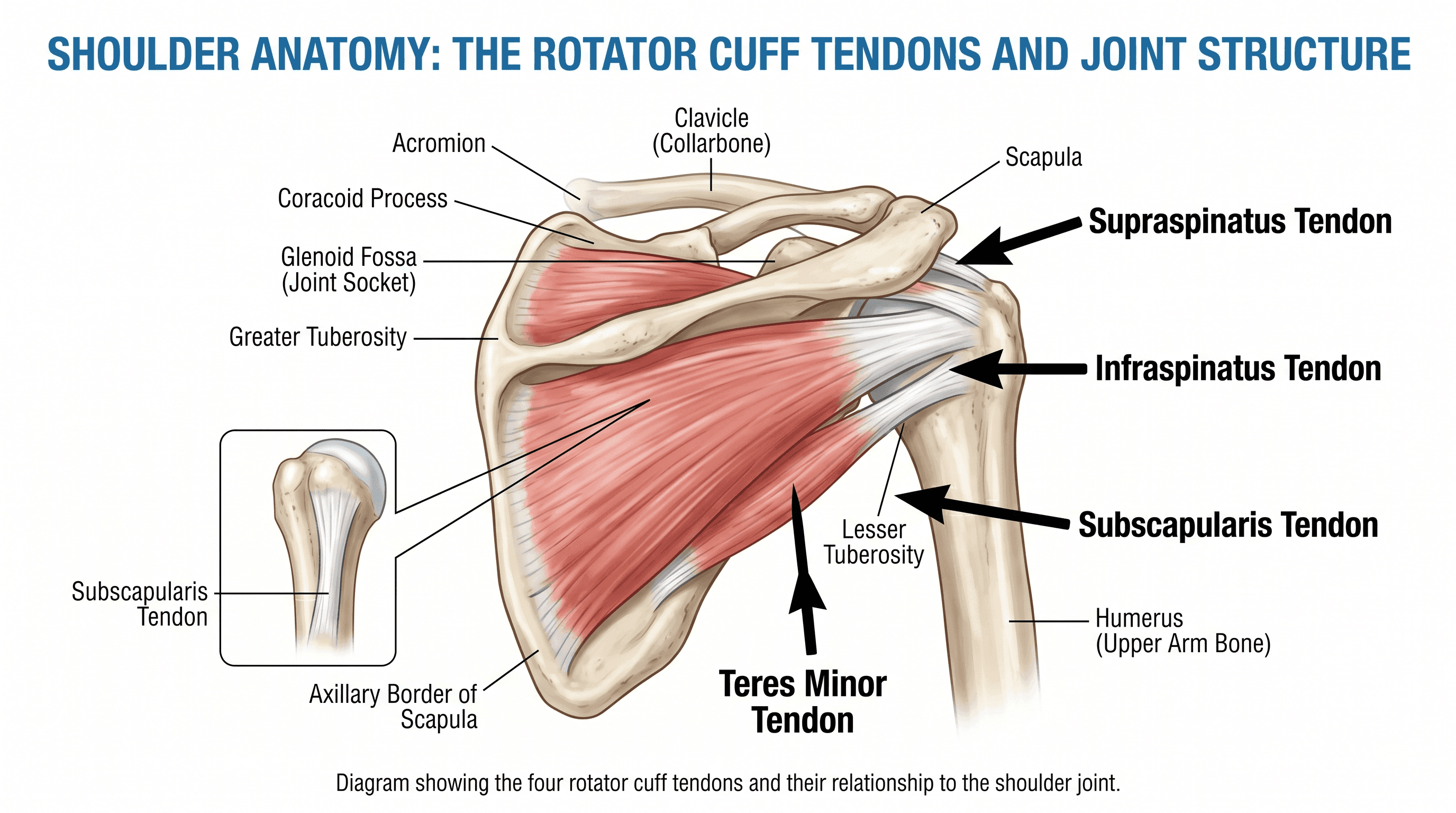
The four tendons that make up the rotator cuff (the supraspinatus, infraspinatus, subscapularis, and teres minor) wrap around the head of the humerus and hold it in the shoulder socket while enabling rotation and overhead movement. When one or more of these tendons is frayed or torn, the surrounding muscles often compensate, which is why many tears remain manageable without an operation.
The Classic Red Flags: Symptoms You Should Not Ignore
Pain alone is not the deciding factor. A cluster of specific symptoms raises the clinical index of suspicion for a tear serious enough to warrant surgical evaluation.
Night pain that disrupts sleep is one of the most consistent early indicators. Lying on the affected shoulder compresses the inflamed tendon, and many patients describe being jarred awake when rolling over. This pattern, especially when it persists beyond a few weeks, is worth discussing with a physician rather than waiting out.
Inability to reach behind your back and difficulty raising the arm above shoulder height are signs of meaningful functional limitation. When simple tasks like fastening a seatbelt, brushing hair, or lifting a bag into an overhead compartment become unreliable, the tear may be affecting the structural mechanics of the joint rather than just causing localized irritation.
Profound weakness when lifting or rotating the arm is a more urgent signal. A shoulder that aches is different from a shoulder that simply cannot generate force. Weakness that prevents raising a cup of coffee, holding a phone to the ear, or pressing a light overhead object suggests tendon continuity has been significantly compromised.
Persistent pain lasting three to six months despite rest, anti-inflammatory medication, and activity modification is the threshold at which most orthopedic guidelines recommend a formal workup and consideration of more aggressive intervention.
The Drop Arm Sign and Extreme Weakness
Functional loss is a different category from pain, and it changes the urgency of the evaluation. The drop arm test is performed by raising the patient's arm to 90 degrees and then asking them to slowly lower it to their side. If the arm drops uncontrolled, the test is positive, indicating a likely massive or complete tear of the supraspinatus tendon.
Symptoms That Signal an Urgent Evaluation
Certain presentations need prompt attention rather than a watchful waiting approach. An acute tear from a fall, a sports collision, or a sudden forceful movement in a person under 60 is treated with greater urgency than a chronic degenerative tear in an older adult. When extreme weakness develops suddenly rather than gradually, when the arm cannot be raised against gravity at all, or when trauma preceded the onset of symptoms, waiting for weeks of physical therapy before seeing a specialist is not the appropriate path.
Acute Trauma vs. Degenerative Wear and Tear
The mechanism of injury shapes the treatment approach as much as the tear itself. A sudden rotator cuff tear in a 35-year-old who falls on an outstretched arm during a sport is a fundamentally different clinical situation than a 65-year-old whose shoulder gradually worsened over two years of repetitive overhead work.
Acute traumatic tears in younger, active patients are often repaired promptly because the tissue is healthy, the tendon ends have not yet retracted, and the muscle has not undergone the fatty changes that make late-stage repair difficult. Mayo Clinic notes that surgery is more commonly recommended when a tear is the result of a sudden injury rather than gradual degeneration.
Degenerative tears in older adults or lower-demand patients begin with a conservative protocol. Physical therapy, non-steroidal anti-inflammatory drugs (NSAIDs), and cortisone injections address the pain and functional limitation while the body's adaptive mechanisms compensate. Many of these patients achieve satisfactory outcomes without ever having surgery.
Understanding Your MRI: Partial vs. Full-Thickness Tears
When a patient's shoulder is imaged, the radiologist and orthopedic surgeon look at several specific variables. An MRI remains the gold-standard diagnostic tool for soft tissue evaluation, though musculoskeletal ultrasound is increasingly used in office settings for real-time dynamic assessment.
Partial Tear vs. Full-Thickness Tear: Does the Difference Matter for Surgery?
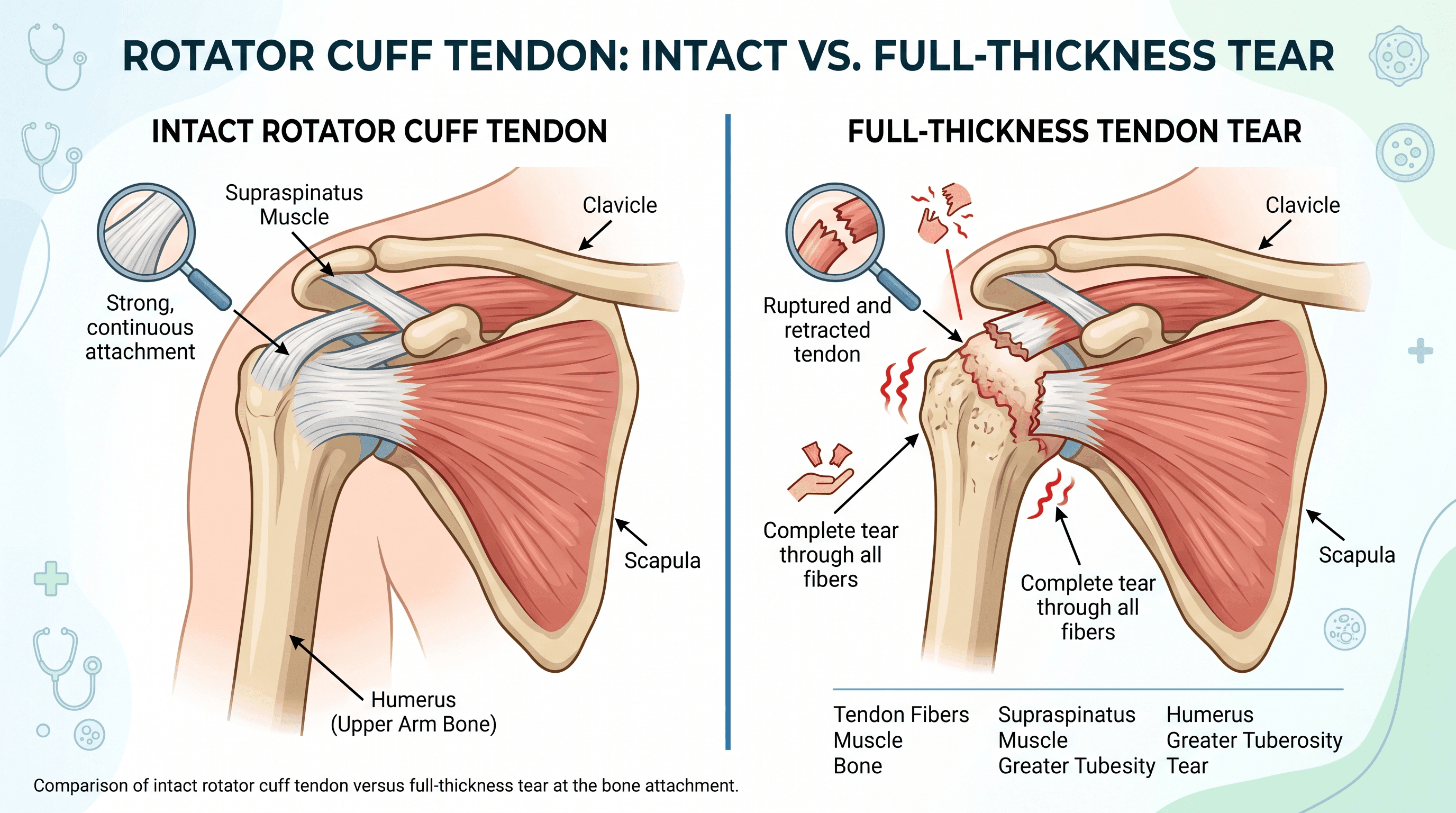
The distinction matters significantly. A partial-thickness tear means the tendon is frayed or damaged but still connected to the bone on both sides. A full-thickness tear means the tendon has been breached completely from top to bottom, creating a gap between the torn ends.
As noted in research indexed through NIH PubMed, approximately 80% of partial tears improve with conservative management. Full-thickness tears require a different calculation. Small full-thickness tears (under 1 cm) still respond reasonably well to non-operative care, particularly in older adults. Large full-thickness tears exceeding 3 cm have lower rates of conservative treatment success, and the tissue quality around them deteriorates faster, which is why the timing of intervention matters.
Beyond tear size, the surgeon examines fatty infiltration (the degree to which muscle belly has been replaced by fat) and tendon retraction (how far the torn tendon end has pulled back from its attachment). Both of these are graded on standardized scales (Goutallier for fatty infiltration; Patte for retraction), and high-grade findings in either category can render a tear irreparable.
When Conservative Treatment Is the Better Choice
Not having surgery is a legitimate and often clinically superior choice, not a fallback. Conservative treatment works particularly well for older adults with degenerative tears, individuals with significant medical comorbidities, patients with partial tears, and lower-demand patients whose primary goal is pain reduction rather than return to sport or heavy labor.
A structured physical therapy protocol for rotator cuff tears typically spans 6 to 12 weeks of supervised sessions focused on rotator cuff strengthening, scapular stabilization, and restoring normal movement patterns. Anti-inflammatory medications reduce acute swelling. Corticosteroid injections, when used judiciously (generally no more than two to three per joint per year), can provide a meaningful pain window that makes physical therapy more tolerable and more effective.
Who Should Not Have Rotator Cuff Surgery
Several medical and anatomical factors push the calculus firmly toward non-operative management. Active smokers have significantly higher rates of failed tendon healing and post-surgical complications. Uncontrolled diabetes impairs tissue healing at the cellular level. Severe glenohumeral (shoulder joint) arthritis is a contraindication because the underlying joint surface problem will not be resolved by tendon repair. Massive irreparable tears, where the tendon has retracted far and the muscle is heavily infiltrated with fat, cannot be reattached with predictable success, and attempting repair in these cases often leads to re-tear. Neurological conditions affecting motor control, and morbid obesity, are also factors that typically shift the recommendation toward non-operative management or alternative procedures.
What Happens If You Do Not Have Surgery?
This is the question most patients are privately weighing, and it deserves a straight answer. For partial tears and small full-thickness tears in appropriately selected patients, long-term non-operative outcomes are good. A 10-year follow-up study by Moosmayer et al., indexed in NIH research archives, found that a meaningful proportion of surgically and non-surgically treated patients achieved comparable functional scores at 10 years, with the non-surgical group maintaining acceptable shoulder function when they had adherence to rehabilitation.
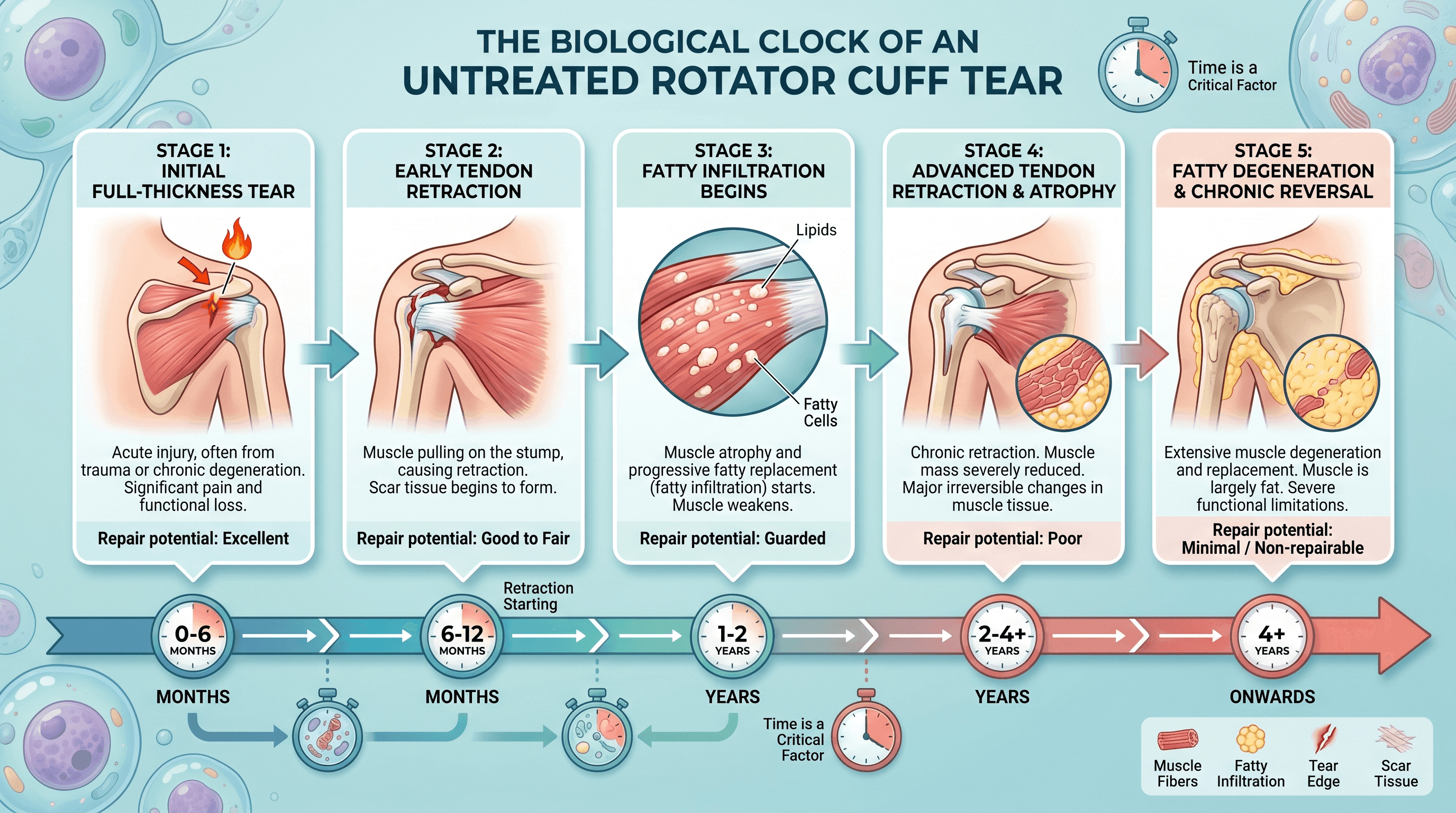
But leaving certain tears unmanaged carries a biological cost. A fully torn tendon that is not repaired within a window of several months to roughly a year can begin to retract away from its bony attachment. The muscle it connects to then undergoes fatty infiltration, where healthy muscle fibers are progressively replaced by fat and fibrous tissue. Once fatty infiltration reaches a Goutallier grade 3 or 4, the tendon and muscle are no longer repairable with predictable results. This is the ticking clock that surgeons refer to when they say a tear that could be fixed today may not be fixable in 18 months.
So the honest framing is: watchful waiting is safe for low-grade, low-demand, or asymptomatic tears in older adults, but an untreated symptomatic full-thickness tear in an active person under 60 carries a genuine risk of losing the repair window permanently.
Surgery vs. No Surgery: What the Research Actually Shows
A 2024 meta-analysis examining surgical versus non-surgical outcomes for full-thickness rotator cuff tears (indexed through NIH PMC) found that short-term pain and functional outcomes are broadly similar between the two pathways, particularly in older patients with degenerative tears. Both groups show meaningful improvement from baseline at 12 months.
Where the data begin to separate is in younger patients, larger tear sizes, and longer follow-up periods. Patients under 55 with full-thickness tears tend to achieve better long-term strength, a lower re-tear rate at follow-up, and higher rates of returning to pre-injury activity levels when treated operatively. A separate longitudinal analysis (indexed through NIH PMC) found that tear size progression was more common in the non-operative group, with a subset eventually crossing into surgical candidacy due to symptom worsening.
The practical takeaway: neither path is universally superior. The right choice depends on who the patient is, what the tear looks like, and what their goals are. This is precisely why a detailed conversation with an orthopedic surgeon who has reviewed your specific imaging is irreplaceable.
Your Decision Checklist: Questions to Bring to Your Appointment
This checklist is not a diagnostic tool. It is a framework for having a more productive conversation with your surgeon or sports medicine physician.
Symptom Duration and Severity
- Have symptoms been present for more than three months despite activity modification?
- Does pain regularly wake you from sleep or prevent you from sleeping on the affected side?
- Has the shoulder pain been scored consistently above 5 out of 10 on most days?
Functional Impact
- Are you unable to raise the arm overhead without significant pain or compensation?
- Have you lost meaningful strength in the arm (difficulty with tasks you could previously perform)?
- Has your work, sport, or daily functioning been significantly affected?
Treatment History
- Have you completed a structured physical therapy program of at least 6 to 8 weeks?
- Have cortisone injections been tried, and if so, how much and how long did they help?
- Have NSAIDs been used consistently at therapeutic doses for an adequate trial period?
Individual Factors
- Are you under 60 with a full-thickness tear from an acute injury?
- Do you have significant comorbidities (active smoking, poorly controlled diabetes, severe arthritis)?
- Are you committed to 6 to 12 months of post-operative rehabilitation?
- Does your occupation or sport require full overhead strength and range of motion?
If most of your answers in the first three categories lean toward "yes" and you have completed a full conservative treatment trial, this checklist points toward a surgical consultation being a reasonable next step. If comorbidities dominate your individual factors section, the conversation will likely center on optimizing those factors before any operation is considered.
To find an orthopedic specialist or sports medicine physician near you, use this physician directory to locate and book a consultation.
Beyond Standard Surgery: Newer and Emerging Options
For patients who are not ideal surgical candidates or who want to explore adjunctive treatments, the landscape has expanded beyond simply choosing between surgery and standard physical therapy.
Platelet-rich plasma (PRP) injections involve concentrating the growth factors from the patient's own blood and injecting them into the tear site. Mayo Clinic acknowledges ongoing research into PRP, though the evidence for rotator cuff healing specifically remains mixed. It may be better suited as an adjunct to surgery than a standalone treatment.
Ultrasound-guided corticosteroid injections offer more precise delivery than landmark-based injections and are now commonly performed in office settings by sports medicine physicians and radiologists.
Debridement ("smooth and move") procedures are considered for irreparable massive tears in older patients. Rather than attempting to reattach what cannot be repaired, the surgeon removes frayed tissue, creates more space in the shoulder, and partially transfers adjacent tendons to partially restore function.
Reverse total shoulder arthroplasty is the treatment of choice for massive irreparable tears with associated shoulder arthritis, particularly in older adults. It reorients the mechanics of the joint to use the deltoid muscle as the primary driver rather than the rotator cuff tendons.
Pre-surgical optimization is increasingly recognized as a component of surgical planning. Stopping smoking ideally 6 to 8 weeks before surgery, achieving better blood sugar control in diabetic patients, and reaching a healthier body weight all improve healing outcomes meaningfully.
What Recovery Looks Like After Rotator Cuff Surgery
Arthroscopic rotator cuff repair carries success rates exceeding 90% for appropriately selected patients. That figure reflects pain reduction and patient satisfaction. The re-tear rate is a more complicated number: it ranges from 13% in small tears with good tissue quality to upwards of 60 to 69% in large tears with poor tissue quality and fatty infiltration. A re-tear does not always mean a failed outcome; some patients remain functional even with a healed-but-tenuous repair, but it is an honest data point worth knowing before surgery.
The practical recovery timeline unfolds roughly as follows. A sling is worn for 4 to 6 weeks to protect the repair while initial tendon-to-bone healing begins. Formal physical therapy typically starts within the first 1 to 2 weeks for passive range-of-motion work and progresses to active strengthening at 3 to 4 months. Most patients return to desk work within 2 to 4 weeks, driving at 4 to 6 weeks (for the non-dominant arm) or 8 to 12 weeks (dominant arm), and light physical labor at 4 to 6 months. Full return to sport or heavy overhead work generally requires 9 to 12 months. Realistic expectations about this timeline are one of the strongest predictors of post-operative satisfaction.
Frequently Asked Questions
How long does a torn rotator cuff take to heal without surgery?
Partial tears with appropriate conservative management typically show meaningful improvement within 6 to 12 weeks of structured physical therapy. Full-thickness tears do not regenerate on their own but can become asymptomatic through muscular compensation and scar tissue formation over 3 to 6 months. Whether that level of recovery meets the patient's functional needs varies significantly by individual.
What are two warning signs of a rotator cuff tear?
Night pain that disrupts sleep and significant arm weakness that prevents overhead movement are the two most clinically consistent indicators. Either one in isolation warrants evaluation; together they raise strong suspicion for a meaningful tear.
How do I test if my rotator cuff is torn?
Physical examination tests like the drop arm test, the empty can test, and internal and external rotation resistance testing can suggest a tear, but none has sufficient sensitivity to replace imaging. An MRI is the standard confirmatory tool. A sports medicine physician or orthopedic surgeon can perform the clinical examination and order appropriate imaging in a single visit.
How bad does a rotator cuff need to be for surgery?
Surgery is typically recommended when a full-thickness tear has failed 3 to 6 months of conservative treatment, when functional limitation is significant, or when an acute large tear occurs in a younger active patient. Tear size alone does not mandate surgery; it is one variable in a broader clinical picture that also includes patient age, activity demands, tissue quality, and general health.
For more help navigating shoulder pain, imaging results, and care options, the Momentary Lab AI health navigator can help guide you toward the right next step.
References
- Petersen SA et al., PMC2628527 — Study on non-operative outcomes in partial-thickness rotator cuff tears; cited for the approximately 80% improvement statistic with conservative management.
- Mayo Clinic: Rotator Cuff Injury Diagnosis and Treatment — Clinical guidance on surgical vs. non-surgical treatment indications, PRP evidence, and conservative treatment protocols.
- Moosmayer et al. 10-year follow-up, PMC11724712 — Longitudinal comparison of surgical vs. non-surgical outcomes for full-thickness tears over a 10-year follow-up period.
- PubMed 17179786 — Research on partial vs. full-thickness tear classification and clinical outcomes relevant to conservative management thresholds.
- PMC11559883 — Longitudinal analysis of tear size progression in non-operatively managed rotator cuff tears.