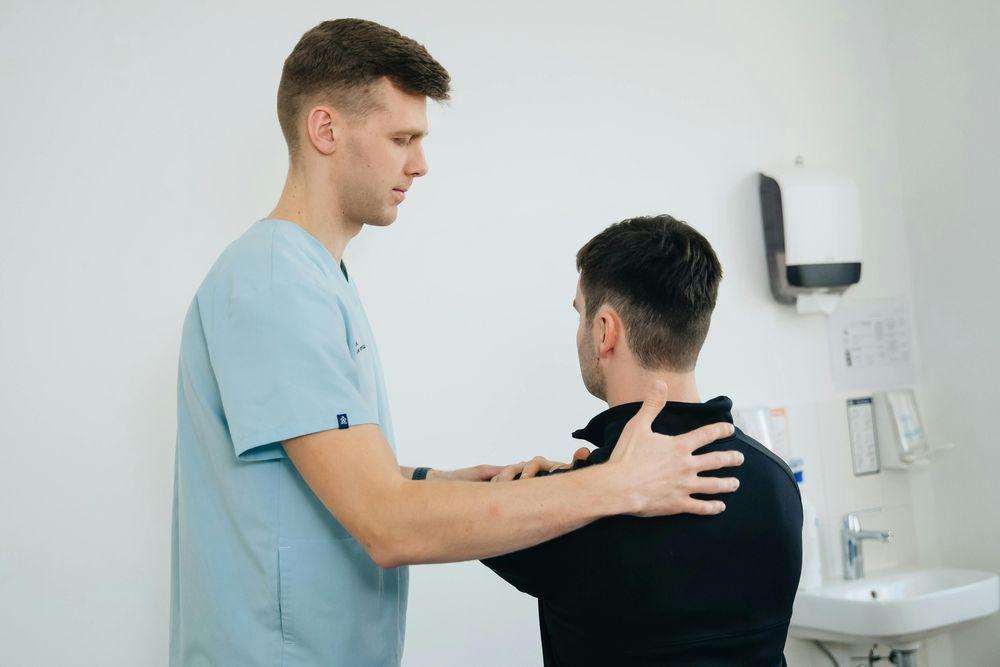


Shoulder replacement surgery (also called shoulder arthroplasty) gives most patients a dramatic reduction in pain and a significant gain in mobility. But "when will I feel normal again?" is the question that keeps people up at night before surgery, and the honest answer takes more than a single number to explain. Recovery from shoulder replacement unfolds across four distinct phases spanning anywhere from six months to a full year, and understanding each one in advance makes the process far less frustrating.
This guide is written for patients who want clinical specificity alongside a realistic, empathetic picture of what the weeks and months actually look like.
At a Glance
| Topic | Key Facts |
|---|---|
| Procedure type | Total or reverse shoulder arthroplasty (shoulder joint replacement) |
| Typical sling duration | 4 to 6 weeks, 24/7 except for hygiene and exercises |
| Driving clearance | Typically 6 to 8 weeks post-surgery, surgeon-dependent |
| Return to desk work | 2 to 4 weeks with ergonomic adjustments |
| Return to manual labor | 3 to 6 months |
| Pain resolution | Most patients reach 90% pain improvement by week 6 |
| Full functional recovery | 6 to 12 months |
| Sport return | Cleared for most low-impact sports at 6 to 9 months |
| Permanent restrictions | Heavy overhead lifting, high-impact contact sports |
The Big Picture: A Marathon Divided Into Four Phases
Most patients feel dramatically better within three months, but the complete biological and mechanical recovery process takes a full six to twelve months.
That gap matters. Feeling better and being fully recovered are two different things. The implant needs time to integrate with surrounding bone, the repaired soft tissue needs time to regain tensile strength, and the atrophied muscles surrounding the joint need months of progressive loading before they can perform reliably. Patients who understand this distinction pace themselves appropriately instead of overdoing it during the early feeling-better window and setting themselves back.
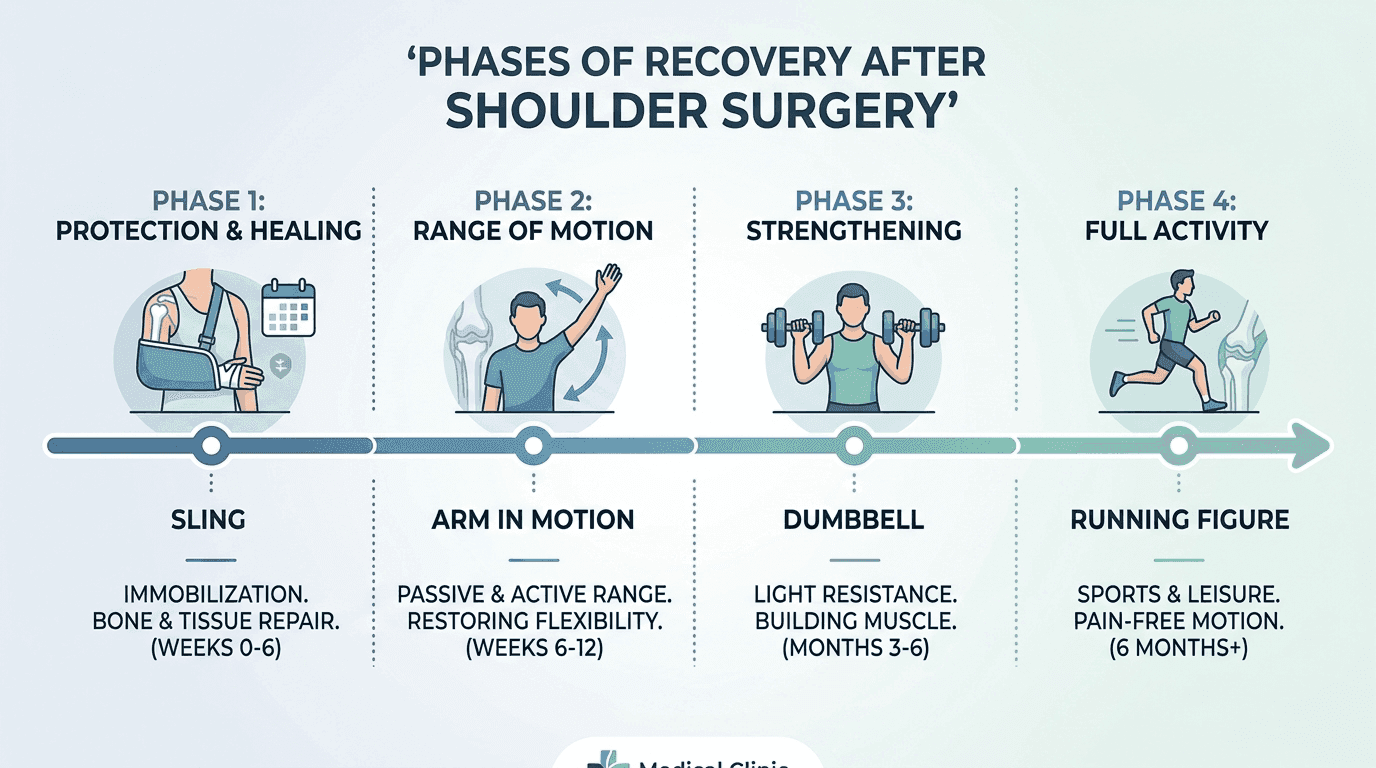
The four phases map roughly as follows: protection and sling compliance (weeks one to four), active motion and sling removal (weeks four to eight), strength rebuilding (months three to four), and maximum function with sport and work return (months six to twelve). Each phase has a distinct goal, and skipping ahead in any of them typically delays the overall timeline rather than shortening it.
Phase One (Weeks 1 to 4): Protection and the Sling
The first four weeks are almost entirely about protecting the surgical repair, managing pain, and preventing frozen shoulder without stressing the new implant.
What to Expect at the Hospital
Shoulder replacement surgery takes approximately two hours, according to Cleveland Clinic. Most patients stay one night in the hospital, though same-day discharge is increasingly common at outpatient surgery centers. Before discharge, a nerve block is typically placed to control pain in the first 24 to 48 hours. Patients often describe the nerve block period as deceivingly comfortable, which makes the transition off the block jarring if they are not prepared for it. Having oral pain medication ready and scheduled, rather than waiting for pain to peak before taking it, significantly smooths that transition.
Sling Compliance
The sling is non-negotiable in this phase. Wearing the immobilizer 24 hours a day, removing it only for hygiene and prescribed exercises, protects the subscapularis tendon repair (in total shoulder replacement) or the deltoid reattachment (in reverse shoulder replacement) while both are at their most vulnerable. Patients are typically permitted to use their hand and forearm for light tasks like eating, typing, or writing, as long as the arm is supported and no movement is initiated at the shoulder joint itself.
Sleep Positioning
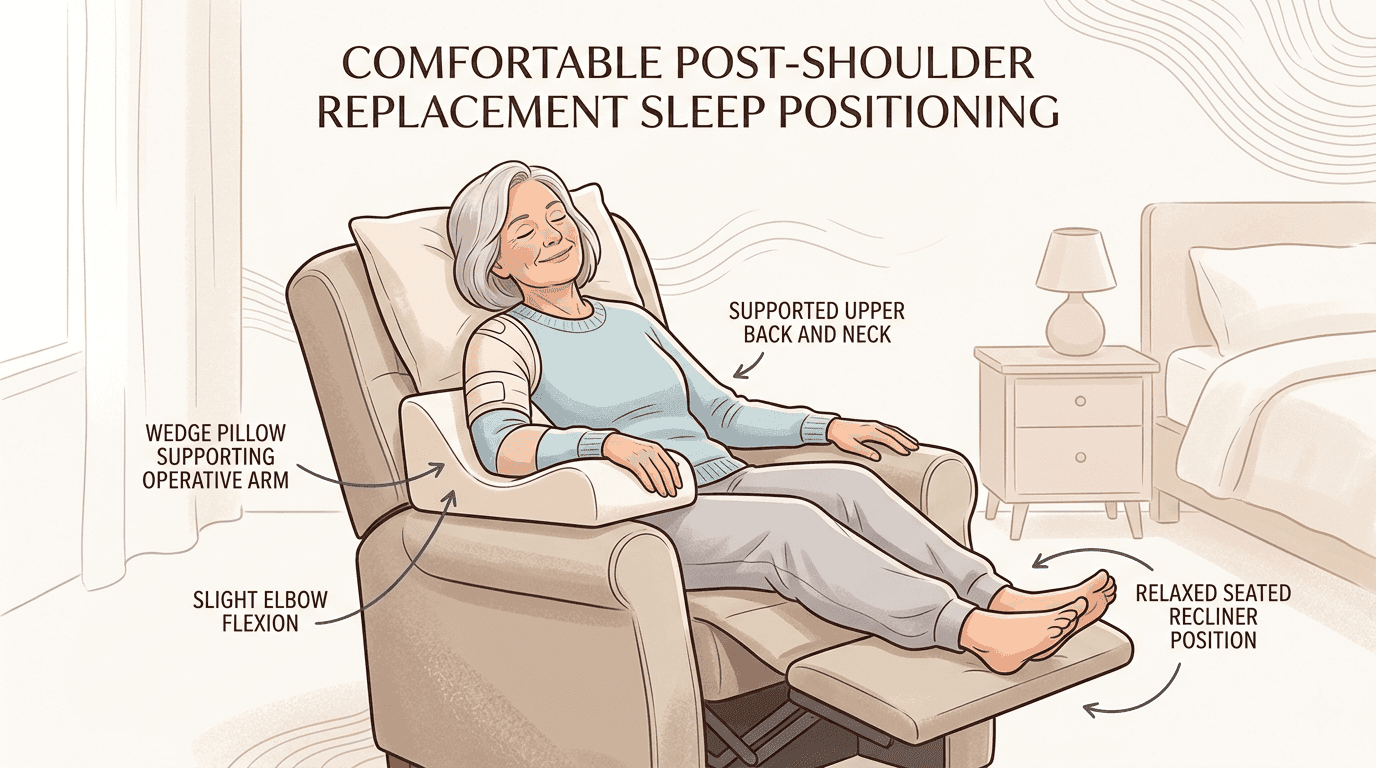
This is the piece of recovery that most institutional guides gloss over, and it is frequently cited as the hardest part of the first month. Lying flat in bed puts the shoulder in a position that strains the repair and increases pain. Most surgeons recommend sleeping semi-reclined, either in a recliner or propped up with a wedge pillow set to roughly 45 degrees. A travel pillow placed under the elbow to prevent the arm from rotating outward adds another layer of comfort. Most patients find that by weeks three to four, they can begin transitioning back to a bed with enough pillow support.
Passive Physical Therapy
Physical therapy begins quickly, often within the first week, but it is passive in this phase. Passive range-of-motion exercises mean that the therapist or the patient's other arm moves the operative shoulder through prescribed arcs. The repaired muscles do no active work. This keeps the joint mobile and prevents scar tissue from restricting movement, without placing load on tissue that is still healing.
Phase Two (Weeks 4 to 8): Active Motion and Ditching the Sling
Weeks four to eight represent a meaningful turning point for most patients.
Sling Removal
Around week four to six, most surgeons clear patients to discontinue the sling for daily activities. This milestone varies by procedure: reverse shoulder replacement patients may get sling clearance slightly earlier because the deltoid muscle, which powers the reverse design, heals more predictably than the rotator cuff tissue repaired in a total (anatomic) shoulder replacement. The first few days without the sling feel unfamiliar and sometimes anxious-making, but most patients adjust quickly as confidence builds.
Active Physical Therapy Begins
The shift from passive to active physical therapy is the defining event of this phase. Active range-of-motion work means the patient's own repaired shoulder muscles are now engaged in lifting and moving the arm. Early in this phase, the exercises feel shockingly difficult. The muscles have been protected and essentially offline for weeks, and reconnecting the neural pathway between brain and shoulder takes patience.
Driving Clearance
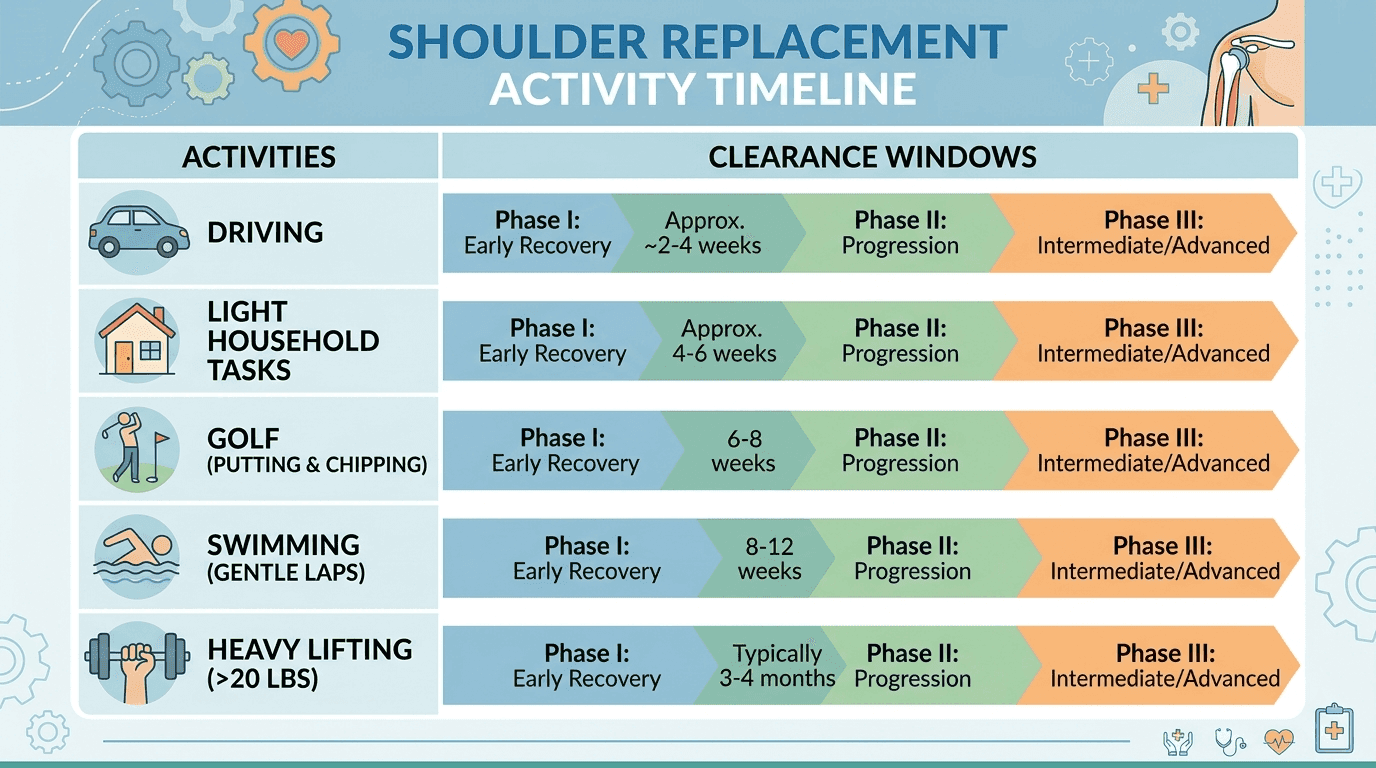
Most surgeons clear patients to drive between weeks six and eight, assuming the operative arm has recovered enough active range of motion and strength to react safely in an emergency. This is surgeon-dependent and should not be self-determined. Patients who had surgery on their dominant arm typically need the full eight weeks, while non-dominant arm surgery may allow earlier clearance. Patients taking opioid pain medications should not drive regardless of timing.
Phase Three (Months 3 to 4): Rebuilding Strength
By month three, most patients have adequate range of motion and are ready to shift the focus of physical therapy toward rebuilding the strength that was lost during the sling phase.
This is when resistance training enters the program in a structured way. Therapists introduce resistance bands, then progress to light free weights as the shoulder tolerates load. The deltoid, rotator cuff muscles, and periscapular stabilizers all need to be rebuilt progressively and deliberately. Overdoing load too early in this phase is a common reason patients plateau or experience setbacks.
An important expectation to set: pain typically resolves before full strength returns. Many patients feel confident and pain-free by month three but still cannot perform tasks requiring sustained shoulder endurance or heavy lifting. That strength gap closes over months four through six with consistent PT work and diligent at-home exercise follow-through.
Return to most daily activities, including light-to-moderate household tasks, personal grooming, and comfortable social activities, is realistic by the end of this phase. Light desk work and computer use are usually well tolerated, though ergonomic setup matters (monitor at eye level, arm supported, frequent breaks).
Phase Four (Months 6 to 12): The New Normal and Sports
Full recovery, meaning what surgeons call maximum medical improvement, is reached somewhere between six and twelve months for most patients.
At this stage, the implant has fully integrated with the surrounding bone, soft tissue has regained reliable tensile strength, and the neuromuscular system has re-learned how to coordinate movement around the new joint. Most patients at this stage report that their shoulder feels like their own again, even if it moves and feels slightly different than the pre-arthritis baseline.
Sport and Recreation Return
Return-to-sport timelines depend heavily on the demands of the activity. Low-impact sports like golf, swimming, cycling, and doubles tennis are typically cleared between six and nine months for appropriately conditioned patients. A 2024 systematic review published through PubMed found that the majority of patients who wanted to return to sport after shoulder arthroplasty were able to do so, with most returning within nine months.
Permanent Activity Restrictions
Some activities are permanently restricted after shoulder replacement to protect implant longevity. Heavy overhead barbell work (bench press, military press, overhead carry), high-impact contact sports like football or hockey, and activities involving repetitive impact loading to the shoulder are generally permanently discouraged. The implant is designed for the demands of daily life and moderate recreation, not for high-load athletic performance.
Anatomic vs. Reverse Shoulder Replacement: Does the Hardware Change the Timeline?
The two most common shoulder replacement procedures recover along similar overall timelines, but the underlying mechanics differ in ways that affect the early weeks.
In a total (anatomic) shoulder replacement, the surgeon restores the natural ball-and-socket geometry of the joint. Because this procedure relies on the rotator cuff to power the shoulder, the recovery timeline is closely tied to how well the rotator cuff heals. Patients with a significantly compromised rotator cuff preoperatively may take longer to achieve full strength.
In a reverse shoulder replacement, the ball and socket are literally reversed: the ball is placed on the shoulder blade side and the socket on the arm side. This design shifts the mechanical load to the large deltoid muscle, bypassing a damaged rotator cuff entirely. Because the deltoid heals more predictably than the rotator cuff, early-phase recovery often feels faster for reverse patients. However, the deltoid-driven mechanics require a different physical therapy protocol, and the long-term strength ceiling may differ depending on the patient's starting deltoid condition.
Both procedures follow the same four-phase framework. The differences are more about which milestones come slightly earlier or later, not about a fundamentally different recovery arc.
Factors That Affect How Fast You Recover
Recovery speed is not random. Several well-documented factors influence how quickly a patient moves through the phases.
Pre-surgery fitness and shoulder strength are among the strongest predictors of recovery speed. Patients who arrive at surgery with better baseline conditioning, including the muscles surrounding the operative shoulder, tend to rebuild strength faster and advance through PT milestones earlier. Age plays a role: younger patients often regenerate soft tissue more quickly, though they also carry a higher risk of pushing too aggressively through the early phases.
The condition of the rotator cuff at the time of surgery is a meaningful predictor for total shoulder replacement patients specifically. A significantly torn or degenerated rotator cuff requires more healing time and may limit the ultimate strength ceiling. Surgeon experience and volume also matter: higher-volume shoulder arthroplasty surgeons have consistently been associated with better outcomes and fewer complications in orthopedic literature published through PubMed.
Comorbidities including uncontrolled diabetes, obesity, and smoking meaningfully slow tissue healing and increase infection risk. A doctor can advise on individual cases and what pre-surgery optimization is appropriate.
PT adherence is the most controllable factor. The surgeon provides the hardware; the patient's daily commitment to at-home exercises determines how fast the hardware becomes functional. Skipping home exercise between PT sessions is the single most common reason patients recover slower than their surgeon expects.
What You Can Do Before Surgery to Recover Faster: Prehabilitation
Prehabilitation refers to purposeful preparation done before surgery to improve the body's starting point for recovery.
The concept is well-supported in orthopedic rehabilitation research. Patients who enter shoulder arthroplasty with stronger periscapular and deltoid muscles, better cardiovascular conditioning, and optimized body composition tend to recover more quickly and achieve better functional outcomes. The gains are not theoretical: prehab patients typically spend less time in early PT reaching baseline milestones, and they report less post-operative pain relative to pre-surgery baseline.
Practically, prehab for shoulder replacement includes prescribed range-of-motion exercises for the operative shoulder (performed within pain-free limits), strengthening work for the contralateral shoulder and both legs (which don't get sidelined during recovery), aerobic conditioning, and stopping smoking at least six to eight weeks before surgery if applicable. Nutrition optimization, particularly ensuring adequate protein intake to support tissue repair, is an underutilized but clinically meaningful preparation step.
Patients who are three to six months out from a planned surgery date have a meaningful window to do this work. Those closer to surgery can still make a difference with two to four weeks of focused preparation.
Return to Work: Timelines by Job Type
When you can return to work depends entirely on what your job asks of your body.
Desk and computer work is usually possible within two to four weeks, provided the workspace is ergonomically appropriate and the patient is no longer dependent on opioid pain medication. Key adjustments include raising the monitor to eye level, using an armrest to keep the operative shoulder relaxed, and building in frequent stretch breaks.
Jobs requiring moderate arm use, such as teaching, retail, or light patient care roles, typically require six to twelve weeks before the shoulder has enough strength and endurance to sustain a full shift. Many patients in these roles negotiate a modified duty assignment during the transition period, which most employers can accommodate with documentation from the surgeon.
Manual labor, construction, nursing, or other physically demanding jobs require three to six months at minimum, and some roles with heavy overhead demands may require the full twelve months before safe return. Patients in these fields should have a direct conversation with their surgeon about realistic return-to-work expectations well before surgery, so that disability leave and work accommodations can be arranged proactively.
Red Flags During Recovery: When to Call Your Surgeon
Most discomfort during shoulder replacement recovery is normal and expected, but some signs require prompt attention.
Infection signs to watch for include increasing redness or warmth at the incision site, discharge or oozing from the wound, fever above 101.5°F, and worsening pain rather than gradual improvement after the first two weeks. Any of these warrant a same-day call to the surgeon's office.
Implant dislocation is uncommon but possible, particularly in reverse shoulder replacement. It typically presents as a sudden sharp pain accompanied by a notable change in the shoulder's appearance or a loss of ability to move the arm at all. This is a medical emergency.
Persistent numbness or weakness in the hand or forearm beyond 72 hours after surgery may signal nerve involvement that requires evaluation. Some temporary numbness from the nerve block or surgical positioning is expected, but it should resolve within two to three days. Prolonged or worsening neurological symptoms are not something to wait out.
Normal post-surgical pain follows a predictable arc: worst in the first 48 to 72 hours, gradually improving through weeks two and three, with most patients reaching 90% pain improvement by six weeks. Pain that plateaus, worsens, or returns after a period of improvement is worth a call to the care team.
If recovery feels uncertain or symptoms are hard to interpret, connecting with a physician for guidance is always the right move. Patients who want to speak with a primary care provider online without waiting for an in-person appointment can access that through a telehealth visit.
Frequently Asked Questions
What is the fastest way to recover from shoulder replacement surgery?
The three most evidence-supported strategies are completing a prehabilitation program before surgery, adhering strictly to the sling protocol and prescribed PT schedule in the early weeks, and doing at-home exercises every single day between PT sessions. No single shortcut overrides consistent, structured effort.
What can you never do after shoulder replacement?
Most shoulder replacement patients are permanently advised against heavy overhead barbell lifting, high-impact contact sports, and activities that place sudden, high-force loads on the shoulder joint. These restrictions exist to protect implant longevity, not short-term healing. A surgeon can advise on activity-specific restrictions based on implant type and individual factors.
How long should you stay home after shoulder surgery?
Most patients can resume light activity outside the home within one to two weeks, though driving is not permitted until six to eight weeks post-surgery. The decision about when to leave home independently depends on whether the patient can manage safely with one arm and whether they are still dependent on opioid pain medication.
Is a shoulder replacement a big operation?
Yes. Shoulder arthroplasty is a major orthopedic procedure performed under general or regional anesthesia, typically lasting around two hours, as noted by Cleveland Clinic. It involves removing damaged bone and cartilage and installing a prosthetic implant. That said, it is also one of the most reliably successful orthopedic procedures, with the majority of patients reporting dramatically reduced pain and improved function after full recovery.
How long does pain last after shoulder replacement?
Most patients reach 90% pain improvement by six weeks. Mild aching and activity-related soreness often persist through months three and four as the muscles rebuild. By six months, most patients report pain levels that are substantially lower than their pre-surgery baseline. Full pain resolution for the minority of patients with lingering discomfort may take the complete twelve-month recovery window.
If questions about symptoms or what to expect remain, using Momentary's AI health navigator can help patients explore their situation and understand what information to bring to their next surgical or PT appointment.
References
- Cleveland Clinic — Shoulder Replacement Surgery — Overview of procedure, preparation, recovery, and restrictions.
- Hopkins Medicine — Total Shoulder Replacement — Recovery timeline and physical therapy guidance.
- Mass General Hospital — Shoulder Replacement Recovery — Phase-based recovery expectations and milestones.
- PubMed — Surgeon Volume and Shoulder Arthroplasty Outcomes (PMID 30885548) — Evidence linking higher surgeon volume to improved patient outcomes.
- PubMed — Return to Sport After Shoulder Arthroplasty (PMID 38273618) — Systematic review of return-to-sport rates and timelines following shoulder replacement.
- PMC — Reverse Shoulder Arthroplasty Outcomes (PMC11276123) — Outcomes data for reverse shoulder replacement including functional recovery.
- PubMed — Prehabilitation and Orthopedic Outcomes (PMID 25234000) — Evidence supporting prehabilitation programs ahead of major joint replacement surgery.
- PMC — Physical Therapy Protocols in Shoulder Arthroplasty (PMC9516623) — PT protocol comparisons and phase-based rehabilitation evidence.
- PMC — Anatomic vs. Reverse Shoulder Replacement Comparative Outcomes (PMC13092001) — Comparative recovery data for anatomic and reverse shoulder arthroplasty.