


Shoulder replacement surgery reliably works. Across decades of clinical research, more than 90% of patients report meaningful pain relief and restored function, and modern implants routinely stay in place and functioning for 15 to 20 years. But that headline number only tells part of the story. Understanding what "success" actually measures, how it shifts depending on surgery type and patient health, and what causes the cases that fall outside that figure puts you in a far stronger position when making one of the bigger decisions of your life.
At a Glance
| Topic | Key Facts |
|---|---|
| Overall success rate | 90% to 95% of patients report significant pain relief and improved function |
| Implant survival at 10 years | Approximately 90% to 95% for anatomic TSA; 85% to 90% for RTSA |
| Implant survival at 20 years | Over 80% for anatomic TSA with intact rotator cuff |
| Revision rate (10 years) | Approximately 8% to 10% |
| Primary failure cause | Glenoid component loosening |
| Annual procedures in the US | Approximately 50,000 per year |
| Patient satisfaction rate | 85% to 90% across procedure types |
| Speed of improvement | 90% of pain relief achieved within 6 weeks post-surgery (TSA) |
What "Success" Actually Means in Shoulder Replacement
Success in shoulder replacement surgery is not a single measurement; it is three overlapping outcomes evaluated together.
The first dimension is pain relief. For most patients, severe arthritis pain is the reason surgery is recommended, and eliminating or dramatically reducing that pain is the primary clinical goal. The second dimension is functional improvement, tracked through validated tools like the American Shoulder and Elbow Surgeons (ASES) score and the Single Assessment Numeric Evaluation (SANE), which measure how well the arm performs real daily tasks. The third dimension is implant survival, meaning the hardware remains in place and functional without requiring removal or revision.
When a study reports a "90% success rate," it is usually measuring at least one of these dimensions, sometimes all three, across a defined follow-up period. The headline figure becomes much more meaningful when you know which dimension is being measured, over what timeframe, and in which patient population. Asking for that context is one of the most useful things a patient can do before surgery.
Overall Success Rates: What the Research Shows
The 90% to 95% success benchmark for shoulder replacement is well-supported across the published literature and is not a marketing figure invented by surgical centers.
Research published in the Journal of Shoulder and Elbow Surgery confirms patient satisfaction rates in the range of 85% to 90%, with most patients reporting that they would choose surgery again. Clinical outcomes measured by the ASES score show consistent improvement from pre-operative baselines to 6-month and 12-month follow-up points. Pain scores on a standard 0-to-10 scale typically drop from the 7-to-9 range before surgery to below 2 within the first year. These are not marginal improvements; they represent a fundamental change in daily quality of life for the majority of patients.
Anatomic Total Shoulder Replacement (TSA) Success Rates
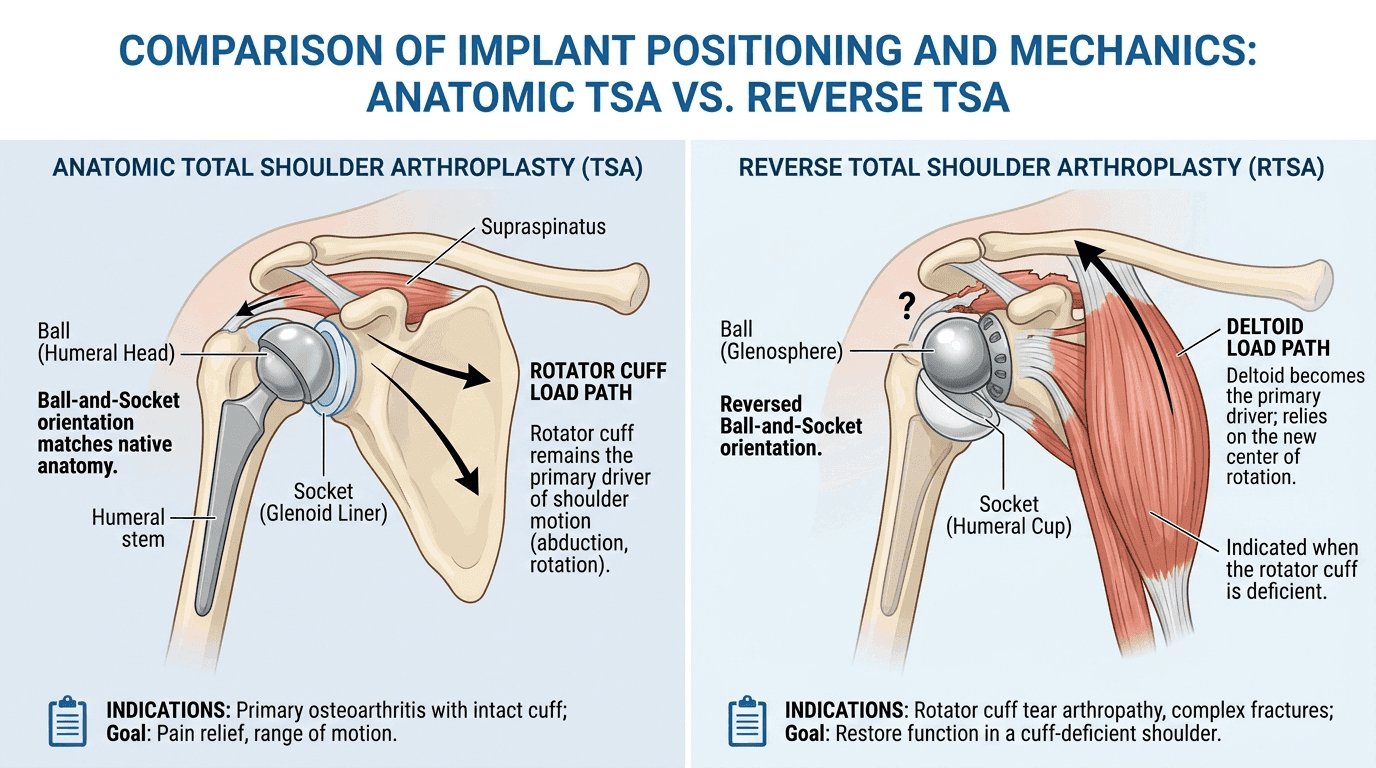
Anatomic total shoulder replacement, or TSA, replaces the ball and socket with components that mirror the shoulder's natural anatomy. It is the preferred approach when the rotator cuff is intact and the degeneration is primarily from osteoarthritis.
Implant survival rates for TSA are approximately 94% at 5 years and around 90% at 10 years, with long-term data suggesting survival above 80% at the 20-year mark. Data from the NIH National Library of Medicine supports the durability of modern TSA components, noting that cemented glenoid fixation and improved polyethylene design have extended longevity compared to earlier generations of hardware.
Reverse Total Shoulder Replacement (RTSA) Success Rates
Reverse total shoulder replacement was designed for patients with rotator cuff tears too severe to support an anatomic implant. In RTSA, the ball and socket are switched, allowing the deltoid muscle to take over the work that the damaged rotator cuff can no longer perform.
Ten-year implant survival for RTSA falls in the 85% to 90% range, a figure that has improved steadily as implant design has evolved. Published clinical data indicates that RTSA reliably reduces pain and restores functional range of motion for patients who would otherwise face few good options. Overhead reach is typically more limited after RTSA than after TSA, which is a realistic expectation to hold going in rather than a surprise to manage after.
How Shoulder Replacement Compares to Hip and Knee Replacement
Shoulder replacement is performed far less frequently than knee or hip replacement, with approximately 50,000 procedures annually in the US compared to over one million knee replacements per year. Despite that gap in volume, patient satisfaction after shoulder replacement is comparable to, and in some studies better than, satisfaction rates after knee replacement. The shoulder's smaller joint surface and reduced weight-bearing demands appear to favor long-term implant performance relative to lower-limb joints.
How Long Does a Shoulder Replacement Last? Implant Survival Over Time
Implant survival and patient satisfaction are related but distinct. A patient can be satisfied with pain relief even if the implant eventually requires revision; conversely, a surviving implant does not guarantee a happy patient if functional expectations were misaligned.
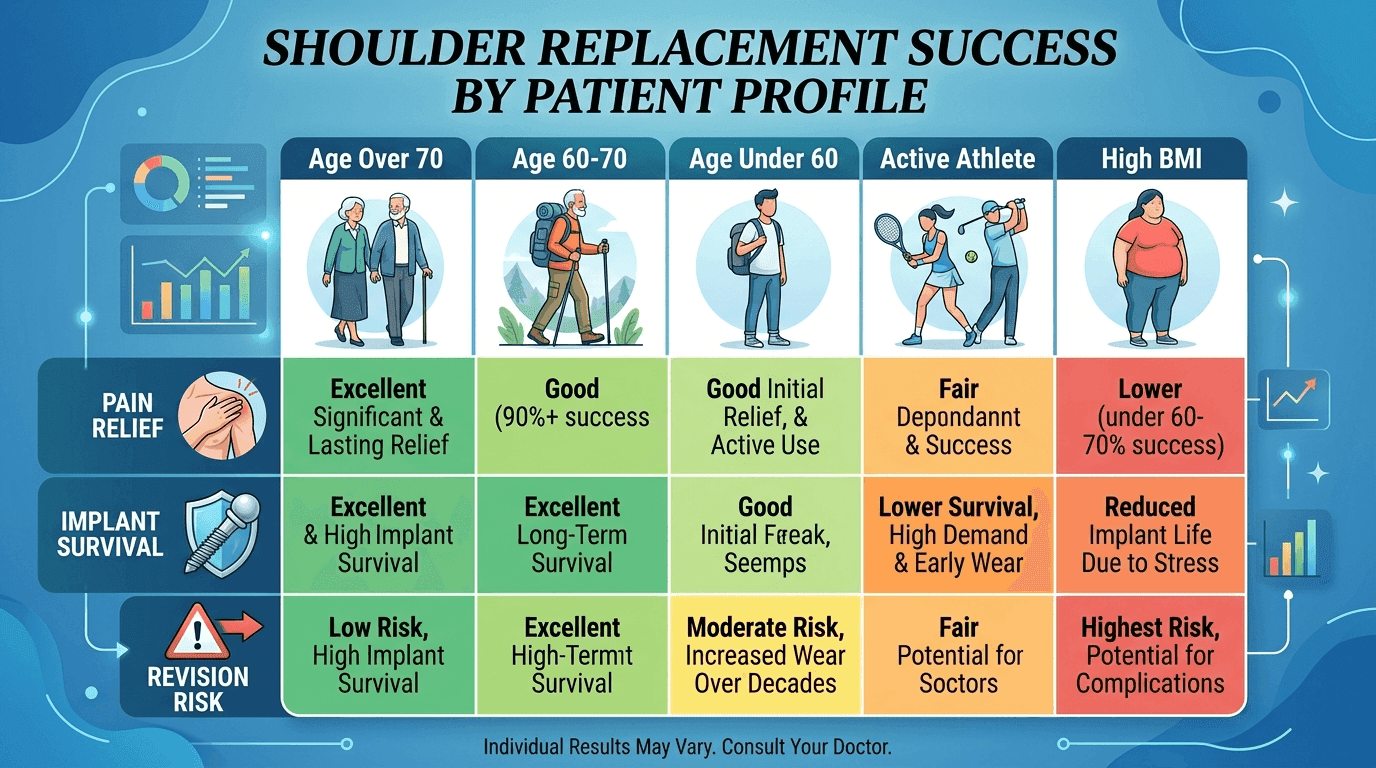
For anatomic TSA, Mayo Clinic data shows implant survival of approximately 95% at 10 years for patients over 70. Patients between 60 and 70 show survival closer to 88% at 10 years, and patients under 60 show similar 10-year survival in the high 80s but face a longer remaining lifespan over which the implant must perform. These age-stratified figures matter because they frame the revision risk across a patient's expected life.
"Survival" in this context means the implant is still in place and still functioning. It is distinct from satisfaction, and it is the number most directly relevant to patients wondering whether they will need a second operation.
Factors That Raise or Lower Your Success Rate
The 90% headline figure is an average across a wide population. Individual outcomes sit above or below that line depending on factors that are well-documented in the research.
Surgeon Volume and Experience
The relationship between surgeon experience and patient outcomes is one of the most consistent findings in orthopedic literature. Surgeons who perform a higher annual volume of shoulder replacements produce measurably better results across multiple outcome measures, including lower complication rates and fewer revisions. Before committing to a surgical team, it is reasonable to ask directly: how many shoulder replacements do you perform each year, and what are your personal revision and complication rates? Most experienced surgeons will answer without hesitation.
Patient Health Factors
Several patient-level factors are linked to worse outcomes and should be addressed before surgery where possible. Higher body mass index is associated with elevated infection risk and a higher rate of reoperation. Research published on PubMed has identified untreated depression and anxiety as predictors of worse functional outcomes and higher revision rates after shoulder arthroplasty, independent of the physical presentation. Preoperative opioid use, metabolic syndrome, and osteoporosis each carry their own risks that an orthopedic team should discuss openly during the pre-surgical evaluation.
Age and Activity Level
The relationship between age and outcome is counterintuitive in one important way: older patients actually tend to have better implant survival rates than younger ones. The reason is mechanical demand. A 72-year-old with osteoarthritis places far less load on the implant over the remaining years of wear than a 52-year-old returning to an active lifestyle. Younger, more active patients face a higher statistical risk of eventual revision, not because the surgery fails in the short term, but because time and activity accumulate stress on components.
That said, younger active patients are not poor candidates. Published data indicates that under-55 athletes have reported return-to-sport rates approaching 100% within 7 months of surgery, with pain relief outcomes comparable to older cohorts. The timing decision for younger patients involves weighing quality of life now against the probability of needing revision surgery later, which is a conversation best had with a surgeon who tracks these outcomes in their own practice.
When Shoulder Replacements Fail: Revision Rates and Causes
Approximately 8% to 10% of shoulder replacements require revision surgery within 10 years. That figure answers one of the most common patient questions directly, and it is lower than many people expect.
The leading cause of revision is glenoid component loosening, where the socket-side component loses its bond with the bone over time. This is more common with anatomic TSA than RTSA and has driven significant implant design improvements over the past two decades. Infection is a less frequent but serious cause of revision, particularly in patients with diabetes or immune compromise. Instability and dislocation account for a smaller share of revisions and are more commonly associated with RTSA, where the inverted ball-and-socket geometry creates slightly different mechanical constraints.
When revision surgery is needed, outcomes are meaningful but more variable than primary surgery. Ten-year implant survival after revision shoulder replacement is approximately 80%, and pain relief, while often substantial, is typically less complete than after a primary procedure. This is why the factors discussed in the previous section carry real weight: the best way to protect a first replacement is to go into surgery as healthy as possible and to choose a surgeon whose track record supports confidence.
What a Realistic Recovery Timeline Looks Like
Recovery from shoulder replacement moves faster than most patients anticipate, particularly for pain relief.
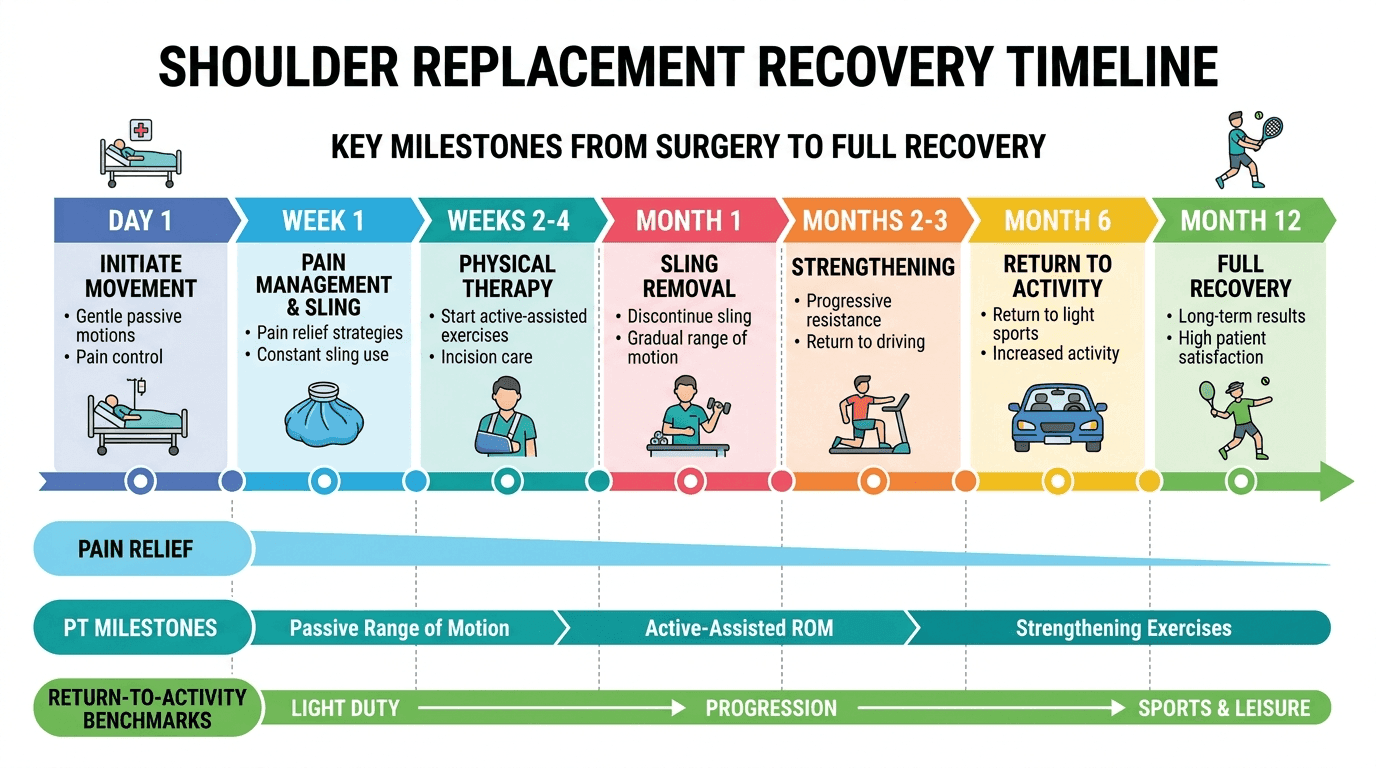
In the first two weeks, the arm is kept in a sling and movement is severely restricted. Most patients experience a noticeable reduction in arthritis pain within days, even while managing post-surgical soreness. By six weeks post-operation, clinical data from Massachusetts General Hospital indicates that the large majority of patients have achieved roughly 90% of their total pain improvement. The final functional gains, meaning full range of motion and strength, continue building through 6 to 12 months of structured physical therapy.
ASES score recovery reaches approximately 96% of its final value within 6 months for TSA patients. The trajectory matters as much as the endpoint: patients who understand that strength and range of motion lag behind pain relief are better prepared to stay consistent with rehabilitation when they still feel limited at the 8-week mark.
If pain during recovery becomes difficult to manage, or if rehabilitation progress stalls, connecting with a primary care provider through Momentary's virtual care platform is a practical option for getting clinical guidance without an in-person visit.
Questions to Ask Your Surgeon Before Shoulder Replacement
The quality of information shared before surgery shapes outcomes after it. These are the questions that belong in every pre-surgical conversation.
What is your annual volume of shoulder replacements, and what is your personal revision rate? Published data and your own common sense both point to the same conclusion: a surgeon who performs this procedure frequently and tracks results has more reliable data about what to expect.
What outcome scoring system do you use, and will you share your personal data? Surgeons who use ASES, SANE, or pain scale tracking and who share those numbers with patients are operating with a level of transparency that benefits everyone.
Which implant type and fixation method will you use, and why? The answer should be specific to the patient's anatomy and diagnosis, not a default choice driven by availability or preference.
What will physical therapy look like, and who supervises it? The rehabilitation protocol has a direct effect on functional outcomes. Knowing the plan before surgery helps with logistics and commitment.
Will this procedure be performed on an outpatient basis or with an overnight stay? Outpatient shoulder replacement is increasingly common and carries equivalent outcomes for appropriate candidates, but eligibility depends on individual health factors.
Is Shoulder Replacement Worth It? How Patients Rate Their Results
Between 85% and 90% of patients report being satisfied or very satisfied with their shoulder replacement outcomes. Most describe the change in terms of sleep quality, the ability to reach overhead, and the absence of the grinding or burning pain that preceded surgery.
Return-to-activity milestones are realistic and well-documented. Swimming, cycling, golf, gardening, and similar moderate-effort activities are achievable for the majority of patients within 4 to 6 months. Permanent restrictions typically apply to heavy overhead lifting, contact sports, and high-impact activities that place asymmetric stress on the implant. These are not arbitrary limitations; they reflect what the long-term survivorship data shows about load and wear.
The bottom line is that for patients with advanced glenohumeral arthritis or severe rotator cuff damage, shoulder replacement produces sustained, meaningful improvement in quality of life for the overwhelming majority of those who undergo it. The decision is most sound when it is made with a surgeon whose outcomes data you have reviewed, after optimizing the modifiable health factors that the research shows matter.
If you are still working through your symptoms and want to understand what might be driving your shoulder pain before pursuing a surgical consultation, Momentary's AI health navigator can help you explore your symptoms, organize your questions, and identify the right next steps.
Frequently Asked Questions
How often is shoulder surgery successful? Shoulder replacement surgery is successful in over 90% of cases when success is measured by significant pain relief and improved function. Patient satisfaction rates across published studies fall between 85% and 90%, making it one of the more reliably effective elective orthopedic procedures.
What do I wish I knew before shoulder surgery? Most patients report wishing they had set more realistic expectations for the rehabilitation timeline. Pain relief arrives quickly, often within days to weeks, but strength and full range of motion take 6 to 12 months to develop. Patients who understand this distinction tend to stay more consistent with physical therapy and report better final outcomes.
What are the signs of a failed shoulder replacement? Warning signs that a shoulder replacement may need evaluation include persistent or worsening pain that does not match the expected recovery curve, new instability or a feeling that the joint is shifting, unexplained swelling or warmth around the joint, fever or wound changes that suggest infection, and a sudden loss of range of motion after a period of normal function. Any of these should prompt contact with the treating surgeon.
Is shoulder replacement always successful? No surgical procedure is universally successful. Approximately 8% to 10% of shoulder replacements require revision within 10 years, and a small subset of patients do not achieve the pain relief or function they hoped for. Risk factors including high BMI, untreated mental health conditions, preoperative opioid use, and low surgeon volume are associated with worse outcomes. Discussing these factors honestly before surgery improves the likelihood of a good result.
References
- PMC / Journal of Shoulder and Elbow Surgery — Cited for RTSA clinical outcomes and patient-reported improvement data.
- UC Davis Health — Referenced for general indications and candidacy context.
- Massachusetts General Hospital — Shoulder Replacement Recovery — Cited for post-operative recovery timeline and milestone data.
- ScienceDirect — Shoulder Arthroplasty Outcomes — Cited for patient satisfaction and functional outcome metrics.
- PubMed — Mental Health and Shoulder Arthroplasty Outcomes — Cited for data on depression, anxiety, opioid use, and revision risk; athlete return-to-sport data.
- PubMed — ASES Score Recovery Data — Cited for ASES score benchmarks and satisfaction measurement methodology.
- NIH National Library of Medicine — Shoulder Arthroplasty Overview — Cited for anatomic TSA survivorship data and glenoid fixation outcomes.