


Most people assume the bigger the surgery, the worse the pain. So when a doctor mentions shoulder replacement in the same conversation as rotator cuff repair, the natural assumption is that replacing an entire joint must be the harder recovery. Orthopedic surgeons hear this regularly, and they spend a lot of time correcting it. The counterintuitive reality, supported by clinical research and patient experience alike, is that rotator cuff repair is widely considered the more painful procedure, often significantly so, despite being the smaller operation. This article explains why that is, what the pain actually looks like week by week, and what patients can do to manage it for either surgery.
At a Glance
| Topic | Key Facts |
|---|---|
| More painful procedure | Rotator cuff repair, particularly in the first 6 to 12 weeks |
| Why rotator cuff hurts more | Tendon-to-bone healing triggers prolonged inflammation; no implant for immediate stability |
| Why replacement hurts less early | Metal/plastic implant is mechanically stable from day one; patients start from a higher pre-op pain baseline |
| Nerve block rebound pain | Affects both surgeries; hits hardest around post-op night one or day two |
| Pain convergence point | Both procedures tend to reach similar pain levels around months 4 to 6 |
| Night pain duration | Longer and more persistent after rotator cuff repair |
| Reverse total shoulder replacement | A third option for irreparable cuff tears; different rehab but similar early pain profile to anatomic replacement |
The Surprising Truth: Why the "Smaller" Surgery Usually Hurts More
Here is the finding that surprises almost every patient: fixing a torn rotator cuff is, by most clinical and patient-reported measures, more painful than replacing the entire shoulder joint. A 2019 study published in Archives of Orthopaedic and Trauma Surgery found that rotator cuff repair patients reported significantly higher pain scores in the early postoperative period compared to patients undergoing other shoulder procedures, including replacement.
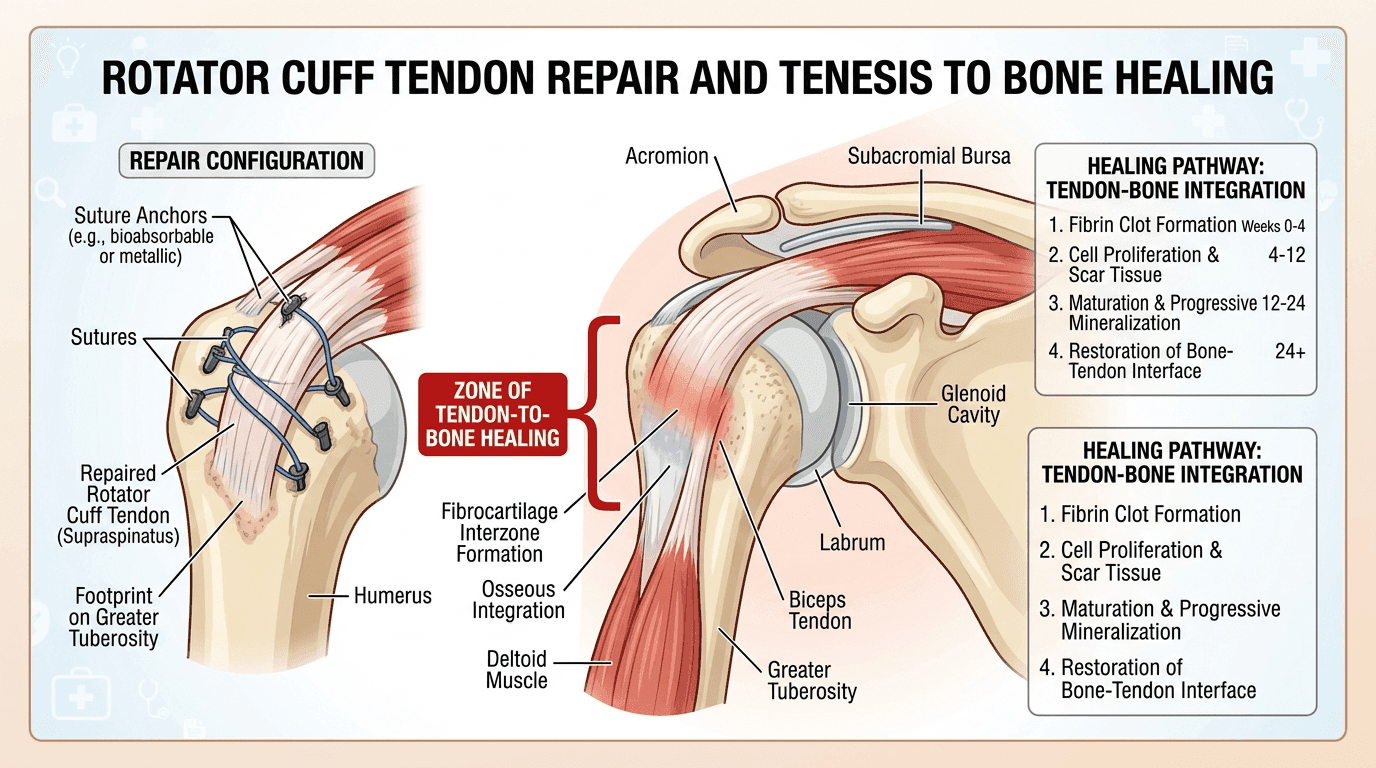
The reason is not surgical error or bad luck. It is biology. Rotator cuff repair requires a damaged tendon, often retracted and stiffened over months or years of injury, to be pulled back to the bone and secured under tension. The body then has to grow new tissue to fuse that tendon to bone, a process that is inherently inflammatory, slow, and painful. Shoulder replacement, by contrast, removes the arthritic joint surfaces and substitutes them with a metal and plastic implant that is mechanically stable from the moment it is placed. There is no biological integration phase in the acute recovery window.
That single difference , biological healing versus mechanical stability explains most of the pain gap between the two surgeries.
The Biology of Pain: Bone vs. Tendon
Rotator Cuff Repair: Tendon Healing Is Slow and Inflammatory
When a surgeon repairs a torn rotator cuff, the goal is to reattach the tendon to the bone using suture anchors. The tendon does not simply knit itself back on contact. Instead, the body launches a complex, staged repair process that researchers have documented across three overlapping phases: an initial inflammatory phase (weeks one through three), a proliferative phase (weeks four through eight), and a remodeling phase that can extend well past three months.
Each of those phases generates pain. The inflammatory phase alone causes heat, swelling, and sensitization of the surrounding nerve endings. The proliferative phase, when new tissue is actively forming, is not comfortable. And the remodeling phase, during which the newly formed tissue gradually gains tensile strength, is the period when patients are most likely to push into physical therapy and find that their shoulder resists every stretch.
Tear size matters significantly here. A small, clean partial-thickness tear repaired in a healthy tendon heals differently than a massive, full-thickness tear involving multiple tendons. Larger tears require more suture anchors, more tension on the tissue, and longer protective immobilization, all of which amplify and prolong pain.
Shoulder Replacement: Mechanical Stability from Day One
Total shoulder replacement surgery removes the damaged ball (humeral head) and socket (glenoid) surfaces and replaces them with prosthetic components. The implant is fixed during surgery, and by the time the patient wakes up, the shoulder has a functional, stable joint, not one waiting for tissue to heal.
This does not mean replacement is painless. The deltoid muscle and surrounding soft tissue are handled during surgery, and they take several weeks to recover. But the joint itself is no longer grinding on itself. For many replacement patients, particularly those with severe osteoarthritis who have been managing grinding, constant joint pain for years, the post-operative experience feels like a net improvement relatively quickly.
This is what orthopedic surgeons call the "starting from a worse baseline" phenomenon. A replacement candidate often arrives at surgery with pain levels that are already at a seven or eight out of ten on a regular basis. When post-op pain settles around a five or six, it can feel like progress, even in the first week. A rotator cuff patient, by contrast, may have had manageable aching before surgery and wakes up to a new level of acute pain that feels jarring by comparison.
The Nerve Block Factor: What No One Warns You About
Both rotator cuff repair and shoulder replacement typically involve an interscalene nerve block, a regional anesthetic injected at the neck that numbs the entire shoulder and arm for surgery. The block is highly effective and is one reason both procedures feel surprisingly manageable in the first several hours after the operation. Patients often report leaving the surgery center with minimal pain, which can create a false sense of how the next few days will go.
The problem is what happens when the block wears off.
Rebound pain, a sharp, pronounced surge in pain intensity that occurs as the nerve block dissipates is a well-documented phenomenon in shoulder surgery. A 2025 review in Frontiers in Medicine found that rebound pain following interscalene nerve block in arthroscopic shoulder procedures is common and can be severe, often peaking on the first post-operative night or the second day. The effect appears more pronounced after rotator cuff repair, where the underlying tissue injury and suture tension create a higher baseline of sensitization once the anesthetic clears.
Patients who are not warned about rebound pain often rate it as one of the worst moments of their recovery, precisely because it arrives after a deceptively comfortable first several hours.
What to ask your surgeon before surgery: Ask about extended-release nerve block options, including continuous catheter nerve blocks (which can provide pain control for 48 to 72 hours) and liposomal bupivacaine (Exparel), a longer-acting local anesthetic that can blunt the rebound effect. Multimodal analgesia protocols, which combine scheduled acetaminophen, anti-inflammatory medications, and low-dose opioids as needed rather than relying on opioids alone are now standard of care at many orthopedic centers and reduce total opioid consumption after both procedures.
Week-by-Week Pain Comparison
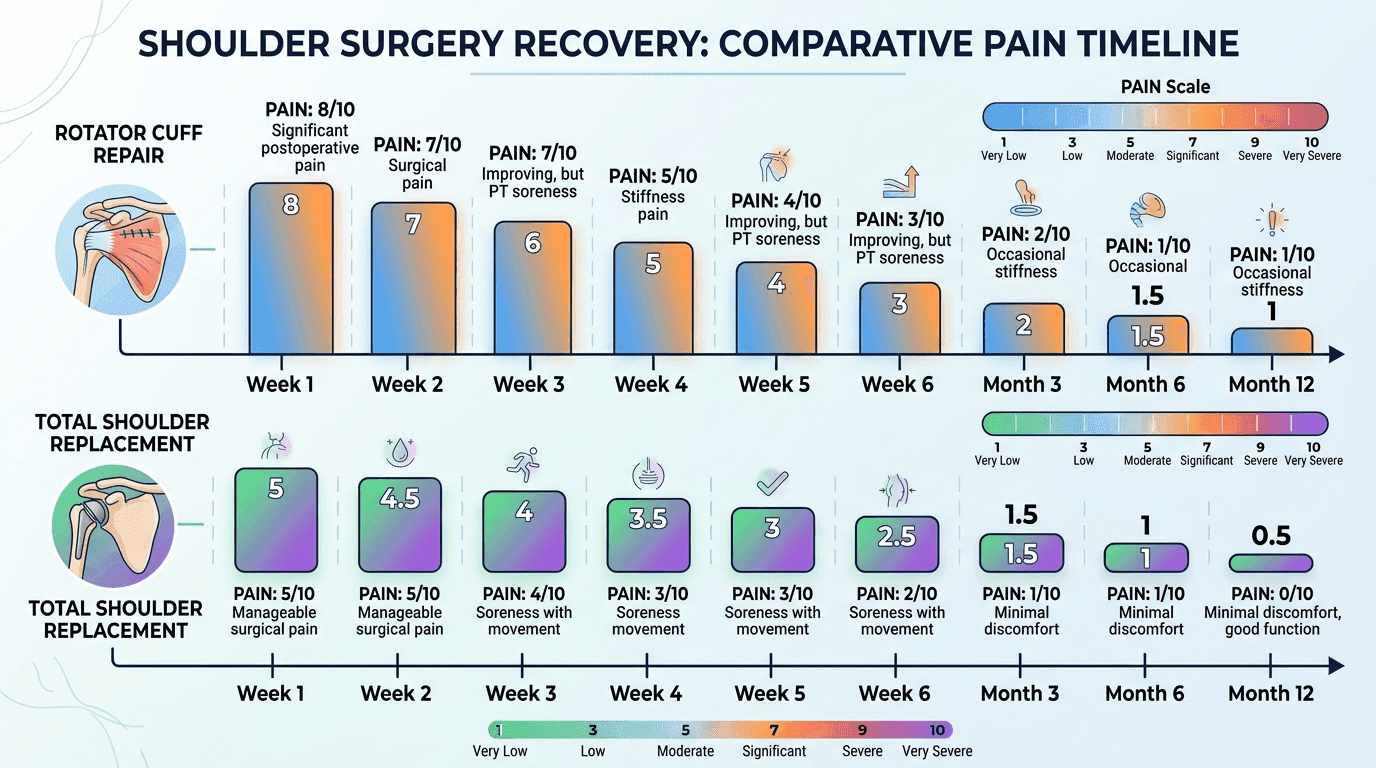
No competing resource provides this. The question patients most want answered is not which surgery hurts more in the abstract, it is when it will hurt, and for how long.
Weeks 1 to 2
Rotator cuff repair patients in this window are often managing a pain level of six to eight out of ten, particularly after rebound pain hits on night one or two. The arm is in a strict immobilizer sling, swelling is at its peak, and every accidental movement is a reminder of what has been done. Shoulder replacement patients in the same window commonly report a pain level of four to six. Swelling is present, the deltoid is sore, and sleep is still difficult — but many replacement patients describe being surprised by how much less severe the pain is compared to what they expected.
Weeks 3 to 6
Rotator cuff patients remain sling-bound for most or all of this period, depending on tear size and surgeon preference. They begin gentle pendulum exercises and passive range of motion but are not yet allowed to actively lift the arm. The pain begins to decrease but remains present, and any accidental active movement (reaching instinctively for something, catching a fall) can cause a sharp spike that sets confidence back. Replacement patients in this window are typically starting active-assisted and then active range of motion exercises, gaining functional use of the arm earlier than cuff repair patients. Pain continues to decline steadily.
Weeks 6 to 12
This is where the gap between the two surgeries becomes most noticeable. Rotator cuff patients are transitioning out of the sling and beginning physical therapy, which often involves stretching stiff, scarred tissue that has been immobilized for six weeks. These PT sessions can be genuinely painful, particularly in the first several weeks of active therapy. Night pain is still common. Shoulder replacement patients, by contrast, are typically well into their strengthening phase and many report that pain has reduced to a two or three out of ten. They still have limitations, but the trajectory feels positive.
Months 3 to 6
The pain gap begins to narrow. Rotator cuff patients who have healed well and completed consistent PT often reach a level of two to three out of ten by month four or five. Shoulder replacement patients may reach near-baseline pain levels in this window, with lingering stiffness or soreness during activity but minimal pain at rest.
Six months and beyond
For patients without complications, the pain profiles of both surgeries tend to converge at this point. Both groups can expect significant pain relief relative to their pre-surgical baseline. The difference is the path: rotator cuff repair patients typically traveled a longer, harder road to get there.
Factors That Affect How Much Pain You Will Actually Feel
Pain is not uniform across patients, and the rotator cuff vs. replacement comparison is a starting point, not a prediction. Several individual variables shape how either surgery actually feels.
Tear size and complexity are the most significant modifiers for rotator cuff repair. A small, acute partial tear in a younger patient heals faster and with less pain than a chronic, massive full-thickness tear in someone who has had symptoms for two years. Surgeons classify massive tears as those involving two or more rotator cuff tendons, and the repair of these tears places considerably more tension on the tissue.
Pre-operative pain levels influence post-operative experience. Patients who arrive at surgery with severe, constant pain often perceive post-op pain as manageable by comparison once acute swelling subsides. Patients whose pre-op pain was intermittent or mild may experience the surgical pain as more disruptive.
Age and tissue quality affect healing rate. Older tissue has reduced vascularity and regenerative capacity, which slows the tendon-to-bone healing process and can prolong the inflammatory phase. This applies to rotator cuff repair more than replacement, where implant stability is not age-dependent.
Metabolic health factors including diabetes, obesity, and smoking status all impair soft tissue healing. Research has consistently shown that patients who smoke or have poorly controlled diabetes experience slower rotator cuff healing and higher rates of re-tear, which directly extends the pain recovery curve.
Psychological factors also play a documented role. Pain catastrophizing, a tendency to ruminate on pain, feel helpless about it, and magnify its significance is associated with worse reported pain outcomes after shoulder surgery. This is not a character flaw; it is a measurable cognitive pattern that surgeons and physical therapists now screen for because it responds to targeted pre-surgical preparation and behavioral strategies.
Recovery Timelines: More Than Just Pain
Rotator Cuff Repair Recovery Milestones
The structural milestones of rotator cuff repair recovery are set by the biology of tendon healing. The sling is worn strictly for four to six weeks, sometimes longer for massive tears, not for comfort but to protect the repair from the patient's own muscle activity. Passive range of motion, where the therapist or patient moves the arm with no muscle activation typically begins around week two or three. Active-assisted motion, where the patient begins participating in the movement, starts around week six. Active lifting against resistance is usually not permitted until week twelve or later.
Return to driving generally occurs around six to eight weeks, depending on which arm is affected and surgeon clearance. Return to overhead activity and sport is a four to six month milestone at minimum for smaller repairs, and may extend to nine to twelve months for massive repairs. These timelines are not arbitrary — they reflect the pace of biological healing, and rushing them carries a meaningful re-tear risk.
Shoulder Replacement Recovery Milestones
Shoulder replacement recovery moves faster in the early weeks precisely because the implant does not need to heal — it is already mechanically stable. A sling is worn for comfort and to protect the soft tissue repair, but the joint itself tolerates early movement. Active-assisted range of motion often begins within the first week in some protocols. Weight-bearing tolerance is higher from the start: patients may be cleared to carry five to ten pounds within a few weeks, compared to the one to two pound restriction typical of early rotator cuff repair recovery.
Return to driving occurs at a similar timeline to cuff repair, around six to eight weeks, pending surgeon clearance. Lifting restrictions after anatomic total shoulder replacement may be permanent for heavy loads, typically above fifteen to twenty pounds, to protect implant longevity. Reverse total shoulder replacement, a variant used when the rotator cuff is irreparable, follows a somewhat different rehabilitation protocol because the muscle mechanics of the reconstructed shoulder are different. Both types of replacement have expected implant lifespans in the range of fifteen to twenty years, though individual outcomes vary based on activity level and anatomy.
The Physical Therapy Paradox
Physical therapy after shoulder replacement is often described by patients as hard work but not agonizing. The goal is to progressively restore range of motion and strength in a joint that is already stable. The exercises feel effortful and the shoulder tires easily, but the underlying tissue is not fighting the movement.
Physical therapy after rotator cuff repair is a different experience entirely. For the first several weeks, the therapist performs passive stretching on a shoulder that has been locked in a sling for over a month. Scar tissue forms during immobilization, and that tissue has to be gradually and repeatedly stretched to restore motion. Many patients describe their early PT sessions after cuff repair as among the most uncomfortable experiences of the recovery. The therapist is not doing anything wrong, the tissue simply resists movement that it was not designed to perform while it is still in the inflammatory and early proliferative healing phases.
This PT pain is one reason that the week six to twelve window is often the hardest for rotator cuff patients. The sling comes off, and instead of feeling free, they discover that their arm barely moves and that regaining that movement is a daily, sometimes painful commitment.
The Night Pain Phenomenon
Night pain after shoulder surgery is nearly universal, and it is one of the most common complaints patients raise in the recovery period. Lying flat causes blood to pool in the shoulder, increasing pressure and swelling, which intensifies pain. Both surgery types produce this effect, but it tends to last significantly longer after rotator cuff repair.
Most shoulder replacement patients find that sleeping in a recliner or propped up at a forty-five degree angle with a wedge pillow manages night pain adequately and that this positioning is necessary for four to eight weeks. After that, many return to a normal bed, often with a pillow under the affected arm for support.
Rotator cuff repair patients frequently report persistent night pain well into months three and four. The shoulder is still in an active healing phase during this period, and the tissue remains sensitive to positional changes. Some patients do not fully resolve night pain until month five or six, particularly those with larger repairs. The recliner or wedge pillow strategy is the same, but the duration of dependence on it is often longer.
If you are managing either recovery, connecting with a care team that can monitor your symptoms and adjust your pain protocol remotely is worth considering. A virtual primary care visit can be a practical way to discuss pain management concerns, request medication adjustments, or get guidance on positioning and therapy progress without traveling to a clinic on days when mobility is limited.
Medication Management: Soft Tissue vs. Bone
Pain medication after shoulder surgery is not one-size-fits-all, and the type of tissue being healed matters.
After rotator cuff repair, anti-inflammatory medications (NSAIDs such as ibuprofen or naproxen) are commonly used to manage swelling and pain. However, some surgeons limit or restrict NSAIDs in the early post-operative weeks based on preclinical research suggesting that prostaglandin inhibition may slow tendon-to-bone healing. This remains an area of ongoing debate in the orthopedic literature, and surgeon protocols vary. Patients should ask their specific surgical team what their policy is, rather than self-directing NSAID use.
After shoulder replacement, NSAIDs are generally used freely once cleared by the surgical team, since there is no tendon-to-bone healing to protect. Scheduled acetaminophen (one gram every six hours) is a cornerstone of multimodal pain management for both surgeries and has a favorable safety profile for most patients. Opioid medications are prescribed for the acute post-operative period and should be tapered as quickly as comfort allows. Ice application, fifteen to twenty minutes at a time, several times daily, remains one of the most effective and underutilized tools for managing shoulder surgery pain at home.
When Rotator Cuff Repair Can Lead to Shoulder Replacement
This is a question many patients with prior shoulder surgery eventually face: can a rotator cuff repair fail in a way that leads to needing a replacement? The answer is yes, and for a subset of patients, this is the actual clinical pathway.
Massive or irreparable rotator cuff tears, particularly in older patients or those with long-standing tears where the tendon has retracted and degenerated may not be candidates for repair at all, or a prior repair may fail to heal. When this occurs alongside joint arthritis, the condition is called cuff tear arthropathy, and it is the primary indication for reverse total shoulder replacement.
Reverse total shoulder replacement differs from anatomic total shoulder replacement in that it switches the positions of the ball and socket, allowing the deltoid muscle to take over the function of the damaged rotator cuff. It is increasingly common as the population ages, and it carries a strong track record for pain relief in appropriate candidates. Patients who have already undergone a failed rotator cuff repair and are considering further surgery should discuss reverse replacement specifically with their surgeon, as the indications, rehabilitation, and long-term expectations differ from both standard replacement and repeat cuff repair.
How to Reduce Pain After Either Procedure
Pain management after shoulder surgery is not passive. There are concrete steps patients can take before and after the procedure to influence how comfortable recovery is.
Before surgery, ask specifically about nerve block options. A single-shot interscalene block provides six to twelve hours of coverage; a continuous nerve catheter (a small tube left in place post-operatively that delivers ongoing anesthetic) can extend this to forty-eight to seventy-two hours, substantially blunting the rebound pain effect. Liposomal bupivacaine (brand name Exparel) is an extended-release local anesthetic that some surgeons inject during closure to provide additional post-block coverage. Not every surgical center offers all options, but the question is worth asking before the date of surgery, not after.
For sleep, plan to use a recliner or a wedge pillow from night one. Having this ready at home before surgery removes the problem of trying to set it up while already in pain. For rotator cuff repair in particular, prepare for this arrangement to last longer than expected, potentially two to four months.
Ice application is consistently effective for both procedures. A dedicated shoulder ice wrap or cold therapy unit (which circulates cold water through a cuff) reduces swelling and dulls pain signals at the tissue level. Use it regularly in the first several weeks, not just when pain peaks.
Physical therapy consistency is the single most important long-term factor for rotator cuff repair patients. Skipping sessions or not completing home exercise programs allows scar tissue to stiffen between sessions, making each subsequent visit harder. The pain of consistent PT is almost always less than the pain of trying to recover from prolonged stiffness.
If questions come up between appointments about symptoms or medication management, using Momentary's AI health navigator to understand what you are experiencing and identify when to reach out to your care team can be a practical way to stay on top of your recovery without guesswork.
Which Surgery Is Right for You? A Simple Decision Framework
The answer to "which surgery hurts more" matters, but it should not drive the decision about which surgery to have. The right procedure is the one that addresses the actual problem in the shoulder.
A straightforward decision framework:
If the rotator cuff tendon is torn but the underlying joint is healthy and the tendon is repairable, rotator cuff repair is the indicated procedure. If the rotator cuff is intact but the joint surfaces are arthritic and deteriorated, anatomic total shoulder replacement is appropriate. If the rotator cuff is irreparable (whether from a massive tear, prior failed repair, or cuff tear arthropathy) and the joint is also compromised, reverse total shoulder replacement is typically the recommended path.
Pain level during recovery does not change which procedure correctly addresses the diagnosis. Choosing a replacement to avoid the harder recovery of rotator cuff repair, when the actual problem is a repairable tendon tear in a healthy joint, would mean undergoing an inappropriate operation. The goal is always to match the surgery to the pathology.
What patients can control is how prepared they are, how proactively they discuss pain management with their surgical team before the procedure, and how consistently they follow through on physical therapy and home exercises during recovery. Those factors, more than the specific surgery type, are what shape the actual experience of getting through it.
Frequently Asked Questions
What is the hardest shoulder surgery to recover from?
Among the most common shoulder procedures, massive rotator cuff repair involving two or more tendons and requiring prolonged immobilization is generally considered the most demanding recovery. The combination of strict sling use for four to six weeks or more, the biological demands of tendon-to-bone healing, and the often grueling physical therapy phase makes it among the more difficult orthopedic recoveries overall. Reverse total shoulder replacement is also a significant surgery but often produces faster early pain relief because it eliminates the source of grinding joint pain immediately.
How bad is the pain after a total shoulder replacement?
Most patients and surgeons describe total shoulder replacement as less painful than expected in the early recovery period, particularly compared to rotator cuff repair. Pain in the first one to two weeks typically centers around the deltoid muscle and surrounding soft tissue rather than the joint itself, since the joint is now mechanically stable. The interscalene nerve block used during surgery provides several hours of post-op comfort, and with a well-managed multimodal pain protocol, most patients describe early replacement pain as moderate and controllable rather than severe.
What do patients wish they had known before shoulder replacement surgery?
The most commonly reported surprises include how long sleeping in a recliner is necessary (often four to six weeks), how much the hand and forearm tingle or feel heavy due to the interscalene block wearing off, how quickly arm function returns relative to expectations, and how important it is to have a helper at home for the first one to two weeks for tasks like dressing, cooking, and hygiene. Patients also frequently mention wishing they had understood the rebound pain phenomenon on day two before they experienced it.
Is rotator cuff surgery considered among the most painful orthopedic procedures?
Rotator cuff repair, particularly for large or massive tears, is consistently ranked among the more painful orthopedic surgeries in patient-reported outcome surveys. The Archives of Orthopaedic and Trauma Surgery study confirmed that rotator cuff repair patients report significantly higher early post-operative pain compared to other shoulder procedures. The pain is not simply from the incision or anesthesia wearing off — it is rooted in the biological demands of the repair itself, which is why it is not easily managed with pain medication alone and requires a structured, patient physical therapy protocol.
How long does the nerve block last after shoulder surgery, and what happens when it wears off?
A standard single-shot interscalene nerve block typically provides six to twelve hours of numbness and pain relief. As the block wears off, pain increases, often significantly, in what is clinically described as rebound pain. This effect is most pronounced on the first post-operative night or early on day two. Patients should be medicated before the block fully wears off, not after pain has already peaked. Extended-release options such as continuous nerve catheters and liposomal bupivacaine can stretch effective coverage to forty-eight to seventy-two hours and meaningfully reduce this effect.
Can rotator cuff surgery eventually lead to needing a shoulder replacement?
Yes, in some cases. Massive or irreparable rotator cuff tears that cannot be surgically repaired, or prior repairs that fail to heal, can lead to joint deterioration over time. When this occurs alongside arthritis, the resulting condition cuff tear arthropathy is a primary indication for reverse total shoulder replacement. Patients who have already had a failed rotator cuff repair and are experiencing progressive pain and loss of function should discuss this pathway explicitly with an orthopedic surgeon who specializes in shoulder reconstruction.
References
- Voss A, et al. Archives of Orthopaedic and Trauma Surgery (2019) — Cited for evidence that rotator cuff repair produces higher post-operative pain scores than other shoulder procedures.
- Zhao X, et al. Frontiers in Medicine (2025) — Cited for clinical review of rebound pain following interscalene nerve block in arthroscopic shoulder surgery.
- Thomopoulos S, et al. PubMed / Musculoskeletal Research (2023) — Cited for the three-phase biological model of tendon-to-bone healing following rotator cuff repair.
- Cancienne JM, et al. PubMed (2020) — Cited for evidence linking smoking, obesity, and diabetes to impaired rotator cuff healing and higher re-tear rates.
- PMC / Journal of Orthopaedic Research (2022) — Cited for supporting data on multimodal analgesia protocols and pain outcomes in shoulder surgery recovery.