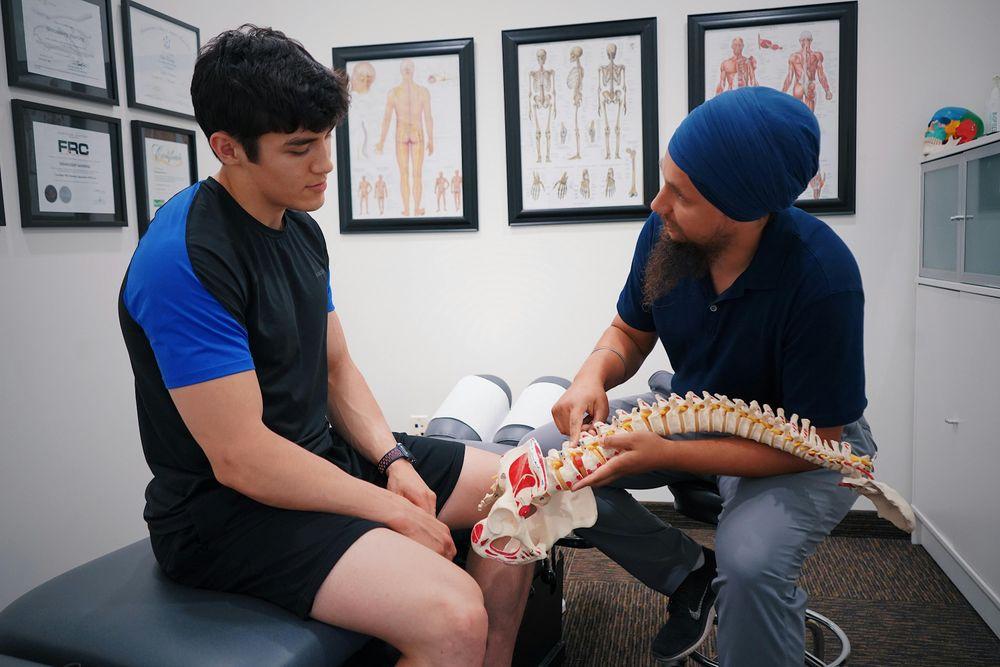


If a surgeon has just handed you a spinal fusion recommendation, this article is for you. Not to frighten you out of a procedure that may genuinely help, but to give you the full, evidence-based picture that far too many patients never receive before they say yes.
| Topic | Key Facts |
|---|---|
| Annual US spinal fusions | Approximately 1 million per year |
| Growth since 1980s | From roughly 40,000 procedures per year |
| Medicare overuse rate (avg.) | 14% of spinal fusions, per Lown Institute 2024 |
| Hospital overuse rate (high end) | Up to 50%+ at individual facilities |
| Estimated cost of overuse | Approximately $2 billion over three years in Medicare alone |
| Failure-to-fuse rate | 10 to 40%, depending on patient risk factors |
| Primary indication strength | Strong for spondylolisthesis, fractures, deformity; weak for non-specific low back pain |
| Key patient action | Always seek a second opinion before consenting |
From Rare Procedure to Routine Surgery: The Numbers Behind the Spinal Fusion Boom
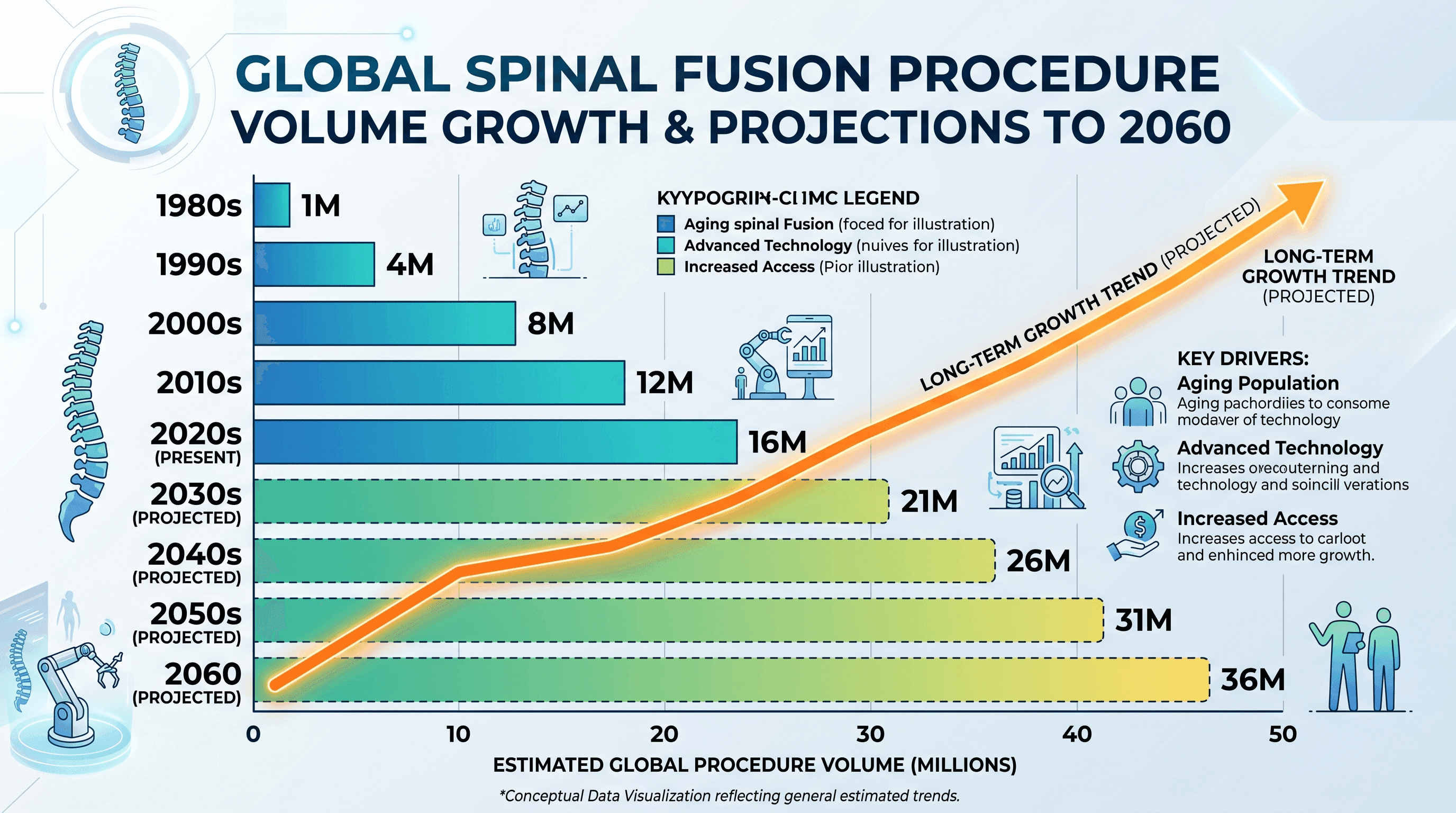
Spinal fusion was once a relatively uncommon operation, performed roughly 40,000 times a year in the United States through the 1980s. Today, estimates place the annual volume near 1 million procedures, making it one of the most frequently performed surgeries in the country.
That is not a story about a sudden epidemic of spine disease. Degenerative spinal changes are a normal part of human aging, and the population of people with those changes has not increased by 2,000 percent. What has changed is how those changes are being treated, who is recommending surgery, and what financial incentives are shaping those recommendations.
Research published in PMC projects that demand for spinal fusion could grow by an additional 83 percent by 2060, reaching approximately 102 procedures per 100,000 residents annually. That trajectory, if it holds, means millions more Americans will face this decision in the coming decades. Understanding what is driving the numbers is the first step to protecting yourself.
Why Spinal Fusion Became So Profitable, and So Overused
The growth of spinal fusion cannot be explained by patient need alone. Three financial forces have reshaped who gets recommended for surgery and how often.
The Device Industry's Role in Driving Surgical Volume
Every spinal fusion requires hardware: titanium cages, pedicle screws, rods, and increasingly, biologic bone growth agents. These implants are sold by device manufacturers whose revenue is directly tied to surgical volume. Sales representatives from these companies have historically been present in operating rooms during procedures, a practice that independent researchers and ethicists have flagged as a potential conflict of interest.
According to the 2024 Lown Institute Hospitals Index report on unnecessary back surgery, the 3,454 physicians who performed a measurable volume of low-value back surgeries over a three-year period collectively received $64 million from device and pharmaceutical companies, covering consulting fees, speaking engagements, meals, and travel. That figure was drawn from federal Open Payments data. It does not mean every one of those physicians made a financially motivated surgical recommendation. It does mean patients deserve to know about those relationships before consenting.
The Reimbursement Gap: What Surgeons Earn from Fusion vs. Simpler Procedures
The financial disparity between surgical options is substantial. A complex multilevel spinal fusion can reimburse a surgeon roughly 20 times more than a simpler decompression procedure, based on CMS reimbursement data. Decompression alone, which relieves pressure on a nerve without permanently joining vertebrae, is often clinically appropriate for conditions like spinal stenosis, but it pays far less.
That gap does not make surgery a financially motivated choice in every case. It does create a systemic incentive that patients should understand, particularly when a surgeon recommends fusion at the first consultation without offering simpler alternatives.
"Over three years, U.S. hospitals performed more than 200,000 unnecessary back surgeries on Medicare beneficiaries. That's one low-value back procedure every eight minutes." — Lown Institute Hospitals Index, 2024
The MRI Trap: Operating on Imaging Instead of Symptoms
One of the most reliable contributors to unnecessary spine surgery is a finding on an MRI that looks alarming but may have nothing to do with a patient's actual pain.
Age-related disc changes, including bulging discs, disc desiccation, and mild degenerative disc disease, are nearly universal in adults over 40. Research consistently shows that a large proportion of people with no back pain at all have significant abnormalities visible on MRI. When a patient with back pain receives an MRI and a radiologist flags a bulging disc, the temptation, for both patient and clinician, is to treat what the image shows. But the image does not confirm that the disc is the source of pain.
This is sometimes called operating on the MRI rather than the patient. A disc that looks deteriorated may be asymptomatic. A nerve that appears compressed on imaging may not correlate with the patient's reported symptoms. Responsible spine evaluation requires correlating imaging findings with a detailed clinical examination and, where appropriate, diagnostic nerve blocks or electrophysiological testing before any surgical recommendation is made.
Patients who are handed a fusion recommendation shortly after receiving their first MRI should ask directly: "How do you know this specific disc is causing my pain?"
The Mechanical Consequence: Adjacent Segment Disease
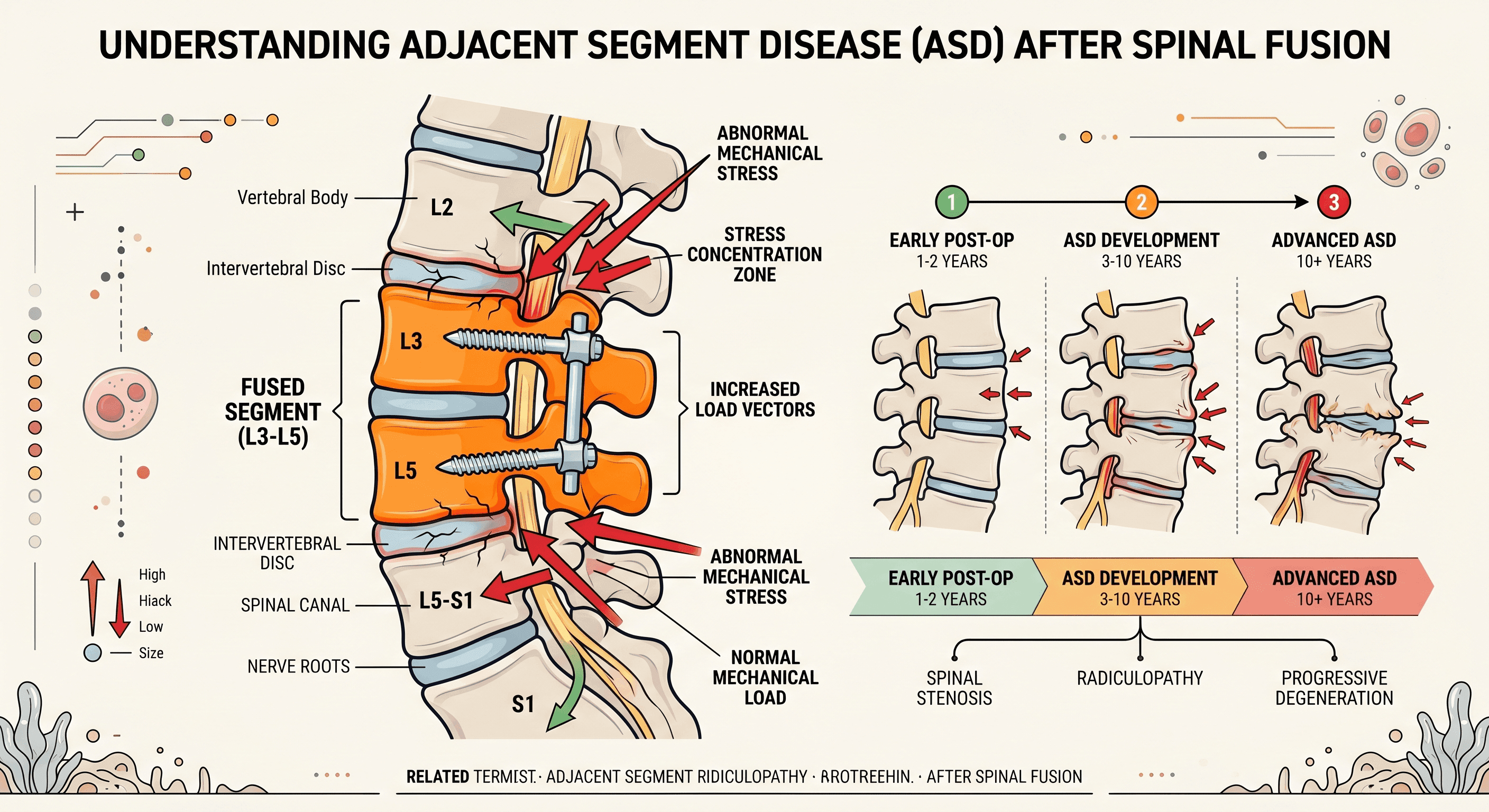
When two vertebrae are fused together, motion at that spinal level is eliminated. The human spine functions as an integrated system of interconnected joints, and when one segment is locked, the segments directly above and below it must absorb increased mechanical stress during every movement.
Over time, that added load accelerates deterioration in those neighboring discs and joints. This is called Adjacent Segment Disease (ASD), and it is not a rare complication. Studies on long-term lumbar fusion outcomes report clinically significant adjacent segment degeneration in a meaningful proportion of patients within five to ten years of their original procedure. When ASD becomes symptomatic, the treatment recommendation is frequently another fusion at the adjacent level.
This creates what spine specialists sometimes call a domino effect: a single fusion leads to stress at the neighboring segment, which deteriorates, which leads to another fusion, which then stresses its neighbor. For multilevel fusions performed in younger patients, the long-term implications of this mechanical chain reaction deserve very serious consideration before the first surgery is agreed to.
Failed Back Surgery Syndrome: When a Successful Surgery Still Fails the Patient
Failed Back Surgery Syndrome (FBSS) refers to persistent or recurrent chronic pain following technically successful spine surgery. The term is sometimes considered a misnomer, because the surgery itself did not fail in a mechanical sense. The fusion may have been executed correctly. The vertebrae may have joined together as intended. But the patient wakes up with the same pain, or worse, because a mechanical fix did not resolve a neurological problem.
FBSS is more common than most patients are told before surgery. Published literature has documented significant rates of persistent pain and functional limitation following lumbar fusion, particularly in patients whose preoperative diagnosis was non-specific chronic low back pain rather than a clearly defined structural cause.
Several factors are associated with higher FBSS risk. Pre-existing opioid use before surgery is one of the strongest predictors of poor outcomes. Psychological factors including depression, anxiety, and catastrophizing are also significant. When these risk factors are not systematically evaluated and addressed before surgery, the probability of meaningful pain relief decreases substantially, and the probability of ongoing chronic pain management increases.
The Real Complications Patients Are Not Fully Warned About
The standard surgical consent form covers the basics: infection, bleeding, nerve damage, blood clots. These are real risks, and surgeons are required to discuss them. What often receives far less attention are the downstream, long-term complications that affect quality of life for years.
The Opioid Trap: Why Many Fusion Patients Do Not Get Off Pain Medication
Pre-operative opioid use is one of the most consequential and least discussed predictors of poor surgical outcomes in spine patients. Patients who are already on chronic narcotic medication before spinal fusion fare significantly worse in terms of pain relief, functional recovery, and return to work.
Research findings show that a substantial proportion of lumbar fusion patients remain on chronic opioid medication two years after their procedure. The mechanism is well understood: opioid use alters pain processing pathways in the central nervous system, a phenomenon called central sensitization. Once those pathways are altered, fixing the structural source of pain in the spine often does not resolve the pain experience itself.
The result is a cycle: a patient in chronic pain is prescribed opioids before surgery, the opioids blunt surgical outcomes, the inadequate outcome leads to persistent pain, and that persistent pain continues to require opioid management. Surgeons who do not screen for and address pre-operative opioid use are setting some of their patients up for this cycle before the first incision is made.
Pseudoarthrosis, Hardware Failure, and the Revision Surgery Cycle
Pseudoarthrosis is the medical term for a failed fusion, a condition in which the two vertebrae do not successfully join into solid bone despite the surgery being performed correctly. Failure-to-fuse rates are reported between 10 and 40 percent, depending on the number of levels fused, patient biology, and lifestyle factors.
Smoking dramatically increases pseudoarthrosis risk. Research data shows that approximately 33 percent of smokers experience incomplete or failed fusion, compared to around 6 percent of non-smokers. Osteoporosis is another major risk factor: approximately 50 percent of patients with osteoporosis who undergo lumbar fusion experience related complications. When pseudoarthrosis occurs, the hardware, including the screws and rods holding the construct together, continues to bear mechanical load without the support of solid bone. Over time, that hardware fatigues and can loosen or break, often requiring revision surgery that is more complex and carries higher complication rates than the original procedure.
When Is a Spinal Fusion Actually the Right Choice?
Fusion is genuinely lifesaving and functionally critical in specific, well-defined clinical scenarios. The problem is not the procedure itself. The problem is how broadly it is being applied beyond those scenarios.
Conditions Where Fusion Has Strong Evidence
Spinal fusion is the established standard of care for high-grade spondylolisthesis (a condition where one vertebra slides forward over another and creates spinal instability), severe scoliosis or kyphotic deformity causing progressive neurological compromise, spinal fractures requiring stabilization, post-infection spinal instability following vertebral osteomyelitis, and tumor resection that leaves the spine structurally unsound.
In these situations, surgery is not elective. The alternative is progressive neurological loss, deformity, or structural collapse. Fusion in these cases reliably improves outcomes and in many instances is the only appropriate treatment.
Conditions Where Evidence Is Weak or Inconsistent
The evidence for fusion is substantially weaker, or actively disputed, for non-specific chronic low back pain without neurological deficits, mild degenerative disc disease in the absence of instability, and single-level disc degeneration with pain but no identifiable mechanical cause that imaging can reliably confirm as the pain source.
For these indications, multiple clinical guidelines, including those from the National Institute for Health and Care Excellence (NICE), recommend exhausting conservative management before surgery is considered. That means a structured trial of physical therapy, targeted injections where appropriate, and pain management, often spanning months rather than weeks.
Red Flags That a Fusion Recommendation May Not Be in Your Best Interest
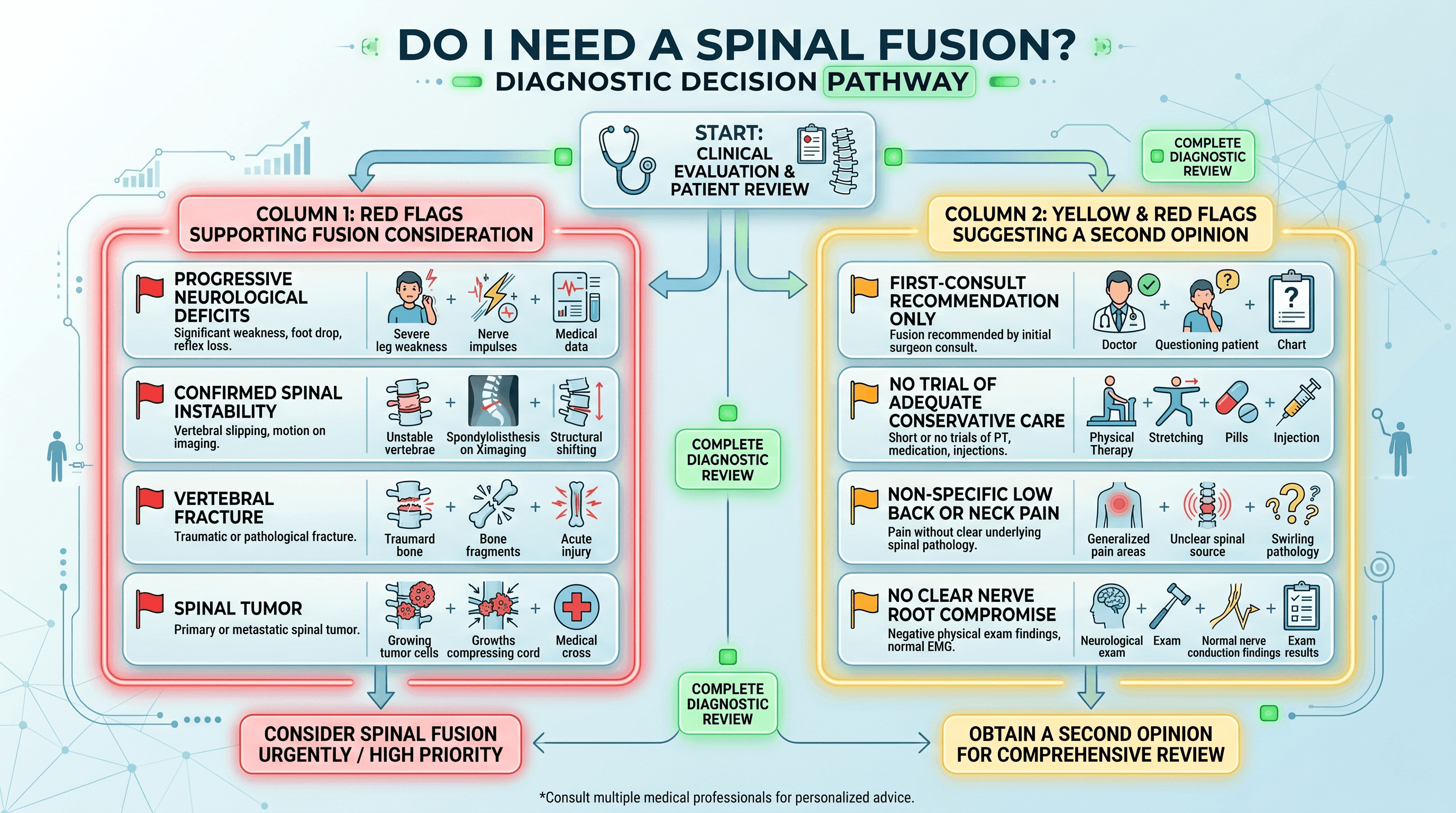
A fusion recommendation is not automatically wrong, but certain circumstances should prompt additional scrutiny before agreeing to anything.
Consider requesting a second opinion if any of the following apply to your situation.
A surgeon recommends fusion at the very first consultation, before a thorough conservative care trial has been attempted or completed. A conservative care trial means structured, supervised physical therapy for a minimum of six to twelve weeks, not two sessions that were discontinued because they hurt.
The recommendation is for multilevel fusion covering three or more vertebral segments, and the diagnosis is non-specific chronic pain rather than confirmed structural instability or neurological compromise.
When asked directly, the surgeon cannot clearly explain which specific anatomical finding is causing your symptoms and how the surgery addresses that finding.
The surgeon has not volunteered information about financial relationships with device manufacturers, and direct questioning about this is deflected or dismissed.
No alternatives to fusion have been discussed, including decompression alone, artificial disc replacement for appropriate candidates, or continued non-surgical management.
These are not accusations of wrongdoing. They are reasonable signals that a conversation with a second physician, ideally from a different hospital system, is warranted before proceeding.
Your Options: Evidence-Based Alternatives to Spinal Fusion
Not every spinal condition that produces significant pain requires fusion. Several alternatives have solid evidence bases for specific indications.
Physical therapy and exercise rehabilitation remain the first-line recommendation for most forms of chronic low back pain and degenerative disc disease. Structured programs focusing on core stabilization, neural mobilization, and movement pattern correction produce meaningful long-term improvements in pain and function for many patients, without the risks of surgery or the recovery burden.
Epidural steroid injections can provide significant short-term pain relief for nerve compression syndromes including sciatica and spinal stenosis. They are not a permanent solution, and guidelines recommend against using them as a standalone long-term strategy, but they can be highly effective for managing acute flares and buying time for conservative rehabilitation to work.
Minimally invasive decompression addresses conditions like spinal stenosis by removing the material compressing a nerve, without fusing the segment. For patients whose primary problem is nerve compression rather than structural instability, decompression alone often achieves the same functional improvement as fusion, with a shorter recovery and without the downstream risks of adjacent segment disease.
Artificial disc replacement (ADR) preserves motion at the treated spinal level and avoids the biomechanical cascade that leads to adjacent segment disease. It is not appropriate for every patient, and eligibility criteria are specific, but for younger patients with single-level disc disease causing nerve compression, ADR outcomes are comparable to fusion in the published literature.
How to Protect Yourself: A Patient Decision Framework Before Agreeing to Fusion
The UK Academy of Medical Royal Colleges recommends the BRAN framework as a tool for any major medical decision: Benefits, Risks, Alternatives, and the option of Nothing (that is, watchful waiting). Applied to spinal fusion, BRAN cuts through the clinical noise and centers the decision on what a patient actually needs to know.
Before signing a surgical consent form, get clear answers to these specific questions.
Eight Questions to Ask Before Agreeing to Spinal Fusion
1. Has conservative care been fully exhausted? A genuine trial means at minimum six to twelve weeks of structured physical therapy with documented outcomes, not a brief course that was abandoned early.
2. What is my exact diagnosis, not just "back pain"? The recommendation should name a specific anatomical finding that is confirmed to be the source of symptoms.
3. What is the published evidence for fusion for my specific condition? Ask for the evidence base by name. "Degenerative disc disease" and "Grade III spondylolisthesis" have very different evidence profiles.
4. What are my non-surgical options? If the surgeon cannot name at least two alternatives, that is worth noting.
5. What is your personal complication rate for this procedure? Board-certified surgeons performing procedures regularly should be able to provide this data.
6. Do you have financial relationships with device manufacturers? This information is publicly available in federal Open Payments databases, and asking the surgeon directly is entirely reasonable.
7. What happens if I wait six more months? If the answer is that waiting carries serious neurological risk, that is important clinical information. If the answer is essentially "you'll still be in pain," that is also important information.
8. Will you support me in seeking a second opinion? A surgeon who is genuinely confident in the recommendation will support this. Reluctance to support a second opinion is itself a signal.
If you would like to find a spine specialist or get a referral to a second opinion physician, connecting with a qualified doctor is a reasonable and medically supported first step before any surgical decision.
The Bottom Line: Spinal Fusion Saves Lives When Used Correctly, and Harms Patients When It Is Not
Spinal fusion is one of the most transformative surgical procedures in modern medicine when applied to the right patient, with the right diagnosis, at the right time. For patients with genuine structural instability, progressive neurological deficits, or conditions that cannot be managed conservatively, it can restore function and prevent permanent disability.
The problem is that the criteria for "right patient" have expanded steadily over three decades, driven by a convergence of financial incentives, device industry influence, and a medical culture that has historically defaulted to intervention over watchful waiting.
Knowing the evidence is not the same as refusing surgery. It means arriving at the operating room, if you arrive there at all, confident that every other reasonable option has been genuinely explored, that your surgeon understands your specific anatomy and not just your imaging findings, and that the risks you are accepting are proportionate to the benefit you have a realistic chance of receiving.
You deserve a surgeon who has exhausted every other option first.
For more support navigating your options and understanding your diagnosis, Momentary Lab's AI healthcare navigator can help you find reliable health information and better understand your care pathway.
Frequently Asked Questions
What are the future problems with spinal fusion? The most common long-term problems following spinal fusion include Adjacent Segment Disease, where the discs above and below the fused level deteriorate faster due to increased mechanical stress; pseudoarthrosis, where the bones fail to fuse and the hardware begins to fail; and revision surgery, which becomes necessary in a significant proportion of patients over the following decade. Ongoing opioid dependency after surgery is also a documented long-term concern, particularly for patients who were on chronic pain medication before the procedure.
How long does L5-S1 fusion surgery take? A single-level L5-S1 spinal fusion typically takes between two and four hours in the operating room, depending on the surgical approach (anterior, posterior, or combined), whether there are complicating factors, and the experience of the surgical team. Recovery involves a hospital stay of two to four days in most cases, and full functional recovery typically takes three to six months.
How safe is spinal fusion surgery? According to Mayo Clinic, spinal fusion is generally a safe procedure when performed by experienced surgeons on appropriately selected patients. However, all surgery carries inherent risk. Potential complications include infection, blood clots, nerve damage, hardware failure, and failed fusion. The safety profile improves significantly when patients are carefully selected and conservative alternatives have been genuinely exhausted first.
What is the best way to sleep after spinal fusion surgery? Most spinal fusion patients are advised to sleep on their back with a pillow under the knees to reduce pressure on the lumbar spine, or on their side in a fetal position with a pillow between the knees to maintain spinal alignment. Sleeping flat on the stomach is generally discouraged in the early recovery period. A surgeon or physical therapist can advise on individual positioning based on which spinal levels were operated on.
What is Failed Back Surgery Syndrome? Failed Back Surgery Syndrome (FBSS) refers to persistent or worsening chronic pain that continues after a technically successful spine surgery. It is not a single condition but a descriptor for a range of outcomes where surgery did not produce the expected pain relief. It can result from central sensitization (altered pain processing in the nervous system), pre-existing opioid use, unaddressed psychological contributors to pain, or a mismatch between the structural finding that was treated and the actual source of the patient's symptoms.
Should I always get a second opinion before spinal fusion? Yes. Clinical guidelines and patient advocacy organizations broadly recommend seeking a second opinion, ideally from a spine specialist at a different institution, before consenting to spinal fusion for anything other than an emergency. A second opinion is not a sign of distrust; it is standard practice for any major elective surgery. Physicians who are confident in their recommendations will support this step.
References
- Lown Institute Hospitals Index, 2024 — Data on Medicare spinal fusion overuse rates, estimated costs, and physician payments from device manufacturers.
- PMC: Lumbar Spinal Fusion Outcomes (PMC9659217) — Projections of spinal fusion demand through 2060 and analysis of procedure growth trends.
- PMC: MRI Findings and Low Back Pain (PMC5913031) — Evidence on the prevalence of MRI abnormalities in asymptomatic adults and the risks of imaging-driven surgical decisions.
- PMC: Adjacent Segment Disease After Lumbar Fusion (PMC10491010) — Long-term data on adjacent segment degeneration rates following lumbar spinal fusion.
- PubMed: Smoking and Pseudoarthrosis Risk in Spinal Fusion (32652276) — Data on failure-to-fuse rates in smokers vs. non-smokers and other procedural volume trends.
- PMC: Failed Back Surgery Syndrome (PMC11432351) — Clinical analysis of FBSS rates, risk factors, and the role of pre-surgical opioid use in outcomes.
- PubMed: NICE Guidelines on Spinal Fusion for Low Back Pain (33447679) — Summary of NICE clinical guideline recommendations for spinal fusion indications and the primacy of conservative management.
- Mayo Clinic: Spinal Fusion — Overview of spinal fusion risks, recovery, and patient safety considerations.