

At a Glance
| Topic | Key Facts |
|---|---|
| Surgery type | Permanent bone-bonding procedure connecting two or more vertebrae |
| Hospital stay | Typically 1 to 4 days depending on levels fused and approach |
| Full fusion timeline | Bone graft solidifies over 6 to 12 months |
| Non-union (pseudoarthrosis) rate | Estimated 5 to 35% depending on risk factors and technique |
| Adjacent segment disease | Radiographic signs appear in roughly 24 to 36% of patients at 10 years |
| Biggest modifiable risk factor | Nicotine use, which directly impairs bone healing |
| Return to desk work | Typically 4 to 6 weeks post-op |
| Return to physical labor | Typically 3 to 6 months post-op |
The Big Picture: A Major Surgery With a Year-Long Commitment
Spinal fusion is one of the more consequential elective procedures a person can undergo, and that description is not meant to frighten. For the right patient, it delivers meaningful relief from conditions that no amount of physical therapy, injections, or medication has been able to resolve. But the gap between a technically successful surgery and a fully recovered patient is wider than most pre-op conversations acknowledge.
This guide was written for a patient who has already been recommended spinal fusion and wants one honest, grounded resource to understand what is really at stake. Not every risk listed here will apply to every patient. Not every recovery follows the same arc. What every patient shares, though, is the need for accurate expectations, because unrealistic timelines and undisclosed failure modes are among the most common drivers of post-surgical frustration and missed milestones.
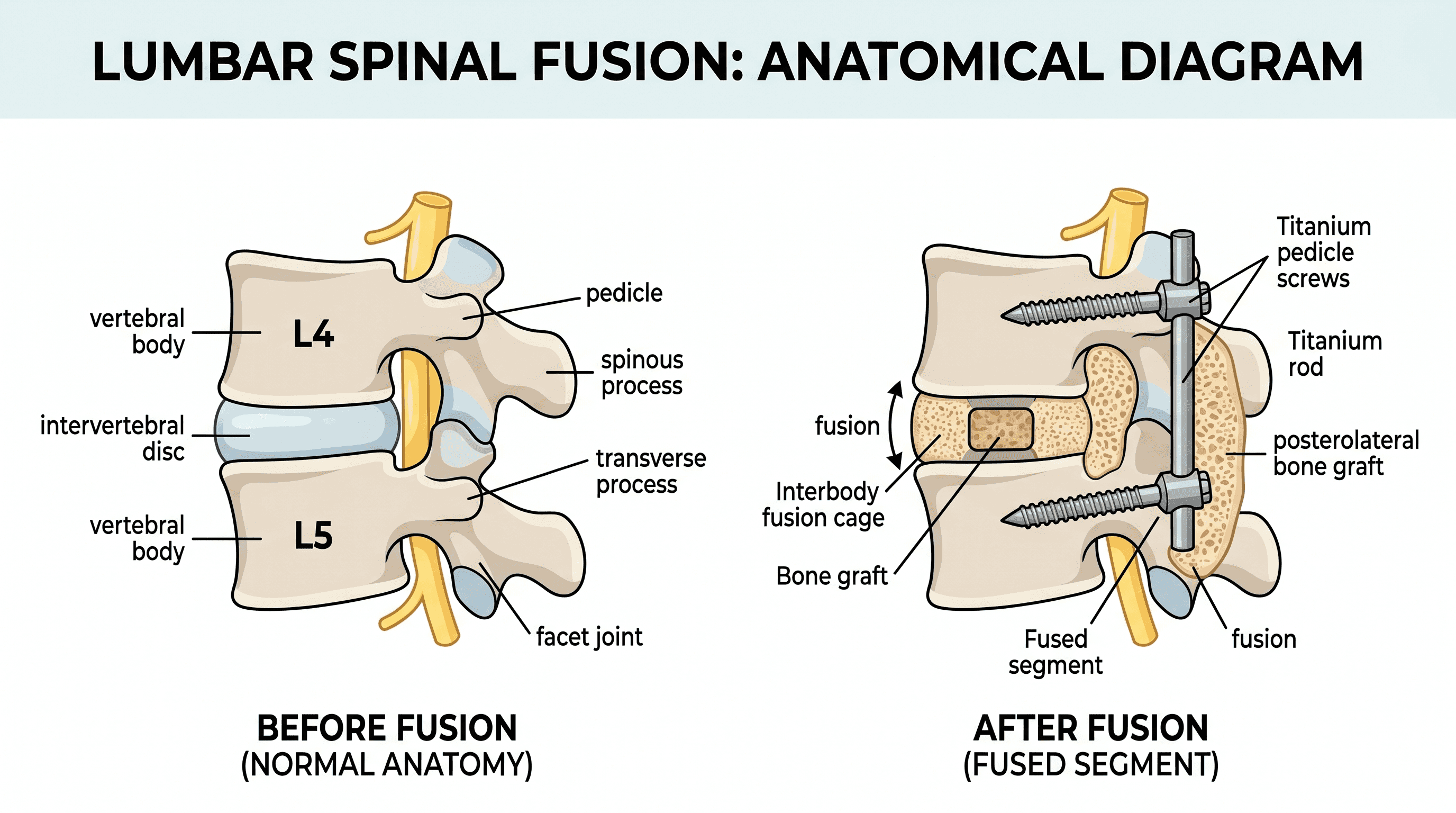
Spinal fusion connects two or more vertebrae by placing bone graft material between them, then stabilizing the construct with metal rods, screws, or cages while the body grows new bone to bridge the gap permanently. The procedure is performed by neurosurgeons and orthopedic spine surgeons and can target the cervical (neck), thoracic (mid-back), or lumbar (lower back) spine. Most fusions in the US are lumbar, targeting the L4-L5 or L5-S1 levels, which are the most mechanically stressed segments of the spine.
Understanding what this surgery does, what it cannot do, and where it sometimes falls short is the starting point for making an informed decision and building a recovery plan that actually works.
The Immediate Clinical Risks: Infection, DVT, and Dural Tears
Every major surgery carries immediate procedural risks, and spinal fusion is no exception. These risks are real, but for most patients in good general health, they are manageable.
Surgical site infection is among the most common short-term complications, with rates ranging from roughly 1 to 4% in lumbar fusion cases, according to data reviewed by the Cleveland Clinic. Deep infections that reach the hardware or bone are more serious and may require surgical debridement, prolonged intravenous antibiotics, or, in rare cases, hardware removal. Patients with diabetes carry a meaningfully higher infection risk due to impaired immune function and slower tissue repair.
Deep vein thrombosis (DVT) is a blood clot that forms in a leg vein during or after surgery. Immobility on the operating table and restricted movement in the days immediately post-op creates the conditions for clot formation. Surgeons routinely prescribe compression stockings, early ambulation protocols, and anticoagulant medications to reduce this risk. A clot that travels to the lungs becomes a pulmonary embolism, which is a medical emergency requiring immediate treatment.
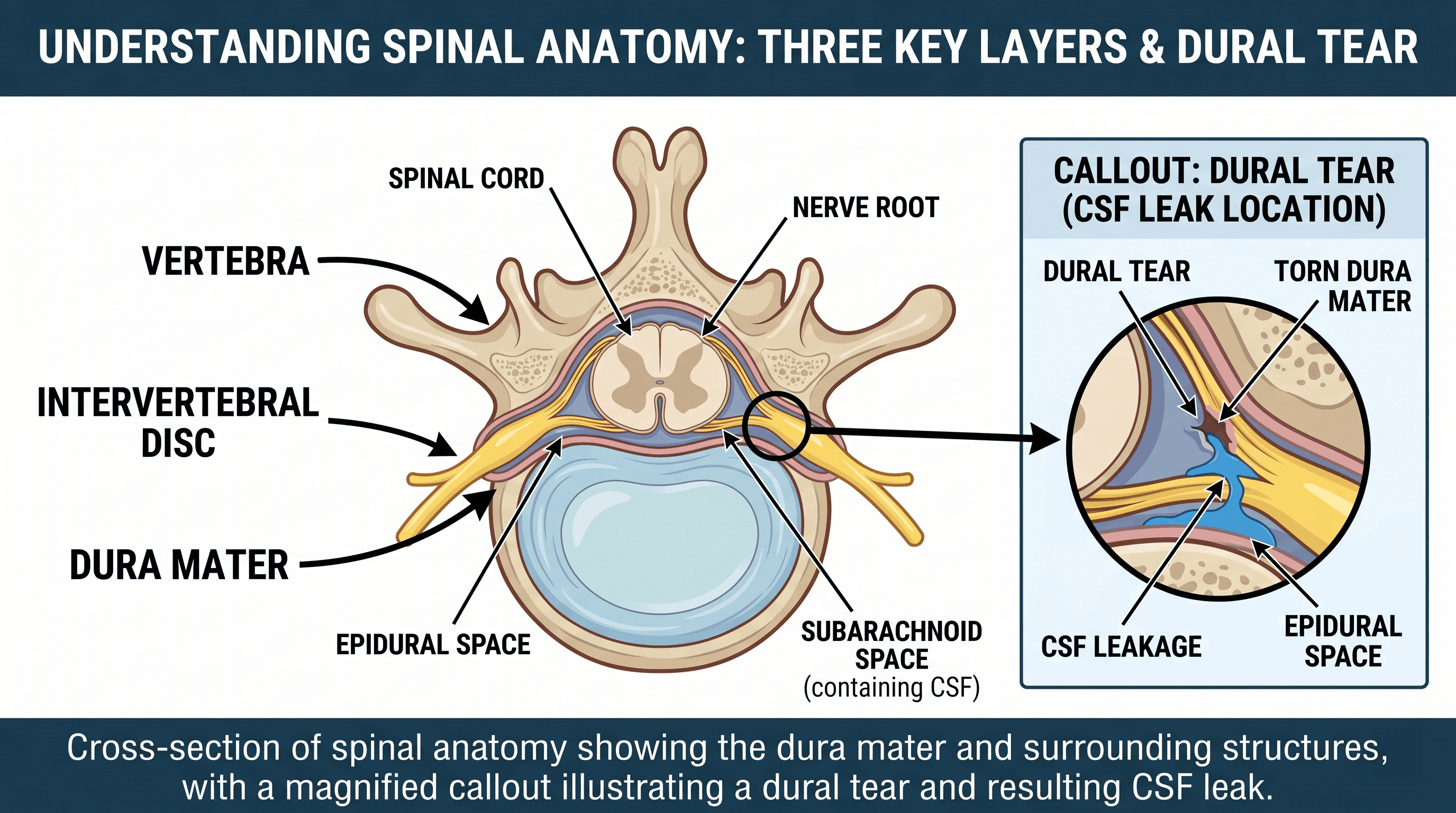
Dural tear, also called a cerebrospinal fluid (CSF) leak, occurs when the thin membrane surrounding the spinal cord is accidentally nicked during surgery. This happens in roughly 1 to 7% of spinal fusion cases and is more likely in revision surgeries or cases with significant scar tissue. Many dural tears are identified and repaired intraoperatively. When they are not caught immediately, symptoms include positional headache, nausea, and neck stiffness. Most small dural tears resolve with bed rest and conservative care, though some require a procedure called a blood patch to seal the leak.
Nerve damage is a risk in any spine surgery. Temporary nerve irritation during the weeks following surgery is common and typically resolves. Permanent neurological injury is rare but possible, particularly in cases involving severe stenosis or complex deformity correction.
The Mechanical Risks: Hardware Failure and Pseudoarthrosis
Beyond the operating room, two longer-term mechanical failures can undermine even a technically well-executed fusion: pseudoarthrosis and instrumentation failure.
Pseudoarthrosis is the clinical term for a failed bone fusion. After surgery, the bone graft is supposed to gradually integrate and harden into a solid bridge between the two target vertebrae. When that process stalls or never completes, a false joint forms at the graft site. The construct remains mechanically unstable, and the hardware is now bearing load it was never designed to carry indefinitely.
Published estimates for pseudoarthrosis rates vary significantly depending on the surgical approach, the number of levels fused, and patient risk factors, but rates between 5 and 35% have been reported in the medical literature, with higher rates seen in multi-level fusions and in patients who continue using tobacco after surgery. Pain from pseudoarthrosis often mirrors the original pre-surgical pain, sometimes with a layer of new localized discomfort at the graft site. A CT scan at 6 to 12 months post-op is typically needed to confirm whether the bone has fused properly, since plain X-rays can be misleading.
Hardware failure follows naturally from failed fusion. Titanium screws and rods are strong, but they are designed to serve as a temporary scaffold while bone does the real work of stabilization. When the bone never fuses, the metal repeatedly absorbs the dynamic stress of movement, and eventually the hardware can crack, loosen, or migrate. Broken or migrated hardware may require revision surgery to remove and replace the construct.
"Nicotine use, including smoking, vaping or smokeless tobacco, can seriously disrupt your body's ability to heal and rebuild bone tissue after surgery." — Cleveland Clinic
The single most effective way to reduce pseudoarthrosis risk is nicotine cessation before and after surgery. Nicotine constricts blood flow to the bone graft site and directly suppresses the osteoblast activity required for fusion. Most spine surgeons will not proceed with elective fusion in an active smoker for this reason.
The Long-Term Risk: Adjacent Segment Disease
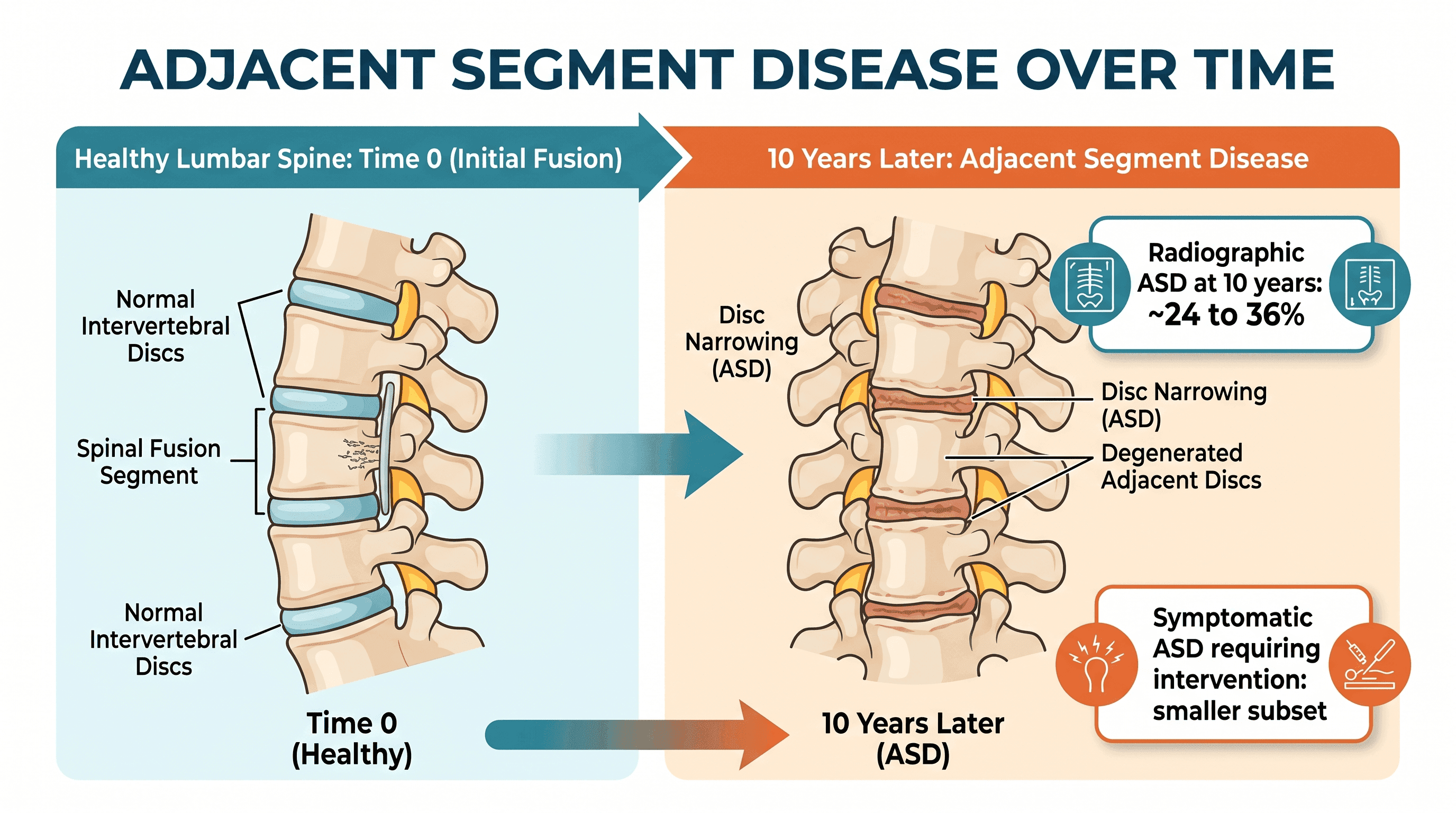
Adjacent segment disease (ASD) is the biomechanical consequence that comes with locking two vertebrae together. When a spinal segment is fused, it can no longer flex, rotate, or absorb shock in the way a healthy disc normally would. That mechanical burden shifts to the discs directly above and below the fused segment, accelerating their degeneration over time.
Radiographic (imaging-visible) signs of ASD develop in a substantial portion of patients over the long term. Research suggests that roughly 24 to 36% of patients show radiographic ASD at the 10-year mark, based on multiple follow-up studies in the orthopedic literature. The critical nuance here, and one that is often glossed over, is that radiographic ASD does not equal symptomatic ASD. A degenerated disc visible on an MRI does not necessarily cause pain or require treatment. Symptomatic ASD, the kind that produces new pain or neurological symptoms and may require revision surgery, develops in a smaller subset of patients at an estimated rate of approximately 6% per year over the first decade.
ASD rates vary by the spinal level fused, the number of levels involved, and the surgical technique. Minimally invasive fusion approaches preserve more of the surrounding musculature and soft tissue, which some evidence suggests may reduce mechanical stress on adjacent segments, though long-term comparative data between open and minimally invasive approaches on ASD specifically is still accumulating.
Patients being considered for multi-level fusions, or for fusion at the lumbosacral junction (L5-S1), deserve a specific conversation with their surgeon about adjacent segment implications before consent is signed.
Recovery Phase 1 (Weeks 1 to 4): Protection and Immobility
The first four weeks after spinal fusion set the foundation for everything that follows. This phase is defined by one overriding priority: protect the graft.
Most patients stay in the hospital for 1 to 4 days post-operatively. A physical therapist will visit during the inpatient stay to walk the patient through safe bed mobility, getting in and out of a chair, and basic ambulation with a walker or cane. The goal of early movement is to reduce DVT risk and prevent the deconditioning that comes with total immobility, not to begin rehabilitation.
The governing rule of Phase 1 is the No-BLT protocol: no Bending, Lifting, or Twisting. The spine needs to be held in a stable, neutral position while the bone graft begins integrating. BLT violations in the early weeks do not always cause immediate pain, but they can disrupt graft positioning and delay or prevent fusion. Surgeons vary on whether a brace is required; some prescribe a rigid lumbar orthosis for the first 6 to 12 weeks, while others rely on activity restriction alone.
Pain during Phase 1 is typically a mix of surgical site soreness, muscle spasm from the dissection and retraction required during the procedure, and nerve pain as the decompressed nerve roots begin to "wake up." Post-decompression nerve pain can sometimes feel like the original sciatica is worsening before it improves, which understandably alarms patients. This pattern is common and generally expected.
Medications during Phase 1 typically include a combination of scheduled anti-inflammatory medications, muscle relaxants, and short-term opioid pain management with a clear taper plan. Constipation from opioids is extremely common and should be managed proactively with stool softeners from day one.
Red-flag symptoms requiring immediate contact with the surgical team: Sudden onset of fever above 101.5°F, new or worsening leg weakness or numbness, wound drainage that is cloudy or has an odor, inability to urinate, and saddle anesthesia (numbness in the groin and inner thighs) are all signs that warrant urgent evaluation and should not be managed with watchful waiting.
Recovery Phase 2 (Months 2 to 3): Physical Therapy and Returning to Movement
Around the 6-week mark, most patients have a follow-up appointment that includes imaging to assess early healing progress. For uncomplicated single-level lumbar fusions, this appointment often comes with meaningful permission slips: clearance to begin formal physical therapy, drive short distances, and return to sedentary desk work.
Formal physical therapy typically begins around 6 to 8 weeks post-op, though the exact timing depends on surgeon preference and patient progress. The Phase 2 PT protocol focuses on rebuilding the muscular support system around the healing spine, since the surgical dissection unavoidably disrupts the paraspinal muscles that normally share load with the vertebral column.
A well-designed Phase 2 program includes gentle core activation exercises targeting the transverse abdominis and multifidus muscles (the deep stabilizers of the spine), a structured walking program building from short flat-ground walks to 20 to 30 minutes of continuous ambulation, postural retraining to reduce compensatory movement patterns that developed during the pain-avoidance period before surgery, and hydrotherapy where available, which allows low-load movement without axial compression.
Phase 2 is also when patients returning to desk work typically do so, with accommodations. Ergonomic workstation setup, standing desk access, and frequent position changes are standard recommendations. Prolonged static sitting remains poorly tolerated at this stage and should be broken up every 30 to 45 minutes.
Driving clearance is typically granted when the patient can perform an emergency stop without hesitation, is no longer taking sedating pain medications, and can comfortably sustain the sitting position required. For most lumbar fusion patients, this is around 4 to 6 weeks. Cervical fusion patients may have restrictions on shoulder rotation that affect driving ability independently of pain levels.
Recovery Phase 3 (Months 6 to 12): The Final Fusion
The 6-month mark is when the most definitive imaging occurs. A CT scan at this stage gives the clearest picture of bone bridging across the graft site. When bridging is confirmed, the surgeon typically upgrades activity permissions significantly.
The bone graft continues maturing and strengthening through the full first year. Maximum medical improvement, the point at which the patient has reached the best outcome they are likely to achieve from this procedure, is generally assessed at 12 months post-operatively. This does not mean all patients feel fully recovered at 12 months; some continue improving beyond that window, particularly those who were significantly deconditioned before surgery.
Phase 3 PT focuses on progressive strengthening, returning to the loading demands of the patient's daily life and work. Manual workers, athletes, and active individuals are progressed through more challenging movement patterns during this phase, with return-to-activity milestones set collaboratively between the patient, surgeon, and physical therapist.
Return-to-work benchmarks by job type:
Desk workers and those in sedentary occupations generally return to work at 4 to 6 weeks with ergonomic accommodations. Light duty roles with no prolonged standing or stooping typically allow return at 6 to 12 weeks. Jobs requiring sustained standing, walking, or lifting below 25 pounds typically target a 3-month return. Heavy manual labor roles involving repetitive lifting, vibration, or overhead work typically require 3 to 6 months of clearance and may require permanent duty modification depending on the fusion level and the patient's outcome.
High-impact and rotational activities such as running, golf, racket sports, and contact activities are generally not cleared until bone bridging is confirmed on CT and the patient has demonstrated adequate core strength and movement control. Swimming is often the first dynamic sport cleared, typically around the 3 to 4 month mark for lumbar patients.
Life expectancy is not shortened by spinal fusion. Quality of life outcomes, when the surgery is performed for the right indication, typically improve meaningfully at the 12-month and multi-year follow-up intervals based on long-term registry data.
How You Control the Outcome: Minimizing Your Risks
The most empowering part of the pre-surgery conversation is this: a meaningful portion of spinal fusion complications are modifiable. Several decisions a patient makes before and after surgery have a direct, documented effect on fusion success and complication rates.
Nicotine cessation is the single highest-yield intervention available. Nicotine, in any delivery form including patches, vaping, and smokeless tobacco, reduces blood supply to the graft site and suppresses the bone-forming cells responsible for fusion. Many surgeons require a minimum period of nicotine abstinence before proceeding with elective fusion, and some require verification through a urine cotinine test. Resuming nicotine after surgery carries the same risks, so cessation needs to extend through the full fusion window of 6 to 12 months.
Blood sugar management is a critical pre-op target for patients with diabetes. Elevated HbA1c is associated with increased surgical site infection rates, impaired wound healing, and higher non-union rates. Most spine surgeons target an HbA1c below 7.5 to 8.0% before proceeding with elective fusion. Patients with poorly controlled diabetes who are considering fusion should work closely with their endocrinologist in the months before surgery to optimize glycemic control.
Weight management affects both the technical difficulty of the surgery and the mechanical demands placed on the construct post-operatively. Obesity is associated with longer operating times, higher infection risk due to increased adipose tissue dissection, and greater long-term stress on adjacent segments. Even modest weight reduction before elective surgery can improve outcomes.
Prehabilitation refers to structured exercise in the weeks before surgery specifically designed to improve surgical outcomes. Patients who enter spine surgery with stronger core muscles, better cardiovascular conditioning, and greater baseline functional capacity recover faster and experience fewer complications. A focused 4 to 8 week prehabilitation program supervised by a physical therapist is a practical, low-risk investment. If a prehabilitation program is not offered as part of a pre-surgical pathway, it is entirely reasonable for patients to ask for a referral.
If you are working through your pre-surgical planning and want to understand which specialist or care team is right for your case, find a spine-focused physician through Momentary Lab's doctor finder to connect with providers who can guide your evaluation and preparation.
Permanent Restrictions After Spinal Fusion: A Practical Guide
Spinal fusion does permanently change the biomechanics of the spine. For most patients, this trade-off is acceptable because the alternative, ongoing instability, pain, or neurological compromise, was worse. But understanding the long-term adjustments that come with a fused spine helps patients plan realistically.
Lifting limits are typically not permanently restrictive for single-level lumbar fusions once bone bridging is confirmed and core strength is rebuilt. However, multi-level fusions and fusions at the lumbosacral junction carry more conservative long-term lifting guidelines from most surgeons. Specific limits should be discussed with the individual surgical team based on the construct and the patient's occupational demands.
High-impact and collision sports are generally discouraged after lumbar fusion. Running on hard surfaces, contact sports, and activities involving significant axial loading or impact generate force that can stress the construct and accelerate adjacent segment wear. Many patients return to swimming, cycling, hiking, and golf after Phase 3 clearance, with technique modifications.
Driving returns within weeks for most patients with simple lumbar fusions and no complications. Long-distance driving requiring sustained sitting typically warrants a later clearance and may require frequent position changes and lumbar support.
Air travel is usually permitted by 4 to 6 weeks, with attention to DVT risk on longer flights. Compression stockings, aisle seating to allow movement, and adequate hydration are practical precautions.
Sleeping positions that avoid twisting the spine are recommended throughout Phase 1 and 2. Side sleeping with a pillow between the knees or back sleeping with a pillow under the knees reduces torsional stress on the healing graft. Many patients find sleeping position comfort normalizes by 3 to 4 months.
Spinal flexibility at the fused level is permanently reduced by design. The goal of fusion is stability, not mobility. Patients who needed significant rotation or lateral flexion at the fused level for occupational or athletic reasons will need to compensate through adjacent levels and adjacent-body mechanics, which is one more reason Phase 3 physical therapy matters.
Questions to Ask Your Surgeon Before Agreeing to Spinal Fusion
No surgeon can guarantee a specific outcome, but a skilled, communicative surgeon can give a patient the information needed to make a truly informed decision. These questions are designed for the pre-operative consultation, before consent is signed.
What is the specific diagnosis that makes me a surgical candidate, and is there strong evidence that fusion outperforms continued conservative care for this condition? This question is especially relevant for patients with non-specific low back pain, where the evidence for fusion over rehabilitation is weaker than for structural conditions like spondylolisthesis or spinal fracture.
Am I a candidate for a minimally invasive approach, and what does the evidence say about outcomes for my specific case? Minimally invasive spinal fusion (MIS fusion) generally produces less blood loss, a shorter hospital stay, and lower infection rates compared to open approaches, based on comparative data from multiple studies. Whether a patient is anatomically suitable for MIS depends on their specific pathology, body habitus, and the surgeon's training.
What is your personal non-union rate for this procedure, and how do you follow up to confirm fusion? A surgeon who has not examined their own outcomes data or who deflects this question warrants scrutiny.
What does a successful outcome realistically look like for my case at 12 months? Success in spinal fusion is not the absence of all pain. For many patients, the realistic goal is meaningful reduction in the most disabling symptoms. Understanding that benchmark before surgery reduces the risk of post-surgical disappointment.
What are my alternatives if this surgery fails? Understanding the revision surgery landscape before the index procedure gives the patient a complete picture and helps them weigh the decision appropriately.
What modifiable risk factors do I have, and what should I address before surgery? This question opens the door to a pre-surgical optimization plan that can substantively improve outcomes.
For additional guidance on navigating your healthcare options and understanding what questions to bring to specialist visits, Momentary Lab's AI Healthcare Navigator can help you organize your symptoms, research your options, and prepare for productive conversations with your care team.
FAQ
Can you live a normal life after spinal fusion?
Most patients who undergo spinal fusion for an appropriate indication do return to a functional, active life. The timeline for that return varies based on the fusion level, the number of levels fused, and the patient's pre-surgical condition and compliance with recovery protocols. Walking, swimming, cycling, desk work, and many recreational activities are compatible with a fused spine once healing is confirmed, typically at 6 to 12 months. Activities involving high-impact loading or contact are generally restricted long-term, though patients with single-level fusions often have broader activity permission than those with multi-level constructs.
Why is spinal fusion not recommended in some cases?
Spinal fusion carries the highest evidence of benefit when it addresses structural instability, deformity, or confirmed neural compression that has not responded to conservative care. It is not well-supported as a first-line treatment for non-specific low back pain without structural pathology, where outcomes studies have not demonstrated consistent superiority over intensive rehabilitation programs. Patients with significant medical comorbidities, active nicotine use, or poorly controlled metabolic conditions may also be counseled away from fusion until those risk factors are addressed, according to guidance from the Mayo Clinic.
What is the recovery time for L4-L5 fusion?
L4-L5 is among the most common lumbar fusion levels performed in the US. Hospital discharge typically occurs within 2 to 4 days. Most patients with single-level L4-L5 fusions are walking short distances by week one, returning to light activity and desk work by 4 to 6 weeks, beginning formal physical therapy between 6 and 8 weeks, and reaching bone-bridging confirmation at the 6-month CT scan. Full recovery and maximum medical improvement are assessed at 12 months. Multi-level fusions at L4-L5 combined with L5-S1 follow a longer timeline with more conservative activity progression.
How successful are spinal fusions?
Success rates vary significantly depending on how "success" is defined and which patient population is measured. Technical fusion success, meaning bone bridging confirmed on CT, is achieved in roughly 65 to 95% of cases depending on surgical approach, number of levels, and patient risk factors. Patient-reported outcomes, including pain reduction and functional improvement, tend to be favorable at 12-month follow-up for well-selected surgical candidates. Long-term data, including a 12.8-year Swedish registry follow-up, supports sustained quality-of-life benefit for appropriate candidates, while noting that roughly 20% of patients report outcomes below their pre-surgical expectations. Choosing the right surgical candidate remains the strongest predictor of success.
What does failed spinal fusion feel like?
Failed fusion (pseudoarthrosis) often presents as persistent surgical-site pain that either never improved after surgery or improved initially and then returned. The pain is typically mechanical, meaning it worsens with activity and loading and may ease somewhat with rest. New or worsening radicular symptoms in the leg can also develop if an unstable non-union allows movement that irritates adjacent nerve roots. A CT scan at 6 to 12 months is the standard diagnostic step when pseudoarthrosis is suspected, since plain X-rays often miss incomplete fusion.
When should I call my surgeon after spinal fusion?
Contact the surgical team promptly for fever above 101.5°F, increased redness, warmth, or drainage at the incision site, sudden worsening of leg weakness or numbness, new inability to control bladder or bowel function, or severe headache made worse by sitting upright (possible CSF leak). These are not symptoms to manage at home with over-the-counter medications and a wait-and-see approach.
References
- Cleveland Clinic — Overview of spinal fusion procedure, preparation protocols, and post-operative care.
- Mayo Clinic — Clinical indications for spinal fusion and patient selection guidance.
- PMC / NIH (PMC12364513) — Peer-reviewed literature on spinal fusion outcomes and complication rates.
- PMC / NIH (PMC9659217) — Research on adjacent segment disease incidence and biomechanical consequences of lumbar fusion.
- PubMed (PMID 9756965) — Early study on pseudoarthrosis rates and revision surgery following lumbar fusion.
- PMC / NIH (PMC10347777) — Data on minimally invasive versus open spinal fusion comparative outcomes.
- PubMed (PMID 12709856) — Long-term follow-up data on lumbar fusion patient-reported outcomes.
- PubMed (PMID 22526700) — Study on modifiable risk factors including smoking and diabetes in spinal fusion outcomes.
- PubMed (PMID 29860014) — Adjacent segment disease incidence and symptomatic vs. radiographic ASD distinction.