


At a Glance
| Topic | Key Facts |
|---|---|
| Why swelling happens | Inflammatory response, lymphatic disruption, tissue trauma, and fluid redistribution after major bone surgery |
| Peak timing | Days 3 to 5 post-surgery; can worsen with activity in weeks 1 to 2 |
| Full resolution | Significant reduction by week 4 to 6; mild end-of-day swelling can persist 3 to 6 months |
| Best management tools | Elevation (foot above heart), ice for weeks 1 to 3, compression stockings, ankle pumps every 1 to 2 hours |
| Red flag requiring 911 | Sudden shortness of breath, chest pain, or severe one-sided calf pain with warmth or discoloration |
| Red flag: call surgeon today | Fever over 101°F, spreading redness around the incision, wound drainage, or a sudden new pain spike |
You had your hip replaced. You followed the discharge instructions. And now, days later, your leg looks like it belongs to someone twice your size. The swelling has crept from your hip down to your knee, maybe even your ankle, and you're up at 11pm wondering if something has gone terribly wrong.
Here is the short answer: swelling after hip replacement surgery is one of the most predictable biological responses in all of orthopedic recovery. It is not a sign that your surgery failed. It is not a sign that your body is rejecting the implant. For the vast majority of patients, it is gravity and inflammation doing exactly what they are supposed to do. This guide explains the full picture, including what the typical timeline looks like week by week, how to actually reduce the swelling, and the specific warning signs that do warrant a call or a trip to the ER.
Why Swelling Happens After Hip Replacement Surgery
Swelling after hip replacement surgery is a direct result of the body mounting a large-scale healing response to significant surgical trauma.
Hip replacement, whether total or partial, requires cutting through skin, subcutaneous tissue, muscle, and bone. The body responds by flooding the area with fluid, immune cells, and healing proteins. This inflammatory cascade is not a malfunction. It is the mechanism your body uses to clean up damaged tissue and begin rebuilding. The medical term for the fluid accumulation that results is edema, and it is an expected part of every major joint replacement recovery.
Compounding the inflammatory response, the lymphatic vessels that normally drain excess fluid from the leg are temporarily disrupted during surgery. The lymphatic system is a slow-moving network, and it takes weeks to reroute drainage effectively around a surgical site.
General anesthesia and prolonged immobility on the operating table further reduce circulation. When the leg is stationary for hours, venous blood and interstitial fluid pool in the soft tissues rather than returning efficiently to the heart.
How Your Surgical Approach Affects Swelling
The incision technique matters. Patients who undergo an anterior (front-of-hip) approach typically experience less swelling in the early days compared to those who have a posterior (back-of-hip) approach. The reason is straightforward: the anterior approach is muscle-sparing, meaning the surgeon works between muscle groups rather than cutting through them. Less muscle trauma means less inflammatory fluid released into surrounding tissue. Research published in the Journal of Arthroplasty has documented measurably lower early-stage edema and faster functional recovery in anterior approach cohorts compared to posterior approach groups.
Posterior approach patients should not read this as a reason for concern. The swelling difference is a matter of degree, not of clinical risk, and posterior approach outcomes are well-established and favorable over the long term.
Factors That Make Swelling Worse for Some Patients
Not everyone swells equally, and several pre-existing factors predict a harder early recovery.
Higher body mass index is one of the strongest predictors of prolonged post-operative edema, because excess adipose tissue compresses lymphatic vessels and reduces venous return efficiency. Age matters too, as older patients tend to have less elastic venous walls and slower lymphatic clearance. Patients who had pre-existing lymphedema or chronic venous insufficiency before surgery typically experience more significant swelling and a longer resolution timeline. Bilateral hip replacement (both hips done simultaneously or in close succession) doubles the physiological load, which amplifies edema. Finally, patients who were sedentary before surgery often have less developed venous muscle pump function, making it harder for the leg to clear fluid once activity resumes.
Week-by-Week Swelling Timeline: What to Expect
The swelling timeline after hip replacement follows a predictable arc, but the specifics of each phase are something most discharge sheets gloss over entirely.
Days 1 to 3: Peak Swelling, and Why It Gets Worse Before It Gets Better
The first 72 hours represent the peak of the acute inflammatory response. Expect the hip, thigh, and surrounding area to look and feel significantly swollen. Bruising is common and can travel in unexpected directions, appearing at the groin, inner thigh, or even the scrotum in male patients due to gravity pulling hematoma fluid downward. Some patients notice mild puffiness extending to the calf and ankle within the first two days. All of this is within normal range. The swelling is not a sign of surgical error; it reflects the scale of tissue disruption that a joint replacement requires.
Weeks 1 to 2: Why Swelling May Still Increase with Activity
Once patients begin weight-bearing and short walks, many are surprised to find their leg swells more, not less. This is gravity-dependent edema in action. When the leg hangs below heart level during sitting or standing, fluid pools distally. Morning swelling is typically lower than evening swelling because the leg has been elevated overnight. Male patients sometimes notice swelling extending into the scrotal area during the first two weeks, which is alarming in appearance but almost always benign and driven by the same gravitational fluid shift. This is a gap that few recovery guides address directly, but it is a documented and self-resolving phenomenon.
Weeks 3 to 6: Gradual Improvement and What "Better" Looks Like
By weeks three to four, most patients notice a measurable reduction in baseline swelling. The leg may look nearly normal in the morning and puff up modestly by the afternoon. Physical therapy sessions will often trigger a temporary flare of swelling, typically lasting 24 to 48 hours, as the tissues respond to increased activity load. This is expected and is not a reason to skip PT. The transition from icing after every session to wearing compression stockings for daily activity management typically happens in this window.
Months 2 to 6: Mild Swelling That Lingers
For many patients, mild end-of-day ankle or lower-leg swelling persists well into months two through six. This is normal soft-tissue healing on a longer timeline. The hip joint capsule, surrounding fascia, and lymphatic pathways continue remodeling long after the incision closes. The key distinction is whether the swelling is bilateral (both legs), mild, and follows the predictable morning-improvement and evening-increase pattern. Swelling that is sudden, severe, one-sided, or accompanied by calf pain, warmth, or skin color changes falls outside this normal range and warrants immediate evaluation.
Normal Swelling vs. Warning Signs: Know the Difference
The most important triage skill in hip replacement recovery is distinguishing normal post-operative edema from the early signs of a deep vein thrombosis (DVT, a blood clot forming in a deep leg vein) or a surgical site infection.
| Normal Swelling | DVT Warning Signs | |
|---|---|---|
| Location | Both legs or whole leg below hip | One leg, especially isolated calf |
| Onset | Gradual, follows activity | Sudden or rapidly worsening |
| Response to elevation | Improves within 30 to 45 minutes | Does not improve with elevation |
| Skin color | Normal or faint bruising | Red, purple, or bluish discoloration |
| Skin temperature | Slightly warm near incision | Distinctly hot to the touch in calf |
| Calf tenderness | Absent or mild generalized aching | Focal, sharp, or throbbing calf pain |
| Shortness of breath | Absent | Present: go to ER immediately |
Signs of a Blood Clot (DVT): Act Within Hours
Deep vein thrombosis is the most serious early complication of hip replacement surgery. According to the American Academy of Orthopaedic Surgeons, DVT risk is highest in the first two to ten days after surgery, which is exactly the window when most patients are still at home and away from clinical monitoring.
The signs to watch for are specific and distinct from normal edema. Unilateral calf pain that is focal and tender to touch, especially when the foot is flexed upward, is a primary signal. Sudden swelling that is significantly worse in one leg than the other, skin that feels distinctly hot compared to the other leg, and red or purplish skin discoloration on the calf are all reasons to call the surgeon immediately. Shortness of breath, chest tightness, or a rapid heart rate alongside any leg symptoms suggest a pulmonary embolism (a clot that has traveled to the lungs) and require a 911 call, not a phone consultation.
Blood thinners (anticoagulants) prescribed by the surgical team are specifically designed to reduce this risk, and taking them as directed is one of the most protective things a patient can do in the first weeks after surgery.
Signs of Infection: Call Your Surgeon Today
A surgical site infection is less acutely life-threatening than DVT but requires prompt treatment to prevent deeper involvement of the prosthetic joint.
Normal incision healing includes mild warmth, some redness directly at the suture or staple line, and minor drainage in the first few days. The signs that cross into infection territory are redness that is spreading outward from the incision rather than fading, a fever above 101°F (38.3°C), drainage that is thick, cloudy, or foul-smelling, and a sudden spike in pain at the surgical site after a period of improvement. Distinguish this from normal post-PT soreness, which is diffuse and follows exertion rather than appearing abruptly at rest.
If any of these signs appear, call the orthopedic surgeon's office the same day. Do not wait to see if it resolves on its own, and do not visit an urgent care center first unless you cannot reach the surgical team.
How to Reduce Swelling After Hip Replacement: What Actually Works
Managing swelling is not about choosing one strategy; it is about applying the right tools in sequence and with enough consistency that the fluid has a mechanical pathway to drain.
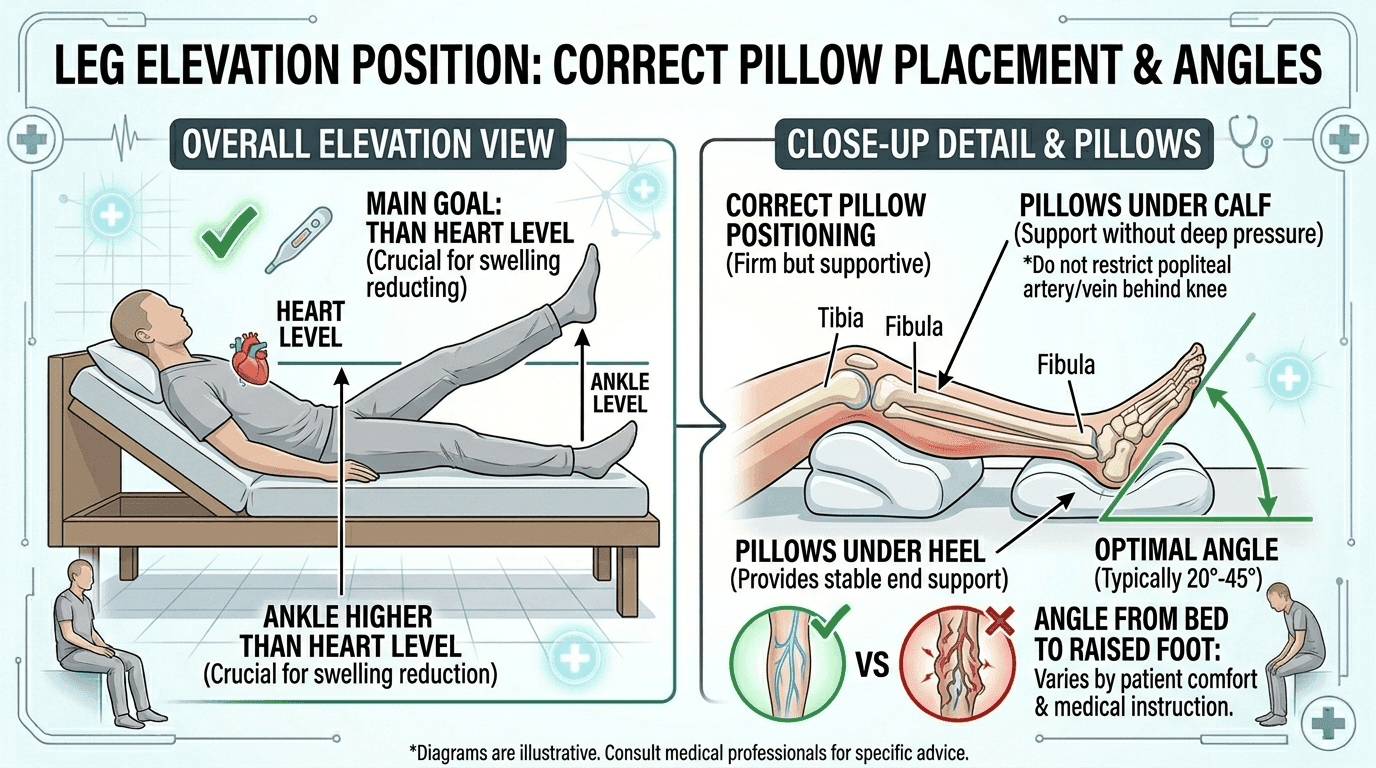
Elevation: Position, Timing, and the Recliner Mistake
Elevation only works when the ankle is positioned higher than the heart. This is the "toes above the nose" rule used by orthopedic nurses, and it is more specific than most patients realize.
Resting the leg on a standard footstool or the arm of a couch does not achieve true elevation. The foot may be higher than the floor, but it is still below or level with the heart, so gravitational drainage back toward the torso cannot occur effectively. The correct position is lying flat in bed with pillows stacked under the heel and calf (not under the knee, as knee flexion restricts venous flow) until the ankle is clearly above the level of the chest. Do this three to four times per day for 45 minutes per session, particularly in the first three weeks. A wedge pillow designed for post-surgical leg elevation is a worthwhile investment if standard pillow stacking is unstable.
Ice and Heat: When to Use Each
Ice and heat serve opposite functions, and using the wrong one at the wrong time slows recovery.
For the first three weeks, ice is the tool of choice after activity, exercise, or physical therapy sessions. Cold therapy constricts blood vessels, reducing the volume of inflammatory fluid released into tissue after exertion. Apply for 20-minute sessions with a cloth or thin towel between the ice pack and skin to prevent burns. Do not apply ice directly to the incision site until it is fully healed and cleared by the surgeon. From week three onward, gentle heat before exercise (not after) helps loosen the surrounding tissue and improve range of motion, while post-activity icing remains appropriate if swelling spikes.
Cold therapy machines, which circulate chilled water through a wrap placed over the joint, are a commonly recommended upgrade from standard ice packs and are especially convenient for the first two weeks when icing frequency is highest.
Compression Stockings and When to Wear Them
Graduated compression stockings apply external pressure that assists venous and lymphatic return up the leg. The pressure is calibrated, meaning it is firmest at the ankle and tapers off toward the knee or thigh, which creates a gradient that physically assists fluid movement upward.
TED hose (anti-embolism stockings) are the hospital-issued version, designed primarily for DVT prevention in post-surgical patients who are not yet fully mobile. Over-the-counter graduated compression socks (typically 15 to 20 mmHg or 20 to 30 mmHg) serve a complementary role once ambulation improves. Wear them from when you wake up until you elevate your legs for the evening. A 2024 clinical review published in PubMed Central evaluating compression interventions in post-arthroplasty recovery found that consistent use of compression dressings in the early post-operative period was associated with reduced edema volume and improved patient-reported comfort compared to no compression. Most surgeons recommend continuing compression stockings for four to six weeks, though the individual timeline should be confirmed with the care team.
Ankle Pumps and Movement: Why Keeping Still Makes It Worse
The calf muscles act as a physiological pump for venous blood return. Every time the calf contracts, it squeezes the deep veins and propels blood upward toward the heart. When a patient lies still for hours, this pump is inactive, and fluid accumulates in the lower leg.
Ankle pumps, the simple exercise of repeatedly flexing and pointing the foot, activate the calf muscle pump without requiring any hip movement or weight-bearing. The protocol recommended by most orthopedic recovery programs is 10 to 20 repetitions every one to two hours while awake, starting on the day of surgery or the morning after. According to UCSF Health's hip replacement recovery guidelines, ankle pumps are one of the first exercises prescribed because they simultaneously promote fluid clearance and reduce DVT risk by keeping blood moving through the deep venous system.
Short, frequent walks (even just to the bathroom and back in the early days) have the same compounding effect. The goal is not speed or distance but regularity.
Gentle Massage and Lymphatic Drainage
Manual lymphatic drainage, a gentle massage technique that uses light, rhythmic strokes directed toward the lymph nodes at the groin, can help accelerate edema resolution once the surgical incision has fully healed.
This is not the same as deep tissue massage, which is contraindicated near a fresh surgical site. Lymphatic drainage involves very light pressure, no firmer than the weight of a hand resting on skin, and always directed proximally (toward the body's center, not away from it). The technique should only be started after the incision is fully closed and healed, and always with clearance from the surgeon or physical therapist. A licensed massage therapist with post-surgical or lymphatic drainage training is the safest option if the care team approves it.
Diet, Hydration, and Sleep: The Overlooked Drivers of Post-Op Swelling
What goes into the body and how the body rests at night both have measurable effects on post-surgical edema, and these factors are rarely covered in standard discharge paperwork.
Sodium is the most direct dietary driver of fluid retention. High sodium intake causes the kidneys to retain water, which increases total circulating fluid volume and worsens tissue edema. In the weeks after surgery, aiming for a low-sodium diet (under 1,500 mg per day as a general target, though individual needs vary) can meaningfully reduce the baseline swelling load. Processed foods, canned goods, deli meats, and fast food are the highest contributors to dietary sodium.
On the hydration side, the intuition that "less drinking equals less swelling" is incorrect. Dehydration causes the body to retain fluid defensively, which can worsen edema. Staying adequately hydrated (approximately eight glasses of water per day for most adults, adjusted for body weight and activity) supports kidney function and helps maintain the osmotic balance that allows fluid to return from tissue to circulation.
Anti-inflammatory foods can support the body's healing process. According to Harvard Health Publishing, dietary patterns rich in omega-3 fatty acids (found in fatty fish, walnuts, and flaxseed), leafy green vegetables, and berries are associated with lower levels of systemic inflammatory markers. While food alone will not eliminate post-surgical swelling, replacing pro-inflammatory foods (refined carbohydrates, seed oils, excess sugar) with anti-inflammatory alternatives provides a supportive biochemical environment for healing.
Sleep position matters more than most patients expect. Lying flat without any leg elevation allows fluid to redistribute into the lower limbs overnight. Sleeping with a pillow between the knees (required for hip precautions in most posterior approach patients anyway) and an additional pillow or wedge under the lower leg to maintain some elevation provides passive drainage overnight. Sleeping on the non-operated side, once cleared by the surgeon, often makes elevation easier to maintain through the night.
When to See a Doctor About Swelling After Hip Replacement
Most post-surgical swelling resolves on its own with consistent home management, but there are specific scenarios where waiting is the wrong call.
If swelling is worsening rather than improving after the third week of recovery, and elevation, ice, and compression are not producing any improvement, a follow-up appointment is appropriate. If swelling is localized to one calf and accompanied by tenderness, warmth, or skin color changes, call the surgeon's office the same day. If shortness of breath, chest pain, or a fast heart rate accompanies leg symptoms at any point, call 911.
For patients who are unsure whether their symptoms fall into the "watch and wait" or "call today" category, getting a professional assessment sooner rather than later is always the safer option. If an in-office visit is not immediately accessible, connecting with a primary care provider through Momentary's virtual care platform is a practical way to have a qualified clinician review symptoms in real time, from home, without waiting for the next available appointment.
Frequently Asked Questions About Swelling After Hip Replacement
How long does swelling last after hip replacement? Swelling after hip replacement typically peaks around days 3 to 5 post-surgery. Most patients see significant reduction by weeks 4 to 6. However, mild end-of-day swelling, particularly at the ankle, can persist for 3 to 6 months as soft tissue continues to heal. Individual factors like BMI, surgical approach, and activity level affect the timeline.
Is it normal for my whole leg to swell after hip surgery? Yes. Because the hip is at the top of the lower extremity, inflammatory fluid and post-surgical edema travel downward with gravity. It is common for the thigh, knee, calf, and even the ankle to appear swollen in the first two to three weeks, even though the surgery was performed only at the hip joint.
Should I elevate my leg while sleeping? Elevating the leg during sleep supports overnight fluid drainage and reduces morning-to-evening swelling fluctuation. A pillow or wedge under the heel and lower calf (not under the knee) to keep the foot above heart level is the recommended position. The surgical team's hip precaution instructions should take precedence over general advice, particularly for posterior approach patients.
What does a blood clot feel like vs. normal swelling after hip replacement? Normal swelling is diffuse, affects the whole leg, and tends to improve with elevation. DVT typically presents as focal calf pain that is tender when touched, swelling that is noticeably worse in one leg than the other, and skin that feels distinctly hotter or appears discolored compared to the other leg. Shortness of breath alongside any of these symptoms is a 911 emergency.
Can I use a recliner to elevate my leg? A standard recliner does not provide true elevation. In a recliner, the foot is raised above the floor, but the leg typically sits at roughly heart level rather than above it. True elevation requires the ankle to be above the level of the heart, which generally means lying flat in bed with pillows under the heel and calf.
Does anterior hip replacement cause less swelling? Yes, on average. The anterior approach is muscle-sparing, meaning the surgeon works between rather than through muscle groups, which produces less tissue trauma and therefore a smaller inflammatory response in the immediate post-operative period. Research supports lower early-stage edema in anterior cohorts. That said, individual factors like BMI, age, and pre-existing conditions can override the surgical approach as a predictor of swelling severity.
If you are tracking symptoms and want to understand what they might mean before your next appointment, Momentary's AI health navigator can help you explore your symptoms, organize questions for your care team, and get clearer on what warrants urgent attention.
References
- American Academy of Orthopaedic Surgeons (AAOS) — Post-hip replacement activity guidelines, DVT risk window, and ankle pump exercise recommendations.
- UCSF Health — Hip replacement recovery protocols including ankle pump frequency and venous return mechanics.
- PubMed Central / PMC10782765 — Clinical review on compression dressings in post-arthroplasty recovery; evidence for edema reduction with consistent use.
- PubMed / 18998272 — Comparative study on surgical approaches and early post-operative outcomes including edema markers.
- PubMed / 17400103 — Research on anterior vs. posterior approach outcomes and soft-tissue trauma differences.
- PubMed / 32481454 — Evidence base for venous pump activation and DVT prevention through early mobilization post-arthroplasty.
- PubMed / 38673482 — Study on edema management and patient-reported outcomes in hip replacement recovery cohorts.
- Harvard Health Publishing — Evidence on anti-inflammatory dietary patterns and systemic inflammatory marker reduction.