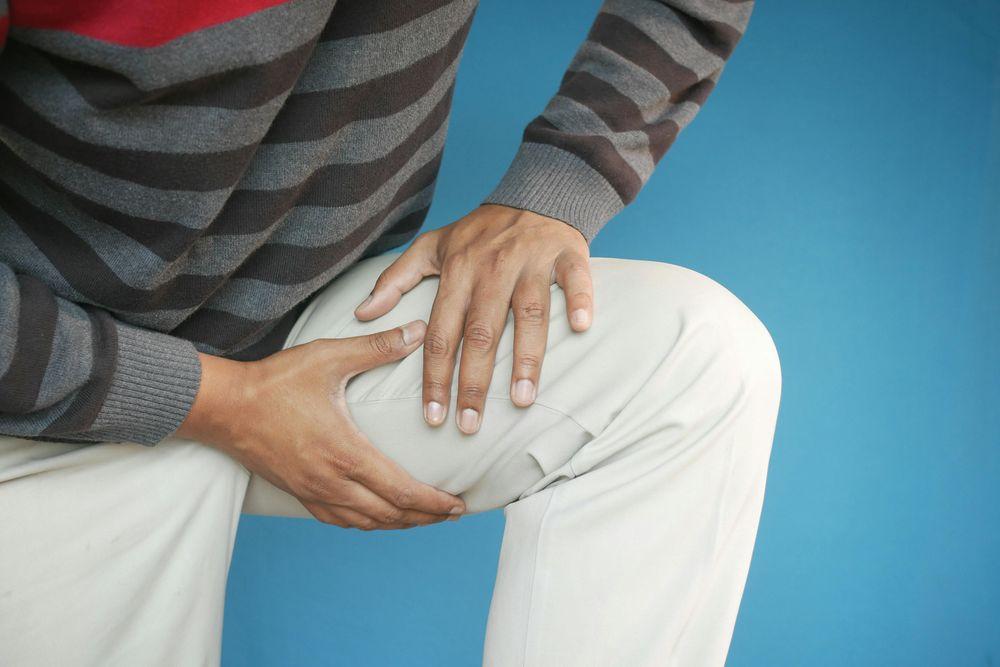


Waking up from lumbar spine surgery expecting back pain makes sense. Waking up with a burning, numb, or aching front thigh that was not even part of your original complaint is disorienting and alarming. This is one of the most underexplained phenomena in spinal fusion recovery, and patients frequently search for answers the night they get home from the hospital.
The short answer: thigh pain after spinal fusion is common, expected in many surgical approaches, and usually temporary. Depending on the fusion technique used, thigh-area symptoms affect anywhere from 10% to over 60% of patients. Most symptoms resolve within 3 to 6 months. The longer answer requires understanding exactly why a surgery on your spine produces pain in your leg, and this guide walks through that in plain language.
At a Glance
| Topic | Key Facts |
|---|---|
| How common is thigh pain post-fusion? | Affects 10% to 60%+ of patients depending on surgical approach |
| Most affected approach | XLIF/LLIF (lateral transpsoas) — highest incidence |
| Primary nerves involved | Femoral nerve (L2-L4), genitofemoral nerve, lumbosacral plexus |
| Typical resolution timeline | Muscle/psoas pain: 2 to 6 weeks; nerve symptoms: 3 to 6 months |
| Red flag requiring urgent evaluation | Progressive quad weakness, worsening numbness, bowel/bladder changes |
| First-line nerve pain medication | Gabapentin or pregabalin (not opioids) |
Why Is My Thigh Burning Instead of My Back?
The confusion is completely valid. Patients prepare mentally for back soreness, incision pain, and fatigue. Thigh pain lands in a place that feels entirely disconnected from the surgical site, which is why so many people assume something has gone wrong.
Here is what actually happens: your lumbar spine and your thigh share a nerve highway. The nerves that exit the lower spine at levels L2 through L4 travel directly into the thigh, controlling sensation across the front, inner, and outer surfaces of the leg. When surgery disturbs any tissue along that pathway, whether through retraction, positioning, inflammation, or decompression, the thigh is where the signal ends up.
There are two broad categories of thigh pain after fusion. The first is approach-related, meaning the surgical path itself physically stressed the psoas muscle or the nerves running through it. The second is decompression-related, meaning nerves that were previously compressed by a damaged disc or bone spur are now free, and they respond to that freedom with a burst of hyperactive, burning signals. Both types can exist in the same patient.
Most thigh discomfort after lumbar fusion is not a sign that something went wrong. It is a sign that surgery went through or near tissue that connects your spine to your leg.
The Anatomy Behind the Pain: Nerves, Muscles, and Your Spine
Understanding why lumbar surgery produces thigh symptoms starts with a single anatomical fact: the nerves controlling thigh sensation originate at the same vertebral levels being fused.
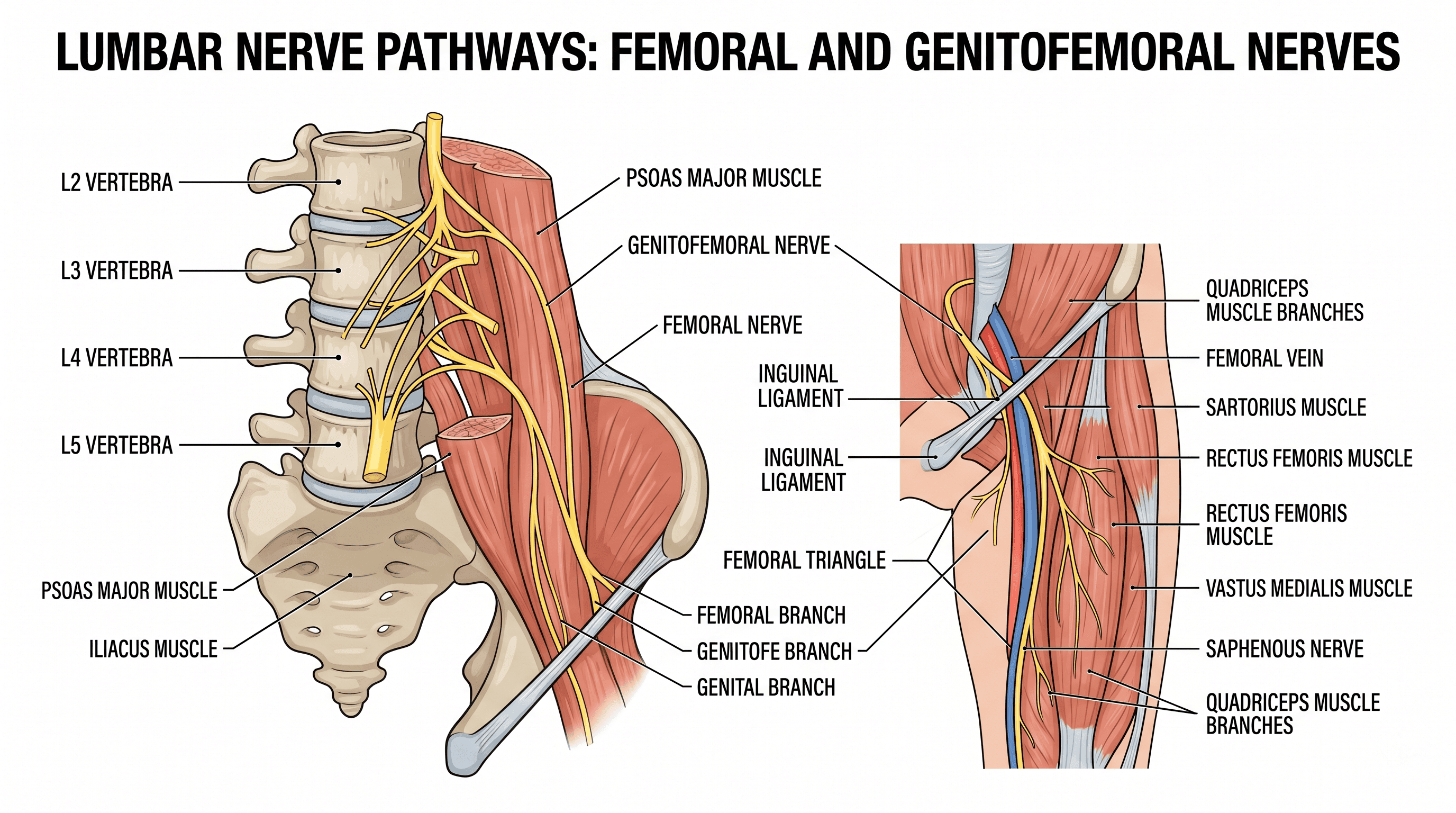
The femoral nerve forms from nerve roots at L2, L3, and L4. It travels through the psoas muscle, exits the pelvis beneath the inguinal ligament, and fans out across the front and inner thigh, continuing down to the medial knee. The genitofemoral nerve, also arising from L1 and L2, supplies the groin and inner upper thigh. The broader lumbosacral plexus, a network of nerves at L1 through S4, sits adjacent to the anterior lumbar spine and is vulnerable during any surgery approaching from the front or side.
Any surgery within this neighborhood, whether accessing the disc space from the front, side, or back, operates near this neurological infrastructure.
How the Psoas Muscle Connects Your Spine to Your Thigh
The psoas major muscle runs from the lateral bodies of the lumbar vertebrae (L1 through L5) and their intervertebral discs down to the lesser trochanter of the femur (your inner upper thigh bone). It is the primary hip flexor and a direct anatomical bridge between the spine and the leg.
Critically, the lumbar nerve plexus runs through or immediately adjacent to the psoas. This means any procedure that requires moving through, retracting, or manipulating the psoas to reach the lumbar disc space puts those nerves at risk for stretch, compression, or irritation. Even brief retraction of the psoas during a lateral approach can produce symptoms that last weeks to months.
Surgery near L4-L5 carries the highest psoas-related nerve risk because the femoral nerve and the lumbosacral trunk converge most densely at that level.
Femoral Nerve vs. Genitofemoral Nerve: Where Each Causes Pain
These two nerves produce distinctly different pain patterns, and knowing which one is generating symptoms can help patients describe their experience more accurately to their care team.
Femoral nerve involvement produces anterior (front) thigh pain, weakness in the hip flexors making stairs and rising from chairs difficult, weakness in the quadriceps making knee extension difficult, and sensory changes on the front and inner thigh that can extend to the medial knee. Genitofemoral nerve involvement produces a different pattern: groin aching or sensitivity and inner upper thigh tingling or burning. The lumbosacral plexus, when broadly irritated, produces a more diffuse pattern covering front, side, and sometimes posterior thigh, often without a clean map that corresponds neatly to either nerve above.
Does Your Type of Fusion Surgery Affect Your Thigh Pain Risk?
The answer is yes, substantially, and this is the information most patient-facing resources fail to provide. Thigh pain risk is not uniform across all spinal fusion approaches. The surgical pathway determines which anatomical structures are placed under stress, and the thigh pain pattern a patient experiences is directly shaped by which approach was used.
XLIF and LLIF: Lateral Fusion and the Highest Thigh Pain Risk
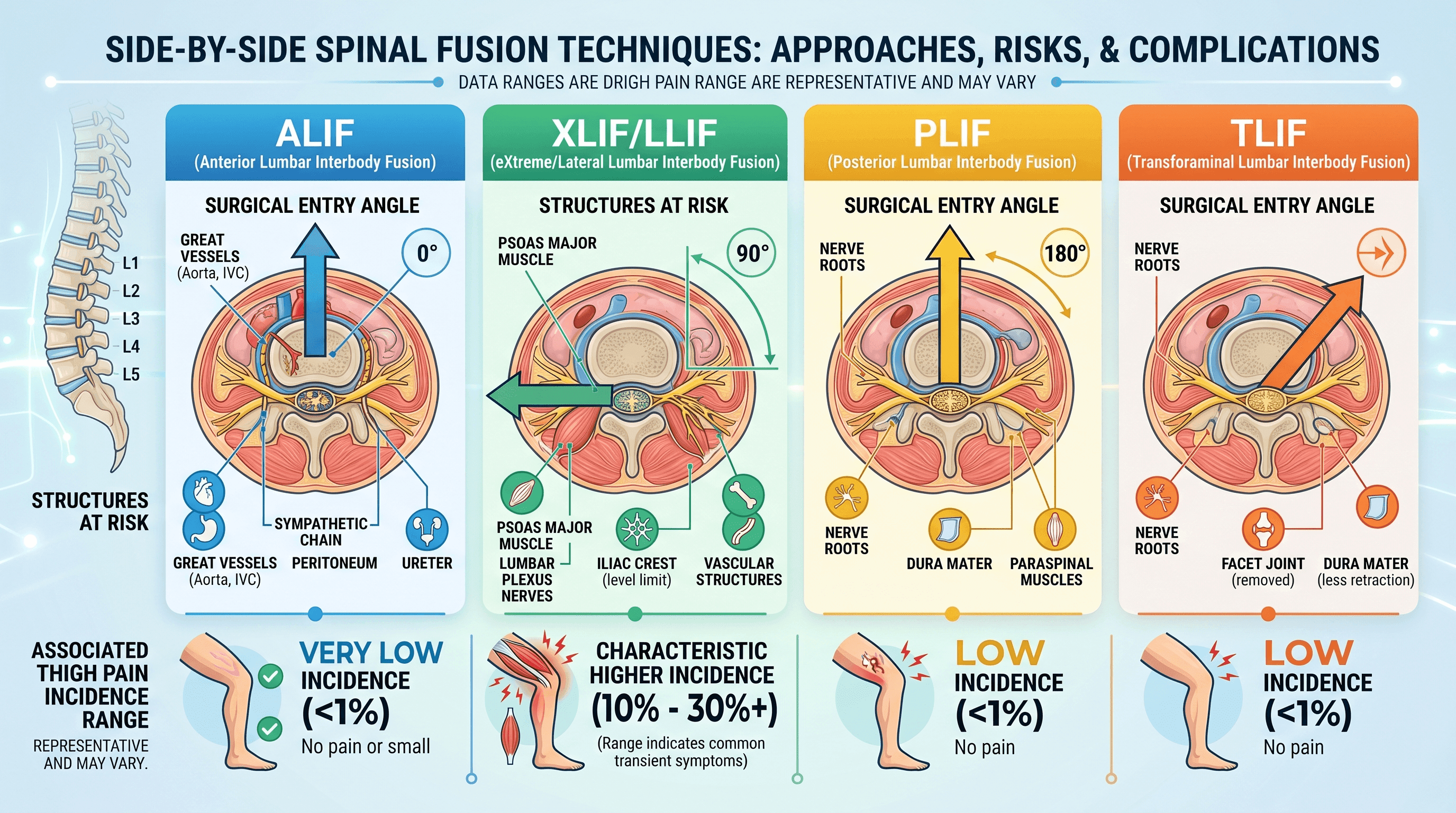
Lateral lumbar interbody fusion, sold under brand names including XLIF and LLIF, approaches the disc space from the side of the body by passing instruments directly through the psoas muscle. This transpsoas corridor is what makes the procedure minimally invasive from a back-tissue perspective, but it comes at a cost: the lumbar plexus runs directly through the muscle being traversed.
Published incidence data for neurological complications following lateral fusion ranges from 9.3% to as high as 60.7% depending on the study, the definition of complication used, and the spinal level treated. A landmark study in the Spine Journal documented the scope and patterns of nerve injury in lateral lumbar interbody fusion, confirming that transient neurological deficits are a well-recognized consequence of the transpsoas approach. Most reported symptoms are transient, meaning they resolve within weeks to months rather than persisting permanently. The L4-L5 level carries the highest risk because femoral nerve fibers are densest at that intersection, making retraction unavoidable if access to that disc space is required.
Patients who had an XLIF or LLIF and experience anterior thigh numbness, deep psoas aching, or hip flexor weakness are experiencing the most predictable, expected complication of that surgical approach. It is not evidence of surgical error.
ALIF: Anterior Approach and Risks to the Femoral Nerve
Anterior lumbar interbody fusion approaches the lumbar spine from the front of the abdomen. To reach the disc space, the surgeon must retract the abdominal contents and work around the major blood vessels. During this retraction, the femoral nerve and lumbosacral plexus can be compressed, stretched, or inadvertently contacted.
Research published in PubMed has examined approach-related complications in ALIF, noting that femoral nerve neuropraxia (a temporary nerve conduction block from compression or stretch, without structural damage) affects a meaningful proportion of patients. The thigh symptoms from ALIF tend to appear more commonly as anterior thigh aching and hip flexor weakness rather than the deep burning that characterizes XLIF-related injury. Resolution typically occurs within approximately 3 months in the majority of cases.
PLIF and TLIF: Posterior Approaches and Positioning-Related Thigh Pain
Posterior lumbar interbody fusion and transforaminal lumbar interbody fusion approach the spine from the back, which avoids the psoas and abdominal structures entirely. Direct injury to the femoral nerve or lumbosacral plexus is much less common with these approaches.
However, thigh pain does still occur after PLIF and TLIF through two distinct mechanisms. First, long procedures performed in the prone position can stretch the femoral nerve where it passes over the anterior hip, producing a position-related neuropraxia. Second, pedicle screws placed at L3 or L4, if slightly mispositioned, can impinge on nerve roots that refer pain into the anterior thigh. These cases are less common overall but important to identify because hardware-related symptoms may require imaging and, in some cases, hardware adjustment.
Normal Post-Op Thigh Discomfort vs. True Nerve Injury: How to Tell
The most anxiety-producing question in early spinal fusion recovery is whether the pain being felt represents normal healing or an indication that something has gone wrong. There is a clinically meaningful difference between expected post-operative thigh discomfort and true nerve injury, and most patients can recognize the distinction with the right framework.
The key distinction is trajectory. Expected discomfort is stable or slowly improving. True nerve injury, particularly a progressive one, worsens over time or fails to improve at all.
Signs Your Thigh Pain Is Part of Normal Recovery
Normal post-operative thigh symptoms tend to share a consistent set of characteristics. The pain or aching is activity-related, meaning it worsens with specific movements such as hip flexion, climbing stairs, or rising from a low chair, and improves with rest. The location is consistent with the surgical side and approach. The onset occurred within 24 to 48 hours of surgery. The sensation, even if described as burning or numb, is stable rather than worsening day over day. Hip flexor fatigue and anterior thigh heaviness are common after any lateral or anterior approach and reflect psoas muscle recovery, not ongoing nerve damage.
For XLIF patients specifically, a deep aching numbness across the front of the thigh that is present on the operative side, began immediately post-operatively, and is slowly fading is the expected course.
Red Flag Symptoms That Need Prompt Evaluation
Some symptoms deserve prompt contact with the surgical team and should not be managed with watchful waiting.
Progressive quadriceps weakness, specifically an increasing inability to extend the knee or support weight on the leg, should be reported immediately. The inability to raise the leg against gravity or climb a single step that was manageable earlier in recovery is a meaningful change. Worsening numbness after an initial period of improvement suggests ongoing nerve compromise rather than healing. Bilateral thigh symptoms after single-level or unilateral surgery are unusual and warrant evaluation. Any bowel or bladder changes occurring alongside thigh pain, including new difficulty with urination or defecation, require urgent assessment. Pain that intensifies substantially beyond weeks 4 to 6 rather than gradually improving should prompt a surgical follow-up visit. These symptoms do not guarantee a serious complication, but they require professional evaluation to rule one out.
DVT vs. Nerve Pain in the Thigh: A Safety Check
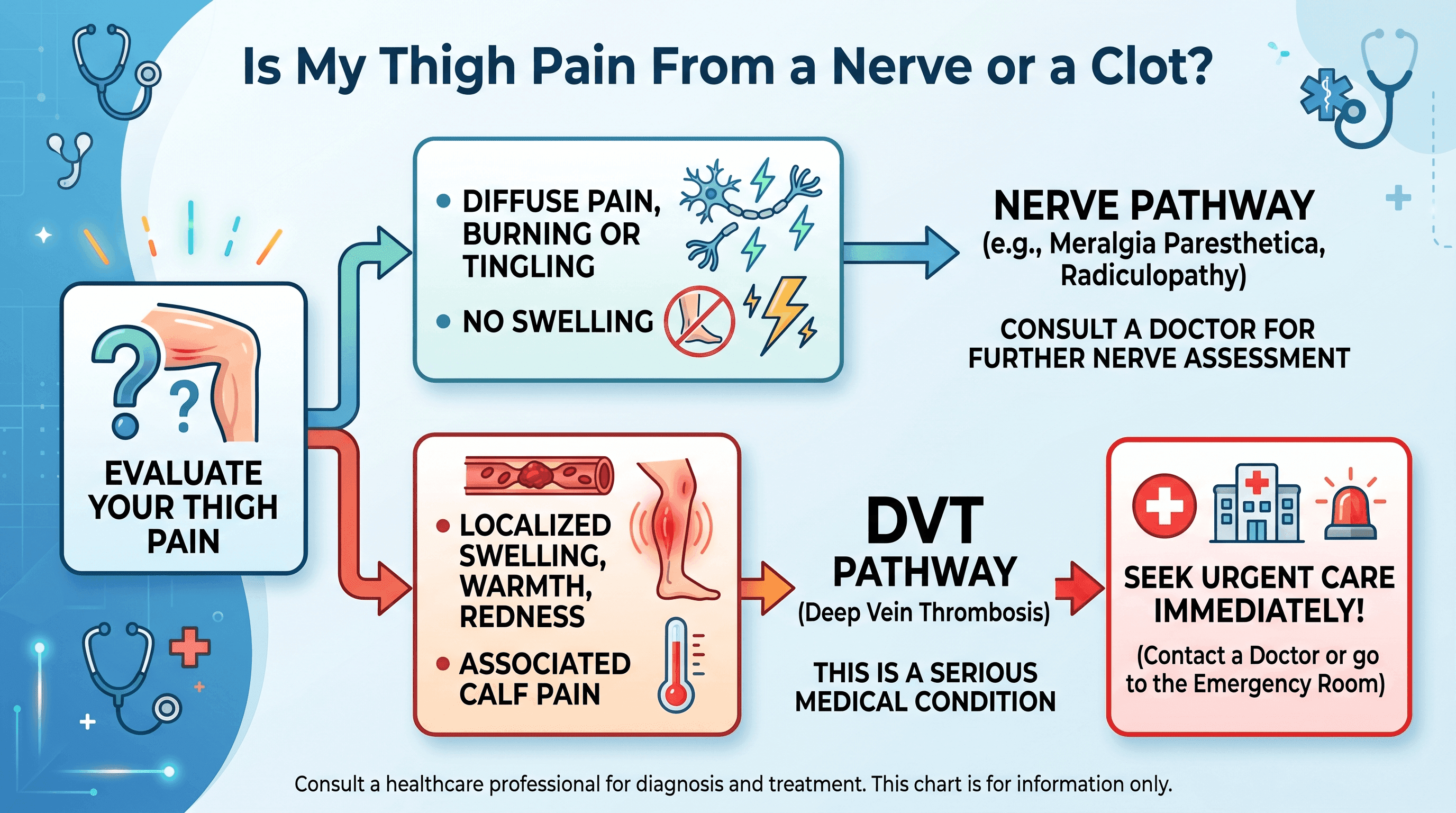
One of the most important distinctions a recovering spinal fusion patient needs to make is between nerve-related thigh discomfort and the signs of a deep vein thrombosis (DVT), a blood clot in the deep leg veins that represents a genuine medical emergency.
Nerve pain after spinal fusion typically presents as burning, electric, tingling, or numb sensations that are diffuse and consistent with the nerve distribution pattern. The thigh is not locally swollen. The skin temperature is normal. There is no sharp demarcation of redness or warmth.
DVT presents very differently. The hallmark signs include localized swelling in the calf or thigh that is asymmetric compared to the other leg, skin that is noticeably warmer to the touch at the site of the clot, redness or discoloration of the skin, and a severe, cramping calf pain that does not behave like nerve tingling. The CDC identifies DVT as a serious post-surgical risk, particularly in the first weeks following major orthopedic or spinal procedures.
If any combination of localized swelling, skin warmth, redness, and calf cramping are present, the patient should contact the surgical team or seek urgent care immediately. This is not a symptom that can be monitored at home. Most spinal fusion programs prescribe blood thinners or compression devices specifically to reduce this risk, but vigilance in the early recovery weeks remains important.
The Nerve Awakening Phase: L3 and L4 After Decompression
Patients who had significant pre-operative nerve compression at L3 or L4, from a herniated disc, bone spur, or foraminal stenosis, sometimes experience an unexpected and poorly explained phenomenon after those nerves are decompressed: the burning gets worse before it gets better.
This is called the nerve awakening phase, and it is one of the most misunderstood aspects of lumbar fusion recovery. When a nerve has been compressed for months or years, it undergoes adaptive changes in its signaling threshold. Once the compression is relieved, the nerve does not immediately return to normal function. It often fires more intensively than before, sending hyperactive signals that patients experience as burning, electric shocks, or intense tingling along the nerve's distribution, which for L3 and L4 means the front and lateral thigh.
Research indexed in PubMed has explored neuropathic pain patterns following lumbar decompression, documenting that post-decompression hyperalgesia (increased pain sensitivity following nerve release) is a recognized phenomenon. This phase can feel alarming because the burning may be more intense than anything the patient experienced before surgery, even though the structural problem has been corrected. The key reassurance is that this phase is time-limited. As the nerve re-establishes normal signaling patterns, the intensity fades, typically over 6 to 12 weeks.
Sciatica and decompression-related thigh pain are frequently confused, but they follow different anatomical paths. Classic sciatica from L4-L5 or L5-S1 compression travels down the posterior (back) of the leg. Decompression-related awakening from L3-L4 hits the anterior (front) and lateral thigh. The location of the burning is one of the clearest distinguishing features.
The Bone Graft Factor: Iliac Crest Harvest and Hip Pain
Some spinal fusion procedures require bone graft material to facilitate vertebral fusion. When the surgeon uses the patient's own bone, the harvest site is typically the posterior iliac crest, a portion of the pelvic bone accessible from the same incision or an adjacent one.
Iliac crest bone graft harvest introduces a separate source of pain that can refer down the lateral (outer) thigh and groin. The lateral femoral cutaneous nerve, which runs near the iliac crest, can be stretched or compressed during harvest, producing a condition called meralgia paresthetica: a burning, tingling, or numb sensation specifically on the outer thigh. Research in PMC has documented lateral femoral cutaneous nerve injury as a recognized complication of iliac crest bone graft harvest, with reported incidence varying by technique and retraction duration.
Patients should ask their surgeon before or after surgery whether autograft (their own bone) was used and from which site. If the iliac crest was the harvest site, lateral thigh symptoms should be expected and are separate from any nerve symptoms related to the spinal approach itself. Meralgia paresthetica from graft harvest typically resolves as the harvest site heals, usually within 6 to 12 weeks, though some cases persist longer.
Muscle Spasms and Altered Walking Mechanics
Not all thigh pain after spinal fusion is nerve-related. A meaningful portion comes from how the body compensates for a stiff, recently fused lumbar spine, particularly during the weeks when the standard "No BLT" restrictions (no Bending, Lifting, or Twisting) govern every movement.
When the lower back cannot flex or rotate normally, the quadriceps and hip flexors compensate by taking on movement loads they do not typically carry. Rising from a chair, negotiating curbs, and climbing stairs all recruit the quadriceps more heavily when lumbar mobility is reduced. Over days and weeks of this compensatory pattern, the muscles accumulate fatigue and microtrauma that produces a deep, aching anterior thigh discomfort that is different in character from nerve pain. It is activity-driven, proportional to how much walking or activity was performed that day, and eased with rest and gentle stretching.
Psoas muscle spasm specifically contributes to this picture. The psoas, already potentially irritated by the surgical approach, tightens protectively in response to reduced lumbar mobility. A tight psoas creates a constant low-level pull on its femoral attachment, producing a persistent groin and inner thigh ache that does not fit neatly into a nerve pain description.
Short, frequent walks rather than prolonged periods of sitting or lying still are the most effective way to prevent psoas tightening. Movement keeps the muscle from shortening into spasm while also promoting circulation and swelling reduction.
How Long Does Thigh Pain Last After Spinal Fusion? A Realistic Timeline
Setting accurate expectations is one of the most valuable things a healthcare provider can offer a surgical patient, and it is one of the areas where written patient resources consistently fail. Here is what published recovery data shows.
In the immediate post-operative period, thigh symptoms are at their most intense. Psoas inflammation and nerve irritation peak within the first 24 to 72 hours. The sensations during this phase can include deep aching, anterior thigh heaviness, hip flexor weakness, and, in some cases, complete numbness across the front of the thigh.
By weeks 2 to 6, psoas-related muscle pain and deep aching typically begin to improve, particularly with consistent walking and physical therapy initiation. Patients who had XLIF or LLIF often report meaningful reduction in the deep psoas ache during this window.
By 3 months, the majority of burning and tingling from nerve irritation has resolved or significantly reduced for most patients. A study published in PMC documented neurological complication timelines following lateral lumbar fusion and noted that transient deficits in the majority of affected patients showed resolution by the 3-month follow-up mark.
By 6 months, most patients who experienced approach-related thigh symptoms are symptom-free or have only mild residual sensitivity. Cases involving L4-L5 surgery or longer operative times may take up to 12 months for complete resolution. Research indexed in PubMed has examined longer recovery trajectories in lateral fusion patients, confirming that recovery past 6 months is possible and does not indicate a permanent outcome.
Chronic persistence of disabling thigh pain beyond 12 months is uncommon and should prompt a comprehensive re-evaluation including imaging, electrodiagnostic testing, and specialist consultation.
Managing and Relieving Thigh Pain During Recovery
The most actionable section of any recovery guide is the one that answers: what can actually be done about this? The key distinction here is that thigh pain after spinal fusion is often neuropathic in nature, meaning it arises from nerve signaling dysfunction rather than tissue damage, and neuropathic pain does not respond well to the same medications used for standard post-operative pain.
Medications That Target Nerve-Related Thigh Pain
Opioid pain medications, while commonly prescribed after spinal surgery, are relatively ineffective for neuropathic thigh pain. Opioids work by suppressing pain signal transmission centrally but do not address the hyperactive firing pattern of a mechanically irritated or recently decompressed nerve. Patients often find that opioids blunt the overall pain experience without substantially reducing the burning or electric quality of nerve-specific symptoms.
Gabapentin (Neurontin) and pregabalin (Lyrica) are the evidence-based first-line agents for neuropathic pain after lumbar surgery. Published research in PMC has evaluated pharmacological management of post-fusion neuropathic pain, supporting the use of gabapentin-class medications as superior to opioids for the nerve-burning component specifically. These medications work by dampening excessive nerve firing, which directly addresses the mechanism producing thigh symptoms.
NSAIDs (non-steroidal anti-inflammatory drugs such as ibuprofen or naproxen) are useful for the inflammatory psoas component of thigh pain, particularly in the first few weeks when psoas swelling and muscle inflammation are contributing. Short-course oral corticosteroids are used in select cases to reduce significant nerve inflammation when conservative measures are insufficient. All medication decisions must be made with and supervised by the treating physician, as NSAID use post-fusion carries considerations around bone healing.
Physical Therapy Exercises to Rebuild Thigh and Hip Flexor Strength
Rehabilitation specifically targeting the thigh and hip flexor is a complete gap in most patient-facing fusion recovery content. Generic physical therapy instructions rarely address the specific muscle weakness patterns that emerge after lateral or anterior fusion.
At 4 to 6 weeks post-operatively, when the surgeon clears initial mobility exercises, the focus should be on gentle range-of-motion restoration and low-load muscle activation. Supine heel slides (lying flat and slowly sliding the heel toward the buttocks) activate the hip flexor and quadriceps without loading the fusion site. Clamshells (lying on the side and rotating the top knee upward while feet stay together) rebuild hip abductor strength that is often disrupted by altered walking mechanics. Straight-leg raises (lying flat and lifting the fully extended leg to approximately 45 degrees) progressively re-engage the quadriceps.
By 8 to 12 weeks, when imaging confirms early fusion progress and the surgeon approves progression, resistance can be added gradually. Standing hip flexion against a resistance band, step-ups to a low step, and seated knee extensions on a resistance machine are appropriate progressions. Physical therapy should be guided by a therapist familiar with post-fusion protocols, as timing and load must be coordinated with the fusion's healing status.
If connecting with a physical therapist feels difficult to coordinate in early recovery, booking a virtual visit with a primary care provider through Momentary is one way to get early guidance, review symptoms, and get a physical therapy referral without the logistical burden of an in-person appointment during a period when mobility is limited.
When Pain Injections or Further Intervention May Be Needed
If thigh symptoms persist beyond 6 months without meaningful improvement, the management pathway changes. A femoral nerve block, performed by an interventional pain specialist, can provide both diagnostic clarity (confirming the femoral nerve is the pain generator) and therapeutic relief. A lumbar plexus block addresses more diffuse plexus-related patterns. Epidural steroid injections target residual nerve root inflammation at the surgical level.
Hardware-related thigh pain, specifically from a pedicle screw that is impinging on a nerve root, requires imaging review and may require hardware adjustment or removal in a subset of cases. Research in PubMed has addressed the management of persistent neurological symptoms following spinal fusion, including the evaluation of hardware position as a contributing factor.
Frequently Asked Questions About Thigh Pain After Spinal Fusion
Why do I have front thigh pain after lumbar fusion?
Front thigh pain after lumbar fusion most commonly reflects femoral nerve or lumbosacral plexus irritation resulting from the surgical approach. For lateral fusion (XLIF/LLIF), the transpsoas corridor passes directly adjacent to the lumbar nerve plexus, and retraction during surgery is the primary cause. For anterior or posterior fusions, retractor pressure, positioning, or nerve root decompression are the typical causes. The anterior thigh is supplied by the femoral nerve, which originates at L2 to L4, the same levels most commonly fused in lumbar procedures.
Is thigh pain after spinal fusion normal or nerve damage?
Most thigh pain after spinal fusion falls into the category of expected, reversible nerve irritation or approach-related muscle inflammation rather than permanent nerve damage. True permanent nerve damage is uncommon. The most reliable distinguishing factor is trajectory: pain that is stable or slowly improving points toward normal recovery, while pain that is progressively worsening or accompanied by increasing weakness several weeks post-operatively deserves medical evaluation.
How long does thigh numbness last after XLIF or lateral fusion surgery?
For most patients, the deep aching and numbness associated with the transpsoas approach to the lumbar spine begins improving within 2 to 6 weeks and resolves substantially by 3 months. Cases at the L4-L5 level, where the nerve plexus is densest, may take up to 6 to 12 months for complete resolution. Permanent numbness is possible but uncommon and affects a minority of lateral fusion patients.
What causes anterior thigh pain specifically, versus posterior or outer thigh pain?
The location of thigh symptoms maps to which nerve is involved. Anterior (front) thigh pain points to the femoral nerve, originating at L2 to L4, and is most associated with XLIF, LLIF, and ALIF procedures. Outer (lateral) thigh pain more often reflects the lateral femoral cutaneous nerve, particularly after iliac crest bone graft harvest, and presents as meralgia paresthetica. Posterior thigh pain is more consistent with sciatic nerve pathology from the lower lumbar or sacral levels.
Will my thigh weakness go away after spinal fusion?
In the majority of cases, thigh weakness related to femoral nerve or psoas irritation improves significantly within 3 to 6 months and resolves fully within 12 months. Progressive resistance exercises under physical therapy guidance, initiated when cleared by the surgeon, accelerate strength recovery. Weakness that fails to improve or that progresses after an initial period of stability should be evaluated with nerve conduction studies to assess the degree and character of nerve involvement.
What is psoas pain and how is it different from femoral nerve injury?
Psoas pain originates from direct muscle trauma, spasm, or inflammation of the psoas muscle itself, most commonly after a transpsoas lateral fusion approach. It presents as a deep, dull ache in the groin and anterior hip that worsens with hip flexion and improves with rest. Femoral nerve injury produces more distinct neurological symptoms: burning, tingling, numbness, or weakness that follows the nerve's anatomical distribution across the front and inner thigh. Both can coexist in the same patient after XLIF or LLIF, but they have different timelines and respond to different treatments. Psoas pain typically resolves faster (weeks) while femoral nerve recovery takes longer (months).
If thigh symptoms are making it difficult to know whether a recovery is on track, or if questions arise about medication options, physical therapy timing, or whether a symptom pattern is cause for concern, using Momentary's AI health navigator can help organize the questions and guide the next steps before or between surgical follow-up appointments.
References
- Nerve Injury in Lateral Lumbar Interbody Fusion, Spine Journal 2017 — Cited for incidence range and nerve injury patterns in transpsoas lateral lumbar fusion.
- ALIF Approach-Related Complications, PubMed — Cited for femoral nerve neuropraxia incidence and resolution in anterior lumbar interbody fusion.
- Lateral Femoral Cutaneous Nerve Injury After Iliac Crest Harvest, PMC — Cited for meralgia paresthetica risk after iliac crest bone graft harvest.
- Post-Decompression Neuropathic Pain Patterns, PubMed — Cited for post-decompression hyperalgesia and nerve awakening phenomenon.
- Neurological Complication Timelines After Lateral Fusion, PMC — Cited for 3-month resolution data in lateral lumbar fusion neurological deficits.
- Long Recovery Trajectories After Lateral Fusion, PubMed — Cited for recovery beyond 6 months and longer resolution timelines in complex cases.
- Pharmacological Management of Post-Fusion Neuropathic Pain, PMC — Cited for gabapentin and pregabalin evidence in post-spinal-fusion neuropathic pain.
- Persistent Neurological Symptoms and Hardware Evaluation After Spinal Fusion, PubMed — Cited for management of persistent post-fusion symptoms and hardware-related nerve impingement.
- CDC Deep Vein Thrombosis Data — Cited for DVT as a post-surgical risk during early recovery.