


Shoulder replacement surgery gives most people their life back. The pain that made it impossible to reach a cabinet, sleep through the night, or swing a golf club is replaced with something that feels almost forgotten: a shoulder that works. But that outcome does not arrive overnight, and the path to it is more demanding than most patients expect before they go under anesthesia.
Unlike hip or knee replacement, where surgeons encourage you to walk the same day, shoulder replacement requires weeks of strict rest first. The subscapularis tendon, which is cut during most anatomic procedures and must fully reattach, sets the tempo for everything that follows. Push too hard too soon, and that repair fails. Follow the protocol, and the results are remarkably good: research published in the Journal of Shoulder and Elbow Surgery consistently shows high patient satisfaction and durable pain relief across both anatomic and reverse implant types.
This guide covers what actually happens in your body and your daily life at each stage of recovery, from the first foggy hours in the recovery room through the quiet, ongoing gains of month six and beyond. Consider it the roadmap your discharge packet should have included.
At a Glance
| Topic | Key Facts |
|---|---|
| Total recovery duration | 6 to 12 months for full strength and function |
| Sling duration | Typically 4 to 6 weeks (varies by implant type and surgeon) |
| Physical therapy start | Week 1 to 2 (passive motion only at first) |
| Driving clearance | Approximately 4 to 6 weeks post-op, off narcotics |
| Return to desk work | Around 2 weeks if pain is controlled |
| Return to sport (golf, swimming) | 4 to 6 months |
| Implant longevity | Most designed to last 15 to 20 years or more |
The Big Picture: A Year-Long Journey in Four Phases
Recovery from shoulder replacement does not follow a single straight line. It moves through four overlapping phases, each with its own goals and its own frustrations.
Phase one runs from surgery through roughly week four. The job is protection. Your implant is new, your tissues are healing, and the only motion allowed is the kind your physical therapist creates for you. Phase two, from about weeks four through twelve, is where passive motion gives way to active movement. The sling comes off, and you start relearning what your arm can do. Phase three, from months three through six, is genuine strengthening. Resistance work begins, and daily function starts feeling recognizable again. Phase four, from month six onward, is refinement: continued gains in strength and endurance, a return to sport, and the slow recalibration of what "normal" means for your shoulder now.
Most patients are surprised to learn that strength and endurance continue improving for up to a full year after surgery, well after formal physical therapy has ended. The acute pain resolves in weeks, but the biological and mechanical recovery is a longer process, and understanding that from the start makes every phase easier to navigate.
The First 48 Hours: The Nerve Block and Rebound Pain
You will wake up from surgery feeling remarkably comfortable. That is not because recovery is easy. It is because of the interscalene nerve block your anesthesia team placed before the procedure, which numbs the entire shoulder and arm region for anywhere from 12 to 24 hours, sometimes longer.
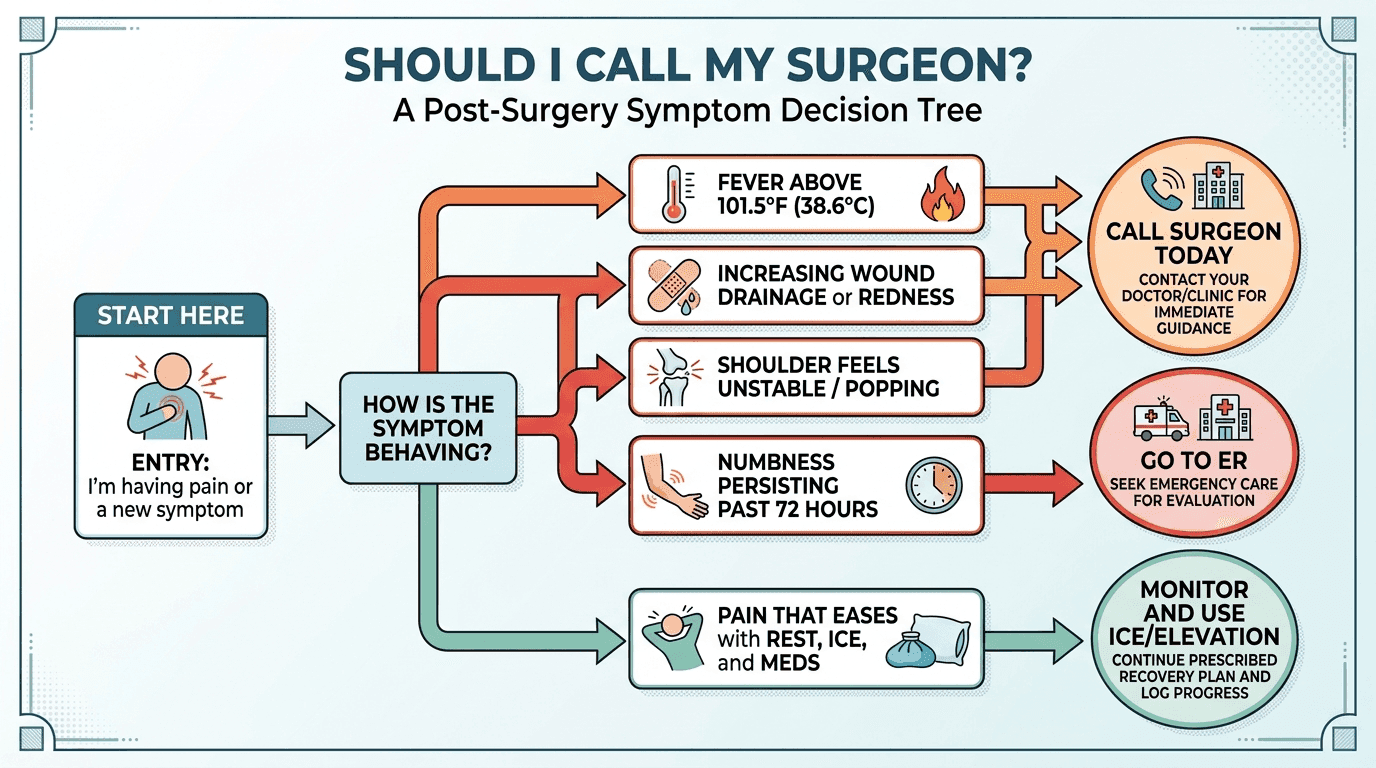
During this window, your fingers and wrist may feel completely numb. That is expected and temporary, and it should resolve fully as the block wears off. If numbness persists beyond 72 hours, contact your surgical team.
The critical mistake patients make in these first hours is waiting until the pain arrives before taking oral pain medication. By the time the block wears off, the medication has not had time to build up, and the result is a sharp, rapidly escalating pain spike that is genuinely difficult to get ahead of. Your surgical team will give you a specific schedule for your oral medications, and the single most important thing you can do in the first 48 hours is follow that schedule before the block wears off, not after.
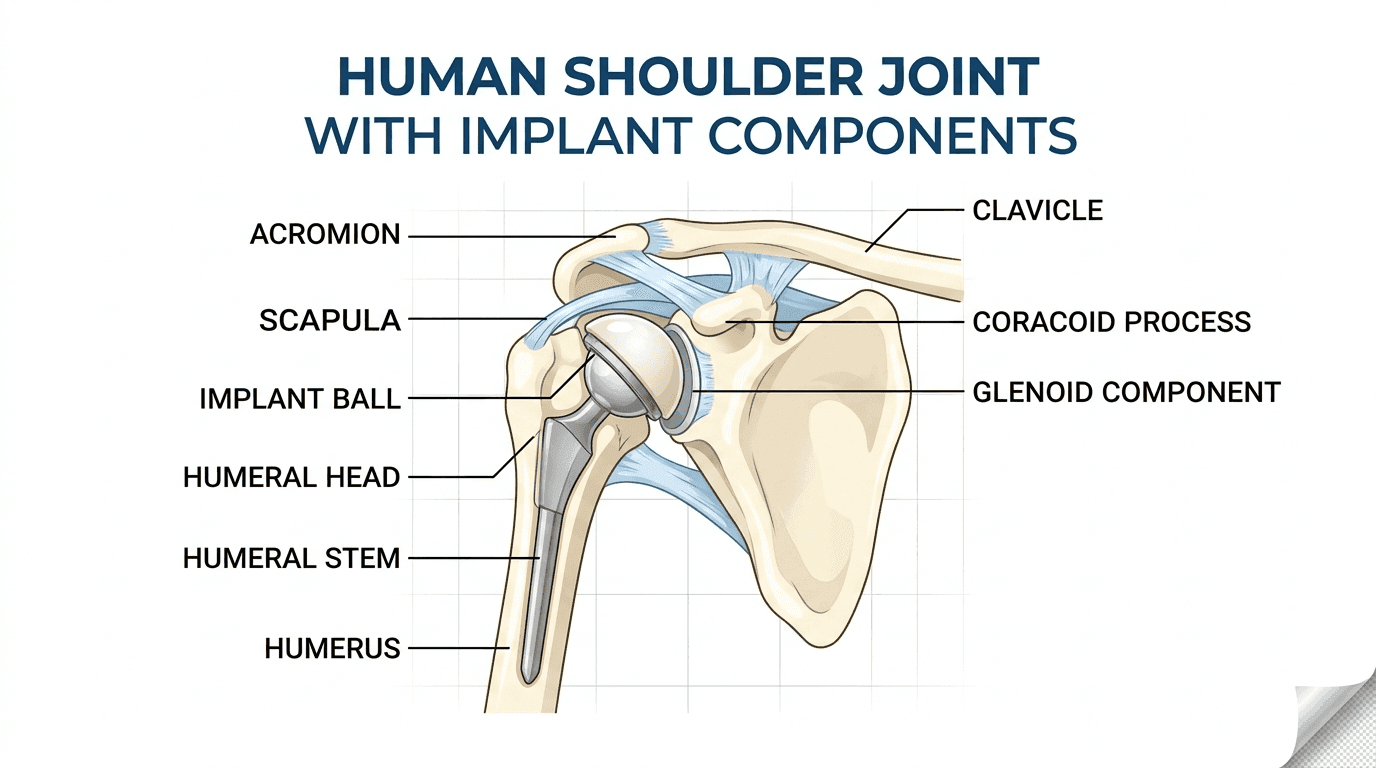
Most shoulder replacement patients are discharged within 24 to 48 hours, and some go home the same day depending on the procedure and the surgical center. Before leaving, your arm will be placed in a sling by the care team, and you will receive wound care instructions and a prescription schedule. Make sure a family member or caregiver is with you for the ride home and for at least the first night.
Setting Up Your Home Before Surgery
This section is worth reading before your procedure, not after. The week before surgery is the time to reorganize your home, because you will have one functional arm for the next four to six weeks and you will not feel like problem-solving while managing post-op pain.
Your sleeping setup is the most important preparation. Lying flat pulls the shoulder back and creates a persistent, gravity-induced ache that makes sleep nearly impossible. Most patients sleep in a recliner or propped up at roughly 45 degrees using a wedge pillow system for the first several weeks. A small pillow tucked under the upper arm provides additional support. Set up your sleeping station before surgery and test it while you are still mobile.
In the bathroom, a removable handheld shower head removes most of the difficulty from bathing, since getting the shoulder wet is restricted until your surgeon clears the wound. A shower chair or bench eliminates the balance risk of managing one-arm showering while still groggy from surgery and pain medication.
For clothing, button-down shirts, oversized pullovers with wide sleeves, and slip-on shoes are non-negotiable. Pulling a fitted shirt over your sling is an exercise in frustration that most patients solve after one painful attempt. Pre-select a stack of appropriate clothing and put it somewhere easy to reach at counter height.
In the kitchen, move anything you use regularly to a height where you can reach it with one hand without overhead extension. A few days of meal prep before surgery, or arrangements for someone to help with cooking, will reduce stress significantly in weeks one and two. Keep your nightstand stocked with your phone charger, a water bottle, your medication schedule, and anything else you reach for at night.

Week-by-Week Recovery Timeline
Weeks 1 to 2: Protecting the Repair
The sling is your constant companion for the first two weeks, including at night. The only exceptions are the specific hand, wrist, and elbow movements your physical therapist demonstrates, which are permitted to prevent stiffness in the joints below the shoulder.
Physical therapy begins early in this phase, sometimes within the first week, but it is entirely passive. Your therapist moves your arm; your shoulder muscles do nothing. Pendulum exercises, where you lean forward and let the arm swing gently by gravity, are typically among the first movements introduced. They feel almost too simple to matter. They are not.
Pain is at its peak during this window and then begins a gradual, uneven decline. Most patients transition off narcotic pain medication within two to three weeks, shifting to scheduled acetaminophen and ice applied for 10 to 20 minutes several times daily. Talk with your surgeon or pharmacist about the timing and dosing that is right for your situation.
Sleep will be difficult. That is universal, and it is temporary. Most patients find sleep quality improves meaningfully by weeks four to six as pain decreases and the body adjusts. Sutures or staples are typically removed at the 7 to 14 day mark.
Weeks 3 to 6: Building Passive Range of Motion
The sling is still required during this phase, though some surgeons allow brief removal for specific daily activities such as eating or typing, depending on how healing is progressing. Physical therapy advances from purely passive motion toward assisted and active-assisted exercises, meaning your therapist may support the arm while asking you to participate lightly in the movement.
Pain decreases noticeably for most patients during weeks three and six, though some days feel like setbacks. That is normal. Activity increases pain temporarily; rest brings it back down. The trajectory is downward even when individual days are harder than the one before.
Week three to four is also the emotional low point for a significant number of patients. The novelty of surgery has worn off, the sling feels like a permanent fixture, and the end of restriction feels distant. That experience is so common that orthopedic teams consider it a predictable part of the recovery arc rather than a sign that something has gone wrong. Staying connected with people who can help practically, and being honest with your care team about how you are feeling, matters.
Driving is still off limits during this phase.
Weeks 6 to 12: Out of the Sling, Into Active Movement
Around the six-week mark, most patients get clearance to stop wearing the sling permanently. This milestone varies by surgeon and implant type, so follow your specific protocol rather than a general timeline.
Active range-of-motion work begins here, meaning your own muscles are now driving movement. Shoulder shrugs, elbow raises, and light-load exercises are introduced progressively. Most patients in this window are also cleared to drive, provided they are off narcotic medications and have adequate arm control for the wheel. If your surgery was on the right shoulder, your surgeon may require a longer wait given the demands of gear shifting and steering.
Return to desk work is feasible for most people around this time, though comfort varies. This is also when most patients have their first major follow-up imaging and examination, which offers a chance to see measurable progress and adjust the physical therapy plan accordingly.
Months 3 to 6: Strengthening and Functional Return
Progressive resistance training begins at approximately 12 weeks. Low-impact activities such as walking, swimming, and light golf become possible for most patients during this window, with surgeon approval. The shoulder starts to feel like something you own again rather than something you are managing.
According to the Mayo Clinic, most patients can expect meaningful improvement in pain and function, with many returning to recreational activities they had given up. Some weather-related achiness around the joint is common and expected as a long-term feature of life with an implant, not a sign of a problem.
Month 6 and Beyond: Long-Term Gains
Strength and endurance continue improving for up to a full year after surgery, even after formal physical therapy has ended. Annual follow-up appointments, which may include imaging, allow your surgeon to monitor implant integrity over time.
The honest ceiling is this: pain relief is highly predictable and excellent for most patients. Range-of-motion improvement is real but more variable, and it depends on the condition of the surrounding soft tissue at the time of surgery, the type of implant used, and how consistently physical therapy exercises are maintained at home.
Anatomic vs. Reverse Shoulder Replacement: How Recovery Differs
These two procedures have meaningfully different recovery trajectories, and understanding the distinction upfront prevents a great deal of confusion.
| Factor | Anatomic Total Shoulder | Reverse Total Shoulder |
|---|---|---|
| Subscapularis involvement | Yes, cut and repaired | Typically not involved |
| Sling duration | 4 to 6 weeks | Sometimes shorter (1.5 to 4 weeks per protocol) |
| PT start | Week 1 to 2 (passive) | Week 1 to 6 depending on protocol |
| External rotation ceiling | Usually preserved | Limited (biomechanical trade-off) |
| Overhead reach | Variable | Often restored, even in rotator cuff failure |
Anatomic total shoulder replacement replaces both the humeral head and the glenoid socket in their original configuration, meaning the subscapularis tendon must be repaired afterward. That tendon's healing is what makes the early sling timeline strict.
Reverse total shoulder replacement swaps the ball-and-socket geometry, placing the ball on the scapula and the socket on the humerus. Because this design relies on the deltoid rather than the rotator cuff, it is used when the rotator cuff is severely damaged or absent. The early recovery may move somewhat faster in some protocols, but it involves different movement restrictions, and the long-term range of motion has its own characteristics.
The Cleveland Clinic provides a thorough overview of both procedures and their respective indications that is worth reviewing alongside your surgeon's specific recommendations.
Sleeping After Shoulder Replacement Surgery
Poor sleep is the most commonly reported complaint in the first three to four weeks after shoulder replacement, and it is almost never adequately addressed in discharge paperwork.
The core problem is position. Lying flat on your back shifts the weight of the arm downward and backward, pulling on the repaired tissues and creating a persistent deep ache that wakes most patients repeatedly. The solution is elevation: sleeping in a recliner or propped up at 45 degrees with a wedge pillow keeps the arm in a neutral position that dramatically reduces nighttime pain.
A small pillow tucked under the upper arm and elbow provides additional support and prevents the shoulder from rotating outward during sleep. Some patients also benefit from a consistent pre-sleep routine that includes a dose of acetaminophen and ice application before lying down, timing medication to its peak effect during the hours most likely to involve the deepest sleep.
Sleep quality for most patients improves substantially by weeks four to six. Knowing that in week two, when it feels endless, is genuinely useful.
Pain Management: What Is Normal and What Is a Warning Sign
Pain after shoulder replacement follows a predictable pattern for most patients: high in the first week, declining unevenly through weeks two and three, manageable by month one, and largely resolved by month three for resting pain.
The nerve block wearing off in the first 24 to 48 hours is the most intense moment for most people. After that, the narcotic taper typically runs for about two to three weeks, followed by scheduled acetaminophen. Ice remains useful throughout the early weeks. Your surgeon or pharmacist can advise on the specific timing and amounts appropriate for your situation.
Pain increasing when you are active is expected. Pain that returns to baseline after rest is also expected. What is not expected is a consistent worsening trend after the second week.
Contact your surgical team promptly if you develop a fever above 101.5 degrees Fahrenheit, increasing pain after week two rather than decreasing, wound drainage or an unusual odor from the incision site, or a sensation that the shoulder has shifted or feels unstable. Go to the emergency department, or call your surgical team immediately, if your shoulder feels like it has dislocated or if numbness beyond the nerve block window develops in the arm or hand.
Physical Therapy: What Happens If You Skip It
Physical therapy is not optional. Skipping or inconsistently attending PT after shoulder replacement allows the joint capsule to tighten, scar tissue to accumulate, and range of motion to become permanently limited in ways that are very difficult to reverse. The implant may function perfectly while the shoulder itself does not, simply because the surrounding tissue was not rehabilitated.
Good post-operative physical therapy follows a clear sequence: passive motion first, then active-assisted, then active, then progressive strengthening. Each phase builds on the last, and advancing too quickly is as counterproductive as not advancing at all.
What separates patients who recover well from those who struggle is often home exercise compliance. The exercises your therapist prescribes for between sessions are not supplementary; they are the majority of the therapeutic dose. Attending three sessions per week while skipping the daily home program is a recipe for a slow, frustrating recovery.
Be specific with your physical therapist about your goals. Returning to recreational golf requires different programming than returning to pain-free sleep and light daily tasks. Both are achievable, but the path differs, and your therapist can only target the right endpoint if you name it.
Prehabilitation, meaning strengthening and mobility work done before surgery, has been shown to improve post-operative outcomes in joint replacement patients. If your surgery date allows time, ask your surgeon or physical therapist about a pre-op program.
If you have questions between appointments or want to understand your symptoms better before a scheduled visit, you can use Momentary's AI health navigator to explore what you are experiencing and get guidance on what questions to bring to your care team.
Returning to Daily Life: Driving, Work, and Sports
Most patients want specific timelines, and here is the most honest version of them.
Driving clearance typically comes around weeks four to six, but requires three conditions to be met simultaneously: your surgeon's explicit approval, complete cessation of narcotic pain medication, and adequate strength and reflexes to control the vehicle safely. Right shoulder surgeries typically require a longer wait than left-side procedures due to steering and gear-shift demands.
Desk work and office jobs are generally feasible around the two-week mark if pain is well controlled, though fatigue is common and shorter initial workdays are practical. Physical work and jobs requiring lifting are delayed until the six to eight week window at minimum, and heavy labor typically requires three to four months of clearance.
Return to sport follows a graduated progression: low-impact swimming and walking by months three to four; golf and light recreational activity by months four to six; higher-impact activities such as tennis by month six or beyond, with surgeon approval. The good news is that most patients do return to sport at activity levels comparable to or better than the months before surgery, when the shoulder was deteriorating under arthritis.
Heavy overhead lifting, power tasks such as chainsaw operation, and high-contact activities carry permanent restrictions designed to protect the implant from excessive loading. Your surgeon will specify what those restrictions mean for your particular situation.
If recovery questions come up between surgical appointments, consider whether a virtual primary care visit might be a practical way to address concerns without waiting for your next in-person follow-up.
How Long Does a Shoulder Replacement Last?
Implant longevity is a reasonable concern, and the data on it is reassuring. According to research reviewed by the Cleveland Clinic, modern shoulder replacement implants are designed to last 15 to 20 years or more, and the majority remain complication-free well into the second decade with appropriate care.
The lifestyle factors that protect implant longevity are consistent: avoiding heavy overhead loading, maintaining a healthy body weight, and choosing low-impact activities over high-impact ones for long-term exercise. Swimming, cycling, golf, and walking place far less stress on the joint than contact sports or heavy manual labor.
One obligation that often surprises patients: all future healthcare providers must know about the implant. Dentists, in particular, need to be informed before procedures, as there may be considerations around antibiotic prophylaxis depending on current guidelines from your surgical team. Alert any provider before imaging studies, injections near the shoulder, or other procedures in the area.
Revision surgery exists for cases where the implant wears, the mechanics change, or other issues develop years down the line. It is a more complex procedure than the original, but it is a viable option and should not be thought of as a failure of the first surgery.
The Emotional Arc of Recovery
No top competitor covers this section, and that absence is its own kind of problem, because the emotional experience of shoulder replacement recovery is something patients encounter without warning.
The first week has a certain adrenaline to it. The surgery is done. The pain you had before may already feel different. There is purpose and momentum. By weeks three and four, that momentum frequently hits a wall. The sling has been on for a month. Progress feels invisible. The things you cannot do, from driving to dressing yourself fully, accumulate into a kind of low-grade frustration that many patients describe as the hardest part of recovery.
That dip is documented, predictable, and temporary. Research on shoulder arthroplasty outcomes consistently shows that patient satisfaction at six months and beyond is high, with the overwhelming majority reporting that they would choose the surgery again. The hard weeks are not indicative of the outcome.
Practical suggestions from patients who have completed recovery: accept help during the sling phase rather than pushing through independence, maintain as much of your normal social routine as one-arm life allows, and communicate openly with your surgical team if you are struggling emotionally as well as physically. Both are relevant to recovery.
Frequently Asked Questions
How difficult is recovery from shoulder replacement surgery?
Shoulder replacement recovery is genuinely demanding, particularly in the first four to six weeks when sling wear is constant and movement is restricted. Most patients describe the first two to three weeks as the hardest, with progressive improvement after that. Adequate home preparation, consistent physical therapy, and realistic expectations about the timeline make a meaningful difference in how the experience feels.
What can you never do after shoulder replacement?
Long-term restrictions typically include heavy overhead lifting beyond the limits your surgeon specifies, high-contact activities, and power tools or work that generates significant vibration or impact. Low-impact sport, recreational swimming, golf, and most daily activities can resume with appropriate timelines. Your surgeon will define the specific ceiling for your implant and lifestyle.
What do I need at home after shoulder replacement?
The most important preparations are a reclined sleeping setup (a recliner or wedge pillow at 45 degrees), a handheld shower head, button-down shirts and loose-sleeved clothing, and reorganized kitchen and bathroom items at reachable heights. Meals prepped in advance and a reliable support person for the first two weeks are also highly practical.
Is shoulder replacement a major surgery?
Yes, shoulder replacement is a significant orthopedic procedure performed under general anesthesia, typically lasting two to three hours. The recovery is longer and more involved than many patients expect. That said, it is a well-established surgery with a strong safety profile and consistently high rates of pain relief and patient satisfaction as documented across multiple outcome studies.
How long will I be in a sling after shoulder replacement?
Most anatomic shoulder replacement patients wear a sling for approximately four to six weeks. Reverse shoulder replacement protocols vary, and some allow earlier sling discontinuation. Your surgeon will give you a specific timeline based on your implant type, the surgical findings, and how healing is progressing at your follow-up visits.
When will I know the surgery was worth it?
Most patients begin feeling that the surgery was the right decision somewhere between the three and six month marks, when pain has substantially resolved, range of motion is improving, and daily activities are returning to normal. The six-month to one-year window is typically when patients reach the peak of satisfaction with the outcome.
References
- Mayo Clinic: Shoulder Replacement — Overview of procedure, recovery expectations, and activity timelines.
- Cleveland Clinic: Shoulder Replacement — Implant types, longevity data, and procedural overview used for anatomic vs. reverse comparison and longevity facts.
- PubMed/JSES: Shoulder Arthroplasty Outcomes Research — Patient satisfaction rates, recovery trajectory, and outcome data cited throughout.