

Spinal fusion surgery can quiet years of debilitating back pain, but the surgery itself is only the beginning. The months that follow ask a great deal from patients physically, mentally, and logistically. Knowing what is actually coming, including the milestones, the setbacks, and the timeline, gives patients the best chance of a smooth recovery.
This guide covers the full arc of recovery, from the first hours in the hospital to the bone maturation that completes around 18 months post-op.
At a Glance
| Topic | Key Facts |
|---|---|
| Surgery type | Spinal fusion (lumbar or cervical) |
| Hospital stay | Typically 2 to 4 days |
| Early restrictions | No Bending, Lifting over 5 to 10 lbs, or Twisting (BLT rule) |
| Return to driving | 2 to 4 weeks (varies by medication and surgeon clearance) |
| PT start | 4 to 6 weeks post-op for most patients |
| Bone fusion timeline | 6 to 12 months for initial fusion; up to 18 months for full maturation |
| Return to desk work | 4 to 6 weeks |
| Return to heavy labor | 6 months or longer |
The Big Picture: A Marathon, Not a Sprint
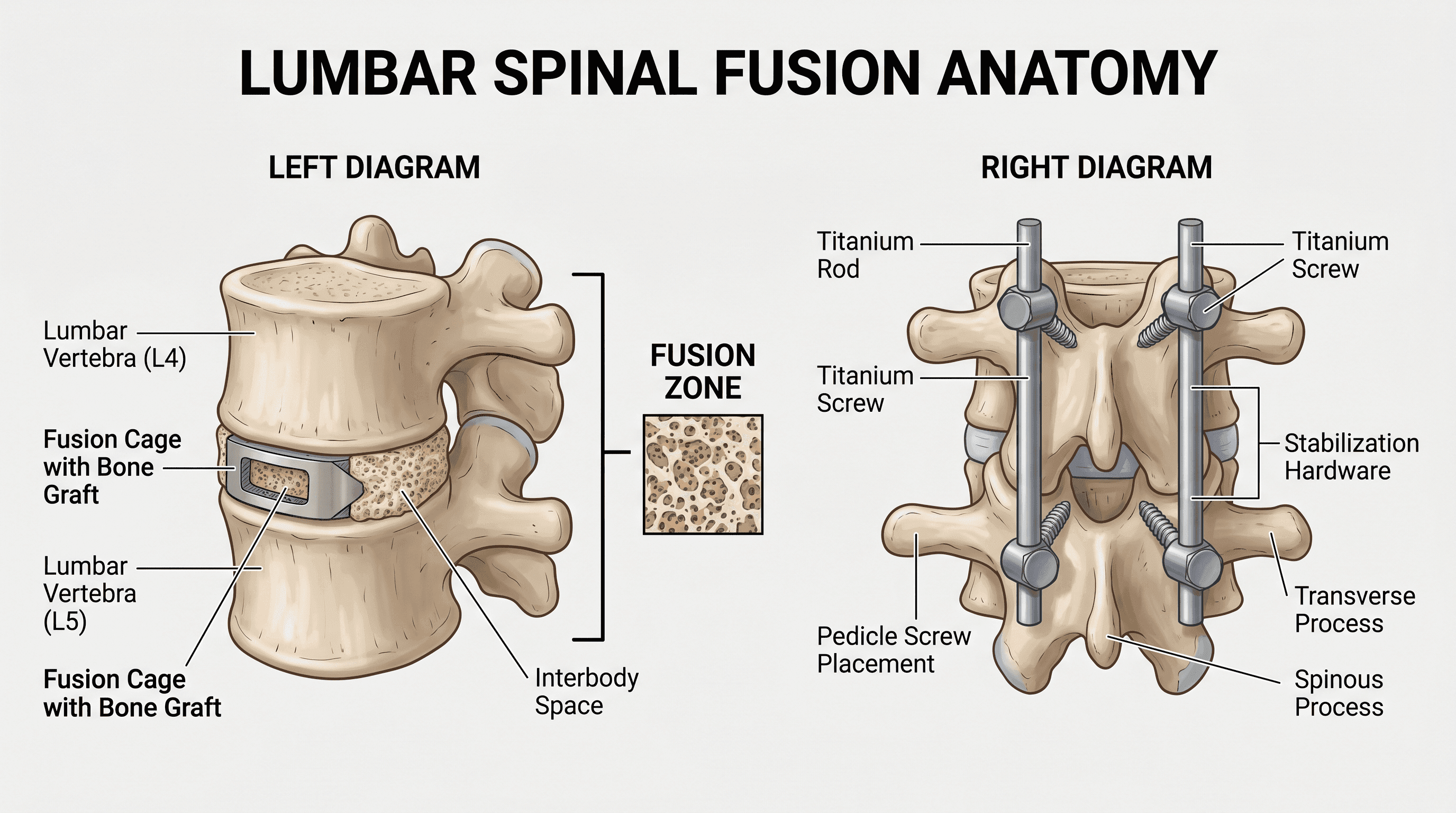
The most important mindset shift after spinal fusion surgery is understanding that there are two separate recovery timelines happening at once. The first is surgical recovery, where incision pain fades, inflammation settles, and the body repairs the immediate trauma of the procedure. That phase takes weeks. The second is biological fusion, where the bone graft material and the vertebrae slowly grow together into a single, solid structure. That process takes a minimum of 6 to 12 months, with full bone maturation continuing up to 18 months post-op.
Many patients feel dramatically better by weeks 6 to 8 and assume they are healed. The hardware (titanium screws, rods, or cages) provides structural stability during that window, but the bone itself has not yet fused. Overloading the spine before fusion is confirmed by imaging is one of the most common causes of hardware failure and reoperation. The restrictions placed on patients during this period are not precautionary formalities. They are protecting an active biological process.
The Hospital Phase: Days 1 to 4
Recovery begins before the patient leaves the operating table. Most hospitals now use Enhanced Recovery After Surgery (ERAS) protocols for spine procedures, a structured, evidence-based approach that combines multimodal pain management, early mobilization, and nutritional support to reduce opioid consumption, shorten hospital stays, and improve outcomes. Understanding what ERAS means in practice helps patients and families know what to expect rather than feeling surprised by how quickly the clinical team moves.
Pain Management in the Hospital: What to Expect and Ask For
Waking up from spinal fusion surgery with significant pain is normal. Pain typically peaks during the first 24 to 48 hours and then begins a gradual, non-linear decline. It will not decrease in a straight line. Some days will feel worse than others, even during normal healing.
ERAS-aligned pain management uses a combination of medications rather than relying on opioids alone. A typical regimen includes scheduled acetaminophen, anti-inflammatory agents where appropriate, nerve-targeted medications such as gabapentin, and opioids reserved for breakthrough pain. This combination reduces total opioid consumption while providing more consistent pain control.
One critical point patients frequently miss: ibuprofen, naproxen, and other NSAIDs are generally avoided after spinal fusion because they can slow or inhibit bone healing. Patients who routinely use NSAIDs for pain should confirm with their surgical team which alternatives are approved before and after discharge.
A pain score of 4 to 6 out of 10 in the first 48 hours is common and expected. Pain that is escalating rather than holding steady, accompanied by fever or new neurological symptoms such as worsening numbness or weakness, warrants immediate notification of the nursing team.
Early Mobility: Why the Team Will Have You Walking Within Hours
The clinical team will ask patients to stand and take their first steps within 12 to 24 hours of surgery, and this often feels impossible or alarming. It is neither. Early mobilization after spinal fusion is a clinical standard supported by strong evidence. Getting upright and moving improves circulation, reduces the risk of deep vein thrombosis (DVT), helps prevent post-surgical pneumonia, and accelerates recovery of bowel function.
The first session is always assisted, typically with a physical therapist or nurse guiding movement from a seated position to standing. A walker is standard equipment for the first several days. Walking 50 to 100 feet on day one is a genuine accomplishment and a meaningful clinical milestone, not a small thing.
A catheter will typically remain in place for 24 to 48 hours. Wound drains, when used, are usually removed within the first 1 to 2 days. IV lines transition to oral medications once pain is controlled and the patient is tolerating fluids.
Preparing Your Home Before Discharge
The gap between hospital discharge and real functional recovery at home is where many patients struggle most, not because their healing is off track, but because their environment was not set up to support the restrictions they need to follow. Preparing the home before surgery is one of the highest-leverage things a patient or caregiver can do.
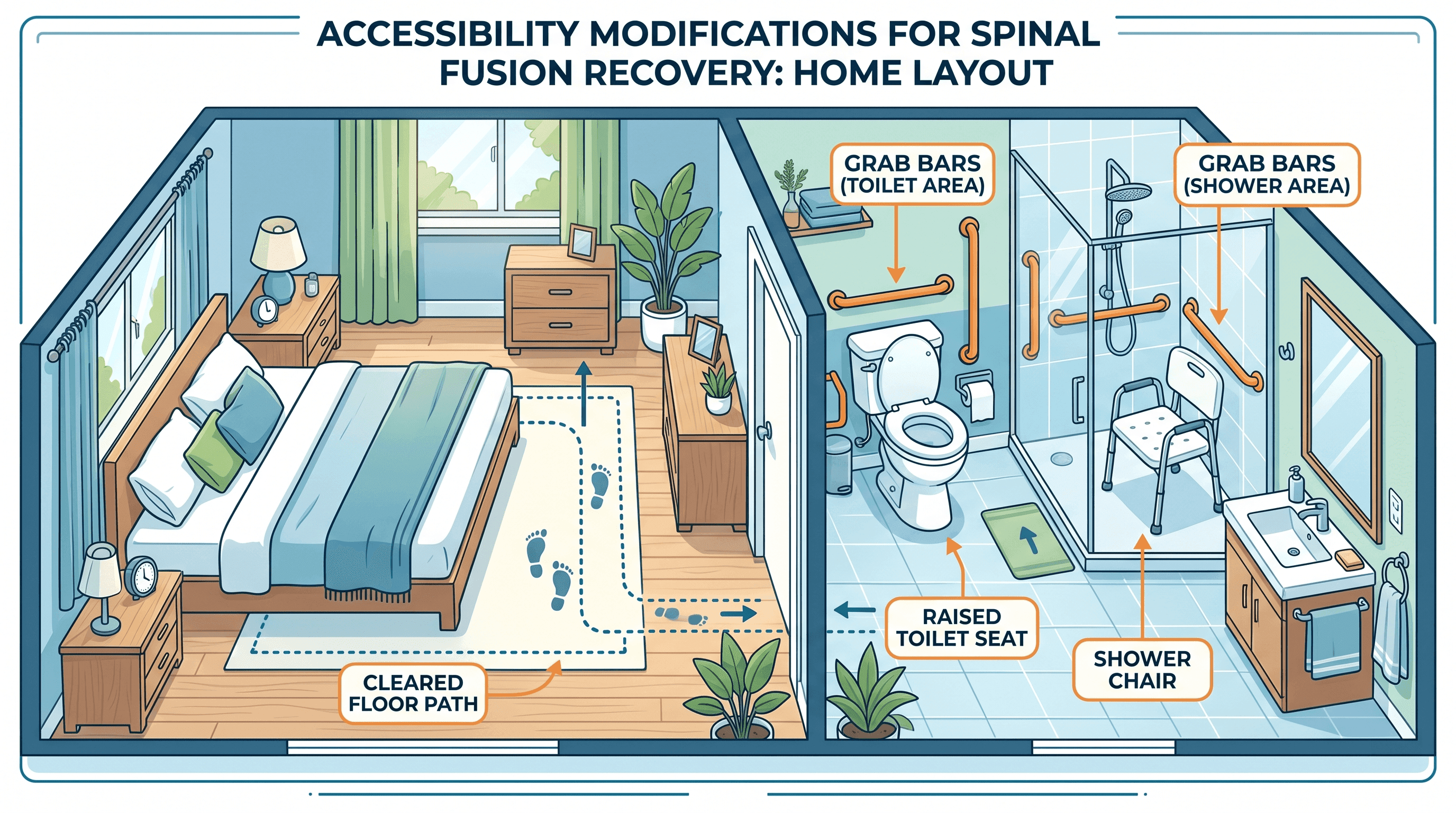
Bathroom and mobility: Install grab bars beside the toilet and inside the shower before surgery day. A raised toilet seat reduces the hip and spine flexion required to sit down, which matters enormously in the first two weeks. A shower chair lets patients bathe safely without standing on a wet surface while fatigued or medicated. Non-slip bath mats should cover all wet flooring.
Sleeping surface: A medium-firm mattress or an adjustable recliner both work well. Many patients find a recliner more comfortable in the first two weeks because it allows the spine to stay in a more neutral position and eliminates the challenge of getting in and out of a low bed. Whichever surface is used, it should be accessible without bending at the hips past 90 degrees.
Kitchen and daily tasks: Pre-cook and freeze meals, or arrange for meal delivery or family support for the first two to three weeks. Place frequently needed items between waist and shoulder height to avoid bending or reaching. Arrange for laundry, trash, and grocery delivery in advance.
Fall hazard removal: Remove all loose rugs, secure electrical cords, and clear floor clutter throughout the home. Falls in the first weeks after surgery are a serious complication risk.
Tools that help: A grabber/reacher tool, a long-handled sponge for bathing, and a sock aid for dressing are inexpensive items that preserve the BLT restrictions during activities of daily living.
Weeks 1 to 4: Surviving Early Home Life
The first month at home is the most demanding stretch of recovery. Pain is still significant, energy is limited, and the restrictions that protect the fusion are most easily violated during everyday activities.
The BLT rule governs everything in this phase. No Bending at the waist, no Lifting more than 5 to 10 pounds (approximately the weight of a small handbag), and no Twisting the torso. These restrictions exist because bending and twisting place shear forces on the fusion site, and lifting increases intradiscal and intra-hardware pressure at precisely the moment when the bone graft needs stability to establish early bridging.
Driving is restricted for most patients during the first two to four weeks, primarily because reaction time and physical ability to operate a vehicle safely are compromised by pain medication and limited trunk rotation. Patients taking opioids should not drive regardless of how they feel.
Constipation is nearly universal in the first one to two weeks and is caused by a combination of opioid medications, reduced mobility, and dehydration. Stool softeners (not laxatives that cause cramping) should be started proactively. Adequate fluid intake and gradual increases in walking distance both help.
Sleep Positions and Back Support After Spinal Fusion
Getting in and out of bed safely requires a specific technique called the log roll. To get out of bed, the patient rolls to one side as a single unit without twisting at the waist, drops the legs off the edge simultaneously, and uses the arms to push up to sitting. Reversing these steps to get in is equally important.
For back sleepers, placing a pillow beneath the knees reduces lumbar extension and takes pressure off the fusion site. For side sleepers, a pillow between the knees keeps the pelvis level and reduces rotational stress on the spine. Stomach sleeping is generally not recommended in the early recovery phase.
A recliner positioned at roughly 130 to 150 degrees of hip angle is a comfortable alternative to bed for many patients, particularly in the first week.
Incision Care and Signs of Infection to Watch For
Daily cleaning with mild soap and water is appropriate once the surgeon confirms the wound is closed, typically around day two to three post-discharge. Gently pat the area dry. Avoid soaking the incision in a bath, pool, or hot tub until cleared, which is usually at the four to six week follow-up visit.
Normal healing appearance includes mild redness directly at the incision edges, some bruising around the site, and firmness beneath the skin as scar tissue forms. Swelling that is decreasing over time is also expected.
Contact the surgical team promptly if any of the following appear: redness that is spreading beyond 1 cm from the incision edges, wound drainage after day five, swelling that increases rather than decreases after day three, fever above 101 degrees Fahrenheit, or increased warmth at the wound site. These are not things to monitor at home and assume will pass.
Weeks 4 to 12: Physical Therapy and Rebuilding Strength
For most lumbar fusion patients, formal outpatient physical therapy begins around four to six weeks post-op, pending surgeon clearance. Patients who had minimally invasive surgery (MIS) may start slightly earlier. Cervical fusion patients often begin gentle range of motion work sooner. The timeline varies and should be confirmed at the first post-op visit.
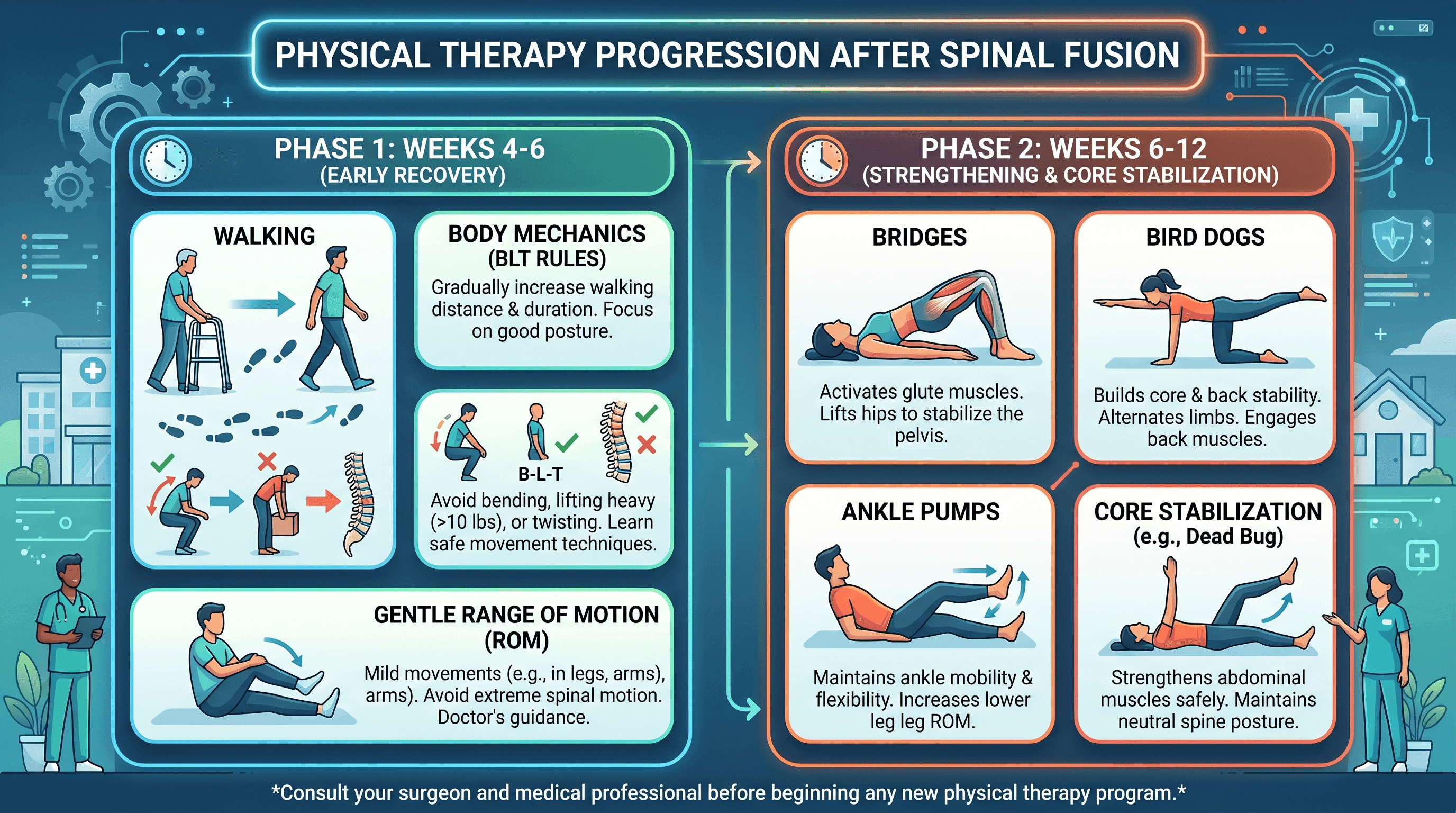
Physical therapy after spinal fusion progresses in two phases. Phase one, typically weeks four through six, focuses on body mechanics education (how to move safely), range of motion, and low-intensity walking progression. The goal is reestablishing normal movement patterns without loading the fusion site.
Phase two, roughly weeks six through twelve, introduces core stabilization exercises. The core muscles that support the lumbar spine, specifically the deep spinal stabilizers and the hip musculature, atrophy quickly with bed rest and surgical trauma. Rebuilding these muscles is not optional. They are the long-term protection system for the fused segment and the adjacent vertebrae above and below it.
Specific exercises at this stage commonly include bridges (lying on the back, feet flat, slowly lifting the hips), bird dogs (on hands and knees, extending opposite arm and leg while keeping the spine neutral), and ankle pumps for circulation. Each of these exercises strengthens the target musculature without placing axial load or shear stress on the fusion zone.
Signs of overdoing it include sharp or new pain during exercise, pain that does not return to baseline within two hours of completing a session, or any new neurological symptom such as increased tingling or weakness in the legs. These warrant a call to the physical therapist or surgical team before continuing.
What to Eat After Spinal Fusion: Nutrition for Bone Healing
Nutrition is one of the most overlooked components of spinal fusion recovery, and there is a meaningful body of evidence that it directly affects how well and how quickly the bone graft fuses.
Protein supports tissue repair and muscle maintenance throughout recovery. Adequate daily protein intake, roughly 1.2 to 1.6 grams per kilogram of body weight, helps preserve muscle mass during the reduced activity of early recovery and supports the cellular processes of bone remodeling.
Calcium and Vitamin D are the most directly relevant nutrients for bone fusion. A 2022 randomized controlled trial published in BMC Musculoskeletal Disorders found that supplementation with Vitamin D3 (800 IU daily) combined with calcium for three months post-op led to shorter time to fusion, improved functional outcomes, and reduced pain compared to controls. Patients who do not already supplement should discuss this with their surgeon or primary care physician before starting.
Magnesium aids calcium absorption and is commonly deficient in adults. Dietary sources include leafy greens, nuts, seeds, and whole grains.
Anti-inflammatory foods such as fatty fish (salmon, sardines), olive oil, berries, and colorful vegetables support the healing environment and may help moderate post-surgical inflammation.
What to avoid is equally important. NSAIDs including ibuprofen and naproxen should be avoided after fusion surgery because evidence shows they can impair bone healing and reduce fusion rates. Alcohol slows healing, impairs sleep quality, and interacts with post-surgical medications. Smoking is addressed in detail in the section on recovery factors below, but its effect on nutrition absorption and bone metabolism is also significant.
Patients who struggle to meet nutritional needs through food alone, which is common in the first few weeks when appetite is suppressed by medication, may benefit from a high-quality protein supplement and a physician-recommended multivitamin. A registered dietitian referral can be requested through the surgical team if needed.
Months 3 to 6: The Active Recovery Phase
"The goal of spinal fusion is to eliminate painful motion at the affected segment while preserving or improving overall spinal function." Mayo Clinic
By month three, most patients have weaned off opioid pain medications entirely and are relying on acetaminophen or non-opioid options for residual discomfort. Energy levels begin to normalize. Physical therapy sessions become more demanding as core strength rebuilds.
Driving clearance, if not already given, typically occurs in this window for most patients, provided reaction time and physical mobility are adequate. The surgeon confirms this at the six-week or three-month follow-up visit.
The three-month and six-month imaging appointments (X-ray, and sometimes CT) assess fusion progress. Patients should bring any questions about activity restrictions to these appointments because clearance for additional activities depends on what the imaging shows, not just how the patient feels.
Returning to Work: A Realistic Timeline by Job Type
Sedentary and desk-based work is typically cleared at four to six weeks, provided sitting tolerance is adequate and the commute does not require sustained driving beyond current restrictions. Ergonomic setup matters enormously at this stage: a chair with lumbar support, monitor at eye level, and the ability to stand or shift position every 20 to 30 minutes reduces load on the recovering spine.
Light physical work or jobs that involve prolonged standing typically require three to six months, depending on the specific demands and surgical approach.
Heavy labor, manual trades, and jobs requiring frequent bending, lifting over 40 pounds, or whole-body vibration (such as driving heavy machinery) generally require six months or longer post-op. In some patients, permanent job modification may be necessary and appropriate to discuss with the surgeon and an occupational therapist.
If returning to work is pressing and the timeline is unclear, consulting a physician who specializes in spine rehabilitation can help establish a functional capacity evaluation and a specific clearance timeline based on job demands.
The Nerve Awakening Phase
One of the most alarming and least-discussed aspects of spinal fusion recovery is the nerve awakening phase. Many patients had their surgery specifically because spinal stenosis, a herniated disc, or degenerative changes were compressing spinal nerve roots, causing pain, numbness, or weakness in the legs or arms. After surgery decompresses those nerves, they do not immediately return to normal function.
Nerve tissue heals slowly. As previously compressed nerves begin to receive restored blood flow and are no longer mechanically impinged, patients often experience new sensations: tingling, burning, electric-shock feelings, or sharp shooting pains in the legs or arms that were not present before surgery. This can feel alarming, particularly when patients expect surgery to reduce pain rather than produce new sensations.
This phenomenon is a sign of nerve recovery, not nerve damage, in most cases. According to Cleveland Clinic, nerve recovery can continue for up to 12 to 18 months following decompression surgery. The timeline depends on how long the nerve was compressed before surgery, the severity of compression, and individual biology.
The important distinction is directionality. Nerve awakening symptoms are expected to fluctuate but trend gradually toward improvement over months. New neurological symptoms that appear suddenly, worsen rapidly, or are accompanied by loss of bladder or bowel control are different and require immediate medical attention. That is a medical emergency, not a nerve awakening symptom.
The Mental and Emotional Side of Spinal Fusion Recovery
The psychological dimension of spinal fusion recovery is rarely covered in pre-surgical counseling, yet peer-reviewed research estimates that approximately 20 to 23% of patients experience clinically significant depression or anxiety in the post-operative period. That is not a small number, and it is worth naming directly.
Several factors contribute. Immobility removes the physical activity that most people rely on to regulate mood. Opioid medications affect neurochemistry and commonly cause low mood or emotional blunting during tapering. Sleep disruption is nearly universal and its effect on mental health is well established. Perhaps most significantly, many patients have lived with chronic pain for years and built an identity around waiting for surgery to restore them. When the recovery is slower than expected, or when nerve symptoms appear instead of the promised relief, the psychological impact can be significant.
None of this is weakness. It is a predictable biological response to major surgery, restricted mobility, pain, and disrupted sleep.
Evidence-based strategies that help during this period include maintaining a structured daily routine (even a loose one), prioritizing outdoor walking as soon as mobility permits, staying socially connected rather than isolating, and engaging the mind through reading, learning, or other absorbing activities during periods of restricted physical movement. If symptoms of depression or anxiety persist beyond two to three weeks or are interfering with recovery, speaking with a mental health professional is appropriate and recommended. A referral can be requested through the surgical team or primary care provider.
Months 6 to 12 and Beyond: Long-Term Expectations
At the six-month mark, imaging typically confirms whether the bone graft is demonstrating early fusion. For many patients, this is the appointment where additional activity restrictions are lifted. But "early fusion" is not "complete fusion." Bone maturation continues for up to 18 months, and the activities cleared at six months are cleared because the fusion is far enough along to tolerate them, not because the bone is fully mature.
Most patients with successful lumbar or cervical fusion gain net functional mobility compared to their pre-surgical baseline once pain resolves, even though the fused segment itself no longer moves. The surrounding hip, sacral, and thoracic mobility compensates for the loss of motion at the fused level in most activities of daily life.
Permanent activity modifications vary by patient but commonly include a 20 to 40 pound lifting limit in patients with multi-level fusion and avoidance of high-impact repetitive loading such as running on hard surfaces or contact sports. Surgeons individualize these recommendations based on imaging, the number of fused levels, patient age, and functional goals.
Adjacent Segment Disease: Understanding the Long-Term Risk
Adjacent segment disease (ASD) refers to accelerated degenerative changes in the spinal vertebrae immediately above or below the fused segment. When a spinal level is fused and its motion eliminated, the adjacent levels absorb more mechanical stress, which can accelerate their deterioration over time.
Research published in peer-reviewed spine literature estimates that radiographic ASD occurs in roughly 26% to 33% of lumbar and cervical fusion patients over the long term, though not all cases become symptomatic.
Symptoms to watch for include new or returning pain in the back or neck, new radicular symptoms (pain, tingling, or weakness traveling into the arm or leg), and reduced function after a period of stability. These symptoms warrant evaluation by the surgical team to determine whether they represent ASD or another cause.
Preventive strategies focus on reducing mechanical load on the adjacent segments. Core strengthening maintained through regular exercise, maintaining a healthy weight, avoiding high-impact loading activities, and not smoking all reduce the rate of adjacent segment deterioration over time.
Warning Signs and Complications: When to Call Your Surgeon
Knowing which symptoms require urgent attention versus which are part of normal healing is one of the most practically useful things a patient can understand. The following warrant a call to the surgical team same-day or an emergency room visit:
A fever above 101 degrees Fahrenheit at any point in the first several weeks of recovery is a red flag for infection and should not be monitored at home. Wound redness spreading beyond 1 cm from the incision edge, drainage from the wound after day five, or increasing swelling after the third post-operative day are all signs of possible wound infection or dehiscence.
Pain that is increasing rather than holding steady or slowly improving after the second week of recovery is not a normal pattern. Escalating pain requires evaluation.
New or worsening neurological symptoms, including numbness, tingling, or weakness in the legs or arms that is progressing rather than fluctuating, should be reported promptly. Loss of bladder or bowel control or retention is a medical emergency requiring an immediate emergency room visit. This is the one symptom that absolutely cannot wait for a scheduled appointment.
Hardware failure, though uncommon, can present as a sudden onset of mechanical-sounding back pain with activity, a palpable change in the contour of the back, or new severe pain after a fall or significant physical stress. Any fall directly onto the surgical site warrants a call regardless of how it feels afterward.
Factors That Affect How Fast You Recover
Recovery from spinal fusion is not a single fixed timeline. Several patient-specific and surgical variables meaningfully affect how quickly bones fuse, how soon restrictions lift, and how completely function returns.
Age influences both tissue healing capacity and post-operative care setting. Patients over 70 are more likely to require a short stay in a rehabilitation facility before returning home, rather than going directly home from the hospital.
BMI affects surgical complexity, implant stability, and soft tissue healing. Higher BMI is associated with longer surgical times and modestly higher complication rates.
Smoking doubles the infection risk after spine surgery and significantly impairs fusion rates. Research published in peer-reviewed literature has consistently found that active smokers have lower fusion rates and higher rates of pseudoarthrosis (failed fusion) than non-smokers. Surgeons often recommend smoking cessation for at least six weeks before surgery and throughout the recovery period.
Diabetes impairs wound healing, immune function, and bone metabolism. Patients with diabetes face approximately a six-fold higher risk of surgical site infection compared to non-diabetic patients. Tight perioperative glucose management is a standard part of surgical preparation for diabetic patients.
Surgical approach matters. Minimally invasive surgery (MIS) causes less muscle trauma, typically allows earlier mobilization, and shortens the initial recovery phase compared to open surgery, though long-term fusion outcomes are similar.
Number of fusion levels directly affects recovery length and the degree of permanent restriction. A single-level fusion recovers faster than a three-level fusion, and the long-term flexibility implications are proportionally greater.
The factors a patient cannot control, such as age, the number of levels fused, and the surgical approach needed, are best understood before surgery. The modifiable factors, including smoking cessation, blood sugar management, pre-surgical physical conditioning, and nutritional status, are worth addressing proactively. A thorough conversation with the surgical team about individual risk factors before the procedure helps set realistic expectations.
For personalized guidance on your specific recovery timeline, use Momentary Lab's AI health navigator to explore your questions and get oriented before your next clinical appointment.
Frequently Asked Questions
What is life like after spinal fusion surgery?
Most patients report a meaningful improvement in quality of life after successful spinal fusion, particularly those who had the surgery for spinal stenosis, degenerative disc disease, or spondylolisthesis causing chronic leg or arm pain. The fused segment no longer moves, but surrounding spinal levels and hip mobility typically compensate well enough that most activities of daily life are fully accessible. Some permanent modifications apply, particularly around heavy lifting and high-impact activities, but the majority of patients return to driving, working, walking, swimming, and most recreational activities within six to twelve months.
What is the best way to sleep after spinal fusion surgery?
Back sleepers do best with a pillow under the knees to reduce lumbar extension. Side sleepers should place a pillow between the knees to keep the pelvis level and minimize rotational stress. Stomach sleeping is not recommended in the early post-operative period. Many patients find a recliner set to a 130 to 150 degree hip angle more comfortable than a bed in the first one to two weeks. Using the log-roll technique to get in and out of bed protects the fusion site during the most vulnerable position changes.
How long does nerve pain last after spinal fusion?
Nerve recovery after spinal decompression and fusion varies widely. Tingling, burning, and electric sensations in the legs or arms are common as compressed nerves begin to recover function and can persist for up to 12 to 18 months. Patients who had longer-standing nerve compression before surgery may have a slower nerve recovery than those who had acute compression. The trend should be gradual improvement over time, even if the path is not linear. Persistent or worsening neurological symptoms should always be evaluated by the surgical team.
Why does my back hurt 2 years after spinal fusion?
Pain returning or persisting two years after spinal fusion has several possible explanations. Adjacent segment disease is among the more common causes, as increased mechanical stress on the vertebrae above and below the fusion can accelerate degeneration over time. Other possibilities include pseudoarthrosis (failed bone fusion, where the bone graft did not fully consolidate), hardware loosening, or a new pathology at a non-fused level. In some cases, myofascial pain from insufficient core strength after surgery is a contributing factor. A return visit to the surgeon with current imaging is the appropriate starting point for evaluating long-term post-fusion pain.
When can I start physical therapy after spinal fusion?
Most patients begin formal outpatient physical therapy at four to six weeks post-op following surgeon clearance. Patients who had minimally invasive surgery may start slightly earlier. During the hospital stay and early home recovery, gentle walking is the primary activity. Formal PT introduces structured range of motion, body mechanics education, and then progressive core strengthening from roughly weeks six through twelve.
What are the signs of a failed spinal fusion?
Signs that a spinal fusion may not have been successful include persistent or worsening back pain that does not follow the expected improvement curve, new or returning radicular symptoms (pain or tingling traveling into the leg or arm), and mechanical-feeling pain with certain movements. These symptoms do not confirm failure on their own but warrant evaluation with updated imaging, typically CT scan, which is more sensitive than X-ray for detecting pseudoarthrosis. A doctor can advise on individual cases based on imaging and clinical examination.
References
- Mayo Clinic: Spinal Fusion — Overview of spinal fusion procedure, goals, and surgical approach.
- Cleveland Clinic: Spinal Fusion — Post-operative expectations including nerve recovery timeline.
- Vitale MG et al., PubMed (PMID 20362247) — Evidence on NSAID use and impaired bone healing after spinal fusion.
- BMC Musculoskeletal Disorders (PubMed PMID 35505790) — 2022 RCT on Vitamin D3 and calcium supplementation improving fusion outcomes.
- PMC: Smoking and Spinal Fusion Outcomes (PMC7707593) — Evidence on smoking doubling infection risk and impairing fusion rates.
- PubMed PMID 38490974 — Data on diabetes and elevated surgical site infection risk in spine surgery.
- PubMed PMID 37866485 — Prevalence and contributing factors of post-surgical depression and anxiety.
- PubMed PMID 26230536 — Prevalence data on adjacent segment disease in lumbar and cervical fusion patients.