


AI diagnosis refers to the use of machine learning software to analyze patient data — images, lab results, electronic health records, and symptom inputs — to suggest potential diagnoses or flag clinical concerns. And the honest answer to whether it actually works is: it depends enormously on what kind of AI, doing what task, on what population.
That nuance is what most articles miss. Some AI diagnosis tools achieve accuracy rates that match or outperform experienced specialists in narrow, well-defined tasks. Others — particularly general-purpose chatbot-style tools — hover around 52% overall diagnostic accuracy across a broad range of conditions, according to a 2024 meta-analysis covering 83 studies. Both facts are true simultaneously, and understanding which type of AI tool is operating in your care is the most useful thing any patient can know.
This guide breaks down how AI diagnosis tools actually work, where they genuinely perform well, where they still fall short, and what questions a patient should be asking their doctor right now.
At a Glance
| Topic | Key Facts |
|---|---|
| What AI diagnosis means | Software that analyzes patient data to suggest diagnoses or flag risks |
| Overall LLM diagnostic accuracy | ~52.1% across 83 studies (2024 meta-analysis, NCBI) |
| Imaging AI accuracy range | 87–94% on specific tasks (lung nodules, diabetic retinopathy) |
| FDA-cleared AI medical devices | 1,000+ cleared as of 2023; radiology dominates |
| Can AI replace doctors? | No — final diagnostic authority remains with a licensed physician |
| Patient concern areas | Accuracy, privacy, bias, reduced human interaction |
| Best current use cases | Radiology, pathology, sepsis prediction, diabetic retinopathy screening |
The Physician's Co-Pilot: What AI Diagnosis Actually Means
AI diagnosis tools are software systems that use machine learning — a method by which computers identify patterns in large datasets — to analyze patient information and surface clinically relevant signals. The defining characteristic of every credible AI diagnostic tool is that it is designed to augment a physician's judgment, not replace it.
Think of it the way a co-pilot operates alongside a captain. The co-pilot processes instrument data, flags anomalies, and keeps the captain informed. But the captain holds final authority over every decision. AI diagnostic tools work the same way: the software processes data at a scale and speed no human can match, while the physician interprets that output through clinical experience, patient context, and physical examination.
The Three Types of AI in Diagnostics
There are three functionally distinct categories of AI diagnosis tools, and they have very different accuracy profiles.
Medical imaging AI uses deep learning — a type of machine learning modeled on the brain's neural architecture — to analyze X-rays, CT scans, MRIs, and pathology slides. This is the most mature and FDA-scrutinized category. Tools like IDx-DR (diabetic retinopathy) and Aidoc (radiology triage) have achieved 87–94% accuracy on specific imaging tasks in validated clinical trials.
NLP and EHR AI (natural language processing applied to electronic health records) reads through a patient's medical history, lab results, medications, and clinical notes to flag risk patterns. These tools are used for sepsis early warning, medication error detection, and predicting patient deterioration. Accuracy varies significantly depending on data completeness and hospital system integration.
LLM-based symptom chatbots are large language model tools that allow users to describe symptoms in plain language and receive a list of possible conditions. These are the most widely accessible and the least accurate category. A 2024 meta-analysis published in NIH's PubMed database found that generative AI systems achieved an overall diagnostic accuracy of approximately 52.1% across 83 clinical studies.
How AI Learns to Diagnose
AI diagnostic models learn by processing millions of labeled examples. A radiology AI, for instance, is trained on hundreds of thousands of chest X-rays, each tagged by human radiologists to identify which ones showed pneumonia, which showed a tumor, and which were clear. The model finds statistical patterns in pixel data that predict those labels, then applies those patterns to new images it has never seen.
The critical implication is that the model can only be as good as its training data. If that data skews toward a particular demographic, hospital system, or imaging technology, the model will perform worse on patients who fall outside that profile. This is not a hypothetical concern — it is the documented source of the equity problems covered later in this article.
Medical Imaging and Radiology: The Most Mature Frontier
Medical imaging is where AI diagnosis has earned its most credible record, and it is the sector where the technology has moved furthest from hype into measurable clinical benefit.
Deep learning models trained on radiology data can scan X-rays, CT scans, and MRIs to flag anomalies — including early-stage tumors, micro-fractures, and neurological changes — with accuracy that rivals or, in some narrow tasks, exceeds that of experienced radiologists. A study published in PMC/NIH documented AI performance in medical imaging reaching high sensitivity for specific lesion detection tasks.
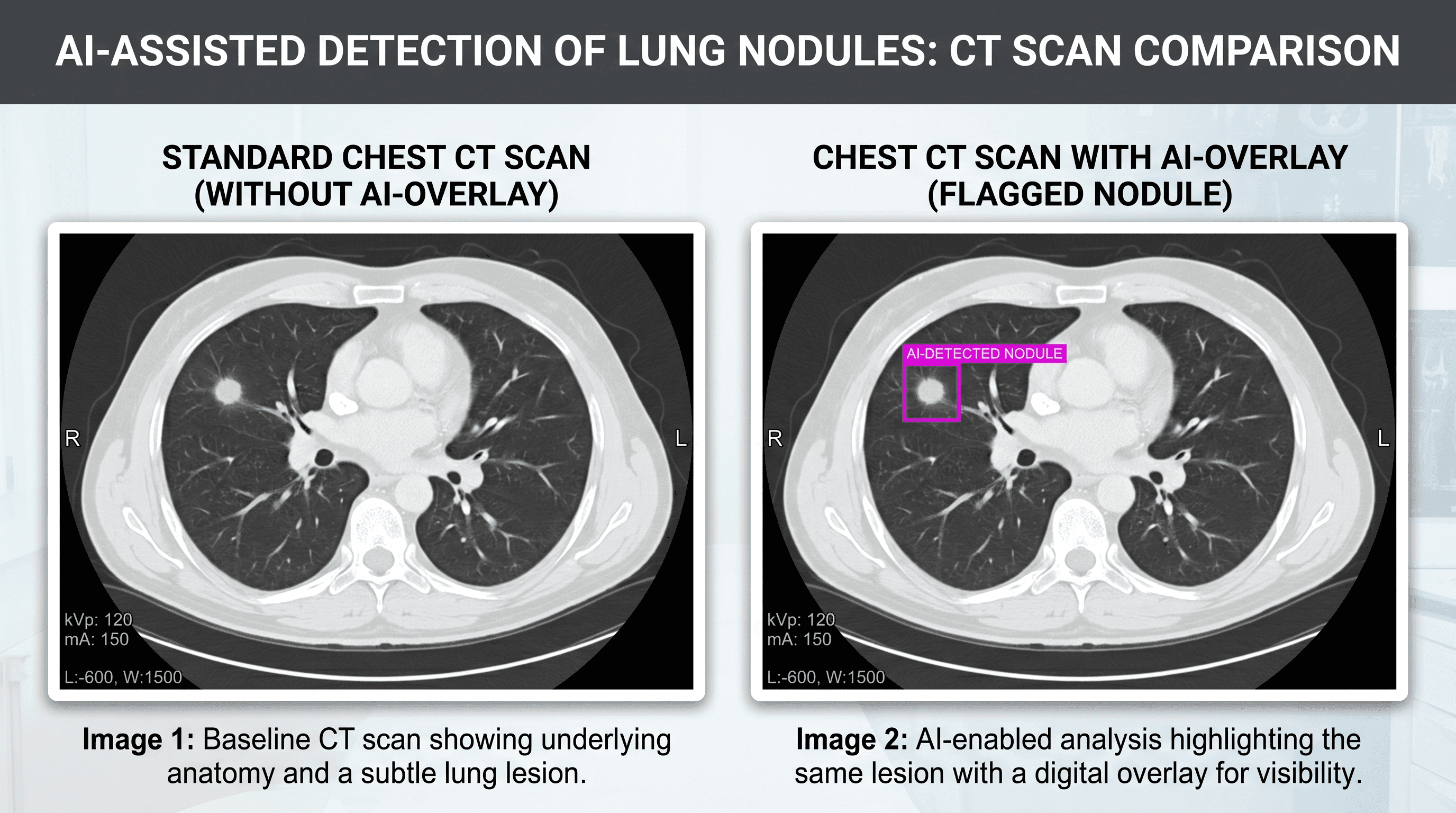
The practical value here goes beyond raw accuracy. Radiology departments in the United States face a documented backlog problem: there are not enough radiologists to read the volume of scans being ordered. AI triage tools like Aidoc and Viz.ai function as a first-pass filter, elevating urgent findings to the top of a radiologist's reading queue so critical cases are seen first. This is an area where the AI does not need to be perfect — it needs to be fast and sensitive enough to catch what cannot wait.
Where AI Genuinely Outperforms Humans
The strongest AI performance is concentrated in tasks that share three features: high image volume, well-defined target features, and large training datasets.
Diabetic retinopathy screening is the clearest example. IDx-DR, cleared by the FDA in 2018, was the first AI diagnostic device authorized to provide a screening decision without a clinician needing to review the image first. In clinical validation, it achieved over 87% sensitivity for detecting more-than-mild diabetic retinopathy. Mammography AI has demonstrated the ability to reduce false positive reads from approximately 11% to around 5% in some studies, meaning fewer women called back for unnecessary follow-up biopsies.
Lung nodule detection on CT scans is another area where AI has demonstrated consistent performance. Research published in PMC documents AI matching or exceeding radiologist performance in identifying small pulmonary nodules — the type of finding where early detection meaningfully changes outcomes.
Where AI Still Falls Short
AI imaging tools perform well on clean, single-modality tasks with abundant training data. They underperform when the diagnostic question requires integrating multiple information types — a scan plus a physical exam finding plus a patient's verbal description of symptoms plus social context.
A 2026 study from Harvard and Beth Israel Deaconess Medical Center found that an OpenAI reasoning model outperformed two experienced emergency physicians on a dataset of complex cases — but the model was working from structured EHR text only. It had no access to imaging, no ability to observe the patient, and no awareness of nonverbal cues that often change a clinical picture entirely. That caveat matters. The performance gap narrows or reverses in real-world settings where information comes in fragmented, multimodal, and often incomplete.
The Lab-to-Clinic Gap No One Talks About
AI diagnostic tools are typically validated in controlled research environments using clean, curated datasets. When the same tools are deployed in real hospitals — where imaging equipment varies, data entry is inconsistent, and patient populations differ from training cohorts — performance drops measurably.
Research from ScienceDirect examining AI performance in applied clinical settings found that real-world deployment can introduce meaningful performance degradation relative to benchmark studies. This gap is the most important practical limitation in AI diagnostics and the one most promotional coverage omits entirely. A tool with 94% accuracy in a trial setting may perform significantly differently when deployed across a network of community hospitals using older imaging hardware.
Pathology and Lab Analysis: The Invisible Diagnostics
Beyond radiology, AI diagnosis is making inroads into pathology — the analysis of tissue samples, blood smears, and cellular material — an area that is less visible to patients but equally consequential.
Traditional pathology requires a trained specialist to examine samples under a microscope, looking for cellular abnormalities that indicate cancer, infection, or blood disorders. It is meticulous, time-consuming, and subject to inter-observer variability, meaning two pathologists examining the same slide may sometimes reach different conclusions. AI pathology tools address both the throughput problem and the consistency problem.
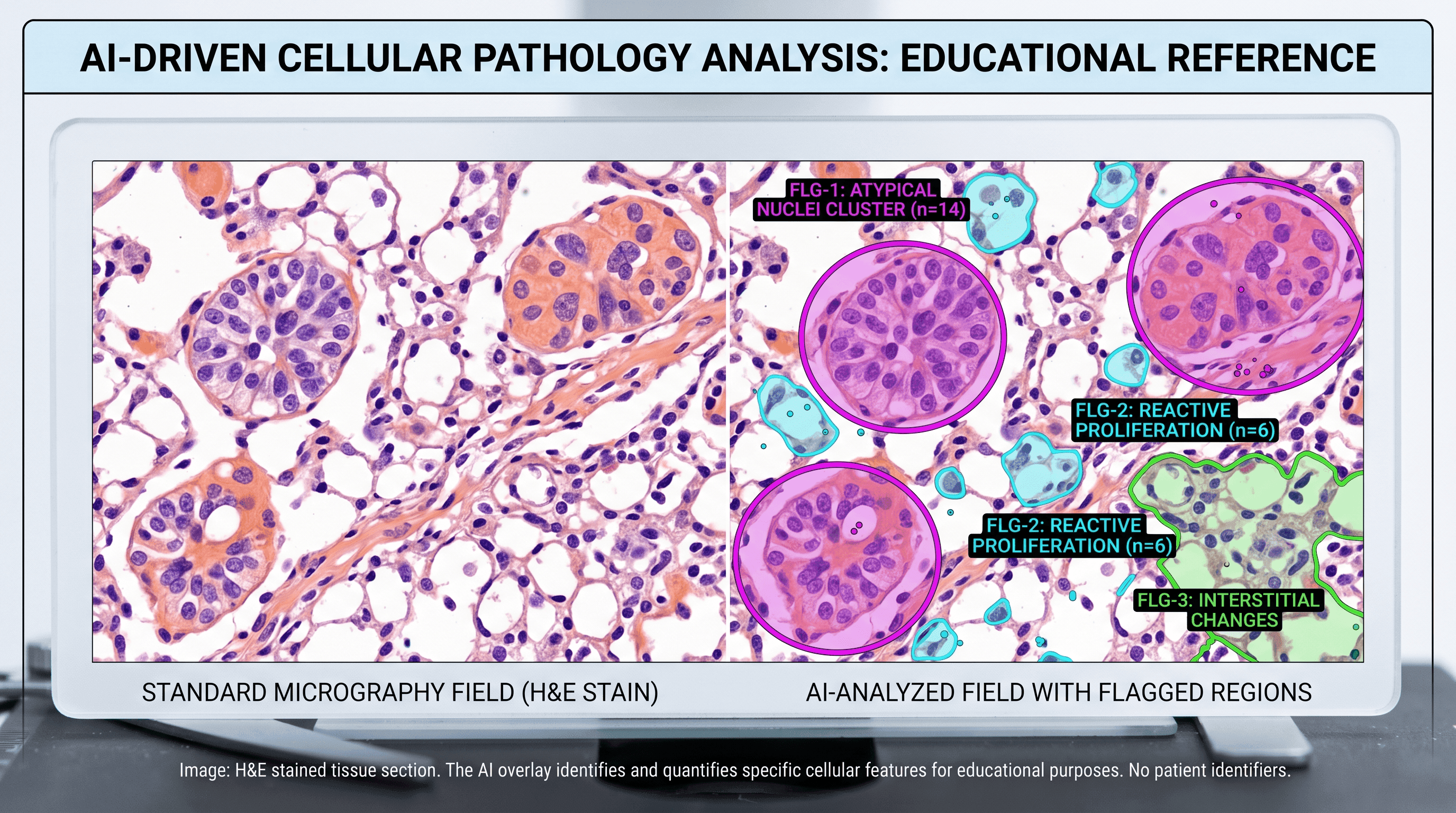
Machine learning models trained on digitized pathology slides can analyze tissue biopsies to identify specific cancer mutations, grade tumor aggressiveness, and flag rare blood disorders faster than traditional manual microscopy. The National Cancer Institute has documented active investment in AI-powered pathology as part of its cancer research infrastructure, specifically for its ability to detect patterns in cellular morphology that human observers may overlook across high volumes of slides.
For patients, the practical implication is faster turnaround on biopsy results and more consistent grading of tumor samples — which affects treatment planning directly. A pathology AI does not eliminate the pathologist; it handles the screening workload so the pathologist's attention is concentrated on complex or ambiguous cases.
Predictive Diagnostics and Early Warning Systems
One of the most consequential applications of AI diagnosis is not in identifying a disease a patient already has, but in predicting deterioration before physical symptoms appear.
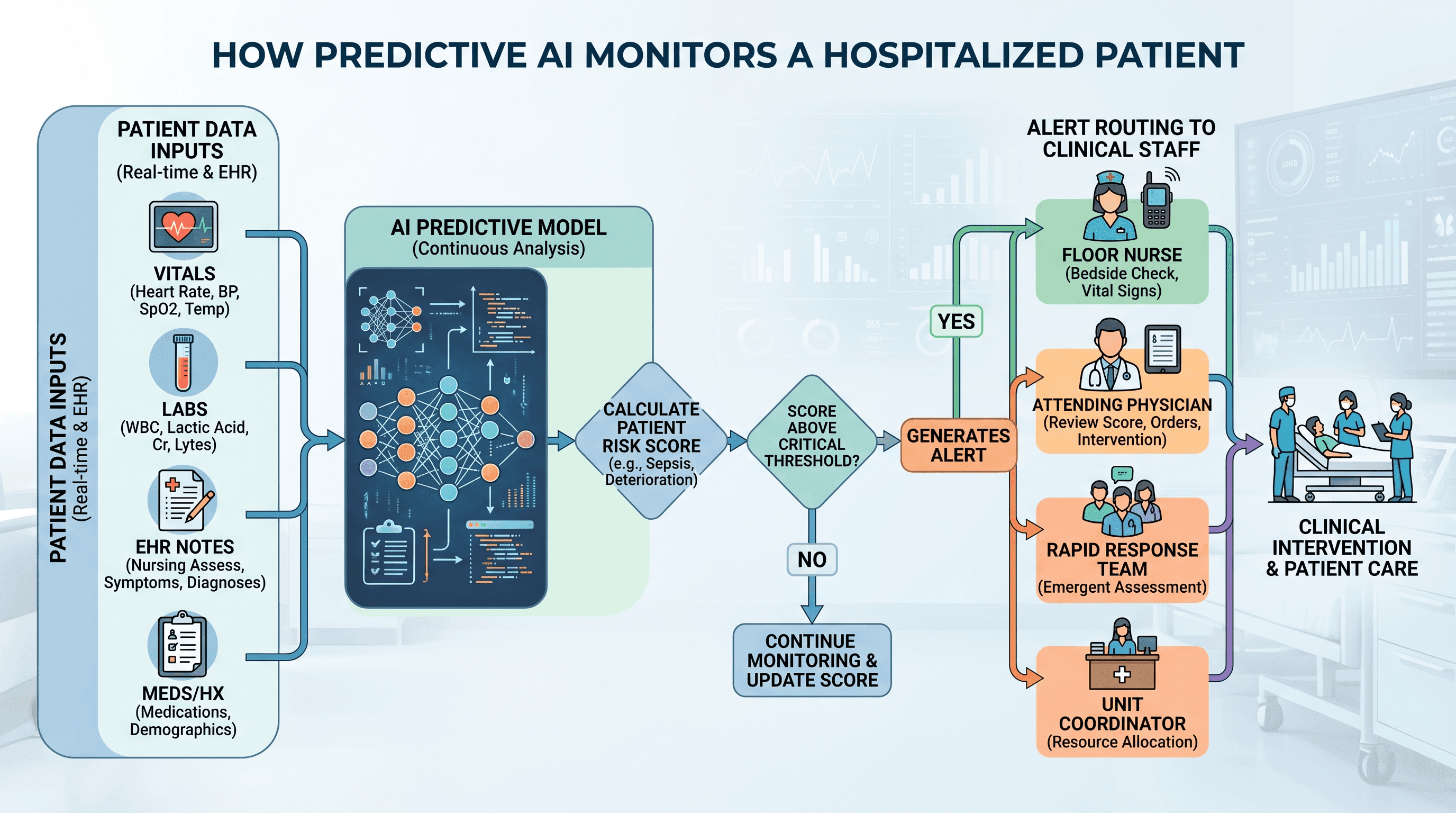
This is where AI analysis of electronic health records (EHRs) becomes a genuine clinical tool rather than an administrative convenience. EHR-based AI models continuously monitor a hospitalized patient's vital sign trends, lab value trajectories, medication history, and nursing notes, building a dynamic risk score updated in near real time.
Sepsis prediction is the most clinically validated use case. Sepsis — a life-threatening systemic response to infection — progresses rapidly, and early intervention is the most effective way to improve survival. Research published in PMC has documented AI models identifying sepsis risk hours before clinical criteria are met, giving care teams a meaningful window to intervene.
The same predictive framework is being applied to acute kidney injury prediction, readmission risk after discharge, and early deterioration in ICU patients. These are not diagnosis tools in the traditional sense — they do not name a disease. They are early warning systems that direct clinical attention to the patients most likely to need it next.
Wearable Bio-Data and Continuous Diagnosis
The frontier that most patients encounter first is not hospital-based AI but consumer-facing wearable technology feeding health data into AI systems continuously.
Smartwatches from major manufacturers now collect ECG readings, blood oxygen saturation, heart rate variability, skin temperature, and in some models, continuous glucose readings. When this data stream is analyzed by AI diagnostic algorithms, it shifts health monitoring from a static snapshot — the labs your doctor orders once a year — to a continuous, dynamic profile.
The clinical potential is real. The Harvard Medical School news office has covered AI's diagnostic potential in complex cases, and cardiologists have documented cases where wearable ECG data flagged atrial fibrillation in patients who had no prior cardiac history and no symptoms at the time of detection. Atrial fibrillation detected early, before it causes a stroke, is a meaningfully different clinical situation than atrial fibrillation discovered after an event.
The limitation is data quality and context. Consumer devices are not medical-grade instruments, and a single aberrant reading means something different than a sustained trend. AI tools interpreting wearable data need to account for noise, individual baseline variation, and the difference between a physiological anomaly and a device artifact. The physician interpreting the flagged data still needs to apply clinical judgment to determine what action, if any, is warranted.
Rare Disease Detection and Genomics
Rare diseases present a specific diagnostic challenge that AI is uniquely positioned to address. There are approximately 7,000 known rare diseases, and the average patient with a rare condition waits more than four years for an accurate diagnosis, often seeing multiple specialists before a correct answer emerges.
AI diagnosis tools trained on rare disease symptom profiles and genetic data can cross-reference a patient's presentation against the full global literature on rare conditions — a scope no individual clinician can match from memory alone. When symptom patterns and genetic markers are combined, machine learning models can surface candidate diagnoses that a physician may not have considered, particularly for conditions that present with overlapping symptoms across multiple organ systems.
Research published in RSC has examined AI applications in rare disease genomic analysis, documenting the technology's ability to identify mutation patterns that predict specific rare conditions. The value here is not that AI knows more than a geneticist — it is that it can process the breadth of documented case literature faster than any search process a human could conduct manually.
This is an area where AI functions as a genuine search engine across medical knowledge, surfacing connections that an overloaded specialist might not have bandwidth to find.
The Ethics of AI Decisions: Trust, Transparency, and Explainability
For AI diagnosis to be trusted by physicians — and by patients — it needs to be more than accurate. It needs to be explainable.
The concept of "explainability" in AI refers to whether a tool can show its reasoning: not just "this scan shows cancer risk" but "these specific features in regions A and B of the image, compared against 240,000 training examples, produced a 91% probability of malignancy." Explainable AI, sometimes called "open-box" AI, allows the physician to evaluate the model's reasoning the same way they would evaluate a colleague's clinical argument.
A study in Science examining AI's diagnostic trajectory noted that physician trust in AI recommendations increases substantially when the model provides not just a conclusion but the reasoning pathway behind it. When AI operates as a black box — producing outputs without accessible explanation — physicians are less likely to act on recommendations and more likely to override them, even when the AI is correct.
The regulatory pressure is moving in the same direction. The FDA's oversight framework for AI medical devices increasingly expects developers to document model behavior and, where possible, provide clinician-readable explanations for high-stakes outputs. For patients, the takeaway is that asking "can you explain how the AI reached that conclusion?" is a reasonable question to bring to any clinical conversation where AI-assisted findings are being discussed.
Medical data privacy is a related concern. AI diagnostic models require large datasets to train, and those datasets contain sensitive patient information. Health systems deploying AI tools are bound by HIPAA, but the specific data governance practices around AI model training — what data was used, how it was anonymized, who has access — vary considerably across vendors and institutions. Patients have the right to ask how their data is used in AI training, even if the answers are not always straightforward.
The Limits: Why the Human Element Is Non-Negotiable
AI diagnosis tools, at their most capable, are still missing something that cannot be coded: clinical intuition applied to a whole person.
The physical examination finds things that no dataset captures. The patient who answers "fine" when asked how they are feeling but whose posture, affect, and breathing pattern tell a different story. The family member present at an appointment who mentions, almost as an aside, that the patient has stopped eating. The inconsistency between a patient's reported symptoms and the timeline that reveals itself only through careful conversation. These are not marginal details. In a significant number of diagnostic pathways, they are the decisive data point.
AI trained on EHR text, imaging pixels, or structured lab values has no access to any of this. A major review published in ScienceDirect examining AI diagnostic performance across clinical settings consistently found that AI underperforms in complex, ambiguous presentations where contextual and nonverbal information is clinically relevant — which is precisely the category of case where diagnostic errors matter most.
The social determinants of health — housing instability, food insecurity, access to medications, domestic circumstances — shape health outcomes in ways that are incompletely represented in any dataset. A physician who knows their patient's life context may recognize that a patient is not adherent to a treatment plan not because they are non-compliant but because they cannot afford the medication. An AI working from prescription fill records alone will flag the non-adherence without understanding its cause.
This is why every responsible framing of AI diagnosis — including from regulatory bodies, hospital systems, and the researchers building these tools — lands in the same place: AI is a decision-support tool. The final diagnostic sign-off belongs with the physician.
If questions are coming up about a specific symptom pattern or health concern, speaking with a licensed provider directly remains the most reliable first step. Connecting with a primary care provider through a virtual visit is now a practical option for getting a physician's interpretation of AI-flagged findings or simply for a first clinical opinion.
AI vs. Doctors: Will AI Replace Physicians?
The direct answer is no — and the more interesting answer is that the question misframes how AI diagnosis actually functions in practice.
In April 2026, a study from Harvard Medical School and Beth Israel Deaconess Medical Center found that an OpenAI reasoning model outperformed two experienced emergency physicians on a structured dataset of complex diagnostic cases. That finding generated significant attention. What was less widely reported were its explicit limitations: the model worked from EHR text only, had no imaging access, could not observe the patient, and was tested in an emergency department context that may not generalize to primary care or specialty settings.
ECRI, an independent patient safety organization, published its 2026 guidance framing AI as "a tool designed to supplement and support clinical expertise — not replace it." That framing reflects the consensus across FDA guidance, hospital policy, and the peer-reviewed literature.
The specialties where AI-assisted workflows are advancing fastest — radiology, pathology, and dermatology — are also the specialties where the diagnostic task is most image-centric and where the volume of material to be reviewed exceeds what any solo practitioner can sustainably process. AI in these settings functions more like a highly capable screening assistant than a replacement for specialist judgment.
What AI genuinely changes in these specialties is throughput and consistency: a radiologist using an AI triage tool can prioritize the urgent cases in a queue of 400 scans without manually reviewing each one. That is a workflow improvement with real patient safety implications. It is not the same as AI making the diagnosis.
What Patients Actually Think — and What They Should Know
Patient comfort with AI diagnosis drops sharply as AI involvement increases and human interaction decreases. This is a consistent finding across patient research, and it surfaces a genuine tension in how these tools are being deployed.
Research cited by the NIH and patient advocacy organizations identifies four recurring concerns patients raise about AI in their clinical care: accuracy (will it get it right for someone like me?), privacy (what happens to my health data?), bias (was this tool tested on people who look like me?), and depersonalization (am I being seen as a person or a data point?). All four are reasonable concerns. None of them has a simple answer.
Questions to Ask Your Doctor About AI in Your Care
These questions are grounded in the concerns patients most commonly raise, and each one is answerable by a clinical team that is being transparent about how AI tools are being used.
"Is AI being used to analyze any of my test results or scans, and if so, which tool?" This establishes basic transparency. You have a right to know when AI is involved in your care, and a responsible clinical team should be able to name the specific tool.
"Has this AI tool been validated on patients with my demographic background?" This gets at the bias problem directly. Tools trained on datasets that underrepresent certain racial, ethnic, or age groups may perform differently on those groups. Asking this question puts the question of generalizability on the table.
"Can you explain what the AI flagged, and why you agree or disagree with that finding?" This treats the AI output as something the physician has reviewed and interpreted, not simply accepted. A good physician should be able to walk through their reasoning, including where it aligns with or departs from the AI's suggestion.
"How is my health data protected when it's used by AI systems?" This is a data privacy question that hospital systems and clinical AI vendors are required to have a policy on. You may not get a complete technical answer, but asking demonstrates that you expect your data governance to be taken seriously.
"Is there additional information — symptoms, family history, lifestyle factors — that the AI did not have access to that I should make sure you have?" This is the most useful question of all. It positions the patient as an active participant in ensuring the physician has complete information, rather than assuming the AI captured everything relevant.
The Bias and Equity Problem in AI Diagnostics
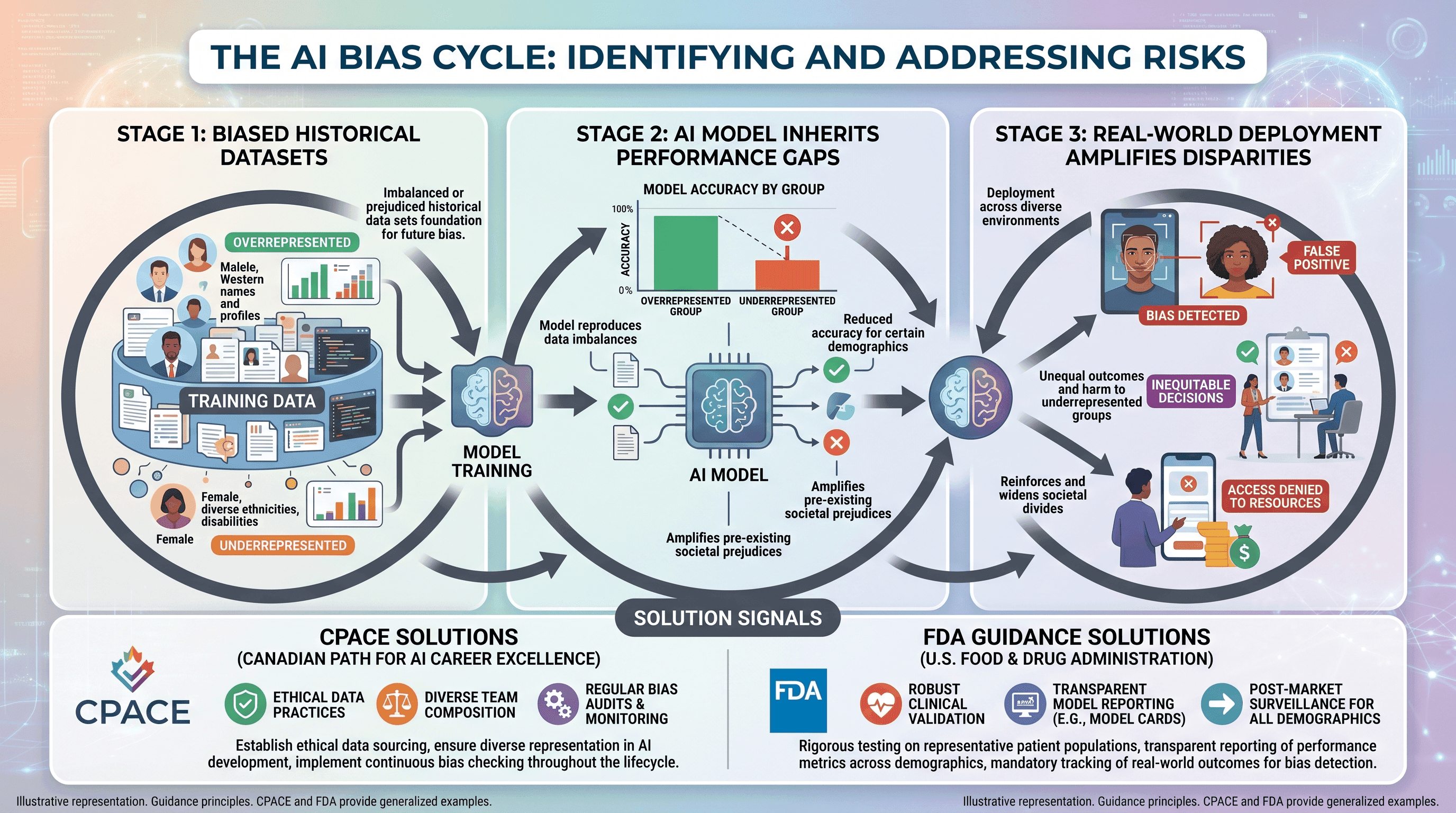
AI diagnosis tools trained on historically biased datasets underperform for patients from minority and underrepresented groups. This is not a theoretical risk. It is a documented pattern with measurable clinical consequences.
The problem originates in training data demographics. If a dermatology AI is trained predominantly on images of lighter skin tones, it will have seen fewer examples of how specific lesions appear on darker skin — and its accuracy on darker-skinned patients will reflect that gap. The same dynamic applies to any clinical domain where the historical patient population used to build the training dataset does not represent the full diversity of patients the tool will eventually encounter.
Research published by the NIH has documented that racial and ethnic minority patients express the greatest concern about AI use in healthcare — a finding that is not incidental. It reflects a pattern of historical experience with healthcare systems that did not always serve those communities equitably.
The solution path is not simple, but it is being actively worked on. Institutions like the University of Pittsburgh's Center for AI in Cardiovascular Health (CPACE) have built explicit bias-mitigation requirements into their AI development protocols, mandating that training datasets meet diversity thresholds before models are deployed clinically. The FDA has also issued guidance encouraging AI developers to document the demographic composition of their training data and to validate performance across subgroups.
For patients, the practical implication is that bias concerns are valid, specific questions about training data are appropriate, and any AI tool used in care should be able to provide documentation of how it was validated across diverse populations.
What Is Next for AI Diagnosis
Three developments are shaping where AI diagnosis goes in the next three to five years, and all three have implications for how patients will experience their care.
Multimodal AI represents the most significant capability jump on the horizon. Current AI tools are largely single-modality — imaging AI reads images, EHR AI reads records. Multimodal models integrate imaging data, genomic sequencing results, electronic health records, and wearable data simultaneously. Research programs at institutions like the NIH's National Cancer Institute are actively building multimodal AI frameworks for oncology that would allow a single model to synthesize a patient's scan, their tumor's genetic profile, and their treatment history to generate more precise diagnostic and prognostic outputs.
LLM integration into clinical decision support is moving AI diagnosis from a background tool that generates reports for physicians to an active participant in clinical reasoning. Large language models embedded in the EHR can surface relevant research, flag drug interactions, suggest diagnostic differentials based on a patient's full record, and document clinical reasoning in real time. The accuracy and reliability of this integration is still being established, and appropriate physician oversight remains a regulatory requirement.
Regulatory evolution is the wildcard. The FDA cleared over 1,000 AI-enabled medical devices through 2023, with radiology accounting for the largest share. The pace of submissions continues to accelerate while FDA staffing faces resource constraints. How the regulatory framework evolves to keep pace with the rate of AI development will determine how quickly new tools reach clinical practice — and how rigorously they are validated before they do.
For patients, the near-term trajectory points toward AI that knows more about their health history, synthesizes more data types, and surfaces risks earlier — all under the oversight of a care team whose job is to interpret those signals in the context of who the patient actually is.
Frequently Asked Questions
Can AI give you a diagnosis?
AI tools can suggest possible diagnoses based on the data they analyze, but they cannot provide a medical diagnosis in the legal or clinical sense. A diagnosis requires evaluation by a licensed physician who can integrate all available information, including physical examination findings, patient history, and contextual factors that AI tools do not have access to. AI diagnostic tools are designed to assist clinical decision-making, not replace it.
What diseases are diagnosed by AI?
AI diagnostic tools are currently used across a broad range of conditions, with the strongest track record in imaging-detectable diseases. These include diabetic retinopathy, certain cancers (lung, breast, skin, colon), atrial fibrillation, pulmonary embolism, brain bleeds, and sepsis risk. AI is also being applied to rare disease identification through genomic analysis, though this remains a more emerging area.
Is there a free AI for medical diagnosis?
Several consumer-facing symptom checker tools use AI to generate possible diagnoses based on user-described symptoms, and some are available at no cost. These tools fall into the LLM chatbot category, which carries the lowest accuracy profile of the three AI diagnostic types. They can be useful as a starting point for understanding possible explanations for symptoms, but they should not be used as a substitute for evaluation by a licensed clinician. For a more personalized starting point, Momentary's AI health navigator can help you explore your symptoms and understand what next steps might be appropriate.
How accurate is AI at diagnosing disease?
Accuracy varies substantially by tool type and task. Imaging AI achieves 87–94% accuracy on specific, well-defined tasks like diabetic retinopathy detection and lung nodule identification. Generative AI and LLM-based tools show an overall diagnostic accuracy of approximately 52.1% across a broad range of conditions, based on a 2024 meta-analysis of 83 studies. AI also tends to perform better in controlled research settings than in real-world clinical environments, where data quality and patient diversity introduce additional complexity.
Will AI replace doctors?
No. Current AI diagnostic tools are designed as support systems for physicians, not replacements. Final diagnostic authority remains with a licensed clinician who can integrate the full clinical picture — including physical examination, patient history, social context, and nonverbal cues — that AI tools cannot access. The specialties where AI has advanced furthest (radiology, pathology, dermatology) have seen AI take on a screening and triage function, while specialist judgment remains central to diagnosis and treatment planning.
What should I do if AI is used in my diagnostic care?
Ask your care team which specific tool is being used, how it has been validated, and how they are interpreting the AI's output alongside other clinical information. You also have the right to ask about data privacy and whether the tool has been validated across populations similar to you demographically. Staying informed and asking specific questions is the most effective way to ensure AI is working in your interest within your care.
References
- Matheny ME, et al. — Artificial Intelligence in Health Care. NIH/NCBI PubMed. — Cited for generative AI overall diagnostic accuracy of approximately 52.1% across 83 clinical studies.
- ScienceDirect — AI in Applied Clinical Diagnostic Settings. — Cited for lab-to-clinic performance gap and real-world AI deployment limitations.
- Science.org — AI Starting to Beat Doctors at Making Correct Diagnoses. — Cited for physician trust and AI reasoning transparency findings.
- RSC — AI in Rare Disease and Genomic Diagnostics. — Cited for AI applications in rare disease genomic analysis and mutation pattern identification.
- PMC/NIH — AI Performance in Medical Imaging. — Cited for AI imaging accuracy benchmarks, patient demographic concerns, and bias documentation.
- PMC/NIH — Sepsis and Predictive AI in Clinical Settings. — Cited for AI performance in medical imaging at high sensitivity for specific lesion detection tasks.
- PMC/NIH — Predictive Algorithms and EHR-Based Early Warning Systems. — Cited for AI sepsis prediction research and EHR-based early warning documentation.
- Harvard Medical School — Study Suggests AI Good Enough for Clinical Testing in Complex Cases. — Cited for AI performance versus physician benchmarks in complex case datasets and wearable AI diagnostic potential.
- National Cancer Institute — Artificial Intelligence in Cancer Research Infrastructure. — Cited for NCI investment in AI-powered pathology and multimodal AI oncology frameworks.
- PubMed — Generative AI Diagnostic Accuracy Meta-Analysis. — Cited as additional support for generative AI diagnostic accuracy findings.


