


Artificial intelligence has quietly moved into one of the most personal spaces imaginable: the conversation between a patient and their health. An AI doctor is not a robot in a white coat. It is a software system trained on vast clinical datasets, capable of analyzing symptoms, scanning medical images, and surfacing health information in seconds. And in 2026, it is no longer a novelty. It is a genuine part of how millions of people first encounter the healthcare system.
That said, knowing what an AI doctor actually is, where it genuinely helps, and where it falls short can make the difference between a useful tool and a misplaced sense of certainty. This guide covers all of it, without hype and without dismissal.
At a Glance
| Topic | Key Facts |
|---|---|
| What is an AI doctor? | Software using NLP and machine learning to simulate clinical decision support |
| Is it a licensed practitioner? | No. AI doctors are not licensed physicians and carry no legal liability as such |
| Best use cases | Symptom triage, chronic condition monitoring, after-hours questions, pre-visit prep |
| Key limitation | Cannot perform physical exams; accuracy drops with complex or atypical presentations |
| Regulatory status | 1,300+ AI medical devices hold FDA clearance; no unified liability framework exists (2026) |
| Replaces doctors? | No. Evidence supports a complementary role, not a replacement role |
The Short Answer: Your 24/7 Digital Health Sentinel
An AI doctor, sometimes called a virtual AI doctor or AI medical assistant, is a software application that uses natural language processing (NLP) and machine learning (ML) to interpret health-related input and return clinically grounded responses. The term covers a wide range of tools: AI symptom checkers that help users triage their concerns, AI doctor chat platforms that simulate a medical consultation, and AI health assistants integrated into wearable devices that passively monitor physiology.
What AI doctors share is a training foundation built on anonymized patient records, published medical literature, and clinical treatment protocols. That foundation lets them recognize symptom patterns, suggest likely diagnoses, and flag cases that may warrant urgent care. What they do not share with a licensed physician is legal accountability, the ability to conduct a physical examination, or the clinical intuition that develops over years of practice.
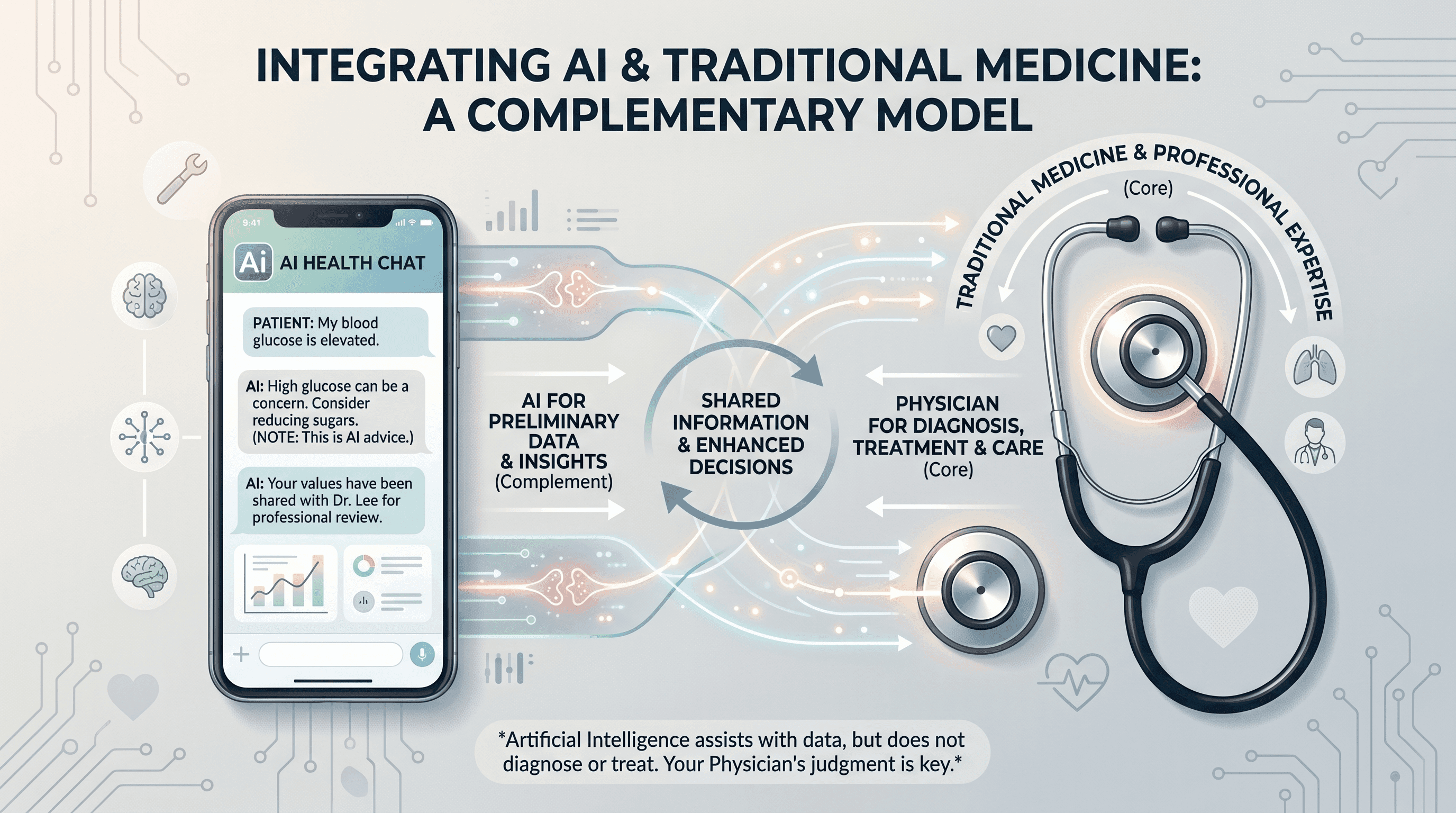
The distinction matters because patients who understand what an AI doctor actually does are far better positioned to use it well.
Symptom Triage and Instant Access
Think of AI symptom checkers and AI doctor chat platforms as the front door of digital health. Before a patient decides whether a headache warrants a trip to urgent care or a few hours of rest, an AI health assistant can help them reason through it. That single function carries enormous public health value, particularly for people who lack easy access to a primary care provider or who encounter symptoms at 2 a.m. when clinics are closed.
According to a study published in NEJM AI, AI-based diagnostic tools are demonstrating accuracy levels sufficient to warrant clinical testing in complex cases, a signal that the underlying technology has matured considerably from the basic chatbot era.
In practical terms, AI triage tools ask structured questions, much like a nurse intake form, but in conversational language. A user might describe "burning chest pain after eating" and the AI translates that into a clinical data point: probable gastroesophageal reflux disease versus cardiac event, filtered by age, duration, and associated symptoms. The output is a probability-weighted suggestion, not a diagnosis, and the best tools communicate that clearly.
Where these tools genuinely shine is in common, high-prevalence conditions: upper respiratory infections, urinary tract infections, digestive complaints, and skin presentations that photograph well. For uninsured patients, the ability to use a free AI doctor online to determine whether a symptom merits a $250 urgent care visit is a meaningful financial benefit.
Diagnostic Imaging and Precision
Perhaps the most dramatic application of artificial intelligence in medicine is in radiology and pathology, where AI has demonstrated what can only be described as superhuman pattern recognition in certain narrow tasks.
A landmark study published in Science showed that AI systems trained on large imaging datasets could identify early-stage cancers in mammograms, chest X-rays, and skin lesion photographs with accuracy that matches or in some cases exceeds experienced radiologists. The key word is narrow: these systems are trained for specific imaging tasks and do not generalize across clinical contexts the way a trained physician does.
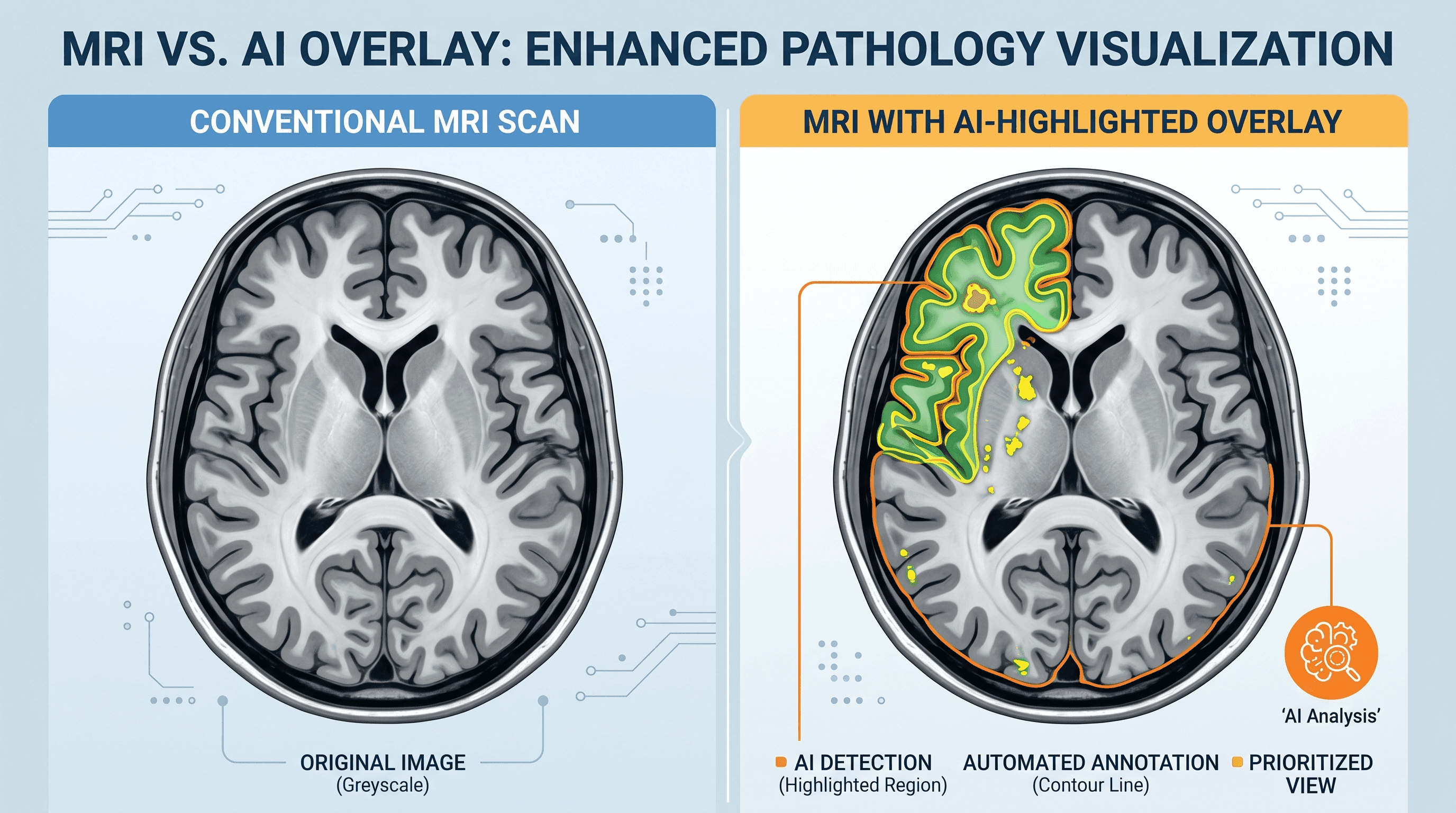
For patients, the practical implication is that AI in diagnostic imaging is largely a backend tool. It assists the radiologist reviewing scans rather than replacing them. The AI flags anomalies; the physician interprets them in the context of the patient's full clinical picture. This combination reduces the rate at which early findings are missed, particularly in high-volume settings where radiologist fatigue is a real variable.
Machine learning in healthcare has also advanced pathology, where AI systems analyze tissue samples at the cellular level. In dermatology, AI tools available directly to patients can analyze smartphone photographs of skin lesions and flag presentations consistent with melanoma, prompting earlier consultation. These tools do not diagnose; they triage. But in conditions where early detection dramatically changes outcomes, that triage step has genuine life-extending value.
Chronic Condition Monitoring
For the approximately 60% of American adults living with at least one chronic condition, according to the CDC, the healthcare encounter is not a one-time event. It is a continuous management challenge. AI enters this space through wearable devices and connected health platforms that track physiological data around the clock, an approach sometimes called passive healthcare.
A continuous glucose monitor paired with an AI health assistant, for example, does more than log blood sugar readings. It identifies patterns: that glucose spikes at a particular time of day, that levels drop after a specific activity, or that a trend is emerging that historically precedes a hypoglycemic episode. The AI translates raw data into actionable alerts before the patient feels a symptom.
A 2025 review published in PMC (NIH) examined AI's role in chronic disease management and found consistent evidence that AI-assisted monitoring reduces emergency department visits in patients with conditions including heart failure and type 2 diabetes, by catching deterioration signals earlier than standard care schedules allow.
Similar logic applies to hypertension and cardiovascular monitoring, where AI platforms integrate blood pressure readings, heart rate variability data, and symptom logs to predict risk periods and prompt earlier intervention. The technology does not replace the cardiologist or endocrinologist; it gives them richer, more continuous data to work with, and it gives the patient a more actionable view of their own health between appointments.
The Future of Personalized Medicine
The current generation of AI doctors treats patients based on population-level data: if a thousand patients with this symptom profile responded well to this treatment, the AI recommends it. The next generation is moving toward something more precise: treatment recommendations grounded in an individual's genetic profile, microbiome, prior medication responses, and real-time physiological state.
This is the domain of predictive diagnostics, and it is where the phrase "artificial intelligence in medicine" begins to carry its most significant long-term implications. Pharmacogenomics, which is the study of how a person's genes affect their response to drugs, is already informing prescribing decisions in oncology. AI accelerates this by cross-referencing genetic variants against treatment outcome databases at a scale no human researcher could manage manually.
Research from Harvard Medical School suggests that large language model-based systems are already approaching specialist-level performance on diagnostic reasoning for complex medical cases, a finding that points toward a future where AI assists in personalizing treatment pathways, not just triaging common complaints.
For patients, personalized medicine means fewer trials of ineffective medications, faster identification of treatments likely to work, and a care plan that reflects who they are biologically, not just the average of a large study population.
AI in Mental Health Support
Mental health care faces a structural access problem in the United States. According to the National Institute of Mental Health, more than half of adults with a mental health condition receive no treatment in a given year, and the shortage of psychiatrists and licensed therapists is expected to worsen through the late 2020s. AI-driven mental health tools have emerged as a partial, imperfect, but genuinely useful bridge.
Conversational AI platforms designed for mental health support offer immediate, low-barrier access to cognitive behavioral therapy techniques, mood tracking, stress management exercises, and psychoeducation. These tools are not therapists. They cannot diagnose a mental health condition, they cannot prescribe, and they are not equipped for acute psychiatric crises. But for someone managing generalized anxiety between therapy sessions, or someone in a rural area without a provider within 50 miles, the availability of a responsive, nonjudgmental AI health assistant at any hour has measurable value.

The ethical boundaries here matter enormously, and reputable platforms communicate them clearly. A mental health AI tool should always direct users experiencing suicidal ideation or acute psychiatric distress to emergency services or crisis hotlines immediately. Any platform that fails to do this reliably should not be trusted with mental health support functions.
Drug Discovery and Surgical Assistance
Behind the scenes of patient-facing AI tools, artificial intelligence is reshaping two of medicine's most resource-intensive processes: developing new medications and performing surgery.
Traditional drug discovery is slow and expensive. Taking a compound from initial identification to FDA approval typically spans 10 to 15 years and costs over $1 billion, according to estimates cited by the NIH. AI accelerates the early phases by analyzing molecular structures, predicting protein interactions, and identifying candidate compounds with favorable efficacy and safety profiles far faster than conventional laboratory screening. During the COVID-19 pandemic, AI tools helped researchers identify therapeutic candidates in months rather than years, offering a preview of what accelerated timelines can look like.
In surgical settings, AI contributes through two mechanisms: real-time data overlays that give surgeons intraoperative guidance, and robotic surgical systems that translate a surgeon's hand movements into micro-scale precision that exceeds unaided human capability. The da Vinci surgical system, FDA-cleared and in use across thousands of US hospitals, is one of the most established examples of machine learning in healthcare applied to procedural medicine. The surgeon retains full control; the AI and robotics enhance precision and reduce unintended tissue trauma.
A 2025 PMC review documented significant improvements in surgical outcomes for minimally invasive procedures when AI-assisted robotic systems were used, particularly in urological and gynecological surgeries, where the operating space is narrow and precision is paramount.
If you are navigating questions about a specific condition or wondering whether a symptom warrants further evaluation, see a doctor online through Momentary's virtual primary care platform, where you can connect with a licensed provider from home, without waiting weeks for an in-person appointment.
The Limits: Why AI Doctors Are Not Replacing Physicians Yet
No honest account of AI in healthcare skips the limitations. And the limitations are real, well-documented, and clinically significant in 2026.
The "Black Box" Problem and Hallucinations
AI diagnostic models, particularly large language models used as the backbone of AI doctor chat platforms, are trained to generate plausible responses based on pattern recognition. When the pattern they recognize is accurate, the output is useful. When the training data is incomplete, biased, or when the user's symptom description deviates even slightly from the training distribution, the model can produce a confident but incorrect answer.
In medical contexts, this is called a hallucination: the AI states a clinical falsehood with the same tone of certainty it uses for accurate information. Research published in PMC and subsequent analyses have documented that even minor inaccuracies in how a symptom is described to an AI system can substantially alter the output, sometimes in clinically harmful directions.
A 2024 analysis referenced by Harvard Medical School found that AI systems under evaluation produced harmful recommendations in a meaningful proportion of cases involving atypical presentations, a finding that underscores why AI diagnosis online is a triage and support tool, not a substitute for clinical evaluation.
Who Faces the Highest Risk
Two populations carry disproportionate risk from AI diagnostic errors. Patients with rare diseases are underserved by AI systems because rare conditions generate thin training data. A system trained predominantly on common presentations will consistently underweight rare diagnoses, even when the symptom profile is suggestive.
Historically underrepresented populations face a different but related problem: training bias. AI systems trained on datasets that over-represent certain demographic groups inherit the gaps in that data. Women presenting with atypical cardiac symptoms, Black patients whose pain presentations have historically been undertreated in clinical literature, and non-English speakers whose symptoms may be filtered through translation all face elevated error rates in current AI diagnostic tools.
The Absence of Empathy and Physical Examination
Clinical medicine is not only pattern recognition. A physician notices that a patient winces when describing a symptom, that their skin color is subtly off, that they hesitate before answering a question. These observations feed the diagnostic process in ways that no AI doctor online can replicate, because they require physical presence.
The physical examination, from palpating an abdomen to listening to breath sounds, remains entirely outside the capability of any current AI health assistant. For conditions where the physical exam is central to diagnosis, which includes most surgical conditions, musculoskeletal injuries, and a significant portion of cardiac and pulmonary presentations, the AI's role is necessarily limited to prompting the right questions before a real appointment, not answering them.
Data Privacy Concerns
Sharing health information with an AI platform means sharing it with a company. Before using any AI doctor app or virtual AI doctor platform, patients should confirm whether the tool is compliant with the Health Insurance Portability and Accountability Act (HIPAA), which governs the handling of protected health information in the US. Many general-purpose AI tools, including consumer-facing large language models, are not purpose-built for HIPAA compliance and should not be used to share sensitive personal health data.
Frequently Asked Questions
How does an AI doctor work?
An AI doctor uses natural language processing to convert a patient's symptom description into structured clinical data, then applies machine learning models to cross-reference that data against training datasets drawn from anonymized patient records, medical literature, and treatment guidelines. The output is a probability-weighted suggestion about likely conditions or appropriate next steps. It is not a diagnosis and carries no legal standing as one. Research from PMC provides a detailed overview of the underlying computational approaches.
Is it safe to use an AI doctor?
For common, low-acuity concerns like cold and flu symptoms, minor digestive issues, or general health questions, AI health assistants are generally safe as a first-step resource. The risk increases with symptom complexity, atypical presentations, rare conditions, and any situation involving acute or time-sensitive symptoms. AI doctors should not be used as the final word on any health concern, and emergency symptoms always warrant contacting emergency services directly, not an AI.
Can AI doctors prescribe medication?
No. AI doctors cannot prescribe medication. Prescribing is a legally regulated act performed by licensed practitioners, and no AI system holds that licensure. Some telehealth platforms use AI as a front-end tool before connecting a patient with a licensed provider who can prescribe; in those cases, the prescription comes from the human clinician, not the AI.
What happens if an AI gives wrong medical advice? Who is liable?
As of 2026, the legal framework around AI medical liability is unsettled. More than 1,300 AI medical devices hold FDA clearance, but no unified liability framework governs what happens when an AI recommendation contributes to patient harm. Individual platforms operate under varying terms of service. Patients should review those terms before relying on any AI health assistant for significant health decisions.
Is an AI doctor HIPAA compliant?
It depends on the platform. Purpose-built medical AI tools designed for US healthcare markets are often built with HIPAA compliance as a requirement. General-purpose consumer AI tools, including most large language models, are not. Before sharing identifiable health information with any AI doctor app or online AI doctor platform, verify the platform's HIPAA status directly on their website or in their privacy policy.
Can AI replace doctors?
The evidence in 2026 points toward AI as a powerful complement to physicians, not a replacement. A study highlighted by Harvard Medical School found that AI systems approached specialist-level diagnostic accuracy in structured testing, but also that performance degraded significantly in real-world conditions with incomplete information. The American Medical Association has noted that two-thirds of physicians now use AI tools in some capacity, a figure that reflects integration, not replacement.
If you want to explore your symptoms before an appointment or get a clearer sense of what questions to bring to a provider, Momentary's AI health navigator can help you organize your health information and understand your next steps.
References
- NEJM AI: AI in Medicine — Cited for evidence on AI diagnostic tool accuracy approaching clinical testing thresholds.
- Science: AI Starting to Beat Doctors in Making Correct Diagnoses — Cited for AI imaging accuracy findings in radiology and pathology.
- PMC (NIH): AI in Chronic Disease Management — Cited for evidence on AI-assisted monitoring reducing emergency visits in chronic conditions.
- Harvard Medical School: Study Suggests AI Good Enough for Clinical Testing — Cited for LLM diagnostic performance on complex cases and personalized medicine trajectory.
- PMC (NIH): AI and Surgical Outcomes — Cited for evidence on improved outcomes with AI-assisted robotic surgery.
- PMC (NIH): Machine Learning in Clinical Decision Making — Cited for AI hallucination risk and training data quality issues in medical AI.
- Harvard Magazine: 5 Questions for a Medical AI Expert — Cited for harmful recommendation rate findings in atypical symptom presentations.
- PMC (NIH): Additional AI Healthcare Review — Cited for supplementary context on AI healthcare developments.
- Science: AI Drug Discovery — Cited for AI's role in accelerating drug candidate identification.


