


AI healthcare analytics is the practice of applying machine learning, predictive modeling, and generative AI to clinical, financial, and operational data so health systems can act on risk before it becomes harm. In 2026, that definition carries real weight: physician AI adoption reached 66% in 2024, nearly double the 38% recorded just a year prior, and the global healthcare AI market is projected to grow at a 38.5% compound annual rate through 2033. For CMIOs, CDOs, and analytics leaders, the question is no longer whether to deploy AI, but how to deploy it in ways that are measurable, equitable, and built to last.
This guide covers the full landscape: what AI healthcare analytics actually includes, the use cases with documented results, the implementation challenges that derail most programs, and the emerging agentic layer that is quietly reshaping what "analytics" means in a clinical setting.
At a Glance
| Topic | Key Facts |
|---|---|
| Market size | Global healthcare AI market on track for 38.5% CAGR through 2033 |
| Physician adoption | 66% of physicians using AI tools in 2024, up from 38% in 2023 |
| FDA-authorized AI devices | 692 authorized AI-enabled medical devices as of late 2023 |
| Top ROI benchmark | 734% average ROI reported at two years post-deployment |
| Biggest barrier | 52% of CDOs rate their GenAI data readiness as inadequate |
| Equity gap | Many AI models trained on urban hospital data perform poorly on rural and underserved populations |
| Regulatory milestone | CMS 2026 final rule introduces new accountability requirements for AI in reimbursement decisions |
From Retrospective Reports to Real-Time Action
The short version: 2026 analytics is no longer about reviewing last quarter's data. It is about processing live streams of clinical, financial, and social information to surface risk the moment it becomes actionable.
Legacy healthcare business intelligence was built for one purpose: reporting what already happened. A hospital generated a utilization dashboard at the end of the month, a CFO reviewed it, and decisions followed weeks later. That model served a fee-for-service world reasonably well. It does not serve a value-based care world at all.
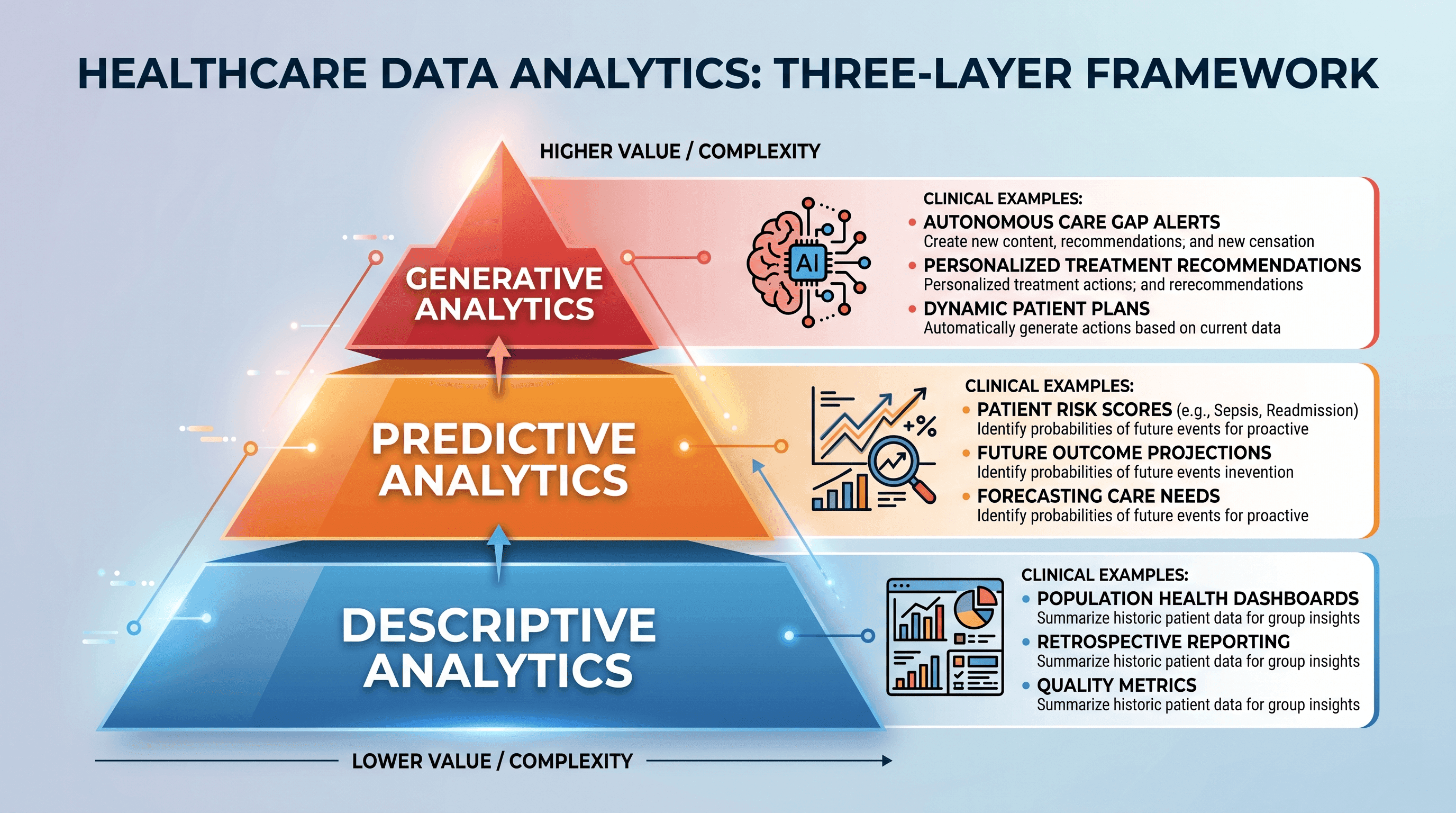
Contemporary AI analytics platforms operate across three layers simultaneously. The descriptive layer still exists, turning EHR data into population dashboards and operational reports. The predictive layer sits on top of it, using trained models to identify which patients are moving toward a high-cost event before that event occurs. The generative layer, which is genuinely new in 2026, synthesizes findings, drafts clinical communications, and in some configurations takes autonomous action on the insights it surfaces.
What makes this an inflection point rather than another iteration is the convergence of three forces: the maturity of large language models capable of reasoning over clinical text, the near-universal adoption of FHIR-based data standards enabling real interoperability, and regulatory frameworks that now hold health systems accountable for the quality of AI-assisted decisions. Analytics is no longer a back-office function. It has moved into the clinical workflow itself.
Predictive Risk Stratification
Predictive risk stratification is AI's most clinically mature application, using patient data to identify individuals on a trajectory toward high-cost or high-acuity events before those events occur.
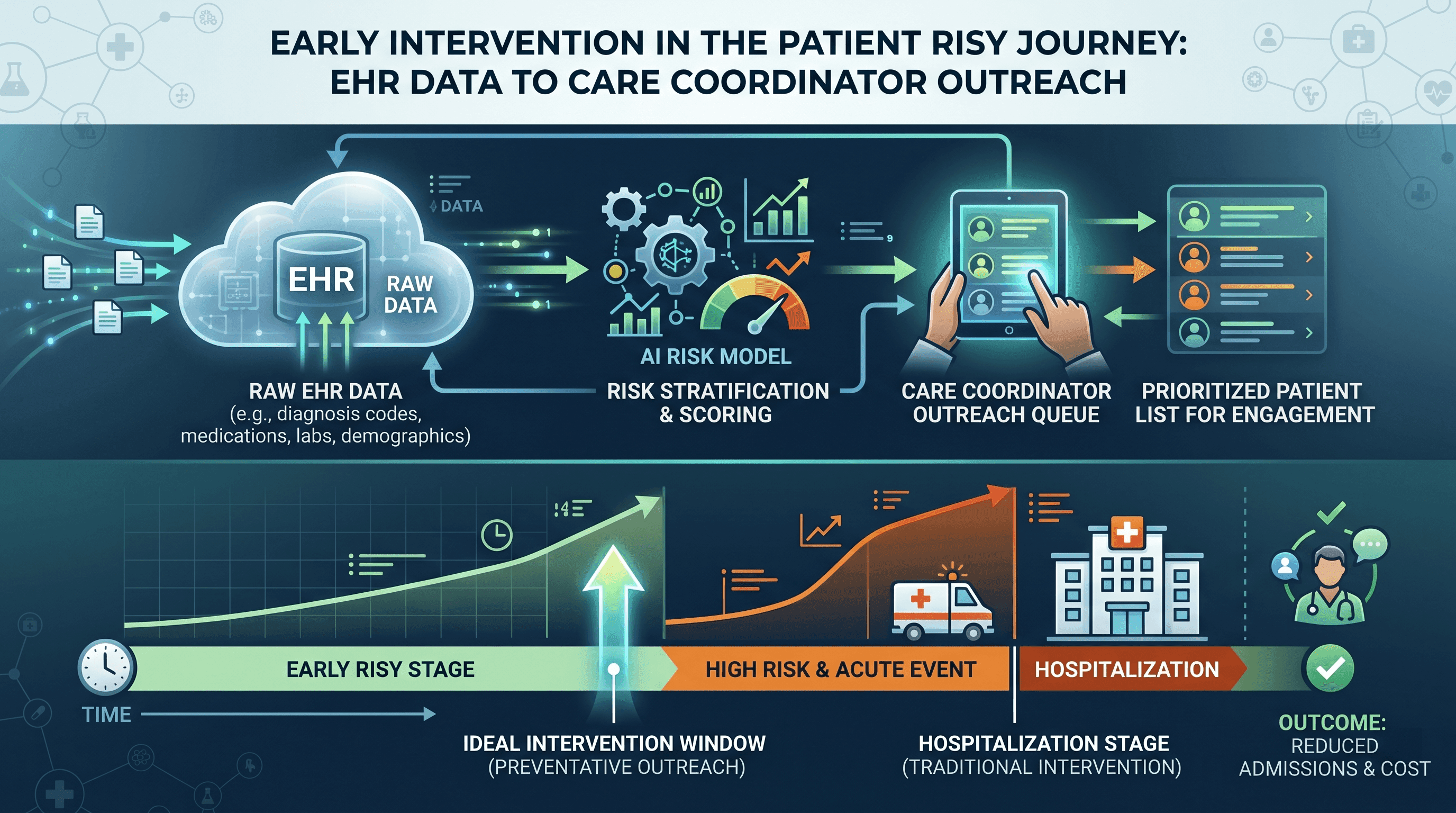
The premise is straightforward: most adverse health events do not appear without warning. A patient who will be admitted for decompensated heart failure in 90 days is already showing signals today, embedded in a combination of lab trends, medication adherence patterns, prior utilization history, and social risk factors. Legacy systems waited for those signals to become emergencies. Predictive AI reads them early.
In practice, risk stratification models pull from EHR data, claims records, remote monitoring feeds, and increasingly from patient-generated health data. They output a ranked list of patients by risk score, often updated daily or in real time, giving care coordinators a prioritized outreach queue rather than a static panel.
The results are documented. Studies in peer-reviewed literature show that AI-driven risk stratification reduces preventable readmissions by identifying high-risk patients for care management enrollment before discharge becomes a revolving door. Approximately 38% of health systems that have deployed risk stratification tools report measurable gains in population health outcomes. At the same time, honest practitioners acknowledge that model performance varies significantly by data quality and patient population, which is why bias monitoring, covered in the implementation challenges section below, is not optional.
Predictive Sepsis Modeling
Sepsis is one of the most time-sensitive conditions in acute care, and it is also one of the strongest proof points for AI-driven analytics. Research published in peer-reviewed journals demonstrates that AI early-warning models for sepsis can identify deteriorating patients hours before clinical presentation meets traditional screening criteria. Several health systems have reported reductions in sepsis mortality following deployment of continuous vital-sign monitoring AI that triggers nurse alerts outside normal threshold windows. The key differentiator from older early-warning scores is the model's ability to synthesize dozens of variables simultaneously rather than relying on two or three manually checked parameters.
Diabetes and Cardiovascular Risk Pipelines
Chronic disease risk pipelines represent a slower-burn but equally important application. AI models trained on longitudinal EHR data can identify patients in prediabetic ranges whose trajectory suggests progression to Type 2 diabetes within 12 to 24 months, enabling primary care teams to intervene with lifestyle and pharmacologic strategies during a window when reversal is still possible. Similar pipelines exist for heart failure, atrial fibrillation, and chronic kidney disease. The clinical logic mirrors the sepsis use case: earlier signal, earlier action, better outcome.
Operational Efficiency and Command Centers
AI analytics is reshaping hospital operations by giving facility leaders a real-time view of capacity, staffing, and throughput that was previously impossible to assemble from siloed systems.
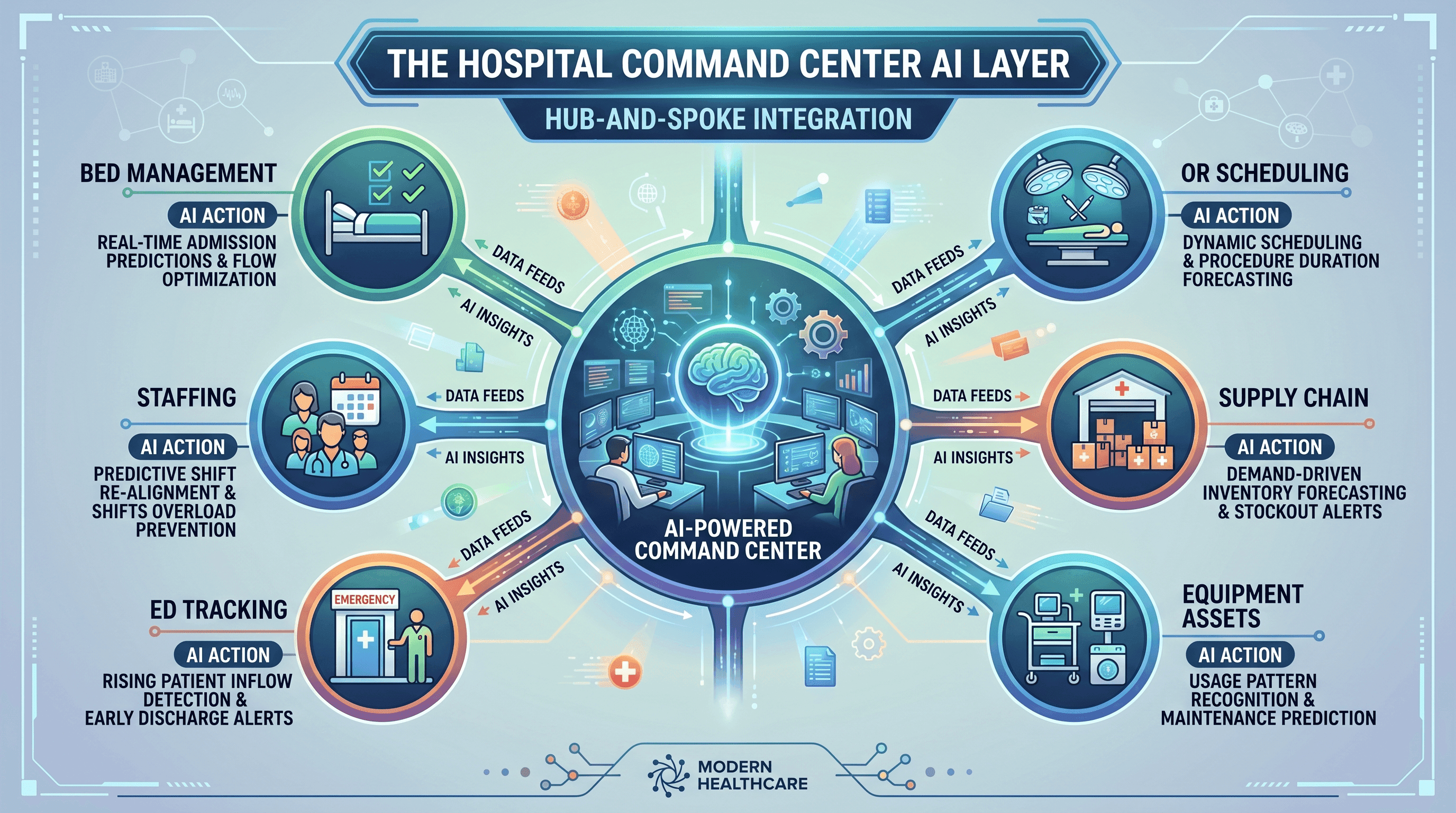
Hospital command centers, sometimes called operational intelligence centers, aggregate live data from bed management systems, surgical scheduling, emergency department tracking, and workforce management platforms. AI sits on top of that aggregation to forecast: which beds will open in the next four hours, which units are trending toward a staffing shortfall on the next shift, and which surgical cases are at risk of delay due to equipment or supply chain gaps.
Operational AI deployments in emergency settings have demonstrated reductions in boarding times and left-without-being-seen rates by predicting peak arrival windows and triggering proactive staffing responses. One documented pattern is the use of AI-generated staffing recommendations that allow nurse managers to adjust float pool assignments 12 hours in advance rather than responding to a crisis at shift change.
Revenue cycle management is another area where operational AI is delivering measurable returns. AI models that review claims prior to submission can flag documentation gaps and coding inconsistencies before a denial occurs rather than after. Health systems deploying AI in revenue cycle have reported gains in clean claim rates and reductions in denial write-offs, with approximately 23% of organizations reporting revenue cycle improvements following AI implementation. For a 500-bed health system, even a modest improvement in denial prevention compounds into millions of dollars annually.
Value-Based Care and Financial Analytics
In a value-based care environment, AI financial analytics does something traditional revenue cycle management never could: it connects clinical outcomes to reimbursement risk in real time.
The shift from fee-for-service to value-based contracts introduced a new class of financial risk for health systems. Under capitated and shared-savings arrangements, a patient who receives care outside the network, a phenomenon called leakage, represents both a revenue loss and a quality metric risk if that outside care goes undocumented. AI analytics platforms can identify leakage patterns by analyzing claims data and cross-referencing it against attributed populations, surfacing which patient segments are consistently seeking care outside the network and why.
Value-based care analytics also enables health systems to monitor performance against quality metrics continuously rather than through quarterly retrospective reviews. This matters because many value-based contracts carry performance thresholds where missing a measure by a small margin can trigger significant financial penalties. AI models that flag a care gap when it opens, rather than after the measurement period closes, give clinical teams the runway to close it.
Population health analytics platforms that integrate FHIR-native data feeds are becoming the standard infrastructure for this work. FHIR (Fast Healthcare Interoperability Resources) is the HL7-developed standard that allows clinical and financial data to flow between systems without manual mapping. Health systems that have migrated to FHIR-native analytics architectures report meaningfully faster time-to-insight than those still operating on proprietary data warehouses.
Agentic Analytics: AI That Acts on Insights
Agentic AI represents the 2026 frontier: systems that do not wait for a human to read a risk score and decide what to do next, but instead take the next logical clinical or administrative action autonomously.
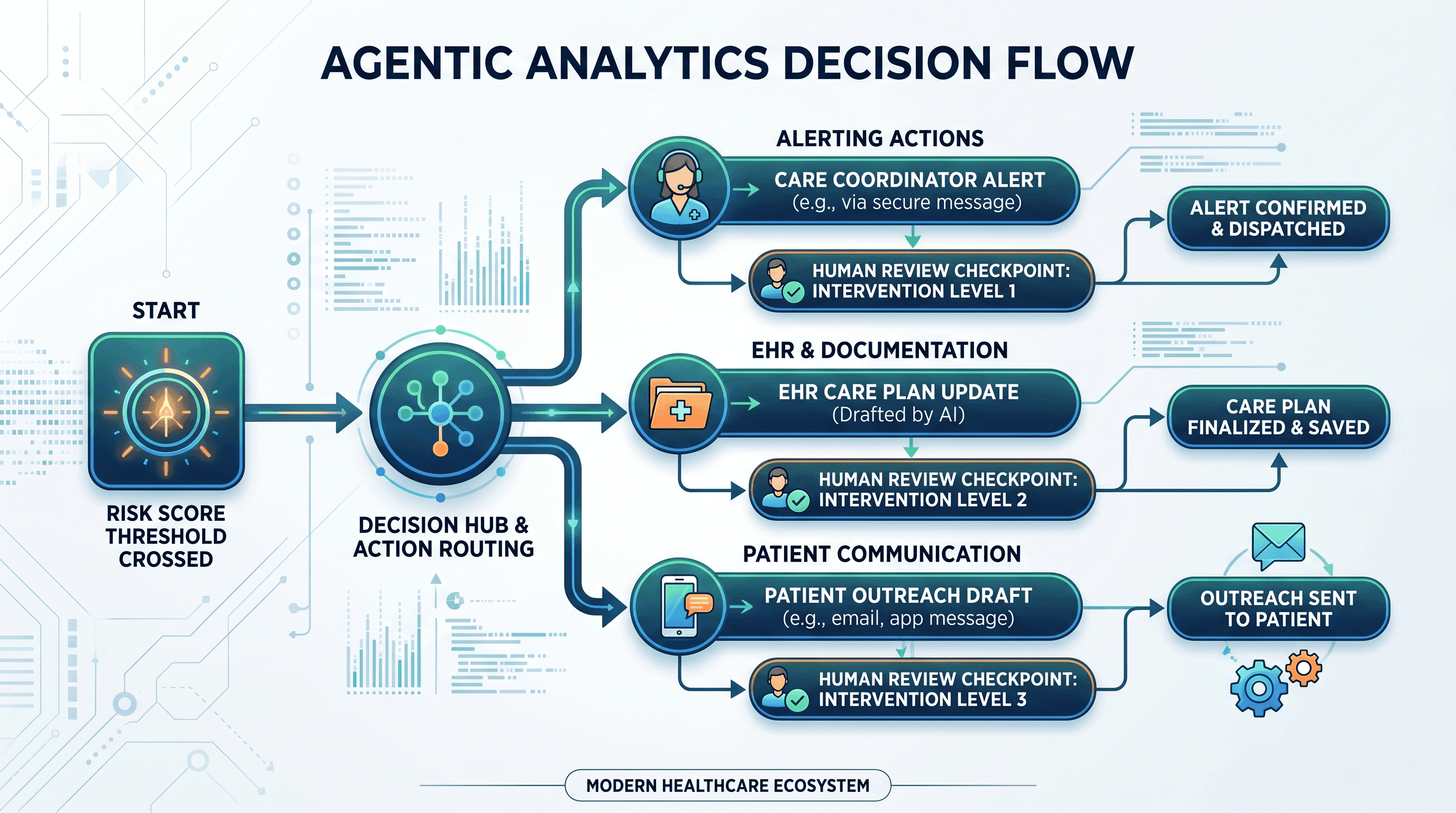
The distinction matters. A predictive model flags a patient as high-risk for 30-day readmission. A classical analytics platform surfaces that flag on a dashboard. An agentic system acts on it: it drafts a discharge follow-up message to the patient's care coordinator, schedules a transitional care management call, updates the patient's care plan in the EHR, and documents the action taken, all within seconds of the risk score crossing a defined threshold.
Coverage from HIMSS 2025 highlighted agentic AI as the most significant emerging capability in health system operations, with early deployments focused on prior authorization automation, care gap closure, and population-level intervention triggering. Ambient documentation tools like Nuance DAX Copilot represent a form of agentic analytics applied to clinical workflow: the system listens to a patient-physician encounter, synthesizes clinical content, and drafts a structured note in the EHR without the physician transcribing anything.
The governance implications of agentic AI are significant. When a system takes autonomous action rather than presenting an insight for human review, the accountability framework changes. Health systems deploying agentic capabilities in 2026 are investing in AI decision audit trails, defined human-in-the-loop checkpoints for high-stakes actions, and rollback protocols for autonomous decisions that fall outside tolerance bounds.
Social Determinants of Health Integration
The most predictive clinical AI models in 2026 are not built solely on medical data. They incorporate social determinants of health, the non-clinical factors that account for roughly 80% of health outcomes according to CDC research.
Social determinants of health (SDoH) include factors like housing stability, food security, transportation access, educational attainment, and neighborhood-level environmental conditions. A patient's zip code, in many studies, is more predictive of their likelihood of hospitalization than their most recent lab values. Yet traditional EHR-based risk models excluded SDoH almost entirely, because that data did not live in clinical systems.
Contemporary AI analytics platforms are closing this gap by integrating data from multiple sources: standardized SDoH screening tools administered at clinical visits (using validated instruments like the PRAPARE protocol), public datasets including census and social vulnerability indices, and in some cases real-time community resource data. The result is a risk score that reflects the whole patient rather than only the medical record.
The AIM-AHEAD initiative, funded by NIH, is specifically focused on ensuring that AI models trained to incorporate SDoH data are themselves representative of the populations most affected by social risk. AIM-AHEAD addresses a documented problem: many AI models trained on data from large academic medical centers embed the demographic skews of those populations, which means they underperform for rural patients, patients of color, and patients in low-resource settings.
Health systems implementing SDoH-integrated analytics should build demographic accuracy monitoring into their model validation frameworks from the start, treating population-level performance parity as a deployment prerequisite rather than a post-launch audit.
Privacy-Preserving Intelligence: Federated Learning
Federated learning allows AI models to be trained across multiple healthcare institutions without any patient data leaving the originating system, directly addressing the privacy constraint that has historically limited collaborative model development.
The mechanics are important to understand. In a conventional machine learning pipeline, data from multiple hospitals would be aggregated in a central repository, the model would be trained on the combined dataset, and the trained model would be deployed back to participants. That approach creates significant HIPAA exposure and organizational risk. Federated learning inverts the architecture: the model travels to the data. Each participating institution trains the model on its local dataset, shares only model weight updates (not patient records) with a central coordinator, and the coordinator aggregates those updates into an improved global model.
Published research on federated learning in healthcare demonstrates that federated models can match or approach the performance of centrally trained models on tasks including sepsis prediction, radiology interpretation, and chronic disease risk stratification, while maintaining the data sovereignty requirements of individual health systems. For multi-hospital networks and accountable care organizations, this makes federated learning the architecturally sound path to collaborative AI development without the legal and reputational exposure of pooling patient records.
The practical constraint is computational: federated learning requires participating institutions to have sufficient local infrastructure to run training jobs, and coordination overhead is meaningfully higher than centralized training. Health systems evaluating federated approaches should assess their local ML infrastructure capacity before committing to a federated consortium.
Implementation Challenges: What Actually Gets Programs Stuck
Most AI analytics programs do not fail because the models are wrong. They fail because the organizational infrastructure required to make good models useful was not built before deployment.
Data Governance: The Foundation That Determines Outcomes
An AWS and Harvard Business Review survey found that 52% of CDOs rate their organization's GenAI data readiness as inadequate, and 39% cite data quality issues as the primary barrier to scaling AI analytics beyond pilot programs. Those numbers reflect a consistent pattern: health systems invest in AI tools before investing in the data governance infrastructure that makes those tools reliable.
Effective AI data governance in healthcare requires five components working together. Data quality standards define the completeness and accuracy thresholds that must be met before data enters a model training pipeline. FHIR-based interoperability standards ensure that data from disparate source systems can be joined without manual reconciliation. Consent management frameworks document how patient data may be used for analytics purposes and maintain audit trails for regulatory review. AI decision audit trails capture every model inference, the input data it used, and the action that followed, enabling retrospective review when a clinical or financial outcome is questioned. Security and access controls restrict model access to authorized roles and log all interactions.
Health systems that treat governance as a precondition for AI deployment, rather than a compliance obligation to be addressed post-launch, consistently report faster time-to-value and fewer production failures.
Algorithmic Bias and Health Equity
Algorithmic bias in healthcare AI is not a theoretical concern. It is a documented pattern with measurable patient harm consequences.
Research cited by the WHO and published in peer-reviewed literature demonstrates that AI models trained primarily on data from large urban academic medical centers encode the demographic characteristics of those populations. When deployed in community hospitals, rural health systems, or federally qualified health centers serving predominantly Black, Hispanic, or Indigenous patients, those models show degraded performance, sometimes dramatically so, leading to systematic underestimation of risk for the patients who are already least well served by the healthcare system.
A practical monitoring framework for algorithmic bias should include demographic-stratified performance metrics evaluated at regular intervals after deployment. A commonly cited operational standard is a plus or minus 5% demographic accuracy threshold: if model performance on any demographic subgroup deviates more than 5% from overall model performance, the system triggers a model review and, if the gap persists, a rollback to the previous model version while retraining proceeds. Health systems should also require vendors to provide demographic performance data for any commercial AI tool before signing a deployment contract.
The NIH AIM-AHEAD initiative is developing infrastructure and training specifically to address AI health equity gaps, and its published frameworks represent a useful starting point for health systems building internal bias monitoring programs.
Clinical Workflow Resistance and Change Management
Clinicians do not resist AI because they distrust technology. They resist AI tools that interrupt their workflow, present information in formats incompatible with clinical decision-making, or surface risk scores without providing a clear, actionable next step.
Successful AI analytics deployments treat workflow integration as a clinical design problem, not an IT implementation problem. This means involving frontline clinicians in use case selection, alert threshold calibration, and interface design before a tool is deployed. It also means accepting that some tools will be turned off or redesigned based on clinical feedback after deployment, and building that iteration cycle into the implementation plan rather than treating deployment as a finish line.
Explainability and Clinical Trust
Clinicians and administrators making consequential decisions based on AI output need to understand why a model produced a given score, not just what the score is. This is the domain of explainable AI (XAI), a set of techniques that surface the specific features driving a model prediction in human-readable terms.
An AI model that flags a patient as high-risk for readmission is more likely to drive clinical action if it accompanies that flag with an explanation: "This patient's risk score is elevated primarily due to three prior ED visits in 90 days, a recent hemoglobin A1c of 9.4, and an open medication access issue flagged in the last care plan." That framing gives a care coordinator a concrete place to start. A bare risk score does not.
Regulatory Compliance: HIPAA and CMS 2026
The regulatory environment for AI in healthcare is evolving faster than most compliance frameworks can track. The CMS 2026 final rule introduces accountability requirements for AI-assisted prior authorization and reimbursement decisions, requiring documentation of the AI system used, the version deployed, and the human review process applied to AI recommendations. HIPAA guidance updated in recent years clarifies that AI-generated analyses of protected health information are subject to the same safeguards as the underlying records.
Health systems should work with legal and compliance teams to build AI-specific addenda to their existing HIPAA policies, covering model documentation, vendor BAA requirements for AI platforms, and incident response protocols for AI-related data events.
Build vs. Buy: A Decision Framework for Health System Leaders
The build-vs.-buy question for AI analytics is not primarily a technology question. It is a question about data maturity, organizational capacity, and strategic risk tolerance.
A structured decision framework should evaluate five dimensions. Data maturity captures whether the organization has clean, well-governed, FHIR-accessible data at the volume and quality required to train and validate custom models. Organizations with immature data infrastructure consistently underperform when building custom models and are better served by commercial platforms with pre-trained models and built-in data normalization. IT and data science capacity asks whether the organization has the staffing to build, validate, and continuously retrain models internally. Custom AI development requires machine learning engineers, clinical informaticists, and data governance staff, roles that most community hospitals cannot staff competitively against technology companies.
Regulatory risk tolerance matters because custom-built AI tools used in clinical decision-making may require FDA Software as a Medical Device (SaMD) review, a pathway that adds months to deployment timelines. Commercial platforms have often already navigated this process for their core products. Speed to value favors commercial platforms for most organizations: a validated commercial risk stratification tool can be deployed in weeks, while a custom-built equivalent requires 12 to 24 months of development and validation. Total cost of ownership includes not just licensing fees but also the infrastructure, staffing, and ongoing model maintenance costs that a custom build requires indefinitely.
For most community and regional health systems, a hybrid approach is practical: commercial platforms for high-volume, well-validated use cases like readmission risk and sepsis prediction, with custom development reserved for use cases where the organization has a unique data advantage or a clinical workflow requirement that no commercial product addresses. Large academic medical centers with mature data science teams have a stronger case for custom builds in specific domains, particularly where proprietary patient data provides a competitive modeling edge.
Cloud infrastructure options including AWS HealthLake, Azure Health Data Services, and Google Cloud Healthcare API provide FHIR-native data storage and managed ML services that reduce the engineering overhead of custom development for organizations that choose that path. These platforms are not AI analytics solutions themselves but rather the infrastructure layer on which custom analytics can be built.
"The challenge isn't finding AI solutions — it's building the organizational capacity to use them well." — World Health Organization, Ethics and Governance of AI for Health
How to Measure ROI from AI Healthcare Analytics
Health system AI programs that cannot demonstrate measurable ROI do not survive their second budget cycle. A three-stage measurement framework gives leaders the structure to track value from day one.
Stage one is pre-deployment baseline. Before any AI tool goes live, the organization should document the current state of every metric the tool is intended to improve: 30-day readmission rate for the target population, average time to sepsis diagnosis and treatment initiation, denial rate on targeted claim types, care coordinator outreach completion rates. Without a clean baseline, it is impossible to attribute post-deployment improvements to the AI intervention rather than to simultaneous workflow changes or population shifts.
Stage two covers process metrics during rollout, typically the first three to six months. These metrics assess whether the tool is functioning as designed: alert firing rate, alert response rate by clinical staff, care coordinator acceptance rate for AI-generated outreach recommendations, and model drift indicators. High alert fatigue rates at this stage are a signal to recalibrate thresholds before the program is judged on outcome metrics.
Stage three captures outcome metrics at six, twelve, and twenty-four months. Documented benchmarks suggest that well-implemented AI analytics programs report average ROI of 734% at two years, though the range is wide and programs with poor data governance or low clinical adoption consistently underperform that benchmark. Approximately 40% of organizations report significant ROI, while 37% report it is still too early to determine. Honesty about that distribution matters: programs in the early-return category are not failures; they are programs that need more time and better adoption infrastructure.
If working through the ROI framework raises questions about your current clinical data infrastructure, an option worth exploring is to connect with a primary care provider through Momentary's virtual care platform to understand how digital-first care models are generating the data streams that make AI analytics viable at the individual patient level.
A Phased Roadmap for Getting Started
Health systems that have successfully scaled AI analytics programs share a consistent pattern: they did not try to solve everything at once.
Phase One: Foundation
The foundation phase focuses on infrastructure and governance before any AI model is deployed. This includes a data infrastructure audit that maps every source system, documents data quality gaps, and identifies the FHIR readiness of key data feeds. Governance policies covering data use, consent management, AI decision documentation, and bias monitoring should be written and approved before a model touches patient data. Baseline KPIs for the initial use case should be locked at this stage.
Phase Two: Pilot
The pilot phase deploys a single high-impact use case with tightly defined success metrics. Readmission prevention, sepsis early warning, and prior authorization AI are common first choices because they have the strongest evidence base and the most mature commercial tooling. Bias monitoring for demographic performance parity should be active from day one of the pilot, not introduced after the program scales. The pilot should run for a minimum of 90 days before outcome metrics are assessed, with process metrics reviewed weekly during that window.
Phase Three: Scale
The scale phase expands to additional use cases based on pilot learnings, embeds AI outputs more deeply into clinical workflows rather than surfacing them on separate dashboards, and establishes continuous model validation processes. At this stage, the organization should also formalize its AI governance committee, with representation from clinical leadership, legal, compliance, IT, and patient advocacy, to review model performance and make deployment decisions on an ongoing basis.
The Human Interpretation Layer
AI provides the signal. The clinical team provides the symphony. No analytical model, regardless of its accuracy, replaces the clinician's ability to integrate a risk score with what they know about a specific patient's values, social context, and care preferences.
This is not a limitation of AI analytics; it is its correct function. The goal of predictive and generative analytics is to give clinicians more time with the information that matters and less time hunting for it. A care coordinator who used to spend two hours each morning manually reviewing a panel of 200 patients to identify who needed outreach now receives a prioritized list of 12 patients with specific reasons for each. That coordinator still makes the clinical judgment about what kind of outreach is appropriate, how urgently, and whether the patient's context warrants a different approach than the model recommends.
Research on AI implementation in clinical settings consistently shows that the biggest performance differentiator between high-performing and low-performing AI programs is not model accuracy but clinical adoption quality: whether frontline staff understand what the model is telling them, trust its outputs enough to act on them, and have the workflow infrastructure to act efficiently.
The health systems that are getting the most value from AI analytics in 2026 are not the ones with the most sophisticated models. They are the ones that paired rigorous model development with equally rigorous change management, built explainability into their clinical interfaces, and invested in the human capacity to turn AI signals into coordinated care.
Frequently Asked Questions
What type of AI is used in healthcare? Healthcare uses several AI types depending on the application. Machine learning models, including gradient boosting and neural networks, drive most predictive analytics applications like risk stratification and readmission prevention. Natural language processing (NLP) extracts structured information from clinical notes and radiology reports. Computer vision AI powers medical imaging analysis, including radiology and pathology. Large language models (LLMs) support generative applications like ambient clinical documentation and patient communication drafting. In 2026, agentic AI architectures that chain multiple AI capabilities together to take autonomous action are an emerging category.
What are the four types of data analytics in healthcare? The four types are descriptive, diagnostic, predictive, and prescriptive (sometimes called generative in current frameworks). Descriptive analytics reports what happened: utilization rates, population health dashboards, cost reports. Diagnostic analytics investigates why it happened: root cause analysis of readmission spikes, claims denial pattern review. Predictive analytics forecasts what will happen: which patients are at rising risk for hospitalization, which claims are likely to be denied. Prescriptive or generative analytics recommends or takes action: drafting a care plan, autonomously closing a care gap, generating a prior authorization letter. Most health systems operate across all four layers simultaneously, with different tools at each tier.
Which AI tool is best for healthcare? There is no single best tool; the right choice depends on use case, data maturity, and organizational capacity. For clinical risk stratification and population health management, several enterprise platforms have documented evidence bases and regulatory clearances. For ambient clinical documentation, tools like Nuance DAX Copilot have broad deployment. For radiology AI, the 692 FDA-authorized AI-enabled devices as of late 2023 include options across modalities and clinical settings. A structured build-vs.-buy evaluation against the five-dimension framework outlined in this guide will identify the right approach for a specific health system more reliably than any vendor ranking.
Is ChatGPT HIPAA-compliant? OpenAI offers a HIPAA-eligible API tier for enterprise customers that includes a Business Associate Agreement (BAA), which is a prerequisite for using any AI platform with protected health information. ChatGPT's consumer products are not HIPAA-eligible. Health systems considering any large language model for clinical use should require a signed BAA, conduct a thorough risk assessment of data flows, and ensure that PHI is never submitted to a model endpoint that is not covered by a BAA. Compliance is also not limited to the BAA itself: the organization remains responsible for data minimization, access controls, and audit logging around any AI system that processes patient data.
Who is leading AI in healthcare? Leadership in healthcare AI is distributed across several categories. Academic health systems including Mayo Clinic and Johns Hopkins are among the most prolific AI research and deployment institutions. Technology companies including Google (with Med-PaLM and Google Cloud Healthcare API), Microsoft (with Azure Health Data Services and Nuance DAX), and Amazon (with AWS HealthLake) are building the infrastructure layer. Specialized clinical AI companies hold the majority of FDA-authorized AI device authorizations in imaging and diagnostics. Federal programs including NIH AIM-AHEAD and ONC's interoperability initiatives are shaping the governance and equity framework within which all of these actors operate.
Where can I explore my own health data or symptoms using AI tools? For individuals navigating health questions outside a clinical setting, Momentary's AI health navigator offers a way to explore symptoms, understand health information, and get guidance on next steps before or between clinical encounters.
References
- Pew Research / JAMA Network — AI Physician Adoption 2024 — Cited for 66% physician AI adoption rate and year-over-year growth from 38%.
- PMC / National Library of Medicine — AI in Clinical Decision Support — Cited for AI risk stratification outcomes, clinical adoption research, and predictive analytics frameworks.
- ScienceDirect — Operational AI in Emergency Settings — Cited for ED triage AI deployment and operational efficiency outcomes.
- Altair — AI and Analytics for Healthcare — Cited for value-based care analytics and population health platform overview.
- PubMed — AI Sepsis Prediction Models — Cited for sepsis early-warning AI performance and mortality reduction evidence.
- PMC — Federated Learning in Healthcare — Cited for federated learning architecture, privacy-preserving model training, and ROI benchmark data.
- WHO — Harnessing Artificial Intelligence for Health — Cited for algorithmic bias documentation, health equity risks, and governance frameworks.
- Tandfonline — Agentic AI in Healthcare 2025 — Cited for agentic AI healthcare coverage and emerging autonomous analytics capabilities.
- PMC — Additional AI Healthcare Analytics Research — Supporting reference for AI implementation challenges and health system deployment patterns.
- FDA — Software as a Medical Device (SaMD): AI and ML — Cited for FDA-authorized AI device count and regulatory pathway context.
- NIH — AIM-AHEAD Initiative — Cited for health equity AI bias mitigation program and demographic performance monitoring frameworks.
- CDC — Why Addressing Social Determinants of Health Is Important — Cited for the 80% health outcomes attribution to non-clinical social factors.


