


The headlines have been hard to miss. "AI Outperforms Doctors in Harvard Trial." "Microsoft's AI System Achieves Four Times the Diagnostic Accuracy of Physicians." For anyone paying attention to health news in 2025 and 2026, it can feel like the age of the human doctor is quietly ending.
But that framing gets the story wrong in ways that matter for real patients making real decisions. The evidence shows something far more interesting than a simple win or loss column. AI diagnostic tools can, under specific conditions, match or surpass certain physician benchmarks. They also fail in ways that are hard to predict, reflect the biases of the data they were trained on, and cannot perform functions that sit at the core of what medicine actually is.
This guide works through the ai vs doctors question the way a careful clinician would: with the evidence on the table, the caveats clearly labeled, and the goal of helping patients understand what this means for their own care.
At a Glance
| Topic | Key Facts |
|---|---|
| AI diagnostic accuracy (2025 meta-analysis) | 52.1% overall; expert physicians significantly outperform |
| Where AI leads | Radiology, dermatology, pathology, early-stage triage |
| Where humans lead | Pediatrics, rare diseases, mental health, complex multi-system cases |
| Surprising finding | AI + physician sometimes underperforms AI alone (UVA 2024) |
| Cost advantage | Microsoft MAI-DxO showed roughly 20% lower diagnostic cost |
| US adults using AI for health | Approximately 25% monthly (Gallup, late 2025) |
| Physician AI adoption | Two-thirds of US physicians now use AI tools (AMA 2024) |
The Short Answer: Collaboration Over Competition
The "ai vs doctors" framing is a false dichotomy, and the most recent evidence makes that clearer than ever.
AI systems excel at a specific category of task: recognizing patterns at scale within structured data. They can scan thousands of medical images faster than any radiologist, flag statistical anomalies in lab panels invisible to the human eye at that volume, and retrieve diagnostic decision trees from a corpus of literature no physician could read in a lifetime.
Physicians excel at a different category entirely: integrating ambiguous signals, reading the patient in front of them, weighing tradeoffs that involve values rather than probabilities, and bearing legal and ethical responsibility for what happens next.
The most accurate framing is not replacement but augmentation. The goal of this piece is to map exactly where the line sits, because it is not always where people assume.
Speed and Data: Where AI Has a Clear Edge
The machine's advantage is most legible when the task is defined, the inputs are structured, and the volume is high.
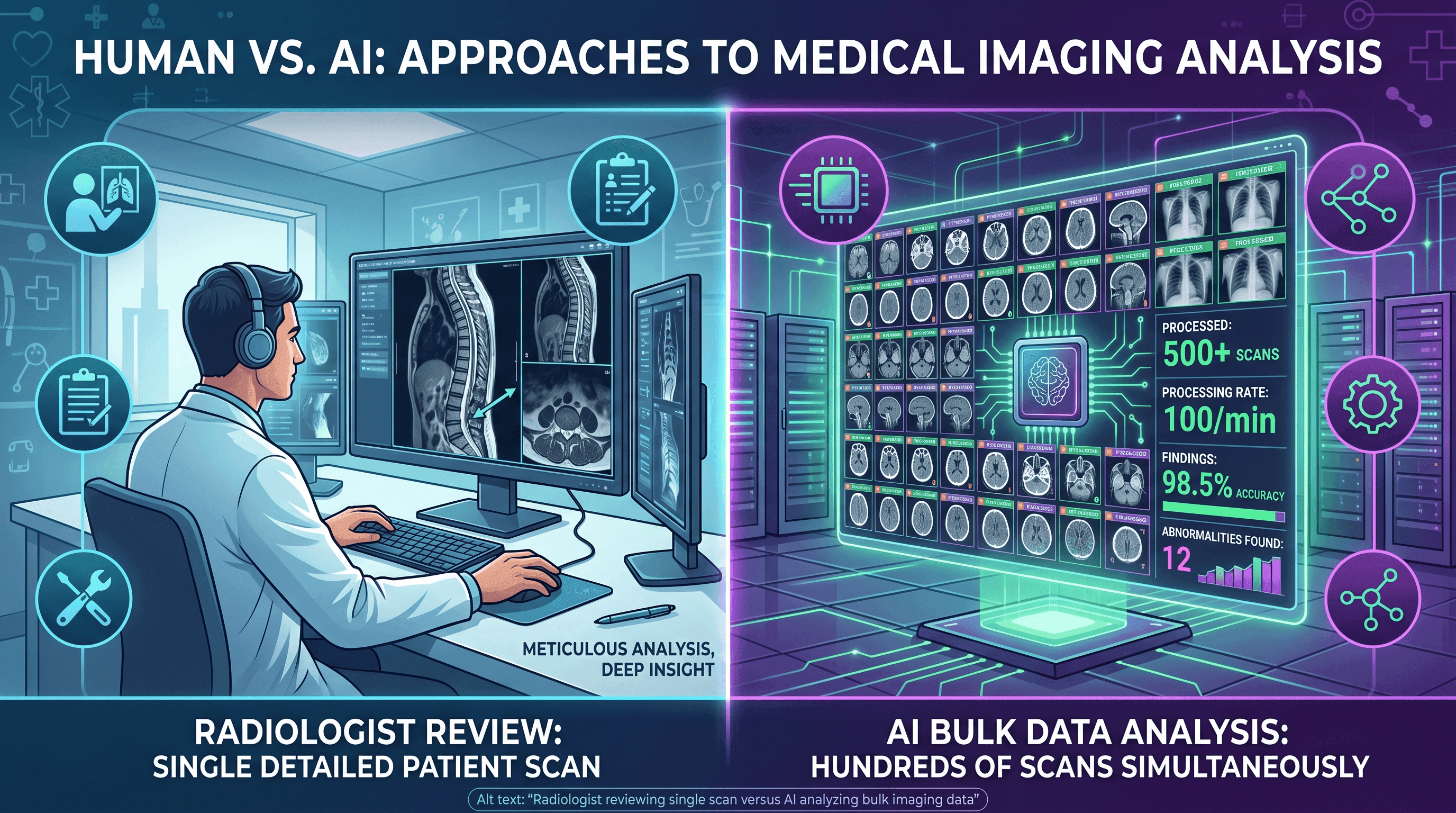
In imaging-heavy specialties, the numbers are striking. A widely cited benchmark found AI systems detecting melanoma with roughly 95% accuracy compared to dermatologists' 87% in controlled trials. Separate mammography data showed that AI-assisted screening reduced false positives in some populations, which matters because unnecessary biopsies carry real patient harm. In pathology, machine learning models trained on tissue slides have matched or exceeded attending pathologist accuracy on specific cancer subtypes.
The May 2026 Beth Israel/OpenAI o1 emergency department study produced the result that drove the most recent round of headlines: in a controlled ER triage setting, the AI model outperformed emergency physicians on diagnostic accuracy. But reading the methods carefully matters. The study compared performance on chart-based diagnostic cases, not bedside encounters. The AI did not examine patients, take a history in real time, or make treatment decisions.
Speed is a genuine advantage too. AI tools can process a complete set of labs, imaging reports, and prior notes in seconds, surfacing correlations a busy physician reviewing the same stack might miss simply due to cognitive load and time pressure. In emergency triage with limited information, that edge is largest.
The Microsoft MAI-DxO system demonstrated a four-times improvement in diagnostic accuracy over baseline physician performance in its 2025 evaluation, alongside a roughly 20% reduction in diagnostic cost. Both findings deserve context: the test conditions were structured and the comparator group was not specialist physicians. But the cost finding is important and largely underreported, and a later section covers it directly.
Clinical Intuition: Where Human Judgment Still Leads
Pattern recognition gets medicine far, but not to the end.
Physicians use what cognitive scientists call thin-slicing: the ability to make rapid, surprisingly accurate assessments from minimal information, drawing on physical cues, behavioral signals, and social context that never enter a medical record. A doctor notices that a patient is guarding their abdomen before they mention pain. They observe that someone described as "fine" by their family is not making eye contact. They register that a child's affect is inconsistent with their stated complaint.
None of that is in the chart. AI systems trained on electronic health record data, lab values, and imaging cannot access it.
The March 2025 Nature npj Digital Medicine meta-analysis covering 83 studies found AI systems achieving an overall diagnostic accuracy of 52.1%. That figure is often cited to show AI's potential. But the same analysis found that expert physicians, not average physicians, significantly outperformed AI on the same case sets. The gap between AI and the best human clinicians is larger than the headlines suggest.
Specific domains where human judgment consistently outperforms current AI include pediatrics, where AI models notably lag due to limited and less standardized training data; rare diseases, where the data density required to train an AI simply does not exist; mental health, where diagnosis depends on subjective experience, relational history, and behavioral observation over time; and cases requiring a physical examination, where the body's response to palpation, percussion, and direct observation carries diagnostic weight that imaging cannot fully substitute.
Accuracy in Specialized Fields: The 2026 Benchmarks
Not all specialties are equal when it comes to ai diagnosis accuracy, and the differences matter for how patients should think about AI tools in their own care.
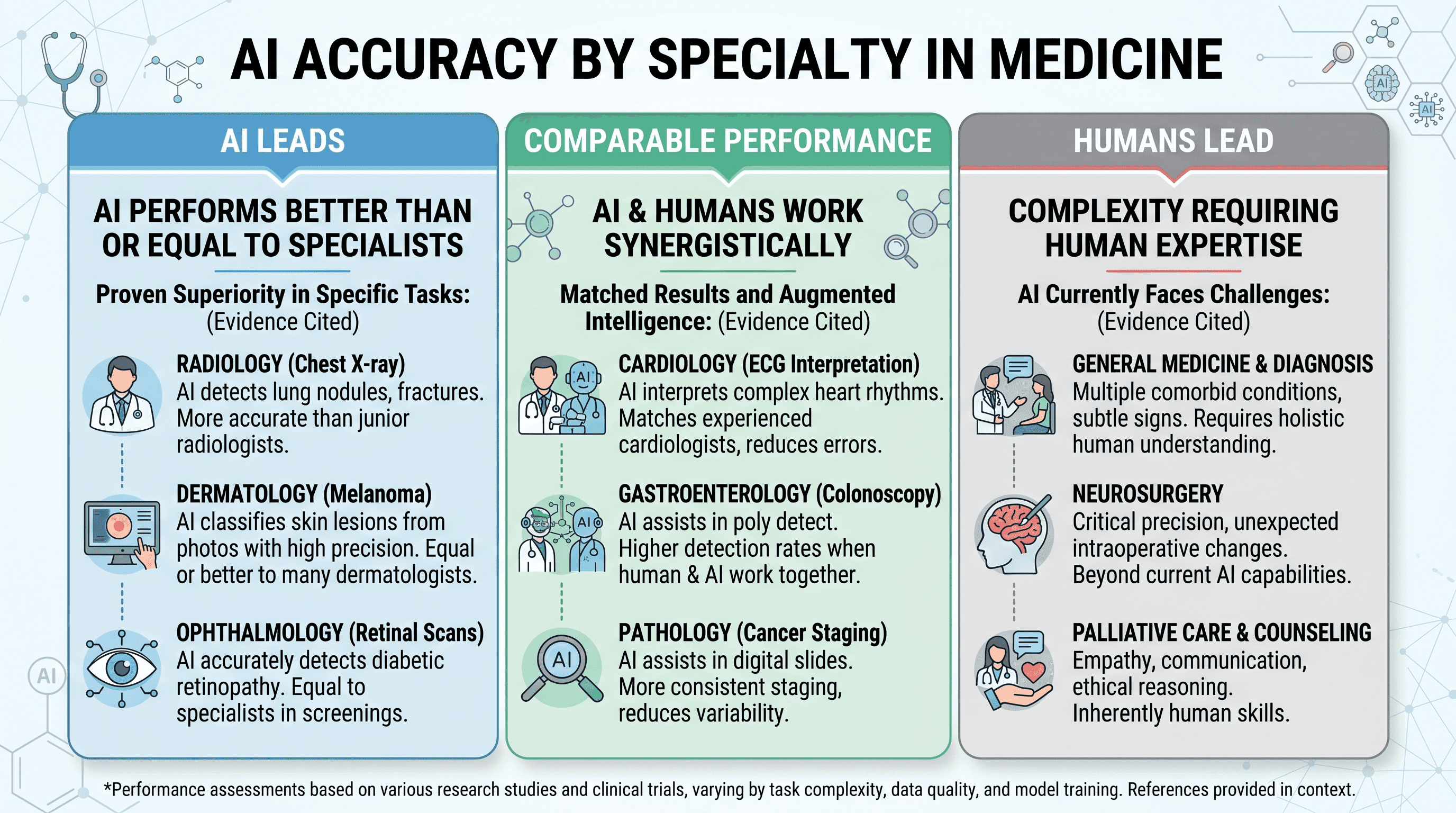
Imaging-Heavy Specialties: Radiology, Dermatology, Pathology
These three domains share a structural feature: the primary diagnostic input is a visual pattern in a bounded medium (a scan, a skin lesion, a tissue slide), and AI systems trained on millions of labeled examples of those patterns can perform at or above specialist benchmarks on specific tasks.
The key qualifier is "specific tasks." An AI radiology tool trained to detect pulmonary nodules performs well on pulmonary nodules. Asked to characterize an unexpected finding in the same scan that falls outside its training distribution, its performance degrades in ways that may not be visible to the clinician reviewing its output. Human radiologists generalize across unexpected findings. Most current AI tools do not.
Where Performance Converges: Primary Care and Internal Medicine
The Stanford February 2025 Nature Medicine study found that chatbot AI tools alone outperformed physicians who had access to standard internet search on clinical decision-making tasks, but that physicians who used AI tools directly kept pace with AI alone. This finding is often misread as "AI beats doctors." What it actually shows is that the combination of a physician and a good AI tool is roughly equivalent to AI alone, and both outperform the physician using less capable search tools. The implication for healthcare workflow is significant.
Emergency Triage: The Unexpected Frontline
The Beth Israel 2026 findings suggest AI's edge is largest precisely where information is most limited: early-stage emergency triage, when only a chief complaint and basic vitals are available. As more clinical data accumulates across an encounter, the performance gap narrows. This is a meaningful data point for thinking about where AI integration creates the most value.
The Surprising Finding: When AI Plus a Doctor Underperforms AI Alone
This is the finding that stops most people mid-scroll, and it deserves a careful read.
A 2024 University of Virginia study found that adding a physician to an AI diagnostic workflow actually reduced accuracy compared to AI operating alone, while improving the speed of the final decision. The mechanism was cognitive anchoring: physicians who received the AI's initial diagnostic suggestion tended to anchor to it, and when the AI was wrong, they were less likely to override it than they would have been if arriving at the case independently.
Why Doctors Sometimes Make AI Worse: Anchoring Bias
Anchoring bias is well documented in clinical cognition. Physicians form an initial diagnostic impression early and weight subsequent information disproportionately toward confirming it. When AI introduces a suggested diagnosis at the front of the encounter, it can function as an anchor that makes the physician less responsive to contradictory evidence, not more.
Automation bias is a related phenomenon: the documented tendency for people working with automated systems to over-trust system outputs, particularly when the system has performed reliably in the past. Clinical trials of AI-assisted decision support have shown that automation bias can cause physicians to approve incorrect AI recommendations at rates that would not occur in unaided judgment.
The practical implication is counterintuitive: the value of AI in clinical settings depends significantly on how it is integrated into physician workflow. Presenting AI output as a second opinion to be weighed, rather than a first answer to be confirmed, produces better outcomes. The order of information matters.
The Empathy Gap and Bedside Manner
Healthcare is not a transaction. It is a social contract between a person in a vulnerable moment and a professional whose role includes witnessing that vulnerability and responding to it.
Patients do not only want accurate diagnoses. They want to be heard. They want someone to explain what is happening in terms they can hold. They want a presence during the conversation about a cancer diagnosis, a pregnancy loss, or a decision about whether to pursue surgery. Research on patient outcomes consistently shows that the quality of the therapeutic relationship, including perceived empathy from the provider, is associated with better adherence, lower anxiety, and in some conditions, improved physiological outcomes.
AI systems can communicate warmly. They can be trained to use validating language and to ask follow-up questions that mirror active listening. But they do not carry the weight of shared human experience, and patients in clinical settings largely know the difference. A Harvard Health review notes that while AI shows promise in certain diagnostic domains, the therapeutic relationship remains a distinctly human function.
The bedside manner in the digital age is not about choosing between AI efficiency and human connection. It is about designing systems where AI handles the cognitive load of pattern recognition, freeing the physician to do what only they can do: be present with the patient.
Ethics, Liability, and the "Black Box"
When an AI diagnostic system makes an error that causes patient harm, who is responsible?
The honest answer is that current legal and regulatory frameworks have not fully resolved this question, and the gap creates real risk for patients and providers alike.
The FDA has cleared a growing number of AI diagnostic tools under its software as a medical device framework, which requires demonstration of safety and effectiveness but does not resolve liability in the same way a drug approval does. The BMJ has reported on emerging guidance from regulatory bodies indicating that physicians remain fully responsible for clinical decisions made with AI assistance. In practice, this means a doctor who follows an incorrect AI recommendation may bear liability for that decision, even when the error originated in the algorithm.
Algorithmic Bias: When Training Data Leaves Patients Behind
Many AI diagnostic systems were trained predominantly on data from white male patients in high-income health systems. The documented consequences include lower diagnostic accuracy on women, patients with darker skin tones, elderly populations, and patients from underrepresented ethnic groups.
Dermatology AI tools trained on images of lighter skin tones have shown significantly degraded performance on darker skin tones, a pattern that mirrors longstanding disparities in dermatological training and reference materials. Sepsis prediction models have shown reduced performance on Black patients in several studies. Cardiac risk algorithms have in documented cases underestimated risk in women, partly because the underlying training data reflected historical patterns of underdiagnosis in that population.
These are not hypothetical risks. They are documented failure modes in tools already deployed in clinical settings. Human oversight is not a bureaucratic caution; it is the mechanism by which these biases get caught before they cause harm.
The Cost and Access Dimension: AI's Most Underreported Advantage
The cost and access case for AI in medicine is more compelling than the accuracy debate, and it receives far less attention.
Approximately 25% of US adults use AI tools for health questions at least monthly, according to a Gallup poll from late 2025. The survey found that lower-income adults and younger people were disproportionately likely to use AI for health guidance, and the primary driver was not preference. It was cost and access. For these populations, AI is not a supplement to physician care. It is filling a gap that physician care is not filling.
The Microsoft MAI-DxO evaluation showed roughly 20% lower diagnostic cost compared to standard physician pathways. In a healthcare system where diagnostic workups contribute substantially to patient debt and out-of-pocket exposure, that is not a marginal finding.
In rural areas with documented physician shortages, in communities where the nearest specialist is hours away, and in populations where cost is a barrier to seeking care at all, AI-assisted triage and guidance tools represent a genuine equity opportunity. The framing of AI as a threat to medicine misses the more pressing reality: for millions of Americans, the alternative to AI guidance is not a physician. It is nothing.
If you want to explore how virtual care can bridge that gap, connecting with a primary care provider through a telehealth platform like Momentary can offer accessible, affordable care without the barriers of in-person visits.
The Rise of the "Centaur Doctor"
The term comes from chess, where researchers found that human-AI teams consistently outperformed both AI alone and human alone in complex play. The same model is emerging in medicine.
The best medical outcomes in 2026 are coming from physicians who treat AI as a co-pilot: using machine-generated pattern recognition to surface candidates, check completeness, and flag statistical outliers, then applying clinical judgment to weigh what the data cannot capture. Two-thirds of US physicians now use AI tools in their practice, according to an AMA 2024 survey.
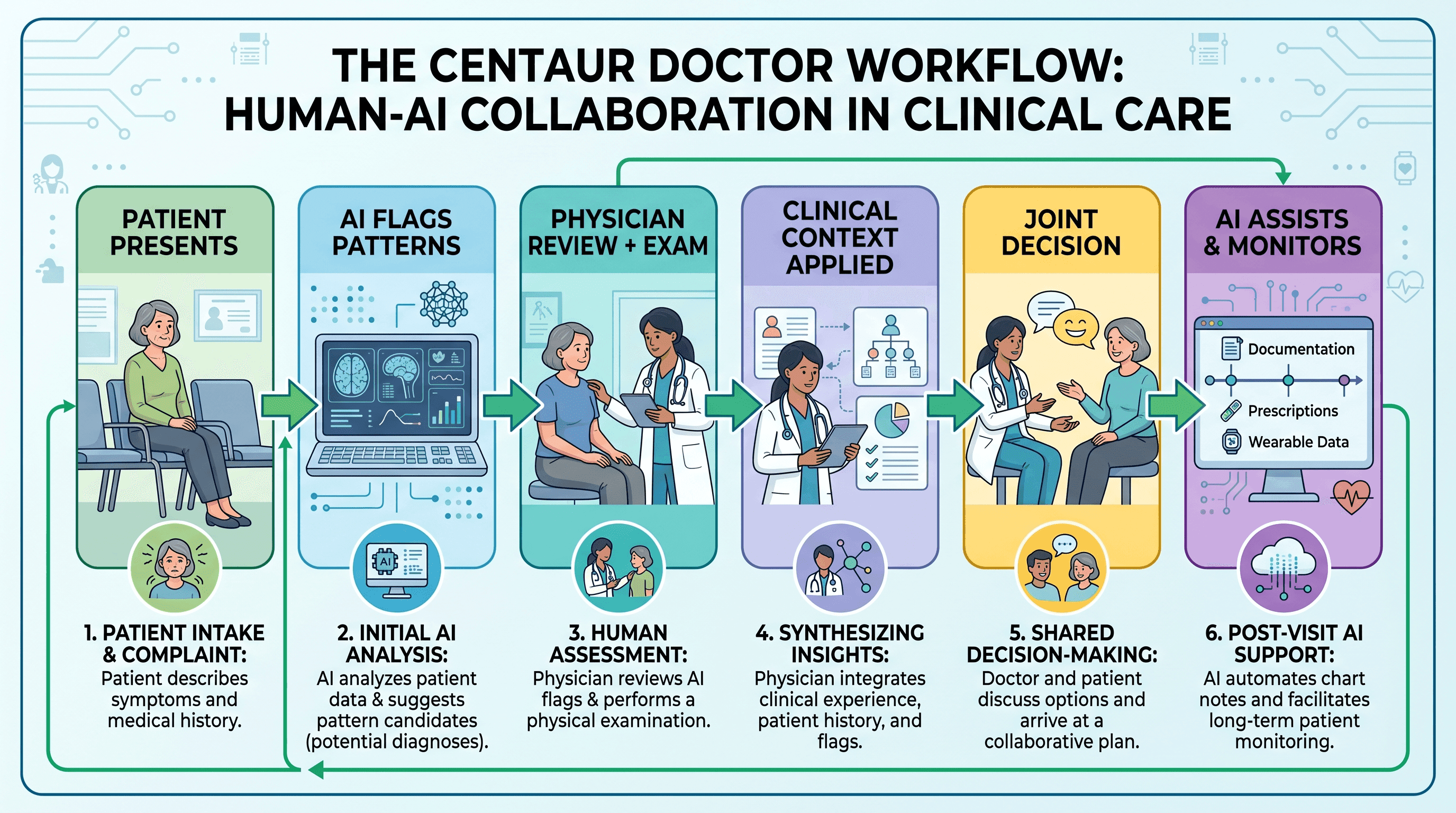
The ambient scribing tools already deployed at scale are a clear example. AI transcribes and structures the clinical encounter in real time, reducing documentation burden by an estimated 50% in some implementations. That time goes back to the patient interaction. The physician listens more, types less, and the note is more complete.
Google's AMIE pre-visit tool, currently in active trials, conducts a structured symptom interview before the appointment and surfaces a differential diagnosis for the physician to review. The physician enters the room with better information and more time for the conversation that cannot be automated.
The AMA framing that has emerged from this landscape: "Doctors using AI will replace doctors who aren't." That is not a prediction about displacement. It is a statement about capability.
The Limits: When the Human Must Take the Lead
No matter how capable AI systems become in pattern recognition domains, there are categories of clinical decision-making where human authority is not optional.
In end-of-life care, decisions about withdrawing treatment, transitioning to comfort care, or navigating family disagreement about a patient's wishes require a physician who can hold all of that complexity with the patient and family in real time. No algorithm can substitute for that presence.
In complex trauma surgery, the surgical judgment required to adapt in a living body to findings that do not match the pre-operative plan is a form of embodied expertise that robotics and AI augment but cannot replicate.
In cases with no data precedent, where a patient's presentation falls genuinely outside established diagnostic categories, the physician's ability to reason from first principles, tolerate uncertainty, and advocate for the patient through a diagnostic odyssey is what keeps that patient from falling through the cracks.
These are not edge cases to be managed by improved algorithms. They are the core of what medicine is, and they are where the physician's role is most irreplaceable.
A Practical Decision Framework for Patients
Most people are not asking whether AI will replace doctors in the abstract. They are asking whether it is safe to use an AI tool to figure out what is wrong with them. Here is how to think about that.
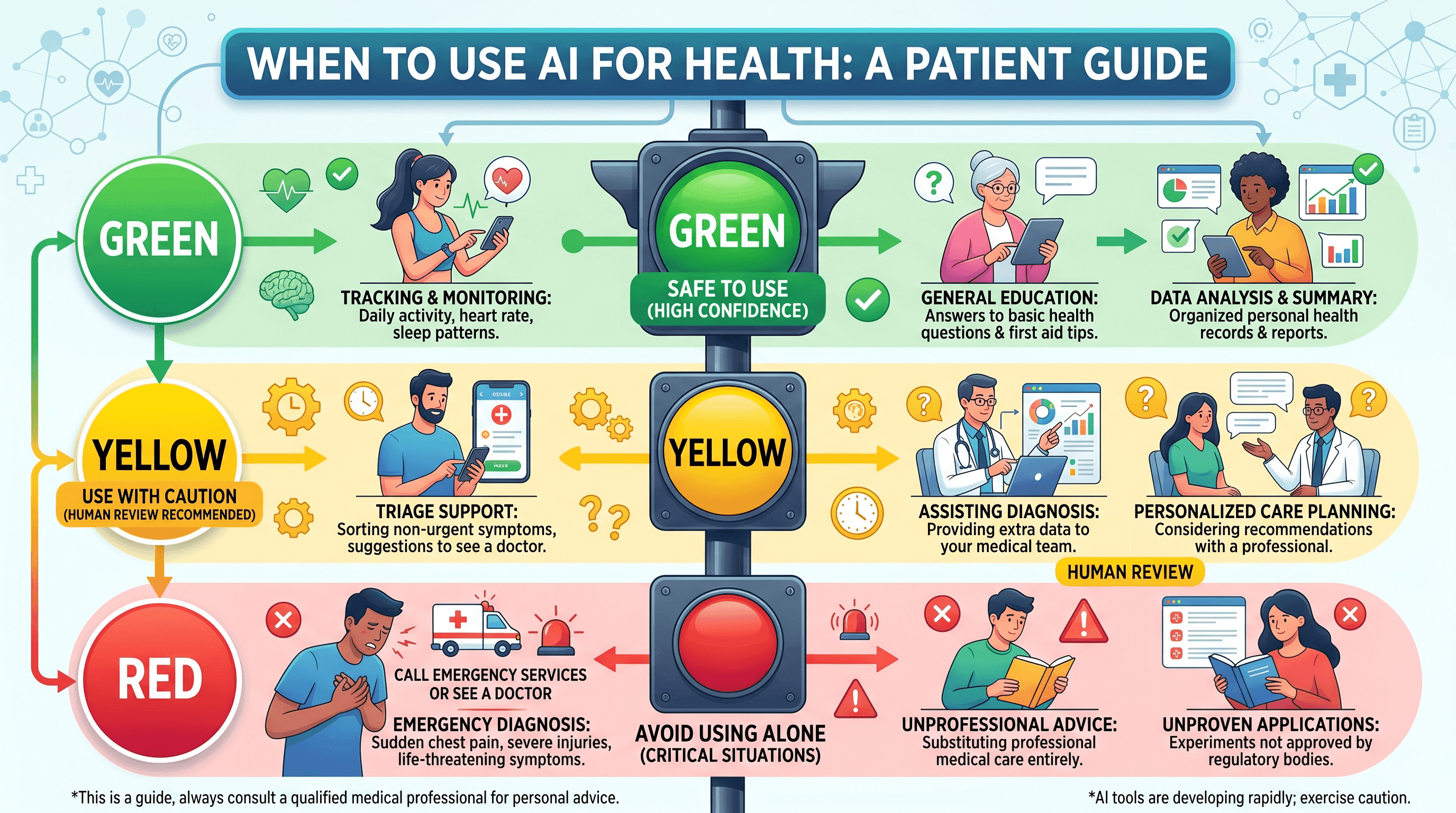
Green: Safe to Start with AI
Using an AI tool to understand a lab result before an appointment, prepare questions for a visit, research what a diagnosis means, or triage a mild symptom that has been present for a day or two are all reasonable uses of AI health tools. The information helps. The stakes are low. Use it.
Yellow: Use AI, Then Verify with a Doctor
Ongoing or recurring symptoms, questions about medication interactions or dosing, interpreting imaging or specialist reports, or managing a chronic condition through a new symptom all fall into a category where AI can give useful initial guidance but should not be the final word. Book the visit. Bring the AI output with you.
Red: Skip AI, Contact Care Directly
Chest pain, shortness of breath, sudden neurological symptoms (weakness, speech changes, vision changes), mental health crisis, any acute symptom in a child under three, and any symptom that is worsening rapidly within 24 hours require immediate human medical contact. An AI tool cannot examine you, cannot call emergency services, and cannot take clinical responsibility for what happens next.
When AI and your doctor disagree, bring the AI output to the appointment. Ask your doctor to engage with it directly rather than dismissing it. "This AI suggested X, and I want to understand why we're taking a different approach" is a legitimate clinical conversation. Document it.
To understand your symptoms more clearly before your next appointment or visit, you can use Momentary's AI health navigator to explore what your symptoms might mean and get guidance on your next steps.
Where This Is All Heading: The Realistic Five-Year Outlook
The trajectory is not replacement. It is integration, at a pace faster than most healthcare systems are currently prepared for.
The NHS has published a 10-year AI plan. Google's AMIE is moving from trials toward deployment. Ambient scribing is already standard at many large health systems. The pattern is consistent: AI absorbs the structured, high-volume, pattern-recognition work, and clinical encounters become more focused on what requires a human.
The 2025-2026 benchmark studies represent AI performance at a particular moment in a rapidly moving field. The 52.1% overall accuracy figure from the Nature meta-analysis reflects where AI was across 83 heterogeneous studies. In specific high-investment domains, that number is already higher, and it will continue to improve.
What will not improve automatically is the regulatory infrastructure, the liability framework, the training of physicians to use AI tools well rather than poorly, and the equitable distribution of AI's benefits across patient populations. Those are human problems requiring human solutions.
The most honest summary of where this is heading: AI will become a standard component of clinical practice, the way imaging and laboratory medicine became standard. The physicians who learn to use it well will extend their own capabilities. The patients who understand its limits will be better partners in their own care.
Frequently Asked Questions
Why won't doctors be replaced by AI?
Medicine involves more than pattern recognition. Physicians perform physical examinations, integrate social and psychological context, make ethical judgments in real time, bear legal accountability for clinical decisions, and provide the therapeutic relationship that research consistently links to better patient outcomes. AI systems excel at structured data analysis and specific recognition tasks. They do not perform examinations, cannot be held legally responsible, and cannot replicate the human dimension of care. The evidence from the 2025 Nature meta-analysis shows that expert physicians still significantly outperform AI on overall diagnostic accuracy, particularly in complex and ambiguous cases.
Do patients prefer AI or human doctors?
Most patients, when given the choice, prefer human physicians for significant health decisions, particularly those involving chronic illness, mental health, or serious diagnosis. Acceptance of AI is higher for administrative tasks, symptom checking before appointments, and receiving information. Patient trust in AI tools varies significantly by age, health literacy, prior experience with AI, and the perceived stakes of the interaction. Surveys consistently show preference for human oversight of AI-generated recommendations rather than fully autonomous AI decision-making.
Can AI replace MBBS doctors?
Not within any foreseeable horizon, and the evidence does not support that framing. AI tools can outperform specific physician cohorts on specific tasks in controlled settings. They cannot perform physical examinations, cannot practice medicine independently under any current regulatory framework, cannot adapt to genuinely novel presentations the way experienced clinicians can, and are not accountable in the ways medicine requires accountability. The more useful question is how AI changes what it means to train and practice medicine, which is a question the field is actively working through.
Will doctors lose jobs due to AI?
The more likely near-term outcome is transformation of roles rather than elimination. AI is already absorbing documentation burden, radiological pre-reads, and certain screening tasks. The physicians best positioned in an AI-integrated healthcare system are those who develop expertise in working with AI tools, interpreting AI outputs critically, and focusing their clinical practice on the tasks AI cannot perform. The AMA has framed this as "Doctors using AI will replace doctors who aren't," which captures the shift more accurately than a jobs-lost framing.
Is AI diagnosis safe to use on my own?
For low-stakes uses such as researching a diagnosis, preparing questions before an appointment, or understanding a lab result, AI health tools are generally useful and the risks are low. For anything involving acute symptoms, medication decisions, or ongoing health management, AI guidance should be verified with a qualified clinician. The red/yellow/green framework in the patient decision section of this post provides a practical guide for when to rely on AI versus when to seek human medical contact.
How biased are AI diagnostic tools?
Algorithmic bias in medical AI is a documented and serious problem, not a theoretical concern. Tools trained predominantly on data from white male patients in high-income settings show measurable performance degradation on women, darker skin tones, elderly populations, and underrepresented ethnic groups. Dermatology AI tools, sepsis prediction models, and cardiac risk algorithms all have documented bias-driven failure modes. Patients from underrepresented populations should be aware that AI tools used in their care may have been validated primarily on populations that do not reflect them, and should feel empowered to raise this with their providers.
References
- Science / The Science.org — Beth Israel/OpenAI o1 emergency triage study, 2026; AI diagnostic accuracy in ER settings.
- Nature npj Digital Medicine — March 2025 meta-analysis of 83 studies; 52.1% overall AI diagnostic accuracy; expert physician comparison.
- TIME / Microsoft MAI-DxO — MAI-DxO 2025 evaluation; 4x accuracy improvement, 20% lower diagnostic cost finding.
- PMC / NIH — UVA 2024 study; AI alone more accurate than AI + physician; anchoring bias in AI-assisted diagnosis.
- BMJ — Stanford February 2025 Nature Medicine findings on chatbots versus doctors in clinical decisions; regulatory guidance on physician responsibility for AI-assisted decisions.
- Frontiers in Artificial Intelligence — Supporting data on AI in healthcare; Gallup 2025 poll context on US adult AI health usage.
- Harvard Health — Harvard Health review on AI medical question accuracy; therapeutic relationship and AMA 2024 survey on physician AI adoption.


