


Healthcare is spending more on AI than ever, and getting less operational value than it should. According to a 2024 Deloitte report, roughly 80% of hospitals now use some form of AI, yet a 2023 JAMA study found that more than 81% of health systems lack a formal AI governance framework. Providers are spending, deploying, and then struggling to extract measurable returns.
The deeper problem is not the technology. It is the administrative tax placed on clinicians, one that grows every year. The American Medical Association has documented that physicians spend more than twice as many hours on administrative tasks as they do on direct patient care. Healthcare automation AI, when implemented correctly, is the clearest available tool for changing that ratio.
This guide is not a vendor pitch and not a definition piece. It is written for the administrator, clinical operations leader, or practice manager who already believes in automation and needs to know what to automate first, what results to expect, and how to stay compliant while doing it.
At a Glance
| Topic | Key Facts |
|---|---|
| Primary benefit | Returns clinical time from administrative tasks to direct patient care |
| Key automation categories | Revenue cycle, ambient scribing, patient navigation, agentic workflows, pharmacy and supply chain |
| Burnout context | Physicians spend 2x more hours on admin than patient care (AMA) |
| Compliance requirement | All AI vendors accessing PHI require a signed BAA under HIPAA |
| Governance gap | 81.3% of health systems have no AI governance framework (JAMA, 2023) |
| Market trajectory | Healthcare AI market projected to reach $110B–$500B by 2030 |
The End of Medical Paperwork
Healthcare automation AI is not a single product or platform. It is the strategic removal of repetitive, non-clinical tasks from the workflows of trained medical professionals, and its return on investment is measured in recovered time, not just recovered dollars.
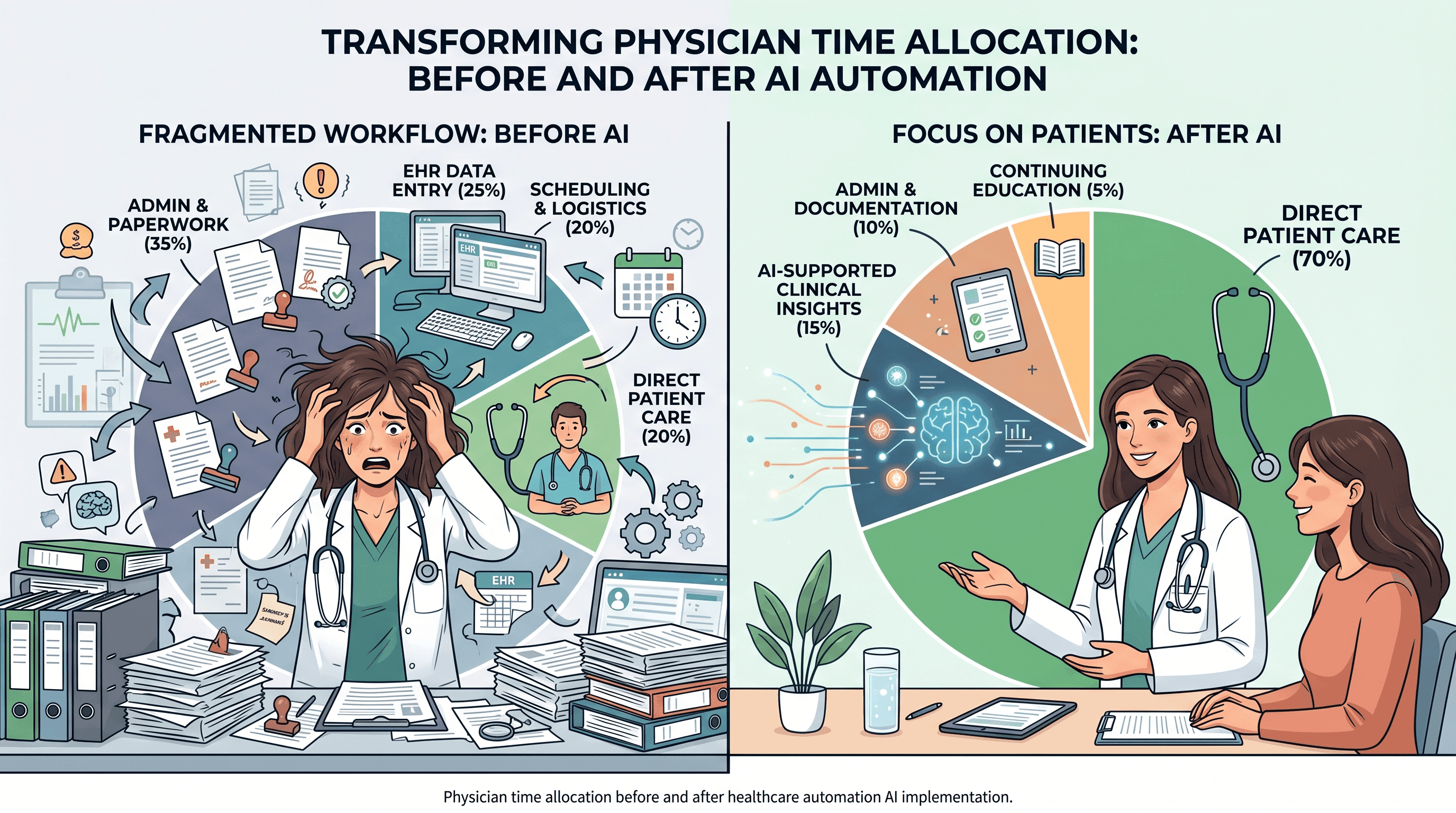
The goal is concrete: return approximately 30% of a physician's day back to direct patient care by automating what has been called the "administrative tax" of medicine. That tax includes coding, prior authorization requests, intake forms, scheduling confirmations, and the documentation work that forces clinicians to stay logged in after hours, a phenomenon widely referred to in clinical literature as "pajama time."
Understanding what healthcare automation AI covers requires a working map of its layers. At the base sits robotic process automation (RPA), which replicates human keystrokes to move structured data between systems, such as pulling insurance eligibility data from a payer portal into an EHR. Above that sits machine learning (ML), which identifies patterns in large datasets to make predictions, like flagging which patient is most likely to miss a follow-up appointment. At the top of the current stack sits generative AI, which produces human-readable text, summaries, and responses from unstructured inputs.
In 2025 and into 2026, a fourth layer has begun moving from pilot to deployment: agentic AI, where the system does not simply flag a result but takes a sequence of autonomous actions in response. More on that later.
Revenue Cycle and Billing Automation
Revenue cycle management (RCM) is the financial engine of any healthcare organization, and it is also one of the highest-friction administrative bottlenecks in medicine.
The core workflow problem is this: a provider delivers care, a coder assigns the appropriate ICD-10 or CPT codes, a claim is submitted to a payer, the payer either pays or denies it, and staff then work the denial queue manually. At scale, this process is slow, expensive, and error-prone. According to the American Hospital Association, prior authorization requirements alone grew by more than 10 times over the last decade, with each request requiring an average of 12 staff hours per physician per week.
AI-driven revenue cycle management compresses this cycle significantly. Automated medical coding tools now process clinical notes and apply ICD-10 and ICD-11 codes in real time, using natural language processing to read physician documentation and suggest codes before human review. The AI does not replace the coder; it handles the volume so the coder handles the exceptions.
Prior authorization automation is the fastest-growing segment within RCM. AI tools can now submit prior auth requests, track payer responses, and flag incomplete documentation before submission, rather than after denial. Auburn Community Hospital, a mid-size facility in upstate New York, reported a 50% reduction in claim denials after implementing AI-assisted RCM workflows, according to vendor-published case data that has been independently cited in the healthcare operations literature.
The financial return on RCM automation tends to materialize within three to six months. Administrative efficiency gains in the 20 to 35% range are consistently documented, making this category one of the clearest starting points for organizations calculating a first automation investment.
What to automate first in RCM: Prior authorization submission and tracking delivers the fastest ROI because it replaces a defined, repetitive, and high-cost manual workflow with a measurable automated one. Coding automation should follow once documentation quality is standardized.
Ambient Clinical Intelligence and Scribes
Ambient AI scribing is the breakout automation category of 2025 and 2026, and it is solving the most personal form of administrative burden: the documentation that follows every patient visit.
The problem it addresses is well established. According to research published in the Annals of Internal Medicine, physicians spend nearly two hours on EHR and administrative tasks for every hour of direct patient care. A significant portion of that time is post-visit documentation completed after hours, a pattern that the AMA links directly to physician burnout rates exceeding 40%.
Ambient AI scribing tools use a microphone in the exam room (or on a connected device) to listen to the natural conversation between a physician and patient. The AI then converts that conversation into a structured clinical note, populates the relevant sections of the EHR, and presents a draft for physician review and sign-off. The physician does not type. The patient does not see a clinician staring at a screen.
A pilot program at Mass General Brigham, one of the largest health systems in the United States, reported a 40% reduction in documented burnout symptoms among participating physicians after deploying ambient AI scribing, a figure cited in multiple health system operational reviews. The same program documented approximately three hours saved per physician per week on documentation tasks alone.
"Reducing administrative burden is the single most powerful intervention we have for physician retention and long-term workforce sustainability." American Medical Association, 2024 Physician Burnout Report
Tools in this category, including platforms like Nuance DAX, Abridge, and Ambience Healthcare, function as documentation assistants. None of them make clinical decisions. The physician reviews every note before it enters the permanent record. The automation handles the transcription and structure; the clinician retains full medical and legal accountability.
For organizations considering ambient scribing, the implementation path is relatively low-friction compared to other AI deployments: there are no major EHR integration overhauls required for most major systems, and training time for physicians is typically measured in hours rather than weeks.
Intelligent Patient Navigation and Intake
Before a patient sits down with a physician, a significant amount of administrative work has already happened, or should have happened. Healthcare automation AI is now handling most of that pre-visit workflow without human involvement.
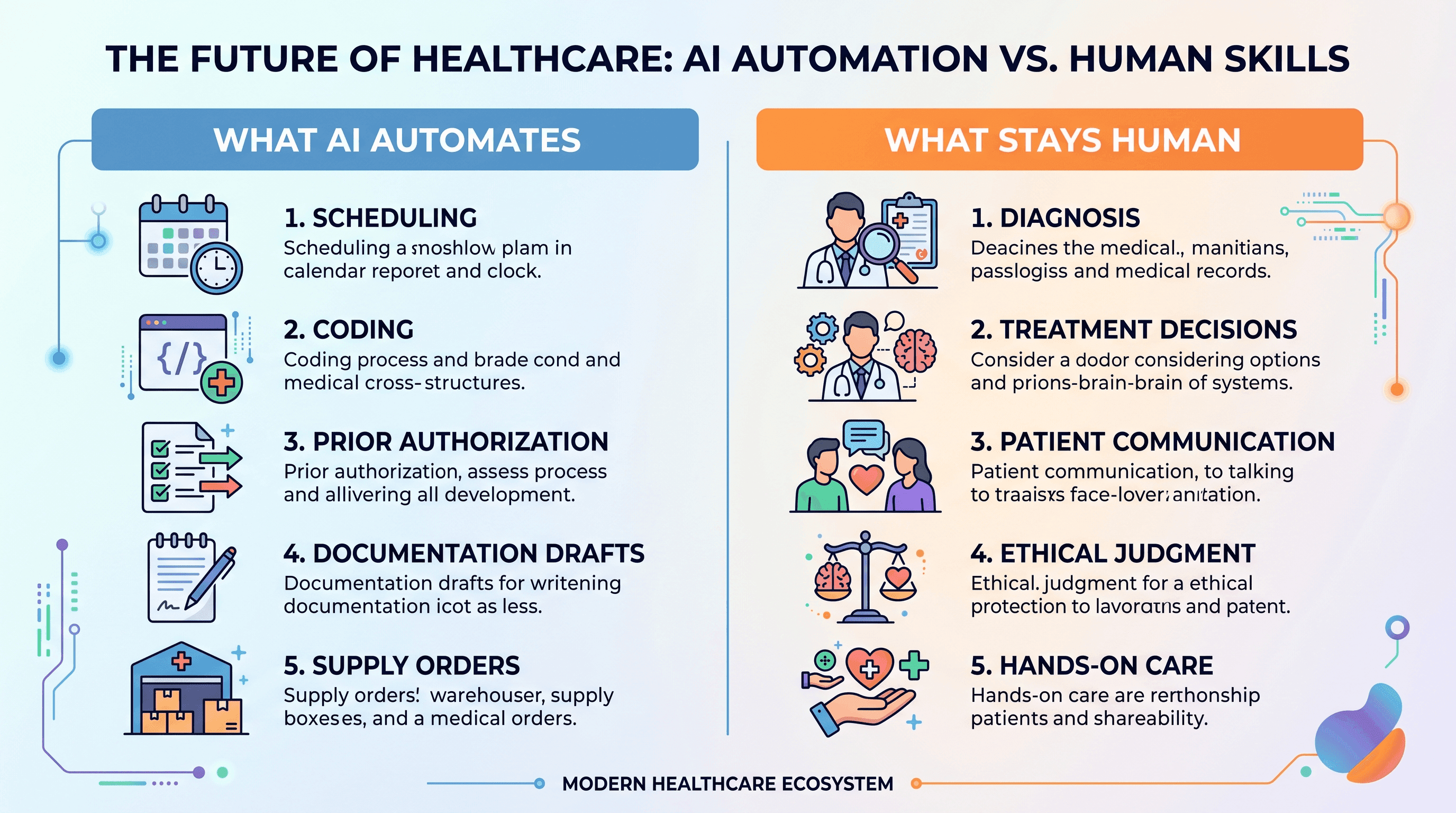
The "digital front door" is the industry term for the automated patient-facing layer that manages appointment scheduling, insurance verification, and pre-visit intake. When this layer functions well, the physician receives a complete summary of the patient's reason for visit, insurance status, outstanding pre-authorizations, and relevant history before the appointment begins. When it does not function well, the physician walks in blind and spends the first ten minutes of the visit collecting information that could have been gathered in advance.
AI-powered scheduling tools now use predictive models to optimize appointment slots based on visit type, provider availability, likely duration, and no-show probability. Research published in the Journal of the American Medical Informatics Association has shown that predictive no-show models can reduce missed appointments by 20 to 30% by triggering automated reminders at the statistically optimal times before the appointment.
Insurance eligibility verification, historically a manual process completed by front-desk staff, is now handled in real time through RPA integrations with payer systems. The AI checks coverage, confirms co-pay amounts, and flags any coverage gaps before the patient arrives, eliminating a common source of post-visit billing disputes.
Pre-visit clinical questionnaires represent the most direct time return for the physician. When an AI-powered intake form collects structured symptom data, medication history, and chief complaint before the appointment, and then populates the EHR with a pre-formatted summary, the physician can spend the entire appointment on assessment and care rather than information gathering.
Patient engagement automation is growing at roughly 20 times the rate of other administrative categories. Post-visit follow-up messaging, medication adherence reminders, and care gap notifications are now being handled by AI tools that personalize outreach based on each patient's documented care plan, rather than sending generic reminders to everyone on a panel.
Agentic AI: The Next Leap in Workflow Orchestration
Every automation category covered so far involves AI that responds to a trigger and completes a defined task. Agentic AI changes the architecture entirely.
Where conventional automation says "flag this abnormal lab result for review," agentic AI says: "This lab result is abnormal. I will schedule the follow-up appointment, notify the ordering physician, send the patient a portal message, check whether a prior authorization is needed for the likely next step, and update the care plan, all without waiting to be asked." The system chains a sequence of tasks autonomously, based on a goal, not a script.
According to Google Cloud's 2025 healthcare AI ROI report, agentic AI adoption in health systems is accelerating rapidly, with early deployers reporting workflow completion rates that were previously impossible without adding staff. The report identifies care coordination, discharge planning, and referral management as the three highest-impact agentic use cases in current deployments.
This is not science fiction. It is the logical extension of the automation stack already in place at most mid-size and enterprise health systems. The prerequisite is data infrastructure: agentic AI requires clean, interoperable data across scheduling, EHR, pharmacy, and billing systems. Organizations without that foundation cannot deploy agentic workflows effectively, regardless of the vendor.
For 2026, the most realistic entry point for agentic AI is post-visit care coordination: automating the sequence of tasks that follow a specialist referral or a hospital discharge. These workflows are currently manual, high-volume, and prone to gaps that result in readmissions. Agentic AI reduces those gaps by ensuring every required step is completed in order, without a care coordinator having to track each one individually.
A note on governance: Agentic AI requires explicit human override protocols. Because the system acts without being prompted at each step, organizations must define clearly which actions require human sign-off before execution and which can proceed autonomously. This is a governance question, not a technology question, and it needs to be answered before deployment begins.
Supply Chain and Pharmacy Automation
The back office of a hospital is where supply chain breakdowns silently become patient care failures.
Drug shortages are not random events. They follow predictable patterns tied to disease prevalence, manufacturer capacity, and regional demand, all of which are measurable. AI-powered pharmacy and supply chain tools use predictive models to forecast demand for specific medications and consumables based on historical usage data, patient census projections, and real-time disease surveillance inputs.
The FDA's drug shortage database documents hundreds of active shortages at any given time, many of which affect medications with no direct therapeutic substitute. Health systems that rely entirely on reactive procurement, ordering only when stock falls below a threshold, are consistently more exposed to these shortages than systems that use predictive ordering.
Automated inventory management systems now track medication usage at the unit level, trigger reorder requests when predictive models indicate a shortage risk, and route those requests through the approval chain without human initiation. For high-volume, high-cost medications, this translates into meaningful reductions in both waste (from overstocking) and stockout events (from under-ordering).
Johns Hopkins Medicine documented approximately $700,000 in annualized ICU staffing and supply cost savings after implementing ML-driven predictive analytics for patient flow and supply chain management, according to data cited in a peer-reviewed operations analysis. Supply chain demand forecasting is consistently among the top three ROI categories in healthcare AI implementations, behind only RCM and ambient scribing.
Pharmacy automation extends beyond procurement. Robotic dispensing systems now handle the physical preparation and verification of high-volume medication orders, reducing dispensing errors and freeing pharmacists for clinical consultation roles. Automated prior authorization for specialty medications, where the greatest delays in patient care often occur, is one of the fastest-growing applications within this category.
The Ethics of Automation: Transparency and Job Displacement
The most frequently asked question from clinical staff encountering AI automation is direct: "Is this replacing my job?"
The honest answer, for the current generation of healthcare automation AI, is no. But it is a qualified no that requires context.
Healthcare is facing a structural labor shortage that automation alone cannot solve. The Association of American Medical Colleges projects a shortage of up to 86,000 physicians in the United States by 2036. Nursing shortages are similarly documented by the Bureau of Labor Statistics, which projects that demand for registered nurses will grow significantly faster than the average for all occupations. In this environment, automation is functioning as a force multiplier, helping existing staff manage higher patient volumes without proportional headcount growth, rather than as a workforce reduction tool.
The jobs most directly affected by automation are not clinical roles. Billing coders, prior authorization specialists, and scheduling coordinators are the roles most exposed to displacement by AI. Organizations that are implementing automation responsibly are retraining staff in these roles into positions that require human judgment: care coordination, patient advocacy, data quality review, and AI oversight. Responsible implementation includes a workforce transition plan. Automation without one is not an ethics-neutral choice.
On the clinical side, the most important ethical question is not displacement but transparency. Explainable AI (XAI) refers to systems that can articulate the basis for their outputs in terms a clinician can review and verify. When an AI tool flags a patient as high-risk for readmission, the physician needs to know which factors drove that flag, not just that the flag exists. Without explainability, clinicians have no way to identify when an algorithm is producing biased or incorrect outputs.
Algorithmic bias is a documented risk. AI systems trained predominantly on data from one demographic group can produce outputs that systematically underperform for underrepresented populations. Research published in JAMA has documented racial and socioeconomic disparities in AI diagnostic performance, making diverse training data and ongoing performance monitoring non-negotiable components of any responsible deployment.
Where Automation Stops and Medicine Begins
Every section in this guide covers tasks. Tasks can be automated. Care cannot be.
The boundary between automatable administrative work and irreplaceable clinical judgment is not ambiguous in current AI systems. No AI tool approved by the FDA for clinical use makes a final diagnosis, prescribes a treatment, or communicates a serious prognosis to a patient. Every FDA-authorized AI/ML medical device, and there are now approximately 950 of them authorized as of 2024, is designed to support clinical decision-making, not replace it.
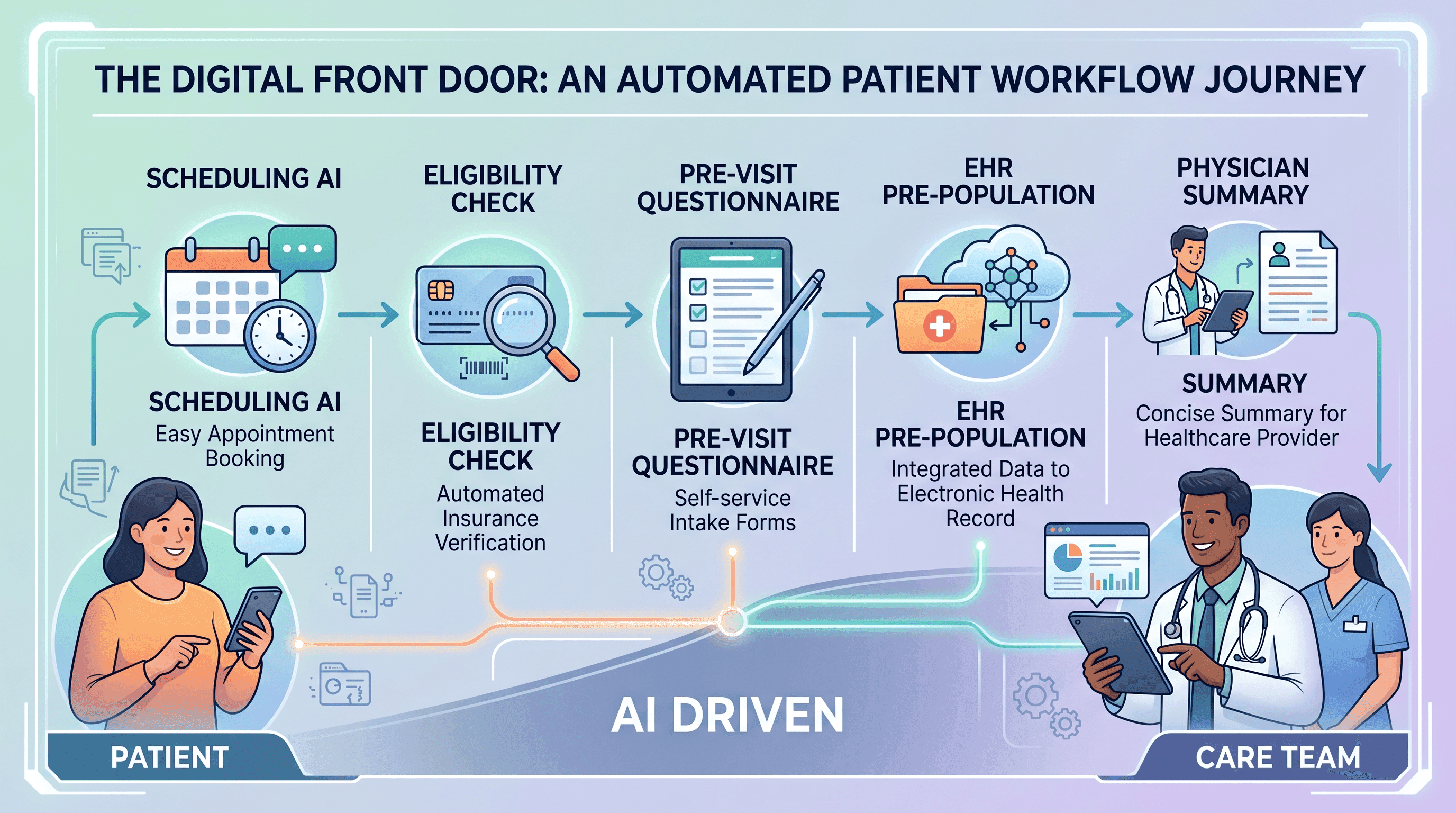
The clinical scenarios that require human judgment are precisely those where the stakes of error are highest: differentiating between presentations that look similar but carry different prognoses, communicating a cancer diagnosis to a patient, deciding whether a borderline lab result warrants immediate action or watchful waiting, and managing the grief and fear that accompany serious illness. Empathy, ethical reasoning, and relational trust are not functions that an algorithm can perform or should attempt to perform.
This is not a limitation of current AI. It is the correct design. The goal of healthcare automation AI is to remove enough administrative burden from clinicians that they have the time, attention, and emotional capacity to do the work that only humans can do. That goal is worth pursuing with rigor, but it is only achievable if the boundary is held clearly.
If questions come up about whether specific symptoms or test results need medical attention, connecting with a qualified clinician is always the right next step. Patients and providers can see a doctor online through Momentary's virtual primary care platform for accessible, real-time clinical guidance without an in-person visit.
Frequently Asked Questions
What is AI in healthcare mainly used for?
The most widespread applications of AI in healthcare today are administrative: clinical documentation (ambient scribing), revenue cycle management, prior authorization processing, and patient scheduling. On the clinical side, AI is most broadly used in radiology for image analysis and in risk stratification tools that flag high-risk patients for proactive outreach. According to the FDA, approximately 950 AI/ML medical devices have been authorized for clinical use, the majority of them in radiology and cardiology.
Which jobs will survive AI in healthcare?
Roles that require direct patient interaction, ethical judgment, and adaptive clinical reasoning are the most durable: physicians, nurses, mental health professionals, and patient advocates. Roles at highest risk of displacement are those involving high-volume, rule-based data processing: billing coders, prior authorization specialists, and some scheduling functions. Organizations implementing automation responsibly are retraining staff in at-risk roles into AI oversight, care coordination, and patient navigation functions.
What is an example of automation in healthcare?
A practical example is prior authorization automation. Historically, a physician submits a request for a specific medication or procedure, and a staff member manually fills out the payer's authorization form, tracks the request status, and follows up on denials. AI-powered prior authorization tools now submit those requests automatically, cross-reference payer requirements in real time, and flag missing documentation before submission rather than after denial. This process, which previously consumed an average of 12 staff hours per physician per week, can be compressed to near-zero manual effort.
Which AI tools are used in healthcare?
Healthcare AI tools span several categories: ambient scribing platforms (which convert physician-patient conversations into structured clinical notes), revenue cycle management tools (which automate coding, billing, and prior authorization), clinical decision support systems (which surface evidence-based recommendations within the EHR workflow), predictive analytics platforms (which model patient risk, staffing needs, and supply demand), and patient engagement tools (which automate follow-up outreach and appointment reminders). The FDA authorization database is the most reliable reference for which clinical AI tools have been reviewed for safety and effectiveness.
How does healthcare AI stay HIPAA compliant?
Any AI vendor that accesses protected health information (PHI) must sign a Business Associate Agreement (BAA) with the covered entity. Beyond the BAA, HIPAA-compliant AI implementations apply data minimization principles (using only the PHI necessary for the specific function), maintain audit trails documenting every instance of PHI access, and require breach notification protocols for third-party cloud infrastructure. Organizations should verify BAA coverage for every AI tool in their stack, including workflow tools that touch patient scheduling or communication data indirectly.
What should I ask an AI vendor before signing a contract?
At minimum: Does your system require a BAA, and do you sign one? What data is used to train your model, and does it include our patient data? How do you validate accuracy across different demographic groups? What human oversight mechanisms are built into the system? How does your tool integrate with our existing EHR? What is your breach notification process? What change management support do you provide during implementation? Who owns the outputs your system generates? What is your data retention and deletion policy? How do you handle algorithm updates, and are we notified before changes go live?
References
- American Medical Association (AMA) — Physician burnout prevalence and administrative burden data.
- JAMA — AI Governance and Algorithmic Bias in Healthcare — Documentation of health system AI governance gaps and demographic disparities in AI performance.
- American Hospital Association — Prior Authorization Fact Sheet — Prior authorization volume growth and staff time data.
- Annals of Internal Medicine — Physician Time Study — Documentation of physician time allocation between EHR tasks and direct patient care.
- Google Cloud 2025 Healthcare AI ROI Report — Agentic AI adoption data and workflow completion benchmarks.
- FDA Drug Shortage Database — Active drug shortage data and historical shortage trends.
- PMC — AI in Healthcare Operations (PMC8285156) — Johns Hopkins supply chain and staffing AI savings data.
- Association of American Medical Colleges — Physician Shortage Projections — Projected US physician shortage to 2036.
- Bureau of Labor Statistics — Registered Nurses Outlook — Nursing workforce demand projections.


